Chinese government gives wrist slap to powerful scientist on fraud and plagiarism charges

In a decision clearing a powerful scientist of charges of fraud and plagiarism in more than sixty papers, several of which have already been retracted, the Chinese government has also allowed that scientist to keep his post as head of one China’s universities.

The Chinese communists did punish him, but in a way that in the long run is mostly meaningless.

Cao [Xuetao, president of Nankai University and an academician at the Chinese Academy of Engineering] will be barred from applying for national science and technology projects, lose his qualification as a scientific expert, and be forbidden from recruiting graduate students, all for 1 year. The notification also ordered him to investigate and correct the papers. It appears he will keep his job as president of Nankai University, one of China’s most prestigious universities. (On Nankai’s English-language website, Cao is also listed as one of the university’s two chancellors.) Cao did not immediately respond to an email requesting comment.

In other words, he keeps his powerful post. To get off so lightly you would almost think he worked for the American FBI and had tried to overthrow a legal election. But then, no, it isn’t the same. The FBI officials who managed the Trump coup have actually seen less punishment. China, as corrupt as its communist government might be, in this case actually managed to administer a tiny bit of justice.

This is the future, as the world’s culture no longer honors law and the truth, but power and authority. And those in power will never be brought to justice, because they are above all those little people who serve them.

This also tells you how little you should trust any results coming from a government scientist. Those results might be real, but before you accept them you better go over them with a fine-tooth comb.

3 comments

Update on China’s pseudo-private commercial launch industry

Link here. Unlike past Space News articles which generally made believe these privately funded Chinese companies were truly private, the article at the link today is very clear about the close supervision maintained by the Chinese communist government over these companies. They might get funding through private investment capital, but everything they do is approved by their government.

A 2014 central government policy shift opened the Chinese launch and small satellite sectors to private capital. Since then around 20 launch vehicle-related firms have been established in China.

These commercial launch companies are being supported by a national strategy of civil-military fusion. This includes facilitating the transfer of restricted technologies to approved firms in order to promote innovation in dual-use technology. The State Administration for Science, Technology and Industry for National Defense (SASTIND) oversees activities.

Provincial and local governments are also providing support for space companies as they look to attract high-end and emerging technology firms.

The initial focus of the article is on iSpace, also called Interstellar Glory Space, which is planning another fund-raising round. This company, whose Hyperbola-1 solid rocket reached orbit for the first time in 2019, is now designing a liquid-fueled rocket whose first stage will be reusable.

The article also gives a quick review of some of the other Chinese companies.

It is all part of the new colonial movement, the international race to gain dominance in space. The competition is presently fierce, and should only become fiercer based on China’s decision to encourage internal competition.

1 comment

Chang’e-5’s lunar samples less dense than expected

Because the lunar samples retrieved by China’s Chang’e-5 probe were less dense than expected, it ended up recovering only 3.8 pounds of material rather than the targeted 4.4 pounds.

The probe had estimated the lunar rocks to have a density of 1.6 grams per cubic millimetre, based on data from past missions by other countries, said Pei Zhaoyu, the mission spokesman. Going by that figure, the probe stopped taking samples after just 12 hours, apparently assessing that the target had been reached. “However, from tests, the actual density might not be that high,” Pei told reporters.

This is not a failure, but a discovery. In order to make sure the lander did not recover too much material, weighing too much, they needed to set limits based on the expected weight of the material recovered. That these samples taken from the Mons Rümker volcano complex are lighter than expected reveals something about them. It suggests the lava here was different than lava samples taken elsewhere.

3 comments

Another professor arrested for hiding ties to China

An MIT professor has been arrested for hiding his extensive ties to the Chinese communist government, even as he took almost $20 million in grants from the Department of Energy.

According to prosecutors, Gang Chen, a mechanical engineering professor at MIT, has held various positions on behalf of the PRC aimed at promoting China’s technological and scientific capabilities. He allegedly shared his expertise directly with Chinese government officials, “often in exchange for financial compensation,” said prosecutors in the U.S. attorney’s office in Boston.

The Chinese consulate in New York allegedly requested that Chen, a naturalized U.S. citizen, act as an “overseas expert” for the PRC. He was also a member of two talent programs that the PRC has used to place Chinese students at American universities.

This is not the NASA scientist who pled guilty to similar charges yesterday.

It appears to me that the Trump Justice Department is trying to wrap up as many of its cases of academics spying for China as it can before Joe Biden takes over.

4 comments

Scientist pleads guilty of lying about ties to China

A NASA scientist yesterday pled guilty of lying about his participation in China’s Thousand Talents program, designed to recruit scholars for stealing U.S. intellectual property.

On or about October 27, 2020, MEYYAPPAN was interviewed by the FBI, NASA OIG, and the USAO, in New York, New York. During that interview, MEYYAPPAN falsely stated, among other things, that he was not a member of the Thousand Talents Program and that he did not hold a professorship at a Chinese university. In truth and in fact, MEYYAPPAN was a member of the Thousand Talents Program and held a professorship at a Chinese university, funded by the Chinese government.

This guy is one of a slew of scientists the Trump administration has caught spying for China. There are certainly many others, as our academic community generally has more loyalty to communism and China than it does to the U.S.

Unfortunately, he will likely be one of the last such spies caught, as we can surely expect the Biden administration, with its own ties to China, to shut down this national security work.

1 comment

Tianwen-1 to arrive in Mars orbit February 10

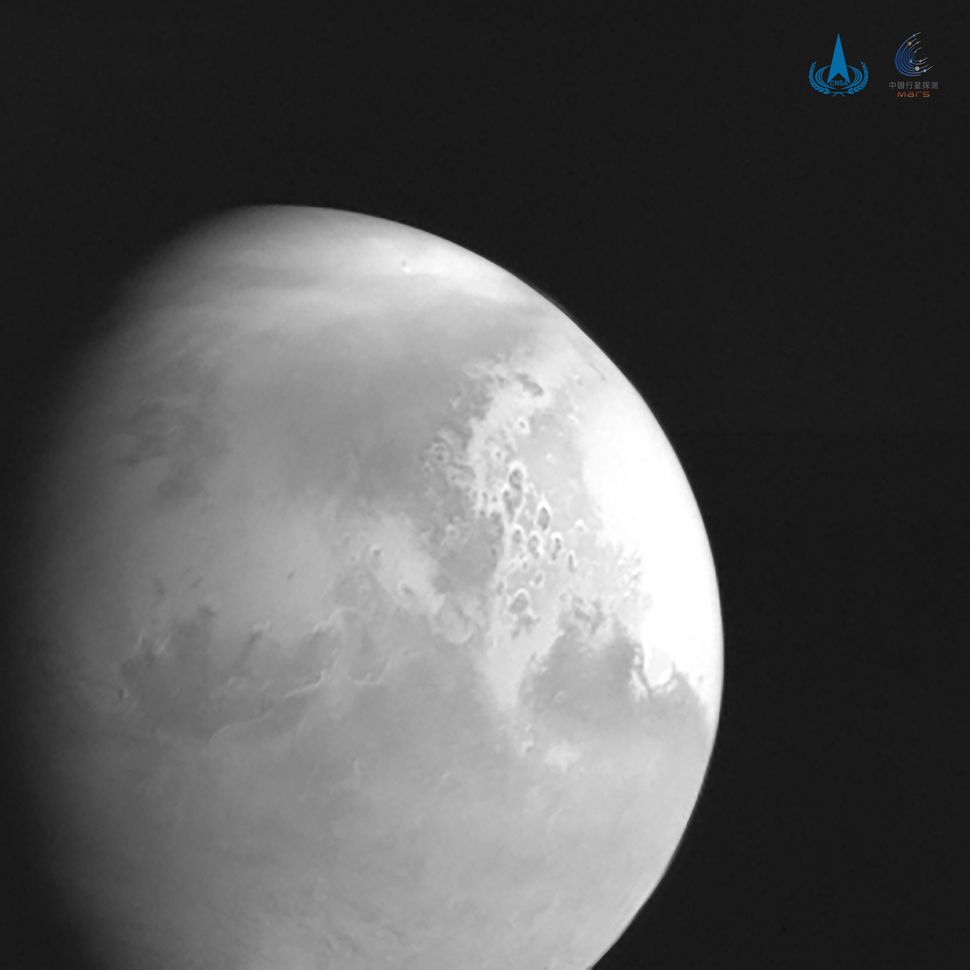
The new colonial movement: China’s space agency, CNSA, today announced that its first Mars orbiter/lander/rover, Tianwen-1, will arrive in Mars orbit on February 10th, with the lander/rover dropping to the surface in May.

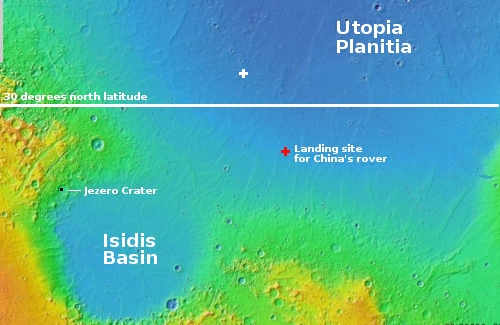
After entering orbit, Tianwen-1 will begin to prepare for a landing attempt of the mission’s rover. The orbiter will begin imaging the main candidate landing site within the huge impact basin Utopia Planitia, to the south of NASA’s Viking 2 landing site.

Getting ready for the attempt will take time however, with CNSA stating that the landing won’t take place until May.

At the moment they say that all systems are working as planned, and that they have one more course correction, the fourth, to do before entering orbit.

11 comments

China targets 40-plus launches in ’21

The new colonial movement: China’s space agency announced today that it is aiming to complete at least 40 launches in 2021.

A terse summary of the report in a CASC press release (Chinese) stated that missions related to the Chinese Space Station complex would be among the planned 40-plus launches. Recent reports state that the space station core module will be launched in the coming months, followed by the Tianzhou-2 cargo vessel and Shenzhou-12 crewed missions. The missions will require Long March 5B and Long March 7 launches from Wenchang and a Long March 2F launch from Jiuquan in the Gobi Desert.

Other major highlighted activities include the Tianwen-1 Mars spacecraft, which is due to enter Mars orbit around Feb. 10 with a rover landing attempt to follow in May. Development work will focus on the two experiment modules for the Chinese Space Station and, notably, crewed lunar exploration. No further details on the latter were provided but earlier indications are available.

Assuming they experience no major launch failures, 2021 should be a ground-breaking year for China.

1 comment

China’s Long March 4C rocket launches military reconnaissance satellite

In what is likely China’s last launch in 2020, a Long March 4C rocket today successfully launched what is thought to be a military reconnaissance satellite into orbit.

The leaders in the 2020 launch race:

35 China
25 SpaceX
15 Russia
6 ULA
6 Rocket Lab

The U.S. still leads China 40 to 35 in the national rankings. At the moment only one launch is publicly scheduled for the rest of the year, that by Europe’s Arianespace of a Soyuz rocket tomorrow from French Guiana.

My annual worldwide launch report will likely be posted on December 31st, as a New Year’s Eve gift to my readers.

2 comments

Chang’e-5 lunar orbiter heading to Sun-Earth Lagrange point

The new colonial movement: Chinese engineers have decided to extend the mission of the Chang’e-5 lunar orbiter by shifting its orbit so that it is transferred to one of the five Sun-Earth Lagrange points.

Amateur radio operators first confirmed the Chang’e-5 orbiter was still in space and heading towards the moon. Official confirmation has now been provided as to the spacecraft’s status.

Hu Hao, a chief designer of the third (sample return) phase of the Chinese lunar exploration program, told China Central Television (Chinese) Dec. 20 that the orbiter is now on an extended mission to a Sun-Earth Lagrange point. Hu said the extended mission was made possible by the accurate orbital injection by the Long March 5 launch vehicle, the same rocket which failed in July 2017 and delayed Chang’e-5 by three years. The Chang’e-5 orbiter has more than 200 kilograms of propellant remaining for further maneuvers.

While unspecified, it is believed that the Chang’e-5 orbiter will enter orbit around L1, based on the reference to planned solar observations. The orbiter is equipped with optical imagers. The team will decide on a further destination after tests and observations have been conducted, Hu said.

It makes great sense to keep the orbiter operating, and since lunar orbits tend to be unstable, going to a Lagrange point makes even more sense.

However, this decision raises an interesting point for the future. There are only five Lagrange points in the Earth-Sun system. All have great value. All also can likely sustain a limited number of satellites and spacecraft. Who coordinates their operations? What happens if China fills each with its spacecraft? For example, the James Webb Space Telescope is aiming for Lagrange point #2, a million miles from Earth in the Earth’s shadow. While Chang’e-5 is presently heading to a different point, what happens if China changes its mind and puts Chang’e-5 in Webb’s way?

As far as I know, there has been no discussion of this issue in international circles.

9 comments

China completes first launch of Long March 8 rocket

The new colonial movement: China today successfully launched for the first time its new Long March 8 rocket, designed at some point to mimic the Falcon 9 by vertically landing its first stage and reusing it. (Note: link fixed!)

On this launch the rocket had no such recovery capability.

The leaders in the 2020 launch race:

34 China
25 SpaceX
15 Russia
6 ULA
6 Rocket Lab

The U.S. still leads China 40 to 34 in the national rankings.

3 comments

Samples from space!

Scientists from both the Japanese Hayabusa-2 mission to the asteroid Ryugu and the Chinese Chang’e-5 mission to the Moon announced yesterday the total amount of material they successfully recovered.

The numbers appear to diminish the Japanese success, but that is a mistake. Getting anything back from a rubble-pile asteroid that had never been touched before and is much farther away from Earth than the Moon was a very great achievement. The 5.4 grams is also more than fifty times the minimum amount they had hoped for.

This is also not to diminish the Chinese achievement, They not only returned almost four pounds, some of that material also came from a core sample. They thus got material both from the surface and the interior of the Moon, no small feat from an unmanned robot craft.

Scientists from both nations will now begin studying their samples. Both have said that some samples will be made available to scientists from other countries, though in the case of China it will be tricky for any American scientist to partner with China in this research, since it is by federal law illegal for them to do so.

9 comments

Chang’e-5 sample return capsule successfully recovered in China

The new colonial movement: The sample return capsule for China’s Chang’e-5 mission, the first to bring lunar samples back to Earth since 1976, has been successfully recovered in the inner Mongolia region of China today.

Chinese officials confirmed the roughly 660-pound (300-kilogram) capsule landed at 12:59 p.m. EST (1759 GMT) Wednesday, or 1:59 a.m. Thursday in Beijing.

Recovery crews dispatched to the remote landing zone converged on the capsule in helicopters and off-road vehicles, traveling across the snow-covered plains of Inner Mongolia in the middle of the night. Ground teams reached the Chang’e 5 return module within minutes to begin operations to secure the capsule, and planted a Chinese flag in the frozen soil next the spacecraft.

Crews plan to transport the module to Beijing, where scientists will open the sample carrier and begin analyzing the moon rocks.

For China this success is a major milestone for its government-run space program. They have demonstrated superb technical capabilities that will serve them on many more future missions. They have also signaled to the world and the U.S. that they mean business in space, and that their published plans to build colonies on the Moon are serious. They have also made it clear that they will enforce control over any territory they occupy, notwithstanding the rules of the Outer Space Treaty. Any American government that makes light of these facts and refuses to aggressively compete with China is going to quickly discover it shut out of the most valuable locations on the Moon.

0 comments

Chang’e-5 on its way back to Earth

The new colonial movement: Chang’e-5 today successfully fired four engines for 22 minutes to leave lunar orbit and begin its journey back to Earth, with a planned arrival date in China for its sample return capsule around December 15/16th.

The return capsule is expected to land in northern China in the Inner Mongolia region after separating from the rest of the spacecraft and floating down on parachutes. The material would be the first brought back since the Soviet Union’s Luna 24 probe in 1976.

The rocks and other debris were obtained both by drilling into the moon’s crust and scooping directly off the surface. They may be billions of years younger than those brought back by earlier U.S. and Soviet missions, possibly offering insights into the moon’s history and that of other bodies in the solar system.

The landing sequence is the last major engineering challenge, though hardly as challenging as the autonomous rendezvous and docking in lunar orbit.

3 comments

China launches two science satellites with its Long March 11 rocket

The new colonial movement: China yesterday completed the eleventh successful launch of its Long March 11 rocket, putting two astronomy satellites in orbit designed to supplement gravitational wave research.

The satellites appear designed to look in other wavelengths at the region of sky from which gravitational waves are detected, and better pinpoint their location and nature.

This Long March 11 launch continues its perfect launch record. It uses solid rocket motors, derived from military missiles, which allow it to be stored easily and then launched quickly.

The leaders in the 2020 launch race:

33 China
23 SpaceX
13 Russia
5 ULA
5 Rocket Lab
5 Europe (Arianespace)

The U.S. still leads in the national rankings, 36 to 33, over China. And before anyone asks, yesterday’s SpaceX test suborbital flight of Starship does not qualify as a launch in these standings, as I only include successful orbital launches.

0 comments

Chang’e-5 ascender sent to crash on Moon

The new colonial movement: Even as the Chang’e-5 orbiter/return capsule awaits its window for leaving lunar orbit, Chinese engineers have separated the ascender capsule that brought the samples from the surface and sent it to crash on the Moon.

This decision makes sense, as lunar orbits tend to be unstable, and to leave the ascender there after the orbiter and return capsule leave could make it a piece of uncontrollable space junk threatening future missions.

The engine burn that will send the orbiter/return capsule back to Earth is expected early December 12th, with the return capsule landing in China on December 16th.

0 comments

China launches military surveillance satellite

China yesterday launched a military surveillance satellite using its Long March 3B rocket.

No word on whether the first stage or its strap-on boosters landed on any homes, or whether they had grid fins for better controlling their descent, as China has tested previously.

The leaders in the 2020 launch race:

32 China
22 SpaceX
13 Russia
5 ULA
5 Rocket Lab
5 Europe (Arianespace)

The U.S. still leads China in the national rankings, 35 to 32. That lead will hopefully widen in less than an hour with the first SpaceX launch of its second generation Dragon cargo freighter to ISS.

1 comment

Chang’e-5 sample capsule docks with return vehicle in lunar orbit

According to the official Chinese state-run press Chang’e-5’s capsule containing samples from the Moon has successfully rendezvoused and docked with its return vehicle in lunar orbit, the first time an unmanned craft has done such a thing autonomously.

The news report at this point provides no other details, other than to state that the return capsule and orbiter will next separate from the ascent capsule and “wait for the right time to return to Earth.” Earlier reports had suggested an arrival on Earth around December 16, which would suggest an exit from lunar orbit in about a week.

5 comments

LRO snaps picture of Chang’e-5 on Moon

Chang'e-5 on the Moon, taken by LRO
Click for full image.

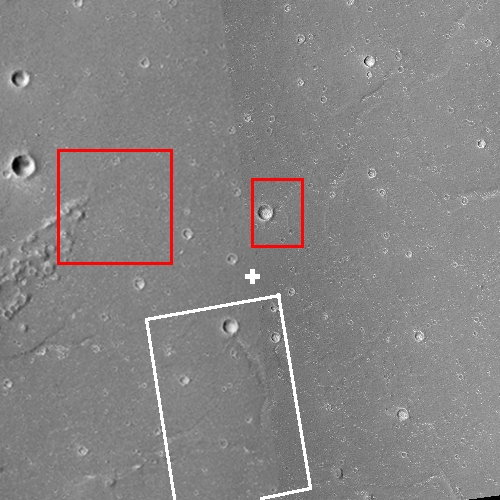
The science team for Lunar Reconnaissance Orbiter (LRO) late yesterday released an image taken of Chang’e-5 on the surface of the Moon. The image to the right, reduced to post here, is that photo.

China’s Chang’e 5 sample return spacecraft made a safe touchdown on the lunar surface at 10:11 EST (15:11 UTC) 01 December 2020. LRO passed over the site the following day and acquired an off-nadir (13° slew) image showing the lander centered within a triangle of craters.

The LROC team computed the coordinates of the lander to be 43.0576° N, 308.0839°E, –2570 m elevation, with an estimated accuracy of plus-or-minus 20 meters.

If all goes well, the return capsule, which lifted off from the Moon yesterday, will dock with the return vehicle in orbiter later today.

0 comments
1 35 36 37 38 39 71