China and Russia successfully launch satellites

Both China and Russia today successfully places satellites into orbit.

China used its Long March 4C rocket to place an Earth observation radar satellite into orbit. Russia in turn used its Soyuz-2 rocket to launch a military surveillance satellite. As both launched from interior spaceports, both dumped first stages and boosters on their respective countries.

The leaders in the 2022 launch race:

12 SpaceX
9 China
5 Russia
2 ULA
2 Rocket Lab

The U.S. still leads China 19 to 9 in the national rankings.

2 comments

Rogozin proposes Russia launch modules to China’s space station

Dmitry Rogozin, the head of Roscosmos, yesterday proposed in an interview on China’s state-run press that Russia is eager to discuss the possibility of attaching its future space station modules to China’s Tiangong space station.

“As for the Chinese space station, we can discuss construction of some joint modules as well. In order to be friends in space, friendship must first be established back on Earth, and Russia and China are friends on Earth,” Rogozin said. He opined that Russia and China “can be together” in human spaceflights as well.

Whether China will agree is in some ways besides the point. The real question is whether Russia has the capability to do this. Though China and Russia already have a joint agreement to develop a permanent base on the Moon, China is carrying most of the load. Moreover, Russia’s new modules for ISS are decades behind schedule. Whether they will now even be launched to ISS is questionable. Adding these Russian modules to China’s space station will require some major engineering discussions, as neither Tiangong nor the modules were designed for such a thing.

I suspect the two countries will work out an agreement that they will announce with great fanfare. I also expect China will insist that at no time will it be dependent on Russian technology, so that if Russia is delayed or can’t get it done, China will not be hampered in any way. This is essentially their deal for building the lunar base.

0 comments

China’s Long March 11 rocket launches three satellites

China today successfully launched what appear to be three technology test satellites using its Long March 11 rocket.

The three satellites Tianping-2A, Tianping-2B and Tianping-2C will provide services such as atmospheric space environment survey and orbital prediction model correction.

This is all we know about these satellites.

The leaders in the 2022 launch race:

11 SpaceX
8 China
4 Russia
2 ULA

The U.S. still leads China 17 to 8 in the national rankings.

0 comments

China successfully launches Long March 6A for the first time

China today successfully completed the first launched of its Long March 6A rocket, upgraded significantly from earlier versions of the Long March 6.

The launch also debuted a new launchpad at China’s Taiyuan Satellite Launch Center in the country’s interior. The two payloads deployed appear to be technology tests, though China provided little information.

The launch of the Long March 6A also sported four solid rocket strap-on boosters. With these and the core first stage all crashing on land in China, there was no word whether any had any technology for controlling their landings.

The leaders in the 2022 launch race:

11 SpaceX
7 China
4 Russia
2 ULA

The U.S. now leads China 17 to 7 in the national rankings.

4 comments

The journey so far of China’s Zhurong Mars rover

Zhurong's journey on Mars, as seen by MRO
Click for full image.

Elevation map and wider overview
Click for full image.

Cool image time! The science team for the high resolution camera on Mars Reconnaissance Orbiter (MRO) today released a new orbital photo that shows the entire journey on Mars of China’s Zhurong rover, since it landed in May 2021. That image, reduced to post here, is to the right. From the caption, written by Alfred McEwen of the Lunar & Planetary Laboratory in Arizona:

This HiRISE image, acquired on 11 March 2022, shows how far the rover has traveled in the 10 months since it landed.

In fact, its exact path can be traced from the wheel tracks left on the surface. It has traveled south for roughly 1.5 kilometers (about 1 mile). This cutout highlights the rover and the rover’s path (with contrast enhanced to better reveal the tracks).

The white curves that the rover has apparently been inspecting as it moved south are called megaripples, mid-size sand dunes from three to six feet in height that are generally found to be inactive, though not always. From a recent report about Zhurong’s findings:

“The examples Zhurong has visited appear very bright-toned in satellite images taken from orbit, and the team thinks that this is because the megaripples are covered with a layer of very fine dust,” says Matt Balme at the Open University, UK, who wasn’t involved in the analysis. “This means these features are probably currently inactive, as any present-day windblown sand would tend to remove the dust.”

That report used data from the rover’s first sixty days on Mars, after it had passed its first megaripple and had just reached the parachute and backshell. It does not include any later data in the past eight months, as Zhurong rolled past another nine megaripples and several small craters.

It also doesn’t include any data obtained as the rover skirted the wide apron that surrounds the large depression in the lower left. That depression looks like a crater at first glance, but because it appears to be on top of a mound it could instead by an old pitted cone. There are a lot of these cones in this region of the northern lowland plains of Mars, and planetary scientists really want to know whether they were formed from erupting ice, lava, or mud.

The Chinese have so far not released any data on what they have found in these later travels. We shall have to wait for further published papers.

The wider elevation overview map to the right, first published on August 24, 2021 and cropped and annotated to post here, shows Zhurong’s future potential geological targets to the south. The cone to the southwest as well as the nearest scarp to the south are probably the rover’s primary goals.

Though the released results have hinted that the geology here was shaped by both wind and water, direct evidence for water has not been found, or revealed by the Chinese. Zhurong has a radar sensor that could detect evidence of near surface underground ice, if it was there. As far as I know at this point, no results from that instrument have as yet been published.

2 comments

China launches military reconnaissance satellite

China today successfully launched its second Yaogon military reconnaissance satellite, using its Long March 4C rocket.

The leaders in the 2022 launch race:

10 SpaceX
6 China
2 ULA
2 Russia

The U.S. lead over China in the national rankings is now 16 to 6. Note too that tomorrow Russia is scheduled to launch another crew to ISS, using its Soyuz-2 rocket, while SpaceX plans another Starlink launch.

1 comment

China tests rocket engine for the next Long March 5B launches

China’s state-run press today revealed that a full duration test has been successfully completed of the rocket engine that will be used by the core first stage of the Long March 5B rocket that will launch the next two modules for China’s Tiangong space station.

Developed by the China Aerospace Science and Technology Corporation, the engine is designed for the core stage of the Long March-5 carrier rocket series, which will be used to launch two lab modules of China’s orbiting Tiangong space station this year.

The long-range test, lasting 520 seconds, has verified the reliability of the engine, and there will be more than 20 experimental tasks that the rocket engine will undergo to further test its performance, the company disclosed.

Though this short press release does not say, it implies that this new engine is restartable, something that on previous launches of the Long March 5B was not possible for the core stage. This lack meant that once the core stage lifted and deployed its payload into orbit, it no longer had an engine that could control it. It would within weeks crash to Earth, threatening many habitable areas around the globe. This lack also resulted in a lot of very bad press for China.

If this new engine is restartable, it means that China will be able to de-orbit it in a controlled manner, over the ocean. If so, hallelujah! It means China will finally be honoring its obligations under the Outer Space Treaty.

If not, than China will continue to prove that it is an unreliable and dangerous player on the world stage.

0 comments

Chinese rocket stage impacts Moon

What is believed to be an abandoned upper stage from a Chinese launch in 2014 is now believed to have impacted the Moon’s far side, as predicted by the estimates of its orbital mechanics.

None of this story is certain, other than amateur astronomers had identified an abandoned uppers stage that they calculated would hit the Moon on March 4th. While the data strongly suggests it was an upper stage from a Chinese launch, that is not confirmed. And so far we do not have confirmation of the impact either. Expect images identifying the impact site from Lunar Reconnaissance Orbiter (LRO) in the next few months.

3 comments

China launches seven satellites with Long March 2C rocket

China today successfully launched six communication satellites and one remote sensing satellite using its Long March 2C rocket lifting off from its Xichang spaceport inside the Chinese interior.

No word on if the first stage crashed near habitable area, or whether it carried grid fins or parachutes to better control where it crashed.

The leaders in the 2022 launch race:

9 SpaceX
5 China
2 Russia
2 ULA

The U.S. now leads China 14 to 5 in the national rankings.

1 comment

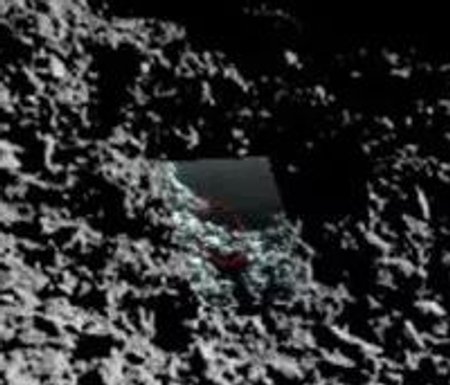
Scientists: Yutu-2 spots tiny glass globules similar to those found by Apollo astronauts

According to a paper just published Chinese scientists running the Yutu-2 rover on the far side of the Moon have spotted several tiny glass globules similar to those found by Apollo astronauts.

Xiao and his team believe the small spheres, which are between 0.59 and 0.79 inches (1.5 to 2.5 centimeters) across, were probably formed by relatively recent meteor impacts. Specifically, the researchers believe that the globules formed from anorthosite, a volcanically-formed rock rich in the mineral feldspar, after a high-energy impact melted the rock and reformed into spheres.

In appearance these Yutu-2 globules appear translucent, unlike the Apollo globules which were either dark or opaque. Since the rover did not do spectroscopy on these objects before moving on, however, their actual make-up is unknown, with the speculations by the researchers above merely that, speculations, though reasonable.

0 comments

China successfully launched rockets twice today

China successfully launched two rockets this morning, one a Long March-4C carrying an Earth observation satellite and the second a Long March-8, carrying 22 smallsats.

The Long March-8 is one of China’s next generation rockets, meant to launch from its coastal spaceport and use less toxic fuels. Also, according to the state-run press article, its manufacture process is aimed at allowing for a launch rate of once per week.

The leaders in the 2022 launch race:

8 SpaceX
4 China
2 Russia

The U.S. leads China 11 to 4 in the national rankings.

5 comments

China denies the rocket stage about to hit the Moon comes from its rocket

A Chinese official yesterday claimed that the abandoned rocket stage that will hit the Moon on or about March 4th does not come from its 2014 Long March 3C rocket that tested technology for the later launched Chang’e-5 lunar sample return mission, as suggested by amateur astronomers and an engineer at JPL.

“According to China’s monitoring, the upper stage of the rocket related to the Chang’e-5 mission entered into Earth’s atmosphere and completely burned up,” Foreign Ministry spokesperson Wang Wenbin said Feb. 21.

Space tracking data from the Space Force’s 18th Space Control Squadron suggests that 2014-065B—the international designator for the rocket stage in question—reentered the atmosphere in October 2015, a year after launch, apparently backing China’s claim.

We are thus left with a mystery. If that abandoned upper stage did not come from either a SpaceX or Chinese launch, what launch did it come from? Or is it a rocket stage at all? Could it be a previously unidentified asteroid?

There is also the possibility that it is a piece from that Chinese launch, considering how the orbital data matches so well. The stage could have split or broken apart, with one part falling in the ocean as monitored by the Space Force, and the other section now heading for the Moon. If so, China is likely denying this fact for propaganda reasons.

6 comments
1 44 45 46 47 48 118