Midnight repost: Truth, Justice, and the American Way
Tonight Diane and I decided to watch again the 1978 Richard Donner movie, Superman. The overall film is lighthearted entertainment that captures the myth of this super-hero perfectly. However, it has two scenes that remain among the best moments in movie history (which you can watch here and here). The first captures the myth in every way. The second shows us that Superman truly stood for the best in America.
In watching the movie tonight again and reliving the myth I grew up with — that great things are possible if you believe and follow sincerely Superman’s motto of “truth, justice, and the American way” — I decided to repost my essay from 2020 where I attempted to explain what that motto really meant.
Enjoy!
———————
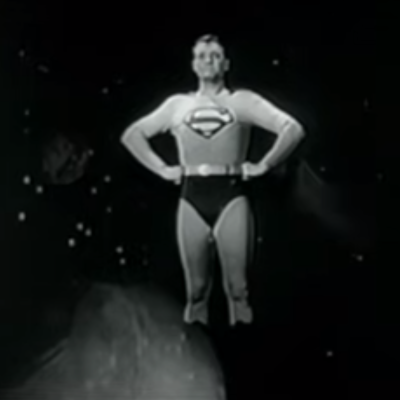
George Reeves as the heroic Superman as envisioned
in the 1950s television show, emulated later by Richard
Donner in his 1978 movie. Click for show’s opening credits.
Truth, Justice, and the American Way
The words spoken during the opening credits of a 1950s children’s television show:
Faster than a speeding bullet.
More powerful than a locomotive.
Able to leap tall buildings in a single bound.
Look up in the sky!
It’s a bird.
It’s a plane.
It’s Superman!
Yes, it’s Superman, strange visitor from another planet who came to Earth with powers and abilities far beyond those of mortal men.
Superman, who can change the course of mighty rivers, bend steel in his bare hands, and who, disguised as Clark Kent, mild-mannered reporter for a great metropolitan newspaper, fights a never-ending battle for truth, justice, and the American Way.
That television show was obviously Superman, starring George Reeves, and these opening words expressed the mythology and basic ideals by which this most popular of all comic-book super-heroes lived.
I grew up with those words. They had been bequeathed to me by the American generation that had fought and won World War II against the genocidal Nazis, and expressed the fundamental ideals of that generation.
Much of the meaning of these fundamental ideals is outright and clear.
» Read more