Rocket Lab successfully launches NOAA satellite

Capitalism in space: Rocket Lab today successfully used its Electron rocket to place a NOAA satellite into orbit, designed to gather data from ground-based sensors.

This was the company’s eighth successful launch in 2022, the most it has achieved in any single year. No attempt was made to recover the first stage on this launch.

The leaders in the 2022 launch race:

45 SpaceX
41 China
12 Russia
8 Rocket Lab
7 ULA

American private enterprise now leads China 65 to 41 in the national rankings, and the entire globe combined 65 to 61. The 65 successful launches so far this year is now the second most successful American year in rocketry, exceeded only by the 70 launches in 1966. With almost three months left to go in the year, 2022 looks like it will top that record, by a lot.

SpaceX meanwhile has a launch scheduled for later today, after getting scrubbed yesterday at T-30 seconds because of detected minor helium leak.

1 comment

Endurance docks at ISS

Like clockwork SpaceX’s Endurance capsule successfully docked at ISS yesterday, delivering four astronauts to the station for a six month mission.

The most interesting aspect of this launch and crew is Russian Anna Kikina.

Kikina is the first Russian to fly aboard a U.S. spacecraft in nearly 20 years. She and Rubio were launched under a new agreement between NASA and Roscosmos, the Russian space agency, that ensures at least one astronaut or cosmonaut is always aboard the space station even if a Crew Dragon or Soyuz is forced to depart early, taking its crew with it.

Without the seat-swap arrangement, a medical emergency or some other major problem could leave an all-Russian or all-NASA crew aboard without the expertise to operate the other nation’s systems.

The agreement had been stalled almost entirely by the former head of Roscosmos, Dmitry Rogozin. He is now gone however, sent by Putin to take over the fake occupation government in parts of the Ukraine. It appears his bellicose manner, that caused the loss of a billion dollars in launch contracts with OneWeb, was more than even Putin could handle.

With him gone, the new head of Roscosmos, Yuri Borisov, quickly finalized this astronaut barter deal. He has also publicly acted to try to ease tensions between the U.S. and Russian space agencies.

1 comment

Startup smallsat rocket company signs spaceport deal with Brazil

The new colonial movement: A Canadian startup smallsat rocket company, C6 Launch Systems, has not only signed a spaceport deal with Brazil to build its own launchpad at that country’s Alcantara Space Center, it has also won its first launch customer.

First, the launchpad is for C6’s rocket, which is unnamed and designed to launch cubesats. The company webpage says they are aiming for suborbital flights in 2021 and orbital flights in 2022, but it is unclear if it has launched anything at this point.

Nonetheless, Brazil is very clearly teaming up with C6. The Brazilian air force hired it to build a launch pad, a Brazilian company, Concert Technologies, has awarded it a launch contract.

Concert Technologies S.A. who are developing a new small satellite constellation have signed a a non-exclusive letter of intent to launch three small satellites with C6 Launch. The broad agreement allows for Concert Technologies to schedule more launches to maintain and expand their high-resolution Earth Observation (EO) constellation.

It appears Concert’s satellites will be targeting both the Earth imagery market as well as communications services in the “internet of things.”

1 comment

October 6, 2022 Quick space links

Courtesy of BtB’s stringer Jay.


4 comments

Martian crater and mesa sculpted by ancient flow

Martian crater and mesa sculpted by ancient flow
Click for full image.

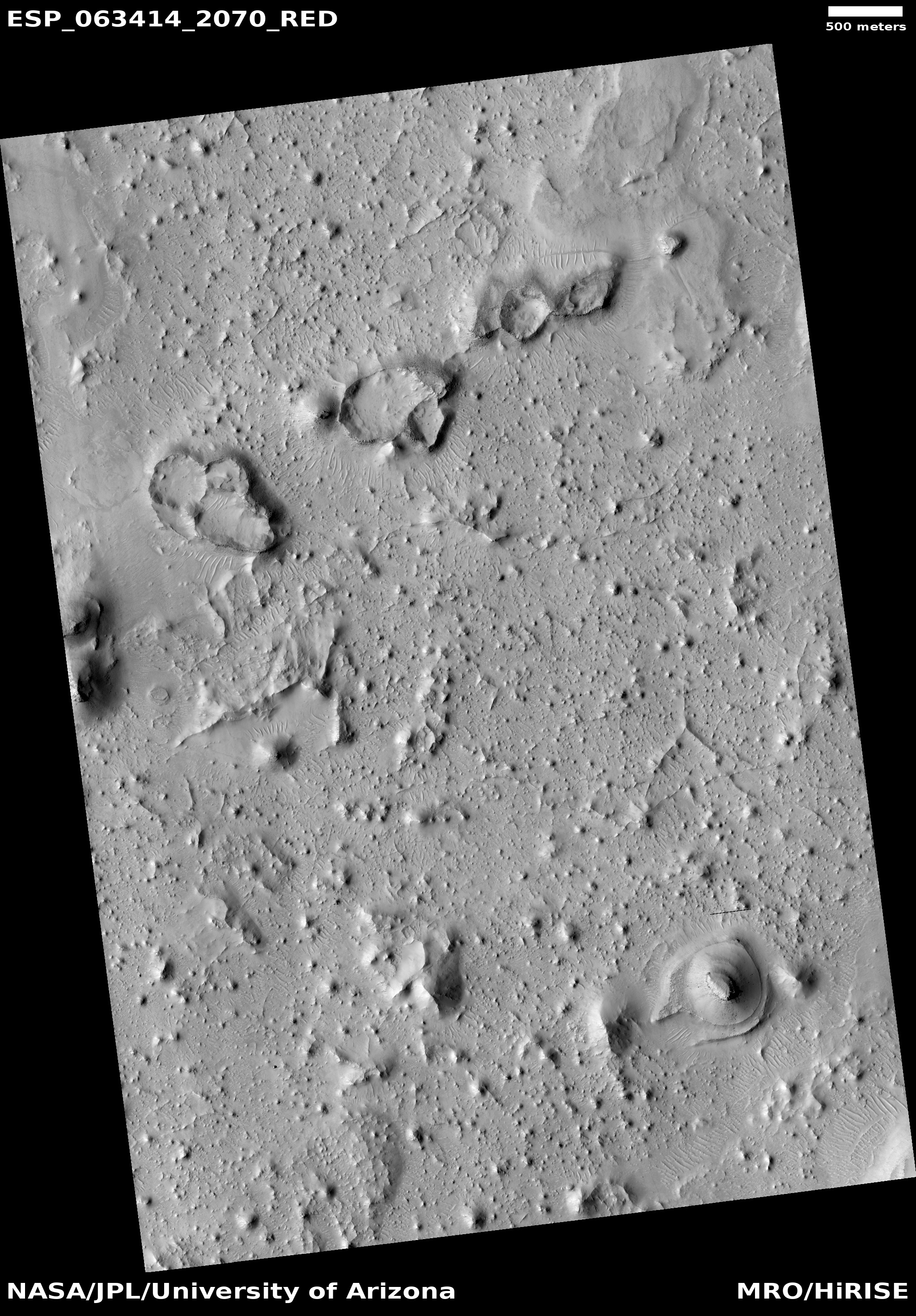
Cool image time! The picture to the right, rotated, cropped, and reduced to post here, was taken on June 15, 2022 by the high resolution camera on Mars Reconnaissance Orbiter (MRO). It shows a crater whose ejecta has been sculpted to the east into a teardrop-shaped mesa by some ancient flow, coming from the west.

The crater itself is located in one of several outflow canyons draining out from the volcanic Tharsis Bulge into the northern lowland plain of Chryse Planitia, the biggest of which is Valles Marineris. This particular canyon is one of the smaller and is dubbed Ravi Vallis.

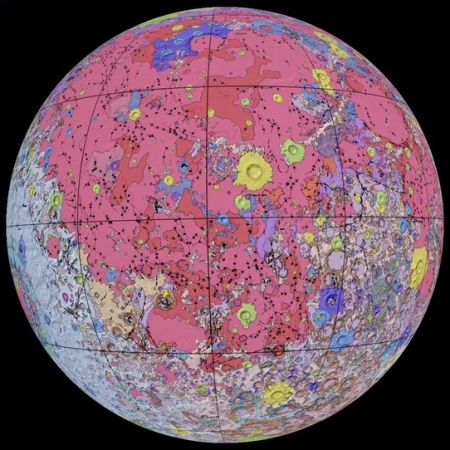
The overview map below illustrates why many scientists think the flow that shaped this mesa came from a catastrophic flood of liquid water, billions of years ago.
» Read more

2 comments

Engineers still struggling to regain full control of CAPSTONE

Though its batteries are now getting charged by the Sun, engineers have still not regained full control of the smallsat lunar orbiter CAPSTONE, presently on its path towards the Moon.

As per the latest update:

The CAPSTONE mission team is continuing to work towards recovery of the spacecraft full three-axis control. This work includes collecting information from the spacecraft, running simulations, and refining recovery plans. The vehicle remains stable and power positive in its current configuration.

In other words, they’ve got the spacecraft oriented so that its solar panels can gather enough sunlight to charge the batteries, but its attitude remains incorrect and they do not yet have CAPSTONE fully under their control.

The spacecraft arrives in lunar orbit on November 13, 2022. At that time however it will have to do an engine burn to enter lunar orbit, and if full control is not regained by then this burn will not be possible because engineers will not be able to point it correctly.

1 comment

Falcon Heavy to finally launch again?

After three years of delays due to payload issues, it now appears that the next Falcon Heavy launch will likely occur near the end of October.

The tentative date is October 28th, but this is not yet confirmed. Though a manifest of a half dozen Falcon Heavy launches has existed since 2019, and most were originally scheduled for launch in 2020-2021, none has taken place, all supposedly because of payload delays not issues with the rocket itself.

SpaceX officials are now saying that it plans to complete six Falcon Heavy launches within the next twelve months. Two are for the military, three for commercial communications companies, and the last is the Psyche mission for NASA. This last launch is delayed because of software issues discovered in June, only a few weeks before launch. Whether it can fix these issues in time for a new July 2023 launch window remains questionable.

6 comments

Satellite about to burn up because Sherpa orbital tug has done nothing

Capitalism in space: A Boeing cubesat satellite launched last month is about to burn up as it returns to Earth because the Spaceflight Sherpa orbital tug that was supposed to raise its orbit has as yet done nothing.

Spaceflight planned to use a chemical propulsion system on the Sherpa, provided by Benchmark Space Systems, to raise the orbit of the vehicle to an altitude of 1,000 kilometers. The Sherpa payload, initially not disclosed by Spaceflight, is a V-band communications demonstration by Boeing called Varuna.

However, tracking information from the U.S. Space Force shows that Sherpa has yet to raise its orbit. Atmospheric drag has caused that orbit to gradually decay, and the spacecraft was most recently tracked in an orbit of 283 by 296 kilometers. That raised concerns that the spacecraft could reenter in a matter of weeks if it does not start firing its thrusters.

Spaceflight officials explain the lack of action is because they are still “commissioning” the tug, whatever that means. It also appears that problems was this same propulsion system caused SpaceX to ban Spaceflight in March as a customer on future rideshare launches.

1 comment

SpaceX launches another 52 Starlink satellites

Capitalism in space: SpaceX this afternoon successfully completed its second Falcon 9 launch of the day, placing 52 Starlink satellites into orbit from Vandenberg..

The seven hour gap between launches was a record for the shortest time between two SpaceX launches. The first stage landed successfully on a drone ship in the Pacific, completing its fifth flight.

The leaders in the 2022 launch race:

45 SpaceX
41 China
12 Russia
7 Rocket Lab
7 ULA

American private enterprise now leads China 64 to 41 in the national rankings, and the entire world combined 64 to 61. The U.S. total, 64, ties the total from 1965, the second most active year in American rocketry. The record of 70 successful launches, set in 1966, will almost certainly be broken sometime in the next month.

2 comments

Another “What the heck?” formation on Mars

Another
Click for full image.

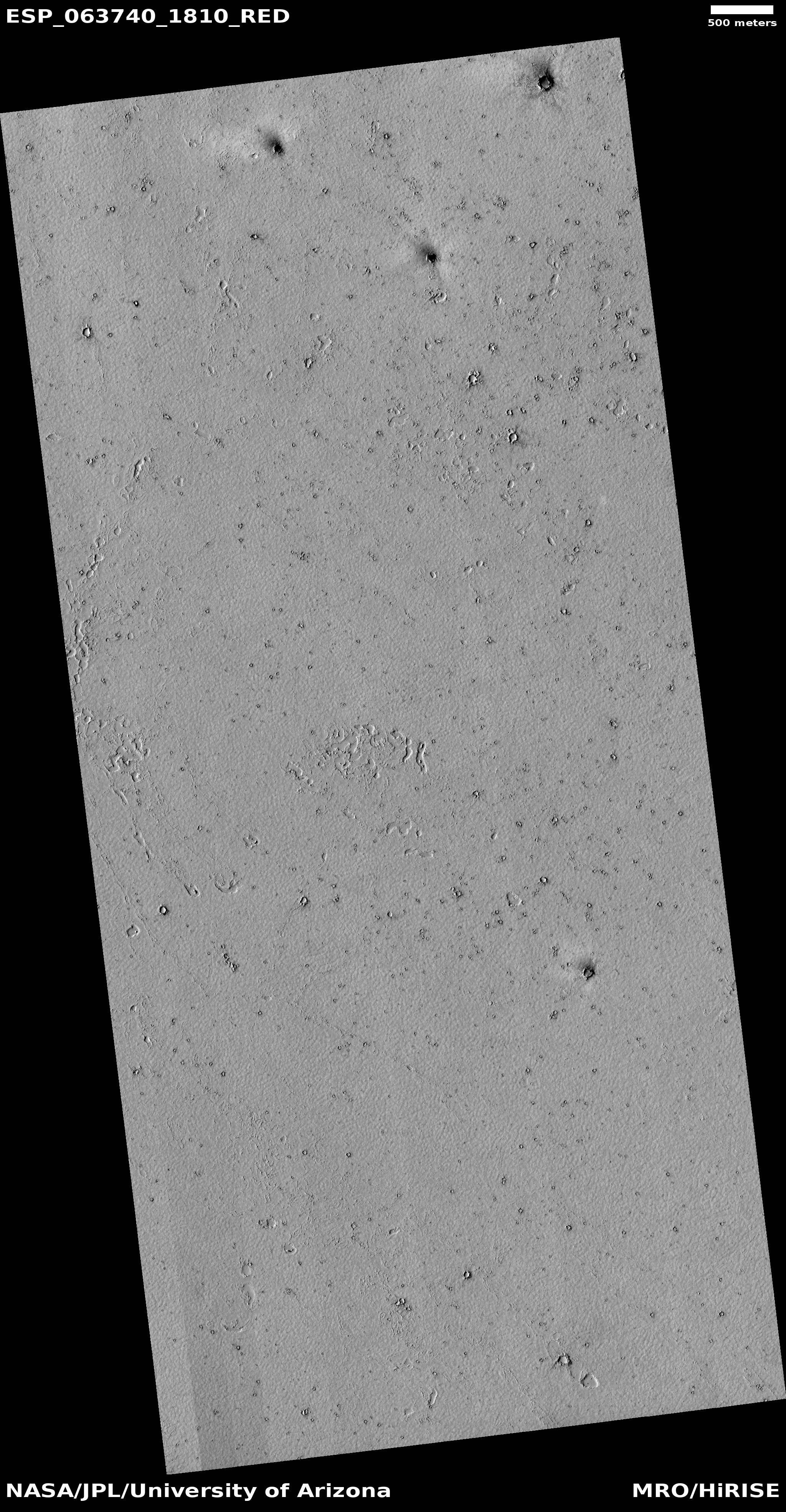
Cool image time! The photo to the right, cropped, reduced, and enhanced to post here, was taken on May 28, 2022 by the high resolution camera on Mars Reconnaissance Orbiter (MRO), and shows what the scientists label “unique terrain.”

I have increased the contrast to bring out the details. It appears that we have a flat plain of criss-crossing ridges that in large areas have somehow gotten flattened across their top. Imagine someone laying plaster on a wall and using a scraper tool to smooth the surface, but only partially. In this case on Mars, our imaginary worker only smoothed the surface a little, and only in some areas. To try to come up with a geological process however to explain this seems daunting.

And what created the criss-crossing ridges? The overview map provides only a little help in answering these questions.
» Read more

5 comments

October 5, 2022 Quick space links

Courtesy of BtB’s stringer Jay, who reads Twitter so I don’t have to.


1 comment

Firefly wins Space Force launch contract

Capitalism in space: Shortly after Firefly completed the first successful orbital launch of its Alpha rocket, the U.S. Space Force awarded the company its first military launch contract.

The VICTUS NOX mission will demonstrate an end-to-end Tactically Responsive Space capability, including the launch segment, space segment, ground segment, and on-orbit operations. VICTUS NOX will perform a Space Domain Awareness (SDA) mission from Low-Earth Orbit (LEO).

The next Alpha mission, a demonstration launch of a climate smallsat for NASA, presently hopes to launch before the end of the year, though more likely early next year.

1 comment
1 402 403 404 405 406 1,354