SpaceX sets numerous launch records in placing 60 more Starlink satellites in orbit

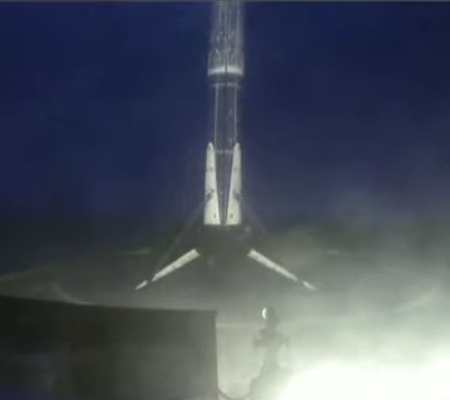
Falcon 9 booster landing for a record 7th time

Capitalism in space: SpaceX tonight broke a whole bunch of new launch records in launching another sixty Starlink satellites into orbit using its Falcon 9 rocket.

First, the leaders in the 2020 launch race:

31 China
22 SpaceX
12 Russia
5 ULA
5 Rocket Lab

The US now leads China 35 to 31 in the national rankings.

For SpaceX, this launch established the following landmarks for the company:
» Read more

9 comments

SpaceX launches oceanography satellite

Capitalism in space: SpaceX today successfully launched an oceanography satellite using its Falcon 9 rocket from the company’s California launch site at Vandenberg Air Force Base..

The first stage, making its first flight, successfully landed back on land near the launch site.

This was also SpaceX’s 21st successful launch in 2020, tying their record from 2018 for the most launches in a single year by a private company, ever. That record should be broken tomorrow, with their next Starlink launch.

The leaders in the 2020 launch race:

30 China
21 SpaceX
12 Russia
5 ULA
5 Rocket Lab

The U.S. now leads China 34 to 30 in the national rankings.

9 comments

The SpaceX fleet of Dragons

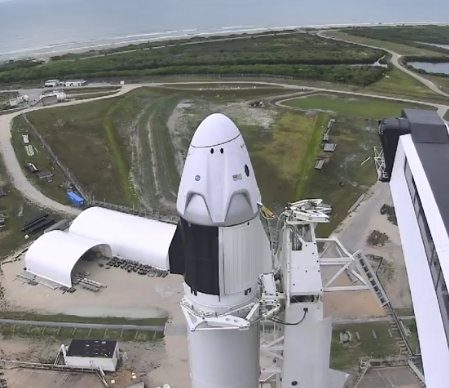
The first manned Dragon capsule on the launchpad
The first manned Dragon capsule, on the launchpad

Capitalism in space: During the post-launch press briefing after launch of its second manned Dragon mission on November 15, SpaceX CEO Gwynne Shotwell revealed the company’s plans to build and fly a fleet of Dragon cargo and crew capsules, and reuse them repeatedly over the coming years..

Specifically, Shotwell revealed that SpaceX intends to build three reusable Cargo Dragon 2 capsules, one of which is already completed and in Florida preparing for its December 2nd CRS-21 launch debut. On the crew side of things, SpaceX will build “three more” Crew Dragon capsules on top of the flight-proven Demo-2 and currently orbital Crew-1 capsules. It’s unclear if this means that the new Crew Dragon capsule flown on SpaceX’s January 2020 In-Flight Abort (IFA) test will be refurbished for additional flights.

Excluding IFA Crew Dragon capsule C205, SpaceX thus intends to operate a fleet of at least three Cargo Dragon 2 and five Crew Dragon capsules, representing eight reusable spacecraft each capable of at least five orbital missions.

She also hinted that the company has plans to fly its own missions, using these spacecraft, in addition to its contracted flights for NASA and the private company Axiom.

This private capability, which far exceeds anything ever built by NASA or any government worldwide, is entirely because Elon Musk had the freedom and the will to push for his particular vision. He had a bold idea, and with courage he pursued it.
» Read more

16 comments

Israeli fighter pilot to fly on Axiom’s first private Dragon launch in ’21

Capitalism in space: Axiom has revealed that an Israeli fighter pilot, Eytan Stibbe, will be the second passenger on on its first private Dragon launch to ISS in the fall of 2021.

Stibbe will be the second Israeli to fly in space, following Ilan Ramon, who died when the space shuttle Columbia broke up in 2003 during its return to Earth.

The Axiom AX-1 mission is scheduled to launch in the second half of 2021, which the company unveiled in a deal with SpaceX earlier this year. Astronaut Michael Lopez-Alegria, who previously worked for NASA and flew to space four times, will be the AX-1 mission commander, with Stibbe set to serve as a mission specialist.

AX-1 would be the first fully private mission to the International Space Station, with Lopez-Alegria and Stibbe flying with two other yet-to-be-named people.

The consistent rumors are that actor Tom Cruise and a movie director will be those other two passengers, but this is not confirmed.

It is important to emphasize that this space mission will be entirely private, with almost no involvement of the U.S. government other than providing coordination, the training of the astronauts, and the use of ISS. The rocket and spacecraft are SpaceX’s, purchased by the customer Axiom. Moreover, Axiom has plans to add its own private modules to ISS where future private space passengers will be housed, which will then reduce the government’s role and contribution even more.

And since this will be a private mission, it means the funds to fly it will come from its passengers, not the government. This also means that as long as there are customers, there will be no slow-down in future flights.

2 comments

SpaceX successfully launches four astronauts to ISS

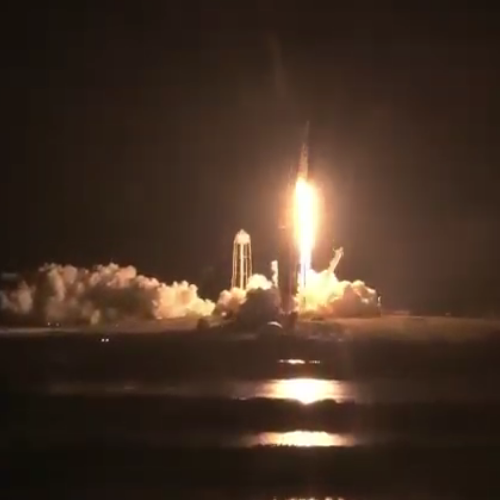
Falcon 9 launch on November 15, 2020 with four astronauts

Capitalism in space: SpaceX tonight successfully launched four astronauts to ISS on its Dragon capsule Resilience, using its Falcon 9 rocket.

They also recovered the first stage, landing it on its drone ship in the Atlantic. The routine manner in which SpaceX ran this launch is truly admirable. They make landing and reuse of the first stage so expected it is hard to believe that for fifty years rocket managers and engineers insisted it wasn’t doable.

They had one issue today, a failure of the capsule hatch to hold air pressure after closure. They calmly reopened the hatch, cleared the issue, added some lubricant, and closed the hatch, all in less than ten minutes.

Resilience will dock with ISS tomorrow evening.

The leaders in the 2020 launch race:

30 China
20 SpaceX
5 ULA
4 Europe (Arianespace)
4 Rocket Lab

The U.S. now leads China 32 to 30 in the national rankings.

6 comments

Watch today’s launch of SpaceX’s Resilience manned capsule

According to a NASA report yesterday, the weather then stood at 50% for allowing a launch of four astronauts to ISS on SpaceX’s Resilience capsule tonight at 7:27 pm (Eastern).

That percentage was still reported this morning. Part of the issue is that SpaceX wants to recover the first stage, and the weather therefore not only has to be good in Florida, it has to be good in the Atlantic where the stage will come down.

NASA’s live coverage begins at 3:15 pm (Eastern). The link to that live stream is below the fold. As I write this at around noon (Eastern) it is simply NASA TV’s normal feed, which is essentially full time propaganda for NASA. After 3:15 pm it will switch to live coverage, which unfortunately will still be packed with pro-NASA propaganda, even though this launch is entirely being run by the private company SpaceX. NASA’s only part is that of a customer, with the ability to say “no” at any point. The rocket, the capsule, the launchpad, and the countdown, is operated completely by SpaceX and its employees.

I have also added the clean feed from NASA, which appears to carry little commentary or narration.

» Read more

4 comments

Weather forces one day delay in launch of Resilience with four astronauts

Because of high winds and ocean weather interfering with the recovery of the first stage, NASA and SpaceX today decided to delay the launch of SpaceX’s second manned Dragon mission, the capsule Resilience carrying four astronauts, to Sunday, November 15.

NASA and SpaceX are now targeting 7:27 p.m. EST Sunday, Nov. 15, for liftoff of the agency’s SpaceX Crew-1 mission to fly astronauts from Launch Complex 39A at NASA’s Kennedy Space Center in Florida to the International Space Station.

Teams moved the launch by one day because of onshore winds and to enable recovery of the first stage booster, which is planned to be reused to launch the Crew-2 mission next year. The booster is expected to land on the recovery ship about nine minutes after launch.

They now plan to dock with ISS at 11 am (eastern) on November 16th.

1 comment

NASA officially approves operational Dragon manned missions

Capitalism in space: NASA yesterday officially certified SpaceX’s Dragon capsule for future operational manned missions to ISS.

NASA officials gave approval Tuesday for SpaceX to begin regular crew rotation flights to the International Space Station with the launch of four astronauts set for Saturday from the Kennedy Space Center in Florida, signaling a transition from development to operations for the human-rated Dragon spacecraft.

Mission managers completed a two-day Flight Readiness Review Tuesday and issued a preliminary go-ahead for the launch of SpaceX’s Crew Dragon “Resilience” spacecraft Saturday at 7:49 p.m. EST (0049 GMT Sunday) with NASA commander Mike Hopkins, pilot Victor Glover, and mission specialists Shannon Walker and Soichi Noguchi, a veteran Japanese space flier.

The decision means that SpaceX will now be rotating crews for NASA at ISS every six months. It will also be reusing both the first stages and the capsules. Endeavour, the capsule used on the demo flight earlier this year, will be reused in the spring. Resilience, the capsule scheduled for launch on November 14th, will be reused next fall.

Since SpaceX also has a commercial manned flight planned for next fall, that will probably require a third capsule. With those three capsules they will have at least for the next few years a fleet will cover all their initial needs. Don’t be surprised if however the introduce an upgraded capsule or two along the way, based on what they learn on these initial flights.

The article had one other piece of new news concerning Boeing’s Starliner capsule. The second unmanned demo flight has now officially been delayed into the first quarter of next year, rather than late this year.

0 comments

NASA offers public chance to experience next manned mission virtually

NASA is now offering the general public the opportunity to virtually experience the next manned Dragon flight to ISS, set to launch on November 14th.

“Members of the public can attend the launch virtually, receiving mission updates and opportunities normally reserved for on-site guests,” NASA officials wrote in a statement on Tuesday (Nov. 3). “NASA’s virtual launch experience for Crew-1 includes curated launch resources, a digital boarding pass, notifications about NASA social interactions and the opportunity for a virtual launch passport stamp following a successful launch,” the agency added.

While much of this will be fun to do, much of it is also pure hype, designed to sell NASA to the public, even though the mission is being launched and run almost entirely by the private commercial company SpaceX, not NASA.

5 comments

SpaceX launches Space Force GPS satellite

Capitalism in space: SpaceX tonight successfully launched the GPS satellite that on a previous launch had experienced a launch abort at T-2.

This was a completely new Falcon 9 rocket, with two of its original engines replaced after the company had traced the issue that caused the launch abort. The first stage successfully landed on the drone ship in the Atlantic Ocean, and will fly again on the next GPS launch by SpaceX for the Space Force.

The satellite has been deployed successfully, completing the launch.

The leaders in the 2020 launch race:

27 China
19 SpaceX
12 Russia
4 ULA
4 Europe (Arianespace)
4 Rocket Lab

The U.S. now leads China 30 to 27 in the national rankings.

3 comments

SpaceX finds clogged valves in several Merlin engines

Capitalism in space: SpaceX has discovered that the problem that caused a recent launch abort of a GPS satellite was a coating that clogged valves in several newer Merlin engines.

Hans Koenigsmann, vice president of build and flight reliability at SpaceX, said teams initially weren’t able to figure out why two of nine engines triggered early-start sensors on Oct. 2, which forced computers to automatically scrub seconds before liftoff. After the engines were removed and shipped to Texas for testing, the anomaly surfaced again when sensors detected higher-than-expected engine chamber pressures.

The cause: a minuscule, almost undetectable amount of “masking lacquer,” which is used to protect engine components and surfaces during the production process. The lacquer is almost like a bright red nail polish. “We found a relief valve – a little line that goes to the relief valve – blocked in the gas generator,” Koenigsmann told reporters Wednesday. “That little red substance was blocking a relief valve that caused it to function a little bit earlier than it was supposed to.”

The gas generators are almost like little rocket engines themselves – they’re used to power a pump that then feeds propellants into the main engine chamber. But the blockage caused certain processes to begin too early.

Once the lacquer was removed the engines functioned perfectly.

The issue was also found in two engines on the new booster that was going to launch astronauts to ISS, which explains why that mission was delayed. The company is swapping out the engines, and is still targeting November 14th for that launch. In addition, NASA wants it to fly at least two missions beforehand to demonstrate the problem is fixed. One will be that GPS satellite, on November 4th. The other could be one of three different payloads on SpaceX’s busy schedule.

4 comments

Initial price for Starlink: $99 per month?

According to a CNBC article today, SpaceX is now offering a beta version of its Starlink internet service to customers as the price of $99 per month, plus a $499 charge for equipment.

SpaceX is expanding the beta test of its Starlink satellite internet service, reaching out via email on Monday to people who expressed interest in signing up for the service.

Called the “Better Than Nothing Beta” test, according to multiple screenshots of the email seen by CNBC, initial Starlink service is priced at $99 a month – plus a $499 upfront cost to order the Starlink Kit. That kit includes a user terminal to connect to the satellites, a mounting tripod and a wifi router. There is also now a Starlink app listed by SpaceX on the Google Play and Apple iOS app stores.

“As you can tell from the title, we are trying to lower your initial expectations,” the emails said, signed Starlink Team. “Expect to see data speeds vary from 50Mb/s to 150Mb/s and latency from 20ms to 40ms over the next several months as we enhance the Starlink system. There will also be brief periods of no connectivity at all.”

SpaceX did not confirm this story with CNBC. If it is real, the price is disappointingly high, and might very well limit Starlink’s potential. Then again, this is only the beta version. Later versions when under full operation and available to many more customers might bring that price down.

11 comments

SpaceX identifies problem with several engines on booster, requiring replacement

Capitalism in space: SpaceX has identified the issue with several engines on the first stage that caused a launch abort for an Air Force GPS satellite and has replaced those engines.

Since Falcon 9 B1062 suffered a rare last-second launch abort on October 2nd, SpaceX has discovered an issue with several new Merlin 1D booster engines and apparently removed affected engines from Falcon 9 booster B1062, shipped the engines to McGregor, Texas for testing, characterized the bad behavior, and implemented a fix capable of satisfying their strictest customers (NASA and the US military) in roughly three weeks.

The immediate fix appears to be replacing the engines for now as they troubleshoot the issue. They have now rescheduled the launch of the GPS satellite for November 5th.

It also appears that because the company has identified the engine issue and can spot it on any engine it uses, NASA has agreed to set a November 14th launch date for the next manned Dragon mission. They will hold a press conference tomorrow to outline the situation in more detail.

3 comments

SpaceX launches 60 more Starlink satellites

Capitalism in space: SpaceX today successfully launched another sixty Starlink satellites, bringing the total in orbit to over 800.

The company also recovered the first stage, completing its third flight. The fairings were to be picked up in the ocean, rather than caught in a ship’s net, as the last launch one fairing broke the net. SpaceX engineers might have determined ocean recovery is now safer and sufficient for reuse.

This was also the company’s 100th successful launch and its 63rd successful first stage recovery.

The leaders in the 2020 launch race:

26 China
18 SpaceX
11 Russia
4 ULA
4 Europe (Arianespace)

The U.S. now leads China 28 to 26 in the national rankings.

6 comments

SpaceX wins partial approval to provide Starlink service in Canada

Capitalism in space: Though SpaceX has obtained permission to provide its Starlink internet service from Canada’s Radio-television and Telecommunications Commission, similar to the U.S.’s FCC, it still has not gotten full government approval to begin offering its service to customers.

It appears a different Canadian regulatory body, dubbed Innovation, Science and Economic Development Canada (ISED), has still not given its okay of the “satellite spectrum” SpaceX requires. From the second link:

SpaceQ had previously contacted ISED in June about SpaceX. ISED wouldn’t comment directly on any application, but did tell SpaceQ that the applications and approved website pages were up to date at that time. The website had last been updated in May. Since then, the website was updated in July. And yet there’s still no mention of SpaceX. It’s my understanding that the specific pages with applications and approvals is updated pretty quickly when there is new information to post. Though it took 3 weeks for changes to appear after Kepler submitted their application in June of this year.

With respect to how long it takes to get approval, ISED said the “service standard for the processing of satellite applications, including for those for foreign satellites, is 130 calendar days.” It’s quite possible that it could take longer.

This description carries all the hallmarks of a typical government bureaucracy whose only purpose is to block new companies and new technology. The political swamp of Canada might also be using it as a means of extortion for campaign funds from SpaceX. “Nice business you got there. Sure would be a shame if it didn’t get that license approval.”

I don’t think SpaceX needs to bow to these games. In the end ISED will back down and give approval, especially when the company begins offering its services just over the border in the U.S. The competitive and political pressure to give its okay will then be too great.

4 comments

SpaceX launches another 60 Starlink satellites

Capitalism in space: SpaceX today successfully launched another 60 Starlink satellites, raising the constellation to more than 800 satellites.

The first stage successfully landed, for the sixth time, on a drone ship. The company also recovered both fairings, which were making their third flight. With one fairing’s recovery however the net broke on the ship, which might have damaged it this time.

The leaders in the 2020 launch race:

26 China
17 SpaceX
11 Russia
4 ULA
4 Europe (Arianespace)

The U.S. had regained the lead over China, 27 to 26, in the national rankings.

7 comments

Next manned Dragon launch delayed

Because of an engine issue that caused Falcon 9 launch of a military GPS satellite to abort at T-2 seconds on October 2nd, SpaceX and NASA have decided to delay the next manned Dragon launch from October 31st “to early-to-mid November.”

The one to two week delay will give the company time to analyze the issue involving an “unexpected pressure rise in the turbomachinery gas generator” that are used to drive the rocket’s Merlin engine turbopumps.

It seems unlikely that this problem is systemic to all Merlin engines, considering the number of rocket launches SpaceX has successfully completed in the last four years. Each launch has used ten engines, with no evidence of this problem appearing previously.

At the same time, no one wants a problem on a manned flight. Better to completely understand why it happened on the GPS launch first before launching four astronauts on the rocket.

0 comments

Musk to personally review SpaceX launch procedures

Capitalism in space: As a result of the spate of launch aborts in the past few weeks, the head of SpaceX, Elon Musk, is now planning a personal review of the company’s launch facilities in Florida next week.

Musk would like SpaceX to increase its cadence such that it can reach 48 launches in 2021, which would more than double the company’s previous record for total number of missions in a single year. Technical scrubs like the ones this week would prevent this. Achieving frequent launches will require smooth operations.

“We’re doing a broad review of launch site, propulsion, structures, avionics, range & regulatory constraints this weekend,” Musk tweeted. “I will also be at the Cape next week to review hardware in person.”

This review aligns with the company’s entire strategy regarding rocketry. Instead of accepting such aborts as the cost of doing business, Musk wants to review procedures to see if launches can be made more reliable.

Musk’s statement that they want to be able to do 48 launches next year is most intriguing, as it suggests, based on their manifest of launches, that they are going to launch a lot of Starlink satellites.

6 comments

SpaceX launches another 60 Starlink satellites

After a number of weather delays, SpaceX this morning finally launched another 60 Starlink satellites into orbit, using its Falcon 9 rocket.

They also successfully landed the 1st stage, on its third flight, the 61st time they have done this. One fairing half was also making its third flight, and was also recovered. I have embedded the live stream of the launch below the fold.

The leaders in the 2020 launch race:

25 China
16 SpaceX
10 Russia
4 ULA
4 Europe (Arianespace)

The U.S. has retaken the lead from China, 26 to 25, in the national rankings.
» Read more

4 comments

Antares launches; Falcon 9 aborts

Of the two launches scheduled for tonight, Northrop Grumman’s Antares rocket was the only one to launch, lifting off on schedule at 9:16 pm (Eastern). This was the company’s third launch this year.

SpaceX’s launch however aborted at T-2 seconds. No word on why the rocket’s computer’s shut down, or when they will reschedule.

The leaders in the 2020 launch race remain unchanged:

25 China
15 SpaceX
10 Russia
4 ULA
4 Europe (Arianespace)

The Antares launch however puts the U.S. back into a tie with China, 25-25, in the national rankings.

6 comments
1 38 39 40 41 42 76