Pushback: City in Georgia forced to rescind a law that required permits for any protest


“Terrorist” Jerry Gray holding his terrible sign

Bring a gun to a knife fight: After veteran Jeff Gray was issued a citation and fined for standing in front of the city hall of Blackshear, Georgia, with a sign that said “God Bless the Homeless Vets,” he sued, hiring the Foundation for Individual Rights and Expression (FIRE) to represent him.

In Blackshear, Police Chief Chris Wright approached Gray and informed him of a city ordinance requiring citizens to obtain a government permit for a “parade, procession, or demonstration” if they wanted to hold a sign outside city hall. Although Wright said it was “kind of silly,” he explained that the ordinance — nearly identical to one struck down by the Supreme Court in 1969 — meant that Gray would need to send a letter to Blackshear’s mayor and city council explaining the purpose of his one-person demonstration and obtain the council’s approval. Gray was issued a criminal citation, which was later dismissed.

» Read more

9 comments

FTC will not block the purchase of Aerojet Rocketdyne by L3Harris

How nice of them! The Federal Trade Commission (FTC) said yesterday that it will not block the planned purchase of Aerojet Rocketdyne by L3Harris, which the company expects to now complete in mere days.

The deal, if finalized, would place L3Harris on a solid footing to achieve Kubasik’s long-stated goal of positioning the company as the sixth major defense prime.

The forthcoming acquisition has also garnered support from an unlikely source: RTX, the parent company of missiles giant Raytheon. Executives from the company, which rely on Aerojet to deliver crucial parts, have been open in recent weeks that while they don’t love strengthening a competitor, they feel Aerojet is in desperate need of new leadership. “We’ve obviously always been concerned about Aerojet. But I would say some of these things have been magnified by all these external inputs,” Wes Kremer, Raytheon president, told Breaking Defense during last month’s Paris Air Show.

Aerojet has had problems for years, especially because the rocket engines it makes are very expensive. It has failed to garner any market share in the new emerging rocket industry, remaining dependent entirely on very generous government contracts and the older big space contractors. But even here, it lost out to Blue Origin when ULA was looking for engines for its new Vulcan rocket.

It is likely that after this merger, the name Aerojet Rocketdyne will vanish, a sad end to a company whose roots go back to the very beginning of the space age.

2 comments

Boeing’s total losses due to Starliner now equal $1.5 billion

According to CNBC, the total losses for Boeing due to its on-going and persistent engineering problems flying its manned Starliner capsule now equal almost $1.5 billion, not $1.1 billion as estimated yesterday.

Since 2014, when NASA awarded Boeing with a nearly $5 billion fixed-price contract to develop Starliner, the company has recorded losses on the program almost every year. The charges total $1.47 billion, according to its annual reports and the company’s most recent quarterly filing.

The annual losses have ranged from $57 million in 2018 to $489 million in 2019.

At this moment, the only way Boeing can make a profit on Starliner is to garner a lot of other tourist customers, outside NASA. The problem is that SpaceX’s already operational fleet of four manned Dragon capsules has captured that market, with a capsule and rocket that has demonstrated remarkable reliability. To convince others to fly on Starliner it will have to fly it a lot beforehand in order to convince others its problems have really been fixed. This will take time and money, which will only add to the red ink.

4 comments

A Dragon cargo capsule had a valve issue at ISS in June

The Dragon cargo capsule that had been docked to ISS in June apparently had a faulty valve that impacted no operations but has required SpaceX to review similar valves on all manned and cargo Dragon capsules.

The valve — known as an isolation valve — is designed to come on in case of a thruster leak, Reed said during the press conference. Since no leak was happening at the time it was stuck open, the valve “didn’t have to serve any purpose.”

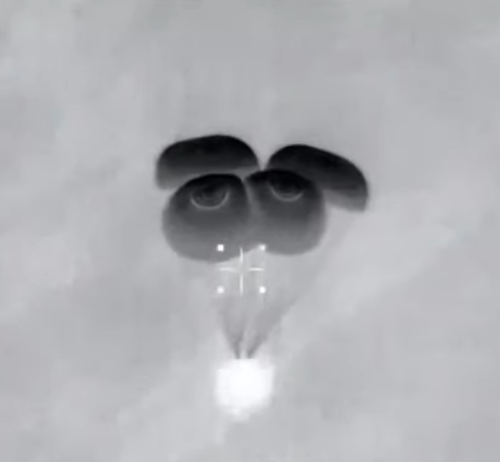
The affected spacecraft, known as CRS-28, otherwise returned to Earth normally on June 30 after 25 days in space. After checking into the valve on CRS-28, SpaceX looked at its entire spacecraft line. They found “corrosion among certain units,” Reed said, which SpaceX is looking into identifying and addressing.

Knowing SpaceX, it will now not only find out the root cause, but fix it so that the corrosion never appears again, thus making its Dragon spacecraft even more reliable.

4 comments

A third spaceport approved in Scotland

Despite some local opposition, a third spaceport has been approved in Scotland, allowing up to ten suborbital launches per year.

During launches, a 155m (250km) exclusion zone will be placed on the seas around St Kilda, the world-heritage site and archipelago north west of the site. It will be the third of its kind in Scotland, after spaceports were launched in Sutherland and Shetland.

The project, spearheaded by Comhairle nan Eilean Siar – Western Isles Council – has been met with opposition from locals with more than 1,000 people signing a petition rejecting the plans.

…Comhairle nan Eilean Siar had previously bought Scolpaig Farm for £1m and is developing it with private military contractor QinetiQ alongside space industry firms Rhea Group and Commercial Space Technologies.

It is unclear if the spaceport will eventually upgrade to providing orbital launch facilities. It will also have to compete with the two other spaceports in Scotland, as well as get launch approvals from the UK’s Civil Aviation Authority.

0 comments

The grassroots revolt led by mothers

The Liberty Bell
“Proclaim liberty throughout all the land unto all
the inhabitants thereof.” Photo credit: William Zhang

Bring a gun to a knife fight: The recent upheavals at school board meetings over the effort by public school officials to insert pornography in elementary schools — against the will of parents — points to a revolution that is likely not to end until either the public schools change drastically, or die because parent cease sending their kids to these schools.

The ramifications however could extend far beyond the classroom.

This revolution is best illustrated by Moms for Liberty, a new organization only three years old that has grown to become a major political factor in school board elections, and thus by proxy a major influence on larger elections on the local, state, and even national level.

Nor have they restricted themselves to protesting at school board meetings. [Moms for Liberty] have endorsed and actively supported parent-friendly candidates for school board seats nationwide. In 2022, they supported 500 candidates, 275 of whom won. Moreover, their candidates took control of 17 school boards in California, Florida, Indiana, Minnesota, New Jersey, North Carolina, and South Carolina. Moms for Liberty has now set its sights on school board elections in 2024, even as the organization enjoys rapidly growing conservative support and donor funding.

» Read more

18 comments

NASA awards 11 small development contracts to a variety of companies

Capitalism in space: NASA today announced that it has awarded small contracts to eleven different companies, ranging from big established companies like ULA and Lockheed Martin to small startups like Varda and Zeno, for developing a range of new technologies, from power production on the Moon to making building materials from lunar soil.

Five of the technologies will help humanity explore the Moon. For astronauts to spend extended periods of time on the lunar surface, they will need habitats, power, transportation, and other infrastructure. Two of the selected projects will use the Moon’s own surface material to create such infrastructure – a practice called in-situ resource utilization, or ISRU. Redwire will develop technologies that would allow use of lunar regolith to build infrastructure like roads, foundations for habitats, and landing pads.

Blue Origin’s technology could also make use of local resources by extracting elements from lunar regolith to produce solar cells and wire that could then be used to power work on the Moon.

Astrobotic’s selected proposal will advance technology to distribute power on the Moon’s surface, planned to be tested on a future lunar mission. The company’s CubeRover would unreel more than half a mile (one kilometer) of high-voltage power line that could be used to transfer power from a production system to a habitat or work area on the Moon.

The contracts range in price from $1.6 to $34.7 million, with Blue Origin getting that largest award.

0 comments

Rocket Lab delays its private mission to Venus two years to ’25

In order to focus at this time on its commercial customers, Rocket Lab has decided to reschedule its private mission to Venus, delaying its two years to the next launch window in 2025.

The mission appeared to still be on in May, before Rocket Lab quietly put it on the back-burner last month. Spokesperson Morgan Bailey said it had decided to delay the mission so it could concentrate on its commercial launches. “The decision was a business one and we look forward to delivering the Venus mission in 2025,” she said.

It also appears that the mission could be pushed back further if customer demand requires it.

2 comments

SpaceX launches another 22 Starlink satellites

SpaceX today successfully launched another 22 second generation Starlink satellites, using its Falcon 9 rocket lifting off from Cape Canaveral.

The first stage completed its sixth flight, landing on a drone ship in the Atlantic. The two fairings completed their seventh and eighth flights respectively.

The leaders in the 2023 launch race:

49 SpaceX
29 China
9 Russia
6 Rocket Lab
5 India

American private enterprise now leads China in successful launches 56 to 29, and the entire world combined 56 to 48, with SpaceX by itself leading with the entire world combined (excluding other American companies) 49 to 48.

SpaceX’s 49 successful launches so far this year carries some additional historical significance. This number exceeds the launch count of the entire United States per year from 1968 to 2021, and SpaceX has done it in only a little more than half the year. Its reported goal of completing 100 launches this year remains very much within reach.

7 comments

Indian company Skyroot conducts rocket engine test

Capitalism in space: The Indian rocket startup Skyroot successfully conducted a ten-second static fire test of a new engine, using a test facility of India’s space agency ISRO.

The Modi government has established a policy that ISRO must provide its facilities for private companies to develop their rockets, and this test was another demonstration that this policy is taking hold. It also indicates that Skyroot is getting closer to launching its first orbital rocket, Vikram-1.

1 comment

NOAA pays smallsat company PlanetiQ $60 million for its weather data

Capitalism in space: NOAA today awarded the smallsat company PlanetiQ a $60 million contract to provide the agency weather data from the company’s planned constellation of 20 satellites.

At present two satellites are in orbit, with more scheduled for launch in 2024. The satellites use data obtained in orbit from the different GPS-type satellite constellations to determine the atmosphere’s temperature, pressure, humidity and electron density.

In 2018 NOAA had awarded PlanetiQ and two other commercial companies, Spire and GeoOptics, small developmental contracts. This appears to be the first full contract, and continues NOAA’s very slow shift from building its own weather satellites to buying data from commercial satellites built by private companies. The agency has resisted this change, but since it can’t get its own satellites built and launched on budget or on time, it is increasingly being forced to do so.

0 comments

SpaceX launches 15 more Starlink satellites into orbit

SpaceX tonight successfully launched fifteen more Starlink satellites into orbit, lifting off from Vandenberg Space Force Base in California.

The first stage completed its tenth flight, landing successfully on a drone ship in the Pacific. Both fairings successfully completed their sixth flight.

The leaders in the 2023 launch race:

48 SpaceX
26 China (with a launch also planned for tonight)
9 Russia
6 Rocket Lab
5 India

American private enterprise now leads China in successful launches 55 to 26, and the entire world combined 55 to 45, with SpaceX by itself leading the entire world combined (excluding other American companies) 48 to 45.

An additional note: This was the 100th successful orbital launch in 2023. In the history of space rocketry, reaching 100 launches in a year was generally considered an indication of an active launch year. Now the global rocket industry accomplishes it in just over half the year. Last year set a record with 179 launches. There is now an outside chance of breaking that, topping 200 launches in 2023.

0 comments
1 188 189 190 191 192 683