Glynn Lunney, R.I.P

NASA flight director Glynn Lunney has passed away at the age of 84.

He not only was one of the flight directors in Houston that helped get astronauts to the Moon in 1969, he was also instrumental in getting the crew of Apollo 13 back home when their service module failed in 1970.

Lunney and his team were just about to come on console for the evening shift on April 13, 1970, when the Apollo 13 crew radioed, “Houston, we’ve had a problem.”

“For me, I felt that the Black Team shift immediately after the explosion and for the next 14 hours was the best piece of operations work I ever did or could hope to do,” Lunney said in his oral history. “It posed a continuous demand for the best decisions often without hard data and mostly on the basis of judgment, in the face of the most severe in-flight emergency faced thus far in manned spaceflight.”

“We built a quarter-million mile space highway, paved by one decision, one choice, and one innovation at a time — repeated constantly over almost four days to bring the crew safely home. This space highway guided the crippled ship back to planet Earth, where people from all continents were bonded in support of these three explorers-in-peril,” he said. “It was an inspiring and emotional feeling, reminding us once again of our common humanity. I have always been so very proud to have been part of this Apollo 13 team, delivering our best when it was really needed.”

He had been part of NASA when it was young (as he was) and honest and dedicated to accomplishing its goals fast and efficiently and — most significantly — with courage. May he rest in peace.

1 comment

China and Russia sign partnership agreement for lunar exploration

The new colonial movement: China and Russia today signed an agreement outlining a partnership to jointly build a base and orbiting station on and around the Moon.

The International Lunar Research Station (ILRS) is described as a comprehensive scientific experiment base built on the lunar surface or on the lunar orbit that can carry out multi-disciplinary and multi-objective scientific research activities including exploration and utilization, lunar-based observation, basic scientific experiment and technical verification, and long-term autonomous operation. Statements from Roscosmos and CNSA underline that the project will be “open to all interested countries and international partners.”

Though not explicitly stated it is understood that the ILRS would be constructed at the lunar south pole.

Russia is slowly breaking off its partnership with the U.S. because the U.S. is insisting it sign the Artemis Accords, which require all signatories to honor property rights in space. Neither Russian nor China wish to do that, instead reserving those rights wholly to their own governments, their citizens be damned.

Thus, we have a deal for Russia and China to work together. China actually doesn’t need Russia, as it has clearly shown in the past five years that its space capabilities are quite sufficient and well funded. Russia however needs China, as its capabilities have been declining in recent years due to corruption within its aerospace industry as well as a shortage of funds caused by a poor economy and the drop in oil prices.

Working together however could help speed what they achieve while simultaneously fueling the growing international competition in space. In the end this will benefit everyone, as more will get done faster.

How we shall settle the disagreement over property rights and government power in space is a entirely different question, one that I address at great length in my next soon-to-be published book, entitled Conscious Choice: The origins of slavery in America and why it matters today and into the future. Stay tuned!

4 comments

Yutu-2 and Chang’e-4 reactivated for 28th lunar day on Moon

The new colonial movement: Engineers have reactivated both Yutu-2 and Chang’e-4 to begin their 28th lunar day on the far side of the Moon.

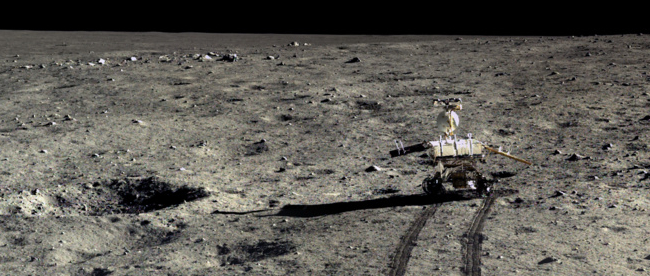
The article, from China’s state-run press, provides only one real tidbit of information, that Yutu-2 has now traveled 429 meters (1,378 feet) from the landing site. They still have about a mile to go to reach their next big geological target, which should take years at the pace the rover is setting.

Both spacecraft though have been unmitigated successes. Their nominal mission had been to survive three lunar day-night cycles, about 90 Earth days. They have survived 28, or more than two years since landing in January 2019.

This success suggests that China’s Mars rover has a good chance of doing as well. Its planned mission length is also 90 days, similar to the Spirit and Opportunity rovers, both of which lasted many years.

0 comments

NASA lunar rover experiences big budget overruns

NASA revealed yesterday that the budget for VIPER, a new NASA-built lunar rover, has increased from $250 million to $433.5 million.

The cost of the mission has gone up significantly. At the time NASA announced VIPER in October 2019, it projected a cost of about $250 million. As part of the confirmation review, known as Key Decision Point C, NASA set a formal cost commitment for the mission. NASA spokesperson Alison Hawkes said March 3 that the new lifecycle cost for the mission is $433.5 million.

NASA didn’t disclose the reason for the cost increase, but NASA officials said in June 2020 that they were postponing VIPER’s launch by about a year to late 2023 to change the rover’s design so it can meet the goal of operating for 100 days on the lunar surface. At the time, the agency declined to comment on VIPER’s cost.

This is very typical of modern NASA. Even though its planetary program produces some spectacular spacecraft and results, that program — like all NASA-built programs — rarely does so for the budget promised. For the planetary program, however, the overage for VIPER is startlingly high, especially in so short a time.

Be prepared for more delays and overages for this project, since that is usually what happens for NASA projects that experience such large budget increases.

8 comments

Maezawa looking for volunteers for his Starship flight around Moon

Capitalism in space:
Yusaku Maezawa, the Japanese billionaire who has purchased a flight on SpaceX’s Starship to fly around the Moon, is now looking for volunteers to join him.

The Japanese entrepreneur said applicants would need to fulfill just two criteria: being ready to “push the envelope” creatively, and being willing to help other crew members do the same. In all, he said around 10 to 12 people will be on board the spaceship, which is expected to loop around the moon before returning to Earth.

The application timeline for spots on the trip calls for would-be space travellers to pre-register by 14 March, with initial screening carried out by 21 March. No deadlines are given for the next stages – an “assignment” and an online interview – but final interviews and medical checkups are currently scheduled for late May 2021, according to Maezawa’s website.

Both he and SpaceX are still aiming for a 2023 flight, though that date is likely optimistic.

To apply, go here.

4 comments

Apollo 16 Lunar Rover “Grand Prix”

An evening pause: This seems especially appropriate with the arrival of another rover on Mars last week.

On their first day of three on the lunar surface, John Young and Charles Duke deployed their rover and took it for a test drive before heading out to nearby Plum Crater for two hours of sample gathering and exploration.

This footage shows Young driving with Duke filming and reporting what he sees. The goal was to gather engineering data on how the rover’s wheels functioned in the very dusty lunar soil.

This short clip nicely illustrates the ambitious achievement of the American Apollo missions that should give pause to any arrogant modern young engineer. This was before home computers and CAD-CAM. It was designed by hand and slide-rule, using inches, pounds, and feet. And it worked, and worked magnificently. Oh if we today could only do as well.

Hat tip Björn “Local Fluff” Larsson.

8 comments

India officially delays both its manned mission and next lunar lander

The new colonial movement: India has now officially delayed the launch of both its manned mission Gaganyaan as well as its next lunar lander/rover Chandrayaan-3.

They hope to launch an unmanned test Gaganyaan mission before the end of this year, but the manned mission will not occur until after a second unmanned mission scheduled very tentatively in the 2022-2023 time frame.

As for Chandrayaan-3, they had initially hoped to launch it last fall, but they panic over the coronavirus that shut down their entire space industry for a years has now apparently pushed that launch back ’22, a delay of more than a year.

0 comments

Hungarian company awarded NASA contract to develop Moon mini-rover

A Hungarian company has won a NASA contract worth $225K to develop what the company calls its Puli Moon mini-rover.

Named after a Hungarian breed of dog, the Puli rover is a low-cost platform designed to carry different payloads, including the ice water snooper, which won the 2020 “Honey, I Shrunk the NASA Payload” challenge, a competition organised by the U.S. space agency. Weighing less than 400 grammes (14 oz), its purpose is to probe for water ice by identifying and mapping the subsurface hydrogen content of the lunar soil.

The “news article” at the link appears to be a poorly researched article distributed by Reuters that has now been reprinted without changes by such stalwart American mainstream news outlets like the New York Post and MSN.com, to name two. Neither bothered to do any further research.

The article falsely claims that the airplane-based SOFIA telescope recently confirmed there is water on the Moon. It also claims that this rover will be on a lunar mission next year, something that does not seem likely at all.

A look at the company’s website clarifies things. The company competed in a NASA contest offering its design of a very tiny lightweight rover, won, and was then awarded a larger development contract of $225K. No launch is presently set, though if the company is successful in building it for this cost, they will likely get a berth on a later unmanned mission.

0 comments

Momentus signs deal to deliver two private cubesats to lunar orbit

Capitalism in space: Momentus has signed a deal with a Singapore startup to provide the transportation to lunar orbit of two cubesats using its next generation space tug.

Momentus Inc. (“Momentus” or the “Company”), a commercial space company offering in-space infrastructure services, and Qosmosys, a new space venture founded in Singapore last year, announced today a service agreement to deliver two cubesats to low lunar orbit as early as 2024 via Momentus’ inaugural lunar mission.

The new contract builds and expands on the agreement announced in January 2021 for delivery of up to four cubesats in low Earth orbit by Momentus’ Vigoride service vehicle, starting in 2022. Qosmosys will expand its novel business ideas to the Moon using a specific bus named Zeus-MS, a version of its Zeus platform it has been developing in cooperation with NuSpace from Singapore, and made specific for lunar missions. Zeus-MS is the precursor to a series of multi-mission platforms that will allow organizations and businesses to host their payloads, and will offer individuals a bespoke, unprecedented line of services to the Moon on regularly scheduled flights.

“We are excited to partner with Momentus again, now onboard Ardoride’s inaugural lunar mission in 2024,” said Francois Dubrulle, CEO of Qosmosys. “Our vision is to make space accessible to all, and Momentus will help us achieve this goal through their efficient orbital services.”

Ardoride, the next generation service vehicle after Vigoride, will extend the range and capabilities of Momentus’s services beginning in 2023.

It is unclear who Qosmosys’ customers are for their lunar Zeus-MS cubesat platform, but I have no doubt they have plenty, many from the university community. For example, universities fund student-built cubesats for educational purposes. Why not make this a project to the Moon, rather than just in Earth orbti? The cost difference would not be much using these new private companies.

0 comments

Rover update: The rovers are coming! The rovers are coming!

With the imminent landing on Mars of both the American rover Perseverance only days away on February 18th followed by China’s rover in April, I think it time for a new rover update, not only providing my readers a review of the new landing sites but a look at the most recent travels of Curiosity on Mars and Yutu-2 on the Moon.

Curiosity

Curiosity's view of the base of Mount Sharp, February 12, 2021
Click for full resolution image.

Overview map of Curiosity's most recent and future travels

The panorama above, made from four images taken by Curiosity’s right navigation camera on February 12, 2021 (found here, here, here, and here), looks south to the base of Mount Sharp, now only a short distance away. The yellow lines on the overview map to the right show the area this panorama covers. The white line indicates Curiosity’s previous travels. The dotted red line in both images shows Curiosity’s planned route.

The two white dots on the overview map are the locations of the two recurring slope lineae along Curiosity’s route, with the plan to get reasonable close to the first and spend some time there studying it. These lineae are one of Mars’ most intriguing phenomenon, seasonal dark streaks that appear on slopes in the spring and fade by the fall. There are several theories attempting to explain their formation, most proposing the seepage of a brine from below ground, but none has been accepted yet with any enthusiasm.
» Read more

2 comments

Turkey to do lunar mission, send astronaut into space

The new colonial movement: Turkey’s leader, Tayyip Erdogan, announced yesterday a new space exploration initiative that will include sending an unmanned probe to the Moon as well as flying an astronaut into space.

“The first rough landing will be made on the moon with our national and authentic hybrid rocket that shall be launched into orbit in the end of 2023 through international cooperation,” Erdogan said, detailing a two-phase mission. Erdogan did not elaborate further on the cooperation. Last month, Erdogan spoke to Tesla and SpaceX boss Elon Musk on possible cooperation in space technologies with Turkish companies.

Speaking in an event in Ankara, Erdogan announced a programme with 10 strategic goals including sending a Turkish citizen to a scientific mission in space.

The manned mission will not be flown by Turkey, but will be purchased from someone else, either Russia or SpaceX or Boeing maybe even China.

The timing of this announcement, the same day the UAE’s Al-Amal probe entered Mars’ orbit, suggests it was prompted by that success, and is an example of keeping up with the Joneses. Whether there is any reality to these proposals however remains to be seen.

2 comments

ESA contracts Airbus to build three more Orion service modules

The European Space Agency (ESA) late last week announced that it has awarded Airbus a contract to build three more service modules for NASA’s Orion capsule.

This new contract supplements the existing contract that already has Airbus building three service modules. With six service modules in the pipeline, the ESA is signaling that it is very confident the Artemis program will continue.

The key question remains: Will it continue with SLS as the rocket of choice? Right now there simply aren’t the funds to build six SLS rockets. Congress has only funded two. Moreover, the pace of construction for SLS means that, if funded, it will likely take a decade at least for it to launch these six capsule/service modules. Since SpaceX’s Starship/Super Heavy will likely be operational in about half that time, and will also be capable of much more for far less, I suspect that if these additional Orion capsules get launched, they will do so on something other than SLS.

5 comments
1 42 43 44 45 46 94