Astronomers detect water in the very very early universe

The uncertainty of science: Using the ALMA telescope in Chile, astronomers have detected the molecules of water and carbon monoxide in a galaxy thought to have formed only 780 million years after the Big Bang.

SPT0311-58 is actually made up of two galaxies and was first seen by ALMA scientists in 2017 at its location, or time, in the Epoch of Reionization. This epoch occurred at a time when the Universe was just 780 million years old—roughly 5-percent of its current age—and the first stars and galaxies were being born. Scientists believe that the two galaxies may be merging, and that their rapid star formation is not only using up their gas, or star-forming fuel but that it may eventually evolve the pair into massive elliptical galaxies like those seen in the Local Universe.

“Using high-resolution ALMA observations of molecular gas in the pair of galaxies known collectively as SPT0311-58 we detected both water and carbon monoxide molecules in the larger of the two galaxies. Oxygen and carbon, in particular, are first-generation elements, and in the molecular forms of carbon monoxide and water, they are critical to life as we know it,” said Sreevani Jarugula, an astronomer at the University of Illinois and the principal investigator on the new research. “This galaxy is the most massive galaxy currently known at high redshift, or the time when the Universe was still very young. It has more gas and dust compared to other galaxies in the early Universe, which gives us plenty of potential opportunities to observe abundant molecules and to better understand how these life-creating elements impacted the development of the early Universe.”

Need I say that there are many uncertainties with this result, including the assumption that the universe is only 780 million years old at location of this galaxy. That age is extrapolated from the galaxy’s red shift, a link that depends on some uncertain assumptions. Moreover, the discovery of these molecules so soon after the theorized Big Bang is unexpected. Cosmologists had assumed that at this early age the universe wasn’t old enough yet to form galaxies with such complex molecules.


1 comment

Hubble still in safe mode

NASA released a new but relatively terse update on November 1st describing the status of the Hubble Space Telescope, which has been in safe mode since October 25th.

Hubble’s science instruments issued error codes at 1:46 a.m. EDT Oct. 23, indicating the loss of a specific synchronization message. This message provides timing information the instruments use to correctly respond to data requests and commands. The mission team reset the instruments, resuming science operations the following morning.

At 2:38 a.m. EDT, Oct. 25, the science instruments again issued error codes indicating multiple losses of synchronization messages. As a result, the science instruments autonomously entered safe mode states as programmed.

Mission team members are evaluating spacecraft data and system diagrams to better understand the synchronization issue and how to address it. They also are developing and testing procedures to collect additional data from the spacecraft. These activities are expected to take at least one week.

In other words, the engineers presently do not understand the problem, and are working at pinpointing its cause.

This is not a “glitch”. If used properly that word really refers to something that is akin to a short burp in operations. Hubble has been shut down now for ten days, and will remain so for at least one more week. This is a serious problem that remains unsolved.

7 comments

China’s Long March 2C rocket places two earth observations satellites in orbit

China today successfully launched two Earth observation satellites using its Long March 2C rocket.

This was China’s 39th successful launch in 2021, breaking China’s previous yearly high of 38 set in 2018.

The leaders in the 2021 launch race:

39 China
23 SpaceX
18 Russia
4 Northrop Grumman
4 ULA
4 Arianespace (Europe)

China now leads the U.S. 39 to 36 in the national rankings.

1 comment

Two skylights into connected Martian lava tube?

Two skylights into a connected Martian lava tube?
Click for full image.

Cool image time! The photo to the right, cropped and annotated to post here, was taken on September 1, 2021 by the high resolution camera on Mars Reconnaissance Orbiter (MRO). I have annotated it to note the two apparent skylights that appear aligned along a north-south depression.

The grade is downhill to the north. If you look at the full image you will see that this north-south depression extends for a considerable distance beyond the edges of the cropped image above, with that depression appearing to dissipate to the north into a series of parallel very shallow depressions, almost like the lava had flowed out of the tube and formed branching surface rivulets heading south.

The overview map shows that this tube is on the northern flanks of the volcano Arsia Mons.
» Read more

2 comments

Chinese pseudo-private company buys engines for its reusable rocket

The pseudo-private Chinese rocket company, Rocket Pi, has signed a deal with another pseudo-private Chinese company, Jiuzhou Yunjian, to build the engines the former will use in its proposed reusable Darwin-1 rocket.

I call these pseudo-private because — while they both have raised independent Chinese investment capital and are structured and appear to operate as private companies, they remain entirely under the supervision of the Chinese communist government, most especially its military wing. Nothing they do is done without that government’s permission, even if they are launching entirely private payloads.

Nonetheless, both companies are real, and have been proceeding aggressively towards the first launch of Darwin-1 in ’23. There is every reason to expect them to succeed.

2 comments

Evidence from nearby white dwarfs suggest rocky exoplanets are alien to Earth

The uncertainty of science: Evidence from 23 white dwarfs, all located less than 650 light years from Earth, suggest that the make-up of rocky exoplanets are likely very alien to Earth, with minerals and chemistry that is found nowhere in our solar system.

They found that these white dwarfs have a much wider range of compositions than any of the inner planets in our solar system, suggesting their planets had a wider variety of rock types. In fact, some of the compositions are so unusual that Putirka and Xu had to create new names (such as “quartz pyroxenites” and “periclase dunites”) to classify the novel rock types that must have existed on those planets.

“While some exoplanets that once orbited polluted white dwarfs appear similar to Earth, most have rock types that are exotic to our solar system,” said Xu. “They have no direct counterparts in the solar system.”

Putirka describes what these new rock types might mean for the rocky worlds they belong to. “Some of the rock types that we see from the white dwarf data would dissolve more water than rocks on Earth and might impact how oceans are developed,” he explained. “Some rock types might melt at much lower temperatures and produce thicker crust than Earth rocks, and some rock types might be weaker, which might facilitate the development of plate tectonics.”

The data from the white dwarfs is believed to be the leftover material of exoplanets that were absorbed by the star, sometime in the far past.

First, this result should not be a surprise. To even think for a second that planets in other solar systems would be similar to the planets in our solar system is unrealistic. Even in our solar system we have found that practically every single body — planets, moons, asteroids, comets — is remarkably unique. Other solar systems are sure to be even more alien.

Second, the result here is somewhat uncertain. The scientists were not gathering data of actual exoplanets, but what is believed to be the remains that had been swallowed by the stars. The scientists then extrapolated backwards to come up with these alien rock types. The result, while very suggestive, must be taken with some skepticism.

4 comments

SpaceIL issues contract for construction of Beresheet-2

SpaceIL, the nonprofit that designed Israel’s first lunar mission, Beresheet-1, has now contracted for the construction of Beresheet-2, which instead of being a single large lander will an orbiter and two small landers.

Israel Aerospace Industries (IAI) was the prime contractor for Beresheet, the lander it built for the nonprofit organization SpaceIL, one of the competitors of the former Google Lunar X Prize. Beresheet attempted to land on the moon in April 2019, but its main engine shut down prematurely during its descent, causing the spacecraft to crash. A later analysis found that one of two inertial measurement units on the spacecraft shut down during its descent, and the process of restarting it caused resets in the lander’s avionics that caused the engine to shut down.

After some initial uncertainty about its future plans, SpaceIL is moving ahead with a Beresheet 2 mission, and will once again have IAI build the spacecraft.

The article at the link focuses on the new design of Beresheet-2 (two landers and an orbiter), but that is old news, announced back in December 2020. That IAI has begun work however means SpaceIL has obtained the cash to pay it, possibly from the Israeli-UAE deal that was announced on October 20th.

That October 20th announcement did not mention a transfer of funds or Beresheet-2, but when SpaceIL revealed its plans for Beresheet-2 in December 2020, the nonprofit also said it was seeking financial support from the UAE. I suspect that support has come through.

1 comment

Falcon Heavy gets another contract

Capitalism in space: With the announcement on October 30th that the Space Force has added a third military Falcon Heavy launch for ’22, the rocket is now scheduled to fly five times next year.

The addition of a third national security mission for Falcon Heavy will make for quite a scheduling challenge for SpaceX’s three-core rocket that also is projected to launch in 2022 a Viasat-3 commercial broadband satellite with an Astranis communications satellite as a secondary payload, as well as NASA’s Psyche planetary science mission.

The Space Force missions USSF-44 and USSF-52 both were scheduled to fly in 2021 but have been delayed by payload readiness and range scheduling issues. No target launch dates have been announced yet although the Space Force said they would happen in 2022. Falcon Heavy rockets lift off from NASA’s Kennedy Space Center.

It increasingly looks like 2022 will be a major record-setting year for rocketry.

12 comments

History Unplugged – The Age of Discovery 2.0

The podcast, History Unplugged, created by Scott Rank from the History on the Web webpage, has put together a six part podcast called The Age of Discovery 2.0 with the goal of exploring how today’s new effort to colonize the solar system can learn from the first age of discovery that began when Columbus discovered the New World in 1492. From the announcement:

No era transformed Western Civilization like the Age of Discovery. Before then, Europe was an economic and military weakling that had suffered centuries of defeat from Islamic empires. Constantinople, Greece, Serbia, and the Crimea had all fallen to the Ottomans in the 15th century. Compared to its richer, more educated, and far more powerful rivals in the East, Europe was the Third World of the late medieval era. Chroniclers saw it as living in a long twilight, far removed from its golden age. It had nothing to look forward to but Judgment Day.

But with Columbus’s discovery of the New World, the West was reborn. Trade routes to Africa, India, and China opened. Ship building began at a furious pace. New wealth flowed into European capitals. At the same time, printing presses spread new ideas about science, religion, and technology. Literacy rates exploded. Above all, anyone willing to brave the dangers of traveling and settling in the New World could seek their fortune, bypassing whatever their birth status was in Europe’s rigid social hierarchy. Because of the Age of Discovery, for the first time in generations, Western Civilization had hope in the future.

Today, an Age of Discovery 2.0 is upon us. With Elon Musk promising rocket launch costs at $200/kilo (one percent of the Space Shuttle’s launch costs, with much lower costs to come), the price of sending explorers to space will soon match the cost of a ticket on the Mayflower in 1620. In a few decades, the Moon, Mars, and other planetary bodies will be as accessible to humans as the New World was in the Age of Sail.

How will the Age of Discovery 2.0 change our civilization the way the first one did five centuries ago?

To find the answer, History Unplugged is interviewing historians, scientists, and futurists who have spent decades researching this question by looking at the past to understand the future. It will explore how:

Scott asked me to be one of his guests, which also include Robert Zubrin, Glenn Reynolds, Rand Simberg. Episode #4 will focus on the history I outline in my new book, Conscious Choice: The origins of slavery in America and why it matters today and for our future in outer space. The topic fit perfectly with his series.

The series begins airing tonight, and will continue for the next two weeks.

3 comments

Amazon picks rocket startup ABL to launch 1st two prototype Kuiper satellites

Capitalism in space: Amazon has chosen the smallsat startup rocket company ABL to launch its first two prototype Kuiper satellites, with that launch targeted for ’22.

KuiperSat-1 and KuiperSat-2 will reach orbit via the RS1, a new rocket developed by California-based ABL Space Systems. Amazon also announced today that it has signed a multi-launch deal with ABL to provide these early Project Kuiper launches.

The 88-foot-tall (27 meters) RS1 is capable of launching 2,975 pounds (1,350 kilograms) of payload to LEO, according to its ABL specifications page. ABL is charging $12 million for each launch of the two-stage rocket. The RS1 has not flown yet, but ABL has said that it aims to conduct a debut launch from Alaska’s Pacific Spaceport Complex before the end of 2021.

Earlier this year, Amazon announced that it had signed a deal with United Launch Alliance (ULA), whose Atlas V rocket will loft operational Project Kuiper craft on nine different launches.

Does anyone notice what rocket company has not won these contracts, even though its owner is also Amazon’s founder and biggest shareholder? That’s right, as far as I can tell, Blue Origin’s New Glenn rocket has apparently not won any contracts to launch Amazon’s Kuiper satellites. Notice also that the deal with ULA uses its Atlas-5 rocket, not its new Vulcan rocket, even though ULA wants Vulcan to replace the Atlas-5 beginning in ’22.

Since both New Glenn and Vulcan depend on Blue Origin’s troubled BE-4 rocket engine, these contracts strongly suggest that the engine’s technical problems have not yet been solved, and that neither rocket will be flying in ’22 as both companies have promised.

14 comments

Dragon manned launch delayed again

NASA announced today that the manned launch of four astronatus to ISS on SpaceX’s Endurance spacecraft has been delayed again, pushed back to November 6tth because of a “minor medical issue”.

The agency says one of the astronauts has a “minor medical issue.” The issue is not a medical emergency and not related to COVID-19, according to NASA.

The launch is now set for 11:36 pm (Eastern) that evening.

0 comments

Curiosity looks back across the alien landscape of Mars

Gale Crater, October 31, 2021
Click for image.

Cool image time! The photo above, the first of 21 identical images taken by Curiosity’s right navigation camera, taken at intervals of about thirteen seconds on October 31st, was probably snapped as part of an effort to spot a moving dust devil. At the resolution available to my software, I see nothing when I compare all 21 photos.

What I do see is a remarkably alien landscape. In the distance can be seen the mountains that mark the rim of Gale Crater, 30-plus miles away. On the image’s right edge you can see the rising slope heading up to the peak of Mount Sharp about 13,000 feet higher.

In the center are those blobby mesas that make this terrain look so strange. For the past decade Curiosity has been traveling from the floor of the crater on the picture’s far left to circle around that dark sand dune sea to climb up the mountain slopes in the foreground in front of those mesas.

It is now heading to the right, into the mountains that make up Mount Sharp. Such a view of the floor of Gale Crater will thus be for the next few years more difficult to catch, as the mountains themselves will block the view. Assuming the rover survives long enough, it will have to climb much higher before it can get such an expansive view again.

5 comments

Sunspot update: Sun continues its higher than predicted activity

With the beginning of a new month comes my monthly sunspot update, based on NOAA’s most recent monthly graph of sunspot activity. That graph is below, annotated to show the previous solar cycle predictions and thus provide context. It has now been extended from last month to include the Sun’s sunspot activity in October.

Sunspot activity in October continued to be higher than predicted, though the month saw a slight drop from September. Even so, the number of sunspots seen on the Sun’s facing hemisphere in October were the most since August of 2016, when the Sun was ramping down to solar minimum.

» Read more

3 comments

An example of good public school education

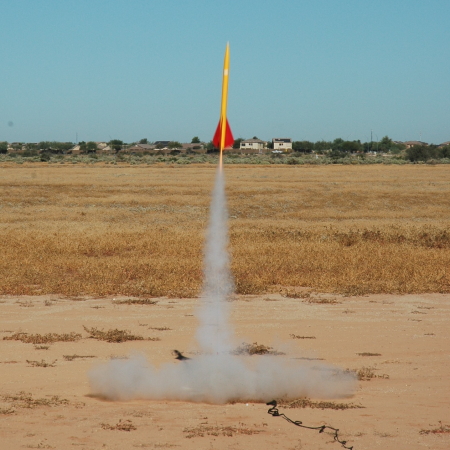
First rocket launch of the day

Those who are regular readers of this webpage know that I generally have a low opinion of the American public school system, based on ample evidence. It generally fails to educate while working to abuse and indoctrinate young children in ways that are so ugly and inappropriate that often the administrators and teachers involved could actually be charged with child abuse.

Today I am instead going to provide an example of a public school doing right by its students. On Saturday I was invited to watch as an afterschool engineering group, run by John Morris, the Engineering & Mathematics teacher at Casa Grande Union High School in Arizona, went out to launch model rockets that they had built themselves.

The launch to the right was the first of the day. The rest of the post below is image oriented, to give you a feel of what it involved in teaching young high school students how to make and launch small rockets. That activity, while involving relatively simple engineering, provides them the right grounding for learning how to work hard, make sure they do the work right, and learning that failure is really only a step towards success.
» Read more

14 comments

Astronomers: If there are artificial Dyson spheres out there, we can detect them

In a preprint science paper published on October 26, 2021, astronomers review the impact a Dyson sphere might have on its central star and conclude that modern astronomical instruments should be able to identify these changes. From the abstract:

The search for signs of extraterrestrial technology, or technosignatures, includes the search for objects which collect starlight for some technological use, such as those composing a Dyson sphere. These searches typically account for a star’s light and some blackbody temperature for the surrounding structure. However, such a structure inevitably returns some light back to the surface of its star, either from direct reflection or thermal re-emission. In this work, we explore how this feedback may affect the structure and evolution of stars, and when such feedback may affect observations. We find that in general this returned light can cause stars to expand and cool. Our MESA models show that this energy is only transported toward a star’s core effectively by convection, so low mass stars are strongly affected, while higher mass stars with radiative exteriors are not. Ultimately, the effect only has significant observational consequences for spheres with very high temperatures (much higher than the often assumed ~300 K) and/or high specular reflectivity. Lastly, we produce color-magnitude diagrams of combined star-Dyson sphere systems for a wide array of possible configurations.

A plain-language description of the paper can be found here, which summarizes this work as follows:

This study shows that Dyson spheres can result in measurable changes to stellar properties. Megastructures have long been confined to science fiction, imagination and certain video games. However, if there are indeed Dyson spheres out there waiting to be found, we could soon be in a position to find them.

4 comments

Dragon crew launch to ISS delayed due to weather

The early morning launch on October 31st of the next manned flight of SpaceX’s Endurance capsule to ISS, has been delayed because of poor weather downrange from the launch site.

The bad weather could have interfered with recovery operations should a launch abort had been necessary and the capsule was forced to land in the Atlantic.

The launch has now been rescheduled for 1:10 am (Eastern) on November 3rd.

1 comment

Hubble in safe mode again

According to NASA’s Twitter feed for the Hubble Space Telescope, it went into safe mode earlier this week because of “issues with internal communications.”

Hubble’s science instruments went into safe mode on Monday after experiencing synchronization issues with internal spacecraft communications. Science observations have been temporarily suspended while the team investigates the issue. The instruments remain in good health.

Much of the press is using that lovely buzzword of bureaucrats, calling this a “glitch.” The goal of that word is to make the problem seem minor and no big deal.

It can’t be minor and no big deal however if the telescope shut down six days ago and remains out of service. This is not a “glitch.” This is a serious issue that is taking time to resolve.

Furthermore, I get more concerned when no further information is provided. As far as I can so far find, the quote above is the only information NASA has released. And that information is remarkably vague and uninformative.

3 comments

ABL leases space at Port of Los Angeles

Capitalism in space: The rocket startup ABL has now leased space at the Port of Los Angeles for “spacecraft processing” and cargo shipment.

Included in the five-year lease is a 25,000-square-foot integration and payload processing facility, 20,000-square-foot warehouse space, and a 13,000-square-foot office space. The location, previously occupied by rocket launching ship company Sea Launch, will be used by ABL for a range of operations including vehicle processing, payload integration, and maritime operations supporting the company’s launch facilities around the world.

This deal comes on top of ABL’s announcement earlier this week that it has raised an addition $200 million in investment capital, and is planning its first launch in mid-December.

4 comments

Holes in snowy ice on Mars?

Holes in snowy ice on Mars?
Click for full image.

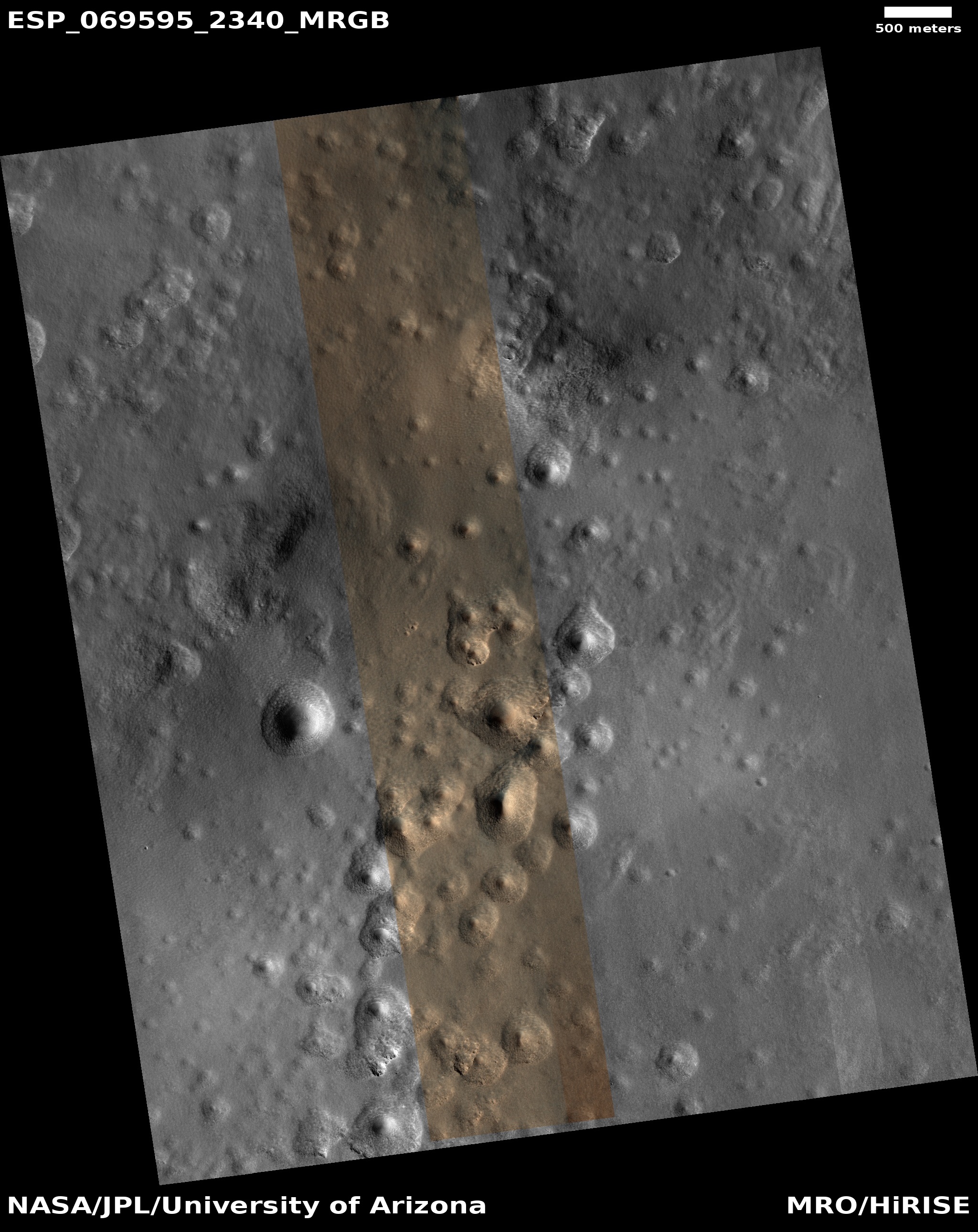
Cool image time! Today we return to the regions surrounding Milankovic Crater in the high northern latitudes of Mars. The photo to the right, cropped and reduced to post here, was taken on June 1, 2021 by the high resolution camera on Mars Reconnaissance Orbiter (MRO). It shows a spray of impact craters where the bolides apparently landed in relatively soft material. The location itself is about 10 miles to the southeast of the 74-mile-wide crater, and sits within its rim ejecta blanket.

The label for the image says this is showing “crater modification,” which suggests that the rimless nature of these craters became so after their creation. This location, at 54 north latitude, is in a region of Mars where scientists have found a lot of evidence of near surface ice. For example, within Mikankovic Crater itself they have identified numerous scarps with clearly seen pure ice layers.

If ice is close to the surface here, then the ground could be like soft snow on Earth, especially because Mars’ lighter gravity would not compress that ice as much. Think about what happens when you toss pebbles into soft snow. They fall through, and leave behind holes not unlike the ones we see in this picture. Later, sunlight would begin to modify the holes so that their edges grow outward, once again exactly as we see here.

The overview map below as always gives some context, which in this case has less to do with Mars but with Elon Musk and Starship.
» Read more

0 comments

VC of Joint Chiefs: Not one, not two, but “hundreds” of Chinese hypersonic tests!

If I did not have confirmation of my skepticism about the claims by the military and anonymous sources that China this summer completed a successful hypersonic test flight, I have it now.

Today the Vice Chairman of the Joint Chiefs of Staff, Gen. John Hyten, made a speech demanding that the military stop building expensive gold-plated satellites and emulate SpaceX’s methods of frequent testing and quick development.

Hyten has been very correctly pushing for this change in strategy for years. However, in his remarks he said this:

China, he said, has performed “hundreds” of tests of hypersonic weapons in the last five years, compared to nine the United States has performed.

…[He also] implied this morning, but did not state categorically, that China has built and tested what appears to be a Fractional Orbital Bombardment System (FOBS).

FOBS technology is not new, but Hyten described it “as highly destabilizing.” And China’s reported use of a nuclear-capable hypersonic glide vehicle (HGV) as the pointy end of the stick would be a twist. The Soviets deployed a FOBS — which combines a low-flying missile and nuclear warhead that reaches Low Earth Orbit, but does not remain in space for a full turn about the Earth — from 1969 to 1983. China began an effort in the early 1970s, but suffered test failures with its launcher, and gave up. [emphasis mine]

As I say, Hyten’s goals — fast testing, fast development, and not fearing failure — are all correct and laudable. But to suddenly turn a questionable story about a possible single successful Chinese hypersonic test flight, based entirely on anonymous sources, into “hundreds” of flights, strongly confirms to me that the original story was planted by the military to create fear in Congress and the public so that both would eagerly give the military more money.

The result will be that Hyten won’t get what he really wants. His use of exaggeration and possible disinformation will only cause Congress to balloon the military’s budget for new programs, which will then be used to feed the Pentagon’s insatiable appetite for endless and slow-moving test programs that only function as jobs programs, the very thing Hyten rails against.

20 comments
1 17 18 19 20 21 76