Space Force awards 125 small contracts to develop space junk removal and satellite repair

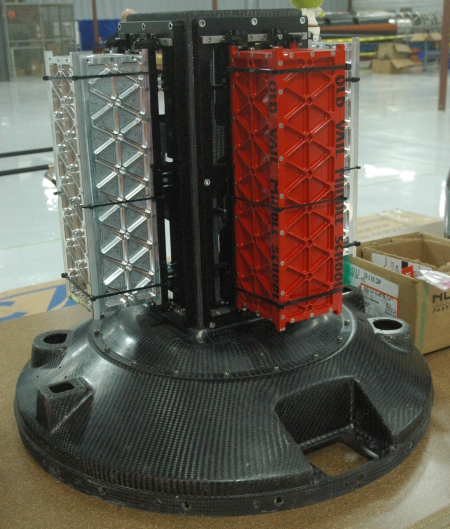
Capitalism in space: The Space Force yesterday announced the issuance of 125 small contracts, each worth $250,000, for developing new technologies for the removal of orbiting space junk as well as the robotic servicing of orbiting satellites.

SpaceWERX [a Space Force division] plans to award the 125 contracts over the next 30 days and each team will have about 150 days to deliver a product or study. Later this year they will have an opportunity to compete for second-phase awards of up to $1.5 million to continue development and prototyping.

The long-term goal is to select one or more teams two years from now to conduct an in-space demonstration of OSAM technologies, short for on-orbit servicing, assembly and manufacturing. This includes a broad range of technologies to repair and refuel existing satellites, remove and recycle orbital debris, and manufacture products in space.

Many of these development contracts likely went to already established companies like Northrop Grumman, Orbit Fab, Momentus, Launcher, and Spaceflight, which are all developing technologies for in-orbit transportation and servicing. These small contracts were also likely given to new startup companies that have not yet launched.

3 comments

Berger: The media should ignore Rogozin

Eric Berger today beat me to the punch with a very cogent op-ed outlining how the press is consistently being fooled by the head of Roscosmos, Dmitry Rogozin, by reporting what he says without really understanding any of the larger context.

It happened again this weekend. Both Bloomberg and Axios reported that Russia is quitting the International Space Station due to sanctions imposed by the United States on Russia. Each of these stories garnered considerable attention. And each of these stories was also wrong.

…Specifically, this is what Rogozin said on state television this weekend: “The decision has been taken already, weโ€™re not obliged to talk about it publicly. I can say this onlyโ€”in accordance with our obligations, weโ€™ll inform our partners about the end of our work on the ISS with a yearโ€™s notice.”

This may sound ominous, but that is the wrong interpretation of Rogozin’s words. There is actually some positive news in there, with Rogozin saying Russia will give NASA and its other partners a full year’s notice before departing. This is more than enough time for NASA and its commercial partners, Northrop Grumman, SpaceX, and Boeing, to work together to salvage the larger Western segment of the space station.

Rogozin’s most recent comments are even more positive than his comments in early March, when he threatened to break off the ISS partnership by the end of the month.

The ignorance of both the Bloomberg and Axios reports were amplified in that they were reporting nothing new, as Rogozin had essentially revealed this decision three weeks earlier.

The bottom line is that Russia is facing the death of its space program. It doesn’t have the cash to finance its own space station, and it has no one else to fly with. China says it will be glad to work with Russia on its Tiangong station, but it isn’t going to put out one dime to help pay for Russian efforts. Nor will the future American private stations.

Thus, most of what Rogozin says is bluster, not to be taken too seriously. Russia is going to stay with ISS for at least the next two years, and if it eventually decides to continue the partnership through ’30 it will be no surprise.

0 comments

Rocket Lab successfully catches first stage with helicopter

Electron first stage on parachute just before capture

Capitalism in space: In successfully placing 34 smallsat into orbit today using its Electron rocket, Rocket Lab also successfully caught the first stage with helicopter as it descending by parachute.

The screen capture to the right from the live feed shows that first stage on parachute just before the helicopter hook captures it. That helicopter is now returning to land with that stage, which it will then gently deposit for study and refurbishment. Though it is likely this first recovered first stage will not get reused, that possibility remains, and regardless this success points to the future reuse of all Electron first stages.

UPDATE: Because of “different load characteristics” than seen during previous tests, the helicopter pilot released the stage for safety reasons, while still over the ocean. The company was then able to recover it, but though they can now study it no reuse will be possible.

The leaders in the 2022 launch race:

17 SpaceX
13 China
6 Russia
3 Rocket Lab
2 ULA

The U.S. now leads China 25 to 13 in the national rankings, with the U.S. leading all other nations combined 25 to 22.

8 comments

Watch Rocket Lab launch and attempt to capture first stage with helicopter

I have embedded below the live stream of Rocket Lab’s launch today from New Zealand, scheduled for a 3:41 pm (Pacific) liftoff. The rocket carries 34 satellites for deployment.

More exciting however will be the attempt to recover the first stage. On this launch the Electron rocket’s first stage will control its descent using both thrusters and parachutes so that a helicopter can make the first attempt to snatch it out of the air before it hits the ocean.

If successful, Rocket Lab will then hopefully be able to reuse the first stage on a later launch.

7 comments

Navigating a rover on Mars

16 photos taken by Perseverance's right navigation camera on May 2, 2022

Overview map
Click for interactive map.

Cool image time! The photo to the right is actually a screen capture of 16 consecutive photos taken on May 2, 2022 by the right navigation camera on the Mars rover Perseverance.

The overview map below gives the context. The red dot marks Perseverance’s position when the photos were taken. The green dot marks Ingenuity’s position. The small white dot marks the spot where the rover’s parachute landed. The yellow lines indicate I think the area covered by the sixteen navigation images.

There is a reason for showing this panorama in this somewhat crude form. The engineers who run Perseverance have programmed its navigation cameras to send back its pictures so that they immediately line up in this coherent pattern. There is no need to rearrange them upon arrival. The engineers thus can instantly see how each picture relates to the others, and thus get an immediate sense of the nearby terrain in which they must plot the rover’s next move.

Perseverance is now in its second science campaign, focused on studying the base of the delta. As the science team studies the delta’s cliff face, they are also studying the best route to continue uphill. To do both, they have begun slowly moving along that face, going from west to east.

The rough panorama above thus shows them the ground ahead as they continue that traverse. I expect the rover’s next move will be to the northeast, once again moving along the base of the nearest cliff. The panorama shows that while the ground in this area has a few ridges, none are so high as to cause Perseverance any problems.

0 comments

Update on Dream Chaser

Link here.

Overall progress has been incredibly slow, considering the NASA contract to build this was awarded in 2016. Sierra Space is only building one spacecraft, designed to be reusable. For six years to have passed and the spacecraft, dubbed Tenacity, is still a year away from flight, seems excessive, especially because the spaceplane is small. It took SpaceX only four years to go from concept to successfully landing first stages. Starship began test flights only three years after the project began.

Still, the spaceplane is moving forward. Hopefully by February ’23 it will finally fly, giving the U.S. another method besides Dragon for getting cargo to and from space. That it might do so before Boeing’s Starliner is somewhat ironic, and puts more pressure on that company to get that capsule operational.

15 comments

China and Russia each successfully complete launches

Both China and Russia successfully completed launches in the past few hours.

First, shortly before midnight today (local time) Russia used its smaller version of its new Angara rocket to place a military satellite into orbit, launching this version of the rocket for the second time.

Next, using its solid rocket Long March 11, China on April 30th (local time) successfully launched five smallsats from an ocean platform in the East China Sea. This was the third launch from sea by the Long March 11.

The leaders in the 2022 launch race:

17 SpaceX
13 China
6 Russia
2 ULA
2 Rocket Lab

The U.S. still leads China 24 to 13 in the national rankings. The U.S. also still leads all other nations and companies combined, 24 to 22.

4 comments

Brain terrain in Mars’ glacier country

Brain terrain in glacier country
Click for full image.

Cool image time! The photo to the right, cropped and reduced to post here, was taken on February 10, 2022 by the high resolution camera on Mars Reconnaissance Orbiter (MRO).

It shows what planetary scientists have dubbed “brain terrain”, a truly unique Martian geological feature that is not found on Earth and also remains as yet unexplained. Specifically, the brain terrain is the speckled areas between the larger flow features, all of which are probably ice or glacier related.

What especially drew me to this MRO image however was the particular flow feature in the center left that looks like either a giant squid or something out of Lovecraft horror short story. Talk about a cool image!

The downward grade here is likely to the north, as this spot is inside a north-south canyon, cutting into the southern cratered highlands. The general north-south trend of the depression here reinforce this supposition.

The overview image below provides context.
» Read more

0 comments

SpaceX launches another 53 Starlink satellites

Capitalism in space: SpaceX today successfully launched another 53 Starlink satellites using its Falcon 9 rocket, the first stage successfully flying and landing for the sixth time.

That first stage had flown only three weeks ago, thus completing the fastest turnaround yet.

The leaders in the 2022 launch race:

17 SpaceX
12 China
5 Russia
2 ULA
2 Rocket Lab

The U.S. now leads China 24 to 12 in the national rankings.

8 comments

Surprise! FAA delays SpaceX approval at Boca Chica another month

As I have been predicting now for months, the FAA today announced that it is once again delaying approval of its environmental reassessment of SpaceX’s Boca Chica facility one more month, to May 31, 2022.

This is the fifth time since December that the FAA has delayed the release of the environmental assessment. When the first delay was announced in December 2021, I predicted that this stone-walling by the government will likely continue for many months, and delay the first orbital launch of Starship “until the latter half of โ€™22, if then.”

Since then it has become very clear that the other federal bureaucracies at NOAA and Fish & Wildlife which must sign off on the approval are hostile to Elon Musk, SpaceX, and Starship, and are acting to block this approval, with this stone-walling having the unstated support of the Biden administration. When the third delay was announced at the end of February, I predicted no approval would ever occur, that the Biden administration wants to reject the reassessment and force the issuance of a new environmental impact statement, a process that could take years. To do this before the November election however will cost votes, so the administration would instead delay the approval month by month until November.

This prediction has been dead on right, unfortunately. Expect more month-by-month delays until November, when the Biden administration will then announce — conveniently just after the election — the need for a new impact statement requiring years of study.

The one hope to stop this government intransigence will be a complete wipe-out of the Democratic Party in Congress in those November elections. A strong Republican Congress with large majorities in both houses could quickly force the Biden administration to back down on many issues, including this effort to shut SpaceX down in Texas.

22 comments

Axiom signs deal with the UAE to fly one astronaut to ISS in ’23

Capitalism in space: Axiom announced today that it has signed an agreement with the United Arab Emirate (UAE) to fly a UAE astronaut to ISS in ’23 for a six month mission.

Axiom was able to put its own passenger on this flight because of a complex deal with NASA that had Axiom act as the go-between for Mark Vande Hei’s launch on a Soyuz in April ’21. Axiom brought the flight for NASA (which didn’t have the funds), and got in exchange a free seat for a passenger on a later American launch. Axiom has now sold that seat to the UAE.

The UAE in turn solidifies its space effort, with a six month manned mission to ISS.

The deal also demonstrates the priceless value of leaving ownership to American companies. Axiom made this deal to sell globally its long term space station plans, and it will use a SpaceX Dragon capsule and Falcon 9 rocket to launch it. Both companies thus make money on their products, instead of the cash going to NASA. Such profits will only encourage further sales, not only to these companies but to other competing American rocket and space station companies.

0 comments

Watch today’s launches by SpaceX and Rocket Lab

UPDATE: The Rocket Lab launch has been pushed back to May 1st because of poor weather today. The live stream below is still valid but it won’t go active until about 20 minutes before launch.

Capitalism in space: Two American rocket launches are scheduled for today, first a launch of another 53 Starlink satellites on SpaceX’s Falcon 9 rocket from Cape Canaveral followed by the launch of 34 smallsats on Rocket Lab’s Electron rocket from New Zealand.

I have embedded the live stream of both below. The Rocket Lab launch will be especially exciting, because the company is going to attempt for the first time the recovery of the first stage for reuse by snatching it in the air with a helicopter as it slowly descends on parachutes.

The SpaceX launch is scheduled for 5:27 pm (Eastern), with the live stream going active about 20 minutes before launch. If successful it will be the shortest turnaround for a Falcon 9 first stage, only 21 days and shaving almost a week off the previous record.

About one hour later the Rocket Lab launch will occur, the live stream also going active about 20 minutes beforehand.

» Read more

2 comments
1 485 486 487 488 489 1,327