Elblag Canal
An evening pause: How a boat climbs over a hill on a canal in Poland.
Hat tip Tom Biggar.
An evening pause: How a boat climbs over a hill on a canal in Poland.
Hat tip Tom Biggar.
NASA today announced that it has approved a new mission to Titan, called Dragonfly, that will be a rotorcraft able to fly from place to place.
Dragonfly will launch in 2026 as part of NASA’s New Frontiers program, and is expected to arrive at Titan in 2034. ‘Dragonfly is a bold, game-changing way to explore the solar system,’ said APL Director Ralph Semmel. ‘This mission is a visionary combination of creativity and technical risk-taking that will help us unravel some of the most critical mysteries of the universe — including, possibly, the keys to our origins.’
Initially, Dragonfly will carry out a 2.7-year mission to explore different sites across Titan, including dunes and impact craters. Observations from the Cassini mission indicate these areas once held liquid water and complex organic materials. The dual quadcopter will sample these organic surface materials and measure their composition in effort to characterize the large moon’s habitability.
Dragonfly will first touchdown in an equatorial area known as the ‘Shangri-La’ dune fields, which have been compared to the Namibian dunes in southern Africa.
It will then complete ‘leapfrog’ flights of around 5 miles (8km) each to hop to other areas, stopping to take samples from each site.
I hate to throw cold water on this magnificent and ambitious mission, but I will not be at all surprised if it ends up costing more than expected and ends up getting delayed. NASA’s track record in the past decade with big projects on the cutting edge, as this appears to be, has been abysmal. Worse, I have seen little at NASA to make me thing any of this has changed enough to ease my mind for the next decade.
I hope I am wrong, because the concept is wonderful, and the target, Titan, is a critical solar system location that must be explored.
Astronomers have for the first time pinpointed the location of a non-repeating fast radio burst.
In a historic first, an international team of researchers have discovered the source of a non-repeating fast radio burst and traced its origin to a galaxy 4 billion light-years away.
The monumental findings, published in AAAS journal Science on Thursday, detail the discovery and localization of FRB 180924, a powerful, one-off fast radio burst that lasted for just a fraction of a second. Speculation about the cause of the bizarre signals takes in everything from explosive neutron stars to alien spacecraft, and while we’re still not sure what’s causing them, the revelation puts astronomers one step closer to their true nature.
“This is the big breakthrough that the field has been waiting for since astronomers discovered fast radio bursts in 2007,” said Keith Bannister, lead author of the paper and principal research engineer with Australia’s Commonwealth Scientific and Industrial Research Organisation.
Knowing the distance for the burst makes it possible to calculate how powerful it was, which helps theorists come up with an explanation for what might have caused it. Similarly, knowing its location–on the outskirts of a spiral galaxy like the Milky Way–helps them further constrain those theories.
The discovery in January 2018 of a number of Martian cliff faces, or scarps as the scientists dubbed them, with a visible and apparently very accessible underground layer of ice, had significant ramifications.
First, it proved that, in at least one area south of Hellas Basin and one spot in the northern hemisphere, an underground ice table existed on Mars at latitudes as far south as 55 degrees. Scientists had theorized that this ice table, comparable to the water table on Earth, existed, but here was visible proof.
Second, the discovery showed places where water could be accessed relatively easily by future colonists. There are plenty of indications from orbiter images and lander/rover data that water is present in many places on Mars, but here the water appeared almost pure and could be obtained without major digging or processing. Whether that ice table extends even farther south, making it even more accessible, remains as yet a scientific question.
In the next few months the scientists involved in this research located more ice scarps in areas beyond the range of those initial discoveries. Since then however even more scarps have been found, including the scarp in the image above and to the right, cropped, reduced, and annotated to post here.
This particular scarp is located inside a crater. The uncaptioned release from the high resolution camera on Mars Reconnaissance Orbiter (MRO), described it as a “Scarp in mantling material.” According to Colin Dundas of the U.S. Geological Survey’s Astrogeology Science Center in Arizona,
» Read more
A victory for democracy: Supreme Court has ruled that federal judges have no authority to overturn congressional districts created by state legislatures.
The 5-4 opinion by Chief Justice John Roberts and joined by the court’s other conservatives said partisan election maps drawn by North Carolina Republicans and Maryland Democrats are constitutional despite their one-sided nature.
It was a dramatic withdrawal by the nation’s highest court from the political battles that have consumed states for decades, and it was loudly denounced by the court’s liberal justices.
“How do you decide where the line is between acceptable partisanship and too much partisanship?” Roberts said from the bench in announcing his ruling on the last day of the term. “At some point, it should occur to you that what you’ve been asked to do is not judging at all.” The chief justice said the challengers from North Carolina and Maryland asked for “an unprecedented expansion of judicial power” that would have broad consequences. “There will be no end to the litigation,” he said.
While this decision ends the use of the federal courts to override the decisions of elected state legislatures, the court has let stand state court actions that overrode gerrymandering. In the end, however, the essence here will shift political power back to the states and their legislatures.
New research has discovered that the mold found on the International Space Station is able to tolerate very high doses of radiation.
Spores of the two most common types of mold on the ISS, Aspergillus and Pennicillium, survive X-ray exposure at 200 times the dose that would kill a human, according to Marta Cortesão, a microbiologist at the German Aerospace Center (DLR) in Cologne, who will present the new research Friday at the 2019 Astrobiology Science Conference (AbSciCon 2019).
Pennicillium and Aspergillus species are not usually harmful, but inhaling their spores in large amounts can sicken people with weakened immune systems. Mold spores can withstand extreme temperatures, ultraviolet light, chemicals and dry conditions. This resiliency makes them hard to kill.
“We now know that [fungal spores] resist radiation much more than we thought they would, to the point where we need to take them into consideration when we are cleaning spacecraft, inside and outside,” Cortesao said. “If we’re planning a long duration mission, we can plan on having these mold spores with us because probably they will survive the space travel.”
While these findings likely mean an increase in the cost for sterilizing future planetary probes, they also mean that fungi will be available for future space travelers for the production of antibiotics, food, and other useful items.
The new colonial movement: The contractor who embezzled almost $6.5 million from the Vostochny spaceport project in Russia has avoided jail time, getting merely a suspended sentence and and a $3,000 fine.
Viktor Grebnev, who headed the TMK contractor until it was declared bankrupt 2015, was accused of knowingly signing loss-making contracts and using company money to buy yachts and a mansion.
A district court in Far East Russia handed Grebnev a five-year suspended sentence and fined him 200,000 rubles ($3,000) for large-scale embezzlement, Interfax cited the court as saying.
It appears from this story that the corruption in Russia remains as strong as ever, which bodes poorly for its future in space. Space engineering is hard. If you allow any dishonesty to linger around it you are guaranteed to have something go wrong.
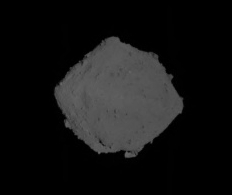
The new colonial movement: The Hayabusa-2 science team has decided to attempt a second touch-and-go sample grab from the man-made crater they created on the surface of the rubble-pile asteroid Ryugu.
JAXA engineers confirmed that the probe’s camera and other equipment that were slightly damaged by the first landing are usable, and that there are no big rocks at the candidate site. They gave the go-ahead for a landing on July 11.
Hayabusa2 is scheduled to begin its descent from an altitude of 20,000 meters at around 10 a.m. on July 10 Japan time, and touch down on the asteroid’s surface about 25 hours later.
This is the first time I have heard of any damage to the spacecraft from the first touch-and-go landing. Regardless, they have decided they can risk another sample grab and still have the ability to return the samples to Earth.
The new colonial movement: Europe has finally admitted that its refusal with Ariane 6 to make it reusable was a mistake, and has begun a major engineering research project to design and fly two different types of reusable rockets.
This month, the European Commission revealed a new three-year project to develop technologies needed for two proposed reusable launch vehicles. The commission provided €3 million to the German space agency, DLR, and five companies to, in the words of a news release about the project, “tackle the shortcoming of know-how in reusable rockets in Europe.”
This new RETALT project’s goals are pretty explicit about copying the retro-propulsive engine firing technique used by SpaceX to land its Falcon 9 rocket first stages back on land and on autonomous drone ships. The Falcon 9 rocket’s ability to land and fly again is “currently dominating the global market,” the European project states. “We are convinced that it is absolutely necessary to investigate Retro Propulsion Assisted Landing Technologies to make re-usability state-of-the-art in Europe.”
What is interesting to me is what appears to be some internal politics within Europe surrounding this effort. France is generally the most dominate member of the European Space Agency. Yet, according to the press release for this announcement, France is not involved in these new reusable rocket projects. Instead, Germany dominates, with companies from Switzerland, Portugal, and Spain participating.
It could be that the failure of Ariane 6 to garner customers, due to its higher costs, has forced these ESA partners to push for their own reusable rocket projects.
Either way, the competition in rocket technology is heating up, more evidence that the 2020s will be the most exciting decade in space since the 1960s.
The new colonial movement: Chinese engineers have awakened both the Chang’e-4 lander and the Yutu-2 rover to begin work on their seventh lunar day on the Moon’s far side.
The text of this Chinese news report is almost identical to the text in the news report a month ago, when both spacecraft were awakened for the sixth lunar day. And as before, it tells us little.
What today’s story reveals is that Yutu-2 traveled only about 75 feet during the sixth lunar day. With an overall odometer reading of 695 feet, it appears it is averaging about 100 feet per lunar day, with the per day number dropping with time. Either the science team is becoming cautious, or they have had unstated issues that have slowed them down.
Still, the rover’s nominal mission was only three lunar days, so it is survived more than twice as long as designed.
Embedded below the fold in two parts.
» Read more
Cool image time! The sequence of images above, reduced to post here, were taken in multiple wavelengths by the 2.1 meter Kitt Peak National Observatory in Arizona and the Spitzer Space Telescope in orbit.
The Whirlpool galaxy, also known as Messier 51 and NGC 5194/5195, is actually a pair of galaxies that are tugging and distorting each other through their mutual gravitational attraction. Located approximately 23 million light-years away, it resides in the constellation Canes Venatici.
The leftmost panel shows the Whirlpool in visible light, much as our eye might see it through a powerful telescope. In fact, this image comes from the Kitt Peak National Observatory 2.1-meter (6.8-foot) telescope. The spiraling arms are laced with dark threads of dust that radiate little visible light and obscure stars positioned within or behind them.
The second panel from the left includes two visible-light wavelengths (in blue and green) from Kitt Peak but adds Spitzer’s infrared data in red. This emphasizes how the dark dust veins that block our view in visible light begin to light up at these longer, infrared wavelengths.
Spitzer’s full infrared view can be seen in the right two panels, which cover slightly different ranges of infrared light.
The infrared views of the Whirlpool galaxy also show how dramatically different its two component parts are: The smaller companion galaxy at the top of the image has been stripped nearly clean of dust features that stand out so brilliantly in the lower spiral galaxy. The faint bluish haze seen around the upper galaxy is likely the blended light from stars thrown out of the galaxies as these two objects pull at each other during their close approach.
The Spitzer images above are likely among the last we shall see from that telescope, which has been in orbit since 2003 with a planned mission of only 2.5 years. As its cryogenic coolant became depleted in 2009, it has been functioning in a somewhat limited phase since. NASA will officially end the mission on January 30, 2020, more than thirteen years beyond that initial lifespan.