
Taylor Davis – Nostalgia
An evening pause: Hat tip Alton Blevins.
An evening pause: Hat tip Alton Blevins.
Though one of its two solar panels remains undeployed, engineers and Northrop Grumman and NASA have proceeded with four engine burns so as to rendezvous with ISS tomorrow, November 9th, with arrival in the early morning hours.
Expedition 68 NASA astronaut Nicole Mann will capture Cygnus with the station’s robotic arm, with NASA astronaut Josh Cassada acting as backup. After Cygnus capture, ground commands will be sent from mission control at NASA’s Johnson Space Center in Houston for the station’s arm to rotate and install it on the station’s Unity module Earth-facing port.
According to this NASA update, it appears that NASA managers are confident that the stuck solar panel is not blocking the grapple point, preventing the arm from grabbing the capsule. At the same time, the wording in the update is just a bit vague, and also suggests that before this capture occurs they will be inspecting Cygnus very carefully.
I will be doing a long appearance on the Space Show tonight with David Livingston, beginning at 7 pm (Pacific). Please feel free to call in and ask questions.
In order to give them time to make sure all is right after the coming tropical storm, NASA managers have decided to delay the first test flight of SLS two days until November 16.
A launch during a two-hour window that opens at 1:04 a.m. EST on Nov. 16 would result in a splashdown on Friday, Dec. 11. If needed, NASA has a back-up launch opportunity on Saturday, Nov. 19, and will coordinate with the U.S. Space Force for additional launch opportunities.
At the moment they have decided to keep the rocket on the launchpad, as they expect it will be able to withstand the predicted storm. If the predictions change however they still have the option to roll it back into the assembly building.

What the Democrats want to repeal.
I think today’s blacklist story about a lawsuit by five California doctors against a state law that was passed by the Democrat-controlled state legislature and signed by Democrat governor Gavin Newsom, is a perfect blacklist story for today, election day.
Two years ago, at the beginning of the Biden administration, I noticed an immediate change in the behavior of Democratic Party politicians and their supporters. No longer were they whispering about their desire to silence their opponents. Suddenly they were open and aggressive about it, calling for blacklists and commissions, as Congresswoman Alexandria Ocasio-Cortez (D-NY) enthused, “…to figure out how we rein in our media environment so you can’t just spew disinformation and misinformation.” Here is what I suggested they do:
Hey, Alexandria, I’ve got the perfect name for your congressional commission. Why not call it the House Un-American Activities Committee? You could subpoena right-wing writers and journalists to testify against their will in Congress, demanding to know their party affiliations. You could also set up lists of these proven conservatives so that businesses nationwide can blacklist them and keep them from working.
As it turned out, the Democrats did exactly this, though their commission was instead named the January 6th commission, supposedly focused on punishing anyone involved in the entirely legal demonstrations that occurred in DC that day. At no time in the past two years has that commission, or Biden’s Department of Justice, showed the slightest interest in investigating actual political violence. No, instead, the goal has been to persecute ordinary people and slander entirely innocent politicians.
Nor has the Democratic Party’s campaign against free speech and personal liberty been limited to this commission. I started my blacklist column at that time because the number of examples of blacklisting, censorship, and abuse of power by the left, both in and out of that party and among its supporters, had become so numerous I realized if I reported every case as it happened, my website would be swamped. Instead, I decided to cover one per day, to make it clear how much these thugs were normalizing this goonlike behavior. After two years, that column now lists more than four hundred examples of blacklists and abuse of power, almost all of which were done by the Democratic Party or its supporters on the left.
The law under dispute in California is a perfect example. Passed in September, 2022, it forbids any doctor from saying anything the government doesn’t like, or face the loss of their medical license for “unprofessional conduct.” Below is the bill’s specific but very vague wording, designed to allow the government to punish almost all medical professionals for anything they might say or publish, merely because someone in the government disagrees with it:
» Read more
With the launch of Ispace’s first lunar lander, Hakuto-R, only two weeks away, the private company has obtained a license from the Japanese government to conduct private transactions on the Moon.
The license allows Ispace to complete a contract awarded by NASA in December 2020, to acquire regolith from the lunar surface to sell to the space agency. During M1, Ispace is expected to collect regolith that accumulates on the footpad of the landing gear during the touchdown on the surface, photograph the collected regolith and conduct an “in-place” transfer of ownership of the lunar regolith to NASA. After ownership transfer, the collected material becomes the property of NASA, under the Artemis program. Under the contract, the lunar regolith will not be returned to Earth.
Under a second contract awarded to Ispace’s subsidiary [Ispace EU] … Ispace EU will acquire the lunar material on its second mission scheduled for 2024 as part of the HAKUTO-R program. An application for Mission 2 will be submitted to obtain a separate authorization.
This mission will also land the UAE’s first lunar rover, Rashid.
According to the Outer Space Treaty, it is the responsibility of each nation to regulate the private operations of its citizens in space. This action thus follows the laws that Japan has passed to supervise commercial space companies.
Two stories today suggest that Richard Branson’s space empire continues to totter.
First, a judge ruled that the fraud lawsuit against Branson by other stockholders in the suborbital tourist company Virgin Galactic can go forward.
The suit claims Branson concealed safety problems while he sold off the bulk of his own stock at top dollar. Only after he had dumped his stock were those problems revealed, and the stock price plummeted, now trading at less than 10% of the peak in February 2021, when Branson sold.
Second, it appears that though Branson’s satellite orbital company Virgin Orbit is operational, it is not going to launch as many satellites this year as expected, and thus required an investment of $25 million on November 4th from Branson’s Virgin Group to stay liquid.
Branson clearly wanted to be a major player in space. In the end, he has mostly failed, though once again Virgin Orbit remains a viable launching company for smallsats.
Delayed two years because of engine cracks, Japan’s space agency JAXA yesterday successfully completed a static fire test of its new H3 rocket.
JAXA aims to conduct the first launch of an H3 rocket before the end of this fiscal year. The space agency will spend about two weeks analyzing data from the latest test to determine whether it was successful.
Two first-stage engines were fired for about 25 seconds during the test, causing smoke to billow from the base of the rocket towards the sea.
Assuming no new issues are found in the test data, Japan hopes to complete the first H3 launch in 2023.
Skyroot, India’s first startup private rocket company, has now scheduled the first test launch of a suborbital version of its Vikram rocket for sometime between November 12the and 16th, depending on weather.
The rocket will be sent into space from ISRO’s Satish Dhawan Space Centre spaceport in Sriharikota, off the Andhra Pradesh coast.
The space sector was opened up to facilitate private sector participation in 2020. In 2021, Skyroot became the first space technology startup to ink an MoU with ISRO for sharing facilities and expertise.
…The company’s COO & co-founder, Naga Bharath Daka, said “The Vikram-S rocket getting launched is a single-stage sub-orbital launch vehicle, which would carry three customer payloads and help test and validate the majority of technologies in our Vikram series of space launch vehicles.” The four-year-old Skyroot has successfully built and tested India’s first privately developed cryogenic, hypergolic-liquid, and solid fuel-based rocket engines. The R&D and production activities extensively use advanced composite and 3D-printing technologies.
The company has raised $51 million in private investment capital, the most ever raised by a private Indian rocket company.
Engineers have figured out the issue on the mid-infrared instrument on the Webb Space Telescope that was causing increased friction during operations, and are now ready to return it to full operations.
The team concluded the issue is likely caused by increased contact forces between sub-components of the wheel central bearing assembly under certain conditions. Based on this, the team developed and vetted a plan for how to use the affected mechanism during science operations.
An engineering test was executed Wednesday, Nov. 2, that successfully demonstrated predictions for wheel friction. Webb will resume MIRI MRS science observations by Saturday, Nov. 12.
Webb has three other infrared instruments, looking at different infrared wavelengths, so this issue had not prevented the telescope from doing most of its observations. Losing MIRI however would have been a very bad blow, this soon after launch.
A storm, now rated subtropical, that is expected to cross the east coast of Florida on November 10th with the possibility that it could strengthen into a hurricane now threatens NASA’s SLS rocket that is on its Florida launchpad preparing for its first test flight on November 14, 2022.
A map of the storm’s presently predicted track can be seen here.
NASA’s Kennedy Space Center in Florida is currently in a HURCON (Hurricane Condition) IV status, which includes implementing checklists and preparations for the storm as the agency continues to prioritize its employees in the Kennedy area. Based on current forecast data, managers have determined the Space Launch System rocket and Orion will remain at Launch Pad 39B. Teams at Kennedy will continue to monitor the weather, make sure all personnel are safe, and will evaluate the status of the Monday, Nov. 14, launch attempt for the Artemis I mission as we proceed and receive updated predictions about the weather.
Depending on the storm’s track in the next 24 hours, as well as its strength, NASA managers have the option of returning the rocket to the assembly building to protect it. If they do so, however, it is certain the November 14th launch date will be scrubbed. As they have a window of a number of additional dates [pdf] through November 27th, I suspect they will then aim for one of those dates.
An evening pause: Nicely done, in this age of no memory and a forgotten past.
How does it feel
To be an expert in a dying field
How do you know
It’s over when you can’t let go
You can’t stop
Can’t rewind
Love is learned over time
‘Til you’re an expert in a dying field
Hat tip Gavin Packard.
Courtesy of BtB’s Twitter stringer, Jay.
Next comes testing and hopefully a launch early next year.
The animated movies at both links are intriguing, but they mean nothing until we see some real footage of real hardware. Otherwise, this stuff is no different than the decades of powerpoint presentations NASA and Roscosmos would put out about what each intended to do, while doing nothing.
This is the engine for Relativity’s larger Terran-R rocket, intended to compete directly with SpaceX’s Falcon 9.
The failure of one of the two solar panels on Northrop Grumman’s Cygnus capsule to deploy today shortly after launch might cause some issues with getting the spacecraft docked to ISS.
Northrop Grumman has reported to NASA that Cygnus has sufficient power to rendezvous with the International Space Station on Wednesday, Nov. 9, to complete its primary mission, and NASA is assessing this and the configuration required for capture and berthing.
The capsule does not dock directly with the station, but is instead grabbed by a robot arm, which then brings it into its port. The grapple point that the arm uses is on the end where the solar panels are, with the docking port at the capsule’s other end. What is not presently clear is whether that point is blocked by the undeployed panel.
Because I led a cave trip yesterday (and was also the oldest person on the trip by at least two decades), I am kind of beat today. I might get some energy later in the day to write up a blacklist column, but right now I don’t have the mental strength to do it.
So instead, I am reposting my voting recommendations for Arizona. While these recommendations cover the statewide elections, they are also tailored to my specific location in Pima County in southern Arizona. If you are in Arizona but in a different county you will simply have to do some of your own research. O the horror!
——————————
Who and What to vote for in Arizona in 2022

The citizen is sovereign, and your vote demonstrates that power
I first posted my election choices in Arizona on October 11, 2022, the day before the start of early mail-in voting in this state. However, I am now posting my choices again because there were two propositions (#128 and #130) then that I was unsure about how I wished to vote. I have now done a bit more research, and made my choices. I think my analysis will be useful to my readers.
I have also included more information about the candidates running.
I want to once again emphasize that though I am not partisan, based on the steady decline of thought in the Democratic Party combined with its increased passion for arresting and violently harassing its opposition, I cannot at present vote for anyone in that party. I wish this was not the case, but I also believe strongly that if American voters throw out as many Democrats as possible in November, it will allow for that party to reform itself. With the defeat of its present leadership, the party will be faced with a stark choice: find new leaders, shift gears, or die (allowing a new party to replace it). With any of these options, the voters would be provided with a new choice in future elections, coming from a different direction.
As a perfect example of the mindless corruption that has now taken over the Democratic Party, witness President Joe Biden’s statement this past weekend throwing his full support behind the castration and mutilation of children in order to change their sex, as advocated by the “trans” movement — which in plain English is a movement of cross-dressers demanding more power over everyone else.
The president denounced Republican states that have passed laws attempting to ban or limit sex change surgeries and transition treatments – like hormone blockers – for children who identify as non binary or transgender. Biden spoke with a panel of six progressive activists for the NowThis News presidential forum on Friday, which aired on Sunday. One of the six panelists was TikTok star Dylan Mulvaney who is documenting their transition from a male to trans woman.
When asked if red states should have the right to pass laws limiting access to gender-affirming treatments, Biden said: ‘I don’t think any state or anybody should have the right to do that.’
‘As a moral question and as a legal question, I just think it’s wrong,’ the president added.
This corruption in the Democratic Party has also made the Republican Party unreliable, which is why the Republican slate in Arizona is so important. All of the state’s major candidates (governor, senate, secretary of state, attorney general) are not from the established party. They are mostly Trump outsiders, who are running on platforms calling for major reform. Giving them all a win will send shockwaves throughout the political landscape, on both sides of the political aisle. The establishment controlling both parties might finally realize they must pay attention to the citizens of the country, not their own wishes.
All these factors suggest that this is a truly significant election. or as Doug Ross noted in this excellent essay:
This is our generation’s fork in the road and the stakes of our decision could not be higher. If we are to protect our society from the inevitable decline and despotism that has infected so many societies since the beginning of time, in whom should we trust? If we are to shield our children from the tyranny against which our founders fought and so many Americans shed blood, in whom should we put our faith?
I contend that we must fight the anti-Constitutional counter-revolution using every political tool at our disposal. We must pledge to return our country to the rule of law, as it was originally defined by our founders and codified in the Constitution. For anything less condemns our descendants to the fate that Thucydides described. The choice is clear. The question is simple.
Which road will you choose?
Thus, below are my updated final election choices. Note too that I have not contributed any money to any of these candidates, nor have I received any money from any candidate or party as well. These opinions are solely my own.
» Read more

Click for original image.
This morning’s cool image on the right, reduced and sharpened to post here, comes courtesy of the Hubble Space Telescope.
NGC 7038 lies around 220 million light-years from Earth in the southern constellation Indus. This image portrays an especially rich and detailed view of a spiral galaxy, and exposes a huge number of distant stars and galaxies around it. That’s because it’s made from a combined 15 hours worth of Hubble time focused on NGC 7038 and collecting light. So much data indicates that this is a valuable target, and indeed, NGC 7038 has been particularly helpful to astronomers measuring distances at vast cosmic scales.
The press release focuses on how astronomers will use this data to refine the techniques they use to estimate distances to astronomical objects. However, a deep field image of this galaxy offers a wealth of other data. Note the reddish streams of dust along and between the spiral arms. This dust, as well as the bright patches in those arms likely signal star-forming regions. And I expect the details in the full resolution image, too large to make available on a webpage, would tell astronomers a lot about what is going on in the galaxy’s central regions.
Capitalism in space: Early this morning Northrop Grumman’s Antares rocket successfully completed its second launch this year, lifting off from Wallops Island and carrying a Cygnus freighter for ISS.
This launch is also the next-to-last for this version of Antares. Northrop Grumman is using up the last few first stages built in the Ukraine that use Russian engines, after which it will send the next three Cygnus capsules into space using SpaceX’s Falcon 9. It hopes to introduce a new Antares using a Firefly first stage following that.
The leader board in the 2022 launch race remains the same:
51 SpaceX
48 China
19 Russia
9 Rocket Lab
7 ULA
American private enterprise still leads China 73 to 48 in the national rankings, but trails the rest of the world combined 76 to 73.
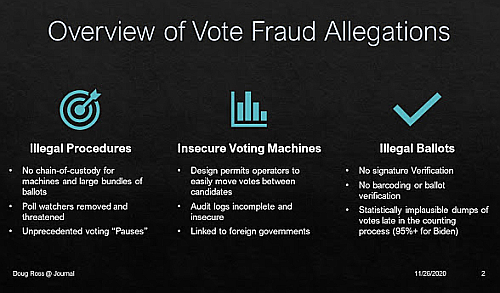
I first published this essay back in mid-July, because I thought it important to outline in detail the nature of the election tampering we should expect to see on Tuesday, November 8th, and how that tampering might be used by the corrupt urban Democratic Party to create undeserved victories in several states.
That analysis remains spot on, though it does appear that in some states, such as Wisconsin and Arizona, enough work as been done to mitigate or prevent the worst fraud. Republicans and other independent organizations in these states especially have taken actions comparable to what I recommended, and are aggressively monitoring the election process to make it much more difficult for election tampering to take place.
I think Americans however need to reread this essay, so that they understand well exactly what is going on when the results are delayed (as predicted by Joe Biden in one of his many ugly speeches last week) in states like Pennsylvania, New York, Minnesota, and Michigan. And if it looks like Democrats will lose in Oregon and Washington expect delays there as well. Those delays will be aimed at changing the results so that the Democrats do not lose.
——————————————–
How the localized nature of Democrat vote tampering will influence the 2022 election
Based on the ample evidence of election fraud, corruption, and vote tampering done repeatedly by Democrats nationwide during the 2020 election, we can expect these politicians and their minions to commit similar election crimes in the upcoming 2022 mid-term elections, especially because the effort by some Republicans to reform their state election systems in the key purple states was so effectively blocked by Democrats, by many quisling Republicans, and by a willing leftist press.
It is however important to understand where that election tampering was done in 2020 in order to understand the election fraud to come, as well as creating a strategy to prevent it. As real estate agents like to say, “Location is everything!”, and it appears this applies to election fraud as well.
The 2020 fraud in Democratically-controlled Fulton County (Atlanta), Georgia.
In 2020, in states that were purple and where the final result was in doubt, the Democrats took advantage of their total control of the local urban voting districts in those states — where there are very few Republican voters — to tilt the results. In such places (Philadelphia, New York, Atlanta, Detroit, Phoenix) the government is essentially a one-party Democrat operation. Many election districts in these cities have no Republican election judges at all. If the Democrats wish to commit election fraud, there is no one looking over their shoulder to question them, with some districts actually taking aggressive action in 2020 to illegally keep Republican poll watchers out.
Thus we saw strong evidence in all of these cities of pro-Democrat ballot-stuffing, of all types, from fake ballots to ballots counted multiple times to evidence the votes on the ballots themselves were changed by computer. The fraud however was strongly localized to these urban centers controlled by Democrats. The vote tampering was able to tilt the statewide results. but not the local contests.
For example, Democrat mayors in Wisconsin teamed up to have drop boxes placed illegally in unsupervised locations, where Democratic Party mules could stuff them with thousands of harvested ballots. The Wisconsin Supreme Court finally ruled on July 8, 2022 that these boxes were illegal, and violated the plain language of the state’s election laws:
» Read more
According to Iran’s state-run press, on November 5, 2022 it successfully completed a test launch of the first stage of its new Ghaem-100 solid-fueled rocket.
Amir Ali Hajizadeh, head of the Revolutionary Guard’s aerospace division which developed the Ghaem 100, said the rocket would be used to launch Iran’s Nahid satellite for the telecommunications ministry, state media reported.
Saturday’s operation tested the first sub-orbital stage of the rocket, the reports added.
There are so many unknowns about this story it would be foolish to speculate.
China’s Long March 3B rocket today launched a communications satellite from one of its interior spaceports.
No word on where the first stage landed. The satellite replaced one that had failed in 2019 immediately after launch.
The leaders in the 2022 launch race:
51 SpaceX
48 China
19 Russia
9 Rocket Lab
7 ULA
American private enterprise still leads China 72 to 48 in the national rankings, but trails the rest of the world combined 76 to 72.
A scheduled Antares launch of a Cygnus capsule from Wallops Island in Virginia was scrubbed today because a fire alarm when off in the capsule’s control center in Dulles, Virginia. It has been rescheduled for wee hours of tomorrow.