Mars rover update: December 22, 2016

Curiosity

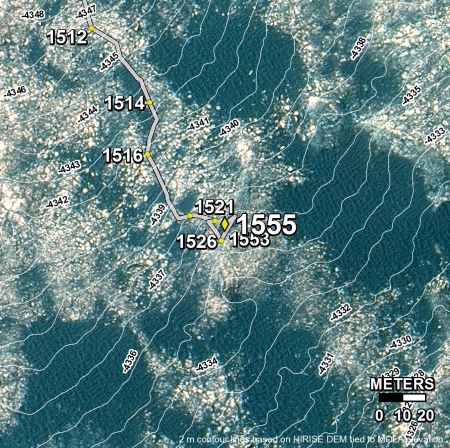
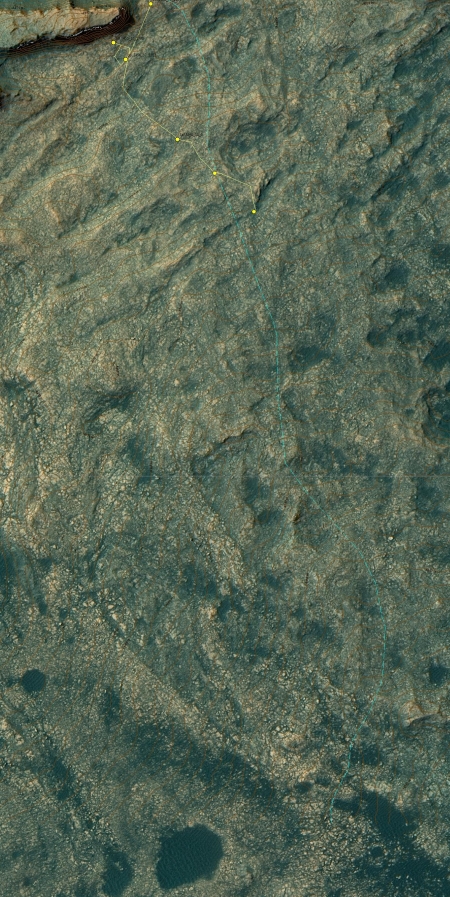
Curiosity's location, Sol 1555

For the overall context of Curiosity’s travels, see Pinpointing Curiosity’s location in Gale Crater.

After weeks of drill diagnostics and enforced lack of travel while those diagnostics were on-going, Curiosity finally moved last weekend (Sol 1553). The traverse map to the right, cropped and reduced in resolution to show here, indicates where they went, which wasn’t far and doesn’t really tell us yet which route they plan to take to pick their way through the surrounding dune fields. Thus, the options I indicated in my November 14, 2016 rover update all remain possible. If you go to that update you can see a much better Mars Reconnaissance Orbiter (MRO) overhead image showing the upcoming terrain.

In the meantime, the Curiosity science team is preparing to take a well deserved Christmas-New Year’s break (see update for sols 1566-1568). So that Curiosity doesn’t sit idle during that time, they have uploaded to it an 8-sol plan to cover December 22 to December 30 followed by a 3-sol plan from December 31 to January 2. The rover will not move during this period, but will take lots of different observations in situ.

As they note rightly at the link above, “It’s been quite the year for our rover: we have drilled six holes, performed two scoops, driven 3 km, and climbed 85 vertical meters!” What is more significant is that the best is yet to come!

Opportunity

For the overall context of Opportunity’s travels at Endeavour Crater, see Opportunity’s future travels on Mars.
» Read more

6 comments

The squealing of pigs

Back in October 2010, just days before the mid-term elections, I wrote the following:

For the sake of argument, let’s assume that, come Tuesday, the Republicans take both houses, in a stunning landslide not seen in more than a century. Let’s also assume that the changes in Congress are going to point decidedly away from the recent liberal policies of large government (by both parties). Instead, every indication suggests that the new Congress will lean heavily towards a return to the principles of small government, low taxes, and less regulation.

These assumptions are not unreasonable. Not only do the polls indicate that one or both of the houses of Congress will switch from Democratic to Republican control, the numerous and unexpected primary upsets of established incumbents from both parties — as well the many protests over the past year by large numbers of ordinary citizens — make it clear that the public is not interested in half measures. Come January, the tone and direction of Congress is going to undergo a shocking change.

Anyway, based on these assumptions, we should then expect next year’s Congress to propose unprecedented cuts to the federal budget, including the elimination of many hallowed programs. The recent calls to defund NPR and the Corporation for Public Broadcastings are only one example.

When Congress attempts this, however, the vested interests that have depended on this funding for decades are not going to take the cuts lightly. Or to put it more bluntly, they are going to squeal like pigs, throwing temper tantrums so loud and insane that they will make the complaints of a typical three-year-old seem truly statesman-like. And they will do so in the hope that they will garner sympathy and support from the general voting public, thereby making the cuts difficult to carry out.

The real question then is not whether the new Congress will propose the cuts required to bring the federal government under control, but whether they, as well as the public, will have the courage to follow through, to defy the howls from these spoiled brats, and do what must be done.

The legislative situation with NASA over the summer and fall might give us a hint about whether the next Congress will have the courage to make the cuts that are necessary. In this case Obama actually proposed doing something close to what conservatives have dreamed of for decades: take NASA (and the government) out of the business of building rockets and spacecraft and pass it over to the private sector.

Moreover, despite the strong dislike the right has for Obama and his leftist policies, many conservative pundits both inside and outside of the space activist community publicly supported the President in this effort.

Nonetheless, these policies were not accepted by Congress. Instead, the legislative body passed an authorization bill that requires NASA to build a new heavy-lift rocket and the manned capsule to go with it. Congress did this partly for national security reasons, but mostly because they wanted to protect the jobs in Houston, Florida, and elsewhere that NASA provides, and thus bring home the bacon to their constituents. And they did this because those constituents had squealed at them about the threatened loss of funding.

In other words, elected officials from both parties had teamed up to authorize this pork-laden program in order to keep the pigs quiet. In other words, NASA’s legislative history this past year does not give us an encouraging view of the future. It appears that Congress will give us the same-old same-old, when asked.

More than six years have passed, and my analysis of the situation in 2010 appears almost perfect. While the Republicans did not win both houses of Congress in 2010, they did in 2014. Despite these victories from voters who clearly wanted them to cut back on the power of government, they did exactly what I expected, based on their actions in connection with NASA and SLS: maintain the pork and chicken out whenever challenged by Obama, the Democrats, the press (I repeat myself), and too many spoiled members of the general public.

After the 2016 elections, things have moved even more to the right. The Republicans not only control both houses of Congress, they have a Republican president (though a very unpredictable one) and the leftwing mainstream press has been discredited and no longer monopolizes the distribution of information. What will happen in the coming years?
» Read more

10 comments

Mars rover update: December 8, 2016

Curiosity

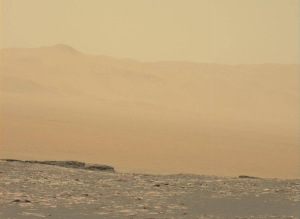
Mars' dusty sky

For the overall context of Curiosity’s travels, see Pinpointing Curiosity’s location in Gale Crater.

Since my last rover update on November 14th, Curiosity moved relatively little. They drove a short distance to the southeast to a point where they wanted to drill, but have not moved from this location for the past two weeks because of drill issues.

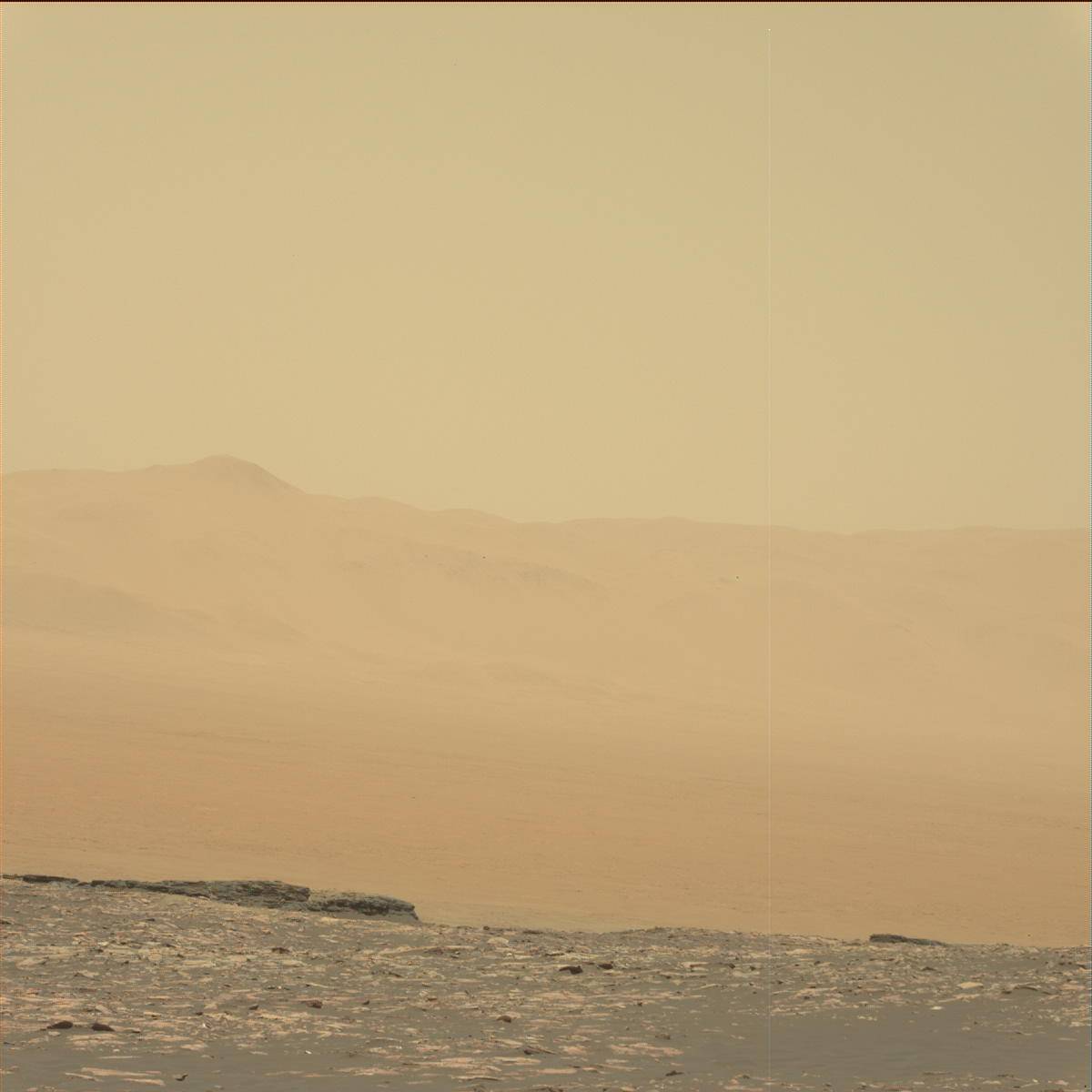
While the engineers study the drill problem, which requires them to not move either the rover or the drill arm, the scientists have still used Curiosity to take images of the dust in the sky, to take hourly images of the dust on the ground (to see how it is changed by the wind), and to take images of nearby interesting nearby features (below the fold).
» Read more

5 comments

Canyoneering in Death Valley

Slabby Acres

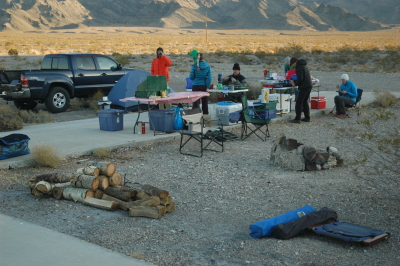
This past Thanksgiving weekend I joined some caving and canyoneering friends in Death Valley to celebrate the holiday in the great outdoors as well as explore some of the park’s more inaccessible canyons. We did not camp in the park, since campfires are not allowed and the park has a size limit for groups. Instead, we camped on BLM land just outside the park, in what appeared to be an abandoned RV trailer park that canyoneerers call Slabby Acres.

First a primer. Regular readers will know that I have been doing cave exploration and mapping now for about thirty years. This recreational activity not only involves knowing how to use survey instruments in a cave, you need also to be trained in the vertical rope techniques required to reach some remote places underground, sometimes dropping multiple pits on the way in and climbing those same domes on the way out.

Canyoneering is somewhat similar to caving. Just like caving you need to know how to travel over boulders and rough terrain and also know how to rappel and climb ropes. Unlike caving the canyons are open to the sky, and you rarely climb the ropes to travel up the canyon. In canyoneering the goal is to find the head of the canyon and travel down its many drops to come out at the bottom safely, all the while getting to see some wild, majestic, and rarely seen places. In addition, modern canyoneering rarely involves virgin exploration. Most canyoneerers visit already explored canyons whose details are well documented so that they know what ropes to bring as well as how to find the canyons.

This was our goal this past weekend. Some of the western cavers who have joined my survey projects and learned how to cave survey are also active canyoneerers. While none of us had ever visited the canyons on our trip list, several were very experienced with finding and traversing places they had never been before. My plan was to follow them and enjoy the experience. Below are my pictures during one of this weekend’s canyoneering trips. The canyon is Scorpion Canyon. It was the first we visited and was relatively easy to do, only 4.6 miles long with only six rappels and only an 1,800 foot elevation drop. It would take us over one of the mountain ranges that form the eastern wall of Death Valley. In fact, this was how I was going to enter Death Valley for the first time. Rather than drive in, like most tourists, I would rappel in.
» Read more

14 comments

NASA global warming advocate Gavin Schmidt fights back

The head of NASA’s Goddard Institute of Space Studies (GISS), Gavin Schmidt, declared in a newspaper interview on Thursday that “Global warming doesn’t care about the election.”

The science community and environmental campaigners in the US have already begun efforts to persuade Mr Trump that climate change is actually real before he takes office next year. Dr Gavin Schmidt, the director of Nasa’s Goddard Institute for Space Studies, signalled they would have allies among the federal science agencies. He tweeted a graph including new data from Nasa showing that last month was the second warmest October on record, putting 2016 firmly on course to be the warmest year. “No surprise here, planetary warming does not care about the election,” he wrote.

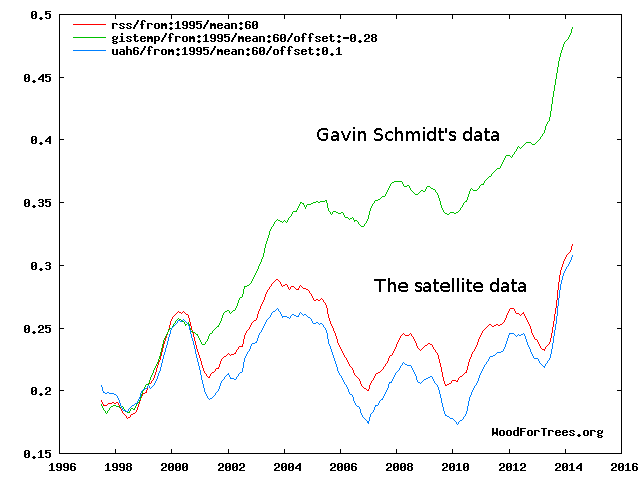
I would not be surprised if Schmidt ends up getting fired by Trump. His monthly graphs showing each month to be the hottest on record, such as the one he tweeted in the quote above, have been absurd campaigning, not science. For one thing, the differences from month to month have been in the hundredths of a degrees, well within the margins of error and essentially insignificant in value. To claim that his data has determined the “hottest” month on record from this is demonstrating that he is not a scientist, but a political activist.

Gavin Schmidt vs the satellite data

Secondly, his data is not trustworthy to begin with. Schmidt has been in charge of all of the data tampering at NASA that has consistently altered the decades-old surface temperature record — without any clear scientific justification — to cool the past and warm the present so that the amount of warming is emphasized. While his graphs show the climate to be warming, based on surface data that he has been adjusting, the satellite data that NASA gathers that he (a NASA scientist) generally ignores, does not. The image to the right illustrates this, and shows that the divergence between his adjusted surface data and the satellite data has been increasing steadily over the years.

I fully expect Schmidt and the other global warming scientists in NASA and NOAA to team up with the press, as Schmidt does here, to defy Trump. Whether Trump will have the courage to fight back, something no Republican has been willing to do for decades, will be the key question.

8 comments

Mars rover update: November 14, 2016

Curiosity

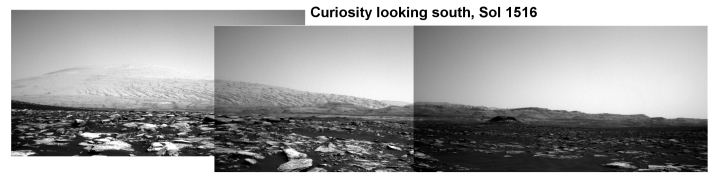
Curiosity looking south, Sol 1516

For the overall context of Curiosity’s travels, see Pinpointing Curiosity’s location in Gale Crater.

Since my last update on November 3rd, Curiosity has reached the region of sand dunes and has started to pick its way through it. The panorama above was created using images from the rover’s left navigation camera, taken on Sol 1516. It looks south, with Mount Sharp rising on the left.

That same day Curiosity also used its mast camera to zoom in on the canyon gap in the center of the panorama. The first image below is the wider mast camera shot, with the an outline showing the even closer zoom-in below that.
» Read more

1 comment

The moderate Democrat wins

It appears that Donald Trump has won what I have been calling the November Democratic primary, and will take the office of President of the United States this coming January.

Will this make much difference? I am very guardedly optimistic. Trump remains at heart a moderate Democrat with mixed leanings. His experience during this campaign however has also clearly pushed him rightward, as he suddenly found himself the target of liberal hate. Moreover, the people he has been listing as possible cabinet and administration appointees during his term in office suggest a slightly right-of-center rule.

At the same time, the entrenched and corrupt culture that rules Washington and intellectual society will not accept a Trump administration meekly. They will fight any effort by him or his supporters to change that culture, or to wrest any power from it. This will be the ultimate test of Trump’s beliefs. If he truly has shifted rightward, he will fight back, and “drain the swamp” as he promised during the campaign. If however he allows his past moderate Democrat roots to take over he will back off and do what the Republican leadership has been doing for the past two decades: retreat in the face of the slightest opposition.

What makes me most hopeful that Trump will actually “drain the swamp” is that he will enter office with a solid Republican congress, made up of more true conservatives then we have ever seen. This more than anything will help keep him from wavering from his promises.

One other thought for the moment: The closeness of this election is still disturbing. Trump was not a great candidate, but Clinton was a truly corrupt one. That so many Americans were willing to look the other way even after almost three decades of documented dishonesty and lying and still give her their votes does not speak well of them. Until that basic fact changes, the American system of government remains very fragile and exposed to destruction from within.

24 comments

Mars rover update: November 3, 2016

Curiosity

Post updated: See last paragraph in Curiosity section.

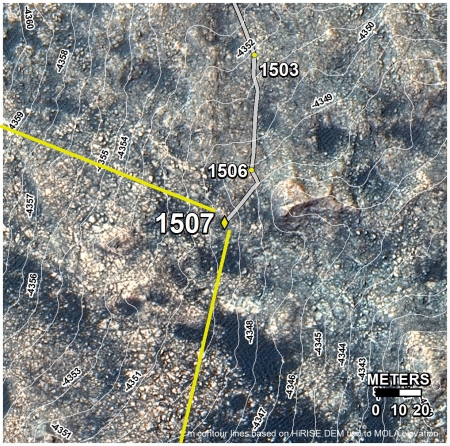
Curiosity location 1507

For the overall context of Curiosity’s travels, see Pinpointing Curiosity’s location in Gale Crater.

After spending almost a month on the flats south of Murray Buttes, during which the rover drilled another hole, in the past week Curiosity has finally resumed its journey south toward the slopes of Mount Sharp and the sand dune area that it must cross to get there.

Unfortunately, NASA has decided to change how it shows the rover’s progress, and these changes seem to me to be a clever and careful effort to make it more difficult for the public to make educated guesses about where the rover might be heading in the very near future. The image to the right is the cropped inset showing the rover’s recent travels that is part of a new a larger image that puts this inset in the context of the rover’s entire journey. This has replaced the wider orbital mosaic that they used to provide (see for example my September 27, 2016 rover update) that gave a very good view of the entire terrain surrounding the rover from which a reasonable estimate of its future path could be guessed.
» Read more

1 comment

More climate fear-mongering

This article from the journal Nature yesterday, Climate change could flip Mediterranean lands to desert, about a new Science journal paper, is very typical of too much of the climate research and reporting these days.

First, they outline the coming and certain disaster:

Maintaining the historic ranges of the region’s ecosystems would require limiting warming to just 1.5 ºC, by making substantial cuts to the world’s greenhouse-gas emissions, the analysis concludes. Otherwise, the vegetation and ecosystems of the Mediterranean basin will shift as temperatures rise. Increasing desertification in southern Europe is just one of the changes that would result. “Everything is moving in parallel. Shrubby vegetation will move into the deciduous forests, while the forests move to higher elevation in the mountains,” says Joel Guiot, a palaeoclimatologist at the European Centre for Geoscience Research and Education in Aix-en-Provence, France, and lead author of the study.

Then they point out the necessary political solution, which of course requires us to agree to an odious international agreement that will limit our individual freedoms and give more power to international governments:

“I like that they’re doing this comparison across different warming scenarios in line with the Paris agreement, to start to gauge the sensitivity to them,” says Benjamin Cook, a climate scientist at the NASA Goddard Institute for Space Studies in New York City. The study confirms the vulnerability of many ecosystems, and could guide policymakers’ efforts to help natural systems adapt to climate change, says Patrick Gonzalez, principal climate-change scientist at the US National Park Service based at the University of California, Berkeley. “This study shows how essential it is for nations to meet their Paris commitments.”

Only at the very end of the article, almost as an aside, do they note these inconvenient facts about the limitations of the paper (which also happens to be based entirely on computer models):
» Read more

1 comment

More madness from our intellectual betters

Below is another collection of links I have been gathering since last week, illustrating the intellectual bankruptcy that presently dominates American society and the so-called elite culture that is supposed to lead us.

I wish I could say that these stories are the exceptions that prove freedom and the demand from western civilization that we always seek the truth is still thriving in America, but if I did I’d be lying. These stories reflect the close-minded and oppressive attitude that is permeating our intellectual climate and is acting to squelch freedom and the ability of people to express alternative points of view.

The first three stories illustrate the hate of western civilization that dominates modern intellectual culture. The last three stories illustrate its close-mindedness. For example, consider the James Madison University speech guide:

Student leaders of this year’s freshman orientation at James Madison University were given a list of 35 things they should avoid saying, including phrases such as “you have such a pretty face,” “love the sinner, hate the sin,” “we’re all part of the human race,” “I treat all people the same,” “it was only a joke,” “I never owned slaves,” and “people just need to pick themselves up by their bootstraps,” among other expressions.

Meanwhile, a police chief (who happens to be black) is banned from speaking about the use of forensics in police work because he has had the nerve to publicly criticize the racist Black Lives Movement. We can’t have that!

The worst aspect of these stories is the lack of resistance to these totalitarian measures. If I was attending James Madison University, my response to that speech guide would be to start wearing t-shirts with those banned phrases blazoned across the front, while chalking those phrases everywhere on sidewalks. I do not get the sense that today’s students have the same courage. In fact, the story on trigger warnings suggests that today’s students are wholly in favor of this oppression, and get upset if anyone dares express a dissenting view to them.

8 comments

Mars rover update: October 6, 2016

Curiosity

Post updated. See last paragraph of Curiosity section.

For the overall context of Curiosity’s travels, see Pinpointing Curiosity’s location in Gale Crater.

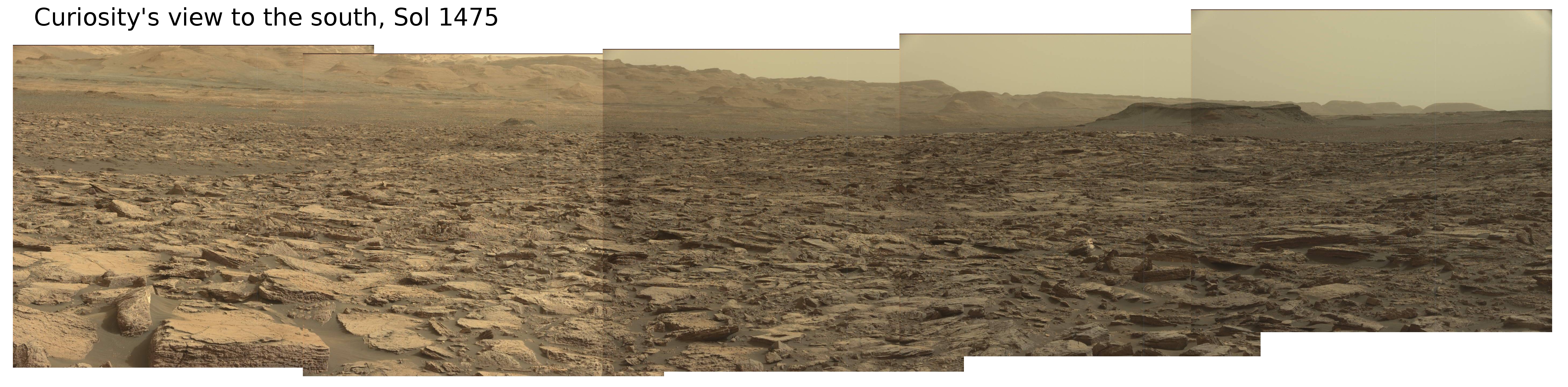
Curiosity looking west, Sol 1475

Having moved south from Murray Buttes, the Curiosity science team has decided [see Sol 1473] that they will veer the rover to the southwest a bit, partly to check out some interesting features but also I think as part of a long term plan to find the best route through an area of sand dunes that blocks their path to the more interesting landscape at the base of Mount Sharp. The panorama above, created by me from images taken by the rover’s mast camera on Sol 1475, was taken to scope out this route, and is indicated below the fold in the overview released earlier this week by the rover science team and annotated by me to indicate the direction of this panorama as well as the rover’s present location. (Be sure to click on the panorama above to see it at full resolution.)
» Read more

4 comments

The childishness sweeping America

I find it incredibly depressing to repeatedly post the number of crazy, insane stories I read each day that document the descent into fascism that I see happening in the United States. So, this week, rather than post them as I found them, I have been accumulating them to post them all at once. I do this partly to save my own sanity, but more importantly to lend impact to them all. These stories illustrate the childishness and immaturity of too many Americans who unfortunately are also being given too much power and undeserved respect.

Quite simply, the behavior illustrated by all these links as that of a bunch of spoiled brats, throwing temper tantrums because they aren’t getting their way. Unfortunately, these brats also generally control our culture today, so no one is allowed to call them for what they are. If you do, you will get slammed, verbally, financially, and even violently. (Note that I once worked in academia, and do so no longer. I leave it to my readers to guess why.)

The video below the fold, from the third link above, nicely illustrates the immaturity and intolerance shown by all these stories. Watch as a tattooed student with a weird hairdo (proving she must be for diversity!) rips down the announcements of an event she simply considers “offensive.” The event was a lecture being given by Christina Hoff Sommers entitled “Where feminism went wrong.” The student is offended that anyone would suggest such a thing, and therefore it must not happen! (I guess some diversity isn’t allowed.)

I also encourage everyone to watch the video at the seventh link, second from the bottom. If you can stomach it, you will see a stark illustration of the hate that moves these children.

The worst aspect of all these stories is how this childish intolerant behavior is becoming increasingly violent and aggressive. Unfortunately, our society does not seem to know how to stop it, and thus I expect it to only grow worse in the coming years, no matter who wins this coming election.
» Read more

154 comments

Sunspot ramp down resumes

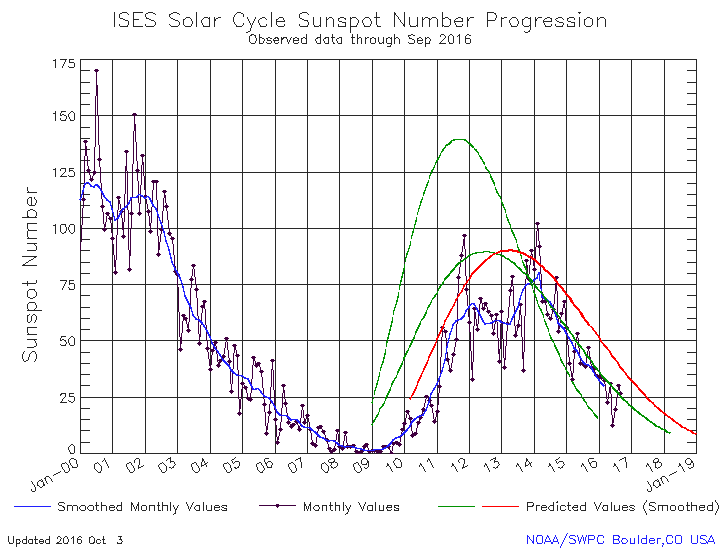
On Monday NOAA posted its monthly update of the solar cycle. I am posting it here, as I do every month, with annotations to give it context.

September 2016 Solar Cycle graph

The graph above has been modified to show the predictions of the solar science community. The green curves show the community’s two original predictions from April 2007, with half the scientists predicting a very strong maximum and half predicting a weak one. The red curve is their revised May 2009 prediction.

After two months of increased sunspot activity, the decline in sunspots resumed in September, though activity did not drop significantly. Overall though, the ramp down towards the next solar minimum continues to track quite closely the ramp down predicted by weak prediction made by half the solar science community back in 2007 (the lower green curve above). These scientists however do not have much to brag about. Their same prediction completely missed the ramp up, which happened a year later than predicted, as well as the activity peak, which was far weaker than predicted.

In fact, the ramp down now continues to point to the possibility that this very weak solar cycle will also be a very short one, something that is quite unprecedented, and suggests that we might be seeing the lead in to another Grand Minimum, where there are no sunspots for decades. Since no one understands yet exactly why such grand minimums happen, however, this remains pure speculation. We will only find out by watching what happens, as it happens.

3 comments

The end of freedom

Below is only a small sampling of the many stories I have been reading in the past two weeks that clearly signal the end of freedom and western civilization. Tolerance for opposing viewpoints is dying, even as our academic community descends into insanity.

The last story is especially depressing. The head of a university advocates the idea that students shouldn’t be forced to hear ideas they don’t like, that they shouldn’t be exposed to any thoughts or statements that might offend them. He then proceeds to insult and denigrate anyone who disagrees with him. This is a man in charge of a university! I read this, as well as the other stories, and realize that the coming dark age is coming far sooner than anyone imagines.

24 comments

Mars rover update: Sept 27, 2016

Curiosity

Curiosity traverse map, Sol 1471

For the overall context of Curiosity’s travels, see this post, Pinpointing Curiosity’s location in Gale Crater.

In the past week Curiosity finally left Murray Buttes and began moving south towards Mount Sharp, and, for at least one day, I thought tracking the rover’s movements might become easier. Early in the week the science team published an updated overhead traverse map that not only showed the topographical elevation contour lines for the surrounding terrain, but also included a blue line roughly indicating the rover’s future route. For reasons I do not understand, however, they only did this for one day, and then went back to the un-annotated traverse maps they had been using previously. I have therefore revised the most recent traverse map, shown on the right, to include these contour lines as well as the planned future route. The contour lines are hard to read on the full image, but below the fold on the right is a zoomed in view of Curiosity’s position as it left Murray Buttes, which shows the rover’s elevation at about 4376 meters below the peak of Mount Sharp. This means the rover has gained about 1,150 meters, or about 3,775 feet, since its landing, but only 50 meters or about 150 feet since March of this year. It is still not on the mountain but in the low foothills at its base.
» Read more

0 comments

Musk’s Mars plan

Musk's Mars plan

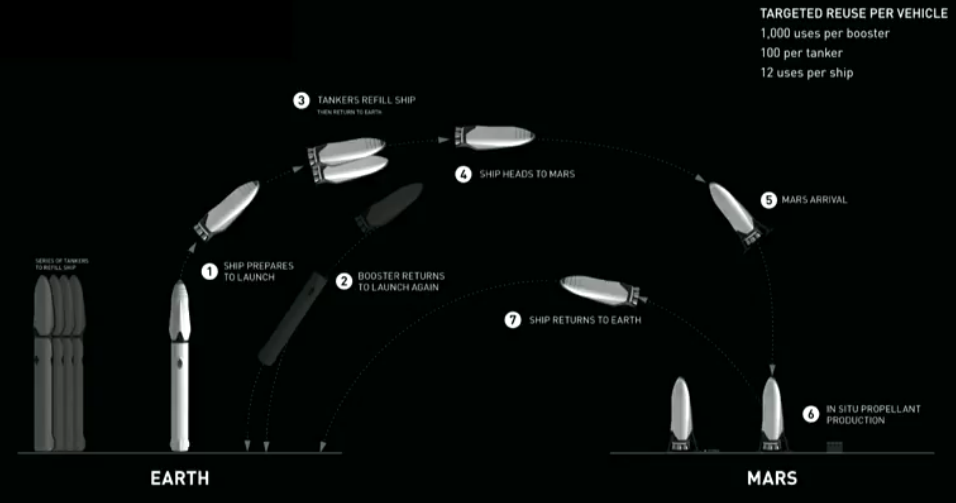
Today Elon Musk gave a speech at the International Astronautical Congress in Guadalajara, Mexico. The speech laid out SpaceX’s proposed architecture for building what he presently calls his interplanetary transport system. The image on the right is one of his talk slides, showing the basic concept, which is built around using the company’s new Raptor engine — still under development — which only got its first test firing this past week.

The plan is ambitious and visionary, which from Musk is not surprising. It is also aimed to be as practical and as cost effective as possible, which also is not surprising coming from Musk. The rocket itself will be larger than both the Saturn 5 and SLS, but not significantly more. Compared to those government rockets however it will be far cheaper and faster to build, though Musk’s hope that they will be launching their first test flights in four years is almost certainly too optimistic. The concept is to use what they have learned with the Falcon 9 to build a bigger rocket with a reusable first stage that launches a large second stage that is either the spaceship taking people to Mars or a giant tanker for refueling that spaceship.

In one of Musk’s early slides he noted something that I have been arguing for decades. “Speading the required lift capacity across multiple launches substantially reduces development costs and compresses schedule.” Though he is still proposing a heavy-lift rocket, he is also following in the footsteps of Wernher Von Braun by proposing that any Mars mission will require some assembly in orbit.

The plan is also aimed at making space travel as affordable as possible. Musk structured the design in as many ways as possible to make it as efficient and as inexpensive as possible. It still won’t be cheap, at about $140K per ton, but at that price it will be affordable to a lot of people. He also mentioned that it include free passage back to Earth.

I doubt we will see this system built as outlined today in the time span predicted by Musk. At the same time, I would not be surprised if we do see some variation of it, and see it built within the near future. In 2011 Musk proposed recovering his Falcon 9 first stages by landing them vertically. The idea seems radical. He got it done in four years. There is every reason to believe he will make this Mars proposal happen as well.

14 comments

Mars rover update: September 20, 2016

Opportunity comes first this time because it actually is more interesting.

Opportunity

For the overall context of Opportunity’s travels at Endeavour Crater, see this post, Opportunity’s future travels on Mars.

Having several choices on where to head, the Opportunity science team this week chose took what looks like the most daring route, heading almost due east towards the floor of Endeavour Crater. In fact, a review of their route and the images that the rover continues to take suggests that the panorama I created last week looked almost due east, not to the southeast as I had guessed. I have amended the most recent overhead traverse image, cropped and reduced below, to show what I now think that panorama was showing.
» Read more

1 comment

Suspicious climate data manipulation at NASA

The uncertainty of modern climate science isn’t merely because of the overall complexity of the data and the climate. Though there are numerous factors that contribute to the long term fluctuations of the climate that we do not yet completely understand or can quantify with any precision (the sun, dust, soot, volcanoes, carbon dioxide increase, to name just a few), there is a more tragic uncertainty that global warming scientists at NASA and NOAA have added to the mix, one that is entirely unjustified and harmful to the field of science and the questions that it is trying to answer.

In the case of this post, that tragic uncertainty has to do with sea level rise and the “adjustments,” without explanation, that NASA is making to its sea level data. Below is a graph taken from the link, showing the changes that have been made to published data from 1982 in order to eliminate a long period of almost no sea level rise from the mid 1950s through 1980.
» Read more

28 comments

A Mars Rover Update

I have decided to continue my Mars rover updates, and make them a regular mid-week feature here on Behind the Black. This is the first.

Curiosity

For the overall context of Curiosity’s travels, see this post, Pinpointing Curiosity’s location in Gale Crater.

Since my last updates here and here, Curiosity has moved south through the gap between buttes to exit the Murray Butte area. The initial slopes of Mount Sharp lie ahead, an open road with no apparent rough terrain to slow travel.

Doing science however does slow travel, and for good reason. Once through the gap the science team decided to swung the rover west and up against the base of the gap’s western butte, rather than immediately head south to climb the mountain. The Mars Reconnaissance Orbiter image below, cropped and reduced, illustrates this path.
» Read more

3 comments

Sunspots: A recovery in August

NOAA’s monthly update of the solar cycle was posted today. As I do every month, I am posting it here, with annotations to give it context.

August 2016 Solar Cycle graph

The graph above has been modified to show the predictions of the solar science community. The green curves show the community’s two original predictions from April 2007, with half the scientists predicting a very strong maximum and half predicting a weak one. The red curve is their revised May 2009 prediction.

The recovery in sunspot activity that began in July continued in August. The number of sunspots increased enough to once again raise the overall curve up to match the green curve of the 2007 weak prediction. Even so, this solar maximum remains far weaker than the weakest prediction. Also, this solar maximum, which started later than all the predictions, looks like it will be far shorter than all the predictions. As I have noted previously, this is counter to all previous solar cycles, where it is the more active cycles that are shorter and the weaker cycles are longer. Here, we are getting a weak cycle that is also short, which once again suggests that we are seeing solar behavior previously unobserved. The solar cycle is doing things it hasn’t done since scientists began studying it closely after Galileo.

2 comments
1 47 48 49 50 51 84