Falcon Heavy launches successfully for 1st time since 2019

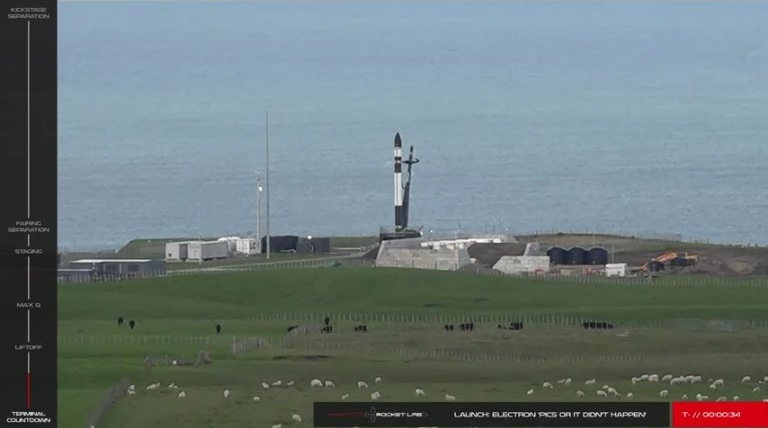
Capitalism in space: SpaceX today successfully put a military reconnaissance satellite using its Falcon Heavy rocket, its first launch since 2019.

The two side boosters and core stage all made their first flight. The core stage was intentionally not recovered, as it needed to use all its fuel for getting the satellite to its orbit. The two side boosters successfully landed at SpaceX’s two landing sites at Cape Canaveral.

The leaders in the 2022 launch race:

50 SpaceX
47 China
18 Russia
8 Rocket Lab
7 ULA

American private enterprise now leads China 70 to 47, though it still trails the rest of the world combined 74 to 70.

This year’s 70 successful launches ties the previous high for the United States in a single year, set in 1966. With two months still left in the year, it looks like that record will be broken, by a lot.

9 comments

The knobby floor of a Martian crater

The knobby floor of a Martian crater

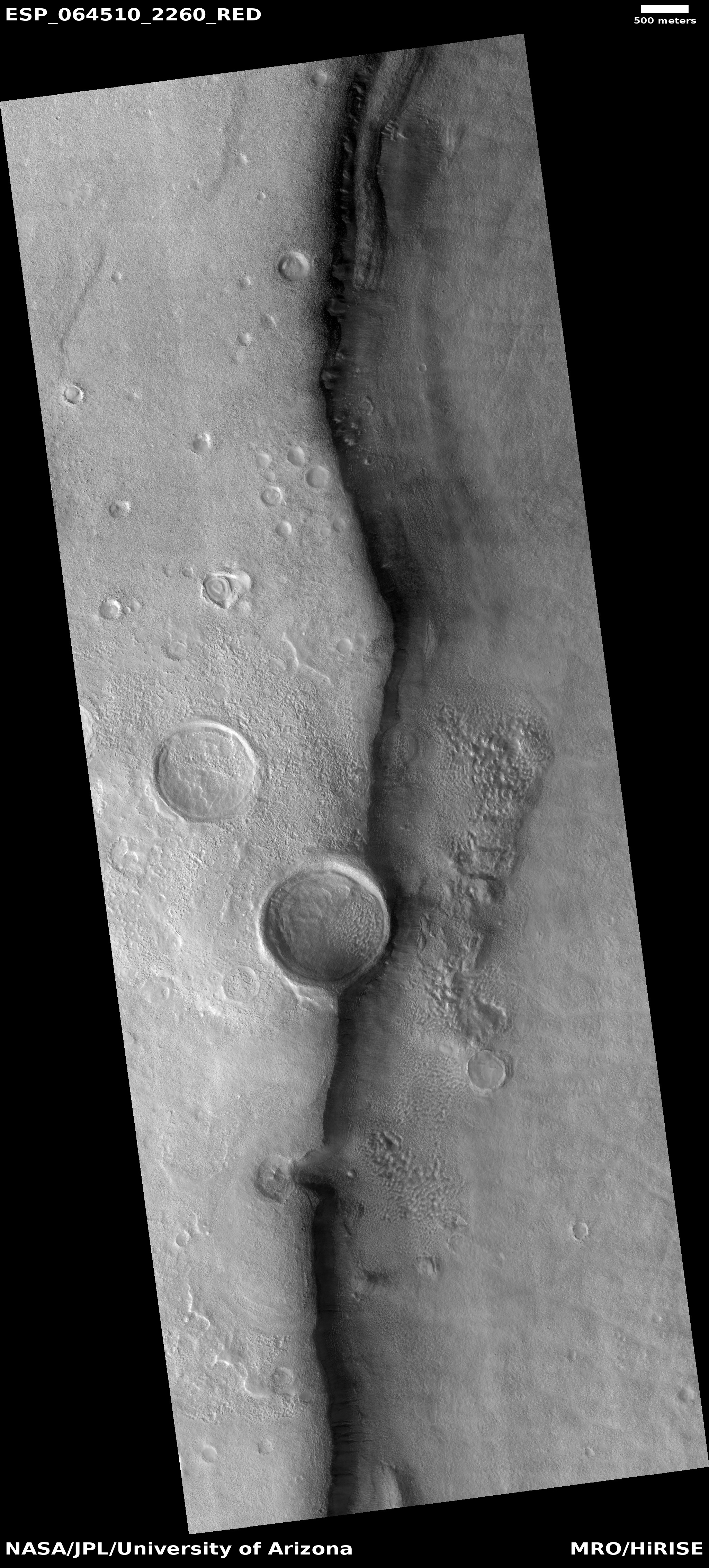
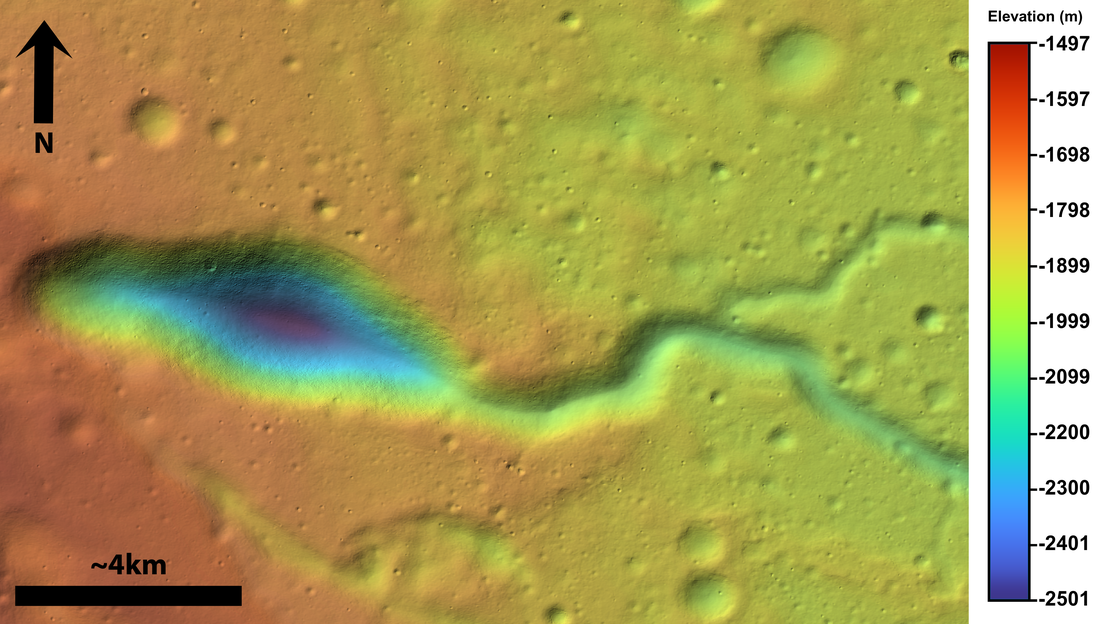
Cool image time! The picture to the right, rotated, cropped, reduced, and enhanced to post here, was taken on July 20, 2022 by the high resolution camera on Mars Reconnaissance Orbiter (MRO). It shows a small portion of the knobby floor of a 70-mile-wide ancient and eroded unnamed crater in the southern cratered highlands of Mars.

Why knobby? Usually such terrain on Mars signifies an very ancient and well eroded region of chaos terrain, its knobs the leftover worn remains of ancient mesas cut by eons of glacier flow.

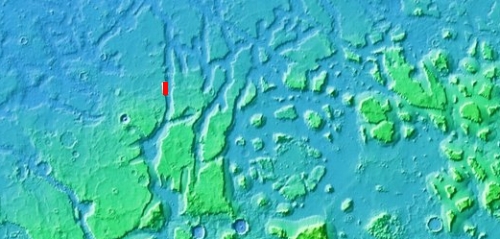
If this is so, the location as shown in the overview map below suggests if there were ever any glaciers — or any near surface ice — at this location, it had to be a very long time ago.
» Read more

0 comments

CAPSTONE makes course correction, now on target for lunar orbital insertion on November 13th

Engineers have successfully overcome the valve issue that had caused the CAPSTONE lunar probe to tumble, and have made a subsequent mid-course correction that has put the spacecraft on target for entering lunar orbit on November 13, 2022, as planned.

The CAPSTONE spacecraft successfully completed a trajectory correction maneuver on Thursday, Oct. 27, teeing up the spacecraft’s arrival to lunar orbit on Nov. 13.

CAPSTONE is no longer in safe mode following an issue in early September that caused the spacecraft to spin. The team identified the most likely cause as a valve-related issue in one of the spacecraft’s eight thrusters. The mission team will design future maneuvers to work around the affected valve, including the two remaining trajectory correction maneuvers scheduled before CAPSTONE’s arrival to orbit at the Moon.

Though it appears the CAPSTONE team has figured out how to deal with that malfuncting valve, it is unclear what the long-term ramifications of that valve will be. If it is still leaking it likely means the mission will be shortened because of loss of fuel, as well as the need to use more to compensate.

1 comment

Distant interacting galaxies

Interacting galaxies
Click for original image.

Cool image time! The picture to the right, cropped and reduced to post here, was taken by the Hubble Space Telescope as part of a survey of known “weird and wonderful galaxies.” This particular pair is dubbed Arp 248, and is estimated to be about 200 million light years away.

Two spiral galaxies are viewed almost face-on; they are a mix of pale blue and yellow in colour, crossed by strands of dark red dust. They lie in the upper-left and lower-right corners. A long, faint streak of pale blue joins them, extending from an arm of one galaxy and crossing the field diagonally. A small spiral galaxy, orange in colour, is visible edge-on, left of the lower galaxy.

The connecting stream indicates that these galaxies are interacting with each other, gravity drawing stars and gas from the upper galaxy towards the lower.

0 comments

Al-Amal orbiter tracks unusual northern summer dust storm on Mars

Fig. 3 from Al-Amal paper
Click for full figure.

Scientists, using UAE’s Al-Amal Mars orbiter, have documented the occurrence of a rare high northern latitude summer dust storm whose origin appears linked to both a major canyon in the northern ice cap as well as the giant sand dune seas that surround that ice cap.

The EMM [instrument on Al-Amal] observed a distinct dust cloud on 10 September 2021. That was outside of the classical Martian dust storm season. The observed dust cloud is an arc-shaped dust storm, typically observed at the northern polar cap edge. This type of non-season dust storm is a well-known phenomenon, but this particular case is interesting because the dust cloud has frontal structure. A large atmospheric front is unusual in this location and season.

EMM’s unique observational coverage adds value to this observation, by providing a sequence of four camera images of the frontal dust cloud, separated by 2–3 hr. The frontal dust cloud shows very little movement over 7–8 hr, that is, it is quasi-stationary. We estimated the wind speed and direction by tracking internal motion of the dust cloud. In one case, the estimated wind is consistent with near-surface easterly winds at the polar cap edge.

The two images to the right are adapted from the paper’s figure 3. The yellow line in the top image indicates the location of the dust storm’s front (about 1,200 miles long), aligned with the canyon Chasma Boreale, marked by the black line, that cuts a 300-mile-long and 4,600-foot-deep gash into the North Pole ice cap.

The storm’s wind speeds were estimated very roughly to be about 16 feet per second, about 10 mph. In Mars’ thin atmosphere these winds would be so gentle that they would be almost imperceptible.

The storm front’s alignment with Chasma Boreale is intriguing, but the overview map below suggests another intriguing alignment.
» Read more

1 comment

Watching the launch of the final large module to China’s Tiangong-3 space station

UPDATE: The Mengtian module has been deployed, and is now proceeding to a rendezvous and docking within the next day or so. The core stage is in orbit, and we can only wait over the next few days to find out where it will hit the Earth.

The leaders in the 2022 launch race:

49 SpaceX
47 China
18 Russia
8 Rocket Lab
7 ULA

American private enterprise still leads China 69 to 47, though it now trails the rest of the world combined 74 to 69.

Original post:
—————-
The launch of the final large module for China’s Tiangong-3 space station is scheduled to occur at 12:37 am (Pacific) tonight.

The module is called Mengtian, and once moved to its permanent port will complete the station in its t-shape. The rocket is the Long March 5B, the core stage of which will reach orbit, and then within a week crash uncontrolled somewhere on Earth.

I have embedded the English live stream below. A lot of Chinese propaganda (though not much different from a NASA broadcast). As I understand it, the launch window is instantaneous, so if there are any holds the launch will be scrubbed for the day.

» Read more

4 comments

Stratolaunch’s giant Roc airplane flies for 1st time with Talon engineering vehicle attached

Test engineering vehicle attached below Roc
Test engineering vehicle attached on Roc

Stratolaunch yesterday successfully flew its giant Roc airplane with a Talon hypersonic engineering vehicle attached for the first time to its central fuselage.

The flight lasted just over five hours, reached an altitude of 23,000 feet, and was “focused on measuring the aerodynamic loads on the Talon-A vehicle while mated to Roc. The loads captured in flight will validate aerodynamic predictions to ensure the release mechanism will function as designed.”

The company will complete a series of captive carry flights in the coming months, culminating in a separation test of the TA-0 vehicle out over the Pacific Ocean in late 2022.

Even as these flight tests proceed, the company is building the actual Talon flight vehicles, designed as testbeds for doing hypersonic flight tests quickly and relatively cheaply. The plan is to have these flight vehicles ready for both military and commercial customers to fly them by ’23.

11 comments

NASA & ESA pick site for Perseverance to deposit its samples for pickup

Overview map
Click for interactive map.

Engineers at NASA and the European Space Agency (ESA) have now chosen the site in Jezero Crater where Perseverance will deposit its first set of core samples for later pickup by a mission to bring them back to Earth.

The location, at the base of the delta that flows into the crater and indicated by the white cross on the map to the right, will contain all the core samples collected from the floor of the crater. This area, in the middle of the flat region the science team has dubbed Three Forks, provides a good landing place for the sample return helicopter that will fly from point to point to pick these samples up. The blue dot on the map indicates Perseverance’s present position. The green dot where the helicopter Ingenuity presently sits.

Once the rover has finished collecting samples and doing its research at the base of the delta, it will deposit those samples at this point and then move up onto the delta, where it will collect more samples that will be placed at a different spot for pickup.

0 comments

NASA sets new launch date for Psyche asteroid mission

NASA yesterday announced that the delayed Psyche mission, to the asteroid Psyche, now has a new launch date of October 10, 2023, with a planned arrival in 2029.

The spacecraft missed its original launch date in 2022 because of the late delivery of its flight software combined with problems with the equipment needed to test that software.

The new launch date, though only one year later than planned, will cause the spacecraft to arrive two years late because of orbital mechanics.

1 comment

China launches classified technology test satellite

China today successfully launched a classified technology test satellite using its Long March 2D rocket lifting off from its Jiuquan Satellite Launch Center in northwest China.

No word on where the expendable first stage crashed within China.

The leaders in the 2022 launch race:

49 SpaceX
46 China
18 Russia
8 Rocket Lab
7 ULA

American private enterprise still leads China 69 to 46 in the national rankings, though it trails the rest of the world combined 73 to 69.

1 comment

InSight detects and dates large impact on Mars

InSight's Christmas Eve impact
Click for full image.

Using the data from InSight’s seismometer of a 4 magnitude earthquake on Mars on December 24, 2021, scientists were able to use the high resolution camera on Mars Reconnaissance Orbiter (MRO) to find the meteorite impact that produced that quake, the largest detected since spacecraft have been visiting Mars. The picture to the right, cropped and reduced to post here and unveiled at yesterday’s press conference, shows the new crater.

The meteoroid is estimated to have spanned 16 to 39 feet (5 to 12 meters) – small enough that it would have burned up in Earth’s atmosphere, but not in Mars’ thin atmosphere, which is just 1% as dense as our planet’s. The impact, in a region called Amazonis Planitia, blasted a crater roughly 492 feet (150 meters) across and 70 feet (21 meters) deep. Some of the ejecta thrown by the impact flew as far as 23 miles (37 kilometers) away.

With images and seismic data documenting the event, this is believed to be one of the largest craters ever witnessed forming any place in the solar system.

This is not the first such impact identified from InSight seismic data, but it is the largest. The white streaks surrounding the crater are thought to be near-surface ice ejected at impact.

The overview map below provides further context, as well as showing us the proximity of this impact to the proposed Starship landing sites on Mars.
» Read more

2 comments

Past tree ring spikes in carbon-14 were likely not caused by solar flares

The uncertainty of science: According to researchers, past tree ring spikes in carbon-14 found in found at five different times going back seven thousand years were likely not caused by solar flares, as previously thought.

The team behind the new research created software to analyse every available piece of data on tree rings, producing the most comprehensive research on Miyake events to date. They found that the events didn’t show a consistent relationship to the 11-year solar cycle, which is the cycle that the Sun’s magnetic field goes through. (Currently we’re heading towards the solar maximum which means more sunspots and solar flares.)

This lack of relationship to the solar cycle means that Miyake events probably aren’t due to a solar flare, as flares occur more during the solar maximum.

The scientists also found that the events lasted years, not days as one would expect by a solar flare.

You can read their paper here. The bottom line is that the cause of these spikes remains unknown.

0 comments
1 393 394 395 396 397 1,354