ISRO successfully test fires a throttleable version of an engine used in two of its rockets

ISRO on January 30, 2023 successfully completed a static fire test of a throttleable version of its Vikas rocket engine, used in the upper stage of both its PSLV and GSLV rockets as well as in the GSLV’S first stage, running the engine at 67 percent power for a time period of 43 seconds.

The ability to adjust the power level of the engine during launch will give ISRO the ability to attempt the recovery of the first stages, as well as expand the ability of these rockets to place more satellites per launch in different orbits.

0 comments

The landing sites for two upcoming lunar landers

Map of Moon's south pole
Click for interactive map.

The approximate landing sites for two different lunar landers have now been revealed.

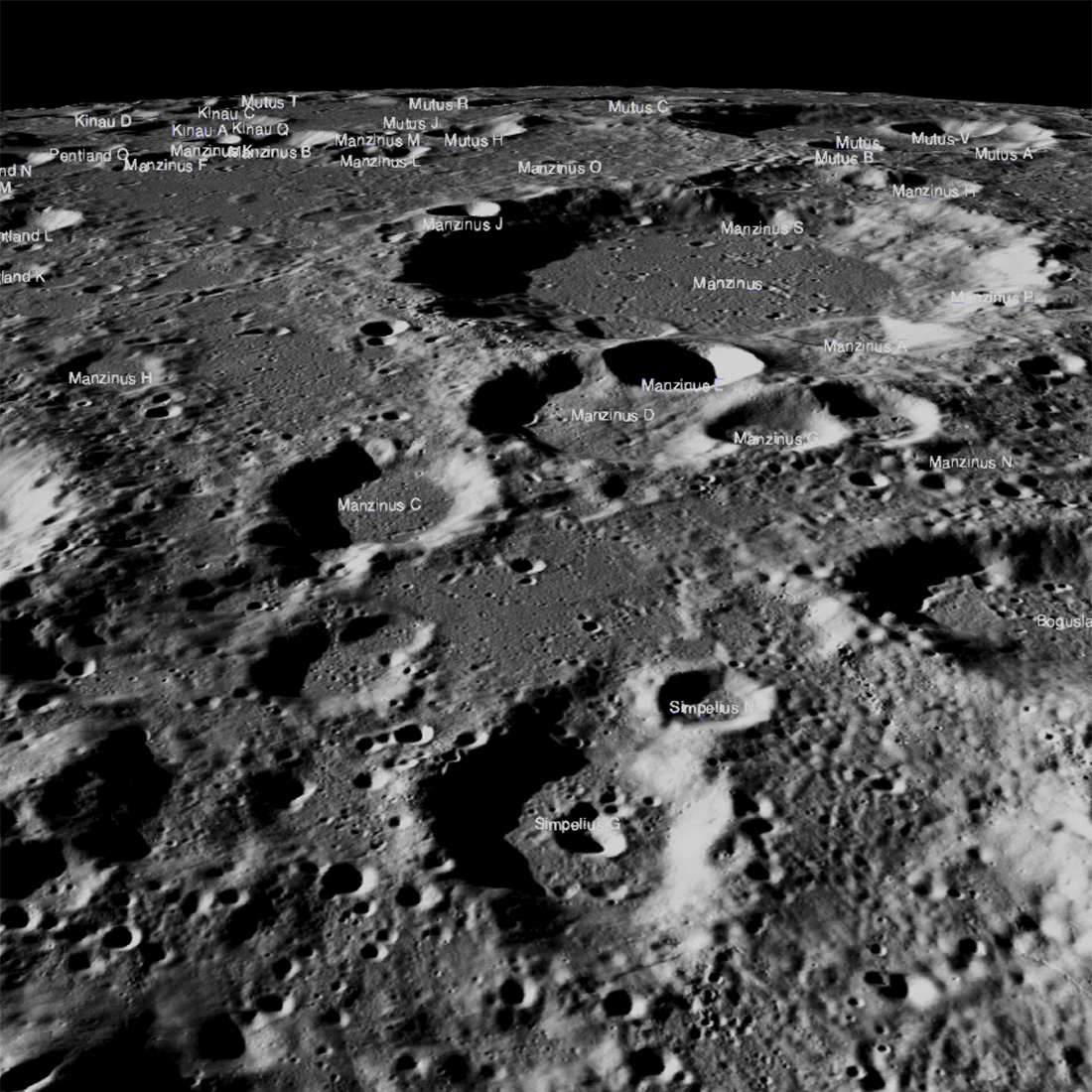
The map to the right, with the south pole indicated by the white cross, shows both, plus the planned landing site for Russia’s Luna-25 lander, presently targeting a summer ’23 launch. The green dot marks Luna-25’s landing site, inside Boguslawsky Crater.

The red dot marks the landing site in for India’s Chandrayaan-3 lunar lander/rover, now tentatively scheduled for launch by the end of ’23. This mission will put a small rover on the surface, and is essentially a redo of the failed Chandrayaan-2 mission from 2019.

The yellow dot in Malapert-A crater is now the likely landing site for Intuitive Machines Nova-C lander. This site is a change from the spacecraft’s original landing site in Oceanus Procellarum (where Astrobotic’s Peregrine lander is now going). In making this change, the launch of Nova-C also slipped to late June 2023, from the previously announced launch date of early 2023.

2 comments

ISRO completes investigation into failure of its SSLV rocket on first launch

India’s space agency ISRO today released the results of its investigation into the launch failure of its SSLV rocket on its first flight in August 2022.

The investigation revealed that there was a vibration disturbance for a short duration on the Equipment Bay (EB) deck during the second stage separation. SSLV is a three-solid-stage launch vehicle unlike the PSLV, which is a four-stage rocket. The vibration affected the Inertial Navigation System (INS), resulting in declaring the sensors faulty by the logic in the Fault Detection & Isolation (FDI) software.

In plain English, it appears the vibration caused a failure in the inertial navigation system, thus resulting in the premature engine shutdown of the fourth stage.

According to the report, the problem has been fixed and the next SSLV launch is now tentatively scheduled for February 9, 2023.

2 comments

ISRO about to test land a prototype of India’s own version of the X-37B

ISRO's own X-37B copy

According to S. Somanth, the head of India’s space agency ISRO, it will attempt the first flight on January 28, 2023 of a prototype reusable launch vehicle, similar to the Space Force’s X-37B.

According to ISRO’s website, Saturday’s landing demonstration will involve a “landing experiment (LEX)” in which the RLV will be carried using a helicopter to an altitude of 3-5 km and released at approximately 4-5 km from the runway with a horizontal velocity.

After the release, the RLV glides and navigates toward the runway, and carries out a conventional autonomous landing. This is planned in a defence airfield near Chitradurga in Karnataka.

The graphic to the right shows the flight profile of earlier tests that landed in the ocean. If this runway test is successful, it appears ISRO will next attempt an orbital flight and return.

6 comments

Updates on India’s space effort

It appears that India’s effort in space is evolving rapidly, based on several news stories today.

First, the Indian space agency ISRO signed a deal with Microsoft, whereby the software giant will provide support to private Indian space start-ups.

As part of a memorandum of understanding that Microsoft has signed with the Indian Space Research Organization, the firm will also provide space tech startups with go-to-market support and help them become enterprise ready, it said.

Startups handpicked by ISRO will be onboarded to Microsoft for Startups Founders Hub platform, where they will receive free access to several tools and resources. These tools include help with building and scaling on Azure, as well as GitHub Enterprise, Visual Studio Enterprise, Microsoft 365 and Power BI and Dynamics 365. [emphasis mine]

The highlighted phrase indicates once again that there is an aggressive turf war going on in India about who will control the aerospace industry. Similar to the battles that occurred at NASA in the 00s and 10s, there are people within ISRO who do not wish to cede their power to an independent private industry, and are doing whatever they can to block the Modi government’s effort to create such an independent industry.

In the end, as long as Modi government stands firm, this effort will fail. Private companies will increasingly succeed, and that success will feed the transition from a government-run industry to an independent and competitive one.

In other stories from India:
» Read more

2 comments

India buying land for new spaceport on India’s southern tip

Kulasekarapattinam

The Indian government has now acquired about 80% of the land it needs for new spaceport on that country’s southern tip.

The new spaceport will be built in Tamil Nadu’s southern region. The new spaceport at Kulasekarapattinam will have some advantages over India’s current and only spaceport at Sriharikota.

Rockets launching into polar orbit from Sriharikota, Andhra Pradesh, must perform a turn manoeuvre to avoid flying over Sri Lanka. This necessitates the use of fuel and reduces the mass that can be carried into orbit. While this has little effect on large rockets, it has a negative impact on the capacity of small rockets such as the SSLV (Small Satellite Launch Vehicle) and those built by Indian start-ups.

A launch from Kulasekarapattinam will allow for a direct flight path to the polar regions (without having to fly over and around Sri Lanka), saving fuel and payload capacity.

Sriharikota’s location is much farther north, beyond the top of the map to the right. It appears this new spaceport is aimed at attracting new private smallsat rocket companies.

0 comments

The uncertainties surrounding India’s proposed first manned mission

Link here. The article does a nice job of outlining the program, dubbed Gaganyaan, as well as the many issues that has caused the first launch to be delayed more than three years.

The key quote however is this:

Despite the government claiming that there would be no delays due to Covid, the first uncrewed flight was rescheduled from 2020 to 2021 and then again to 2022. The dates were once again revised to late 2023 or early 2024, announced Union minister of state for science and technology Jitendra Singh in September this year. [emphasis mine]

The highlighted claim is quite amusing, considering how India’s government space agency ISRO shut down entirely because of the Wuhan panic for more than two years, and remains somewhat dormant even now. As a result of that panic, ISRO lost almost its entire commercial market to American companies.

Read the entire article. It summarizes the state of Gaganyaan in good detail, which also implies that a first launch in ’24 remains questionable.

0 comments

Rocket startup Agnikul Cosmos opens first commercial launchpad in India

Capitalism in space: The Indian rocket startup Agnikul Cosmos has completed construction on the first privately owned launchpad in India, with the first suborbital launch planned before the end of this year.

Agnikul’s infrastructure comprises a launchpad and a Mission Control center 4 kilometres away, both within ISRO’s facilities on the island located off the coast of Chennai. The space pad was designed by Agnikul, constructed over two months, and is a part of the MoU signed between ISRO and Agnikul (among other space startups) under the new regulatory authority IN-SPACe’s first batch of support projects for private companies from ISRO.

Currently, it is capable of launching Agnikul’s rocket, the Agnibaan. [emphasis mine]

The first test launch is apparently not going to be orbital, but a technology test of the launch pad, its fueling facilities, and the 3D-printed engine Agnikul has built for Agnibaan.

The highlighted words once again note the effort by the Indian government to emulate the U.S. policy in the past decade to transition from a government-run space program to a privately-run competing and chaotic space industry. This MoU (memorandum of understanding) probably resembles the first space act agreements NASA issued to SpaceX and Orbital ATK. The agreements gave private companies aid and assistance, but the companies retained full ownership of what they build, and were left free to design things as they saw fit, not as the government dictated.

That two different Indian companies, Agnikul and Skyroot, are on the verge of their first orbital launches signals that this policy is succeeding. Agnikul has tested its engines and built its launchpad. Skyroot has completed its first suborbital launch.

0 comments

India successfully places 1 satellite and 8 smallsats in orbit

Using its PSLV rocket, India’s space agency ISRO successfully launched one ocean science satellite plus eight smallsats into orbit early on November 26, 2022.

This was India’s fourth successful orbital launch in 2022, tying it with Europe’s Arianespace. The leaders in the 2022 launch race however remain the same:

53 SpaceX
52 China
19 Russia
9 Rocket Lab
8 ULA

The U.S. still leads China 77 to 52 in the national rankings, but trails the rest of the world combined 81 to 77.

0 comments

India about to do first drop test of its home-built version of an X-37B

India’s space agency ISRO is now preparing for the first drop test of its own home-built version of an X-37B mini-shuttle, designed to remain in orbit for a period of time, return to Earth on a runway, and then be reused.

According to ISRO officials, the RLV [Reusable Launch Vehicle] wing body will be carried using a helicopter to an altitude of three to five km and released at a distance of about four to five km ahead of the runway with a horizontal velocity. After the release, the RLV will glide, navigate towards the runway and land autonomously with a landing gear in the defence airfield near Chitradurga.

A prototype of the RLV was flown on a suborbital test flight in 2016, landing in the ocean. The pending test would be the first to attempt a runway landing, essential if the spacecraft is to safely return to Earth and then be reused.

1 comment

India’s first private rocket company prepares for its first test suborbital launch

Skyroot, India’s first startup private rocket company, has now scheduled the first test launch of a suborbital version of its Vikram rocket for sometime between November 12the and 16th, depending on weather.

The rocket will be sent into space from ISRO’s Satish Dhawan Space Centre spaceport in Sriharikota, off the Andhra Pradesh coast.

The space sector was opened up to facilitate private sector participation in 2020. In 2021, Skyroot became the first space technology startup to ink an MoU with ISRO for sharing facilities and expertise.

…The company’s COO & co-founder, Naga Bharath Daka, said “The Vikram-S rocket getting launched is a single-stage sub-orbital launch vehicle, which would carry three customer payloads and help test and validate the majority of technologies in our Vikram series of space launch vehicles.” The four-year-old Skyroot has successfully built and tested India’s first privately developed cryogenic, hypergolic-liquid, and solid fuel-based rocket engines. The R&D and production activities extensively use advanced composite and 3D-printing technologies.

The company has raised $51 million in private investment capital, the most ever raised by a private Indian rocket company.

0 comments

OneWeb paid ISRO about $130 million for two GSLV launches

It appears that OneWeb agreed to pay India’s space agency ISRO about $130 million for two GSLV launches, putting up 36 satellites on each launch.

When asked how much his business would spend to have 72 satellites launched, OneWeb Chairman Sunil Bharti Mittal told reporters in India that it would be more than Rs 1,000 crore.

Rs 1,000 crore translates to about $130 million, which means OneWeb paid about $65 million per launch, which is comparable to SpaceX’s standard Falcon 9 price, before discounts for using previously launched boosters.

It also appears that at present this deal is the only one between ISRO and OneWeb, and that the remaining 576 satellites that OneWeb needs to launch to complete its constellation are still open for others. At present, SpaceX and Relativity have contracts, though it is unclear how many each will launch. I suspect SpaceX will be the majority, since Relativity has not even completed its first test launch. It is also possible that ISRO will get more contracts based on its first launch success.

0 comments
1 11 12 13 14 15 42