Breaking the Ice in Antarctica
The first tests in Antarctica of a drill designed to drill cores on Mars.
Is Spirit, the Mars rover, finally dead?
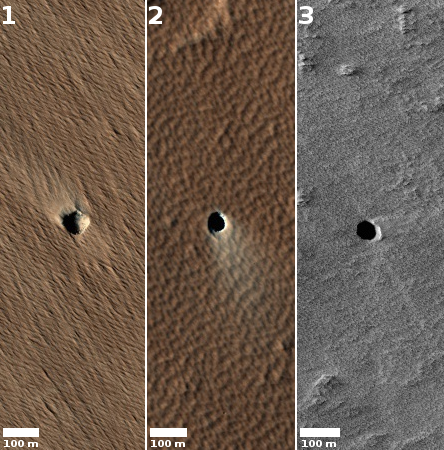
Caver alert! Releases this week from both the Mars Express orbiter and the Mars Reconnaissance Orbiter show a variety of sinkholes and collapse features on Mars, which in turn suggest the possibility of underground passages.
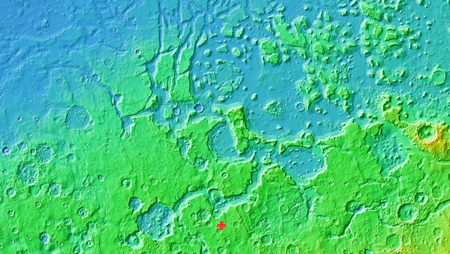
First, there is this picture from Mars Express, showing the area called Phoenicis Lacus (Latin for Phoenix Lake).

The large and long canyon in box 1 is actually a collapse feature, almost two miles deep and formed as this region was stretched, warped, and cracked by the powerful volcanic activity of the nearby giant volcanoes of the Tharsis plateau, including Olympus Mons, the solar system’s largest volcano. You can also see how this activity causes several sinkholes and craters in all three boxes to become elongated and distorted.
In places where the surface is deformed in this way on Earth, you often find tectonic caves, underground cracks produced as the ground is pulled apart. The large collapse feature suggests the possibility that there are voids below it.
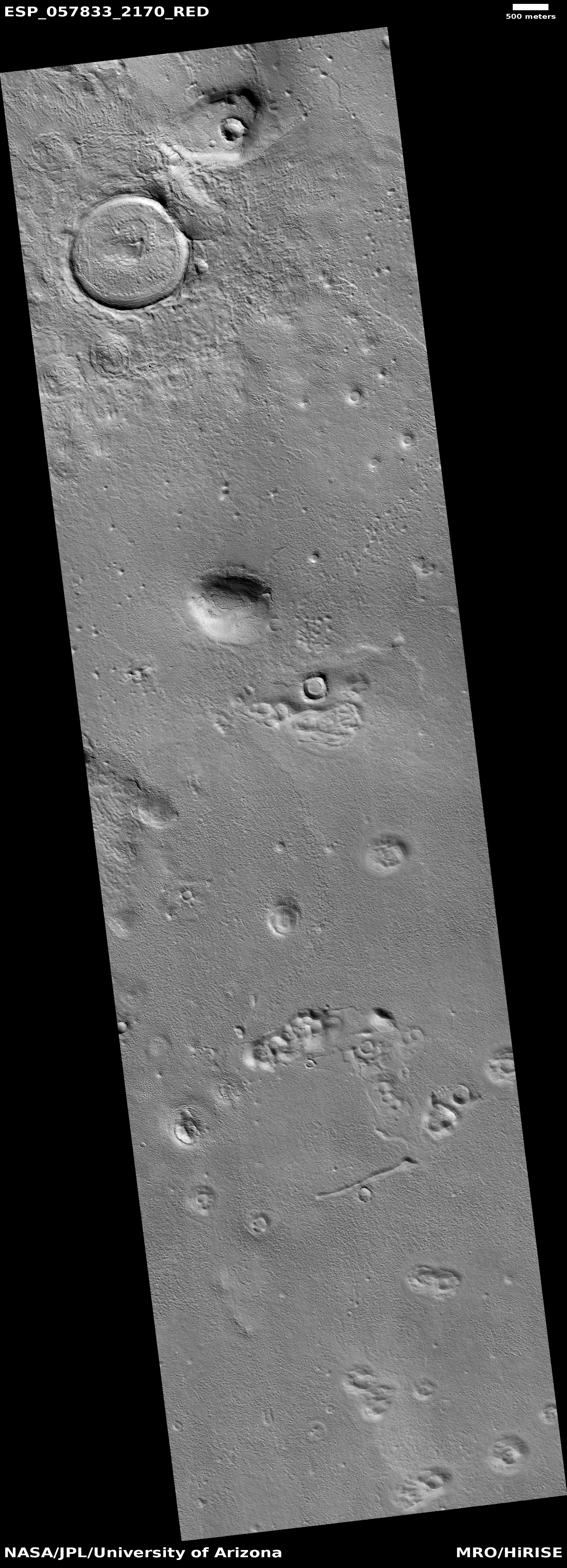
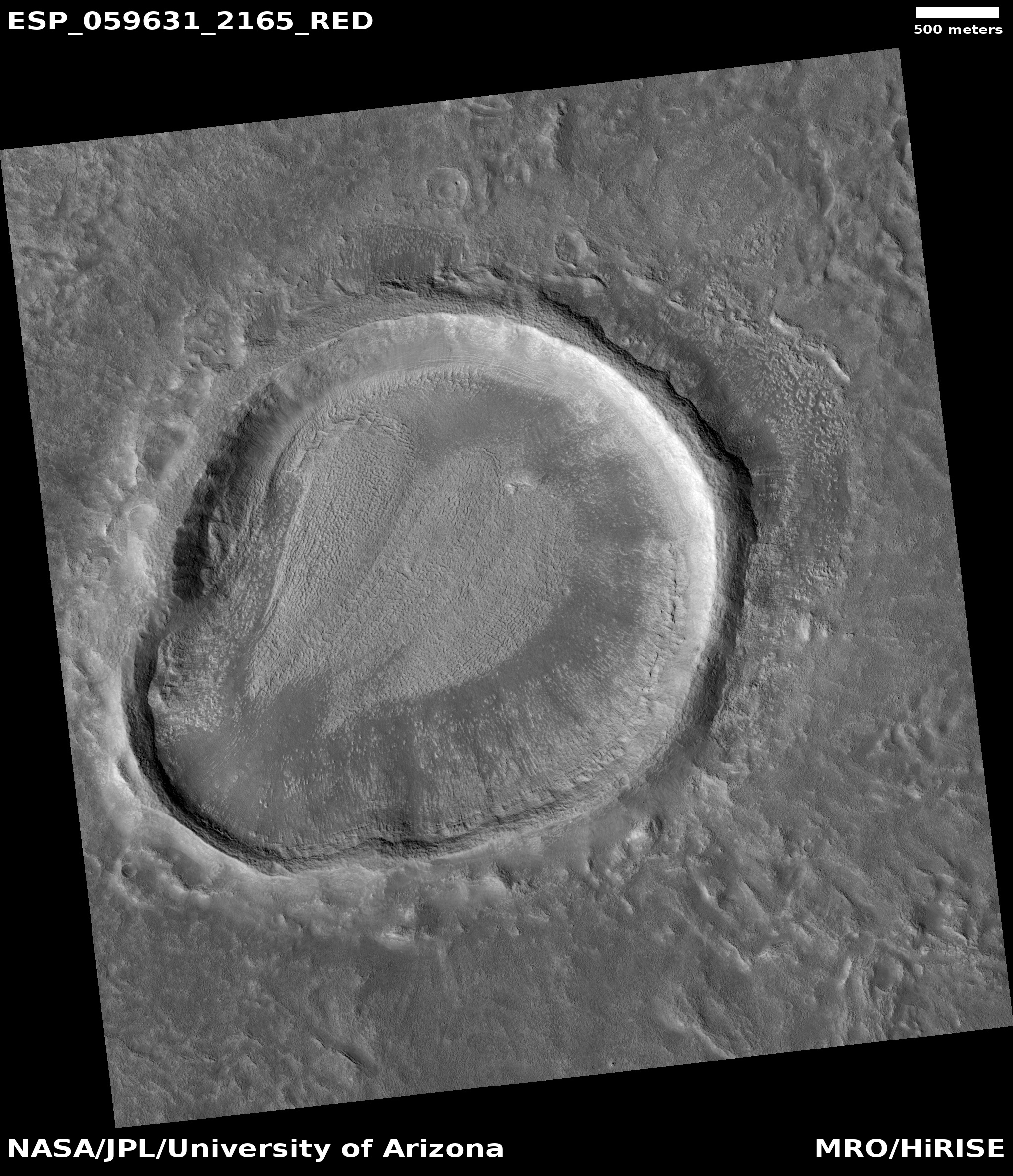
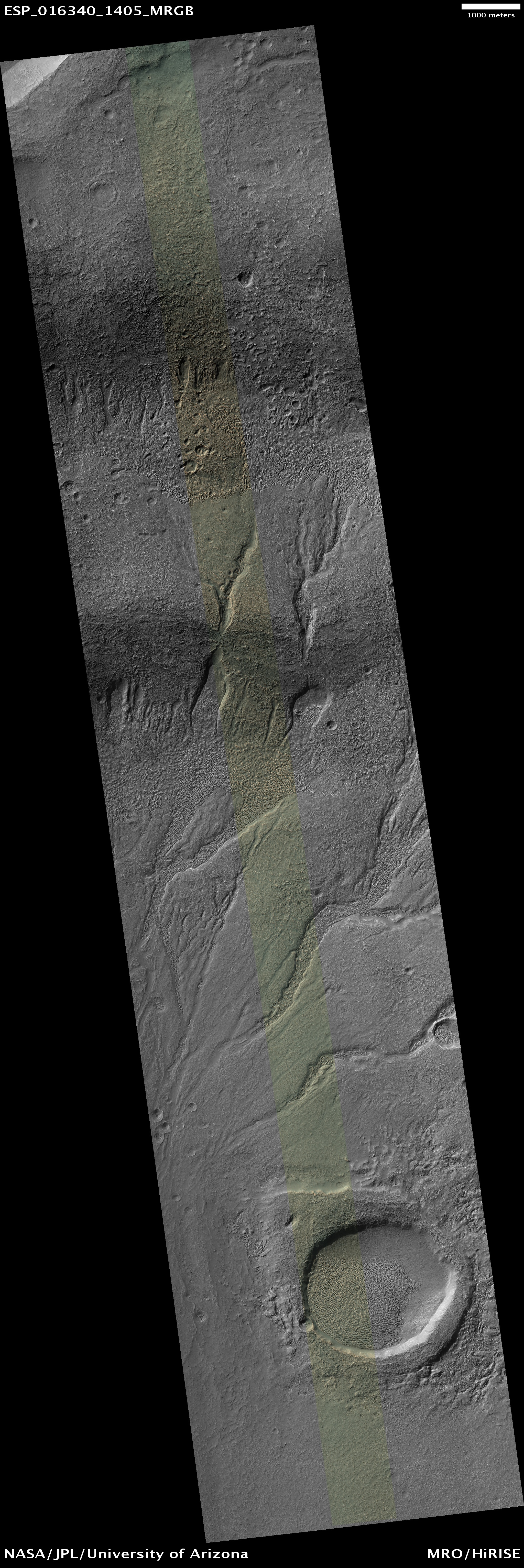
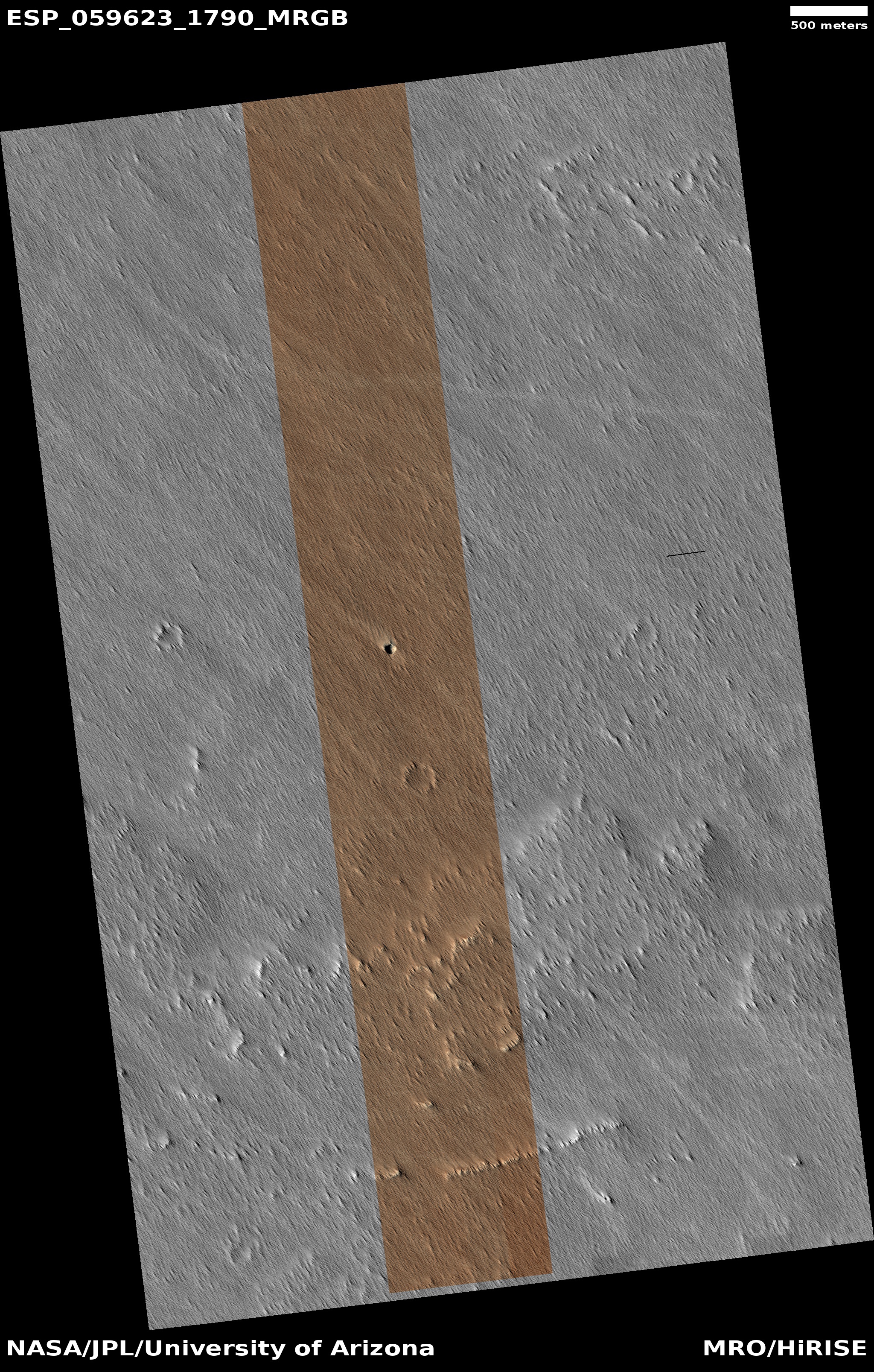
Then there is this subimage from this release of Mars Reconnaissance Orbiter, showing the central peak and southern slope of an old crater in the Terra Sirenum region of the Martian southern hemisphere.

Down that south slope can be seen what look like fluvial-like flows. In the center of these flows as well as near the top of the peak are what appear to be a string of collapse features. Below is the close-up as indicated by the box above:

From the caption: “It is possible that these pits are evidence of subsurface piping or hydrothermal activity. Piping occurs when subsurface water flows through soil, takes some soil with it, and causes the overlying ground to collapse. These fluvial-like features and the connected pits may have formed during a late stage of crater formation when temperatures were suitable for liquid water.”
On Earth, this is one of the geological processes that forms sinkholes on the surface as well as caves underground. When cavers go out to look or dig for new caves, we often head for just this kind of string of sinkholes, as they are excellent evidence that an unentered cave lies hidden below, ripe for exploration.
Opportunity’s long journey across the desert plains of Mars to reach Endeavour Crater is now more than half completed. Below is the most recent mosiac of its view heading east towards the crater, with the crater’s rim visible on the distant horizon, still five miles away.

Evidence of subsurface water has been found by the Mars rover Spirit at the location where the rover remains stuck.
A paper published on Saturday in the Journal of Geophysical Research – Planets of the American Geophysical Union, scientists suggest that the polygonal shaped cracks seen in the crater floors on many Martian craters could be evidence of ancient lakes. The evidence also suggests that the lakes were formed by the impact that created the crater. The energy of the impact melted underground ice to form a temporary lake inside the crater, which eventually dries out, leaving behind the polygons. From the abstract:
We propose desiccation to be a dominant mechanism for the formation of Crater Floor Polygons without ruling out thermal contraction as a possible contributor in some cases. This implies that lakes or water-rich sediments occupied the craters in the past. Many such aqueous environments have no apparent external source of water, and thus, hydrothermal processes occurring shortly after the impact event may be viable explanations for the observed evidence.

Mars Reconnaissance Orbiter has taken this image of what appears to be a recent landslide on Mars, located on the southeast wall of Zunil crater. When the landslide took place is not known, though the color suggests that it happened so recently that the debris has not yet been covered by wind-blown dust.

Steve Squyres of Cornell University and the project scientist of the Mars rovers Spirit and Opportunity spoke today at an astrobiology symposium in Arlington, Virginia. He described several spectacular planetary missions that might be flown in the coming decade. All are being considered. None have yet been chosen or funded.
Squyres is the co-chair of a committee of the National Science Foundation that is right now putting together a decadal survey for outlining unmanned planetary research for the next decade. This survey is expected to be released in March, which is when we will find out which of the above missions the planetary science community prefers.
The discovery by scientists of carbonate rock deep below the Martian surface suggests the planet once had a rich carbon dioxide atmosphere. It also suggests that conditions might be more habitable for life deep underground.
From a session today at the 42nd meeting of the AAS Division for Planetary Sciences: After thirteen years of searching, scientists have concluded that Mars has no active volcanic activity, including geysers, anywhere on its surface.
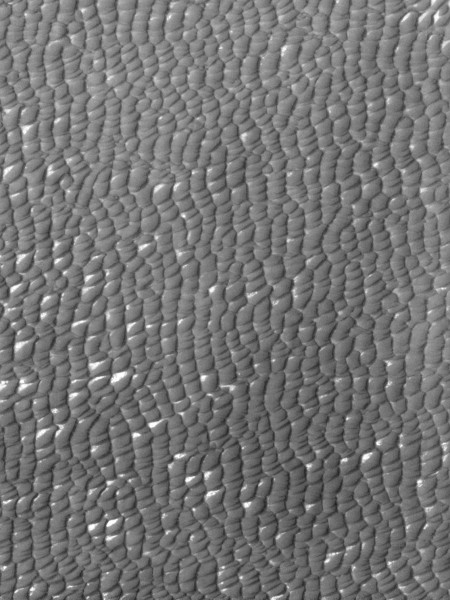
The HiRise Camera on Mars Reconnaissance Orbiter has released some wonderful new pictures, showing what are called barchan dunes on Mars.
Barchans are crescent-shaped, with the horns of the crescents pointing downwind. One barchan is visible in the upper part of the image, with the Southeast (lower right) horns longer than the other. This trend, along with the position of the steep face of the dune on the South side, indicates that the predominant winds which formed the dunes came from the North.
There are a lot more great images on the websites above.

The view from Opportunity, September 16, 2010. Near the rover you can see the bedrock periodically exposed under windblown sand. The rock sitting on the sand in the distance is thought to be a meteorite, to which Opportunity is heading for a closer look. In the distance can be seen the rim of Endurance Crater, the rover’s eventual destination.

Among the new images posted last week by the HiRise camera on Mars Reconnaissance Orbiter is a picture showing the layered and looping ridgelines within Galle Crater. A close-up of these ridgelines revealed the precarious nature of those crumbling cliff tops.
Below is a low resolution version of the image, with a high resolution cropped inset below that, showing a close-up of the most interesting looking area. In the inset you can see that the top of the cliff has separated away. It almost looks as if several large pieces are about to break off. You can also see that the top of the cliff to the north is made up of hanging rocks that appear to almost float in the air. They too look as if they are about to break off.
What makes this even more intriguing is that there are no boulder piles at the bottom of any cliff. All we can see on the valley floor is a pattern of polygonal fractures, possibly “due to ground ice, or regional tectonic stresses.” If large pieces of these ridge lines are breaking off periodically, as they surely appear to be doing, where has the debris gone?


Research results posted today [pdf] at the European Planetary Science Congress show that the methane in Mars’s atmosphere is seasonally variable and far more short-lived than predicted, disappearing in less than a year. Some process, therefore, must be both using it and replenishing it. On Earth, that’s almost always done by some form of life process. Key quote by one of the scientists, from the press release:
“Only small amounts of methane are present in the martian atmosphere, coming from very localised sources. We’ve looked at changes in concentrations of the gas and found that there are seasonal and also annual variations. The source of the methane could be geological activity or it could be biological we can’t tell at this point.”
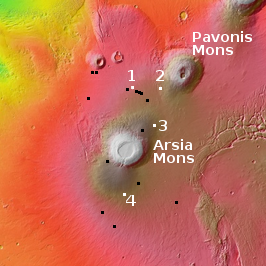
The image below shows the three regions (in yellow) where the methane is concentrated.

For the fifth time in two years Mars Reconnaissance Orbiter has gone into safe mode because of a computer reboot.
On August 18, 2010, the Mars rover Opportunity took this panorama image of the Martian terrain. Up close, patches of bedrock can be seen where the sand had blown clear. In the far distance the rim of Endeavour Crater, the rover’s long term destination, pokes up over the horizon.

Update: A press notice from JPL today notes that Opportunity has now traveled about half of the 11.8 mile distance to Endeavour Crater. As it took two years to go this far, the journey still has two years to go, assuming the rover survives that long.
New research now suggests that it was premature to conclude that Mars has no life, based on the data from the Viking missions to Mars in the 1970s. This is vindication for Gilbert Levin, one of the chief scientists for those missions, who had said so then and was subsequently pilloried for it.
Mud volcanoes on Mars.
These Mars Reconnaissance Orbiter images show in increasing magnification a puzzling feature in the southeast part of a ice mound in Louth Crater on Mars. Located at 70 degrees north latitude, this is the farthest south that scientists have found permanent water ice. The close-up image suggests melting ice with the draining water running down hill to the south, though on Mars the low air pressure would cause any liquid water to evaporate instantly. Key quote:
These may be the crests of partially defrosted dark sand dunes or perhaps some other feature that we do not understand. This is the only area on Louth where these enigmatic ridges are found.


Sand dunes on Mars, from the HiRise camera on Mars Reconnaissance Orbiter:

Fun quote:
These dunes are “barchan” dunes, which are also commonly found on Earth. Barchan dunes are generally crescent-shaped, with their “horns” oriented in the downwind direction. They have a steep slip face (the downwind side of the dune). Barchan dunes form by winds that blow mostly in one direction and thus are good indicators of the dominant wind direction. In this case, the strongest winds blow approximately north to south.
After more than six years, it appears that the Mars rover Spirit has finally died. The rover was originally designed to only operate 90 days.
Mars Reconnaissance Orbiter takes a picture of the non-face on Mars.
The Mars rover Opportunity has spotted its first dust devil after six-plus years of travel.
Want to poke around on Mars? Since it might be a while before you can actually go there, I suggest you instead make frequent visits to the images page for the HiRise camera on Mars Reconnaissance Orbiter. The pictures that appear here are routinely breath-taking. Below is a cropped image showing the flat top of a mesa in Coprates Chasma. The full image shows detailed layers down the side of the mesa as well as rippled dunes on the mesa top. Everything is remarkably reminescent of something you’d see if you visited the Grand Canyon. Only on Mars, this grand canyon is many times larger and deeper.

Mars Odyssey, in orbit around Mars, went into safe mode on July 14, due to problems with “an electronic encoder.” The spacecraft switched to a backup, and engineers have since been able to bring it back to life slowly. They hope to have everything working normally again by the end of this week.
Here’s a nice picture from the HiRISE camera on Mars Reconnaissance Orbiter, released July 7, showing the boulder tracks left by rocks bouncing down the escarpment of Kasei Valles in the low gravity of Mars. Fun quote:
Some of these blocks traveled downhill several hundred meters (yards) as they rolled and bounced, leaving behind a trail of indentations or poke marks in the surface’s fine-grained, light-toned soils. The raised borders in some of these poke marks indicate they are relatively recent features, unaffected by wind erosion, or that this soil has cohesive properties, such as if it was cemented.

Saturday’s weekly dump of publications from the American Geophysical Union also included a paper that showed visual proof of avalanches on Mars! In this case, the location is Russell Crater, “a large crater in the southern hemisphere that exposes a large dune field in its center.” The avalanches occur because a frost layer made up of dry ice and a little bit of frozen water builds up on the crest of the dunes. When that frost melts, dark streaks about three to six feet wide and about 150 feet long appear, flowing downhill. The scientists believe these are avalanches made up of “a mixing of sand, dust, and unstable CO2 gas.”

Before and after shots of the dark streaks flowing down the dune.

Close-ups of the streaks, before and after.