FAA fines SpaceX $633K for acting without its permission

The FAA to SpaceX
The FAA to SpaceX “Nice company you got here.
Sure would be a shame if something happened to it.”

The FAA today revealed that it wants to fine SpaceX a total of $633,009 for two different actions where the company did something without the agency’s express permission.

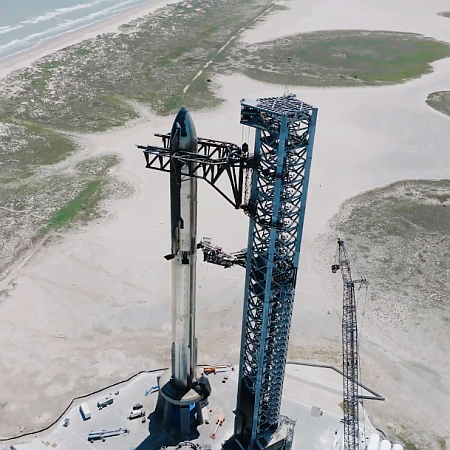
In May 2023, SpaceX submitted a request to revise its communications plan related to its license to launch from Cape Canaveral Space Force Station in Florida. The proposed revisions included adding a new launch control room at Hangar X and removing the T-2 hour readiness poll from its procedures. On June 18, 2023, SpaceX used the unapproved launch control room for the PSN SATRIA mission and did not conduct the required T-2 hour poll. The FAA is proposing $350,000 in civil penalties ($175,000 for each alleged violation).

In July 2023, SpaceX submitted a request to revise its explosive site plan related to its license to launch from the Kennedy Space Center in Florida. The proposed revision reflected a newly constructed rocket propellant farm. On July 28, 2023, SpaceX used the unapproved rocket propellant farm for the EchoStar XXIV/Jupiter mission. The FAA is proposing a $283,009 civil penalty.

To understand the absurdity and abuse of power going on here, one must look at the dates. » Read more

19 comments

A space journalist suddenly notices that the FCC has no legal authority to regulate space junk

An article posted yesterday at Space News was unusual in that this mainstream media space news source and its reporter suddenly recognized, more than a year late, that the FCC’s effort to impose regulations on all satellite companies requiring they build satellites a certain way to facilitate their de-orbit at the end of their lifespan, is based on no statutory authority and is thus illegal.

[A] Supreme Court ruling in June struck down a principle widely known as “Chevron deference,” which gave agencies greater latitude in interpreting ambiguities in laws they enforced. The move has raised questions over the FCC’s space sustainability jurisdiction without a federal law that explicitly authorizes it or other agencies to establish and enforce debris mitigation rules.

Still, the FCC is seen as the logical agency to handle the risk of orbital debris. If courts rule that the FCC has not been granted the authority, Congress will likely address this once it gets around to tackling the issue.

My, my! You mean a federal bureaucrat doesn’t have the right to make law out of thin air, just to facilitate what that bureaucrat thinks should be done? Who wudda thought it!

As an old-fashioned American who believes in freedom and limited government (as clearly established by our Constitution) I had recognized this legal fact immediately in January 2023, when the FCC first made its power grab. That our young modern journalists don’t understand this is both tragic and disgraceful.

What makes this even more disgraceful is that the entire article lobbies hard for the FCC, claiming with no real evidence that “the FCC is seen as the logical agency to handle the risk of orbital debris.”

What this reporter should have known and reported is that both the House and the Senate have disgreed, forcefully. In the House one bill was introduced to give the de-orbit regulatory power to the FAA, while later rejecting a second bill that would have given that power to the FCC. The Senate meanwhile introduced its own bill giving this de-orbit regulatory power to the FAA and Commerce, not the FCC.

Sadly it is probably a mistake to give any government agency too much power in this matter, but our Congress will do so regardless. That is how things are done nowadays. Americans are expected to kow-tow to Washington regulators, in everything they do. Freedom is not the default approach. Regulation is.

6 comments

France’s space agency aims to standardize its French Guiana commercial launchpad

France’s space agency CNES has announced a project to standardize its French Guiana commercial launchpad, which France owns and CNES now manages, for many different customers.

Launch facilities and launch pads in particular are generally specifically built for a single rocket. This will, however, not be the case with the Guiana Space Centre’s new commercial launch facility. As a result, a set of standardized ground systems will be utilized to ensure that the facility can manage a number of different rockets.

At the moment, those rockets include seven different European rocket startups — Avio, HyImpulse, Isar Aerospace, MaiaSpace, PLD Space, Rocket Factory Augsburg, and Latitude — none of which has yet launched a rocket. CNES is telling them all that if wish to use French Guiana, they must design their rocket to fit its facilities.

This project will accomplish two things. First, it will limit use of the pad to these European companies. CNES is essentially establishing French Guiana as a European-only facility. Second, like China’s commercial launchpads — run by that government so that all its pseudo-companies are dependent on it for launches — CNES (and France) is attempting to establish some control and power over these new independent and competing rocket companies, most of which have no facilities or operations in France. Three are German (Hyimpulse, Isar, and Rocket Factory), one is Spanish (PLD), and one is Italian (Avio). Only two are French-based (Latitude and MaiaSpace), with MaiaSpace a subsidiary of ArianeGroup which means it has facilities in many places in Europe. This project will force all these companies to cater their designs to the demands of France.

The American approach I think is far better. Government spaceports lease specific launchpads to specific companies, which then build the facilities to their needs, not the government’s. They can then each work fast and efficiently without consultation with others. CNES’s effort here will likely slow development in Europe, as all these companies will have to meet with CNES and work out some common engineering.

0 comments

Russia’s Angara rocket launches pair of classified military satellites

Russia early today used its Angara-1.2 rocket to launch a pair of classified military satellites, lifting off from its Plesetsk spaceport in northwestern Russia.

The Angara-1.2 is the smallest member of the Angara family of rockets, intended to eventually replace all of Russia’s other rockets. This was that rocket’s third launch, all from Plesetsk. The rocket’s upper stages and fairings fell in Barents Sea.

The leader board in the 2024 launch race remains unchanged.

91 SpaceX
38 China
11 Russia
10 Rocket Lab

American private enterprise still leads the rest of the world combined in successful launches 106 to 60, while SpaceX by itself still leads the entire world, including American companies, 91 to 75.

0 comments

Partisan Democrats hate so much they are willing to commit murder, and worse, now admit it openly

The assassination of Abraham Lincoln
An earlier example of the Democratic Party’s
reasonablity, that time against Abraham Lincoln

They’re coming for you next: The words couldn’t have made it clearer. When asked by a reporter of the Daily Mail what he thought of his father’s actions, the son of attempted Trump assassin Ryan Routh said that his father hates Trump as “every reasonable person does. I don’t like Trump either.”

The problem is that reasonable people don’t hate. Reasonable people think about the differing opinions of others and decide as rationally as possible what they think might be the right answer. And if reasonable people are faced with true evil, they don’t act with hatred. They instead follow the biblical mantra, don’t condemn the sinner, only the sin.

Routh’s son however illustrates the contrasting attitude of the base as well as the leadership of today’s Democratic Party. They don’t simply disagree, they hate. Worse, they think that hatred is “reasonable,” and that everyone “reasonable” agrees with it.

Thus you get two assassination attempts in just over two months against Donald Trump, whose only crime — according to Democrats — is that he is running for president against them, and has said he will change the governmental policies they believe in. “Reasonable Democrats” can’t tolerate such a possibility, so therefore these “reasonable Democrats” appear out of nowhere, over and over again, attempting to kill the source of their hatred.

It is this same mindless hatred that allowed Kamala Harris as well as the Democratic Party operatives running the Trump-Harris debate last week to repeat slanderous lie after slanderous lie. The list below is only a sampling:
» Read more

36 comments

Investigation into upper stage failure during Ariane-6’s first launch completed

The Ariane-6 rocket investigation team, including people from the European Space Agency (ESA), CNES (France’s space agency), ArianeGroup (which built and owns the rocket), and Arianespace (which presently manages the rocket), has identified the issue that caused the rocket’s upper stage failure during the rocket’s first launch in July.

In a 16 September update, the Task Force announced that the investigation had identified a single temperature measurement that “exceeded a predefined limit” as the root cause of the anomaly. The tripped limit caused the software to trigger a shutdown of the APU which ensured the rocket’s Vinci upper stage engine could not be restarted for the final burn.

In order to remedy this issue and ensure a similar shutdown does not occur in the future, the ignition preparation sequence, specifically the APU chill-down sequence, has been changed. The updated flight software is already being tested as teams prepare for the rocket’s first commercial flight which is set to take place before the end of the year.

Because of that incorrect temperature, the upper stage did not do its final burn, thereby stranding the stage and two demonstration return capsules in the wrong orbit. This prevented the test return of both capsules, as well as the test planned de-orbit of the stage over the ocean.

1 comment

Two Russian astronauts mark one year in orbit

Russian astronauts Oleg Kononenko and Nikolay Chub today marked the one year anniversary of their launch in 2023, thus marking another Russian yearlong mission in space.

The two cosmonauts were sent to the orbit aboard the Soyuz MS-24 manned spacecraft, which blasted off from the Baikonur space launch center on September 15, 2023. The third crew member on board was NASA astronaut Loral O’Hara, who returned to the Earth on April 6, 2024. Kononenko and Chub, as well as NASA astronaut Tracy Dyson, will travel back aboard the Soyuz MS-25 spacecraft, whose departure is scheduled for September 23.

Their return next week will not mark a record for the longest flight in space. That belongs to Valeri Polykov, who occupied the Soviet-built Mir space station in the mid-1990s for one year, two months, and two weeks in the mid-nineties, or 438 days. The second longest flight was by Sergey Avdeev, 380 days on Mir in 1998-1999, with the third longest flight by Sergey Prokopyev, Dmitry Petelin, and Franco Rubio, 371 days in 2022-2023.

When Kononenko and Chub return on September 23rd, their flight will 373 days long, passing the 2022-2023 mission.

Note that only one American is on this list. A few have flown almost a year, but only Rubio has made it, and that was forced on him unplanned because of problems with the Soyuz capsule that brought him into orbit. He was forced to stay up an extra six months and come down on the next Soyuz.

The reason for this lack of long American flights is entirely NASA’s fault. It has consistently resisted doing such long missions, even holding the Russians back during the first two decades of ISS’s operation. The Russians no longer follow NASA’s timidity, and have been doing more such missions, because such missions will be the only way to gather the necessary medical data needed for future missions to Mars.

Meanwhile, NASA hesitates, and sometimes touts eleven-month missions (such as Scott Kelly’s) as year-long missions, a blatant lie that our propaganda press repeats mindlessly. I fully expect the first planned year-long American mission will be done privately, outside of our government, once Starship begins flying regularly.

2 comments

Iran completes third orbital launch in 2024

Iran's spaceports

According to Iran’s state-run press and now confirmed by independent sources, Iran yesterday completed its third orbital launch in 2024, its new solid-fueled three stage Qaem-100 rocket lifting off on its second launch from Iran’s interior Semnan spaceport. No word on where the rocket’s lower stages crashed.

The payload was an engineering test satellite, which according to the Iranian press is operating as planned.

At the moment Iran appears to aggressively accelerating its civilian space program. It now has two functioning rockets, the Simorgh rocket, which placed three satellites in orbit in January, and the Qaem-100, its first launch taking place also in January. The country is also building a coastal spaceport near the town of Chabahar, as shown on the map to the right. Moreover, this third launch is the most the country has ever achieved in a single year. Until 2024, Iran had never launched more than once in any year.

And while these rockets and satellites do not appear to be military in nature, the technology development will certainly result in advances in Iran’s missile capabilities. The Qaem-100’s solid-fueled design is exactly what most ballistic missiles use, since it allows the missile to be stored fueled for long periods.

The leader board in the 2024 launch race remains unchanged.

91 SpaceX
38 China
10 Rocket Lab
10 Russia

American private enterprise still leads the rest of the world combined in successful launches 106 to 59, while SpaceX by itself leads the entire world, including American companies, 91 to 74.

10 comments

Intuitive Machines targeting January 2025 for launch of its next lunar lander

The landers either at or targeting the Moon's south pole
The landers either at or targeting the Moon’s south pole

The company Intuitive Machines is now aiming to launch its second Nova-C lunar lander, dubbed Athena, during a January 1-5, 2025 launch window.

The landing site is indicated on the map to the right, on the rim of Shackleton crater and almost on top of the south pole. While Chang’e-7 is targeting the same crater rim, it is not scheduled for launch until 2026.

The lander will not only include a drill for studying the surface below it, it will release a small secondary payload, the Micro-Nova Hopper, which will hopefully hop down into the permanently shadowed craters nearby.

The launch will also carry a lunar orbiter, dubbed Lunar Trailblazar, which will not only do spectroscopy of the lunar surface, looking for water, it will also be used as a communications relay satellite with Athena. That orbiter, designed to demonstrate the ability to build a smallsat at low cost, was previously threatened with cancellation because its builder, Lockheed Martin, went way over budget.

0 comments

Heritage Foundation releases guide to colleges that teach instead of indoctrinate

Heritage map of good and bad colleges
Click for interactive map.

In an effort to find at least two universities in every state that are focused not on leftist and queer indoctrination but instead on free expression and open inquiry, the conservative Heritage Foundation has now put together an interactive map and guide that parents and high school students can use to choose a quality college to attend.

The image to the right is a screen capture of that map, located here. You can click on each dot to get more detailed information about why Heritage recommends or not recommends it. For example, for Thomas Aquinas College in California the guide says the following in explaining why it lists it as a “great option.”

The mission of Thomas Aquinas College (TAC) is to renew “what is best in the Western intellectual heritage and to [conduct] liberal education under the guiding light of the Catholic faith.” TAC has an impressive “A+” rating from the American Council of Trustees and Alumni. It does not have a bias response team, nor does it require diversity statements for hiring. It has an impressive 80 percent four-year graduation rate. Thomas Aquinas College also accepts the Classical Learning Test for admission.

Meanwhile, the guide says the following in giving Cornell University, Duke, Brown, Harvard, and Tufts a “not recommended” status:
» Read more

12 comments

Italian rocket company Avio outlines its future rocket plans

Link here. The plans include steady upgrades to its Vega-C rocket, including replacing the upper stage engine presently provided by a Ukrainian company with an engine built by Avio itself.

The bigger development will be a more powerful rocket, the Vega-E, to replace the Vega-C in 2027.

This version of the rocket will retain the first and second stages of the Vega C+ rocket and substitute the third and fourth stages for a single liquid fuel stage powered by the company’s new M10 methalox rocket engine.

The company is also hoping to begin test flights in 2026 of a Grasshopper-type small-scale demonstration rocket leading to the development of a reusable two-stage rocket that would eventually replace Vega-E.

3 comments

NASA receives 11 VIPER proposals from the private sector

NASA is now evaluating eleven different proposals from private companies to take over the agency’s canceled VIPER lunar rover.

Equipped with three scientific instruments and a drill, the rover was to be delivered to the Moon by a commercial lander, Griffin, built by Pittsburgh-based Astrobotic as part of NASA’s Commercial Lunar Payload Services (CLPS) initiative. Astrobotic and several other companies have CLPS contracts to deliver NASA science and technology experiments to the Moon. NASA pays for delivery services for its payloads. The companies are expected to find non-NASA customers to close the business case.

NASA is paying Astrobotic $323 million for landing services on top of the cost of VIPER itself. NASA’s commitment to Congress was that VIPER would cost $433.5 million with landing in 2023. By the beginning of this year, that had become $505.4 million with landing in 2024.

It appears NASA canceled the VIPER mission because the agency had doubts Astrobotic would launch Griffin on time. The rover cost overruns, plus additional costs from that launch delay, made NASA management back out.

Though NASA has not revealed any details about the new eleven proposals, we know that Astrobotic’s competitor, Intuitive Machines, is one of those proposals. How it can get it launched to the Moon for less than it would have cost to launch on Astrobotic’s Griffin however is a mystery to me.

Meanwhile, Griffin is still going to launch, with Astrobotic now able to sell that VIPER payload space to others and NASA paying for the flight.

0 comments
1 104 105 106 107 108 838