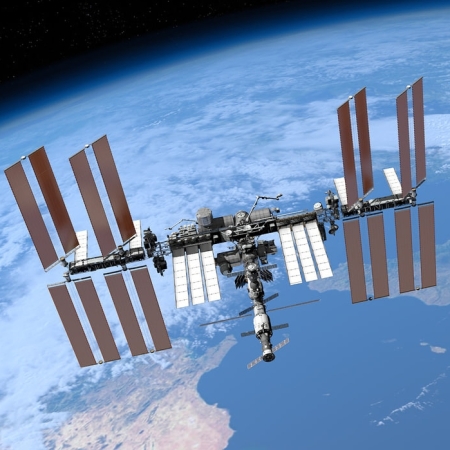
Russian engineers recommend staying with ISS through 2028

Russian engineers yesterday concluded that ISS is technically capable of being operated through 2028.

However, Russia’s committee system for making any decisions is not done. This first analysis was done by Roscosmos’ top managers and its lower level engineers.

The proposed decision will now be considered at a meeting of the Scientific and Technical Council of Roscosmos. Based on its results, the state corporation will draft a message the Russian government.

At that point the Putin government will have to decide on an exit date from ISS. According to the article by Russia’s state-run press, “the minimum configuration of Russiaโ€™s own orbital outpost” will be in orbit by 2028, thus giving the government the option to leave ISS. We shall see.

1 comment

South Korea officially cancels Russian launch contract, signs Vega-C instead

South Korea yesterday officially announced that it has canceled a Russian contract that was supposed to use an Angara rocket to launch a multi-purpose satellite last year and signed a deal with Arianespace to use the Vega-C rocket instead.

The cancellation appears directly because of the sanctions against Russia due to its invasion of the Ukraine. Picking the Vega-C as a replacement at this moment however seems a strange choice, considering its last launch was a failure and it has failed three times in the last eight launches. I suspect Arianespace gave South Korea an extremely good price.

Meanwhile, South Korean officials still seem willing to continue another Russian launch contract, using a Soyuz-2 rocket launching from Kazakhstan. According to the article, officials are right now merely negotiating a launch date.

0 comments

NASA and Russian engineers meeting to discuss status of leaks on ISS’s Zvezda module

According to Russia’s state-run press, NASA and Russian engineers have been reviewing the status of the repairs on the cracks in the Zvezda module on ISS.

Repairs to the various cracks in Zvezda’s hull, done by Russian astronauts in ’20 and ’21, have reduced the leakage from 1,140 grams per day to 300 grams per day. Normally ISS is expected to lose 325 grams per day, across the entire station, so the Zvezda leak doubled this loss, even after the repair. Thus, the hatch to Zvezda is kept closed in order to maintain the atmosphere of ISS at its normal levels, and opened only when there is need to enter it. In addition, its port is no longer used for dockings.

The engineering review is also looking into the cause of the cracks, which are believed to be stress fractures caused by the age of Zvezda (ISS’s second oldest module) combined with the many dockings that had occurred at its port. The review is also discussing ways to reduce the problem, until ISS’s retirement in 2030.

3 comments

Roscosmos predicts Russia’s new space station will launch by 2027

Wanna bet? Yuri Borisov, the head of Roscosmos, yesterday predicted that Russia’s new space station, dubbed the Russian Orbital Station, will launched and deployed by 2027.

“We will create sovereign infrastructure for human space flights to low near-Earth orbit. Its key element will be the Russian orbital station whose deployment we have scheduled for 2027,” he said.

The Russian space agency will carry out all the required feasibility studies by Cosmonautics Day celebrated in Russia on April 12, the Roscosmos chief said.

Based on Russia’s track record for the past three decades, this prediction will fail. Since the fall of the Soviet Union Russia’s space industry has consistently made many such predictions, none of which launched on time, with most never launching at all. Yet, that was during a time when Russia’s economy was booming, it was getting lots of revenue from the international markets, and wasn’t saddled with a draining war in the Ukraine. Now, international sanctions limit what it can get from that market, and its oil revenues have declined considerable due to the war. Moreover, the war prevents Russia from obtaining many cutting edge space components it needs for such a project. Replacing these with home-built components will take time.

If this station gets built, its launch will likely not happen before 2030.

2 comments

Russians successfully test replacement Soyuz capsule for leaks

The next Soyuz capsule to launch to ISS has now been passed its leak tests on the ground as it is being prepared for a February 20th launch.

“At the Baikonur cosmodrome, leak tests of the Soyuz MS-23 transport crewed spacecraft have been completed,” the [Roscosmos press release] said. In the coming days, checks of the propulsion systemโ€™s automation equipment, onboard digital computerized system and radio engineering systems will follow. Also, the thermal control system is to be filled with a coolant.

The launch has been moved up one month in order to speed the replacement of the leaking Soyuz presently on ISS.

2 comments

American astronaut seat liner shifted to Dragon temporarily

Though NASA has not issued an update, the Soyuz seat liner used by American astronaut Frank Rubio was supposed to be shifted from the leaking Soyuz capsule to Endurance today, just in case that Soyuz needs to be used as a lifeboat. From the January 13th ISS update:

On Thursday, Jan. 12, the International Space Station mission management team polled โ€œgoโ€ to move NASA astronaut Frank Rubioโ€™s Soyuz seat liner from the Soyuz MS-22 spacecraft to Dragon Endurance to provide lifeboat capabilities in the event Rubio would need to return to Earth because of an emergency evacuation from the space station. The seat liner move is scheduled to begin Tuesday, Jan. 17, with installation and configuration continuing through most of the day Wednesday, Jan. 18. The change allows for increased crew protection by reducing the heat load inside the MS-22 spacecraft for cosmonauts Prokopyev and Petelin in the event of an emergency return to Earth.

Once the replacement Soyuz MS-23 arrives at the space station on Feb. 22, Rubioโ€™s seat liner will be transferred to the new Soyuz and the seat liners for Prokopyev and Petelin will be moved from MS-22 to MS-23 ahead of their return in the Soyuz.

I expect that once this work is completed tomorrow NASA will issue an update.

10 comments

Russia delays three planned lunar probes because of sanctions

The research division that is building Russia’s Luna 26, Luna 27, and Luna 28 probes to the Moon announced today that these missions will likely be delayed up to two years because many needed components are no longer obtainable due to the international sanctions imposed on Russia because of its invasion of the Ukraine.

“Previously, we designed equipment using foreign components that we could buy from our foreign colleagues. Now that the sanctions have been imposed, we will [be switching to] Russian-made components,” Mitrofanov explained. According to him, researchers have to change design solutions amid the Western restrictions.

Some of these components cannot be so easily replaced by Russian versions. Assuming the Ukraine war does not end soon, expect even longer delays for these unmanned lunar missions.

5 comments

Russia and Europe negotiating return of rockets and satellites

Russia and Europe have begun negotiations concerning the return of the various rockets and satellites that were left stranded in both countries when Russia invaded the Ukraine and all cooperative international agreements between the two entities broke off.

[I]n January 2023, an industry source told RussianSpaceWeb.com that Arianespace representatives were exploring a potential deal with Roskosmos on the exchange of Soyuz rocket components stranded in French Guiana for a group of 36 OneWeb satellites stuck in Baikonur Cosmodrome in Kazakhstan after the aborted 14th launch for the Internet constellation. The satellites were held at the Russian-controlled facility in Kazakhstan per the order by Rogozin, but the newly appointed head of the Roskosmos State Corporation Yuri Borisov was reportedly opened to negotiations on their fate.

There are many obstacles blocking this deal, the biggest being the on going war itself. It will be necessary to engineers to both places to facilitate the return, and the war right now makes that difficult if not impossible.

Ironically, Russia is likely in more need of this deal than Europe. OneWeb of course wants its satellites back, but it can replace them. Russia it appears is having trouble building complex things like rockets, and needs these rockets and components to replace components it no longer can get in the west.

1 comment

Leaking Soyuz to return empty; Unmanned Soyuz to be launched to replace it

The Russians announced today the plan to deal with the leaking Soyuz capsule on ISS as well as provide transportation back to Earth for its three astronauts.

First, the damaged Soyuz will return empty to Earth. Second, the next Soyuz will be launched in February unmanned so that it can bring back all three astronauts. Their mission however will likely be extended. Instead of returning in March as planned, they will stay in orbit until September, when that capsule was originally going to return to Earth. If this happens, it means their flight will end up being about a full year long. For the American in that crew, Frank Rubio, this could mean he will set a new American record for the longest spaceflight.

The Russians also added these details about the puncture in the Soyuz, which is believed to have been caused by a meteor:

According to calculations, a hole in the instrument compartment of the spacecraft, observed with a camera of the American ISS Segment, could be caused by a one-millimeter particle striking the vehicle with a speed of around 7,000 meters per second. Borisov also said that a possibility of a manufacturing defect in the radiator system of Soyuz MS-22 had also been evaluated but had not been confirmed.

4 comments

Decision on leaking Soyuz and its replacement to be made by Russia on January 11th

According to Russian space reporter Anthony Zak, Russia now says it will make its final decision on replacing the leaking manned Soyuz capsule on ISS January 11. Zak added this:

According to unofficial reports, the damaged spacecraft would return to Earth without crew, while the Soyuz MS-23 spacecraft would be launched in February 2023 piloted by a single cosmonaut Oleg Kononenko. His crew mates Nikolai Chub and Andrei Fedyaev would remain on the ground to free return seats for the two Russian members of the stranded Soyuz MS-22 crew. NASA astronaut Frank Rubio, who also traveled to the ISS on Soyuz MS-22, would return to Earth aboard a US Dragon vehicle, according to that scenario. On Jan. 9, 2023, Roskosmos denied that such a plan had been approved.

I have strong doubts about these “unofficial reports.” First, there would be no reason to fly the Soyuz manned, as it can do everything automatically, just like a Progress freighter. Second, there are serious safety issues about flying Rubio home as an extra passenger on Dragon. More likely someone in Russia wants to tweak some noses by suggesting Russia considers its own astronauts more valuable than the American.

Expect Russia to announce that the new Soyuz will arrive unmanned in February, and bring all three men home.

14 comments

January 3, 2023 Quick space links

Courtesy of BtB’s stringer, who trolls the web to make sure I don’t miss any important stories.

  • Astronaut Walt Cunningham has passed away
  • Cunningham only flew in space once, on Apollo 7, the first shakedown flight of the Apollo capsule in October 1968. The flight lasted ten days, had no technical problems at all, though all three astronauts caught colds. Its success paved the way for the Apollo 8 mission around the Moon two months later.


  • The trailer for the Russian sci-fi movie, The Challenge, that was partly filmed on ISS last year, has now been released
  • It is very clear that they got a lot of good footage when they were on ISS. It is a shame however that this trailer doesn’t have English subtitles, because I think it probably could make some money from American filmgoers.

1 comment
1 15 16 17 18 19 133