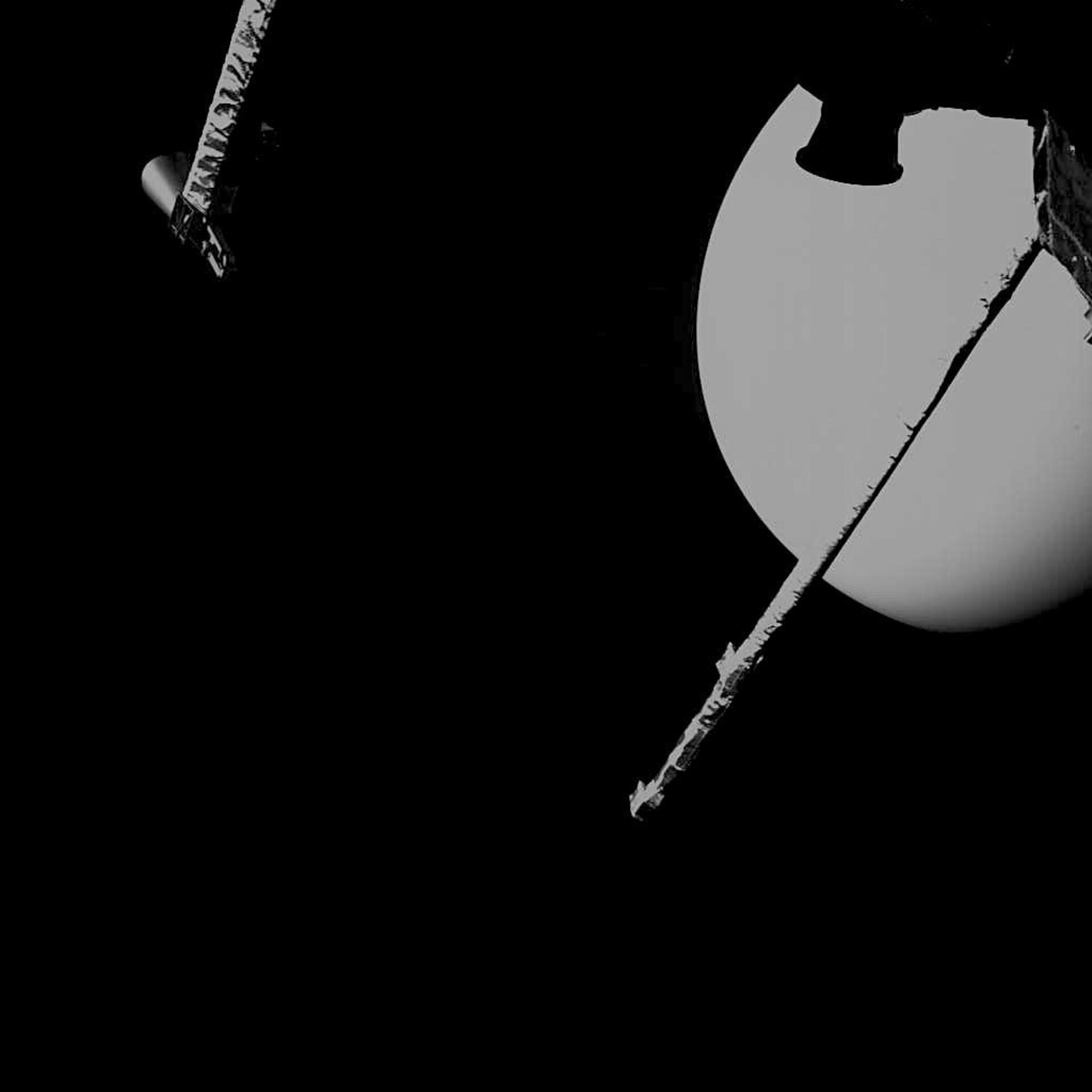
Construction of the Thirty Meter Telescope in Hawaii remains in limbo

Despite the successful power grab by protesters that stopped construction and took management of the telescopes on Mauna Kea in Hawaii away from the University of Hawaii and gave it to a newly created board made up of “observatory representatives, Native Hawaiian cultural practitioners, local business and education officials, and experts in land management,” construction of the Thirty Meter Telescope (TMT) in Hawaii remains in limbo.

But there is another actor in this drama: the National Science Foundation (NSF). TMT has accrued substantial financial backing from its university backers and the governments of China, Japan, India, and Canada, but it is still far from fully funded and has asked NSF to fill the gap. TMT’s request has come in partnership with the Giant Magellan Telescope (GMT), another U.S.-led effort to build a massive new telescope. GMT’s site is already being prepared in Chile but it is also in financial straits.

Together, the two projects are seeking $3 billion from NSF in exchange for the wider U.S. astronomical community gaining access to a large slice of both scopes’ observing time. That proposal was judged by U.S. astronomers as their top priority for ground-based astronomy in the community’s decadal survey published in November 2021. NSF is now assessing whether this is a good investment for U.S. taxpayers.

Considering that Congress now believes that money grows on trees, and there is no reason not to fund anything anyone wants no matter how much debt it produces, I expect that the NSF will eventually fund both telescopes. There is however the slim possibility that the NSF will look at the new and very complex managerial make-up now running things in Hawaii and decide it is impractical and guaranteed to produce problems. The goals of the different members of this board are so contradictory that any construction on Mauna Kea will likely have to be renegotiated over and over again, causing further delays.

Of course, endless funding and delays could be considered a feature, not a bug, by our present corrupt federal government. In that case the NSF will celebrate these delays.

5 comments

Lunar Flashlight cubesat in trouble

The mission of NASA’s test cubesat Lunar Flashlight is now threatened because of a problem with its experimental thrusters that use what the agency labels a new “green” propellant.

The spacecraft, called Lunar Flashlight, launched last month on a mission to seek out water ice on the moon. The probe was also expected to test a new “green” propellant during its four-month voyage to the moon, but its thrusters have a problem, NASA said on Thursday (Jan. 12). “While the smallsat is largely healthy and communicating with NASA’s Deep Space Network, the mission operations team has discovered that three of its four thrusters are underperforming,” NASA wrote in an update. “Based on ground testing, the team thinks that the underperformance might be caused by obstructions in the fuel lines that may be limiting the propellant flow to the thrusters.”

Engineers are now devising a plan to fire the thrusters longer and more frequently to make up for the lower thrust. If successful, the cubesat will enter its planned lunar orbit in about four months, where it will use infrared lasers to search for ice in the permanently shadowed craters at the lunar poles while testing a variety of other new technologies.

9 comments

China completes two launches today

China today continued its normal fast pace of winter launches, launching twice from two different spaceports.

First, a Long March 2C rocket launched a communications satellite from the Xichang Satellite Launch Center in southwest Sichuan Province. Then, a Long March 2D rocket launched three classified technology test satellites from the Jiuquan Satellite Launch Center in northwest China.

As I noted in yesterday’s quick space links, the drop zones for both were in China. No word as yet on whether anything fell near habitable area.

At present the 2023 launch race consists entirely of China with four launches, and SpaceX with two.

0 comments

January 12, 2023 Quick space links

Courtesy of BtB’s stringer Jay.

  • Sierra Space shows off Dream Chaser mock up
  • This is just empty PR. Sierra Space is taking forever to build Tenacity, the first cargo version of its proposed Dream Chaser fleet. In fact, its pace rivals Blue Origin for slowness and non-achievement.


4 comments

The modern American blacklist culture is wide and deep, and will require a lot of dredging to clear

What some conservatives are going to have to face to bring liberty back to America
What some conservatives are going to have to face
to bring liberty back to America

A wise man once said that to beat your enemy you need to know him better than he knows himself. It is to this purpose I write this essay.

Even now, with blacklisting, censorship, and intolerance against dissent the normal standard held by our leftist elitist intellectual class, conservatives still assume naturally that anyone they meet anywhere, whether on the street, at their job, or among their family, are old-fashioned freedom-loving Americans who — whether they are Republicans or Democrats — will stand together for liberty wherever tyrants strike.

This assumption is 100% wrong, and it is why conservatives have been so steadily losing ground in the battle for freedom for decades. Blacklisting is now acceptable to a large percentage of Americans on the left. Censorship and violence against their opponents is okay, and is actually considered the right thing to do for many ordinary Democrats.

Just yesterday the Democrats themselves in Congress proved this point. When faced with a bill that simply condemned the more than hundred violent attacks against “pro-life facilities, groups, and churches” since the May 2, 2022 leak of the Supreme Court decision striking down Roe v Wade, 208 out of 211 Democrats voted against it.

The bill did not support the banning of abortion. All it demanded that Congress:
» Read more

8 comments

Racing above the clouds of Jupiter

Racing above the clouds of Jupiter
Click for full image.

Cool image time! The photo above, reduced in size to post here, was created from a raw Juno image by citizen scientist Kevin Gill. From his caption:

A low perspective over Jupiter’s North Polar Storms. Used imagery from the Juno spacecraft’s recent Perijove 47 to render a simulated view as if the viewer were only a few thousand kilometers above the clouds. Applied simulated altimetry, shadowing, and upper atmospheric transparency depth in Blender and Photoshop to render this.

To get some perspective on how large Jupiter is, the planet’s curve is about comparable to the same curve seen by astronauts of the Earth at a height of about 300 to 400 kilometers. In this image however we are about ten times higher.

3 comments

First exoplanet confirmed by Webb

Astronomers have used for the first time the Webb Space Telescope to confirm the existence of an exoplanet, previous noted in data from the orbiting TESS telescope.

Formally classified as LHS 475 b, the planet is almost exactly the same size as our own, clocking in at 99% of Earth’s diameter. The research team is led by Kevin Stevenson and Jacob Lustig-Yaeger, both of the Johns Hopkins University Applied Physics Laboratory in Laurel, Maryland.

The team chose to observe this target with Webb after carefully reviewing targets of interest from NASA’s Transiting Exoplanet Survey Satellite (TESS), which hinted at the planet’s existence. Webb’s Near-Infrared Spectrograph (NIRSpec) captured the planet easily and clearly with only two transit observations.

The data is still preliminary, so more analysis is necessary to provide some information about the planet’s atmosphere.

0 comments

German rocket startup signs deal with UK spaceport

Rocket Factory Augsburg (RFA), a German rocket startup, has signed a deal with the SaxaVord spaceport in the Shetland Islands of Scotland to fly its first launch from there later this year.

Rocket Factory Augsburg (RFA) has signed a multi-year deal with the SaxaVord spaceport, being built in Unst, for the first launch of its satellite-carrying rockets. After testing at the site in mid-2023, it hopes to launch to a 500km orbit by the end of the year.

Because of the failure of the Virgin Orbit launch from Cornwall earlier this week, the honor of being the first orbital launch from within the United Kingdom remains ungrabbed. Both SaxaVord and Spaceport Sutherland, also in Scotland but at a different location, are now competing for that honor. Both now have planned launches this year, assuming the Civil Aviation Authority of the UK can issue a permit in less than fifteen months.

Meanwhile, Rocket Factory is competing with two other German startups for the honor of being the first commercial private European rocket company to reach orbit.

2 comments

China is planning 60-plus launches in 2023

According to an article today in China’s state-run press, China is planning 60-plus launches in 2023, matching approximately its launch rate in 2022.

The China Aerospace Science and Technology Corporation (CASC) is expected to have more than 50 launches, and other Chinese space enterprises will have more than 10 launches.

If this number is accurate, it suggests a slowdown in activity by the many pseudo-companies that the Chinese government has allowed to form to compete for government and commercial business. Two years ago it appeared that these companies were launching at a faster rate, even many of those launches were failures.

0 comments

American camera snaps picture of shadowed floor of Shackleton crater

floor of Shackleton Crater
Click for original image.

Using ShadowCam, a NASA-funded camera designed to take high resolution images of the permanently shadowed regions on the Moon, scientists have snapped the first picture of shadowed floor of Shackleton crater.

That image, reduced to post here, is to the right. I have added some labels to clarify what we are seeing. The arrow points to a boulder track caused when the boulder rolled down the crater rim slope.

The camera will be used to image the moon’s permanently shadowed regions with a resolution of better than 6.6 feet (2 meters) per pixel

ShadowCam is one of six instruments on the South Korean lunar orbiter, Danuri, which is now in lunar orbit and beginning its science phase. This was therefore only a successful test image to make sure the camera was working as planned.

Though the area photographed was in shadow (otherwise it would have saturated ShadowCam’s sensitive camera), this first image appears to show no ice at the base of the crater. This simply could be that this part of the crater floor is not permanently shadowed, but gets illuminated enough to melt off any ice. Or it could be that no ice exists in these places. We need to wait and see.

3 comments

Russia and Europe negotiating return of rockets and satellites

Russia and Europe have begun negotiations concerning the return of the various rockets and satellites that were left stranded in both countries when Russia invaded the Ukraine and all cooperative international agreements between the two entities broke off.

[I]n January 2023, an industry source told RussianSpaceWeb.com that Arianespace representatives were exploring a potential deal with Roskosmos on the exchange of Soyuz rocket components stranded in French Guiana for a group of 36 OneWeb satellites stuck in Baikonur Cosmodrome in Kazakhstan after the aborted 14th launch for the Internet constellation. The satellites were held at the Russian-controlled facility in Kazakhstan per the order by Rogozin, but the newly appointed head of the Roskosmos State Corporation Yuri Borisov was reportedly opened to negotiations on their fate.

There are many obstacles blocking this deal, the biggest being the on going war itself. It will be necessary to engineers to both places to facilitate the return, and the war right now makes that difficult if not impossible.

Ironically, Russia is likely in more need of this deal than Europe. OneWeb of course wants its satellites back, but it can replace them. Russia it appears is having trouble building complex things like rockets, and needs these rockets and components to replace components it no longer can get in the west.

1 comment
1 634 635 636 637 638 2,915