Volcano on the Moon

Wide shot of lunar volcano

Close-up of lunar volcano
Click for full image.

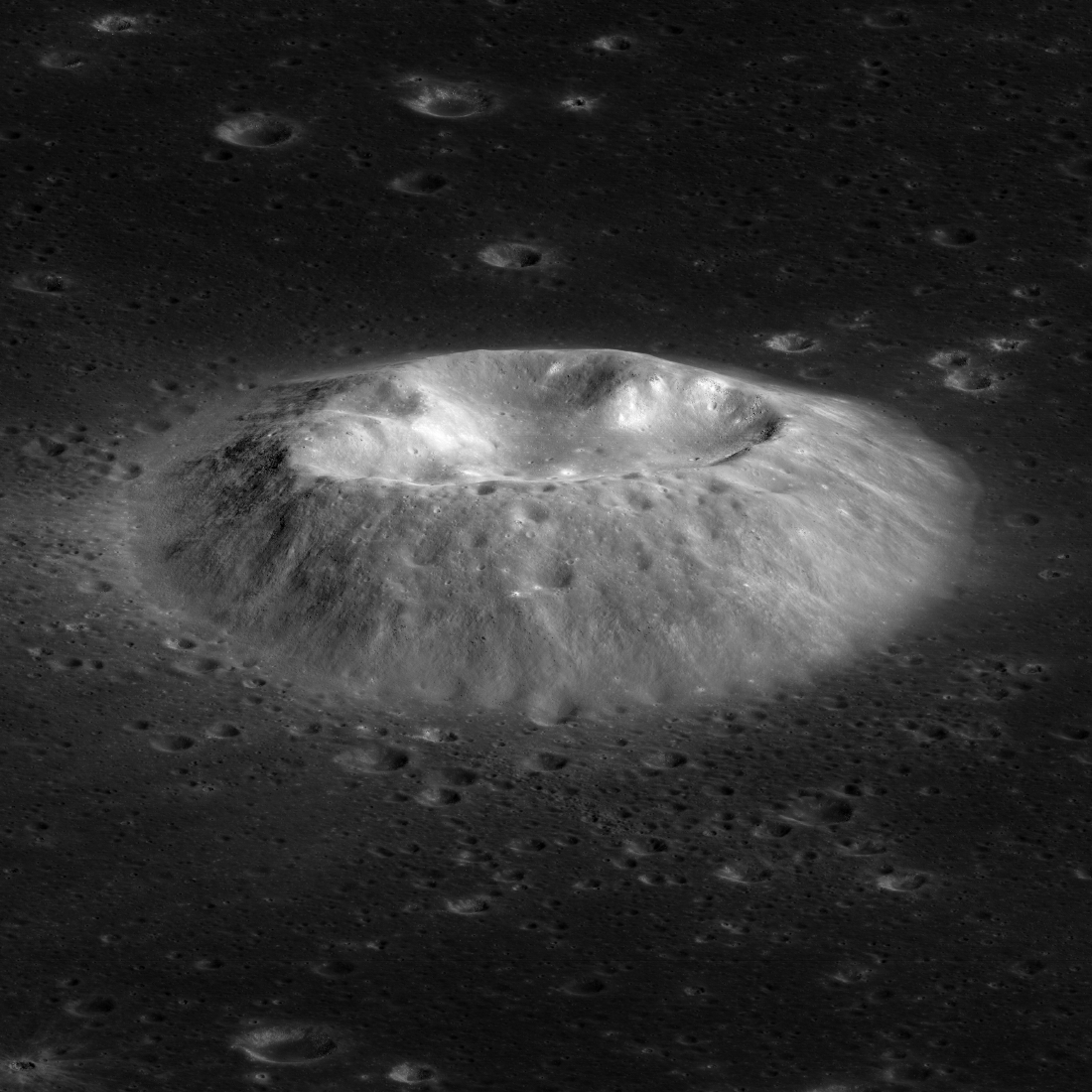
Cool image time! The Lunar Reconnaissance Orbiter (LRO) science team today released the oblique image above and in close-up to the right, showing what they call a “silicic volcano.” From the release:

The Mairan T dome is a large silicic volcanic structure with a pronounced summit depression. Remote sensing indicates that the composition of the volcanic material (lava) making up the dome is enriched in silica (SiO2). This rock type would be classified as either rhyolite or dacite on Earth, and the composition starkly contrasts with the dark, iron-rich mare basalts that embay the Mairan T dome. Most of the volcanism on the Moon is basaltic or iron-rich. Still, silicic volcanism also occurred on the Moon. Indeed, bits and pieces of similar materials were found in the Apollo samples; however, all are small fragments delivered to the Apollo sites as material ejected from distant impact events.

One of the great questions for lunar science is how the silicic materials formed. On Earth, specific tectonic settings and higher water contents in the rocks favor the formation of such lavas; however, the Moon lacks plate tectonics and water-rich sediments. NASA is planning a Commercial Lunar Payload Services (CLPS) lander mission to another, larger silicic volcano, one of the Gruithuisen domes, to address this question.

The scientists also note that this volcano formed first, and then was partly covered by the dark flood lava that surrounds it.

1 comment

InSight’s power levels rise very slightly

InSight's power level through October 8, 2022

In a status report issued today, the science team for the InSight lander on Mars noted a slight increase in the amount of power produced daily by its solar panels. The graph to the right indicates that increase.

On October 8, 2022, InSight was generating an average of 300 watt-hours of energy per Martian day, or sol โ€“ an increase after a sharp decline last week from 430 watt-hours per sol to a low of 275 watt-hours per sol.

It appears that the atmosphere has begun to clear from the very large dust storm that occurred more than two thousand miles away. Despite that distance, the storm apparently reduced the available light above InSight significantly, and could take months to clear.

0 comments

Icebergs of Martian lava

Icebergs of Martian lava
Click for full image.

Cool image time! The photo to the right, cropped, reduced, and enhanced to post here, was taken on July 24, 2022 by the high resolution camera on Mars Reconnaissance Orbiter (MRO). The scientists label this “platy-ridged lava” but to my eye this more resembles lava ice bergs trapped within a now frozen lava stream flowing I think from the northeast to the southwest.

My guess that the flow follows that direction is based on two bits of data. First, the shape of the lava ice flows suggests vaguely a flow to the southwest. The wiggling black ridges inside the streams suggest that these flows occurred in two parts, a stronger wide flow that narrowed as the lava on the edges hardened. When the edges solidified the interior flow scraped against it, forming the wiggling ridges.

Second, the location of this image, as shown on the overview map below, strongly suggests the lava streams flowed to the southwest.
» Read more

1 comment

InSight shut down temporarily because of lack of power

InSight's power levels over recent time

Because a dust storm has caused a further decline in the power being generated by InSight’s solar panels, the science team has decided to put the lander into safe mode for the next two weeks in the hope that the air will then clear, allowing its power levels to rise.

The graph to the right shows that drop. From the press release:

By Monday, Oct. 3, the storm had grown large enough and was lofting so much dust that the thickness of the dusty haze in the Martian atmosphere had increased by nearly 40% around InSight. With less sunlight reaching the landerโ€™s panels, its energy fell from 425 watt-hours per Martian day, or sol, to just 275 watt-hours per sol.

InSightโ€™s seismometer has been operating for about 24 hours every other Martian day. But the drop in solar power does not leave enough energy to completely charge the batteries every sol. At the current rate of discharge, the lander would be able to operate only for several weeks. So to conserve energy, the mission will turn off InSightโ€™s seismometer for the next two weeks.

The real problem however is the dust covering the solar panels. If that dust gets thicker due to this storm, the lander will not recover when they power it up in two weeks. It will still generate electricity at this low number, making future operations likely impossible.

11 comments

Thick flow exiting dramatic canyon on Mars

Thick flow into Mamers Valles on Mars
Click for full image.

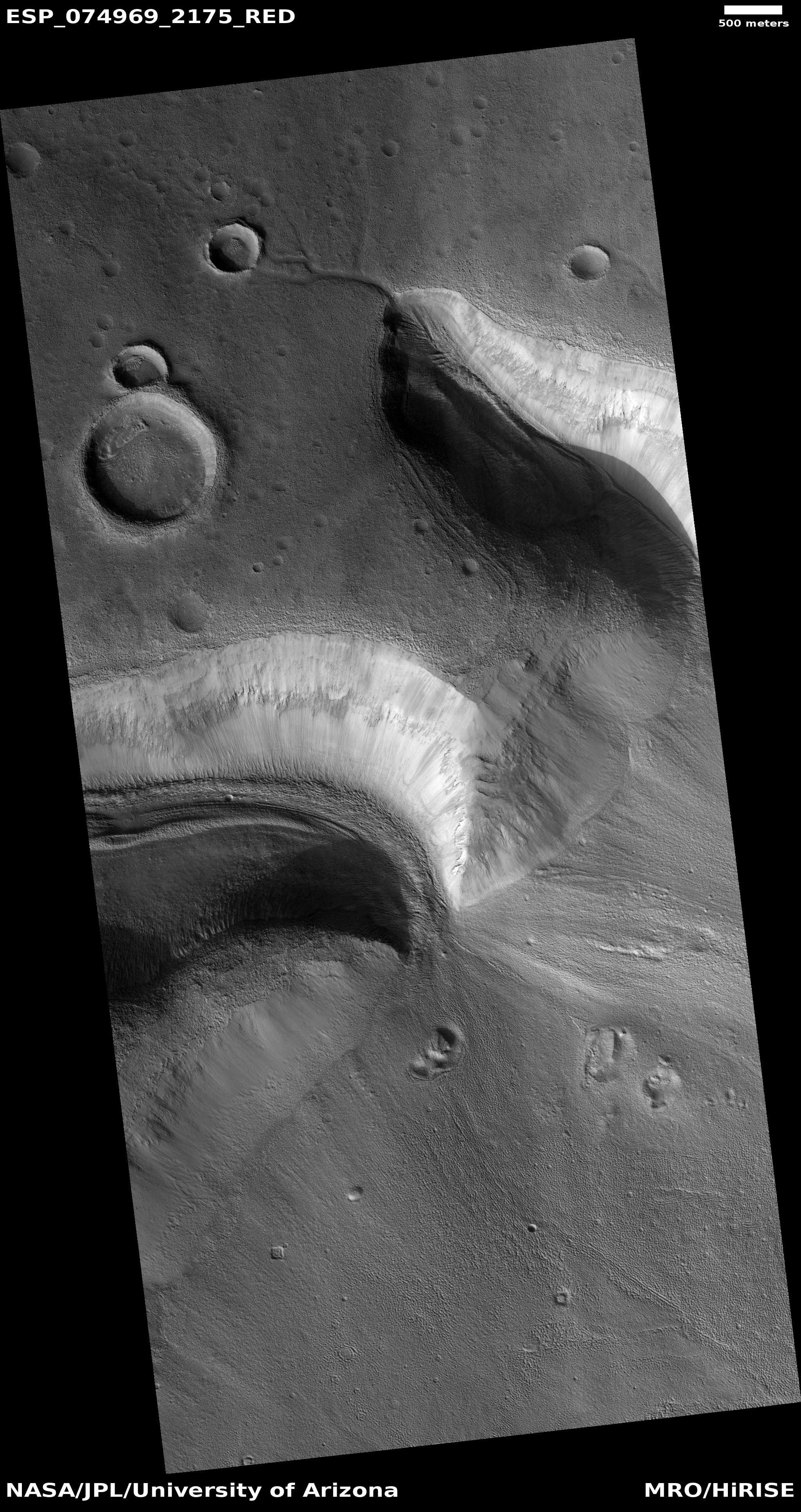
Cool image time! The photo to the right, cropped and reduced to post here, was taken on July 24, 2022 by the high resolution camera on Mars Reconnaissance Orbiter (MRO). It shows what the scientists label as a “viscous flow” that has apparently carved the wide curving canyon as it slowly flows into open country to the south.

I would estimate the height of that canyon wall to be around 3,000 feet, though this is a very rough guess. I also image a trail switchbacking up the nose of that canyon wall would make for a truly stupendous hiking experience.

The flow filling the canyon floor appears very glacial, which is not surprising as this canyon is at 37 degrees north latitude, in the mid-latitude band where many glacial features are found. The overview map below provides some more detailed context.
» Read more

2 comments

Martian crater and mesa sculpted by ancient flow

Martian crater and mesa sculpted by ancient flow
Click for full image.

Cool image time! The picture to the right, rotated, cropped, and reduced to post here, was taken on June 15, 2022 by the high resolution camera on Mars Reconnaissance Orbiter (MRO). It shows a crater whose ejecta has been sculpted to the east into a teardrop-shaped mesa by some ancient flow, coming from the west.

The crater itself is located in one of several outflow canyons draining out from the volcanic Tharsis Bulge into the northern lowland plain of Chryse Planitia, the biggest of which is Valles Marineris. This particular canyon is one of the smaller and is dubbed Ravi Vallis.

The overview map below illustrates why many scientists think the flow that shaped this mesa came from a catastrophic flood of liquid water, billions of years ago.
» Read more

2 comments

Another “What the heck?” formation on Mars

Another
Click for full image.

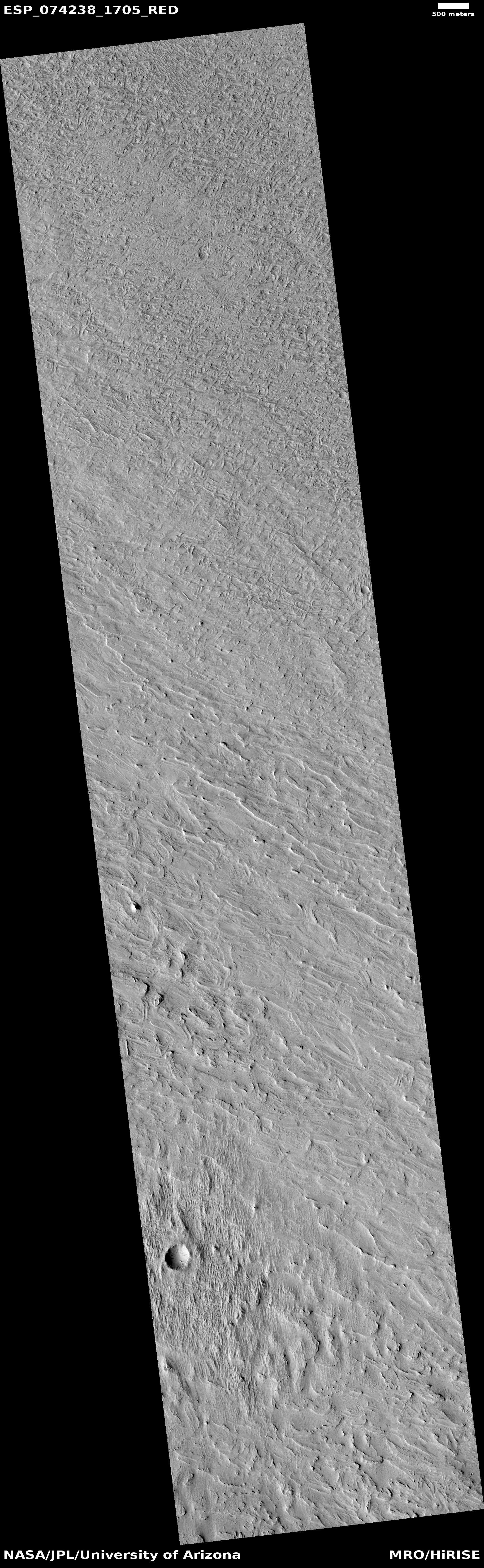
Cool image time! The photo to the right, cropped, reduced, and enhanced to post here, was taken on May 28, 2022 by the high resolution camera on Mars Reconnaissance Orbiter (MRO), and shows what the scientists label “unique terrain.”

I have increased the contrast to bring out the details. It appears that we have a flat plain of criss-crossing ridges that in large areas have somehow gotten flattened across their top. Imagine someone laying plaster on a wall and using a scraper tool to smooth the surface, but only partially. In this case on Mars, our imaginary worker only smoothed the surface a little, and only in some areas. To try to come up with a geological process however to explain this seems daunting.

And what created the criss-crossing ridges? The overview map provides only a little help in answering these questions.
» Read more

5 comments

Two days after DART’s impact of Dimorphus, ejected dust extends like a comet tail out more than 6,000 miles

Dust tail from Dimorphus two days after DART impact
Click for full image.

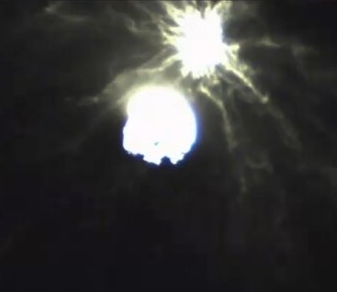
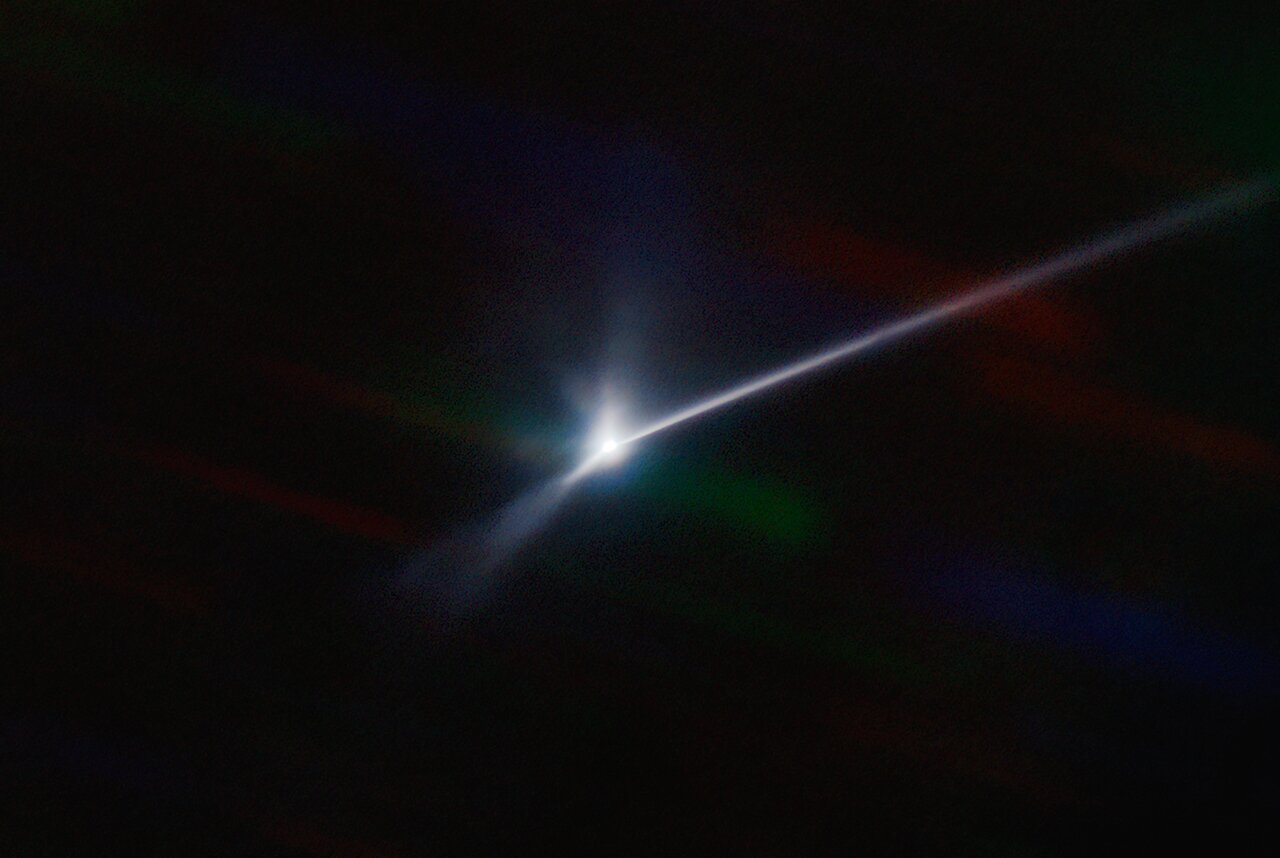
Using a telescope in Chile, astronomers photographed the ejecta two days after the impact of DART into the 525-foot-wide asteroid Dimorphus, and detected a tail of dust extending out more than 6,000 miles.

The picture to the right, cropped and reduced to post here, shows that tail.

In this new image, the dust trail โ€” the ejecta that has been pushed away by the Sunโ€™s radiation pressure, not unlike the tail of a comet โ€” can be seen stretching from the center to the right-hand edge of the field of view. … At Didymos’s distance from Earth at the time of the observation, that would equate to at least 10,000 kilometers (6000 miles) from the point of impact.

Didymos is the larger parent asteroid that Dimorphus orbits.

It is still too soon to get the numbers on how Dimorphus’s path in space was changed by that impact. In fact, we still really don’t have a clear idea what is left of Dimophus itself. The ejecta cloud needs to clear somewhat to see what’s hidden inside it.

5 comments

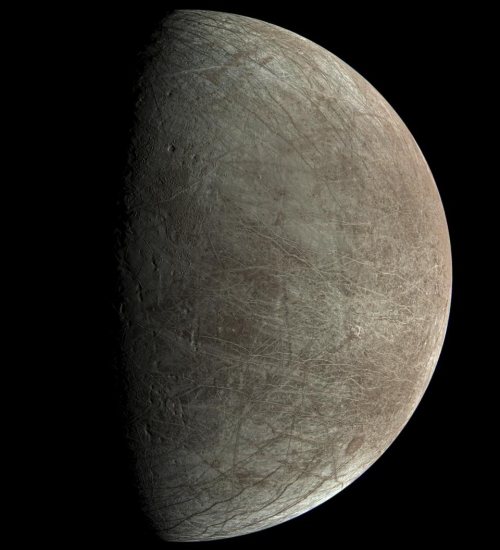
Europa in true color

Europa in true color
Click for full image.

The photo to the right, cropped and reduced to post here, was taken on September 29, 2022 by the Jupiter orbiter Juno during its close fly-by of Europa. Citizen scientist Bjorn Jonsson has processed it to bring out the details. From his caption:

This is an approximately true color/contrast, reprocessed version of Europa image PJ45_1. It is more carefully processed than the version I posted very shortly after the raw image data was released. The color should be fairly close to Europa’s real color and probably slightly more accurate than the color of the earlier version I posted. North is up.

The Sun is coming from the right, so those are craters in the upper left, close to the shadowed limb of the planet. The red color has been known for decades, and appears in many cases to be seepage coming up from the many meandering ridges that criss-cross the planet’s surface. Their chemistry/make-up is not fully known at this time.

Juno came within 219 miles of Europa, the closest any spacecraft has come since the Galileo orbiter circled Jupiter in the 1990s. I was expecting close-up images of the surface, from that close distance, but have not yet seen any. Instead, most of the images released and processed by citizen scientists have been global images from farther away. Thus, at this moment it does not appear Juno took pictures at this closest distance.

2 comments

Tiny cobbles on Mars

Tiny cobbles on Mars

Our second cool image takes us from grand galaxies, one of the universe’s largest coherent objects, to tiny cobbles on Mars. The picture to the right, taken by one of Perseverance’s close-up cameras on September 29, 2022, covers an area less than an inch across, making the largest rounded pebbles in this image only a few millimeters in size.

The rover presently sits on the floor of Jezero Crater, at the base of the delta that flowed into that crater eons ago. The data suggests that delta was created by flowing water entering a lake that filled the crater.

Did flowing water create these cobbles? These pebbles all have the look of the rounded cobble one finds either in river beds, or in glacial moraines. In both cases, the flow of the water or ice rolls the rocks along until they become rounded.

5 comments

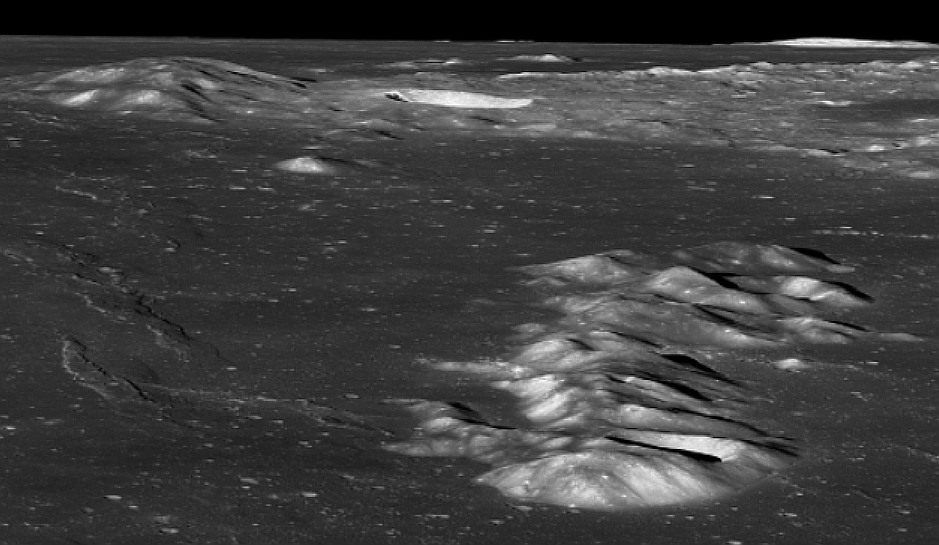
Lunar mountains and wrinkle ridges

Montes Recti on the Moon

Cool image time! The photo above, taken by Lunar Reconnaissance Orbiter (LRO), was released today by the orbiter’s science team, and provides us an oblique look at the mountains dubbed Montes Recti (lower right) and the wrinkle ridges near them (lower left). The highest point in this mountain range is about 5,900 feet high.

The image looks west across the northern part of the mare region dubbed Mare Imbrium, the dark area on the Moon’s visible hemisphere near its top. In the distance can be the mountains that form part of mare’s rim. The rounded peak in the top right is Promontorium Laplace (about 8,530 feet high). It is named this because it projects out (a promontory) into the mare a considerable distance from the rim. The crater at top center is Laplace D. As for the wrinkle ridges, the scientists describe them like so:

Tectonic landforms are those formed by forces that act to either contract or pull apart crustal materials. These forces develop faults or breaks in the crustal materials, and movement or slip along the faults form either positive or negative relief landforms. On the Moon, positive relief contractional landforms are the most common. The most significant contractional landforms on the Moon are wrinkle ridges, found exclusively in the dark mare basalts.

Essentially, something caused the ground to contract, which caused it to break at these ridges and be forced upward.

3 comments

Chang’e-5 samples suggest lunar meteorite impacts took place the same time as big Chicxulub impact

In analyzing lunar samples brought back by China’s Chang’e-5 Moon lander, Australian scientists have found evidence of lunar meteorite impacts that apparently took place the same time as big Chicxulub impact in the Yucatan 66 million years ago, thought by many scientists to have caused the extinction of the dinosaurs.

Their findings suggest that the frequency of meteorite impacts on the Moon may have been mirrored on Earth, and that major impact events on Earth were not stand-alone events and instead were accompanies by a series of smaller impacts. The study has been published in Science Advances.

โ€œWe combined a wide range of microscopic analytical techniques, numerical modelling, and geological surveys to determine how these microscopic glass beads from the Moon were formed and when,โ€ says lead author Professor Alexander Nemchin, from the Space Science and Technology Centre (SSTC) in the School of Earth and Planetary Sciences at Curtin University in Perth.

The data suggests two possibilities, neither of which is confirmed. First, the impacts could have occurred because a cluster of large objects hit both Earth and the Moon at the same time. Second, the impacts on the Moon could have been caused by objects thrown up from the Earth when the bigger impact occurred at Chicxulub.

Either way, the data suggests a greater and more complex interaction between events on the Earth and events on the Moon.

6 comments

More glaciers in Mars’ glacier country

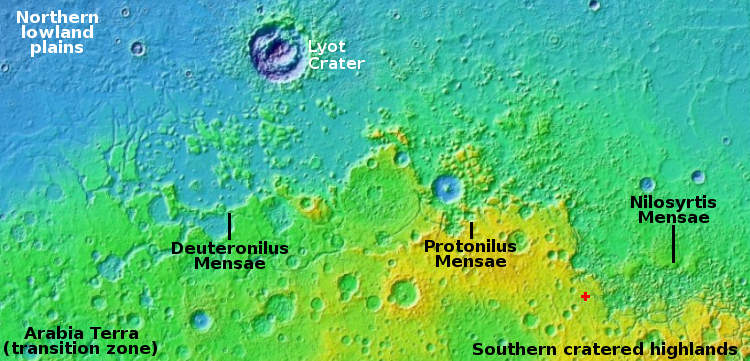
Overview map

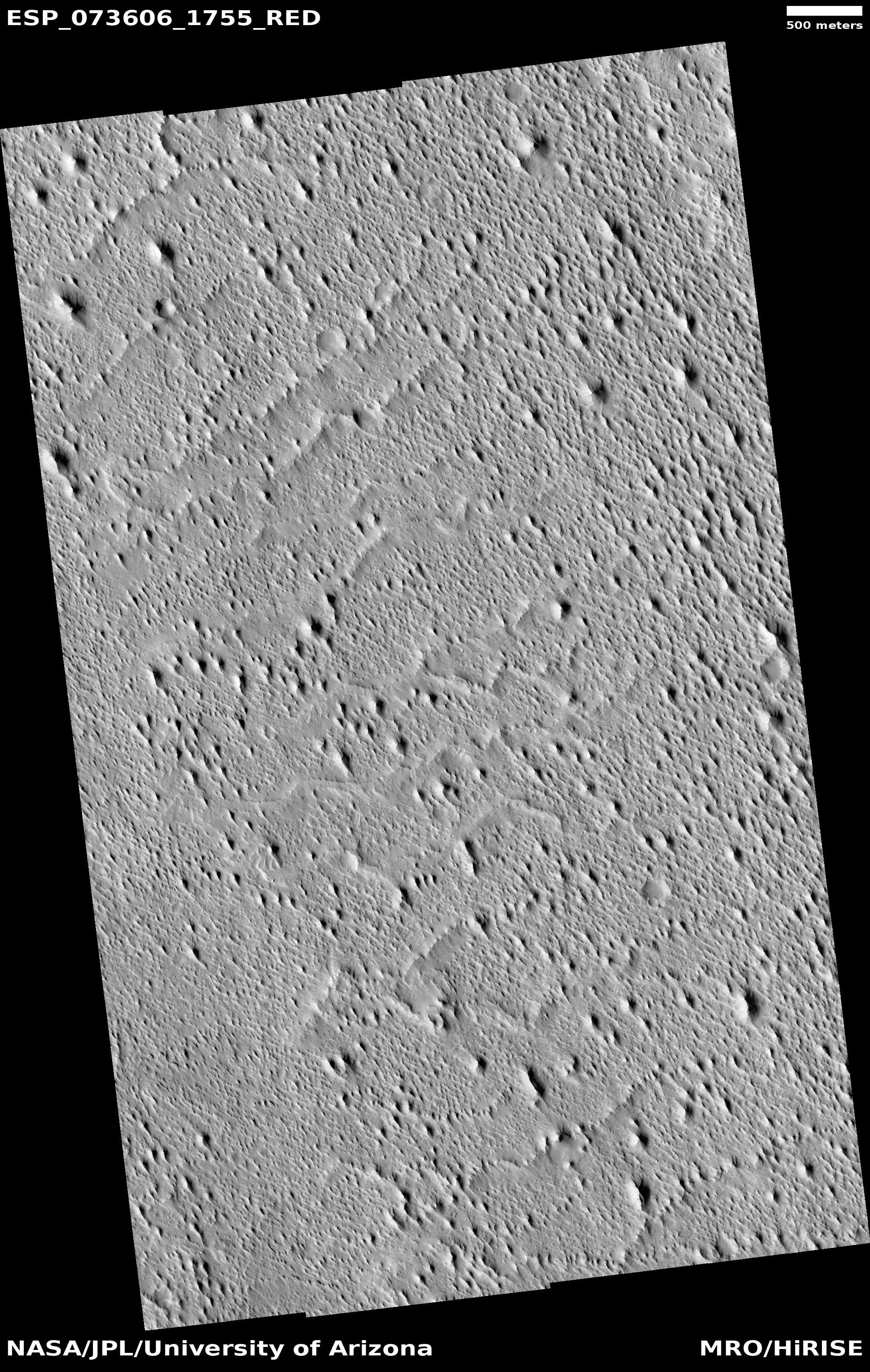
glacial layering in Clasia Vallis
Click for full image.

Cool image time! The photo to the right, rotated, cropped, and reduced to post here, was taken on June 18, 2022 by the high resolution camera on Mars Reconnaissance Orbiter (MRO). It shows what appear to be layered glacial features on the floor of what at first glance appears to be a crater.

It is not a crater however. The depression in the lower right of this image is the rim and floor of a 77-mile-long meandering canyon on Mars dubbed Clasia Vallis. The red cross in the overview map above marks its location, at 34 degrees north latitude. This channel drains downward from the southern cratered highlands into the 2,000-mile-long mid-latitude strip of mensae terrain that I dub glacier country because almost every hi-res image from this region shows glacial features.

Below is a wider view of Clasia Vallis, taken by the context camera on MRO on March 19, 2014.
» Read more

0 comments

Zig-zag ridges on Mars

Zig-zag ridges on Mars
Click for full image.

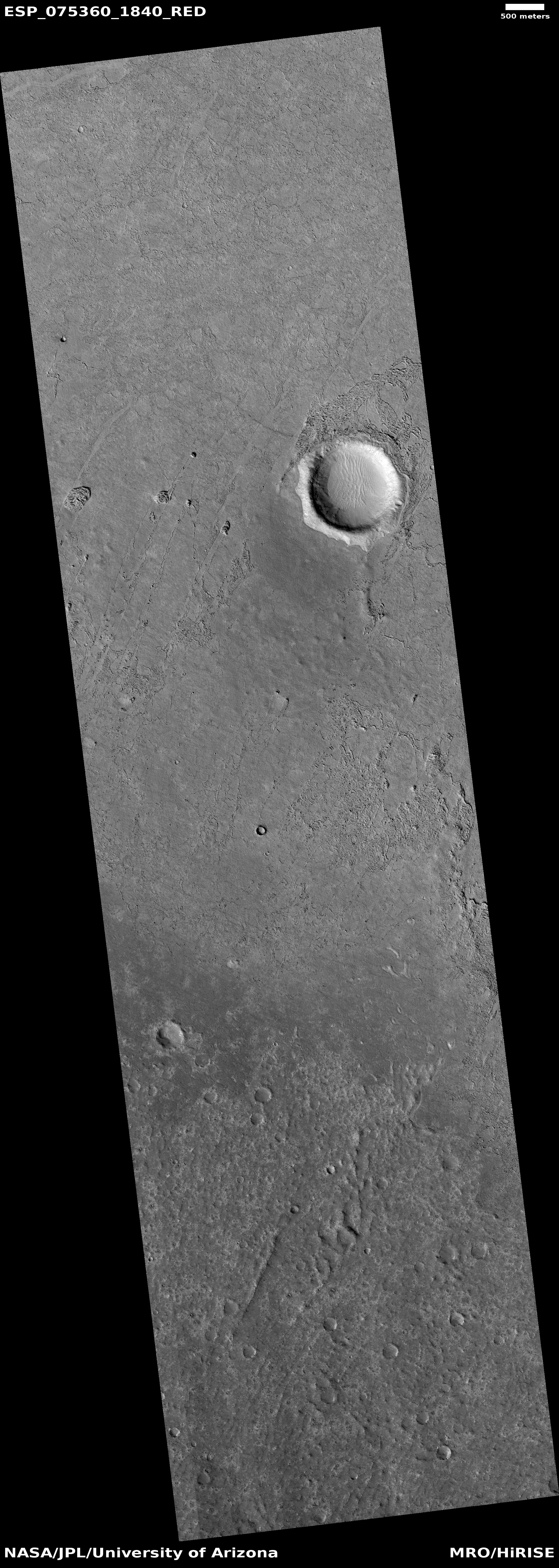
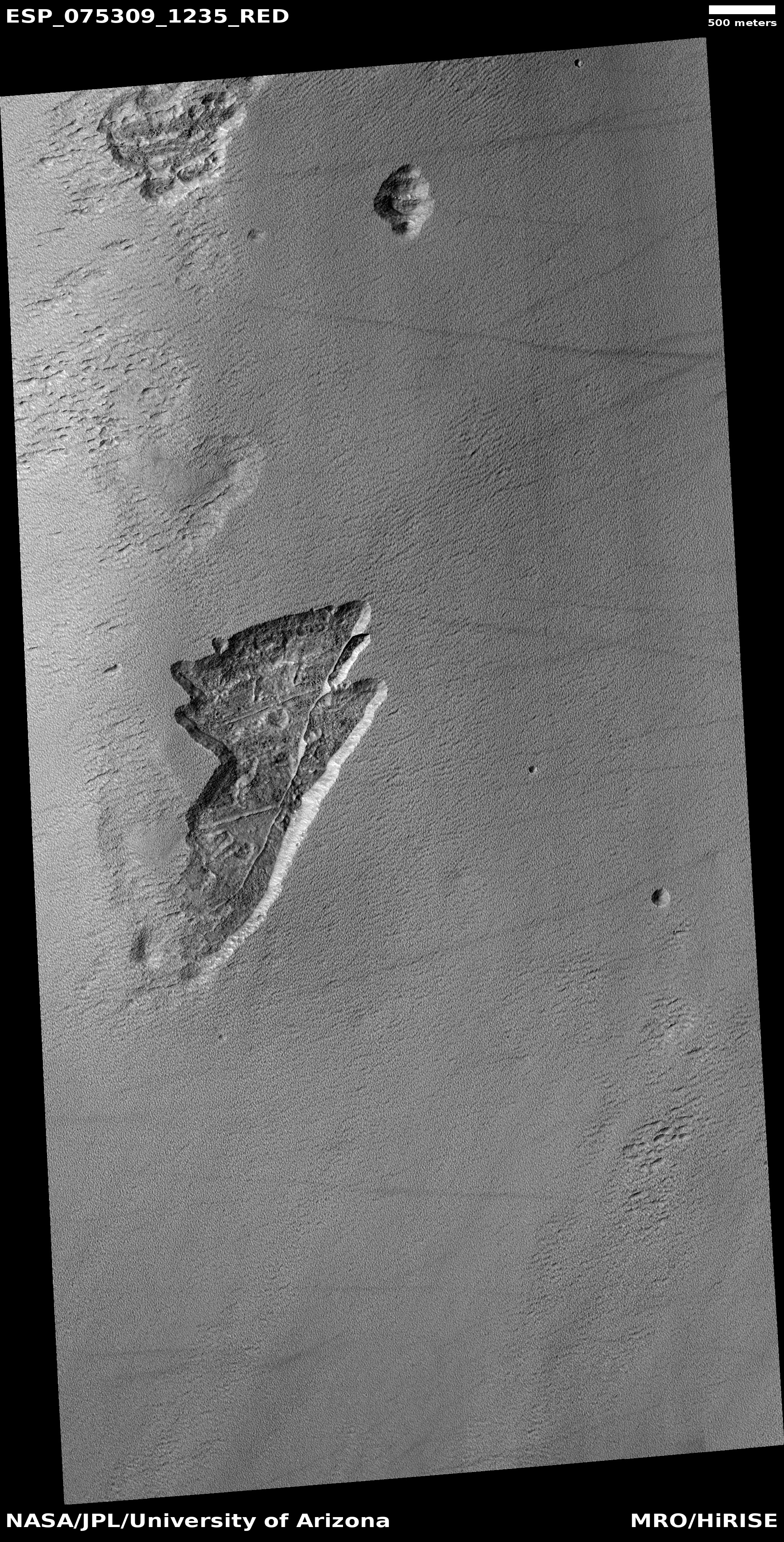
Cool image time! The photo to the right, cropped and reduced to post here, was taken on April 9, 2022v by the high resolution camera on Mars Reconnaissance Orbiter (MRO). It shows a series of parallel zig-zag ridges in a flat, knobby terrain.

I don’t presume to explain this at all. According to one research paper,

This interplana region consists of extensive networks of ridgesโ€”the eponymous Aeolis Dorsaโ€”and is interpreted as having formed by topographic inversion of fluvial and alluvial deposits.

Why these ridges zig-zag however does not seem to fit into either a fluvial or alluvial explanation, both of which involve the flow of water. The quote implies these could be inverted stream channels (where the compacted streambed becomes a ridge when the surrounding terrain erodes away), but once again, the distinct zig-zag pattern seems wrong. Rivers meander, but they don’t generally turn right and left so sharply. And why should we see parallel zig-zags? This doesn’t seem to fit with a river channel origin.

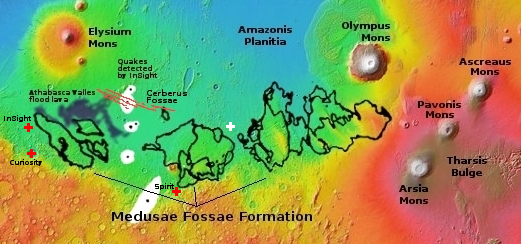
The particular location, as shown on the overview map below, is close to the dry Martian equator, on the edge of Medusae Fossae Formation, the largest field of volcanic ash dust on Mars.
» Read more

1 comment

Above ground and underground Martian drainages

Overview map

Cool image time! Today we are going to zoom into our cool image. The overview map to the right provides us the context. Our target is the small white rectangle inside the small box just below the north rim of 185-mile-wide Newton Crater, located 200 to 800 miles from the southwest edge of the lava plains dubbed Daedalia Planum that flowed down from Mars’s biggest volcanoes.

Newton Crater has a number of interesting features. Only two weeks ago I featured 4-mile-wide Avire Crater in Newton’s western quadrant, long known to have many gullies on its interior slopes as well as glacier features on its floor. Scientists have been monitoring those gullies now for more than a decade to see if they change seasonally, in a attempt to figure out their cause.

Today’s cool image looks at the very intriguing meandering canyons that appear to flow south from Newton’s north rim.
» Read more

0 comments

Watching DART impact asteroid on September 26, 2022

A NASA planetary probe, dubbed DART, is on course for a planned impact of the asteroid Dimorphos this coming Monday, September 26, 2022, at 4:14 PM (Pacific).

DART was launched from Vandenberg Space Force Base, CA on November 23, 2021 PST (November 24 EST) headed to the asteroid Didymos and its tiny moon Dimorphos 7 million miles away. The plan is for DART to ram itself into Dimorphos while scientists on Earth measure whether its orbit around Didymos changes.

Dimorphos is about 525 feet in diameter, while Didymos is much larger, about a half mile in width. The goal is to see if this method can be used in the future to adjust an asteroid’s orbit enough to shift it away from hitting the Earth.

The impact will be observed by a camera on DART, as well as an Italian cubesat dubbed LICIACube.

NASA TV will be live streaming the event, and I will embed that live stream here when it goes live. Once DART gets close, its camera will record the asteroid’s approach through impact.

5 comments

Martian layers everywhere!

Layers in Argyre Basin
Click for full image.

Cool image time! The photo to the left, rotated, cropped, and reduced to post here, was taken on June 1, 2022 by the high resolution camera on Mars Reconnaissance Orbiter (MRO). It shows the rim edge to a fifteen-mile-wide canyon, with many apparent layers exposed on the high plateau.

The layers are intriguing in that they suggest several things. First, they give us a glimpse into the top and youngest layers that make up the interior canyon wall. Second, they tell us that erosion has removed much of those top and youngest layers, resulting in the mesas on that plateau.

Finally, the gullies flowing down into the canyon indicate further erosion processes, eating away at the canyon wall over time.

The location of this canyon is also intriguing.
» Read more

1 comment

Another model attempts to show how liquid water could have once existed on Mars

The uncertainty of science: Scientists today published a new model that attempts to show how it was possible in the distant past for liquid water to have existed on the surface of Mars.

New research published in Earth and Planetary Science Letters suggests that Mars was born wet, with a dense atmosphere allowing warm-to-hot oceans for millions of years. To reach this conclusion, researchers developed the first model of the evolution of the Martian atmosphere that links the high temperatures associated with Mars’s formation in a molten state through to the formation of the first oceans and atmosphere. This model shows that — as on the modern Earth — water vapor in the Martian atmosphere was concentrated in the lower atmosphere and that the upper atmosphere of Mars was “dry” because the water vapor would condense out as clouds at lower levels in the atmosphere. Molecular hydrogen (H2), by contrast, did not condense and was transported to the upper atmosphere of Mars, where it was lost to space. This conclusion – that water vapor condensed and was retained on early Mars whereas molecular hydrogen did not condense and escaped – allows the model to be linked directly to measurements made by spacecraft, specifically, the Mars Science Laboratory rover Curiosity.

As a model, this theory proves nothing, though it is very intriguing. The scientists propose that the heat from the planet’s interior replaces the known lack of energy that came from the Sun in Mars’ far past. While this could work, what makes it very uncertain is that its surface data is based on a single measurement from Curiosity, hardly a deep and convincing baseline.

0 comments

Want to do a virtual hike in Jezero Crater on Mars? You can!

Using data from Mars orbiters, Perseverance, and Ingenuity, scientists have now created a virtual hiking map of Jezero Crater, allowing anyone to explore in detail the same places that the rover and helicopter have visited.

You can view the map here. From the press release:

The map allows virtual hikers to zoom in and out, and pan rapidly across scenes, so that they can explore the landscape from large scales down to centimetre-detail. Some of the 360ยฐ panoramas integrated with the waypoints have been synthetically rendered from orbital image data. Others are real panoramas stitched together from a multitude of single images taken by the Mastcam-Z camera instrument onboard the Mars 2020 Rover Perseverance, which have been provided by the University of Arizona. The sounds have been recorded by the SuperCam instrument on that same rover mission.

I’ve played with the map only a little, but find it quite amazing and useful, especially because it seems to work well on my relatively ordinary desktop Linux computer.

0 comments

InSight’s power level holding steady

InSight's on-going power levels

The Energizer bunny of Mars, the InSight lander, continues to hold on. The engineering team tonight issued another status report, as shown in the graph to the right. For the past week the lander continued to produce 420 watt-hours per day, even though the tau level of dust in the atmosphere increased from 0.8 to 0.85.

The tau level of dust outside of the winter dust season is normally between 0.6 and 0.7. Even though Mars is moving out of winter, that level has increased slightly above InSight. And yet, even with a higher dust content and thus less sunlight, the lander’s dust-covered solar panels are generating power, at a very slightly higher level.

The InSight team had expected the lander to die in early September, at the latest. Instead, it keeps running, thus allowing it to detect on September 5th an impact created by a cluster of three asteroids, the first time scientists have ever pinpointed exactly when such a new impact occurred on Mars.

For the lander to survive for even longer, all it needs is one gust of wind across the solar panels to clean them off. The science team had expected this to happen periodically, based on past experience with the Spirit and Opportunity rovers. Unfortunately for InSight, it has not yet happened even once since it arrived on Mars in 2018. Nonetheless, it only has to happen once to save the lander.

Stay tuned. All is not yet lost.

2 comments
1 39 40 41 42 43 95