Northrop Grumman successfully test solid rocket booster for ULA’s Vulcan

Capitalism in space: Northrop Grumman today announced that it has successfully test fired the strap-on solid rocket booster, qualifying it for flight, for use on ULA’s new Vulcan rocket.

In the Jan. 21 static test, the motor fired for approximately 90 seconds, producing nearly 449,000 pounds of thrust to validate the performance capability of the motor, the company said. The firing also verified the motor’s internal insulation, propellant grain ballistics and nozzle in high temperatures.

If all goes right Vulcan will make its inaugural flight later this year.

7 comments

The slowly disappearing dry ice cap at Mars’ south pole

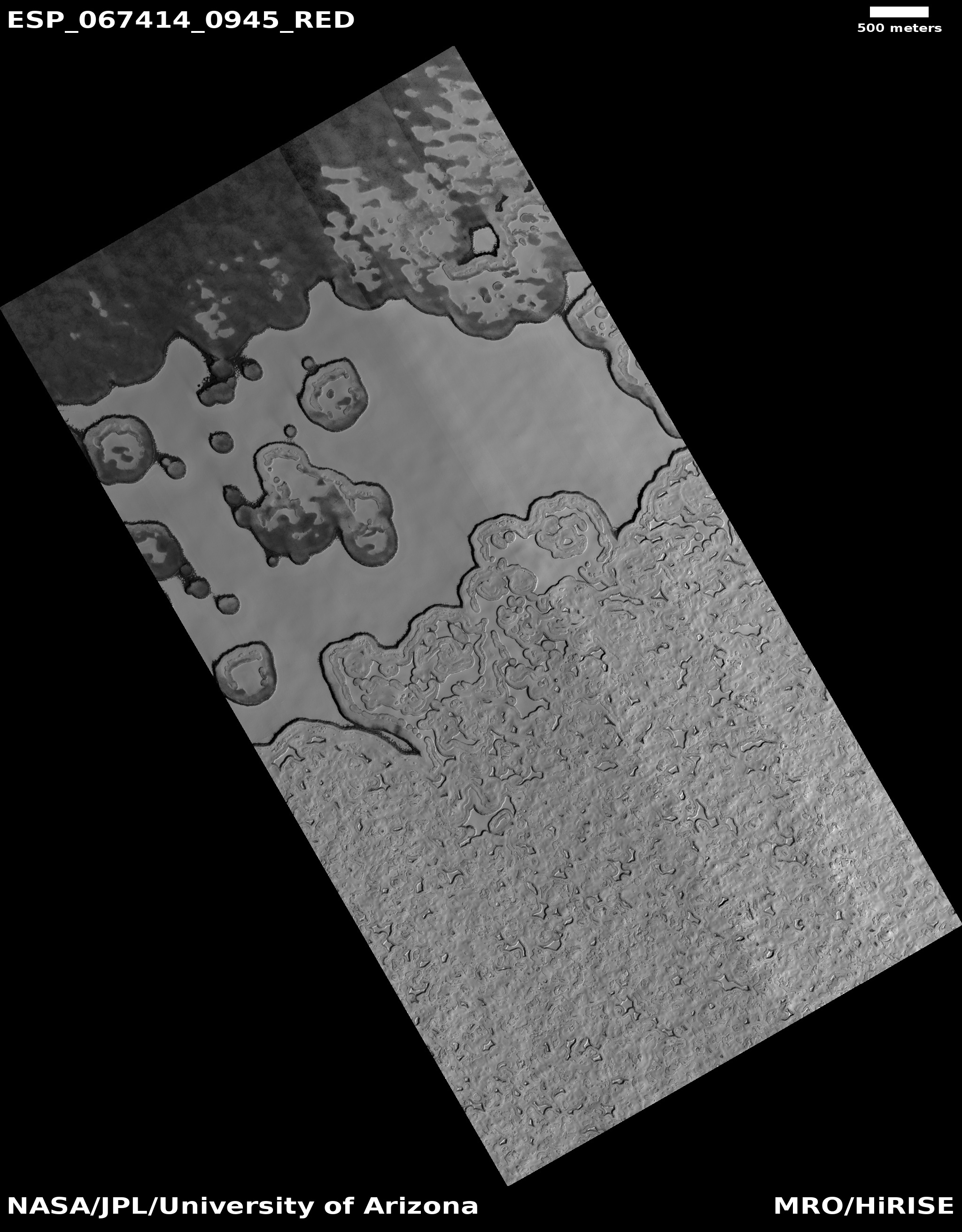
The Happy Face crater near Mars' south pole
Click for the 2020 full image.

Cool image time! The photo to the right of two images taken by the high resolution camera on Mars Reconnaissance Orbiter (MRO) was posted as a captioned image by the orbiter’s science team today.

This crater, dubbed the Happy Face Crater because of the shape of the blobby features within it, is located on the south pole ice cap of Mars, about 200 miles from the south pole itself.

Today’s caption noted how these pictures, taken nine years apart, illustrate the change going on at the Martian south pole.

The “blobby” features in the polar cap are due to the sun sublimating away the carbon dioxide into these round patterns. You can see how nine years of this thermal erosion have made the “mouth” of the face larger. The “nose” consisted of a two circular depressions in 2011, and in 2020, those two depressions have grown larger and merged.

While this caption noted the importance of studying these long term changes in order to understand the evolution of Mars’ climate and geology, it did not give the very specific discovery these changes suggest for Mars globally, a discovery that is actually very significant.

The two ice caps of Mars have some fundamental differences, all presently unexplained. The similarities are obvious. Both have permanent caps of water ice that are presently believed to be in a steady state, not shrinking or growing. Both each winter get covered by a thin mantle of dry ice that sublimates away completely with the coming of spring.

The differences are more puzzling, as shown by the maps of the two poles below.
» Read more

8 comments

Curiosity checks out its wheels

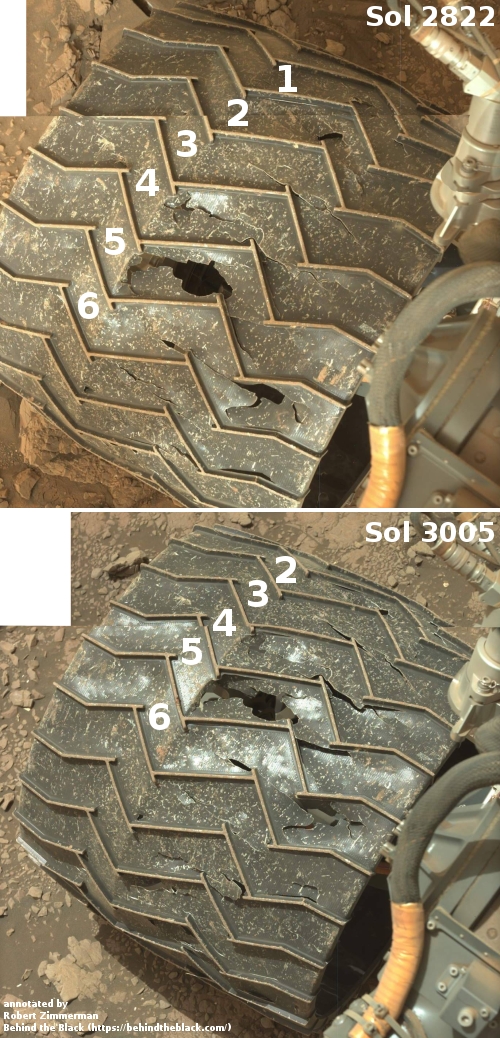
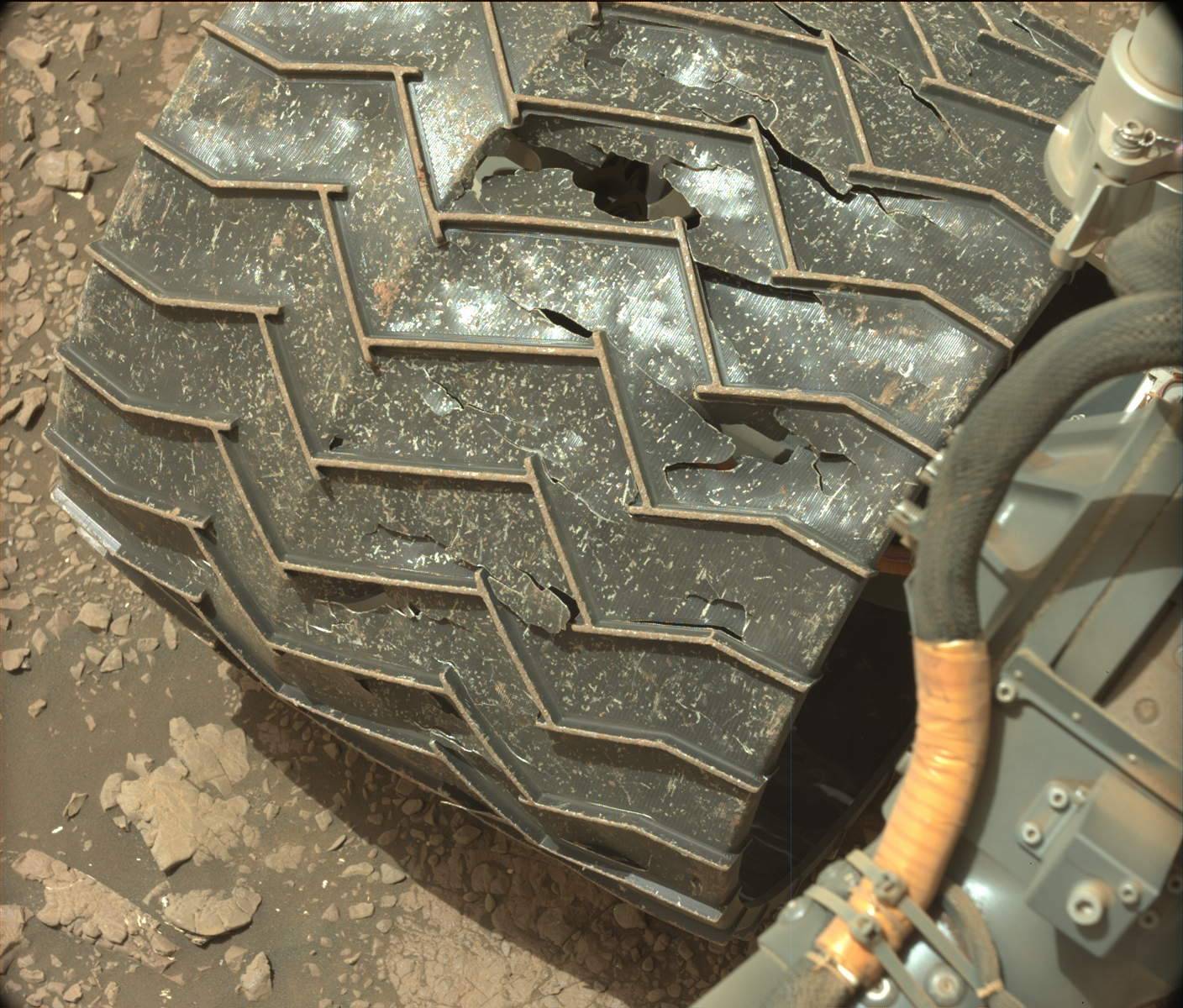
One wheel on Curiosity, as seen in July 2020 and January 2021
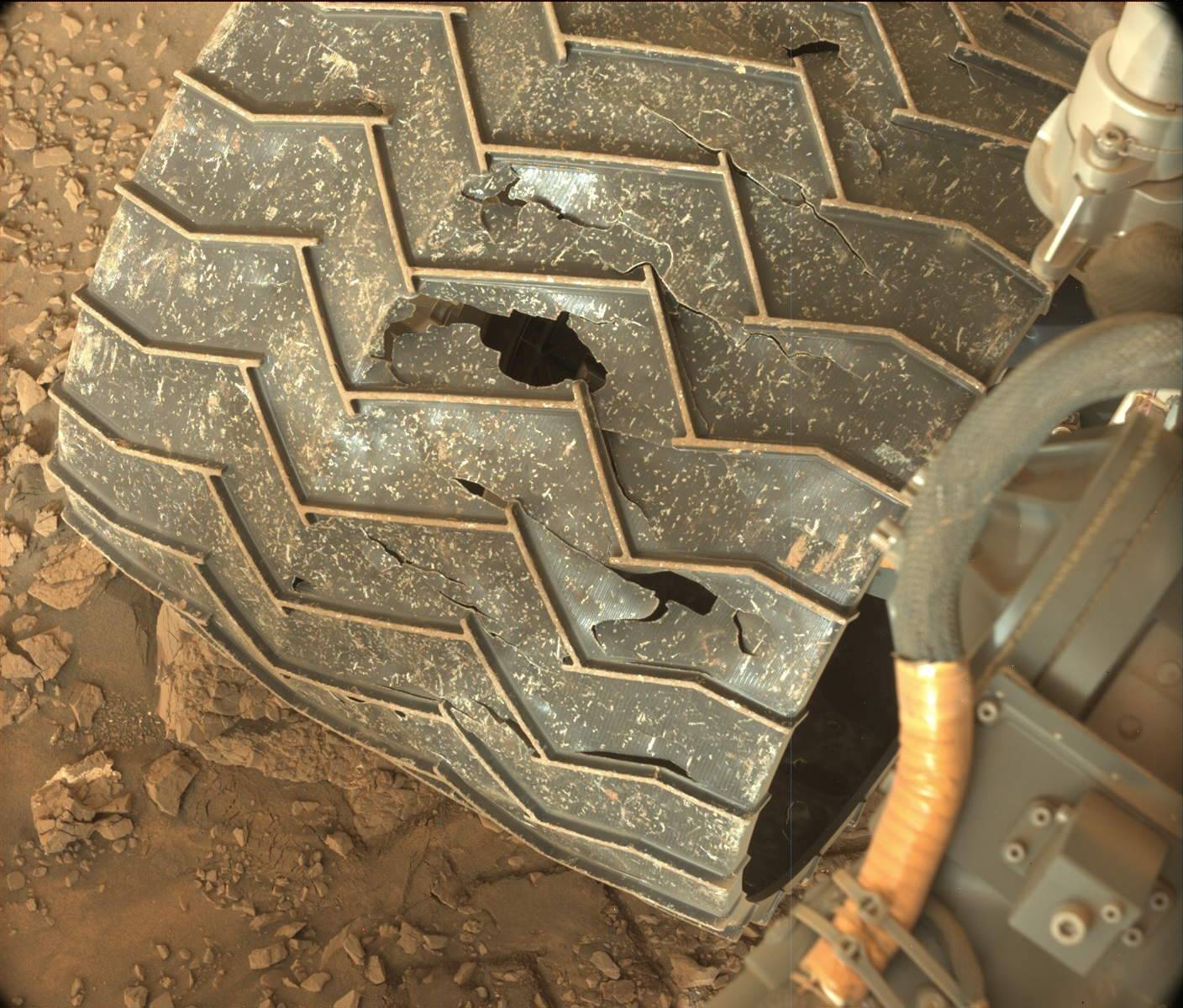
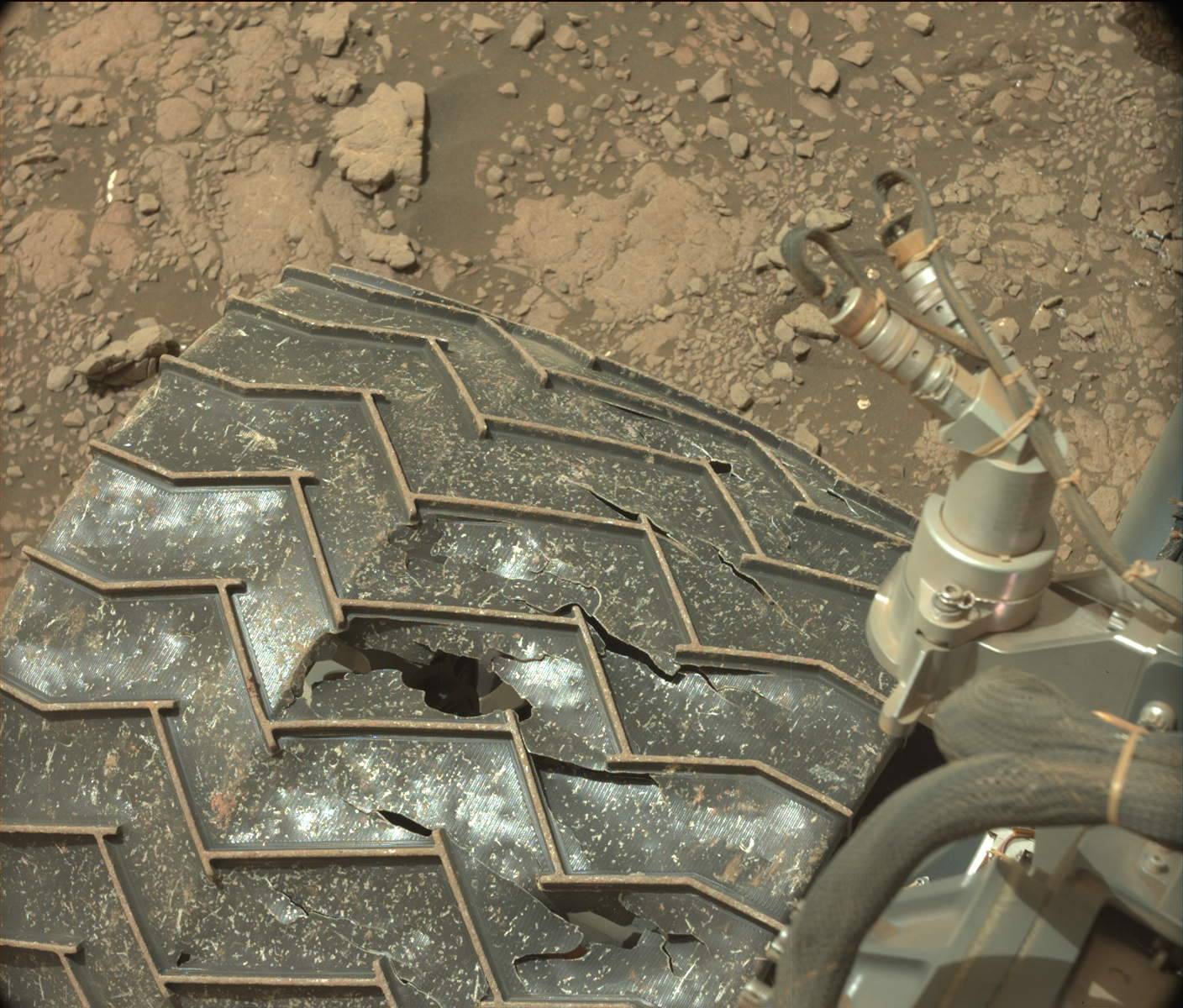
For full resolution images, go here and here for the
top image, and here and here for the bottom image.

Having finished a two week look at a sea of sand, Curiosity’ science team has resumed its journey east towards the higher slopes of Mount Sharp.

Before they started out however, they decided to aim the rover’s high resolution mast camera at Curiosity’s wheels to see how they are faring and whether any of the damage that occurred in the early days of the mission has worsened. The photo on the right compares what was seen this week with the damage on the same wheel as seen in July 2020. This is also the same wheel I have posted images of since September 2017.

Not only does there appear to be no appreciable new damage to this wheel in the six months since July, remarkably, a comparison between today’s image and the photo from September 2017, shows little change as well.

In the more than three years since that 2017 photo, Curiosity has crossed Vera Rubin Ridge, crossed the clay unit, climbed up the next ridge to take a look at the incredibly rough terrain of the Greenheugh Pedimont, and then continued across the clay unit on its way to higher and possibly more challenging terrain.

In all those travels it appears this particular wheel has fared rather nicely, accumulating in at least this part little new damage. This bodes well for the rover’s future, as the wheels have been a concern since Curiosity’s first two years on Mars, when engineers found they were experiencing more damage than expected. The travel techniques they have adopted since to protect the wheels appear to be working.

4 comments

Hints that NASA will redo the SLS static fire test

While NASA has not yet announced any decision on whether it will redo the full static fire test of its SLS core stage — following the January 16th abort — there are hints coming from industry sources that the agency is leaning to doing another test.

According to sources at the agency, program managers are in fact leaning toward conducting a second hot-fire test in Mississippi. Due to the need to obtain more propellant at the test site, conduct minor refurbishment to the vehicle, and possibly change the erratic sensor on Engine 4, the agency estimates it will require about three to four weeks before conducting another test.

Based on that schedule, the actual Artemis 1 unmanned flight, now set for November, will likely have to be delayed one month to December, since after the static fire test it will take several months to disassembly and prep the core stage for shipment to Florida and then reassembly it and prepare it for launch. That November launch date was predicated on a successful completion of the static fire test by January.

NASA and Boeing (the lead contractor building SLS) do not have much schedule margin however. They have begun stacking the solid rocket boosters that strap-on to the core stage. Once this is done the boosters supposedly have a life span of approximately one year, which means the launch must occur by about January ’22 though I would not be surprised if NASA waives that use-by-date if it needs to.

I am in a betting mood this morning. Want to bet SpaceX’s Starship completes its first orbital flight before SLS, even though it has been in development for one tenth the time (2 years vs 20) and for one thirtieth the cost ($2 billion vs $60)? I think the odds right now are very very likely. One way or the other, the race will definitely be neck-and-neck.

14 comments

SpaceX buys two floating oil rigs for Starship/Super Heavy

Capitalism in space: As has been expected now since June, SpaceX has now officially purchased two floating oil rigs to be used for the launch and landing of its Starship/Super Heavy reusable heavy-lift rocket.

Named Phobos and Deimos, after the two moons of Mars, they are currently undergoing modifications to support Starship launch operations.

SpaceX has long been hinting at future floating launch and landing sites for their Starship launch system. The super heavy lift launch vehicle will have a large blast danger area and pose noise concerns if launched frequently near populated areas. Therefore, sea launch platforms will play a key role in the launch cadence SpaceX plans to reach with Starship, including on-orbit refueling flights for deep space missions and transportation from one place to another on Earth.

Job postings by SpaceX have indicated that work on offshore launch platforms has begun in Brownsville, Texas, near their Starship manufacturing and launch facilities in Boca Chica. Positions included crane operators, electricians, and offshore operations engineers, and several of the job listings specified that the position was part of the company’s Starship program. Job descriptions for these positions included responsibilities like “designing and building an operational offshore rocket launch facility” and required the “ability to work on an offshore platform in Brownsville, Texas.”

Out of work because you live in a fascist Democratic Party-controlled state and have had your job destroyed by their tyrannical policies? Move to Texas and go to work for SpaceX! At the moment at least the United States remains a collection of 50 sovereign states, with the ability of citizens to move from one to the other freely to improve their lives. Some states, such as Texas and Florida, are moving forward under the American concepts of freedom and private enterprise. Others, such as California and New York, are not.

Want to bet which ones will prosper in the coming decade? I pick Texas and Florida. Anyone willing to bet me?

8 comments

Update on China’s pseudo-private commercial launch industry

Link here. Unlike past Space News articles which generally made believe these privately funded Chinese companies were truly private, the article at the link today is very clear about the close supervision maintained by the Chinese communist government over these companies. They might get funding through private investment capital, but everything they do is approved by their government.

A 2014 central government policy shift opened the Chinese launch and small satellite sectors to private capital. Since then around 20 launch vehicle-related firms have been established in China.

These commercial launch companies are being supported by a national strategy of civil-military fusion. This includes facilitating the transfer of restricted technologies to approved firms in order to promote innovation in dual-use technology. The State Administration for Science, Technology and Industry for National Defense (SASTIND) oversees activities.

Provincial and local governments are also providing support for space companies as they look to attract high-end and emerging technology firms.

The initial focus of the article is on iSpace, also called Interstellar Glory Space, which is planning another fund-raising round. This company, whose Hyperbola-1 solid rocket reached orbit for the first time in 2019, is now designing a liquid-fueled rocket whose first stage will be reusable.

The article also gives a quick review of some of the other Chinese companies.

It is all part of the new colonial movement, the international race to gain dominance in space. The competition is presently fierce, and should only become fiercer based on China’s decision to encourage internal competition.

1 comment

SpaceX and Rocket Lab complete launches

Capitalism in space: Two successfully launches this morning.

First Rocket Lab used its Electron rocket to launch a German cubesat thought to be a prototype for a Chinese communications constellation, though no information has been publicly released. No recovery attempts were made on the rocket’s first stage.

Then SpaceX successfully completed its 17th Starlink launch and second launch in 2021. This puts about 950 Starlink satellites in orbit. The booster for this flight landed on the drone ship, completing its record eighth flight.

The 2021 launch race:

2 SpaceX
1 Virgin Orbit
1 China
1 Rocket Lab

The U.S. now leads China 4 to 1 in the national rankings.

3 comments

SLS static fire abort not caused by malfunction but too-tight parameters

According to NASA today the reason the SLS static fire test cut off after only one minute was because of too conservative margins set in the computer software.

In an update today, however, NASA said it was engine 2 that caused the abort. At that moment, the engines were underdoing a gimble test where they are rotated in different directions just as they must do during ascent to steer the rocket. Actuators in the Thrust Vector Control system that generate the force to gimble an engine are powered by hydraulic Core Stage Auxiliary Power Units (CAPUs). The CAPUs for engine 2 exceeded pre-set test limits and the computer system automatically shut down the test as it was designed to do, but NASA said it would not have been a problem during a launch.

According to NASA’s update,

The specific logic that stopped the test is unique to the ground test when the core stage is mounted in the B-2 test stand at Stennis. If this scenario occurred during a flight, the rocket would have continued to fly using the remaining CAPUs to power the thrust vector control systems for the engines.

Note too that another issue during the test needs resolution:

Initial data indicate the sensor reading for a major component failure, or MCF, that occurred about 1.5 seconds after engine start was not related to the hot fire shutdown. It involved the loss of one leg of redundancy prior to T-0 in the instrumentation for Engine 4, also known as engine number E2060. Engine ignition begins 6 seconds prior to T-0, and they fire in sequence about 120 milliseconds apart. Test constraints for hot fire were set up to allow the test to proceed with this condition, because the engine control system still has sufficient redundancy to ensure safe engine operation during the test. The team plans to investigate and resolve the Engine 4 instrumentation issue before the next use of the core stage.

No decision has been made yet whether they will do another static fire test before shipping the core stage to Florida for launch. They are under a time limit, as they have begun stacking the SLS rocket’s strap-on solid rocket side boosters, and those only have a life expectancy of one year once stacking has begun.

As far as I am concerned, nothing about the development of this rocket makes sense. I would never fly on it no matter how much money was offered to me, and anyone who does must know the terrible risk they take.

9 comments

More evidence Mars’s glaciers formed across many ice ages

The uncertainty of science: New research using the boulders found on the top of Martian glaciers has now strengthened the evidence that Mars must have undergone many previous ice age cycles going back as much as 800 million years, with those glaciers waxing and waning during each cycle.

This new data helps map the cycles earlier than 20 million years ago, which have been difficult to map out based solely on the orbital data available from Earth and from Mars orbit. The results suggest that before then there were from six to twenty additional cycles during the last 300 to 800 million years.

These numbers are decidedly uncertain. It is likely that there were many more cycles, as suggested by the many layers seen at the edges of the north and south polar ice caps.

Be aware as well that if you read the press release you should know that it falsely implies that this research is the first to map out these ice age cycles. This is not true. All this research has done is provide more evidence for cycles prior to 20 million years ago, cycles that scientists have long believed must have happened based on other data.

In the end, for us to map out the full climate history of Mars will require numerous ice core samples at the planet’s poles, something that will not be possible until people are living and working on Mars routinely.

3 comments

Mysterious colors on Mars, near the landing site of Europe’s rover

Mysterious colors on Mars
Click for full image.

Cool image time! Today the science team for the high resolution camera on Mars Reconnaissance Orbiter (MRO) released a new captioned image, which I have cropped and reduced to post here to the right.

The photo was taken October 12, 2020, and shows a small very colorful area on top of an isolated hill. To quote the caption, written by Sharon Wilson:

An isolated, elongated mound (about 1 mile wide and 3.75 miles long) rises above the smooth, surrounding plains. Horizontal layers are exposed at the northern end of the mound, and its surface is characterized by a very unusual quasi-circular pattern with varying colors that likely reflect diverse mineral compositions.

…The origin of this mound is unknown, but its formation may be related to the clay-bearing rocks in the nearby Oxia Planum region.

» Read more

0 comments

Chang’e-5’s lunar samples less dense than expected

Because the lunar samples retrieved by China’s Chang’e-5 probe were less dense than expected, it ended up recovering only 3.8 pounds of material rather than the targeted 4.4 pounds.

The probe had estimated the lunar rocks to have a density of 1.6 grams per cubic millimetre, based on data from past missions by other countries, said Pei Zhaoyu, the mission spokesman. Going by that figure, the probe stopped taking samples after just 12 hours, apparently assessing that the target had been reached. “However, from tests, the actual density might not be that high,” Pei told reporters.

This is not a failure, but a discovery. In order to make sure the lander did not recover too much material, weighing too much, they needed to set limits based on the expected weight of the material recovered. That these samples taken from the Mons Rümker volcano complex are lighter than expected reveals something about them. It suggests the lava here was different than lava samples taken elsewhere.

3 comments
1 109 110 111 112 113 126