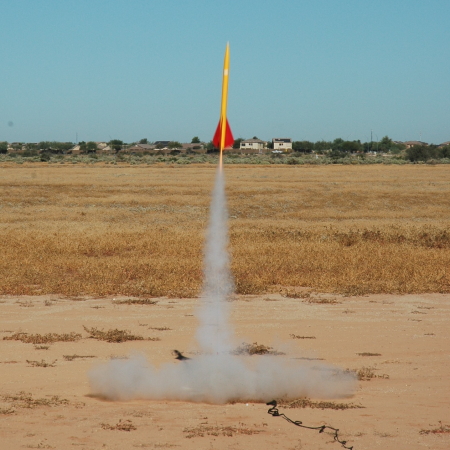
China’s Long March 4B rocket launches Earth observation satellite

China early today successfully placed an Earth observation satellite in orbit, using its Long March 4B rocket.

This was China’s 42nd successful launch in 2021, which is two launches more than it had projected it would fly at the start of the years.

The leaders in the 2021 launch race:

42 China
25 SpaceX
18 Russia
5 Europe (Arianespace)

China now leads the U.S. 42 to 40 in the national rankings.

9 comments

Astra successfully completes first orbital launch

Screen capture 12 seconds after liftoff
Screen capture 12 seconds after liftoff.

Capitalism in space: Astra tonight successfully launched a dummy payload into low Earth orbit. This was their first success after four tries.

The company now joins Rocket Lab and Virgin Orbit as the three operational smallsat rocket launch providers.

The leaders in the 2021 launch race:

41 China
25 SpaceX
18 Russia
5 Europe (Arianespace)

China’s lead over the U.S. in the national rankings has now narrowed to 41 to 40. For the U.S. the 40 launches so far this year ties the entire total from all of last year. With about six weeks left in the year, the U.S. is likely to add a good number of launches to this total. If the total tops 50, it will be first time since the mid-1960s that the U.S. has done that.

The total number of successful launches this year is presently 107. There is an excellent chance the total will exceed 120, a number last seen routinely during the 1970s and 1980s. The highest total ever was 132 in 1975. There is a slim chance that can be beat this year, but if not, I would expect it will be easily eclipsed next year.

8 comments

Watching Astra’s launch attempt tonight

Capitalism in space: Astra has made its live stream available for its orbital launch attempt tonight, scrubbed last night about ten minutes before liftoff.

This will be the company’s fourth attempt to launch a payload into orbit. The first three attempts failed in some manner.

I have embedded the company’s live stream, provided by NASASpaceflight LLC and Astra Space Inc., below the fold.
» Read more

6 comments

Today’s blacklisted American: School bans all pro-Israeli clothing

No freedom of speech in New York
No freedom of speech for conservatives in
NY schools. Photo: Leo Reynolds.

The new dark age of silencing: Neal Singh, the principal of a middle school in Brooklyn, forbid a teacher from wearing a t-shirt that said “Proud Zionist” because it was “politically explosive.”

An outraged Park Slope teacher says he learned the hard way that it’s OK to wear Black Lives Matter T-shirts to work at his “woke” Brooklyn school — but not pro-cop or pro-Israel garb.

Jeffrey Levy, an English as a Second Language teacher at MS 51 in the liberal Brooklyn enclave, told The Post that school principal Neal Singh ordered him to stop wearing his “Proud Zionist” T-shirt in the building — even though other staffers have worn shirts touting BLM and women’s rights. Levy filed a discrimination complaint over not being allowed to wear his self-made shirt, which features the Star of David.

He said he was told by Singh that students and staffers complained about it — and also the pro-police “Back the Blue” T-shirt he’s previously worn. “Singh told me that my T-shirt with an Israeli flag on it and the words ‘Proud Zionist’ were ‘politically explosive,’” Levy says in his complaint, filed Sept. 30 with the city Department of Education’s Office of Equal Opportunity and Diversity.

The excuse Singh uses to ban the pro-Zionist t-shirt is that it offended some students, which means that Singh hasn’t the slightest idea what freedom of speech entails. To have free speech everyone must be allowed to offend others. Silencing someone because their opinion offends you is blatantly oppressive.

Note too that I am sure Levy was offended by the Black Lives Matter banners and t-shirts, since many of that movement’s leaders are outright bigots and anti-Semites. He however did not call for their banning. He did the right thing, responding with more speech.

The NY Department of Education (DOE) is supporting Singh by noting that teachers are not supposed to advocate political positions while at work. Sounds good, eh? The problem is that the DOE did nothing to stop teachers from promoting BLM and feminist causes, continuously. It clearly has a double standard, designed to silence one side of the debate.

I doubt Levy will win his case. I even expect he will find himself fired for daring to make this complaint. After all, he lives in New York, a place that increasingly resembles the Soviet-style dictatorships of Eastern Europe during the Cold War.

6 comments

Video of Ingenuity’s 13th flight

Using the high resolution camera on Perseverance, the science team has now released two videos taken of Ingenuity’s 13th flight on Mars, on September 4, 2021.

One is a very wide view, which makes it hard to see the helicopter. The closer view can be seen here.

At the beginning of the video, Ingenuity is near the lower left of frame, at a distance of about 980 feet (300 meters) from the rover. It climbs to an altitude of to 26 feet (8 meters) before beginning its sideways translation. The helicopter leaves the camera’s field of view on the right. Soon after, the helicopter returns into the field of view (the majority of frames that did not capture helicopter after it exited the camera’s field of view were purposely not downlinked from Mars by the team) and lands at a location near its takeoff point.

1 comment

Scientists: NASA needs to catch up to SpaceX for using its Starship for future manned and unmanned missions

In a white paper [pdf] submitted to the committee presently writing the next decadal survey for NASA’s planetary science program, a large group of well-recognized planetary scientists essentially pleads with NASA to recognize the gigantic possibilities created by SpaceX’s Starship spacecraft for future manned and unmanned exploration, and rethink its management style.

The capabilities of the Starship vehicle to transport unprecedented quantities of cargo and crew to the lunar and Martian surface will require a new support structure within NASA to enable the NASA planetary science community to participate and provide payloads for these flights. SpaceX envisions an accelerated schedule for flights, but NASA’s traditional schedule for selecting and flying planetary payloads is not necessarily consistent with this timeline.

For example, SpaceX is aggressively developing Starship for initial orbital flights, after which they intend to fly uncrewed flights to the Moon and conduct initial test flights to Mars at the earliest Mars mission opportunity, potentially as soon as 2022, or failing that in the 2024 window. Since the launch window is significantly less restricted for the Moon, it is likely that the first Starship landings will be on the lunar surface. (Even in the case of a first Starship launch to Mars, during its six-month trip to the Red Planet it would be feasible to send a Starship to land on the lunar surface prior to the Mars landing).

In order to take advantage of these opportunities, a new funding program within NASA is needed to provide the opportunity for members of the community (within and outside of NASA) to fly robotic payloads on these flights. … In order to be successful given the flight schedule for SpaceX missions, this funding program must be nimble enough to select proposals for funding and make grants within just a few months after proposal submission.

In other words, NASA’s way of doing things when it comes to planetary exploration is simply too slow and cumbersome to take full advantage of Starship’s capabilities.

I found this white paper through this article at Teslarati, which focuses more on what SpaceX plans to do in its manned planetary exploration using Starship. The paper however is less about what SpaceX will do and more about the need for NASA and the planetary community that has depended on the agency for decades to undergo a paradigm shift. With Starship, missions to the Moon and Mars will no longer be very constrained in terms of weight. Nor will launch schedules be slow and far between. Rather than plan a few billion dollar NASA unmanned missions taking a decade to plan and launch, using Starship NASA could have many planetary missions launching fast and for relatively little cost, with far greater capabilities.

The scientists recognize this, and wrote their paper in an effort to make NASA’s hide-bound management recognize it as well.

What I suspect is going to happen is that the scientists will eventually bypass NASA entirely. Because of the lowered cost provided by Starship, they will find other funding sources, many private, to finance planetary missions. Those other sources will also be much more capable than NASA for reacting quickly to Starship’s fast timetable and gigantic capabilities.

Things are going to get really really exciting in the next few years.

14 comments

Court: Blue Origin bid for NASA’s lunar lander contract a failure on all counts

The U.S. Court of Federal Claims today released its detailed report on why it dismissed Blue Origin’s lawsuit against NASA’s contract award to SpaceX’s Starship for its manned lunar lander, essentially saying that the lawsuit was a joke. From the report itself [pdf]:

The Court finds that Blue Origin does not have standing because it did not have a substantial chance of award but for the alleged evaluation errors. Its proposal was priced well above NASA’s available funding and was itself noncompliant. Blue Origin argues that it would have submitted an alternative proposal, but the Court finds its hypothetical proposal to be speculative and unsupported by the record. The Court also finds that several of Blue Origin’s objections are waived.

Even if Blue Origin had standing and its objections were not waived, the Court finds that it would lose on the merits. Blue Origin has not shown that NASA’s evaluation or its conduct during the procurement was arbitrary and capricious or otherwise contrary to law. NASA provided a thorough, reasoned evaluation of the proposals, and NASA’s conduct throughout the procurement process was not contrary to law.

The court’s analysis makes Blue Origin’s effort here look embarrassing. The company submitted a weak, overpriced bid, and when it lost on the merits, it then cried foul and said it would have done something different had it known. Neither the court, the GAO, or NASA considered this approach a good recommendation for Jeff Bezos’ company.

The time for lawsuits is over. If Blue Origin wants to compete in the new commercial space industry, it had better start doing it. Right now it acts like it is entitled to success, instead of working hard to achieve it.

4 comments

Sierra Space raises $1.4 billion in investment capital

Capitalism in space: Sierra Space, the space subsidiary of Sierra Nevada, has raised $1.4 billion in investment capital in a recent round of fund-raising.

The company will use the funds to support development of Dream Chaser, the lifting-body vehicle it is building for to transport cargo for the International Space Station starting in late 2022. The company originally developed Dream Chaser to carry people as a competitor in NASA’s commercial crew program, and company executives have frequently stated they still plan to develop a crewed version at a later date.

The funds will also support development of its Large Integrated Flexible Environment (LIFE) inflatable module. Both LIFE and Dream Chaser are part of Orbital Reef, the commercial space station concept announced Oct. 25 by a team that includes Sierra Space along with Blue Origin, Boeing and Redwire.

It appears that the investment community likes the Orbital Reef commercial space station concept, and especially likes Sierra Space’s part in it. This influx of cash also suggests that the investors got a good look at the status of Dream Chaser, and were satisfied its development was proceeding as planned.

3 comments

Lucy update: Instruments all working, no action yet on solar array

According to an update from the Lucy science team today, they have completed the checkout of the asteroid probe’s instruments, and found them all operating properly. However, no action has yet been taken to try to correct the partially deployed solar panel.

The team has used an engineering model of the solar array motor and lanyard to replicate what was observed during the initial solar array deployment. The test data and findings suggest the lanyard may not have wound on the spool as intended. Testing continues to determine what caused this outcome, and a range of scenarios are possible. The team isn’t planning to attempt to move or further characterize the current state of the solar array deployment before Wednesday, Dec. 1, at the earliest.

It appears the spacecraft is still on its planned course.

1 comment
1 15 16 17 18 19 167