Eric Berger: FAA regulators should get out of the way

In a essay today for Ars Technica, Eric Berger makes note of the progress that SpaceX is making on its Starship/Superheavy rocket, and points out that the one major obstacle that SpaceX cannot control and that stands in its way is the revised “environmental assessment” the FAA still must approve to permit the rocket to launch from Boca Chica.

Perhaps the biggest hurdle of all will be clearance from the Federal Aviation Administration, which is working with SpaceX to conduct an environmental assessment of launching such a mammoth rocket from these South Texas wetlands. After a “draft” of this assessment is published, there will be an approximately 30-day period for public comments. This will be followed by other steps, including a determination by the FAA on whether SpaceX’s proposed environmental mitigations will be enough or if more work is required.

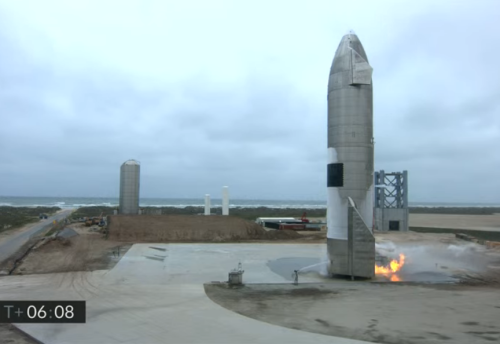
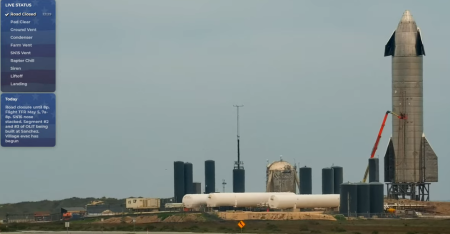
The stacking of the rocket late last week, and the photos released by Musk of that stacking, Berger sees as Musk’s effort to quietly apply pressure on those bureaucrats to get their work done already. As he writes, “Holding back Starship means holding back this progress, Musk wanted regulators to understand.”

Read the whole essay. In addition to illustrating the poltical games required by SpaceX to get past the stifling rules of our modern government, it very nicely shows how America has changed since the early 20th century. Then, no such regulators stood in the way, and Americans were thus about to build fast and with great skill, reshaping the cities of the world forever.

Though I expect the politics of the moment to favor SpaceX, forcing the FAA to get its work done quickly to allow the rocket to take off as planned, this is only going to happen because of the political clout SpaceX has with the public, and thus with politicians. For small companies no such clout exists, and thus expect U.S. innovation to continue to suffer in the coming years because we have given our govenrment too much power over our lives.

8 comments

China gives vague hints about its manned lunar lander

According to this Space News article today, China has recently allowed some tantalizing hints become public about its plans to build a manned lunar lander.

The brief news report from Xiamen University School of Aeronautics and Astronautics July 1 (Chinese) names individuals leading projects pertinent to China’s human lunar landing plans and notably refers to the landing project as a “national strategy”.

…The report names Yang Lei as “chief commander of the crewed lunar landing vehicle system” at the China Academy of Space Technology (CAST), a subordinate to the state-owned space and defense contractor China Aerospace Science and Technology Corp. (CASC). Yang was accompanied for the visit to Xiamen University by the project’s deputy chief commander and another involved in CAST’s new-generation crew spacecraft developed for deep space journeys. Other CASC subsidiaries are working on a new human-rated launch vehicle.

No details of the lander were provided during the meeting, in which current progress and future plans for human moon landings were presented. A number of slides were published but were intentionally blurred out.

Such secrecy is not unusual for China. It is one of the reasons it opposes the Artemis Accords, which require a transparancy in plans that China does not wish to give.

The secrecy however suggests that while they have now named the individuals in charge of the project, they have not yet settled on their design for that lander, and are exploring options. Based on long term schedule for lunar exploration that China and Russia have jointly announced, the first manned landings are planned sometime after ’26.

To meet that schedule they need to get moving on building that lander, now. This story suggests they are now gearing up to do that.

1 comment

Update on SLS: launch prep continues, launch in 2021 remains doubtful

Link here. The key milestone recently achieved was powering up the core stage with all stages stacked.

The initial power up was a significant milestone in pre-launch processing, marking the beginning of the systematic checkouts of the vehicle and ground systems that will be used for the first launch on Artemis 1.

It continues to appear that NASA and its SLS contractors are striving hard to avoid another delay and get the rocket off on its first unmanned test flight in the November/December timeframe that has been penciled in for the last two years. However, as noted in the article, meeting that deadline will be difficult, and the launch date is still likely to slip into early ’22.

The complexity of the tasks needed to get SLS ready becomes obvious if you read the article. This remains a very cumbersome and difficult rocket to launch. Though the prep this time is greater because it is the first time they are doing it, the assembly for later launches will not be much simpler. At best NASA hopes to trim the prep time from one year to six months.

Compare that with SpaceX’s goals on Starship/Superheavy. It is clear the company is aiming for the ability to prep the rocket and get it to the launchpad in mere days, not months, and by all measures it seems to be achieving that goal.

Even if one ignores the gigantic development cost difference ($50+ billion for SLS, $6 billion for Starship/Superheavy), the difference in getting the two rockets to the launchpad makes SLS the clear loser. How can NASA possibly expect to settle the solar system with a rocket that at best can only launch twice a year?

9 comments

Space Force adds three more rocket startups to its rapid launch program

Capitalism in space: The Space Force announced today that it has added the three smallsat rocket companies ABL, Astra, and Relativity to its program, dubbed OSP-4, to develop rockets that can be launched quickly at a moment’s notice.

OSP-4 is an indefinite delivery/indefinite quantity (IDIQ) contract for rapid acquisition of launch services. Vendors compete for individual orders, and have to be able to launch payloads larger than 400 pounds to any orbit within 12 to 24 months from contract award.

The OSP-4 contract vehicle was created in October 2019 and eight companies were selected then: Aevum, Firefly, Northrop Grumman, Rocket Lab, SpaceX., United Launch Alliance, VOX Space [Virgin Orbit], and X-Bow Launch.

There are now 11 vendors in the program that will compete for 20 missions over the next nine years. OSP-4 is authorized up to $986 million for launch contracts over that period.

Of these eleven companies, five have operational rockets (Northrop Grumman, Rocket Lab, SpaceX, Virgin Orbit, and ULA) and five have announced plans to do their first orbital launch this year (Aevum, ABL, Astra, Relativity, and Firefly), with Astra’s first orbital flight scheduled for later this month. The schedule of the remaining X-Bow remains unknown.

9 comments

Starliner launch scrub: 13 of 24 of the capsule’s propulsion valves failed to work

It now appears that the launch scrub last week of Boeing’s Starliner second unmanned demo flight to ISS occurred because thirteen valves in the capsule’s propulsion valves all failed to open during prelaunch testing.

Over the weekend, the team made “positive progress,” a spokesperson said Monday, allowing the company to continue to plan for a launch this month. The company has found “no signs of damage or external corrosion,” Boeing said in a statement Monday. “Test teams are now applying mechanical, electrical and thermal techniques to prompt the valves open.” As a result, more than half of the valves “are now operating as designed,” it said, and work would continue on the others “in the days ahead.”

In a blog post, NASA said that “if all valve functionality can be restored and root cause identified, NASA will work with Boeing to determine a path to flight for the important uncrewed mission to the space station.” The earliest opportunity would come in mid-August, it said.

But Boeing still does not know what caused the valves to remain closed when they needed to be in the open position, and it is unclear how long determining that would take. As a result, some in the aerospace industry are skeptical the company could launch this month.

They have managed to get seven of those thirteen valves working again.

That 13 of 24 failed to function correct strongly suggests the problem isn’t random but is instead a fundamental design problem that needs to be identified prior to launch.

That such a problem has only been discovered now, during the launch countdown, does not reflect well on Boeing or its capsule. That the problem was not noticed in the year and a half delay caused by the software problems during the first unmanned demo flight in December 2019 makes this problem even more disturbing.

In fact, it is downright shocking. It makes one wonder about Boeing’s entire operation, considering the disastrous problems the company has also had with its commercial and military airplane projects in recent years. Does the company have no quality control systems in place, at all?

I truly hope Boeing gets this fixed and Starliner flying, but right now they need to fly a number of times, including reusing a capsule a few times, before I’d recommend anyone buying a ticket.

19 comments

Evidence proves lockdowns bad; Democrats scream, “We must have more lockdowns!”

Modern science!
How Democratic Party policy makers interpret data!

Almost a year and a half since the Wuhan panic swept across the world, the evidence continues to show that the policy decisions by our so-called “intellectual” class of experts to impose mandates and lockdowns were almost all stupid, producing disaster after disaster while completely failing to achieve any of their goals.

First we have Sweden, which refused to impose any lockdowns and now has practically no COVID-19 deaths at all.

An Imperial College model suggested that 85,000 people would die without a lockdown, and an Uppsala University team projected that 40,000 people would die from COVID-19 by May 1, 2020 and nearly 100,000 by June.

But by May, Sweden reported roughly six deaths for every one million people, according to the Financial Times, with 48.9% of its initial coronavirus deaths taking place in nursing homes, according to an analysis by the Swedish Public Health Agency. More than a year later, Sweden recorded 1.1 million coronavirus cases with 1.07 million people having recovered from the virus, and 14,620 coronavirus-linked deaths, according to woldometers.info as of Aug. 8, 2021.

Of the currently 12,248 people who have tested positive for COVID-19, 12, 219 are experiencing mild symptoms (99.8%) and 29 (0.2%) are in serious or critical condition, according to woldometers.info.

In other words, the models were so ridiculously wrong they weren’t even in the same galaxy as the results in the real world. Sweden’s population very quickly reached herd immunity and is now relatively immune from the virus and its later variants.

Moreover, Sweden’s economy has suffered little during the epidemic, and is doing nicely. Not so much in the U.S., where power-hungry politicians with their lockdowns have caused the destruction of 40% of all small businesses.

Nor is Sweden the only data point. A new study of 43 countries as well as all 50 U.S. states has found that lockdowns were worthless.
» Read more

19 comments

Peeling thin layers on a Martian plateau

Peeling thin layers on Mars
Click for full image.

Cool image time! The photo to the right, cropped to post here, was taken on May 14, 2021 by the high resolution camera on Mars Reconnaissance Orbiter (MRO). It shows what the science team labels as “light-toned layered deposits.”

Their focus, rightly from a geologist’s perspective, is the contrast in color between different layers, suggesting different composition and thus a different formation history for each layer.

To me, what made this feature appealing is the thinness and number of its layers. It reminded me of fillo pastry, “unleavened flour dough formed into very thin sheets or leaves.”

If you look at the full image you will see that cropped section only covers one edge of a tongue-shaped plateau, with similar layers revealed along its entire cliff wall. It is almost like those layers have been peeling off for eons to leave the plateau behind.

The location below gives some context.
» Read more

0 comments

Today’s blacklisted American: For too many, it ain’t my problem

Rick, stating the truth in Casablanca
Still asleep, and tragically, they refuse to wake up.

Last week I took a break from publishing my daily “Today’s blacklisted American” column. It is without doubt a depressing chore to detail day after day examples where power-hungry thugs smash their jackboots on the faces of innocent people, merely because those innocent people committed the horrible crime of disagreeing with thugs.

I found I needed that break. I also had sensed — from the overall decreasing interest by news aggregate sites in my column — that the news business, even the conservative news business, was becoming bored with these stories.

Worse, I sensed that many readers found these stories distasteful and wished to avoid them. Though I don’t give a rat’s ass that these ostriches (with their heads in the sand) were bothered, it was nonetheless depressing to sense such people existed, and nothing I did could ever penetrate their close-minded brains.

My post announcing this break sadly confirmed my worse fears.
» Read more

67 comments

Hawaiian TMT protesters found not guilty of obstructing the road they obstructed

The law for thee but not for me: An Hawaiian judge has ruled that the protesters of the Thirty Meter Telesecope (TMT) who had obstructed the access road to the top of Mauna Kea are not guilty of obstructing that road.

[I]n announcing her verdict, the judge noted that during the trial, officials testified that the access road was closed and there were no permits issued for oversized vehicles. “Evidence that Mauna Kea access road was closed or restricted to the public, coupled with no permits, equals no obstruction,” Laubach said. “There would be no unreasonable inconvenience or hazard.”

The state failed to meet its burden beyond a reasonable doubt, she said.

This ruling is a joke. The reason the officials closed the road was because the protesters were there. The officials did not want anyone hurt by the oversized trucks that had legal permission to drive through carrying TMT construction equipment.

Such a ruling however is not a surprise. From top to bottom Hawaii’s government in controlled by the Democratic Party. The judge almost certainly was a Democrat. The Democrats favor the bigoted anti-white and anti-technology agenda of the protesters, and have gone out of their way to help them in their protests.

In general, protesters for Democratic Party causes can loot, burn, kill, obstruct traffic, and do all sorts of violent things — including physically attacking women and children in a park in Portland — and are either never arrested, quickly released on dropped charges, or found innocent.

Be a conservative and spend a dozen minutes inside the Capitol Building taking a few selfies, however, and you will find yourself imprisoned for months, with no charges brought and no sign they ever will be brought. You are guilty, and you will be punished. How dare you do anything that opposes the Democratic Party and its storm trooper thugs?

TMT is never going to be built in Hawaii. In fact, I am beginning to doubt it will ever be built anywhere. Considering the increasing difficulty that ground-based astronomy is going to have dealing with the many satellite constellations now being launched, it is very possible the support for the telescope will begin to dry up. And maybe this failure will be a signal to astronomers that they should finally begin spending their money on space-based optical telescopes.

Meanwhile, Hawaii has become a place hostile to science, to new knowledge, and even to tourism. The dark age there has come quite quickly.

10 comments

New data suggests Gale Crater was never filled with lake

The uncertainty of science: A new review of data from Curiosity now suggests that Gale Crater was not filled with a lake in the past — as generally believed — but instead simply had small ponds on its floor.

Previous analyses of data from Curiosity have relied heavily on a measure called the chemical index of alteration to determine how rocks were weathered over time. Joseph Michalski at the University of Hong Kong and his colleagues have suggested that because this measure was developed for use on Earth, it may not be valid in the extreme Martian climate.

Instead, they analysed the concentrations of various compounds that are expected to change based on different types of weathering over time. They found that some of the layers of rock Curiosity examined did interact with water at some point in their past, but more are likely to have formed outside of the water. “Over hundreds of metres of strata, it seems that the only layers that are demonstrably lacustrine [formed in a lake] are the lower few metres,” says Michalski. “Of the rocks visited by the rover… the fraction that is demonstrably lacustrine is something like 1 per cent.”

These rocks were mostly in the lowest few metres of sediments in the crater, suggesting the lake was not nearly as deep or extensive as we thought. “There was likely a small lake or more likely a series of small lakes in the floor of Gale crater, but these were shallow ponds,” says Michalski.

This conclusion also aligns with other recent work proposing that Gale Crater was always cold and never had running water.

None of this is proven, one way or the other, though this new conclusion would make it easier to explain Mars entire geological history. Trying to create models for Mars’ past climate that allowed large amounts of liquid water on its surface have so far been difficult at best, and have generally been unconvincing. Eliminating the need for liquid water will make explaining Mars’ geology much simpler.

9 comments

Rocket Lab shifts another launch from Virginia to New Zealand

Foot-dragging by NASA bureaucrats has apparently forced Rocket Lab to shift the launch of its CAPSTONE lunar orbit cubesat from its new launchpad in Wallops Island, Virgina, to its New Zealand launchpad.

CAPSTONE would be the second Rocket Lab mission in recent weeks that shifted from Virginia to New Zealand. The most recent Electron launch July 26 placed into orbit Monolith, a smallsat developed by the Air Force Research Laboratory. Monolith was originally going to launch on the first Electron mission from Virginia.

Rocket Lab said at the time that it shifted the launch of Monolith because of ongoing work by NASA to certify the software for the rocket’s autonomous flight termination system. A NASA spokesman said in July that the agency expected to complete certification of the unit by the end of the year.

Note too that Rocket Lab had originally hoped to launch from Wallops in 2020, but was forced to delay that launch to 2021 then because of NASA’s inability to approve this system. Now it looks like they won’t be able to launch in ’21 either.

This flight termination system is likely the same one that Rocket Lab has successfully used now for four years and more than twenty launches in New Zealand. Why it should take NASA literally years to approve it is shameful. As I wrote in November,

While I have no evidence of this, I cannot help being suspicious of these various government agencies. For years numerous people in the government put fake roadblocks up to slow or stop SpaceX’s first manned launch, merely because it threatened their turfs. This autonomous termination system will make the ground crews at Vandenberg and at Cape Canaveral irrelevant, and I would not be surprised if some of these issues were drummed up to delay or block this system because of that.

I know I am being cynical, but based on history it is not unreasonable to be so.

I think we are seeing evidence now that my cynicism was entirely justified.

11 comments
1 64 65 66 67 68 167