Arianespace signs deal to study the possibility of using Orbex’s commercial rocket for launches

In what must be considered a major sea change in Europe, Arianespace — the European Space Agency’s (ESA) official commercial launch company — has now signed a deal with Orbex, a rocket startup based in the United Kingdom, to study the possibility of using Orbex’s not-yet-launched Prime rocket for future European launches.

In particular, it is expected that future collaboration would be particularly beneficial for customers planning small satellite constellations, providing a flexible solution for Low-Earth Orbit (LEO) payloads. Light and heavy-lift launch vehicles could jointly support customers in deploying their initial constellations into the required orbital planes, provide precise injections of a smaller number of satellites through dedicated missions, as well as provide replenishment and replacement launches.

While the ESA began developing a partnership with Orbex back in 2021 when it awarded Orbex a development contract worth 7.45 million euros, for Arianespace to go directly to this independent company for launch services suggests the new policy of ESA to stop developing its own rockets but to become a customer hiring the rockets of private companies is gaining steam.

0 comments

June 13, 2023 Quick space links

Courtesy of BtB’s stringer Jay.


3 comments

Today’s blacklisted American was arrested for quoting the Bible

Damon Atkins being arrested by McClure for quoting Bible
Atkins (r) being arrested by McClure for quoting Bible

They’re coming for you next: On June 3, 2023 there was a rally supporting the queer agenda in front of the Reading City Hall in Pennsylvania, partly instigated it appears by the endorsement of the city’s Democratic Party mayor, Eddie Moran. On the other side of the street were several Christians who vocally expressed their opposition to that rally.

Those Christians found themselves repeatedly harried by the police. As Matthew Wear noted, “I preached for 10 minutes or so until a tyrant cop laid hands on me and threatened to arrest me if I continued.” Soon thereafter a second Christian, Damon Atkins, began quoting the Bible in protest. That same policeman, Police Sergeant Bradley McClure, immediately arrested him.

According to an affidavit of probable cause, McClure claims that “[Atkins] was carrying a sign with a slogan written on it that showed his opposition to the event.” The video footage shows Atkins holding a sign that read “JESUS SAID GO AND SIN NO MORE.”

In the affidavit, McClure also claims that Atkins “began to yell to the people” attending the pride event. “I immediately approached him and told him that, while he was free to stand on that side of the street and hold his sign,” McClure wrote in the affidavit, “he could not cross the street nor yell comments intended to disrupt the event.” McClure added that Atkins “said he understood.”

But the video does not show Atkins agreeing to remain silent and Atkins told The Lancaster Patriot that he never agreed to McClure’s instructions.

The affidavit continues with McClure claiming that in less than a minute Atkins “resumed yelling derogatory comments to the people at the event.” The video records the only words from Atkins as “God is not the” immediately prior to McClure arresting him.

I have embedded the video taken by Wear below.
» Read more

19 comments

Rimstone dams in Mars’ youngest lava deposit

Rimstone dams in Mars' youngest lava deposit
Click for original image.

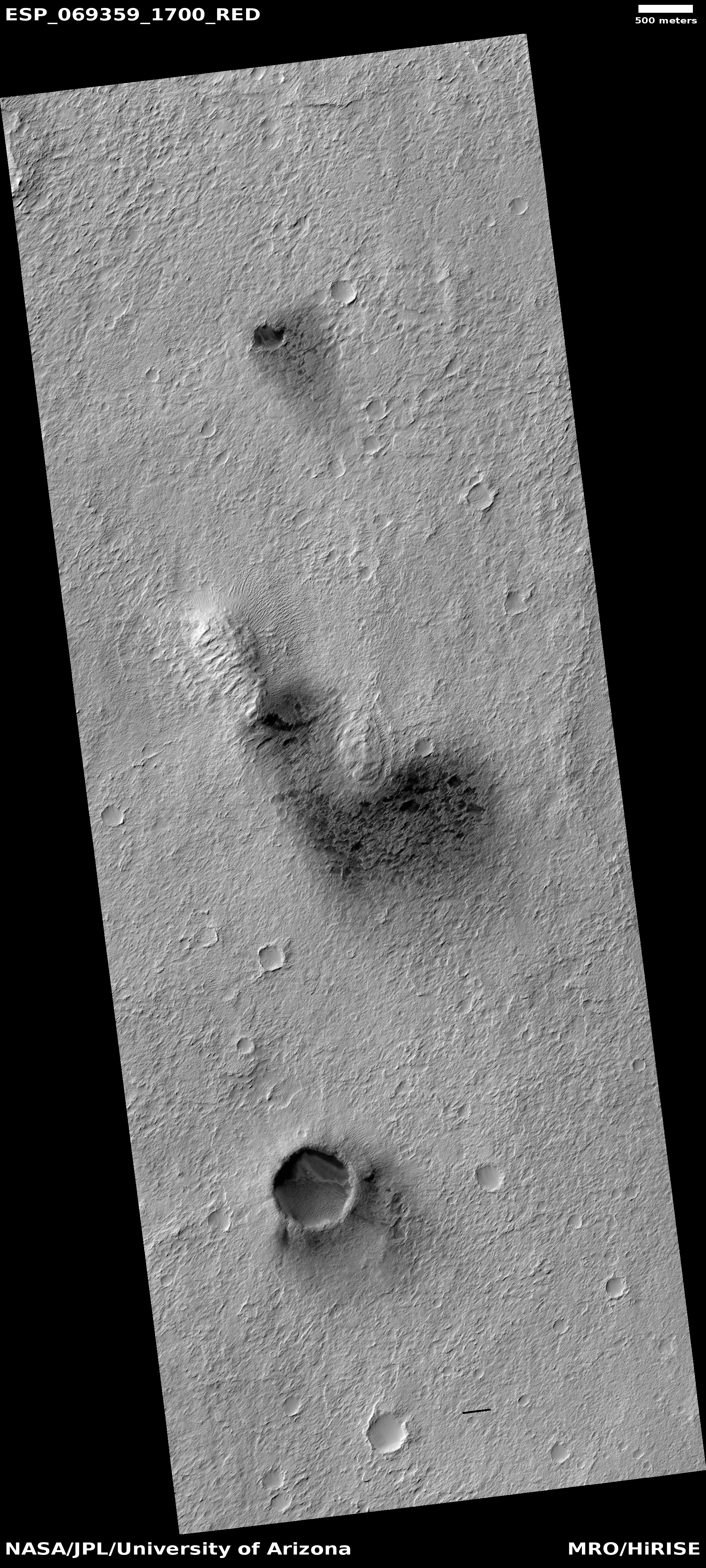
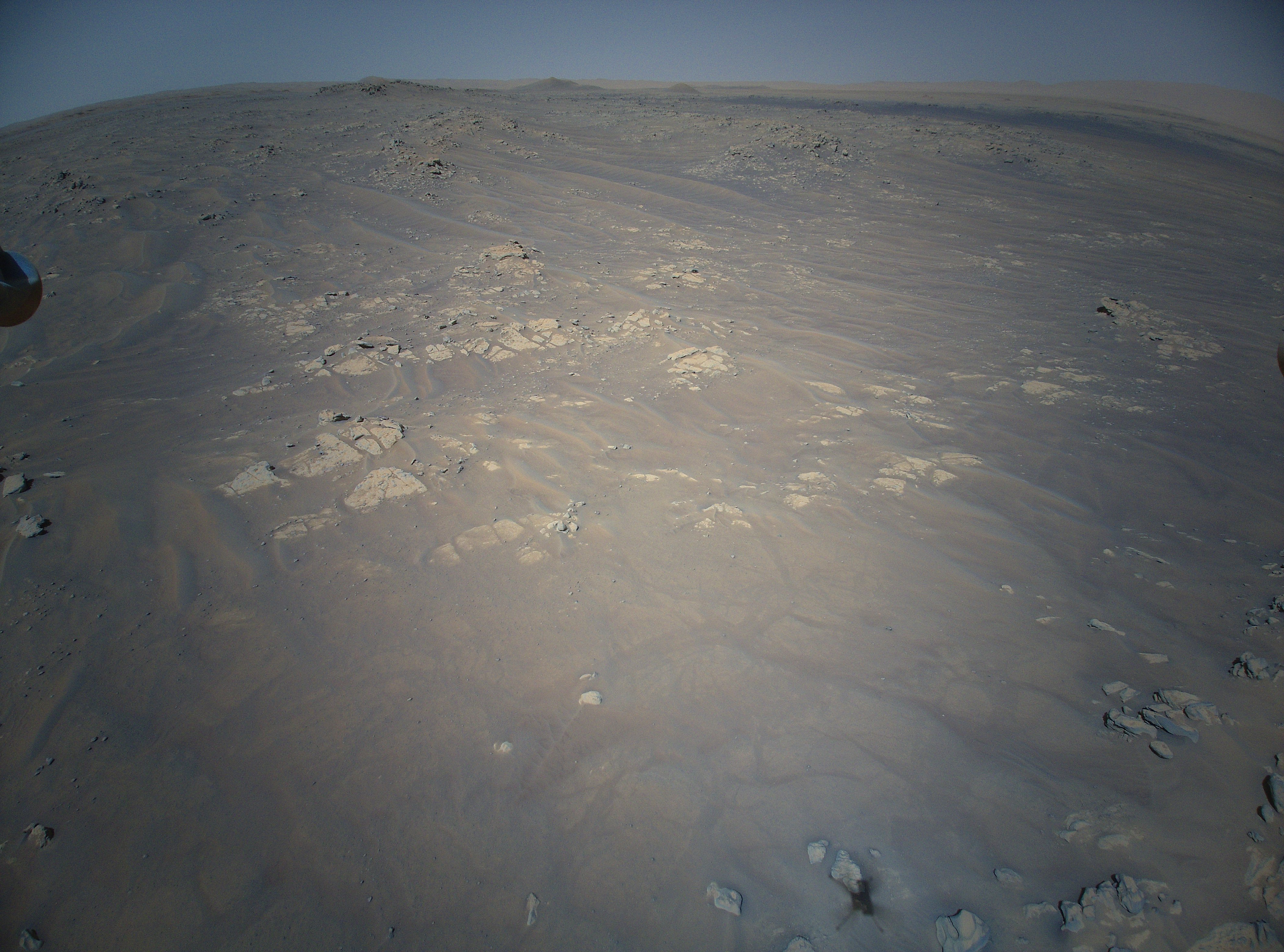
Cool image time! The picture to the right, rotated, cropped, reduced, and sharpened to post here, was taken on April 23, 2023 by the high resolution camera on Mars Reconnaissance Orbiter (MRO).

The scientists dub the features here merely as “land forms,” probably because it is difficult to explain the origins of many of these strange features. For example, why is the half-mile-wide crater filled that knobby terrain, far different than the surrounding plains? Similarly, what caused the small meandering ridges (less than five feet high) that appear to closely resemble the cave formation called rimstone dams?

And why is this terrain so generally flat and smooth?

As usual, the overview map helps explains some of this, but not all.
» Read more

0 comments

Boeing gets NASA contract to develop new airplane wing design

In its effort to reduce fossil fuel use and thus save us from being burned to death by global warming in only a decade, NASA has now awarded Boeing a contract to develop new airplane wing design that it predicts will lower fuel use by up to 30%.

The X-66A is the X-plane specifically aimed at helping the United States achieve the goal of net-zero greenhouse gas emissions by 2050. To build the X-66A, Boeing will work with NASA to modify an MD-90 aircraft, shortening the fuselage and replacing its wings and engines. The resulting demonstrator aircraft will have long, thin wings with engines mounted underneath and a set of aerodynamic trusses for support. The design, which Boeing submitted for NASA’s Sustainable Flight Demonstrator project, is known as a Transonic Truss-Braced Wing.

While developing a more efficient wing design is certainly worthwhile, having skepticism about this project is certainly reasonable. First of all, it seems somewhat strange to award Boeing such a contract at this time, considering NASA own experience with the company with Starliner, as well as that company’s problems with other government contracts for the military.

Secondly, the press release makes a big deal about the project getting an X-plane designation, an entirely superficial and PR related title that if anything suggests there is very little steak to this sizzle.

Third, it is unclear the nature of this contract. Is is cost-plus, or fixed price? The press release says NASA will “invest $425 million over seven years, while the company and its partners will contribute the remainder of the funding, estimated at about $725 million.” If cost-plus, this means nothing. Boeing will use any excuse to go over budget in order to get more money from NASA.

Finally, half a billion dollars to develop and test a new airplane wing design, using an already existing airplane, seems incredibly exorbitant. And to require seven years to build it seems ridiculously long.

All in all, I suspect the real goal of this project is to funnel tax dollars to Boeing to help keep it afloat, not to build a new green airplane.

5 comments

New House bill proposes giving FAA responsibility for monitoring space junk

A just proposed House bill for reauthorizing the Federal Aviation Administration (FAA) also proposes giving that agency the responsibility for monitoring space junk.

The bill instructs the FAA to establish a program to track objects “that are potential sources of covered airborne debris” with a focus on identifying those about to reenter and could pose a risk to aircraft in airspace. That program would coordinate with the FAA’s air traffic control system to identify airspace that needs to be closed for a reentry. It would allow the FAA to establish its own space situational awareness (SSA) facilities and work with other federal agencies, companies or international organizations for data on such objects.

While the focus of the bill is tracking debris to assess airspace risks, the bill does enable additional uses of the data the FAA collects. In particular, it directs the FAA to offer “a basic level of data, information, and services” at no charge. That includes maintaining a public catalog of space objects and “emergency conjunction notifications” of such objects.

The article at the link notes that this new FAA job would also duplicate work of the Space Force, as well as a new Commerce Department office tasked with similar responsibilities. It also duplicates the same responsibilities the FCC has created for itself, outside of its statutory authority.

In other words, there is a factional turf war going on within the swamp, with each faction attempting to establish its territory and control over this work.

The result? Expect Congress to allow this duplication to go forward, funding all three efforts. As we all know, money grows on trees, and hiring as many Washington bureaucrats is the most important thing Congress can do, even if those bureaucrats don’t do anything useful.

5 comments

Japanese government adopts revised space policy emphasizing defense

The Japanese government today announced a revision to its space policy, with the changes mostly focused on increasing that nation’s military surveillance and reconnaissance capabilities in space.

Though defense and security appeared to be the focus of the revision, there were hints this would be achieved through a greater use of the competitive free market.

The government also vowed to bolster collaboration between the Defense Ministry and the Japan Aerospace Exploration Agency in a bid to provide support to private companies engaged in critical space technology development, the blueprint says. By attempting to stimulate private-sector-led development in space, the government will aim to reduce costs in the face of budget constraints, it adds.

Japan has traditionally operated as the U.S. used to, by letting its space agency JAXA do and control everything. JAXA in turn has routinely hired established companies like Mitsubishi to build what it wants, while retaining all control and ownership. The result has been a moribund effort, with Japan at present having no low cost rocket that can compete on the international market for business.

Whether this new policy will allow new companies to compete with the big established players remains unknown.

3 comments

June 12, 2023 Quick space links

After a week break BtB’s stringer Jay returns!


1 comment

SpaceX launches 72 smallsats; lands a Falcon 9 1st stage for the 200th time

SpaceX today successfully launched 72 smallsats using its Falcon 9 rocket, lifting off from Vandenberg Space Force Base in California.

With this launch, SpaceX achieved a significant milestone, successfully landing a Falcon 9 first stage for the 200th time, an achievement that for more than a half century all managers and most engineers in the rocket business claimed was not only impossible, but impractical. They insisted that the first stage would not be able to be reused because of the stress of launch. SpaceX has proved these close-minded fools very wrong. This particular first stage completed its ninth mission on this flight, a number that has become very routine for SpaceX’s Falcon 9 first stages. The stage landed back at Vandenberg,

As of posting the satellites have not all deployed.

The leaders in the 2023 launch race:

40 SpaceX
22 China
8 Russia
5 Rocket Lab

American private enterprise now leads China 45 to 22 in the national rankings, and the entire world combined 45 to 38, with SpaceX by itself leading the rest of the world, excluding other American companies, 40 to 38.

1 comment

A faint irregular cloud of stars

A faint irregular cloud of stars
Click for original picture.

Cool image time! The picture to the right, cropped, reduced, and sharpened to post here, was released today by the science team of the Hubble Space Telescope. It shows an irregular galaxy thought to be about 44 million light years away.

Alongside its hazy shape, NGC 7292 is remarkably faint. As a result, astronomers classify NGC 7292 as a low surface brightness galaxy, barely distinguishable against the backdrop of the night sky. Such galaxies are typically dominated by gas and dark matter rather than stars.

Astronomers directed Hubble to inspect NGC 7292 during an observational campaign studying the aftermath of Type II supernovae. These colossal explosions happen when a massive star collapses and then violently rebounds in a catastrophic explosion that tears the star apart. Astronomers hope to learn more about the diversity of Type II supernovae they have observed by scrutinising the aftermath and remaining nearby stars of a large sample of historical Type II supernovae.

NGC 7292’s supernova was observed in 1964 and accordingly given the identifier SN 1964H. Studying the stellar neighbourhood of SN 1964H helps astronomers estimate the initial mass of the star that went supernova, and could uncover surviving stellar companions that once shared a system with the star that would become SN 1964H.

I searched but was unable to locate any 1964 images of this galaxy when the supernova was still visible, so I could not pinpoint its location in the picture. It has long since faded away.

Note that the reddish smudges scattered throughout the picture are likely galaxies so far distant that their light has shifted entirely into the reddish spectrum. This likely places them one to several billions of light years away, not millions.

2 comments

SpaceX launches another 52 Starlink satellites

Just after midnight tonight (Pacific) SpaceX successfully launched another 52 Starlink satellites, its Falcon 9 rocket lifting off from Cape Canaveral.

The first stage successfully completed its ninth flight, landing on a drone ship in the Atlantic, the 199th time that SpaceX has accomplished this so-called impossible task. The two fairing halves completed their fourth and fifth flights respectively.

The leaders in the 2023 launch race:

39 SpaceX
22 China
8 Russia
5 Rocket Lab

American private enterprise now leads China 44 to 22 in the national rankings, and the entire world combined 44 to 38, with SpaceX by itself leading the rest of the world, excluding other American companies, 39 to 38.

3 comments

Astronomers admit new satellite constellations “are not a threat” to Hubble

In a June 5, 2023 press release from the Space Telescope Science Institute (STScI) that operates both the Hubble and Webb space telescopes, astronomers admitted that the increased number of orbiting satellites from SpaceX and OneWeb have had little impact on Hubble’s observations, and even that impact has been reduced by new software tools.

Stark applied the new tool, based on the image analysis technique known as the Radon Transform, to identify satellite trails across Hubble’s camera with the widest field of view, the Advanced Camera for Surveys (ACS). In 2002 the satellite streaks were present in five percent of ACS exposures, with many of those too faint to discern easily. This rose to ten percent by 2022, although the typical brightness of the detected trails remained unchanged.

…”To date, these satellite trails have not had a significant impact on research with Hubble,” said Tom Brown, Head of STScI’s Hubble Mission Office. “The cosmic rays that strike the telescope’s detectors are a bigger nuisance.”

Radiation from space hits the ACS electronic detectors on every exposure, leaving streaks. These are easy to identify from exposure to exposure. The same holds true for artificial satellites. “The average width I measured for satellites was 5 to 10 pixels. The ACS’ widest view is 4,000 pixels across, so a typical trail will affect less than 0.5% of a single exposure. So not only can we flag them, but they don’t impact the majority of pixels in individual Hubble images. Even as the number of satellites increases, our tools for cleaning the pictures will still be relevant,” said Stark. [emphasis mine]

In other words, the claims by many astronomers that the increase in satellites is a threat to astronomy have been exaggerated. The new satellites might have a greater impact on ground-based telescopes, but based on these numbers (which would be comparable if not better for the giant 8-meter-plus big telescopes on Earth), that impact should be as easily mitigated.

I am gob-smacked that STScI issued this press release, since it undercuts the entire political narrative of the astronomical community that demands these new satellite constellations be either regulated, limited, or even banned, because otherwise all astronomy will be impossible. Based on the information presented here, none of those regulations are justified, at all, and that narrative is an utter lie.

9 comments
1 449 450 451 452 453 2,413