SpaceX launches 54 more Starlink satellites

SpaceX early today completed its 60th successful launch in 2022, putting 54 Starlink satellites into orbit using its Falcon 9 rocket.

This achievement matches a prediction Elon Musk made early in 2022. More significant, except for two years (1965 and 1966), SpaceX completed more launches in 2022 than the United States achieved each year since Sputnik. And it did it not as a nation, but as a private company, for profit.

SpaceX’s achievement this year also allowed the U.S. to smash its own record for annual launches.

The first stage successfully completed its 11th flight, landing on a drone ship in the Atlantic.

The leaders in the 2022 space race:

61 China
60 SpaceX
21 Russia
9 Rocket Lab
8 ULA

The U.S. now leads China 84 to 61 in the national rankings, but trails the entire world combined 93 to 84.

Only one more launch, by SpaceX, is publicly scheduled for 2022.

3 comments

Today’s blacklisted American: Black scientist blacklisted for doing good research

Oluseyi Hakeem, blacklisted
Hakeem Oluseyi, Space Science Education Lead
for NASA’s Science Mission Directorate

They’re coming for you next: Today’s blacklist column describes an effort to not only cancel from history the man who led NASA for almost the entire 1960s space race, but to also blackball a scientist for doing good research that proved the campaign was not based on any facts.

Shortly before the launch of the James Webb Space Telescope last year, a petition was instigated to get it renamed because of accusations that Webb had persecuted homosexuals during his term as NASA administrator in the 1960s. As is now typical of our modern bankrupt intellectual class, as soon as this petition was issued more than 1,700 people signed it, all accepting at face value its accusations against Webb without any further research.

One scientist, who happened to be black, took a more detailed look at those accusations however and found them to be spurious. As Hakeem Oluseyi wrote:
» Read more

9 comments

Finding Martian glaciers from orbit

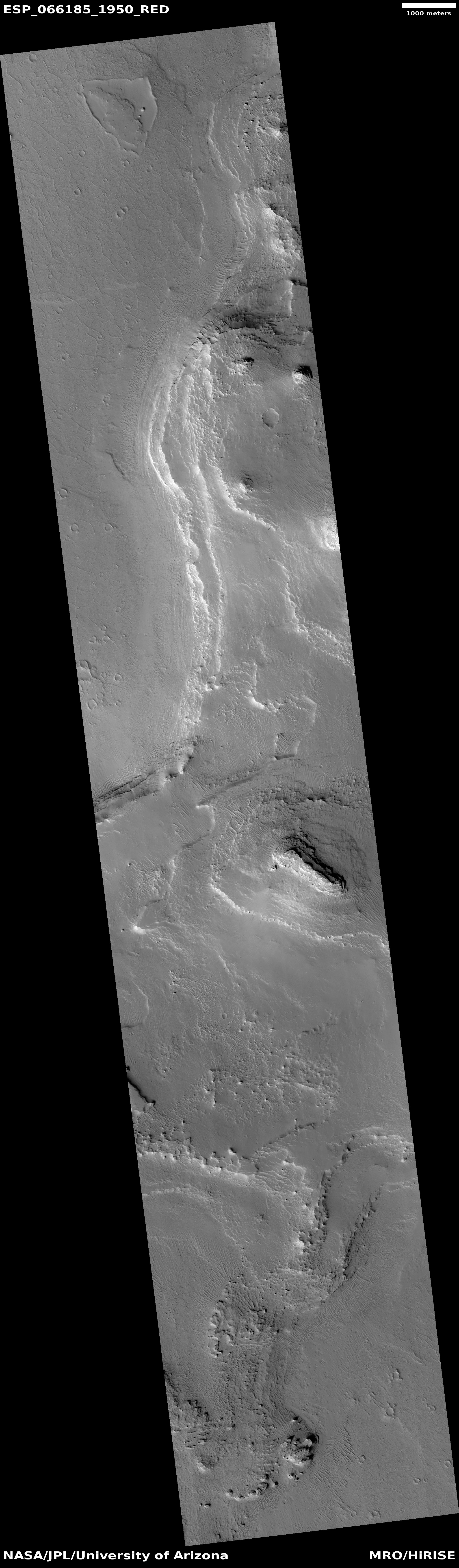
Glacier flow on Mars
Click for full image.

Today’s cool image is a great example of the surprises one can find by exploring the archive of the high resolution pictures that Mars Reconnaissance Orbiter (MRO) has produced since it arrived in Mars orbit back in 2006. The picture to the right, rotated, cropped, and reduced to post here, was taken by MRO’s high resolution camera back on May 4, 2017. I only found it because I had picked out a October 24, 2022 high resolution image that covered a different area of this same flow feature just to the north east. In trying to understand that 2022 picture I dug to see other images had been taken around it, and found the earlier 2017 photo that was even more interesting.

Neither however really covered the entire feature, making it difficult to understand its full nature. I therefore searched the archive of MRO’s context camera, which has imaged the entire planet with less resolution but covering a much wider area per picture. The context camera picture below captures the full nature of this feature.
» Read more

1 comment

China launches Earth observation satellite

China today successfully launched a classified Earth observation satellite using its Long March 4B rocket.

As the launch was from an interior spaceport, the rocket’s lower stages landed somewhere in the interior of China.

The leaders in the 2022 launch race:

61 China
59 SpaceX
21 Russia
9 Rocket Lab
8 ULA

The U.S. still leads China 83 to 61 in the national rankings, but trails the entire world combined 93 to 83.

At the moment, the only known remaining launches in 2022 are two SpaceX Falcon 9 launches. However, China routinely launches a lot in the November/December timeframe, so we should not be surprised if they complete one or two launches as well in the next few days.

1 comment

December 26, 2022 Quick space links

Courtesy of BtB’s stringer Jay.


  • Russian relations with Kazakhstan souring
  • Kazakhstan has “renounced concessions for Russian logistics companies that transport goods for import to Russia,” even as a Russian official threatened Kazakhstan with invasion. For the Russian space program these tensions could be disastrous, as the Baikonur spaceport in Kazakhstan is presently the only place it can launch humans.


1 comment

Cones, mounds, and layers of Martian ice?

Cones, mounds, and layers of Martian ice?
Click for full image.

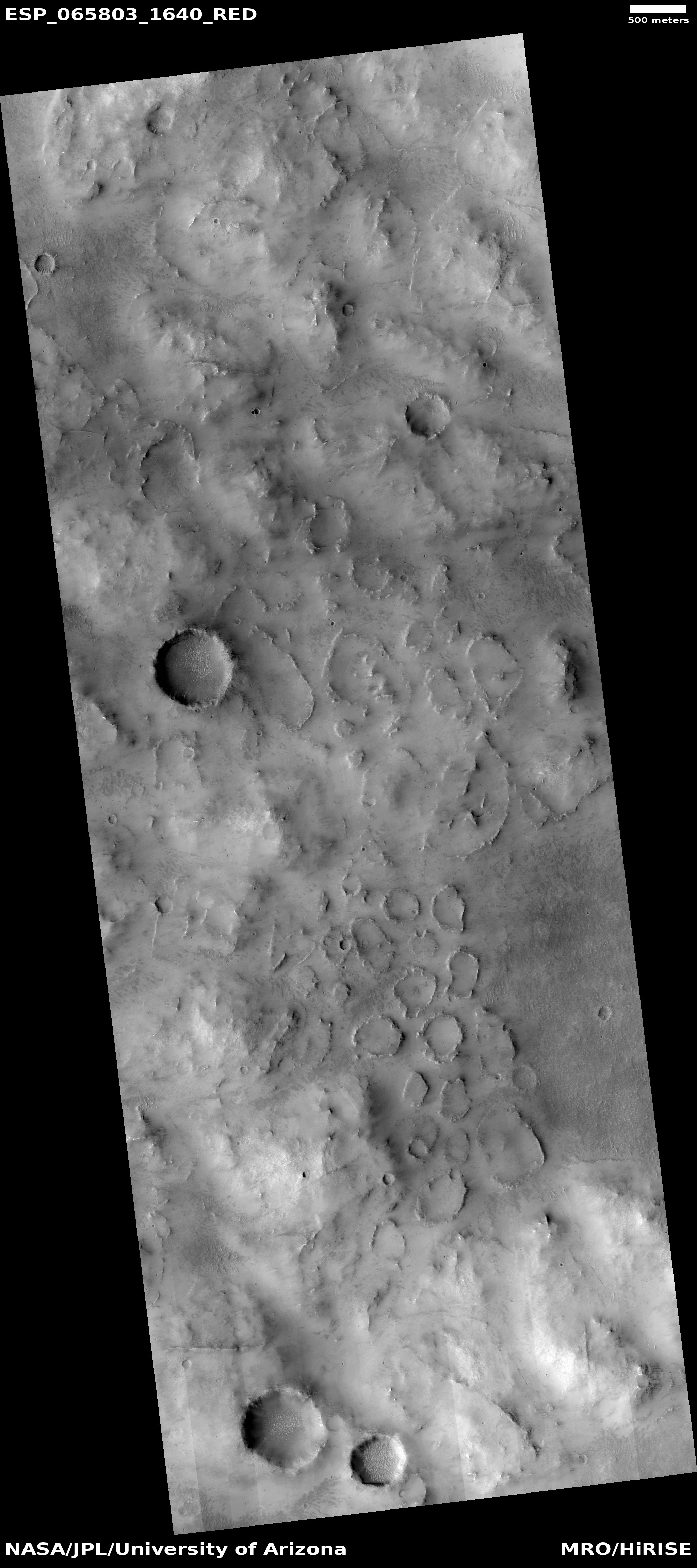
Cool image time! The photo to the right, rotated, cropped, and reduced to post here, was taken on September 10, 2022 by the high resolution camera on Mars Reconnaissance Orbiter (MRO).

The location is at 38 degrees north latitude, in the Martian northern lowland plains. At this latitude in these plains the geological features seen in high resolution pictures almost always invoke near surface ice, including processes that disturb that underground ice layer.

This picture is no different. Not only does it appear that a glacier is flowing down from the top of east-west ridge, the middle mound includes a crater with its southeast rim gone and appears filled with material that suggests ice.

The greater geographic context of this location can be seen in the overview map below.
» Read more

18 comments

A long-armed galaxy

Galaxy with long and faint tidal streams
Click for full image.

Cool image time! The photo to the right, cropped, enhanced, and reduced to post here, was taken by the Hubble Space Telescope as part of a survey of peculiar looking galaxies.

The peculiar spiral galaxy ESO 415-19, which lies around 450 million light-years away, stretches lazily across this image from the NASA/ESA Hubble Space Telescope. While the centre of this object resembles a regular spiral galaxy, long streams of stars stretch out from the galactic core like bizarrely elongated spiral arms. These are tidal streams caused by some chance interaction in the galaxy’s past, and give ESO 415-19 a distinctly peculiar appearance.

ESO 415-19’s peculiarity made it a great target for Hubble. This observation comes from an ongoing campaign to explore the Arp Atlas of Peculiar Galaxies, a menagerie of some of the weirdest and most wonderful galaxies that the Universe has to offer. These galaxies range from bizarre lonesome galaxies to spectacularly interacting galaxy pairs, triplets, and even quintets. These space oddities are spread throughout the night sky, which means that Hubble can spare a moment to observe them as it moves between other observational targets.

I have intentionally brightened the galaxy to make the two faint two tidal streams more obvious. That they are so faint compared to the galaxy itself is in itself a mystery.

1 comment

Crater at the edge of the Martian south pole ice cap

Oblique view of south pole crater
Click for full image.

Overview map

Cool image time! The oblique panorama above, reduced and sharpened to post here, was created from an image taken on May 19, 2022 by the European orbiter Mars Express. Its location on edge of the layered deposits of ice and dust that form most of the Martian southern ice cap is indicated by the white rectangle on the overview map to the right. From the press release:

While it may look like a winter wonderland, it was southern hemisphere spring at the time and ice was starting to retreat. Dark dunes are peeking through the frost and elevated terrain appears ice-free.

Two large impact craters draw the eye, their interiors striped with alternating layers of water-ice and fine sediments. These ‘polar layered deposits’ are also exposed in exquisite detail in the rusty red ridge that connects the two craters.

The scattered white patches are either water frost, or the winter mantle of dry ice, both now sublimating away with the coming of spring.

The black line on the overview map indicates the extent of the layered deposits, and suggest that the ridgeline is not considered part of that ice cap layer, in contradiction to the press release language above.

Which is it? I would guess the answer is simply the uncertainty of science. Some scientists took a look here and decided the ridge was actually a base layer sticking up through the layered deposits. The European scientists who took this picture have instead concluded, based on the image, that the ridge is part of the layer deposits.

4 comments

Soyuz hole not caused by a Geminid meteor

According to an analysis by both NASA and Russian engineers, the 0.8 mm hole in the coolant system on the Soyuz docked to ISS was not caused by an object from the Geminid meteor shower that had occurred about the time the leak appeared.

The Soyuz vehicle, known as MS-22, sprayed its coolant into space on Dec. 14, the same day that the annual Geminid meteor shower peaked. But there’s no causal connection, NASA and Russian space officials said. “We did look at the meteor showers that were occurring,” Joel Montalbano, NASA’s International Space Station program manager, said during a press briefing on Thursday (Dec. 22). “Both the trajectory team in Houston and the trajectory team in Moscow confirmed it was not from the meteor showers; it was in the wrong direction.”

The engineers claim the hole could still have been caused by an impact, just not from these meteors.

0 comments

NASA requesting proposals for raising Hubble’s orbit

NASA has published a request for proposals from the private commercial space industry for a possible future mission to raise Hubble’s orbit.

NASA published a request for information (RFI) Dec. 22 asking industry how they would demonstrate commercial satellite servicing capabilities by raising the orbit of Hubble. The agency said it is looking for technical information about how a company would carry out the mission, the risks involved and the likelihood of success.

NASA emphasized in the RFI that it had no plans to procure a mission to reboost Hubble. “Partner(s) would be expected to participate and undertake this mission on a no-exchange-of-funds basis,” the document stated, with companies responsible for the cost for the mission.

Apparently, this RFI was issued as a direct result of the agreement between NASA and SpaceX to study a Dragon mission to do exactly this, which in turn was prompted by Jared Isaacman, as part of his private Polaris program of manned Dragon/Starship space flights. I suspect that NASA officials realized that not only were their engineering advantages to getting more proposals, there were probably legal and political reasons for opening the discussion up to the entire commercial space community.

Ideally, a Hubble reboost mission should occur by 2025, though the telescope’s orbit will remain stable into the mid-2030s.

12 comments

Juno experienced data download issue during most recent Jupiter close flyby

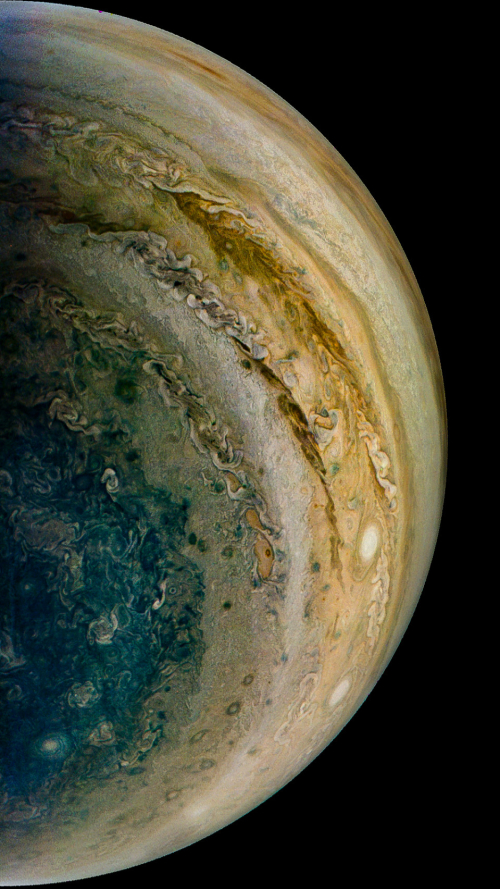
Right after Juno made its 47th close fly-by of Jupiter on December 14, 2022, the download of the obtained data was suddenly disrupted, forcing engineers to put Juno into safe mode.

The issue – an inability to directly access the spacecraft memory storing the science data collected during the flyby – was most likely caused by a radiation spike as Juno flew through a radiation-intensive portion of Jupiter’s magnetosphere. Mission controllers at NASA’s Jet Propulsion Laboratory and its mission partners successfully rebooted the computer and, on Dec. 17, put the spacecraft into safe mode, a precautionary status in which only essential systems operate.

As of Dec. 22, steps to recover the flyby data yielded positive results, and the team is now downlinking the science data. There is no indication that the science data through the time of closest approach to Jupiter, or from the spacecraft’s flyby of Jupiter’s moon Io, was adversely affected. The remainder of the science data collected during the flyby is expected to be sent down to Earth over the next week, and the health of the data will be verified at that time. The spacecraft is expected to exit safe mode in about a week’s time. Juno’s next flyby of Jupiter will be on Jan. 22, 2023.

That such disruptions have actually not occurred very often on Juno is somewhat remarkable, considering the hostile nature of the environment around Jupiter.

1 comment

Perseverance experiment generates new record of breathable oxygen on Mars

MOXIE, an experiment on the rover Perseverance to see if breathable oxygen could be generated from the carbon dioxide in the Martian atmosphere, has set a new production record.

The atmosphere around Jezero Crater, the present location of Perseverance, reached peak density for the year mid (Earth) summer. This presented the perfect opportunity for the MOXIE science team to step on the accelerator and test how fast we could safely produce oxygen. This test occurred on Sol 534 (Aug. 22, 2022) and produced a peak of 10.44 grams per hour of oxygen. This represented a new record for Martian oxygen production! The team was thrilled to surpass our design goal of 6 grams per hour by over 4.4 grams. The peak rate was held for 1 minute of the 70 minutes oxygen was produced during the run.

MOXIE’s next opportunity to operate came recently. Despite the decreasing density of the Mars atmosphere, on Sol 630 (Nov. 28, 2022) MOXIE managed to break the record again and produce nearly 10.56 grams per hour at peak. Oxygen production was sustained for a 9.79 grams per hour for nearly 40 minutes.

These numbers may seem small, but MOXIE production runs are limited by available rover power. In addition, MOXIE technology was miniaturized to accommodate the limited space available on the rover. A MOXIE for a human Mars mission would produce oxygen nearly 200 times faster and work continuously for well over a year.

Ten grams per hour is about half what one person needs to breathe, and is a little less than a large tree produces. Moreover, MOXIE had earlier conducted seven other runs, producing about six grams of oxygen per hour during each.

Based on these tests, MOXIE has unequivocally proven that future human explorers will not need to bring much oxygen with them, and will in fact have essentially an unlimited supply, on hand from the red planet itself. More important, MOXIE has also proven that the technology to obtain this oxygen already exists.

All we need to do is plant enough MOXIE trees on Mars.

1 comment
1 371 372 373 374 375 1,353