On the radio-CANCELLED

UPDATE: Due to technical problems outside of David Livingston’s control, the show tonight had to be cancelled. We will try to reschedule for another show within a week or so.

Original post:
——————
Tonight I will be doing another long appearance on the Space Show with David Livingston, beginning at 7 pm (Pacific). Please feel free to call in, as it is always more fun to talk to someone directly than to answer email questions.

0 comments

Martian dust devil where none had been before

Dust devil on Mars
Click for original image.

Today’s cool Mars image is especially cool because it is of the exact same place on Mars I had featured in a picture only a little more than one month ago. I return to this spot only a month later because the location was yesterday’s featured captioned image from the high resolution camera team of Mars Reconnaissance Orbiter (MRO). The difference is that this time the camera captured a dust devil there that wasn’t there previously. From the caption:

The dust devil is casting a shadow, which can be used to estimate its height. This image is part of ongoing monitoring activities by HiRISE of seasonal activities on Mars.

Over the years, HiRISE has observed many dust devils. Just like on Earth, dust devils develop when the Sun heats up the ground such that it warms the air directly above it. When air heats up its density decreases causing it to rise up while colder air sinks down driving local convection.

If the region is windy, the wind my end up rotating the โ€œconvection cellsโ€ caused by the vertical motion of air leading to development of a dust devil. Since the main requirements for development of such features are the presence of dust and a warm ground, we focus our monitoring of dust devils in regions on Mars that are known to be dusty (like Syria Planum), and during the late spring and summer time, when we expect the ground to be warm.

» Read more

2 comments

Hubble snaps picture of another jellyfish galaxy

Another jellyfish galaxy
Click for original image.

Astronomers today released another picture of a jellyfish galaxy taken by the Hubble Space Telescope, with that picture to the right, cropped, reduced, and sharpened to post here. From the caption:

The jellyfish galaxy JO206 trails across this image from the NASA/ESA Hubble Space Telescope, showcasing a colourful star-forming disc surrounded by a pale, luminous cloud of dust. A handful of bright stars with criss-cross diffraction spikes stand out against an inky black backdrop at the bottom of the image. JO206 lies over 700 million light-years from Earth in the constellation Aquarius.

This image is the sixth and final such photograph in this survey. You can view all of these images here. The study has found that star formation does not seem to be significantly different inside the galaxy versus the tentacles that stretch out beyond due to pressure from the intergalactic material. This suggests that the influence of this intergalactic material on the formation of stars is relatively minor.

0 comments

NASA: Psyche asteroid mission now targeting October ’23 launch

A report [pdf] from NASA on the steps taken by JPL to get the Psyche asteroid mission back on track after it failed to meet its launch date last fall says those steps are working, and the spacecraft should now succeed in meeting its new October ’23 launch date.

Both the report and today’s press release are filled with vague PR blather interspersed with complementing JPL for addressing the issues, including hiring about a dozen more people to get the main software issue that had prevented last year’s launch solved. I noticed one point however that was not mentioned clearly in the press release nor had been made clear in the earlier investigation report that today’s newly released report labels as “COVID-19 Related” issues.

The return to majority in-person work has made a tremendous difference in restoring visibility and informal communications across the project. Drop-in meetings, social coffee hours, off-site intensives, and individuals โ€œwalking the floorโ€ have improved team interaction, problem-solving, efficiency, and trust. The team is also making judicious use of remote and hybrid access options as appropriate to ensure flexibility while not compromising their collaboration.

In other words, the panic over Wuhan had so restricted in-person contact at JPL that it had hampered the project’s development. Based on the vague language used to describe almost everything else mentioned in this new report, it appears that this issue more than anything else contributed the launch delay. Not surprisingly, no one at NASA, JPL, Caltech, or in the government wishes to make this admission bluntly. It would illustrate once again the foolishness of the lockdown policies imposed during the panic by the government and academia.

6 comments

Tianzhou unmanned freighter completes month-long free flight, re-docks with Tiangong-3

Engineers today successfully re-docked a Tianzhou unmanned freighter to China’s Tiangong-3 space station after 33 days flying in formation with the station.

As is usual, China released no information about the reasoning behind this free flight, though some reasons are obvious. The station has two docking ports, and during that 33-day time period the station also completed a crew swap, with one Shenzhou capsule docking with three new astronauts while the previous crew and its Shenzhou capsule was still docked. The Tianzhou freighter had to undock to provide a port during this time period for the two manned capsules.

This formation free flight and docking was also likely testing the kind of routine maneuvers China plans to do when it launches its Hubble-class optical space telescope next year. That telescope will fly freely near the station during most of its operations. For maintenance and repair however it is my understanding that it will be brought back to the station and docked with it. The just completed independent flight of the Tianzhou freighter demonstrated this capability.

2 comments

Russia to launch Luna-25 on August 11, 2023


Click for interactive map.

According to reports in Russia’s state run press, the new launch date for its Luna-25 lander to the Moon has now been scheduled for August 11, 2023.

The launch of an automatic space probe to the Moon, the Luna-25, is scheduled for August 11 this year, the tour operator RocketTrip has said on its website. “August 11 is the launch date,” the website says in the section devoted to the tour to the Vostochny spaceport for the launch of the Luna-25.

The launch had been scheduled for July. The one month delay was announced last week, with no explanation.

The map shows landing locations of three landers that are all scheduled for launch in the next four months. All are targeting spots near the Moon’s south pole (the white cross).

6 comments

Pushback: Court victory for volleyball student and coach father who were blacklisted for disagreeing with queer agenda

Blake Allen, punished for being a normal high school girl

Bring a gun to a knife fight: After an eighteen-month court battle, school officials in Vermont on June 1st conceded defeat, settling the lawsuit [pdf] with a high school student and her father who the school had suspended for having the nerve to write publicly about the school’s sexual policies that allowed boys to leer at girls in the girl’s dressing rooms.

The school district will pay the father and daughter $125,000 and the suspensions will be removed from their records, according to the White River Valley Herald.

The background, which I have reported on several times previously: In the fall of 2022 high school student Blake Allen was suspended by her Vermont high school for daring to write an op-ed criticizing its policy allowing a cross-dressing boy to change in the girl’s lockeroom. School officials also suspended her father, Travis Allen, from his job as the high school’s volleyball coach for the crime of stating these facts on social media.
» Read more

11 comments

Barren land on Mars

Barren land on Mars
Click for original image.

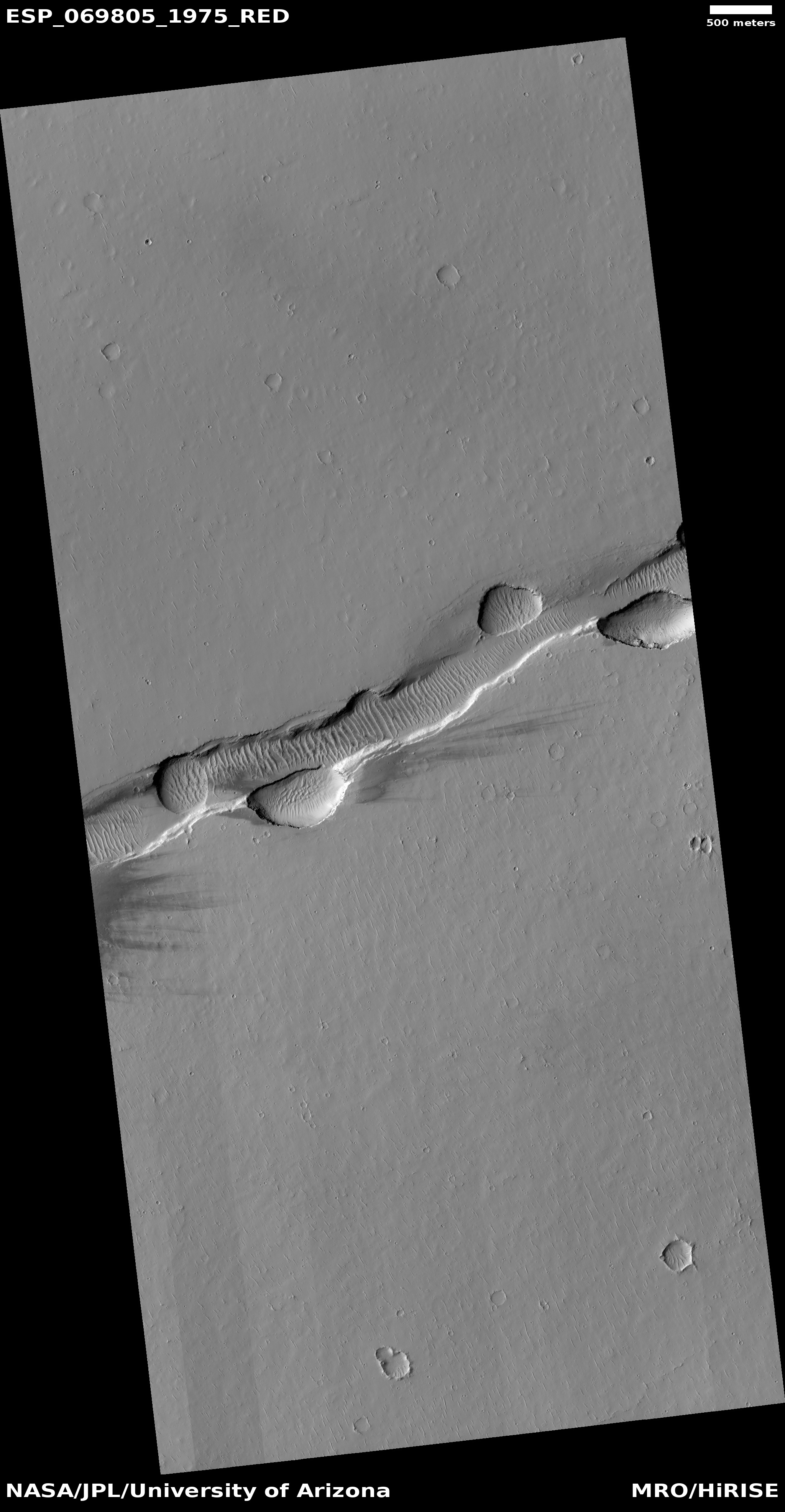
It might seem strange to call any particular place on Mars “barren” when the entire planet has no visible signs of life anywhere. However, much of the surface of Mars involves wind and ice features that show evidence of change and evolution over time. The presence of apparent near-surface ice and glacial features in almost every image located above 30 degrees latitude emphasizes this sense of potential life, even if that life will only be transported from Earth and established there someday by humans.

Today’s cool image to the right, cropped and reduced to post here, has none of these features. It is dry barren bedrock, with only a faint scattering of Martian dust indicated by many faint dust devil tracks.

The picture was taken on March 13, 2023 by the high resolution camera on Mars Reconnaissance Orbiter (MRO). The largest and most distinct flat-topped mesa in the image is only about 100 feet high, with the north-south ridgeline to the south about 20 feet high.
» Read more

0 comments

Researchers successfully transmit electricity from space

In a test of a system to wirelessly transmit electricity from solar power stations in orbit, researchers from Caltech have succeeded in transmitting a small amount of electricity from an orbiting cubesat launched in January.

“Through the experiments we have run so far, we received confirmation that MAPLE can transmit power successfully to receivers in space,” [professor Ali] Hajimiri says. “We have also been able to program the array to direct its energy toward Earth, which we detected here at Caltech. We had, of course, tested it on Earth, but now we know that it can survive the trip to space and operate there.”

This small scale test mainly proved the technology can survive launch, operate in space, and transmit power back to Earth. Whether the rate of transmission can be profitable remains as yet unknown. Nor is it yet known the effects such energy transmissions through the atmosphere will have.

16 comments

Astronomers think they have completed the census of Near Earth asteroids

Astronomers in a new paper [pdf] have concluded that the census of Near Earth asteroids is largely now complete, and have begun focusing their effort on narrowing down the list of potentially dangerous asteroids in that census. From the press release:

Researchers from CU Boulder and NASA have completed a census of hundreds of large asteroids orbiting near Earthโ€”gauging which ones could come precariously close to our planet over the next thousand years. The researchers identified at least 20 asteroids that scientists may want to study more to make certain they pose no threat to life on Earth in the next millennium.

To be clear, the researchers say the odds of any of these rocky bodies striking the planet are extremely low, and are next to zero for the coming century. But because the fallout from such an impact would be catastrophic, itโ€™s important to be sure, said Oscar Fuentes-Muรฑoz, lead author of the study. โ€œWe don’t want to alarm people, because the results are not alarming,โ€ said Fuentes-Muรฑoz, a doctoral student in the Ann and H.J. Smead Department of Aerospace Engineering Sciences. โ€œBut there are a lot of uncertainties in predicting so far into the future.โ€

To sum up, none of those 20 asteroids has any chance of hitting the Earth in the next few hundred years. Beyond that the uncertainties make it difficult to predict. Reducing those uncertainities is now the focus of their work.

2 comments

German rocket startup successfully completes full duration engine test of upper stage

The German rocket startup Rocket Factory Augsburg on June 2, 2023 successfully completed a full duration engine test of the upper stage of its rocket.

Launch service provider Rocket Factory Augsburg AG (RFA) has successfully hot fired its upper stage for a full duration of 280 seconds. This marks the successful completion of the Integrated System Test (IST) campaign, in which a staged-combustion Helix engine was integrated into an upper stage tank system and hot fired several times up to full duration in the final test. This is the 1st time in Europe that a privately developed staged combustion upper stage has been successfully hot fired.

The company will also use the Helix engine in its first stage, so this test essentially proved its capability for that use as well. With this success, the company will now start constructing the first stage, with the first launch of the entire rocket targeting the end of this year.

Two important tidbits about this story. First, the test was done at a private testing facility in Germany. In the past all such testing was done under the control of the the European Space Agency, at its sites. Germany has essentially now broken that monopoly in its push to develop its own independent rocket industry of competing private companies.

Second, the launch is presently aiming to take off from a launchpad the company has leased and is building at the new Shetland Island spaceport in the United Kingdom. I wonder if it will have the same regulatory problems as Virgin Orbit in getting its launch permit. If so, that launch won’t happen this year.

0 comments

Three astronauts return to Earth safely from China’s Tiangong-3 space station

After completing six months in space on China7s Tiangong-3 space station, three astronauts safely returned to Earth yesterday, with their Shenzhou capsule touching down in inner Mongolia.

This mission was the first full six month mission on the station. During their mission they completed four spacewalks. Though little was published about what was accomplished on those EVAs, it is likely it involved completing the construction of the station as well as installing some exterior experiments.

1 comment
1 452 453 454 455 456 2,413