Perseverance spots Phobos

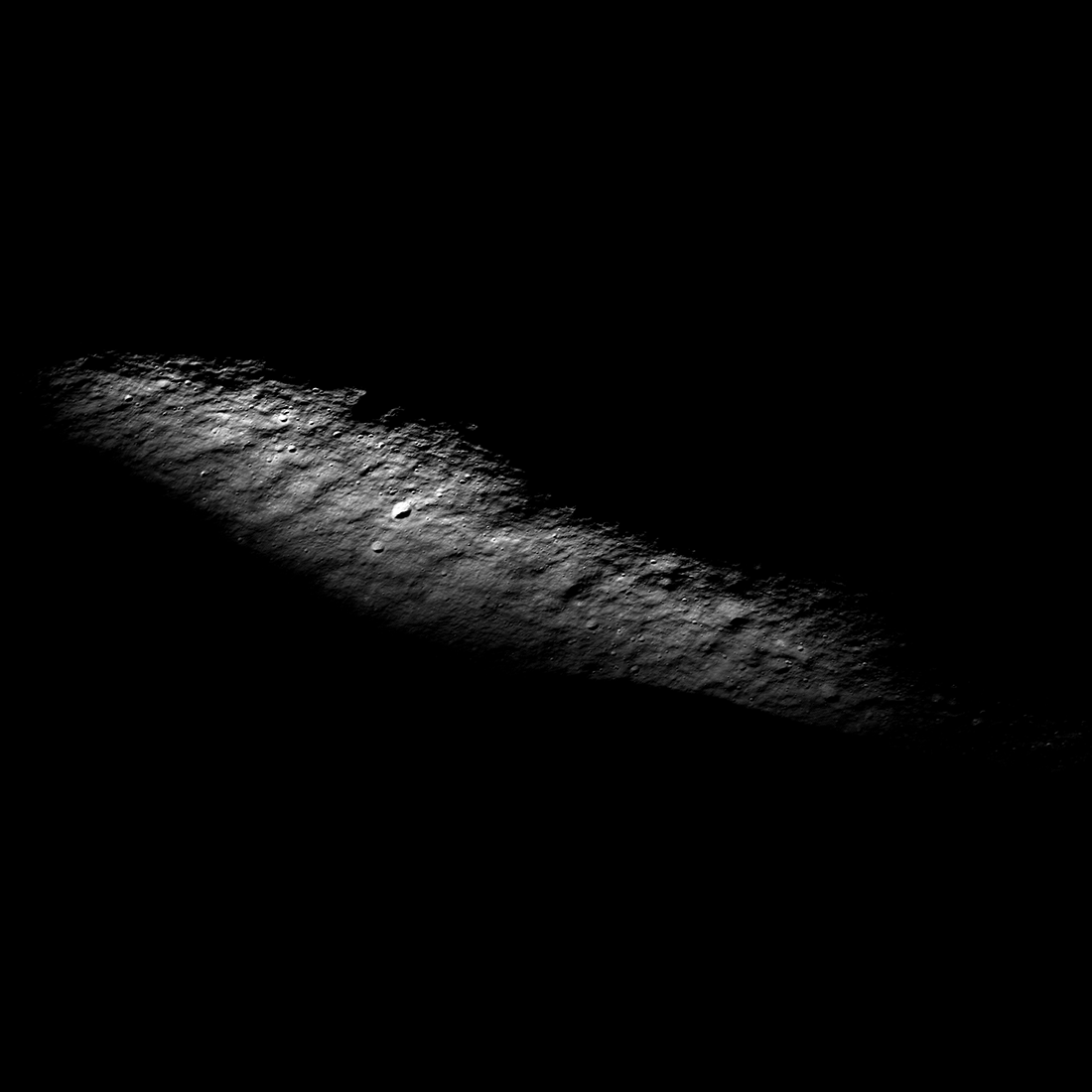
Phobos, as seen by Perseverance on Mars
Click for full image.

Cool image time! The photo to the right, cropped to post here, was taken on January 12, 2022 by one of the high resolution cameras on the Mars rover Perseverance, and shows the Martian moon Phobos.

As noted in an update today by Claire Newman, one of the members of the science team,

This provides a measurement, using visible light, of the amount of dust in the nighttime atmosphere, which can be compared to similar measurements made by looking at the sun during the daytime, and to nighttime measurements of dust abundance made in the infrared by MEDA [another Perseverance instrument].

There have been three attempts to land on Phobos, all by the Russians, all of which failed. At present a Japanese mission to Phobos, dubbed Mars Moons eXploration or MMX, is scheduled to launch in 2024. This is a planned sample return mission, and will also include a rover.

6 comments

Lucy to fly past Earth on October 16th

Lucy solar panel graphic
Artist’s impression of solar panel

As part of its planned route to get to the Trojan asteroids in Jupiter’s orbit, the planetary probe Lucy is scheduled to fly only 220 miles above the Earth’s surface on October 16th.

Lucy will be passing the Earth at such a low altitude that the team had to include the effect of atmospheric drag when designing this flyby. Lucy’s large solar arrays increase this effect.

“In the original plan, Lucy was actually going to pass about 30 miles closer to the Earth,” says Rich Burns, Lucy project manager at NASA’s Goddard Space Flight Center in Greenbelt, Maryland. “However, when it became clear that we might have to execute this flyby with one of the solar arrays unlatched, we chose to use a bit of our fuel reserves so that the spacecraft passes the Earth at a slightly higher altitude, reducing the disturbance from the atmospheric drag on the spacecraft’s solar arrays.”

That solar array remains unlatched (as shown in the graphic above), but because it is almost completely deployed and is producing about 90% of its intended electricity, engineers have ceased efforts to complete deployment and latching.

0 comments

Skyrora’s first suborbital rocket launch fails shortly after liftoff

Capitalism in space: The first launch attempt of a suborbital rocket for Skyrora, a rocket startup from the United Kingdom, failed on October 8, 2022 shortly after liftoff.

The launch was from Iceland, with the rocket crashing in the ocean about 1,600 feet from the pad. No one was injured. The rocket, Skylark-L, was designed for a suborbital flight to test equipment that will be used in the orbital rocket, Skyrora-XL.

Skylark-L is Skyrora’s 11m suborbital rocket, capable of reaching 4x the speed of sound and an altitude of over 125 km. 70% of the technology tested in the Skylark-L launch attempt will be applied to the systems of the Skyrora-XL vehicle, providing a key incremental learning opportunity to increase technological readiness ahead of vertical orbital launch next year.

As this was an engineering flight, the failure is actually a good thing, as it will provide Skyrora’s engineers information about changes needed to make their rocket function properly. Don’t expect that first orbital launch however next year, as the company promises. These things always take longer than expected.

0 comments

Watching return of ISS crew on Freedom

The SpaceX manned capsule Freedom has undocked from ISS, carrying three astronauts completing a six month mission, with a scheduled splashdown planned for 4:50 pm (Eastern) off the western coast of Florida.

I have embedded NASA’s live stream below, for those that wish to watch. Note that though NASA inserts itself into this event, once the spacecraft has left ISS everything — including all workers involved in splashdown operations — is solely under the supervision of SpaceX, with NASA’s participation only that of a customer, albeit a very powerful one. This is a capsule and splashdown designed, built, run, and most important, owned by a private American company, not the government.
» Read more

0 comments

Changing slope streaks on Mars

Overview map

Changing slope streaks on Mars
Click for full image.

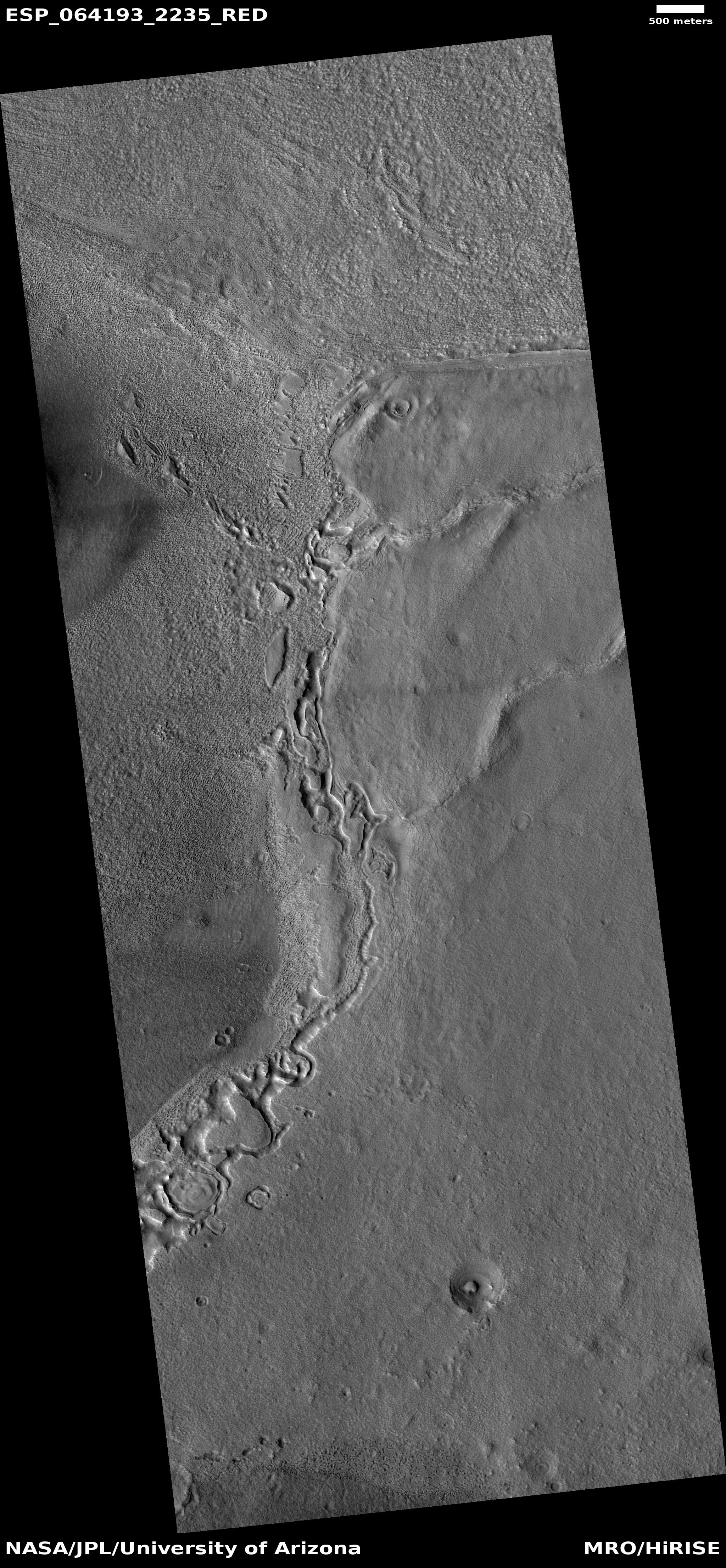
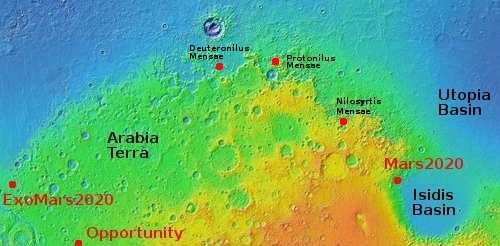
Cool image time! The photo to the right, cropped and reduced to post here, was taken on July 20, 2022 by the high resolution camera on Mars Reconnaissance Orbiter (MRO). It shows what the scientists have labeled a “Splitting Slope Streak” on a mound/hill near the equator and located almost midpoint between the giant volcano Olympus Mons about 2,000 miles to the east and the almost as big volcano Elysium Mons about 2,500 miles to the west. The white cross on the overview map above marks this location, north of the Medusae Fossae volcanic ash deposit.

The slope streak in question is the biggest and darkest at about 7 o’clock. Slope streaks are a feature unique to Mars that remain as yet unexplained. They are not ordinary avalanches, despite their appearance. They seem to have no effect on the topography, and thus are more a stain on the surface. Moreover, some are bright, some dark, and all happen randomly and fade with time. Some think they may be brine-related, while others link them to dust. No theory explains them completely.

What makes this slope streak interesting is that it is relatively new. Compare it with the picture taken in 2016 below.
» Read more

0 comments

The known near Earth asteroid catalog now tops 30,000

Chart of NEA's discovered over time

The catalog of known near Earth asteroids that have been identified using a number of survey telescopes in space and on the Earth now totals 30,039. As defined at the link:

An asteroid is called a near-Earth asteroid (NEA) when its trajectory brings it within 1.3 Astronomical Units (au) of the Sun. 1 au is the distance between the Sun and Earth, and so NEAs can come within at least 0.3 au, 45 million km, of our planet’s orbit.

Currently, near-Earth asteroids make up about a third of the roughly one million asteroids discovered so far in the Solar System. Most of them reside in the asteroid belt between Jupiter and Mars.

NEAs are also called NEOs (Near Earth Objects). The chart above, produced by the Center for NEO Studies which tracks these objects, shows the number of NEAs discovered over time.

Of the 30,039 now known, about 1,400 have orbits with “a non-zero” chance of hitting the Earth. None however will do so in the next hundred years at least.

Though the pace of discovery is vastly improving — as indicated by the steep rise in the curve in the graph — only when that curve begins to flatten out will we know that we are getting close to having a more-or-less complete survey of these objects.

5 comments

TESS enters safe mode

The science team for TESS (Transiting Exoplanet Survey Satellite) revealed yesterday that the spacecraft had entered safe mode on October 10th.

The spacecraft is in a stable configuration that suspends science observations. Preliminary investigation revealed that the TESS flight computer experienced a reset. The TESS operations team reported that science data not yet sent to the ground appears to be safely stored on the satellite. Recovery procedures and investigations are underway to resume normal operations, which could take several days.

TESS has been in orbit since 2018, where it has been repeatedly taking survey images of the entire sky. Astronomers then compare these images to see if they can spot exoplanet transits (as well as any other new phenomenon). So far 250 exoplanets have been identified.

0 comments

China launches Earth observation radar satellite

Using its Long March 2C rocket, China today successfully launched a new Earth observation radar satellite.

As is usual for Chinese launches from interior spaceports, the rocket dumped its lower stages somewhere within China.

The leaders in the 2022 launch race:

46 SpaceX
44 China
14 Russia
8 Rocket Lab
7 ULA

American private enterprise still leads China 66 to 44 in the national rankings. It is now tied with the entire world combined 66 each.

3 comments

Ispace targets November 9-15 launch window for first commercial lunar lander

The private Japanese company Ispace has now scheduled the launch of its commercial lunar lander Hakuto-R on a SpaceX Falcon 9 rocket for a November 9-15, 2022 launch window.

Though the lander’s primary goal is to see if this lander will work, it also includes several customer payloads, the most significant of which is the Rashid rover from the United Arab Emirates. Rashid, which is about the size of a Radio Flyer red wagon, will operate for one lunar day, about two weeks. While its main mission is to test the engineering and to train the engineers who built it, it will have two cameras for taking pictures. In addition, on its wheels are test adhesive patches of different materials, designed to see how each material interacts with the Moon’s abrasive dust.

0 comments

An icy hollow on Mars

A icy hollow on Mars
Click for full image.

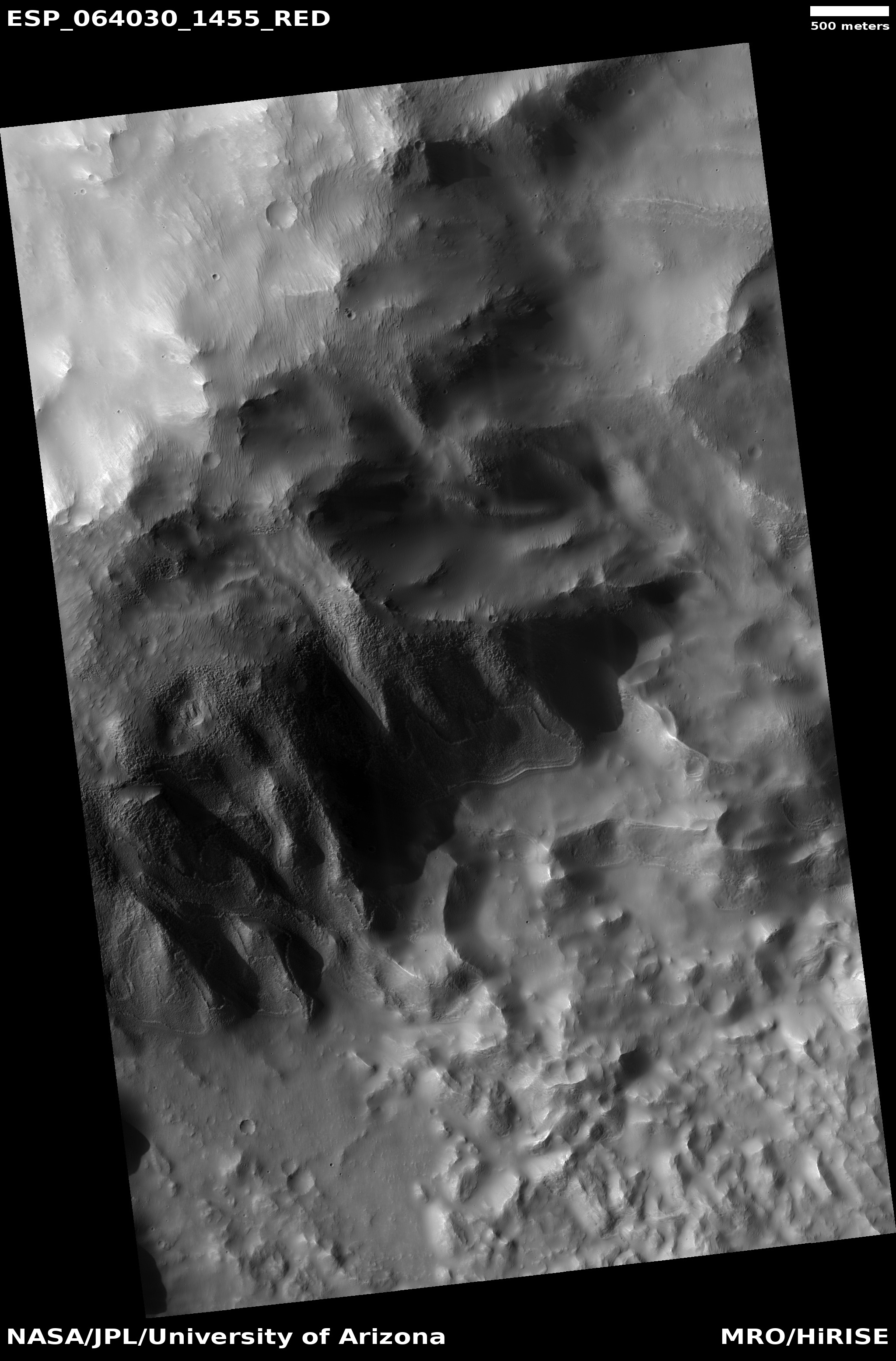
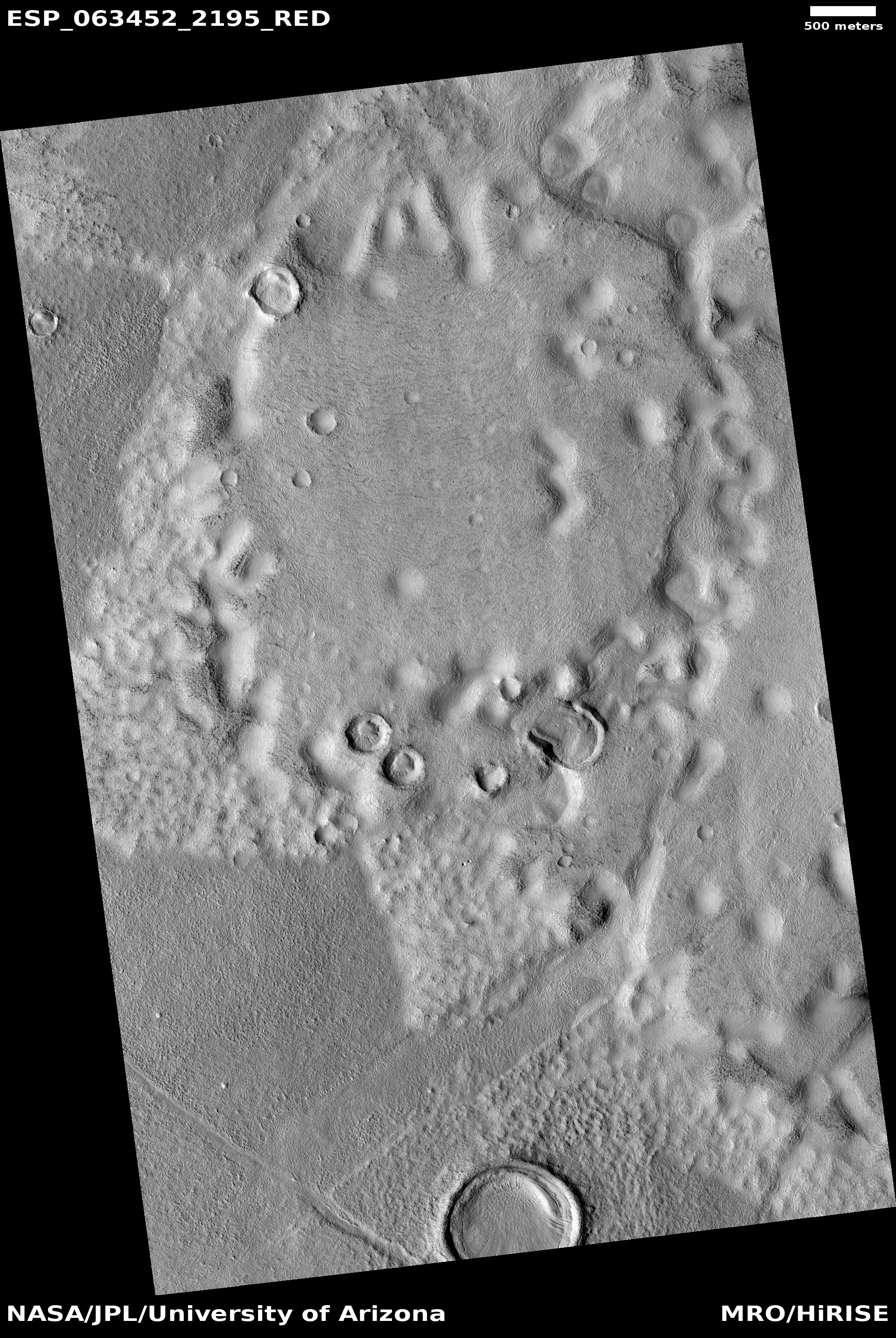
Cool image time! The photo to the right, cropped, reduced, and enhanced to post here, was taken on August 20, 2022 by the high resolution camera on Mars Reconnaissance Orbiter (MRO). It shows a somewhat typical example of the many ice scarps that scientists have identified in MRO pictures.

Though this is not a hard fast rule, most of the ice scarps so far found tend to have the steep cliff on the pole-facing side, with the scarp very slowly retreating towards the equator. In today’s example, the scarp where an ice layer in the cliff wall has been identified is indicated by the white arrow, though three sides of the hollow, on the east, north, and west sides, could all also have exposed ice.

Nor is that the only likely ice at this location at 56 degrees south latitude. The stippled plain surrounding the hollow clearly looks like an eroded ice layer, likely covered with a thin protective coat of dust to protect if from quickly sublimating away. The dark streaks across this surface are likely dust devil tracks.

As documented by the global map below, Mars is like Antarctica, a desert with water ice everywhere.
» Read more

0 comments

Dennis Tito signs deal to fly on 2nd manned Starship mission around Moon

Capitalism in space: Dennis Tito, the first tourist to fly in space and now 82-years-old, has signed a deal with SpaceX for both him and his wife Akiko to fly on 2nd manned Starship mission around Moon.

His weeklong moonshot — its date to be determined and years in the future — will bring him within 125 miles (200 kilometers) of the lunar far side. He’ll have company: his wife, Akiko, and 10 others willing to shell out big bucks for the ride.

Tito won’t say how much he’s paying; his Russian station flight cost $20 million.

The couple recognize there’s a lot of testing and development still ahead for Starship, a shiny, bullet-shaped behemoth that’s yet to even attempt to reach space. “We have to keep healthy for as many years as it’s going to take for SpaceX to complete this vehicle,” Tito said in an interview this week with The Associated Press. “I might be sitting in a rocking chair, not doing any good exercise, if it wasn’t for this mission.”

The bottom line is that this deal, combined with the two other passenger Starship deals SpaceX has already signed, demonstrates that there is a solid market for Starship, even before its first launch. Expect that market to boom once the rocket begins operations.

1 comment
1 399 400 401 402 403 1,354