Brazil signs Artemis Accords

Brazil on June 15th became the first South American country to sign the Artemis Accords, designed to bypass the limitations placed on property rights created by the Outer Space Treaty.

U.S. policy requires any nation that wishes to participate in its Artemis program to go back to the Moon to agree to the accords. Brazil is now the eleventh country to sign, joining Australia, Canada, Italy, Japan, Luxembourg, New Zealand, South Korea, the United Kingdom, the United Arab Emirates, Ukraine, and the United States.

Russia and China oppose the accords, which causes a problem for Russia as it desperately needs to partner with someone because it can’t on its own afford to build much. It is negotiating possible partnerships with China at its new space station as well as building a base on the Moon, but those agreements are not firm. And continues to send out feelers, including statements by Putin, calling for continuing cooperation with the U.S. in space.

Whether the Biden administration will make an exception for Russia in regards to the Artemis Accords remains unclear. That twelve countries have agreed to the accords however gives the U.S. greater leverage with those countries that have not yet signed.

1 comment

Northrop Grumman launches three military satellites using Minotaur rocket

Early this morning Northrop Grumman successfully used a former Minuteman rocket repurposed as a commercial rocket dubbed Minotaur to launch three military reconnaissance satellites for the National Reconnaissance Office.

The rocket’s solid-fueled stages were in themselves amazingly old.

The 69-foot-tall (21-meter) rocket is based on leftover solid-fueled motors from the U.S. Air Forceโ€™s Minuteman missile program. Designers added two Orion solid rocket motors on top of the lower two stages of a Minuteman missile to turn the bomb carriers into satellite launchers.

The Minotaur 1 rocketโ€™s M55A1 first stage motor was cast with solid propellant in 1966 by Thiokol, now part of Northrop Grumman. The SR19 second stage motor, produced by Aerojet, was filled with its solid propellant in 1983, according to a Northrop Grumman spokesperson.

The age of the first stage means it is likely the oldest rocket motor ever used on a space launch.

The leaders in the 2021 launch race:

18 SpaceX
16 China
8 Russia
3 Northrop Grumman

The U.S. now leads China 26 to 16 in the national rankings.

11 comments

Boxwork in the basement of Mars

Polygon ridges in Hellas Basin
Click for full image.

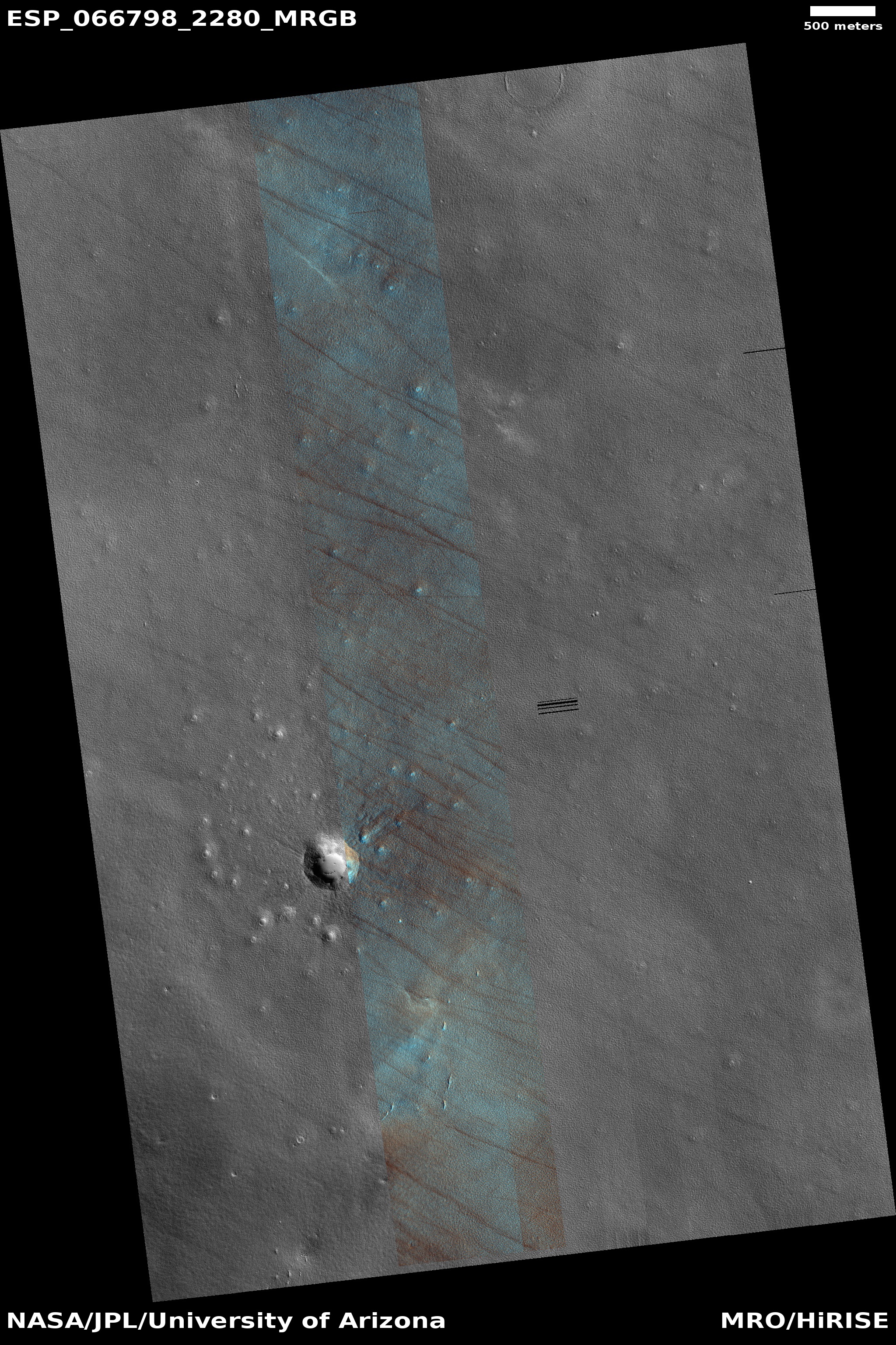
Cool image time! The photo to the right, rotated, cropped, and reduced to post here, shows what resembles closely what in Earth caves are called boxwork, polygonal ridges sticking out from the bedrock and usually indicating cracks filled with harder material that resist erosion.

Taken by the high resolution camera on Mars Reconnaissance Orbiter (MRO) on March 23, 2021, what makes this boxwork especially interesting is its size and location. On Earth cave boxwork generally ranges from a few inches to a few feet across. Not only do these Martian ridges range from 100 feet to a half mile in length, they are located at the lowest point in Hellas Basin, the basement of Mars. In fact, this spot is as close as you can get to Mars’ Death Valley, as shown by the overview map below.
» Read more

3 comments

Russian astronaut fired for opposing filming of movie on ISS

Krikalev on the shuttle to ISS flight in 1998
Sergei Krikalev on the first ISS assembly flight
by the space shuttle Endeavour in 1998.

According to one new story today, Russian astronaut, Sergei Krikalev, 62, was fired from his position in senior management within Roscosmos for opposing its decision to film for profit the first feature film on ISS.

Krikalev did not say why he was against the film but his stance was backed by former colleagues who said that taking a passenger would delay a flight for a cosmonaut. Roscosmos denied that Krikalev had been fired.

Krikalev is one of Russia’s most celebrated astronauts. He was the first person to fly in space who was born after Sputnik, was the first Russian to fly on the space shuttle, and was the first Russian (along with an American) to enter ISS’s first module soon after launch. Overall he has spent more than 800 days in space.

He also became the last Soviet citizen, stranded on Mir when the Soviet Union fell in 1991. When he launched, he was a citizen of the U.S.S.R. When he finally returned, that country didn’t exist, and he was now a citizen of Russia.

I interviewed him extensively for my book, Leaving Earth, because he was fluent in English due to his flights on the shuttle. What I learned was that Krikalev was then and probably still is an ardent communist. On that Mir flight he refused to be filmed in a commercial for Coca-Cola, arranged by Roscosmos to make some money. There was no way he would allow himself to be recorded in such a crass for-profit manner. Thus, I am not surprised he now opposes using Russian space facilities for a commercial movie, for profit.

I also found him to be a very thoughtful and analytical man, which also probably explains his opposition to this quickly arranged commercial flight. The film company is partly owned by Dmitry Rogozin, head of Roscosmos, so there probably is some payoffs and corruption involved. It is also probably interfering with the Russian side of operations, as the story says Krikalev claims. These factors would cause Krikalev to speak his mind and argue against the flight, which likely angered Rogozin, who is apparently pocketing some cash from the film.

I suspect Krikalev is not fired, but has merely been sent to the doghouse for a short while. Roscosmos (and Rogozin) can’t afford the bad publicity of letting him go. It also needs his expertise in their operations.

5 comments

Northrop Grumman’s Pegasus rocket launches military satellite

Early this morning Northrop Grumman’s Pegasus rocket successfully launched a military satellite under a program aimed at demonstrating a quick launch capability.

This was the first Pegasus launch since 2019, and only the fifth in the past twelve years. According to the article, Northrop Grumman significantly lowered its price for this launch, charging the Space Force $28.1 million, about half of what it charged NASA for that 2019 flight. Whether this is an effort to make the rocket more competitive, or is simply Northrop Grumman selling off its inventory, will remain to be seen.

The leaders in the 2021 launch race:

18 SpaceX
16 China
8 Russia
2 Rocket Lab
2 ULA
2 Northrop Grumman

The U.S. now leads China 25 to 16 in the national rankings.

2 comments

China releases more images from Zhurong

Zhurong looking north past its lander
Click for full image.

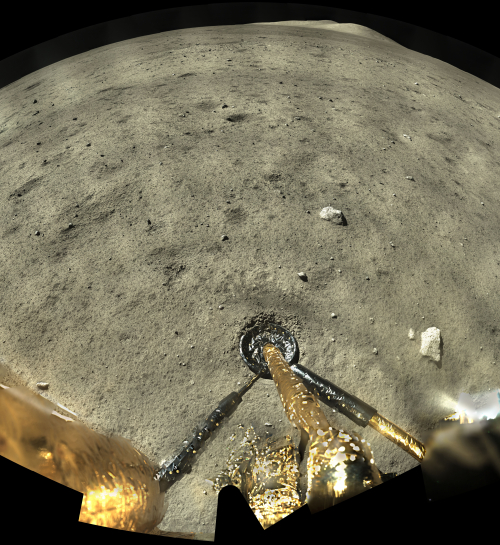
The new colonial movement: Three weeks after its Mars rover Zhurong rolled off its lander to begin its 90 day mission, China yesterday finally released the first high resolution images taken by the rover.

The images included a 360 degree panorama, taken while the rover was still sitting on the lander, an image of both the rover and lander taken by a mini-camera that was dropped from the bottom of the rover, a picture of some interesting nearby boulders to the east, and a picture looking past the lander looking north.

This last picture is above, reduced and annotated by me. The small flat but distinct hill to the north I think is the nearest pitted cone that could be either a mud or lava volcano. That cone is about 3.75 miles away, and though a very enticing target is probably too far away for Zhurong to reach, unless it survives for years past its planned three-month mission, as did the American rovers Spirit and Opportunity.

The closer small ridges and hills just to its right could be the east and west rims of the nearest large crater, about 650 feet wide with a distorted shape, that is visible in the high resolution orbital images taken by both Tianwen-1 and Mars Reconnaissance Orbiter (MRO). This crater is about 1,600 feet away.

Based on these images it appears that once Zhurong rolled off the lander to the east, it immediately turned to the right to move several feet south, where it turned right again to move several feet to the west until it was just to the west of the lander, where it took the picture above. During that last move it dropped the small camera behind it so that it could take the picture showing both the rover and the lander.

These maneuvers and the rover’s position south of the lander and facing west suggest they are going to head to the west, where there are some nearby smaller craters and other interesting features. Whether they eventually go north, with that pitted cone a long term goal should the rover last longer than its planned mission through the end of August, remains entirely unknown.

8 comments

Blue Origin sells first tourist seat on New Shepard for $28 million

Capitalism in space: In a live auction today, Blue Origin successfully sold the first tourist seat on the first manned commercial suborbital flight of its New Shepard spacecraft for $28 million. With the additional fee of 6%, the total price was about $29.6 million.

I have embedded the replay of the auction below the fold, cued up to the auction start.

The bidding was amazingly fierce and aggressive, starting at $4.8 million. The final price is quite spectacular, actually $9+ million higher than what Dennis Tito paid to fly to ISS for several days back in the 1990s.

One wonders what SpaceX and Axiom have been charging for their orbital flights. I doubt it is this much. As I watched I wondered if the bidders were considering the time they would spend with Jeff Bezos as part of the value. These are wealthy people, and getting a chance to spend a lot of time with one of the richest men in the world might be far more valuable to them than the flight itself.

Regardless, we will know soon who won the auction, and will fly into space for a few minues or so on July 20th.

» Read more

22 comments

Zhurong finally located on Mars

Zhurong as seen by MRO
Click for full image.

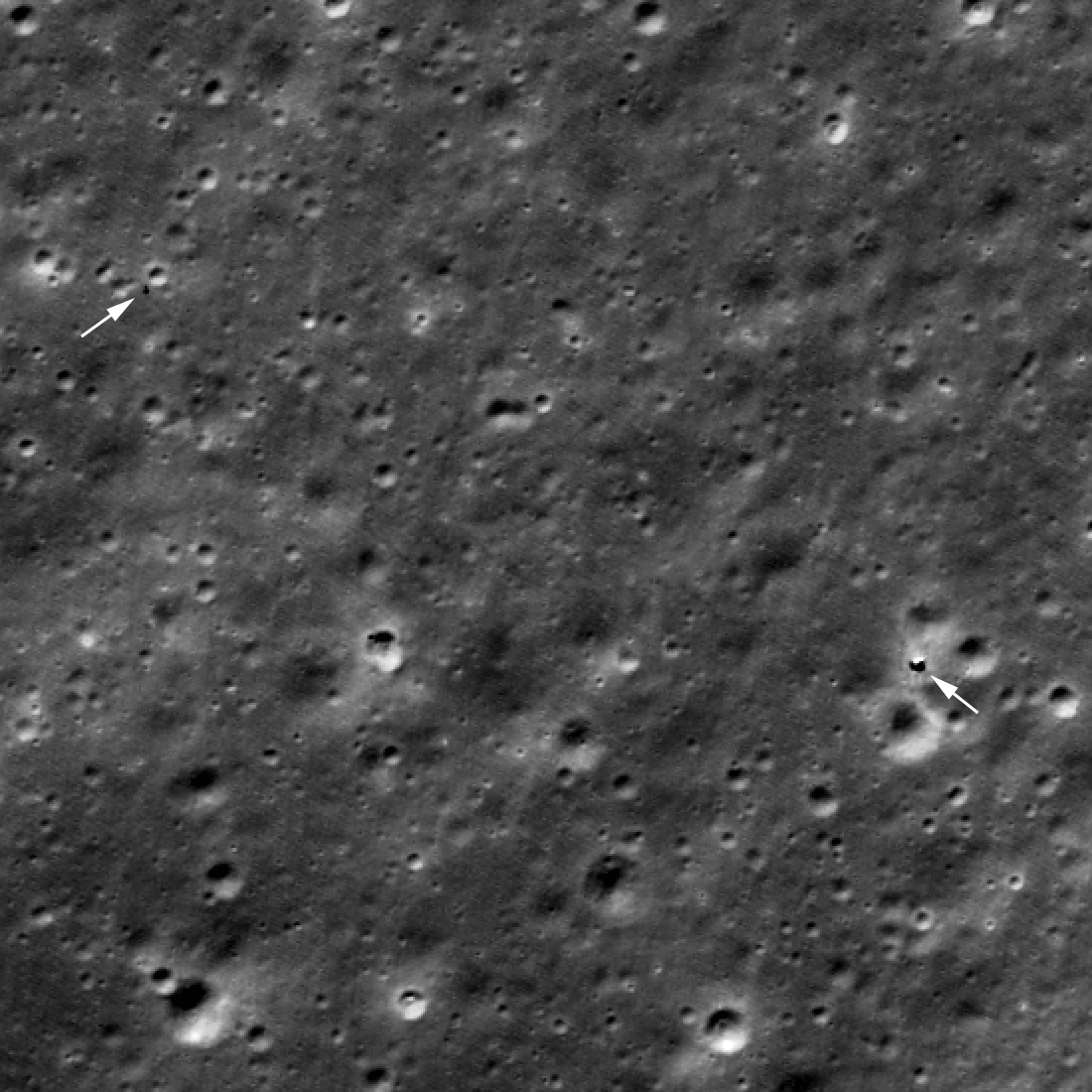
Though the Chinese had earlier this week released one image taken by their Mars orbiter, Tianwen-1, showing their rover Zhurong on the surface of Mars, they did not provide any specific location information.

This lack has now been filled by a new high resolution image of Zhurong taken by Mars Reconnaissance Orbiter (MRO) on June 6, 2021. This image, cropped to match the Tianwen-1 image and annotated by me to post here, shows the parachute, entry capsule, heat shield, lander, and rover. I have added white dots to distinguish the rover from the lander, which indicate that since the Tianwen-1 orbital image the rover had moved south about 70 feet, suggesting it has been able to travel on the surface.

What this MRO image provides that the Chinese refused to reveal is the latitude and longitude of that landing site, which in turn tells us that the lander put down about 14 miles to the northwest of its targeted landing spot. The mosaic of MRO context camera images below show this landing spot in context with the surrounding terrain.
» Read more

0 comments

Update on Perseverance’s future travel plans

Perseverance's future travels
Click for full image.

The science team for the rover Perseverance yesterday released a revised map of where they intend over the next few months to send the rover on the floor of Jezero Crater.

The map to the right, cropped and reduced to post here, shows that route.

The first science campaign (depicted with yellow hash marks) begins with the rover performing an arching drive southward from its landing site to Sรฉรญtah-North (Sรฉรญtah-N). At that point the rover will travel west a short distance to an overlook where it can view much of the Sรฉรญtah unit. The “Sรฉรญtah-N Overlook” could also become an area of scientific interest โ€“ with Perseverance performing a “toe dip” into the unit to collect remote-sensing measurements of geologic targets.

Once its time at the Sรฉรญtah-N Overlook is complete, Perseverance will head east, then south toward a spot where the science team can study the Crater Floor Fractured Rough in greater detail. The first core sample collected by the mission will also take place at this location. After Cratered Floor Fractured Rough, the Perseverance rover team will evaluate whether additional exploration (depicted with light-yellow hash marks) farther south โ€“ and then west โ€“ is warranted.

Whether Perseverance travels beyond the Cratered Floor Fractured Rough during this first science campaign, the rover will eventually retrace its steps. As Perseverance passes the Octavia B. Butler landing site, the first science campaign will conclude. At that point, several months of travel lay ahead as Perseverance makes its way to “Three Forks,” where the second science campaign will begin.

At that point the rover will begin studying the base of the delta of material that in the far past poured through a gap in the western rim of Jezero Crater.

0 comments

“The Endless SLS Test Firings Act”

The Senate passes a law! In the NASA authorization that was just approved by the Senate and awaits House action was an amendment — inserted by Senator Roger Wicker (R-Mississippi) — that will essentially require NASA to build an SLS core stage designed for only one purpose, endless testing at the Stennis Space Center in Mississippi.

The Stennis-specific provision says NASA should “initiate development of a main propulsion test article for the integrated core stage propulsion elements of the Space Launch System, consistent with cost and schedule constraints, particularly for long-lead propulsion hardware needed for flight.”

So what exactly is a “main propulsion test article,” and why does NASA need one? According to a Senate staffer, who spoke to Ars on background, this would essentially be an SLS core stage built not to fly but to undergo numerous tests at Stennis.

My headline above is essentially stolen from the Eric Berger article at the link. Because this ground test core is not funded, at best it would likely not be ready for testing prior to ’27 or ’28, at the earliest. By then who knows if SLS will even exist any longer, replaced by low-cost and far more useful commercial rockets. Thus, if this Wicker amendment survives, Stennis might be testing a core stage endlessly for a rocket that no longer exists.

And even if SLS is flying, what point is there to test a core stage that never flies? None, except if you wish to create fake jobs in Mississippi for your constituents, as Wicker obviously is trying to do.

Fortunately the bill is merely an authorization, and has not yet passed the House. Much could change before passage, and even after passage money will need to be appropriated to create this fake testing project.

Unfortunately, we are discussing our modern Congress, which has no brains, can’t count, and thinks money grows on trees. I would not bet against this fake testing program becoming law.

9 comments

Europe to fly mission to Venus to study its volcanoes

The European Space Agency yesterday announced that it will fly an orbiter to Venus in 2031, dubbed EnVision, to study the estimated million volcanoes on the surface of that hellish planet.

EnVision will use an infrared spectrometer to seek out hot spots on the surface that could indicate active volcanoes. It will use radar to map the surface, looking for signs of lava flows. Ultraviolet and high-resolution infrared spectrometers will then look for water vapor and sulfur dioxide emissions, to see whether smoldering volcanoes are driving cloud chemistry today.

This data will help determine exactly geologically active Venus’s volcanoes are. Several studies in the past decade using archival data (see here, here, and here) have suggested as many as 37 of those volcanoes are active, but this data remains uncertain.

10 comments

China’s Long March 2D rocket launches 4 satellites

Using its Long March 2D rocket China today placed four satellites into orbit, two to observe the Earth, one to study asteroids, and one a technology test satellite.

No word on where the rocket’s first stage booster landed within China.

The leaders in the 2021 launch race:

18 SpaceX
16 China
8 Russia
2 Rocket Lab
2 ULA

The US still leads China 24 to 16 in the national rankings.

0 comments
1 71 72 73 74 75 126