Raytheon & Northrop Grumman successfully complete the second flight of a hypersonic missile prototype

Raytheon and Northrop Grumman, working in partnership, have successfully flown a hypersonic missile prototype for the second time in eleven months.

For the latest test, the HAWC prototype was carried under the wing of an aircraft and flown to high altitude, where it was released. A solid rocket booster then accelerated the vehicle to supersonic speed and a scramjet ignited. An engine without moving parts, a scramjet uses its forward motion to compress the incoming air into a shockwave that burns with fuel, producing enough thrust to propel the missile to over five times the speed of sound.

The latest prototype had only minor modifications from the previous flight and met all of its objectives. The data recovered by telemetry will be used to improve the digital models using artificial intelligence, machine learning, and big data, which will increase the efficiency and performance as the weapon concept comes closer to practical deployment.

As this is a military project, not many details about the prototype were released, such as its size, speed, design.etc. One shouldn’t even trust the illustrations of the missile, provided by Northrop Grumman. Each shows the missile with a rounded lifting body shape on its bottom side, likely to protect and guide it on its re-entry, but there is no guarantee the illustrations’ shape matches that of the real missile.

5 comments

Maritime Launch Services signs land lease for its Nova Scotia spaceport

Capitalism in space: Maritime Launch Services yesterday obtained a 20-year land lease for its Nova Scotia spaceport from the province of Nova Scotia.

The lease covers 334.5 acres, and is renewable for an additional 20 years.

Unlike other spaceports, Maritime isn’t merely providing a launch site for rocket companies. Instead the company will also launch smallsats itself, using a Ukrainian-built rocket dubbed the Cyclone-4M. Initially the plan was to fly all launches in this manner, but the invasion of the Ukraine by Russia has caused Maritime to look for other launch providers as well.

0 comments

Starship gets its first communications satellite customer

Capitalism in space: Sky Perfect JSAT, a Japanese satellite communications company, today awarded SpaceX a launch contract using its giant Starship/Superheavy rocket to put its Superbird-9 communications satellite into orbit in 2024.

Superbird-9 will be launched by SpaceX’s Starship launch vehicle in 2024 to geosynchronous transfer orbit. SpaceX’s Starship is a fully reusable transportation system that will be the world’s most powerful launch vehicle. SKY Perfect JSAT and SpaceX will continue to work together ahead of the launch of Superbird-9 Satellite.

Sky Perfect is the first communications satellite company to choose Starship for a satellite launch. It is however the rocket’s fourth signed customer. Japanese billionaire Yusaku Maezawa made a deal in 2018 for a flight around the Moon, while NASA chose Starship in 2021 as the manned lunar lander in its Artemis program. UPDATE: SpaceX also has a second private manned customer, Jared Isaacman, whose present deal with SpaceX calls for two Dragon flights followed by a Starship flight.

Sky Perfect is not a new company, with sixteen satellites already in orbit providing communications, broadband, and entertainment to Japan and the Far East. It likely made this deal because it got a very good launch price, with options to back out if the rocket’s on-going development gets delayed by too much. It also made the deal because it helps to solidify Starship’s future, something Sky Perfect probably sees as a win considering the significant reduction of launch costs expected from Starship/Superheavy.

5 comments

A “What the heck!?” crater on Mars

A
Click for full image.

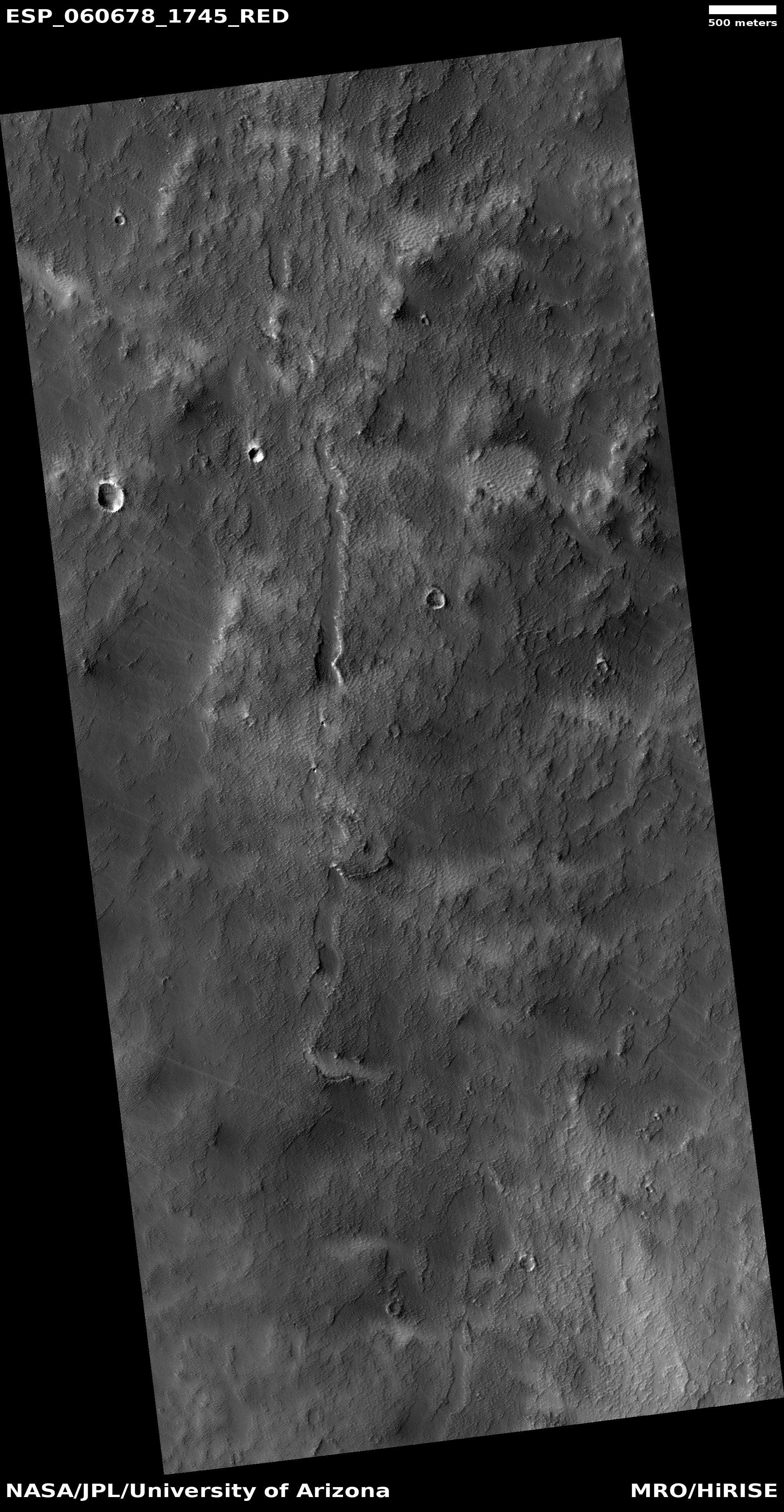
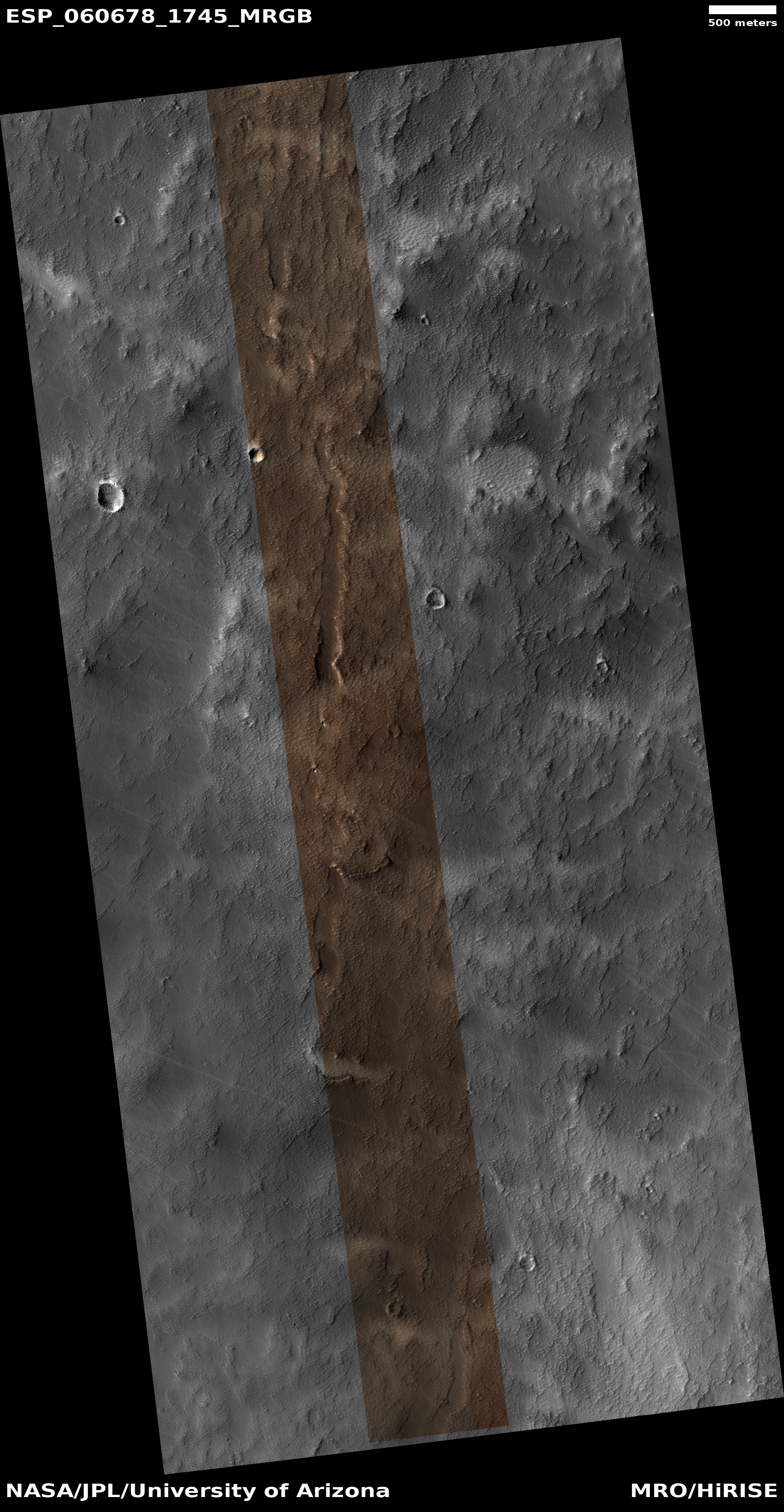
Today’s cool image falls into what I call my “What the heck?” category. The photo to the right, cropped and reduced to post here, was taken on May 31, 2022 by the high resolution camera on Mars Reconnaissance Orbiter. It was also picked by the science team as that camera’s picture of the day on July 12, 2022. From the caption:

This seems to belong to a class of craters in the Cerberus Plains that was flooded by lava, which was subsequently uplifted and fractured by an unknown process. This class of filled, uplifted and fractured craters is informally called “the waffle.” A combination of volcanic and periglacial processes seems possible.

In other words, the scientists only have a vague idea what created the broken up floor of this crater. For example, why did only the material in the interior of the crater get uplifted and fractured? Did this uplift occur before, during, or after the lava event?

The overview map below tells us a little about where that lava came from, and when.
» Read more

1 comment

August 18, 2022 Quick space links

As stringer Jay correctly noted to me in an email today, “Slow news day.” None of the stories below merit a full post, even though they are pretty much all of today’s space news.

0 comments

Russian spacewalk ends earlier due to spacesuit power problem

A Russian spacewalk yesterday to continue the configuration of Europe’s robot arm for the Russian half of ISS was cut short after four hours when the power system in Oleg Artemyev’s spacesuit begin producing unexpected “voltage fluctuations.”

“I have a message, voltage low,” Artemyev radioed Russian ground controllers around 12 p.m. EDT (1600 GMT). An engineer at Russia’s mission control center near Moscow warned Artemyev he would lose communications if his suit ran out of power.

Russian flight director Vladimir Solovyov then jumped on the line to tell Artemyev to head back to the safety of the airlock. “Oleg, this is Solovyov,” he said. “Drop everything and start going back (to the airlock) right away. Oleg, go back and connect to station power.”

This problem occurred about two hours into the spacewalk. The second astronaut, Denis Matveev, continued working at the robot arm for another two hours before mission control ordered him to end the walk early.

According to Russian officials, Artemyev was never in any danger, though the urgency in which he was ordered to come inside suggests otherwise. According to another news report, a power loss could have also shut down the spacesuit’s “pumps and the fan.”

2 comments

Get above 30 degrees latitude on Mars and you can find ice everywhere

Global overview of Mars' ice features

Glacial features inside a Mars crater
Click for full image.

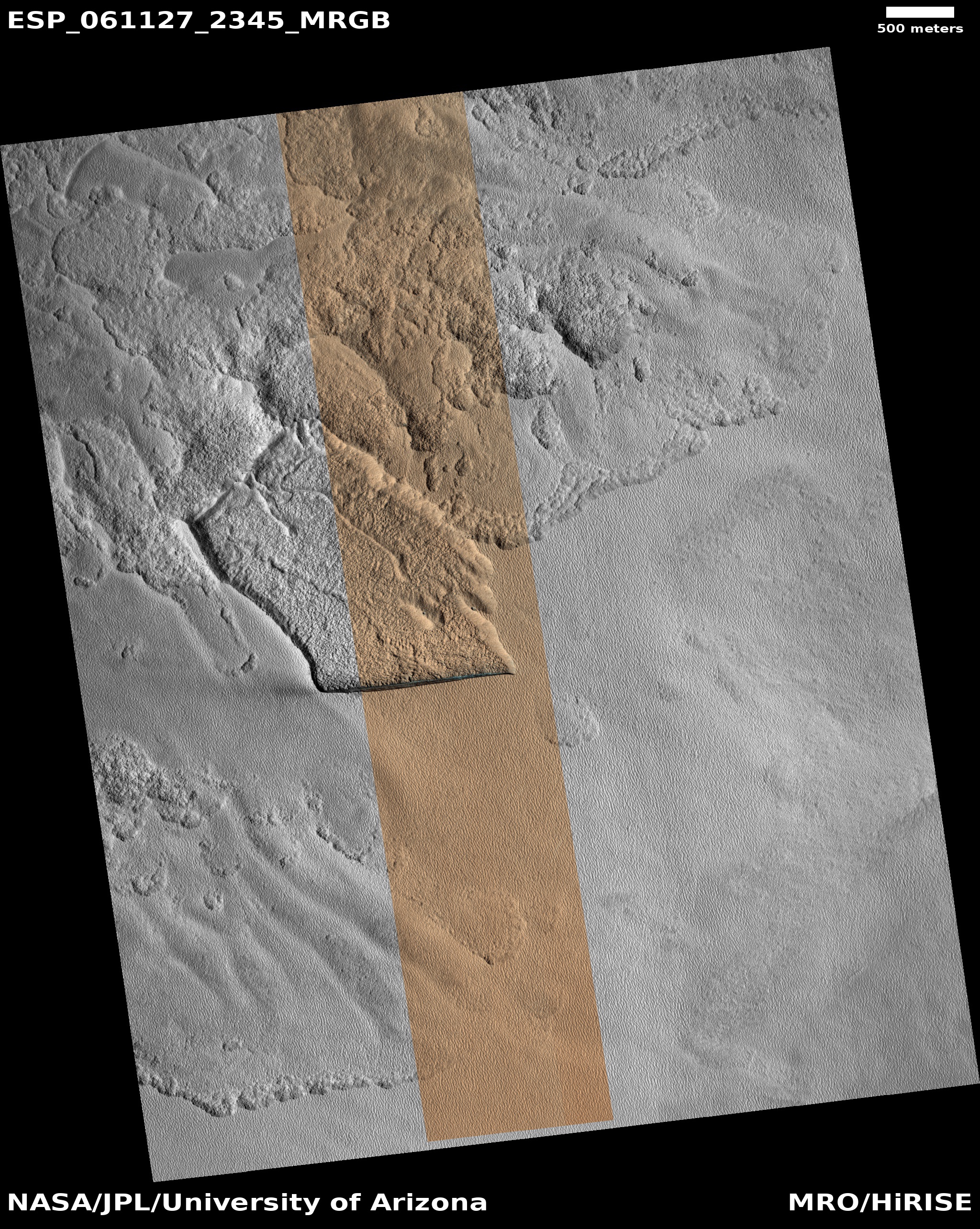
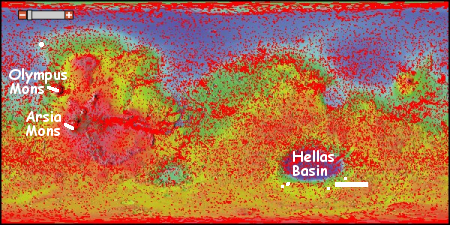
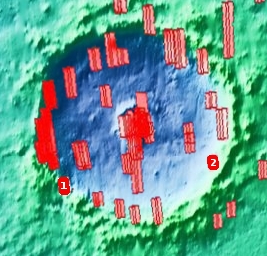
Today’s cool image provides further proof that there is ample near surface ice almost anywhere on Mars once you get above 30 degrees latitude, in either the northern or southern hemispheres. The photo to the right, rotated, cropped, reduced, and annotated to post here, was taken on May 26, 2022 by the high resolution camera on Mars Reconnaissance Orbiter (MRO). It shows the interior slope of an unnamed 15-mile-wide crater that sits inside the much larger 185-mile-wide Newton crater, located in the cratered southern highlands of Mars.

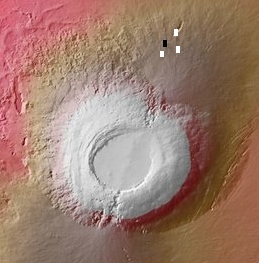
The black cross on the global map of Mars above marks the location of this crater.

The photo was taken as part of the routine monitoring planetary scientists are doing of the gullies that flow down this crater’s interior rim, a monitoring program that goes back to 2007. It is thought that those gullies might be created by seasonal frost, either water ice or dry ice, that causes erosion.

What struck me about the photo however was the glacial features on the floor of the crater. Near the bottom of the interior slope those features look broken up, as if the pressure from above pushed the ice sheets apart. Farther from the interior slope the features more resemble a typical glacial flow, slowly inching downward toward the crater’s low spot. All these glacial features also lend weight to the theory that water ice somehow caused or contributed to the formation of those gullies.

The global map above shows that this crater, while well within the 30 to 60 degrees mid-latitude band where many Martian glaciers are found, is also far from the many regions on Mars that scientists have mapped as having high concentrations of glaciers. And yet, the glacial features are here as well.

Near surface ice will not be found at every spot on Mars. However, once you get above 30 degrees latitude, the evidence increasingly suggests that you won’t have to go far or dig down deep to find it.

0 comments

A detailed description of Rocket Lab’s private Venus mission

Planned insertion of Rocket Lab's probe into Venus's atmosphere
Click for full figure.

Capitalism in space: In partnership with scientists at MIT, the Planetary Science Institute, and others, Rocket Lab engineers this week published a detailed description of the company’s planned privately funded mission to Venus, presently targeting a launch in May 2023.

From the paper’s abstract:

The Rocket Lab mission to Venus is a small direct entry probe planned for baseline launch in May 2023 with accommodation for a single ~1 kg instrument. A backup launch window is available in January 2025. The probe mission will spend about 5 min in the Venus cloud layers at 48–60 km altitude above the surface and collect in situ measurements. We have chosen a low-mass, low-cost autofluorescing nephelometer to search for organic molecules in the cloud particles and constrain the particle composition.

The figure above is figure 6 from the paper. It shows the probe’s planned path through Venus’s atmosphere. If the mission launches in May ’23 the probe would enter the atmosphere in October ’23.

4 comments

Samples from Ryugu prove the truly delicate and long-lived nature of the rubble-pile asteroid

Two new studies of samples brought back from the rubble-pile asteroid Ryugu by the Japanese probe Hayabusa-2 have found that the asteroid not only was never heated above 86 degrees Fahrenheit, it also contained dust grains older than the solar system itself.

The evidence from the first study, completed by Japanese scientists, suggested that:

  • 1.Asteroid Ryugu accreted some components that originated in the outer Solar System and contained abundant water and organics. The asteroid then traveled to the inner Solar System.
  • 2.Organics associated with coarse-grained phyllosilicates may serve as one of the potential sources of water and organics to the Earth.

The second study, using samples provided to American scientists, found two tiny dust grains that must have come from the material that existed before the formation of our solar system.

The team detected all the previously known types of presolar grains—including one surprise, a silicate that is easily destroyed by chemical processing that is expected to have occurred on the asteroid’s parent body. It was found in a less-chemically-altered fragment that likely shielded it from such activity.

This is not the first discovery of presolar grains, but their delicate existence in Ryugu confirms the conclusions of the first study, that Ryugu had to have formed in the outer solar system and then migrated inward over eons.

The second study also reviewed the make-up of the sample and concluded that Ryugu appears to most closely match the family of carbonaceous Ivuna-type (CI) chondrites, thought to be among the most primitive asteroids known, of which very few have been studied because of they rarely survive the journey through the Earth’s atmosphere.

1 comment

Astrobotic makes bid to buy assets of bankrupt Masten

Capitalism in space: Astrobotic, a startup focused on building lunar and planetary unmanned landers, has now made a formal bid to buy the remaining assets of Masten Space Systems, which had also been a startup focused on planetary missions but recently went bankrupt.

In a filing with the U.S. Bankruptcy Court for Delaware Aug. 14, Masten said it received a “stalking horse” bid of $4.2 million for Masten’s assets, including a SpaceX launch credit worth $14 million, from Astrobotic. The agreement, in effect, sets a minimum price for the sale of those assets but does not prevent Masten from seeking higher bids through an auction process that runs through early September.

The agreement appears to supersede an earlier agreement between Masten and a third lunar lander company, Intuitive Machines, included in Masten’s Chapter 11 filing July 28. That agreement covered the SpaceX launch credits alone and Masten did not disclose the value of it in its original filing.

Masten’s long term specialty has been vertical take-off and landing, something it has successfully done for the last several years on suborbital flights. This technology would be of great value to both Astrobotic and Intuitive Machines in developing their own first lunar landers.

1 comment

SLS arrives at launchpad

The Space Launch System rocket (SLS) that will fly on NASA’s first test launch of this rocket on August 29, 2022 has finally arrived at its launchpad, seven years late and about $20 billion overbudget.

In the coming days, engineers and technicians will configure systems at the pad for launch, which is currently targeted for no earlier than Aug. 29 at 8:33 a.m. (two hour launch window). Teams have worked to refine operations and procedures and have incorporated lessons learned from the wet dress rehearsal test campaign and have updated the launch timeline accordingly.

The rollout from the Vehicle Assembly Building took ten hours.

2 comments

InSight’s power status continues to hold steady on Mars

InSight power status through August 14, 2022

According to a new status update posted today by the science team, the power status for the Mars InSight lander continues to hold steady.

The graph to the right adds the new data, showing that the daily watt hours of power produced each day continues to hold at 400, while the dust in the atmosphere continues to drop towards its normal level of between 0.6 and 0.7 tau during the non-dust seasons.

These new numbers appear to be generally good news. Even though the dust continues to settle out of the atmosphere, it does not appear to be adding dust on the solar panels that would reduce their capability to generate power. Though the science team had predicted that the power levels would cause the mission to end sometime in August, at 400 watts per hour InSight has apparently continued to generate enough electricity to keep its seismometer running for at least another week.

0 comments
1 449 450 451 452 453 1,328