Spaceplane startup flies small-scale prototype for the 1st time using new rocket engine

The startup Dawn Aerospace, based in New Zealand, has now successfully flown a small-scale prototype of its proposed spaceplane using for the first time the company’s Aurora rocket engine.

Mk-II Aurora, a scaled down version of the spaceplane Dawn is developing for commercial operations, took to the skies March 29, 30 and 31 from New Zealand’s Gentanner Aerodrome. The initial test campaign validated key flight systems and demonstrated the benefit of rapid reusability, Dawn CEO Stefan Powell told SpaceNews.

During the first flight, the Mk-II Aurora consumed more fuel than anticipated due to a leak in the propellant system. The next day, Dawn engineers removed the Mk-II Aurora engine, took out the oxidizer tank and found the leak.

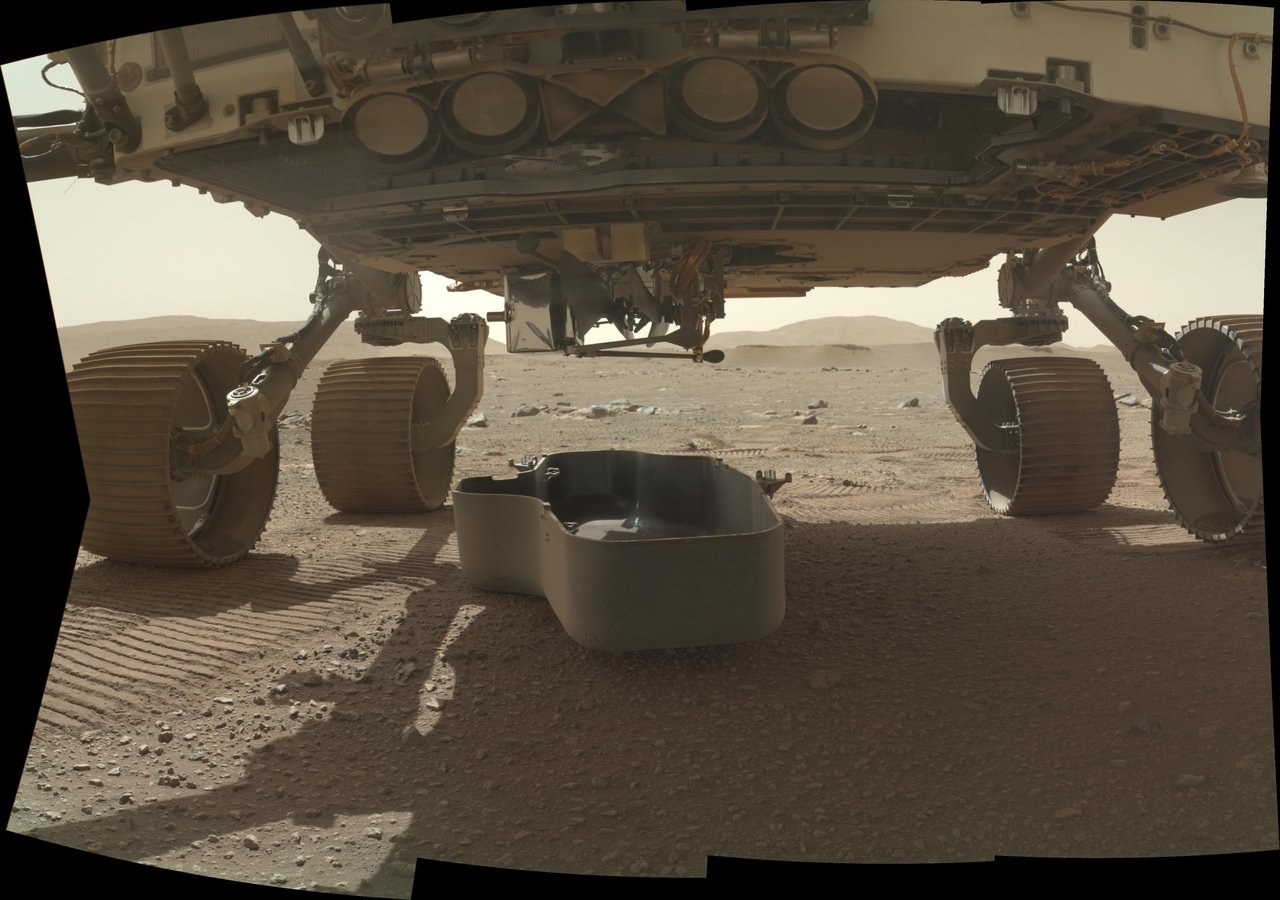
These rocket-powered test flights are a follow-up of an earlier test program in 2021 using jet engines. You can get a sense of the scale of the prototype from a picture at this article.

The company plans to fly this prototype to as high as twelve miles later this year before moving on to a larger test version. Eventually it hopes to develop a two-stage orbital system. The details however remain vague. The 2021 release suggested it was building a two-stage-to orbit version that will take off from a runway and then launch small satellites into orbit. These new stories suggest it are presently targeting the suborbital unmanned research market, with the eventual ability to do frequent flights to 70 miles altitude. Launching orbital satellites is presently only a distant goal.

0 comments

Genesis cover

On Christmas Eve 1968 three Americans became the first humans to visit another world. What they did to celebrate was unexpected and profound, and will be remembered throughout all human history. Genesis: the Story of Apollo 8, Robert Zimmerman's classic history of humanity's first journey to another world, tells that story, and it is now available as both an ebook and an audiobook, both with a foreword by Valerie Anders and a new introduction by Robert Zimmerman.

The print edition can be purchased at Amazon or any other book seller. If you want an autographed copy the price is $60 for the hardback and $45 for the paperback, plus $8 shipping for each. Go here for purchasing details. The ebook is available everywhere for $5.99 (before discount) at amazon, or direct from my ebook publisher, ebookit. If you buy it from ebookit you don't support the big tech companies and the author gets a bigger cut much sooner.


The audiobook is also available at all these vendors, and is also free with a 30-day trial membership to Audible.
 

"Not simply about one mission, [Genesis] is also the history of America's quest for the moon... Zimmerman has done a masterful job of tying disparate events together into a solid account of one of America's greatest human triumphs."--San Antonio Express-News

April 5, 2023 Quick space links

Courtesy of BtB’s stringer Jay.


  • Tianzhou freighter will fly in formation with China’s Tiangong-3 space station
  • The plan is to periodically redock the freighter to the station “when inventories stored inside are needed.” Jay wonders whether this is a test of the similar formation flying that will be required when China’s space telescope arrives next year to orbit near the station for periodic maintenance and repair. I think he is correct.

3 comments

Conscious Choice cover

Now available in hardback and paperback as well as ebook!

From the press release: In this ground-breaking new history of early America, historian Robert Zimmerman not only exposes the lie behind The New York Times 1619 Project that falsely claims slavery is central to the history of the United States, he also provides profound lessons about the nature of human societies, lessons important for Americans today as well as for all future settlers on Mars and elsewhere in space.

 
Conscious Choice: The origins of slavery in America and why it matters today and for our future in outer space, is a riveting page-turning story that documents how slavery slowly became pervasive in the southern British colonies of North America, colonies founded by a people and culture that not only did not allow slavery but in every way were hostile to the practice.  
Conscious Choice does more however. In telling the tragic history of the Virginia colony and the rise of slavery there, Zimmerman lays out the proper path for creating healthy societies in places like the Moon and Mars.


“Zimmerman’s ground-breaking history provides every future generation the basic framework for establishing new societies on other worlds. We would be wise to heed what he says.” —Robert Zubrin, founder of the Mars Society.


All editions are available at Amazon, Barnes & Noble, and all book vendors, with the ebook priced at $5.99 before discount. All editions can also be purchased direct from the ebook publisher, ebookit, in which case you don't support the big tech companies and the author gets a bigger cut much sooner.


Autographed printed copies are also available at discount directly from the author (hardback $29.95; paperback $14.95; Shipping cost for either: $6.00). Just send an email to zimmerman @ nasw dot org.

Pushback: Republicans move to expel Democrats who gave aid to rioters in Tennessee statehouse

Riot in Tennessee Statehouse
L to R, Gloria Johnson, Justin Jones and Justin Pearson stand at
the podium, using a bullhorn to lead protester chants.

Bring a gun to a knife fight: Wasting no time following the riot by protesters that invaded the Tennessee statehouse on March 30, 2023, Republican state legislators have removed from all committees the Democratic Party legislators who gave aid to rioters and are now moving to have them expelled from office.

Resolutions have been filed against Reps. Gloria Johnson, Justin Jones and Justin Pearson after they led chants from the House floor with supporters in the gallery last Thursday. The resolution declared that the three had participated in “disorderly behavior” and “did knowingly and intentionally bring disorder and dishonor to the House of Representatives.”

Republican Reps. Bud Hulsey, Gino Bulso, and Andrew Farmer filed the resolutions. They successfully requested Monday that the House expedite the process and vote on the resolutions Thursday.

Not surprisingly, the three legislators threatened with expulsion claimed they did nothing wrong, even though all three shared a bullhorn in the chamber (as shown in the picture above), leading chants for the demonstrators. Justin Pearson proudly touted what he did in a tweet:
» Read more

3 comments

Exploring the cratered southern highlands of Mars, part 1

Overview map of southern cratered highlands of Mars

Glacial filled crater
Click for original image.

Today and for the next three days the cool images that I will post from Mars will explore a region that I have not covered very much in depth, the cratered southern highlands between the giant basins Argyre and Hellas. The map above is an overview of this 7,000-mile-long region, all of which is inside the 30 to 60 degree south latitude band where scientists have found much evidence of buried glaciers. In this region the bulk of that evidence is most obvious inside craters.

The picture to the right, cropped, reduced, and sharpened to post here, was taken on December 21, 2022 by the high resolution camera on Mars Reconnaissance Orbiter (MRO), and shows a typical example of the kind of glacial feature found. The white cross on the map marks its location, west of the Hellespontus Mountains that form the western rim of Hellas Basin.

Scientists have dubbed this feature concentric crater fill, a purposely vague term because — though it looks like glacial fill — until there is data to confirm it the scientists would quite properly rather not commit themselves. The concentric rings suggest multiple layers, each of which likely marks a different climate cycle in Mars’ geological history.

In this case the glacier features also appear to cover the entire plain surrounding the crater as well as its rim. The small crater to the west is similar, and both give the appearance that the ice sheet that covers them came after the impact, draping itself over everything, with the craters only visible because the ice sheet sags within their interiors.

More crazy features from the cratered highlands to come.

0 comments

Leaving Earth cover

Leaving Earth: Space Stations, Rival Superpowers, and the Quest for Interplanetary Travel, can be purchased as an ebook everywhere for only $3.99 (before discount) at amazon, Barnes & Noble, all ebook vendors, or direct from my ebook publisher, ebookit.

If you buy it from ebookit you don't support the big oppressive tech companies and I get a bigger cut much sooner.


Winner of the 2003 Eugene M. Emme Award of the American Astronautical Society.

 
"Leaving Earth is one of the best and certainly the most comprehensive summary of our drive into space that I have ever read. It will be invaluable to future scholars because it will tell them how the next chapter of human history opened." -- Arthur C. Clarke

First binary quasar found

Double quasar as seen by the Hubble Space Telescope

Using a suite of telescopes on the ground and in orbit, astronomers have found the first galaxy made up of two quasars, supermassive black holes that are very active in eating material from around them.

ESA’s (European Space Agency) Gaia space observatory first detected the unresolved double quasar, capturing images that indicate two closely aligned beacons of light in the young universe. Chen and his team then used NASA’s Hubble Space Telescope to verify the points of light were in fact coming from a pair of supermassive black holes.

Multi-wavelength observations followed; using Keck Observatory’s second generation Near-Infrared Camera (NIRC2) paired with its adaptive optics system, as well as Gemini North, NASA’s Chandra X-ray Observatory, and the Very Large Array network of radio telescopes in New Mexico, the researchers confirmed the double quasar was not two images of the same quasar created by gravitational lensing.

The two quasars are estimated to be only about 10,000 light years apart. Scientists estimate that this galaxy is about ten billion light years away, and exists in this state only about three billion years after the Big Bang.

0 comments

Shetland Spaceport now faces same regulatory hurdles that destroyed Virgin Orbit

The new Shetland spaceport, Saxavord, is right now attempting to get launch approvals from United Kingdom’s Civil Aviation Authority (CAA), the same agency that dithered for six months approving a Virgin Orbit launch, thus causing the bankruptcy of that company.

According to Saxavord’s CEO, the spaceport has two launches aiming to launch before the end of this year, assuming the CAA can get its act together and give its approval. This quote however is worrisom:

The Saxavord spaceport says it is “still on track” to receive its necessary licences from the sector’s regulator before the summer. This relates to applications to the Civil Aviation Authority for range and spaceport licences.

Meanwhile SaxaVord CEO Frank Strang said the company is also on track for two rocket launches this year – “albeit they have moved slightly to the right”. [emphasis mine]

The delays could be coming from the rocket companies themselves. One of those companies is the German startup, Rocket Factory Augsburg, which has leased exclusive use of one launchsite. The other is the American startup ABL, which has had one launch attempt from the U.S. that failed.

Based on the CAA’s track record however the delays are just as likely coming from it. The CAA began this licensing process in November 2022, and is not done yet six months later.

2 comments

Scientists try to model what would happen if Ryugu hit Earth

Ryugu's northen hemisphere
Ryugu’s northen hemisphere. The arrow marks the spot Hayabusa-2
gathered samples

Scientists, using the data and rock samples gathered by the Japanese probe Hayabusa-2, have attempted to predict what what would happen if the rubble-pile asteroid Ryugu hit the Earth.

Without diversion intervention, Tanaka explained, if the Ryugu asteroid was heading to Earth and entered the planet’s atmosphere at an angle of 45 degrees and at a speed of around 38,000 miles per hour (17 kilometers per second), the rubble pile asteroid would break up at an altitude of around 25 to 21 miles (40 to 35 km) over the surface of the planet.

This would result in an “airburst” similar to that seen over Russia in February 2013 when the Chelyabinsk meteor erupted at an altitude of around 19 miles (30 kilometers) over Earth. The result of the Chelyabinsk blast was a bright flash of light and an atmospheric blast equivalent to the detonation of 400–500 kilotons of TNT. This is as much as 33 times the energy released by the atomic bomb that devastated Hiroshima at the end of the Second World War.

The Chelyabinsk meteor caused about 1,500 injuries, mostly from people injured by glass thrown out by breaking windows when it suddenly and unexpectedly exploded during re-entry. With Ryugu this would not be a surprise, so these injuries could be reduced, though not eliminated. The damage and injuries from pieces that survived the breakup and hit the ground remains unknown because scientists don’t know how much of the asteroid would survive the break up.

Ryugu of course poses no threat, because it is not on a collision course with Earth. Whether an asteroid like Ryugu could be diverted however remains unknown, since any such diversion must not cause the asteroid to break apart as well.

7 comments

Judges expand hiring boycott of elite law colleges that allow violent protests and censorship

Judge James Ho
Judge James Ho

Two federal judges have now expanded their hiring boycott to include Stanford Law School along with Yale Law School because the administrators at both schools have refused to punish violent student protesters who acted to silence others.

The judges, James C. Ho of the U.S. Court of Appeals for the Fifth Circuit and Elizabeth Branch, a United States circuit judge of the United States Court of Appeals for the Eleventh Circuit, will hire no graduates from these schools, thus reducing the whole reason for going there. Law students graduate hoping this diploma will get them jobs working for important judges, an early step to becoming a judge themselves.

The question that Ho and Branch raise, however, is whether any judge would want to hire any students from these particular schools. As Judge Ho noted in a speech on April 1st at the annual meeting of the Texas Review of Law & Politics.
» Read more

3 comments

The outermost edge of Mars’ north polar icecap

The outermost edge of Mars' north polar icecap
Click for original image.

Cool image time! The picture to the right, rotated, cropped, reduced, and sharpened to post here, was taken on February 4, 2023 by the high resolution camera on Mars Reconnaissance Orbiter (MRO). It shows the terminating cliffs of the north pole ice cap of Mars, dubbed Rupes Tenius on this side of the icecap.

At this point the elevation difference of the icecap’s edge from top to bottom is not significant, only about 1,500 feet or so, though this is a very rough estimate. As with all other images of the ice cape’s edge, there are many many layers visible, all indicating a different cycle in the climate history of Mars as its rotational tilt swings from about 11 degrees to 60 degrees over eons.

Moreover, at this point there is likely not that much difference between the terrain on top and the terrain below. Both will be mixed ice and dust and coarse rocks, though the percentages will be shifting towards less ice as we go down.
» Read more

1 comment
1 590 591 592 593 594 2,927