Lozenge-shaped hole in Martian crater

Hole in crater floor
Click for full image.

Cool image time! The photo to the right, rotated, cropped, reduced, and enhanced to post here, was taken on June 7, 2021 by the high resolution camera on Mars Reconnaissance Orbiter (MRO).

The left image shows what the scientists have dubbed a “lozenge-shaped depression” in the middle of an unnamed 60-mile-wide crater in the southern cratered highlands of Mars. The right image shows the same exact depression, but I have brightened the photo in order to see the details in the shadowed depression.

Though the image is inconclusive, the bottom of the darkest spot in that depression cannot be seen, suggesting it could be an entrance into a larger void below.

Even if there is no voids below, why is this depression here? What caused it? The wider view of MRO’s context camera below might give us a hint.
» Read more

1 comment

Watching the first all-private commercial manned orbital spaceflight

Liberty and freedom enlightening the world
Liberty and freedom enlightening not only the world,
but the entire solar system.

Bumped: I will be out on a cave trip for most of today, September 15, 2021, so I’ve moved this post to the top of the page, as it clearly will be the most important space news today. I should be back before launch, but if not, enjoy!

Original post:
————————
Capitalism in space: Let’s begin by underlining one fundamental fact about the Inspiration4 manned Dragon orbital space mission, targeted for a September 15th launch tomorrow evening, that makes it different from every other orbital space mission ever flown since Yuri Gagarin completed the first manned mission in 1961:

The government has nothing to do with it.

The launch facilities, the rocket, the capsule, the drone ship where the rocket’s first stage will land, and the entire recovery operation in the ocean are all controlled and owned by SpaceX. The passengers are private citizens, one of whom purchased the flight directly from SpaceX.

It is was organized by 38-year-old billionaire and entrepreneur Jared Isaacman, who is also a highly-capable jet warbird aircraft pilot. When he found out from SpaceX he could be the first to fly an all-commercial mission in Crew Dragon, he fronted $100 million to $200 million required and partnered with St Jude Children’s Research Hospital in a campaign to give away two of the missions seats and raise $200 Million for children’s cancer research.

Every person you will see in mission control, at the launchpad, and on the recovery ships are also private citizens, working for a private company that just happens to be in the business of flying rockets, spaceships, and humans into space. None are government employees, and I would suspect that most don’t want to be.

Not only is this mission privately run, its goals are completely different. While all past space launches were flown for purposes decided by the government, this mission’s goals have been determined by the free participants themselves. SpaceX is making money on the flight, Isaacman and his passengers are getting the chance to fulfill their long-held personal dream of going into space, and Isaacman is also using this flight to raise money for cancer research, a personal passion of his.

The flight itself will be unusual. It will be the first manned mission in more than a decade, since the last shuttle repair mission to the Hubble Space Telescope, to not go to an orbiting space station. Instead, the capsule will spend three days free-flying in orbit around the Earth. To enhance the flight for the passengers, SpaceX removed the docking port on Resilience (the capsule) and replaced it with a viewing port with large windows.

The orbit itself will in a sense push the envelope, as SpaceX plans to loft the capsule to an altitude of about 370 miles, considerably higher than ISS’s orbit of about 260 miles and about 35 miles higher than the mission to Hubble. In fact, the Inspiration4 crew will be the farthest from the Earth’s surface than any human in decades, possibly going back as far as the Apollo era.

For watching this flight I have embedded SpaceX’s live stream below, which you can also find here. You will also be able to find that stream at SpaceX’s YouTube page, where the company is also airing preflight videos.

This mission illustrates the fundamentals that built the United States of America. Give humans freedom, don’t try to tell them what to do, and they will do astonishing and magnificent things, on their own.
» Read more


31 comments

Russia launches another set of OneWeb satellites

Using its Soyuz-2 rocket Russia today successfully launched another 34 OneWeb satellites, launching from Baikonur, Kazakhstan.

At the time of publication about half the satellites have successfully deployed. The rest should be released within the next hour or so.

The leaders in the 2021 launch race:

31 China
22 SpaceX
15 Russia
4 Northrop Grumman

With this launch Russia has now matched its total launches from last year, with three months still to go and a number of launches in ’21 on its manifest. For Russia’s launch industry, 2021 looks like it will be a good year.

The U.S. continues to lead China 33 to 31 in the national rankings.

2 comments

The layered history of Mars as revealed in Valles Marineris

Layered cliff in Valles Marineris
Click for full image.

Cool image time! The photo to the right, rotated, cropped, and reduced, shows just one tiny cliff face in the gigantic canyon on Mars dubbed Valles Marineris. The photo was taken on June 13, 2021 by the high resolution camera on Mars Reconnaissance Orbiter (MRO).

Like many other similar cliff faces that MRO has photographed and that I have previously highlighted, there are many many layers visible here. In fact, it appears that almost every cliff in this part of Valles Marineris is many layered, suggesting that like the Grand Canyon on Earth, the canyon as it was carved exposed in great detail the long geological history of Mars.

In this part of Mars, each layer probably represents the placementof a new layer of volcanic material, pouring out from the giant volcanoes in the Tharsis Bulge to the west. In addition, overlain on this volcanic record are probably deposits lain down by the atmosphere as Mars underwent its many climate cycles due to the regular shifts in its orbit and rotational tilt.
» Read more

0 comments

Utilizing a commercial lunar probe to reach geosynchronous orbit around the Earth

Capitalism in space: The commercial startup SpaceFlight Inc has purchased payload space on Intuitive Machines’ second lunar landing mission to the Moon late in ’22 in order to test its Sherpa Escape space tug’s ability to use that flight path to place a satellite into geosynchronous orbit around the Earth.

The tug will also carry the payload of another company, GeoJump, which will test in-space fueling technology developed by another company, Orbit Fab.

Sounds complicated, eh? It isn’t when you think about it. When NASA gave up ownership and design of its lunar landers and instead began buying such products from the private sector, it freed up that private sector to sell its spare payload capacity to anyone who wanted it. On this particular flight Intuitive Machines sold that spare capacity to SpaceFlight, which in turn provided GeoJump and Orbit Fab the space tug for getting their experimental payloads to geosynchronous orbit.

This is a win-win for everyone. Not only are two companies (Intuitive Machines and Spaceflight) making money by selling their capabilities to others, two other companies (GeoJump and Orbit Fab) are now able to test their own space innovations at a much lower cost, and much more quickly than had they depended on a government launch from NASA.

2 comments

SpaceX successfully launches another 51 Starlink satellites

Capitalism in space: SpaceX tonight successfully used its Falcon 9 rocket to launch another 51 Starlink satellites into orbit.

At publication, the deployment of the satellites is still about 25 minutes away. [Update: deployment successful.] SpaceX now has about 1,500 working Starlink satellites in orbit.

The Falcon 9’s first stage successfully landed on its drone ship, the tenth flight of this stage, tying the record for the most reuses. Both fairings were also reused. This was also the first Starlink launch from Vandenberg Space Force Base. SpaceX intends to do monthly Starlink launches from Vandenberg for the rest of the year.

The leaders in the 2021 launch race:

31 China
22 SpaceX
14 Russia
4 Northrop Grumman

The U.S. now leads China 33 to 31 in the national rankings.

SpaceX will also launch in two days the first ever entirely private orbital mission to space, whereby it has been hired to carry four private astronauts for three days on the highest orbit since the 2009 last shuttle mission to repair the Hubble Space Telescope.

That flight will inaugurate a schedule of almost monthly private manned commercial missions to orbit, extending into next year and possibly forever. The present schedule:

  • September 15, 2021: SpaceX’s Dragon capsule flies four private citizens on a three day orbital flight
  • October 2021: The Russians will fly two passengers to ISS for 10 days to shoot a movie
  • December 2021: The Russians will fly billionaire Yusaku Maezawa and his assistant to ISS for 12 days
  • cDecember 2021: Space Adventures, using a Dragon capsule, will fly four in orbit for five days
  • January 2022: Axiom, using a Dragon capsule, will fly four tourists to ISS
  • 2022-2024: Three more Axiom tourist flights on Dragon to ISS
  • 2024: Axiom begins launching its own modules to ISS, starting construction of its own private space station
  • c2024: SpaceX’s Starship takes Yusaku Maezawa and several others on a journey around the Moon.
4 comments

An example why scientists think there were catastrophic floods on Mars

Broken mesas on Mars
Click for full image.

Today’s cool image provides a nice illustration why scientists have long assumed that in the distance past there had been catastrophic floods of liquid water on Mars. The photo to the right, rotated, cropped, and reduced to post here, was taken on July 6, 2021 by the high resolution camera on Mars Reconnaissance Orbiter (MRO). It shows an east-west gully cutting between mesas to the north and south.

Because the highest mesas seem to be aligned, this suggests they were once part of the same formation, and something came along to carve that gap and gully between them.

What made the break? The overview map below as usual provides some context, which also provides a possible explanation.
» Read more

4 comments

Another technical problem identified in Virgin Galactic spaceship

Capitalism in space: Virgin Galactic announced late Friday, when few would notice it, that a new technical problem has been identified with its Virgin Galactic spaceship.

In a statement issued late Sept. 10, Virgin Galactic said a third-party supplier, which it did not identify, notified the company of a potential manufacturing defect in a flight control actuation system component. Virgin said it is conducting inspections with the vendor to determine if the suspect component needs to be repaired or replaced.

Because of the inspections, Virgin Galactic said the earliest it would perform the next SpaceShipTwo mission, called Unity 23, is the middle of October. The company had previously stated the mission would take place in late September or early October.

This issue is completely independent from the flight path anomaly that occurred during the July suborbital flight that has caused the FAA to ground Virgin Galactic.

1 comment

Data from Opportunity suggests surface dew periodically appears even in the dry equatorial regions

Using data from the rover Opportunity, scientists now think that the renewal of Martian salt crusts on rock surfaces on the rim of Endeavour Crater could possibly by caused by the appearance of rare thin wetting events, and that such events could have even occurred very recently and be on-going..

The scientists looked at the rate of erosion and renewal of the salt crusts, and found them to be in a steady state. The erosion is slow, taking from 200,000 to 2,000,000 years to remove 1 to 2 millimeters. However, periodically a thin film of water or wetting occurs, not unlike dew on Earth, which quickly acts to renew the crust. As David Mittlefehldt of the Astromaterials Research Office at the Johnson Space Center and the lead author of the paper explained to me,

Taken together, the data leaves open the possibility the salt mobilization has occurred within the last few thousand years. It could be ongoing in the sense that over a period of thousands? or hundreds? of years it might happen again.

In other words, the evidence suggests that every few hundred or thousand years the surface of these rocks gets wet, which results in the placement of a new thin layer of salt crusts.

Mittlefehldt also emphasized to me that these wetting events are rare, and “there is also the case that such an event may never come again because of changing conditions.”

The situation is essentially like on Earth, where in some places hydrologists measure the size of floods by how rare they are. A 1,000 year flood is big, but it happens very rarely. At Endeavour Crater these wetting events are comparably rare, but they do not involve big floods, but a mere moistening of the ground.

The location of Endeavour Crater is about 2 degrees south latitude, so it sits in the dry equatorial regions where no surface or near surface ice has so far been found. However, the cyclic nature of Mars’ orbit and obliquity could have changed this in the past, and could change this again in the future. At this time we simply don’t have enough information to know.

0 comments

On the edge of Mars’ glacier country

Color dry mesas on Mars
Click for full image.

Today’s cool image sits right on the southern edge of Mars’ northern glacier country, at 29 degrees north latitude. The picture to the right, cropped and reduced to post here, was taken of this location on June 4, 2021 by the high resolution camera on Mars Reconnaissance Orbiter (MRO). It shows what appears to be the exposed and scraped bedrock and mesas on the floor of an unnamed 60-mile-wide crater.

That scraped bedrock is quite beautiful, reminiscent of the bare carved mesas and bedrock one sees throughout the southwest of the United States. To hike from that central valley to the top of the bright mesa would be a fine experience, especially because of the suggested change in colors in the color strip.

The overview map below gives more context.
» Read more

0 comments

Sunspot update: Activity declines in August to just above prediction

On September 1st NOAA released its update of its monthly sunspot cycle graph, showing the Sun’s sunspot activity for the past month. That graph is below, annotated to show the previous solar cycle predictions and thus provide context.

In August sunspot activity dropped from July so that it was only slightly above the prediction of NOAA’s panel of solar scientists, as indicated by the red curve. The blank streak at the very end of July ended on August 2nd (a streak of seven days and the longest in years), but was followed during the month by an additional five blank days.

» Read more

5 comments

Facebook and Ray-Ban selling sunglasses able to take pictures also

Your privacy belongs to us! Facebook and Ray-Ban have teamed up to create sunglasses that the wearer can use to discreetly to take pictures of their surroundings.

The Ray-Ban Stories eyewear features two 5-MP front-facing cameras for 2,592 x 1,944-pixel photos or 1,184 x 1,184-pixel videos at 30 frames per second.

A capture button is pushed to snap photo memories of what you see on your stroll through the city on a hot and sunny day, or record 30-second video clips to post online to such platforms as Facebook, Instagram, Twitter and TikTok via a new Facebook View app for iOS and Android. The app also allows content to be edited or enhanced before upload, and saved to the phone’s memory, though the smart glasses do have enough built-in storage for more than 500 photos or 30 video clips. Or users can opt to for hands-free operation via Facebook Assistant voice commands.

The article describes several features that supposedly address the questions of privacy, such as led lights that glow when a picture is taken, but in the end these glasses are essentially a voyeur’s dream.

Without question such products have their legitimate uses, such as by undercover journalists or criminal investigators. To market them to the general public however means that both Facebook and Ray-Ban are willing to ignore concerns of right and wrong and the likelihood that their product will be badly misused for entire immoral reasons. All they care about is profit.

Or maybe the two companies are really developing this product to sell a more secretive version to their allies in the government. One does wonder.

8 comments

Rocket Lab negatively impacted by New Zealand’s Wuhan panic lockdowns

Capitalism in space? Rocket Lab reported this week that not only has its income been slashed because of New Zealand’s draconian lockdowns in fear of COVID-19, the company has had to cut its planned launches for the fourth quarter of 2021 by more than half.

“Operations have experienced disruptions due to some of the most restrictive COVID-19 measures globally, including current stay-at-home orders which prevent launch operations from taking place,” said Peter Beck, chief executive of Rocket Lab, of New Zealand’s current restrictions. “Indications are that the current lockdown restrictions may ease by the end of September with the delta cases dropping in New Zealand, but this, of course, is subject to change.”

Those restrictions have delayed plans by Rocket Lab to perform three dedicated Electron launches of BlackSky satellites that had been scheduled to begin in late August. It could also affect the launch of NASA’s CAPSTONE lunar cubesat, which had been scheduled for no earlier than late October on another Electron from Launch Complex 1 in New Zealand.

Adam Spice, chief financial officer, said that the company has five Electron launches manifested for the fourth quarter of the year, but is assuming only two launches in its financial projections. While those five launches would produce more than $40 million in revenue, the company is forecasting only $17-20 million in revenue for the fourth quarter.

Meanwhile, the company has not been able to launch from its new launchpad at Wallops Island in Virginia because NASA — after almost two years! — has apparently still not approved the company’s flight termination system, used to destroy a rocket that has gone out of control. NASA’s refusal to approve this system is very puzzling and very suspicious, especially because Rocket Lab has launched 21 times with it from New Zealand, and even used it several times to successfully destroy failing rockets.

2 comments

Smoke and fire alarms in Russian ISS module Zvezda

In the middle of the night prior to a successful spacewalk by two Russian astronauts to begin the outfitting of the new Nauka module on ISS, fire alarms sounded in the Zvezda module, and both astronauts smelled smoke.

The incident, which the Russian space agency Roscosmos said happened at 1:55 a.m. GMT (9:55 p.m. EDT Wednesday) ahead of a scheduled spacewalk, is the latest in a string of problems to spur safety concerns over conditions on the Russian segment. “A smoke detector was triggered in the Zvezda service module of the Russian segment of the International Space Station during automatic battery charging, and an alarm went off,” Roscosmos said in a statement.

French astronaut Thomas Pesquet said “the smell of burning plastic or electronic equipment” wafted to the US segment of the station, Russian state news agency RIA Novosti reported, citing a NASA broadcast.

The Russian crew turned on a filter and, after the air was cleaned up, the astronauts went back to sleep, Roscosmos said.

It appears that because all the systems on the Russia portion of ISS continued to function normally, the Russians did no investigation. Or if they did, they have not revealed what they found. Nor has NASA provided any information.

In their history the Russians have experienced a number of fires on their various space stations. Some burned out without consequence (as it appears this recent one did). Others required aggressive action to bring them under control, as occurred on Mir several times. This history has apparently made the Russians somewhat nonchalant about such things.

That the issue was in Zvezda, however, which has a serious structural stress fracture problem in its hull, should be cause for a greater concern. Is this burn event related to the stress fractures? If I was an astronaut on board ISS I would surely want to know.

7 comments

Launches by China and Russia

Both Russia and China successfully completed launches yesterday. Russia launched a military reconnaissance satellite using its Soyuz-2 rocket. China in turn launched a communications satellite using its Long March 3B rocket.

The leaders in the 2021 launch race:

31 China
21 SpaceX
14 Russia
4 Northrop Grumman

The U.S. still leads China 32 to 31 in the national rankings.

1 comment

Roscosmos declares film crew fit for launch to ISS

Capitalism in space: Roscosmos last week announced that the actress and director who plan to fly to ISS in October to film scenes for a science fiction movie are fit to fly.

Director Klim Shipenko and actor Yulia Peresild got the thumbs-up after a meeting of the Chief Medical Commission at the Yuri Gagarin Cosmonaut Training Center near Moscow, Russia’s federal space agency Roscosmos announced last week.

Cosmonaut Anton Shkaplerov, who is scheduled to launch toward the orbiting lab with Shipenko and Peresild aboard a Russian Soyuz spacecraft on Oct. 5, also got final medical clearance. So did the backups for the mission: cosmonaut Oleg Artemyev, director Alexey Dudin and actor Alena Mordovina.

The movie script itself, about an astronaut who gets a heart attack while on a spacewalk and then has to have surgery in space before returning to Earth, actually sounds quite good and — most refreshing — well grounded in reality. American space films tend to go in absurd directions, often because the filmmakers are ignorant and have no interest in learning anything about the subject they are writing about.

So far, the schedule of upcoming space tourist flights appears on track to happen, as announced:

  • September 15, 2021: SpaceX’s Dragon capsule flies four private citizens on a three day orbital flight
  • October 2021: The Russians will fly two passengers to ISS for 10 days to shoot a movie
  • December 2021: The Russians will fly billionaire Yusaku Maezawa and his assistant to ISS for 12 days
  • cDecember 2021: Space Adventures, using a Dragon capsule, will fly four in orbit for five days
  • January 2022: Axiom, using a Dragon capsule, will fly four tourists to ISS
  • 2022-2024: Three more Axiom tourist flights on Dragon to ISS
  • 2024: Axiom begins launching its own modules to ISS, starting construction of its own private space station
  • c2024: SpaceX’s Starship takes Yusaku Maezawa and several others on a journey around the Moon.
2 comments

The boom in commercial space continues

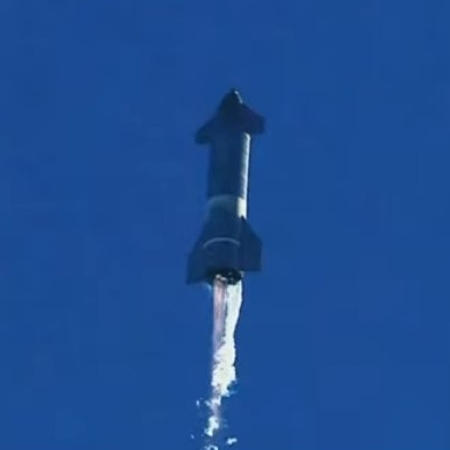
Starship on an early test flight
Modern rocketry soaring under freedom

Capitalism in space: In the last two days there have been so many stories about different space companies winning new contracts I think it is important to illustrate this in one essay, rather than in multiple posts. Below is the list:

The last two stories are possibly the most significant, because both show that the shift in space from government-built to privately-built, as I advocated in my 2017 policy paper, Capitalism in Space, is spreading to other countries. » Read more

13 comments

Glaciers and mesas on Mars

Overview map

Cool image time! Today we return to glacier country on Mars, that band of mensae mesas and glaciers that stretches more than 2,000 miles in the northern mid-latitudes, as shown on the overview map above.

No rovers or landers have yet visited this region, nor are any planned. To the west just beyond the map’s left edge is the planned landing site of Europe’s Franklin rover. To the east and south and just beyond the map’s right edge is where America’s Perseverance rover presently travels in Jezero Crater.

Our journey today begins from afar, and will steadily zoom into the area of the red cross and a most intriguing feature seen in a recent picture taken by the high resolution camera on Mars Reconnaissance Orbiter (MRO).

Before we look at that high resolution image, it is better to view the area using MRO’s context camera, as what it shows helps make sense of the features in the close-up.
» Read more

4 comments

NASA now targets December 18, 2021 for launch of Webb

NASA today announced that it and the European Space Agency have scheduled the Ariane 5 launch of the James Webb Space Telescope from French Guiana for December 18, 2021.

The agency set the new target launch date in coordination with Arianespace after Webb recently and successfully completed its rigorous testing regimen – a major turning point for the mission. The new date also follows Arianespace successfully launching an Ariane 5 rocket in late July and scheduling a launch that will precede Webb. The July launch was the first for an Ariane 5 since August 2020.

Launching before the end of ’21 will allow NASA to claim that Webb is only be ten years behind schedule, not eleven. The cost overruns however remain astronomical (no pun intended). Initially budgeted at $500 million, Webb is now estimated to have cost $10 billion.

Once launched the telescope will take about six months to slowly move to its Lagrange point location about a million miles from the Earth, in the Earth’s shadow. During that time it will also be steadily deploying its many segmented mirror for infrared observations (an important detail as Webb is not a replacement for Hubble, which does most of its observations in the optical wavelengths).

Should deployment and placement go as planned, Webb will undoubtedly do ground-breaking astronomy, especially in the field of deep space cosmology. If anything should go wrong, any repair mission will take at a minimum five years to mount, if ever.

Keep those fingers and toes crossed!

6 comments

Update on status of first orbital Starship/Superheavy

Capitalism in space: The first planned orbital Superheavy booster, prototype #4, has been moved back to the orbital launch site, this time with all of its 29 engines fully installed.

It appears SpaceX engineers are about to begin an extensive test campaign of this booster and its engines. They need to test the fueling of all 29 engines. They need to test fire the engines as a unit. And they need to do a full static fire of them all to see if they will work together as planned.

All these tests, which based on SpaceX’s past pace, will likely take about three to four weeks, which means that the orbital test flight cannot occurr before the end of September, as previously guessed. More likely they will not be ready to fly before the end of October, at the soonest.

That schedule is also impacted by the FAA’s bureaucracy, which still needs to approve the environmental assessment required before any Starship orbital flight. That approval process has been ongoing, but could still take several more months, especially if the effort by some fearful environmentalists to stop the flight gains political momentum.

11 comments
1 319 320 321 322 323 820