Crazy layers inside a Martian crater

Crazy layers in a Martian Crater
Click for original image.

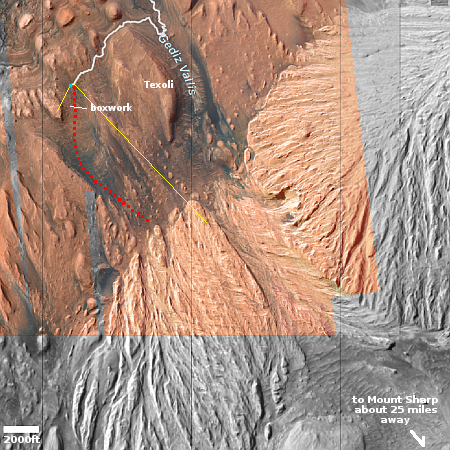
Cool image time! The picture to the right, cropped, reduced, and sharpened to post here, was taken on September 30, 2025 by the high resolution camera on Mars Reconnaissance Orbiter (MRO).

The scientists label this image with the term “layers”, but to my eye this is kind of an understatement. The geology in the top half of this picture is more than simply layers, it is an example of that unique Martian geological feature dubbed “brain terrain”, but on steroids.

No one yet knows what causes brain terrain, though scientists think it is related to the sublimation of near surface ice. Normally the tubelike formations are much smaller, only ten to thirty feet long, not hundreds of feet as we see here.

In this case the location of these features makes their formation even more puzzling, as there is no near surface ice found here.
» Read more

1 comment

This typical cliff on Mars just happens to match the walls of the Grand Canyon

A typical Martian cliff, comparable to the Grand Canyon
Click for original image.

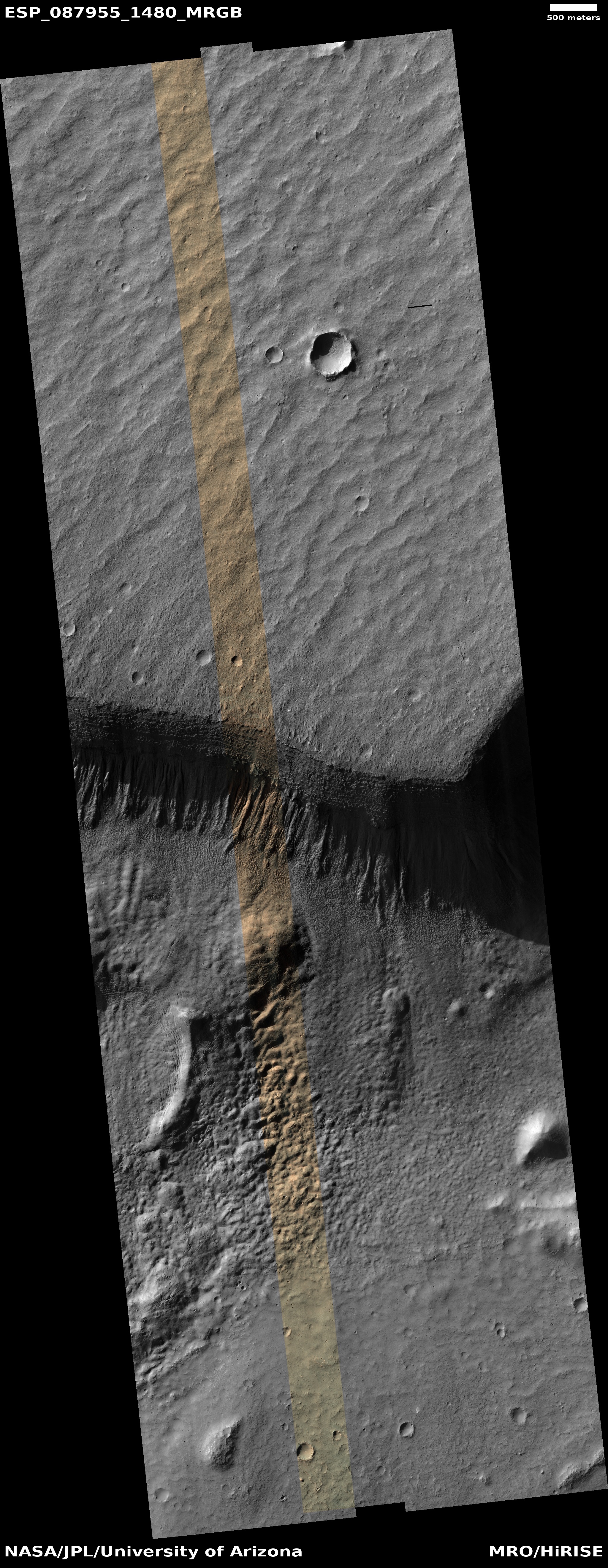
Cool image time! The picture to the right, cropped, reduced, and sharpened to post here, was taken on August 23, 2025 by the high resolution camera on Mars Reconnaissance Orbiter (MRO).

The label the science team gave this image, “remnant fan”, suggests the focus of research here is the fingerlike ridges on the floor of the canyon, emanating out from the cliff. These appear to be the remains of an ancient mass-wasting event, similar to an avalanche but different in that instead of it being a pile of surface material falling down the cliff, the cliff itself breaks free and slumps downward. In this case the event was so long ago that most of the slumped material has eroded away, leaving only those ridges, likely resistant to erosion because of the impact of the material from above.

If you look at the top of cliff, you can see evidence that another mass wasting event is pending. Note how the plateau floor near the cliff has dropped about 100 feet. This drop suggests that this part of the cliff has started to slump and break away from the plateau.
» Read more

2 comments

Someone is apparently considering putting a helicopter on Starship when it goes to Mars

Potential Starship helicopter location

In my regular trolling through the images sent down from Mars Reconnaissance Orbiter (MRO), I sometimes come across things that imply truly exciting future missions. That happened when in 2019 I found a bunch of photos each labeled as a “candidate landing site for SpaceX Starship”. Without fanfare SpaceX had begun researching locations for where it intended to land Starship on Mars, in the northern lowland plains, research that it later solidified considerably.

Similarly, I have found MRO images in 2022 suggesting scientists were thinking of running a helicopter mission inside Valles Marineris, the largest canyon in the solar system. Another image in 2024 suggested that a helicopter mission might go to another region in Mars’s southern cratered highlands.

The image to the right, cropped, reduced, and sharpened to post here, is another new example of a potential Martian helicopter mission. It was taken on August 19, 2025 and is labeled provocatively “Characterize Possible Rotorcraft Landing Site.” Unlike the previous two proposed helicopter locations, however — which appeared to be aimed at uncertain NASA funding — this image’s location suggests it is far more certain, and might launch far sooner than you can imagine.
» Read more

11 comments

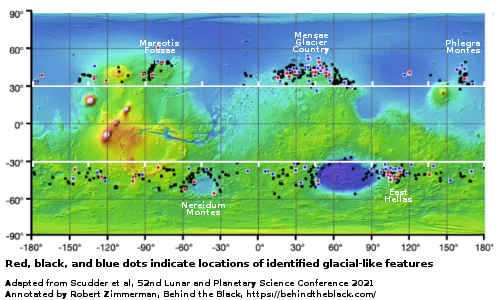
New orbital radar data confirms large ice deposits in Phelgra Mountains near Starship landing zone

Overview map

A new paper published this week used the SHARAD radar instrument on Mars Reconnaissance Orbiter (MRO) to confirm that the glacial features found everywhere within the Phlegra Mountains where one of Starship’s four prime landing sites is located contains significant quantities of very accessible pure water ice.

The red dots on the map to the right mark two of those prime landing sites, with one inside the Phelgra Mountains in a region directly studied by this paper. The numbered black dots were other images taken by MRO for SpaceX, reported here in 2020. From the paper’s abstract:

We examined mid-latitude landforms on Mars that resemble Earth’s debris-covered glaciers in a region called Phlegra Montes. Our study site is a 1,400-km-long mountain range in the northern hemisphere of Mars that houses numerous debris-covered glaciers also called Viscous Flow Features (VFFs). Using data from the SHallow Radar (SHARAD) instrument, we detected eight new glaciers and estimated the thickness and volume of ice within them as well as the thickness of the debris on top insulating the ice. Our findings suggest that the region holds around 1.2 trillion cubic meters of ice below the surface. We detected two notable types of glaciers for the first time on Mars using SHARAD: (a) a glacier system with terrace-like steps and (b) a perched “hanging” glacier on the eastern side of the mountains

The study also found that the layer of dust and debris that covers these glaciers and protects them from sublimating away ranges from 6 to 25 feet in thickness, well within reach of any future colonists.

This study only confirms what all the orbital data for the past two decades has suggested, that Mars is an icy world like Antarctica, not a dry desert like the Sahara. As the researchers themselves note in the very first line of their paper, “Mars is a frozen world where water ice is abundant above, at, and under the surface.”

Their research also confirms that SpaceX has made a good choice for its Starship prime landing sites. Though it will likely not make its first landing at site #3, because it is inside the mountains and thus more risky, expect a landing there not long thereafter.

7 comments

The alien landscape of Mars’ north polar ice cap

The strange terrain of Mars' north polar ice cap
Click for original image.

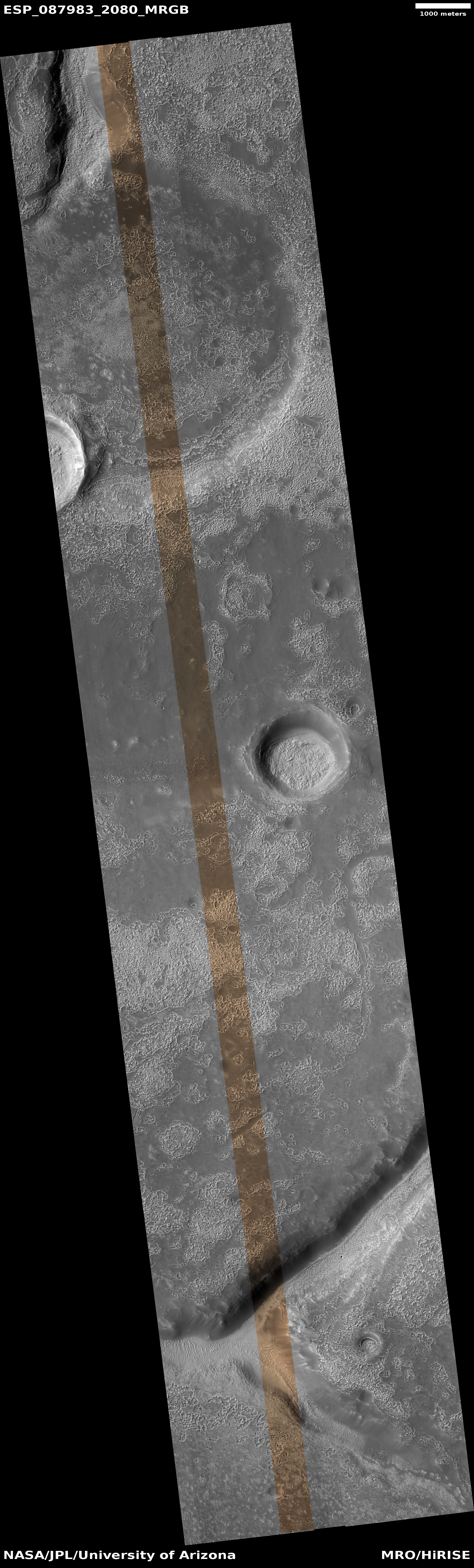
Cool image time! The picture to the right, cropped to post here, was taken on August 24, 2025 by the high resolution camera on Mars Reconnaissance Orbiter (MRO).

The camera team labels this simply as a “terrain sample,” which usually means it was not taken as part of any specific research request, but to fill a gap in the camera’s schedule in order to maintain its proper temperature. When they need to do this, they try to find interesting things to photograph, and mostly succeed.

At first glance the picture to the right does not appear that interesting. If anything it shows an endless expanse of mottled terrain, with no features of any interest at all. This sameness however is what makes this picture and landscape intriguing. What caused it to look this way?
» Read more

3 comments

Weird “What the heck?!” pedestal crater on Mars

A
Click for full image.

Cool image time! The picture to the right, cropped and reduced to post here, was taken on August 26, 2025 by the high resolution camera on Mars Reconnaissance Orbiter (MRO). While the full image shows what the camera team labels as the “ridges” that cover this area, the most prominent feature in the whole landscape is this half-mile-wide pedestal crater, sitting about 50 to 100 feet above the surrounding terrain.

What makes this strange butte so weird is the plateau on top, criss-crossed with ridges and hollows in a manner that defies any obvious geological explanation.

Pedestal craters are not uncommon on Mars, and in fact a bunch of others are found throughout this region. The theory for their formation is that they formed when the surface here was much higher. The impact made the crater floor more dense and resistant to erosion, so as the surrounding terrain wore aware the crater ended up being a butte.

However, pedestal craters usually have relatively smooth tops, making this crater another example of a “What the heck?” image.
» Read more

0 comments

A somewhat typical volcanic vent on Mars

Overview map

With today’s cool image we begin with the overview map to the right. The white dot marks the location, within the region on Mars dubbed the Tharsis Bulge, where four of its biggest volcanoes are located on a surface that has been pushed significantly above the red planet’s mean “sea level.”

The small rectangle in the inset shows the area covered by the cool image below. The focus is on a two-mile-long and half-mile-wide depression that sits on a relatively flat landscape of few craters.

If you look at the inset closely, you will notice this depression is surrounded by a dark borderline on all four sides, ranging in distance from three to thirteen miles. The grade to that borderline is downhill in all directions, with the drop ranging roughly from 800 to 1,000 feet.

So what are we looking at? » Read more

0 comments

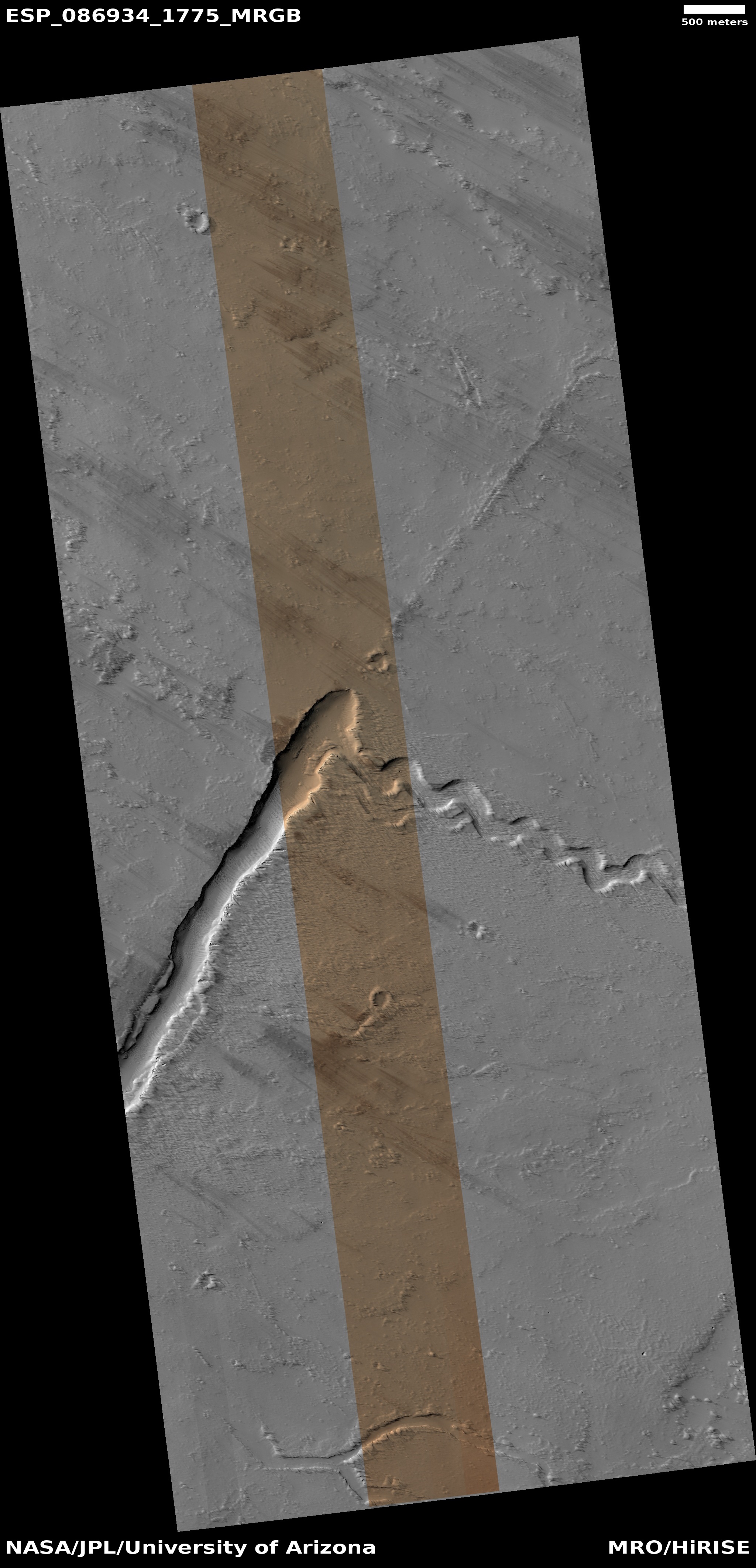
Small fresh impact on Mars’ youngest major lava flow

Monitoring a fresh impact on Martian lava
Click for original image.

Cool image time! The picture to the right, cropped, reduced, and sharpened to post here, was taken on August 26, 2025 by the high resolution camera on Mars Reconnaissance Orbiter (MRO).

The camera team labels this “Monitoring New Impact Site.” The fresh impact, indicated by the three dark patches just left and up from center, is actually not that fresh. It was first photographed by MRO on September 27, 2008. This newer picture is to see if anything significant had changed in the subsequent seventeen years.

In comparing the two pictures, the only change that is obvious is that the patches have faded and become less distinct. Nothing else appears different.

The surrounding terrain however is interesting in its own right. The landscape is remarkably flat, though it has that meandering ridge coming out from that lighter patch in the lower right. What are we looking at?
» Read more

0 comments

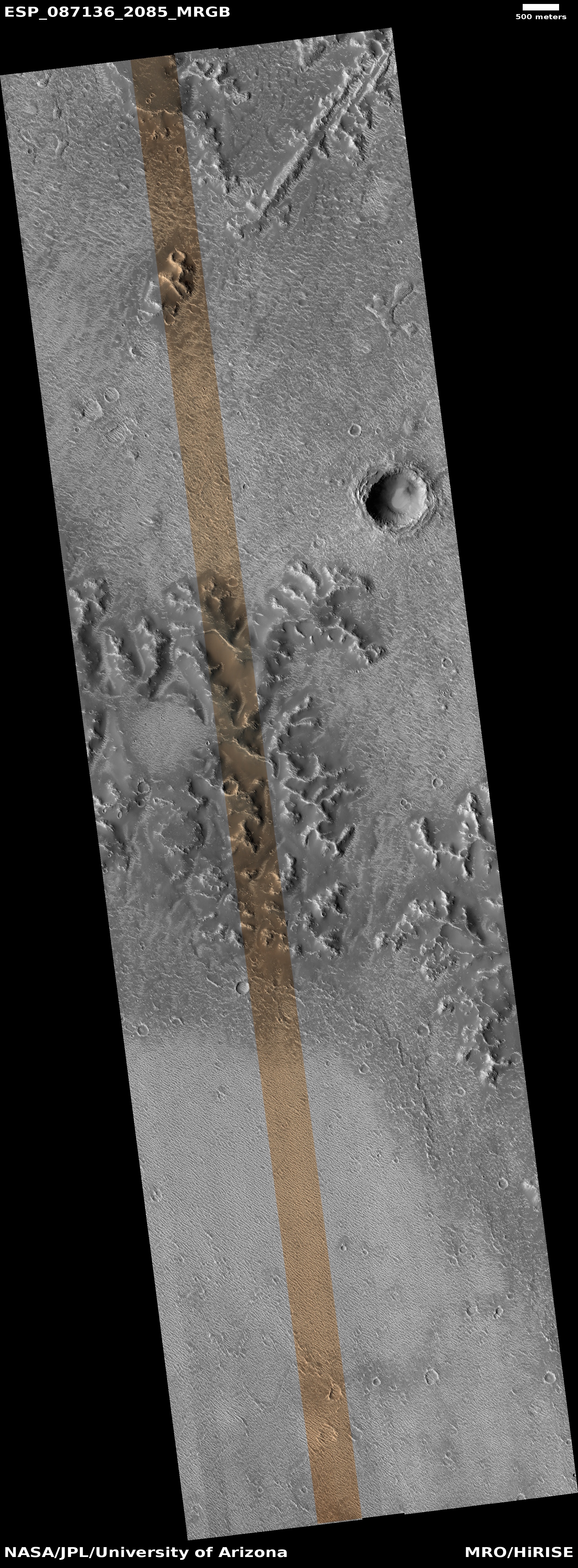
Meandering channel in Mars’ southern cratered highlands

Meandering channel on Mars
Click for original image.

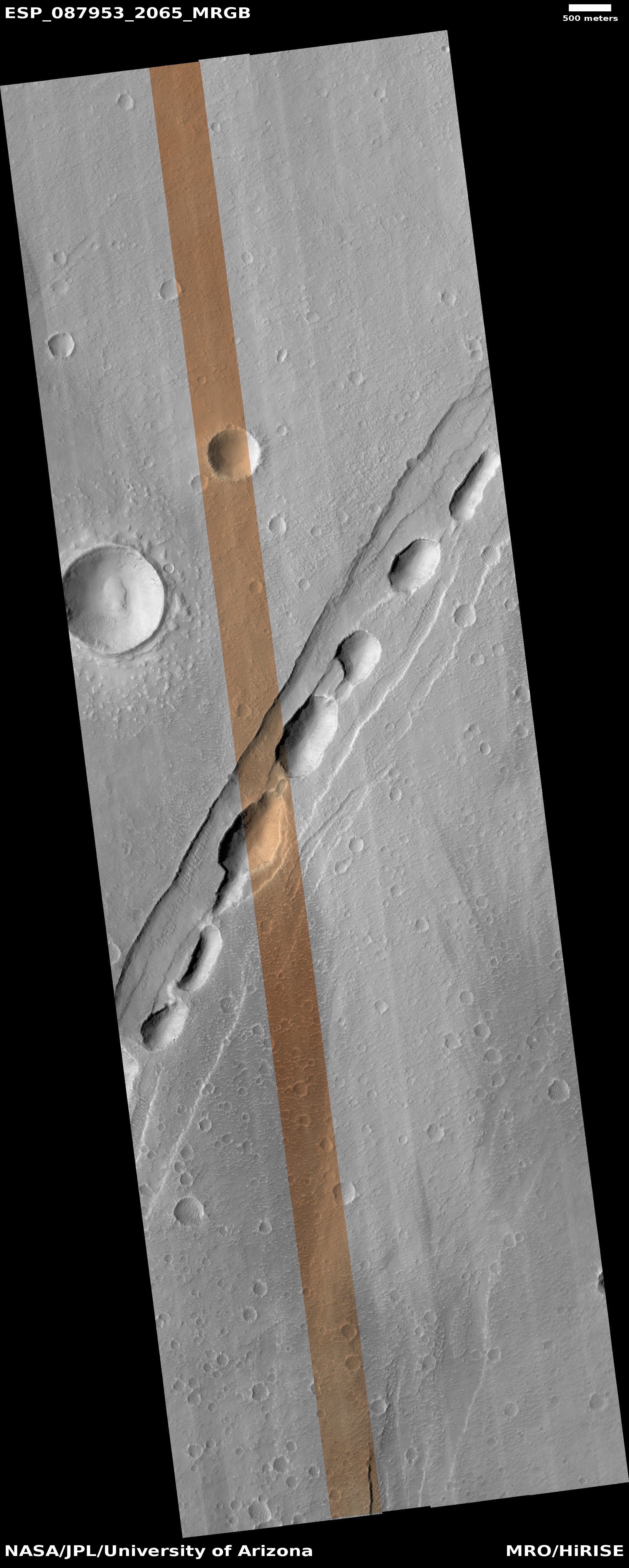
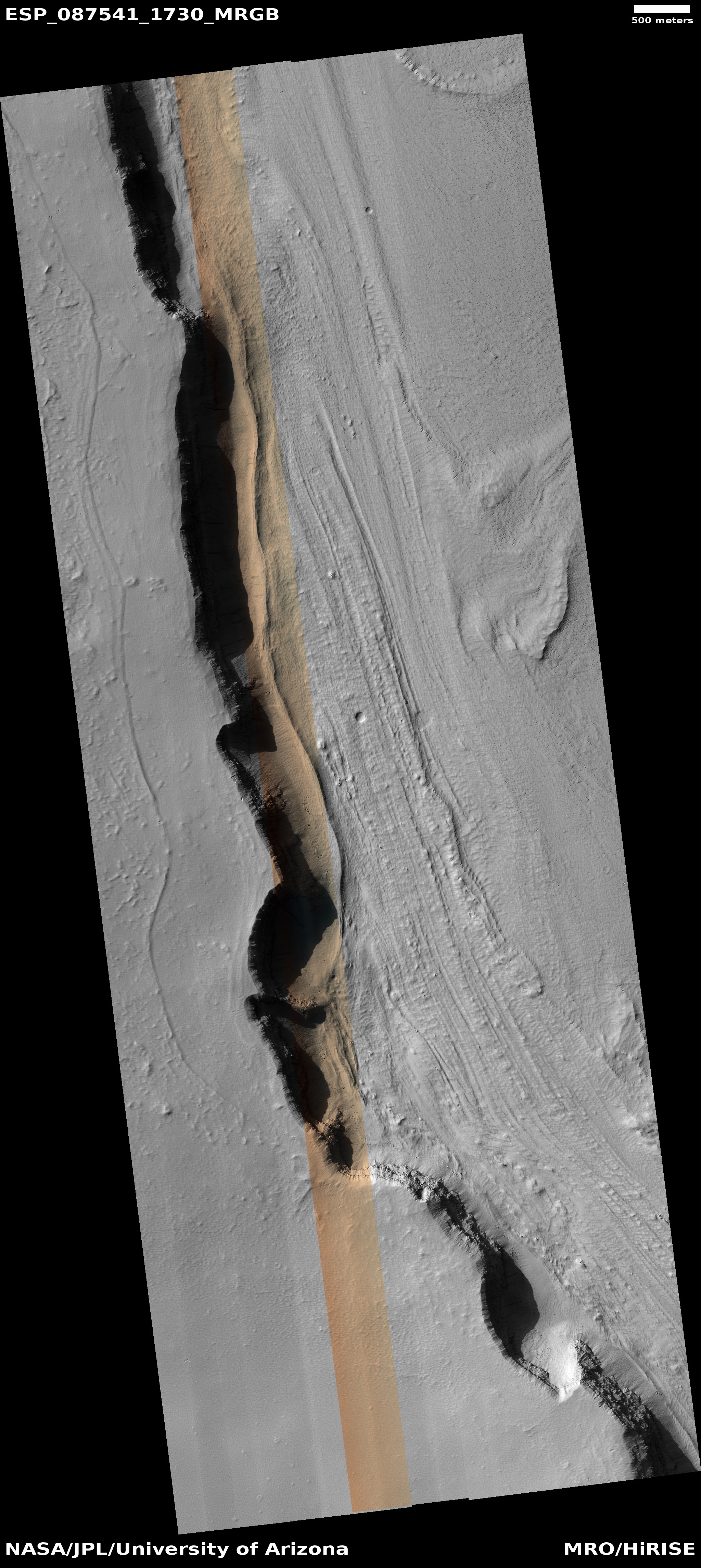
Cool image time! The picture to the right, cropped, reduced, and sharpened to post here, was taken on August 30, 2025 by the high resolution camera on Mars Reconnaissance Orbiter (MRO).

Dubbed a “channel” by the MRO science team, it shows us a meandering canyon with a floor that seems filled with corroded linear features seen frequently on Earth glaciers. Here, the linear ridges appear broken, in many places missing, and in other places so broken their linear nature disappears.

If this was on Earth and I was a global warming activitist, I would immediately claim that the glacier has been evaporating away due to a warming climate caused by SUVs and Republican intransigence. This however is on Mars, where there are no SUVs or Republicans. So what is going on?
» Read more

0 comments

Layers of Martian ash

Layering on Mars
Click for original image.

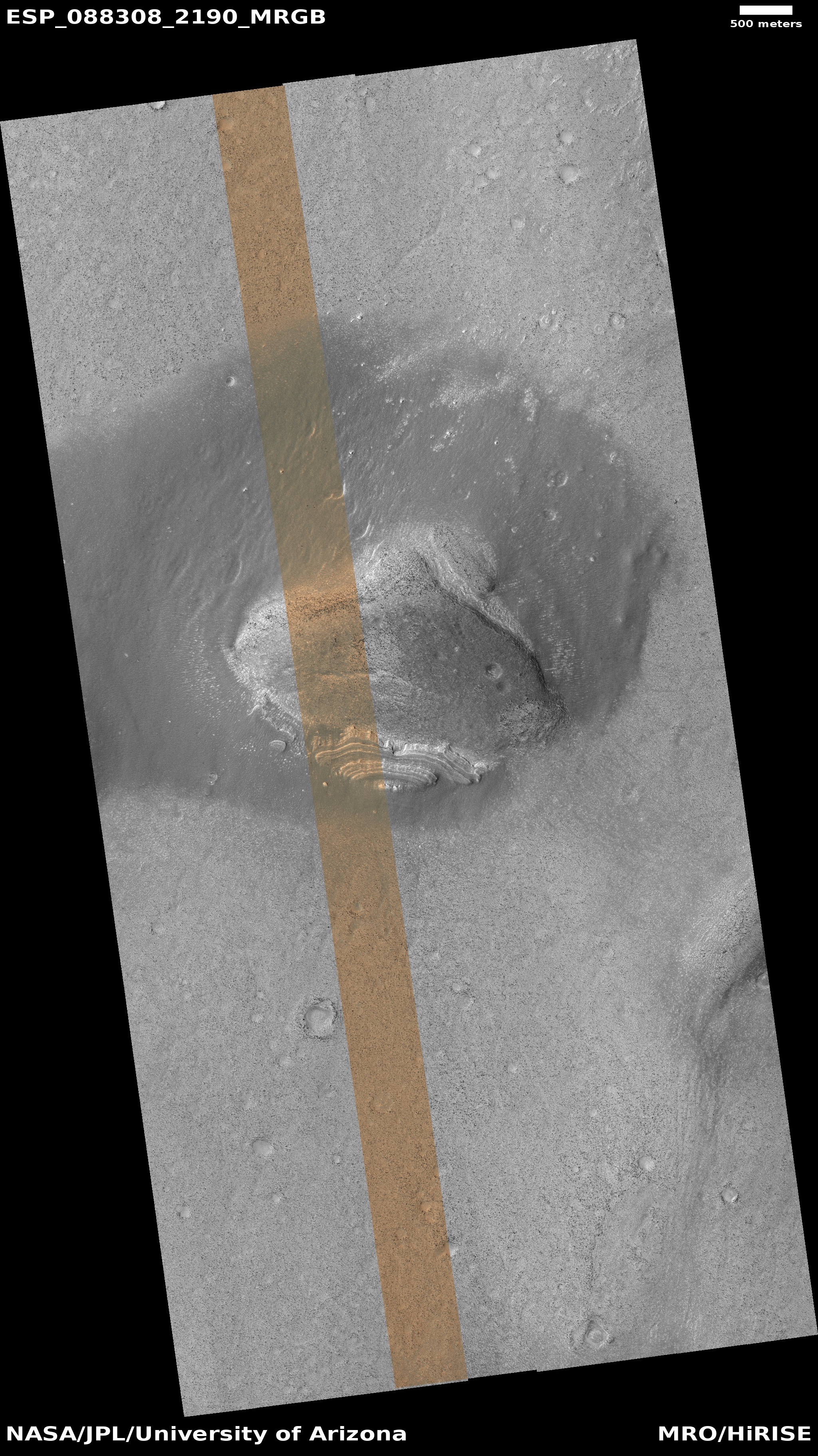
Cool image time! The picture to the right, cropped, reduced, and sharpened to post here, was taken on August 31, 2025 by the high resolution camera on Mars Reconnaissance Orbiter (MRO).

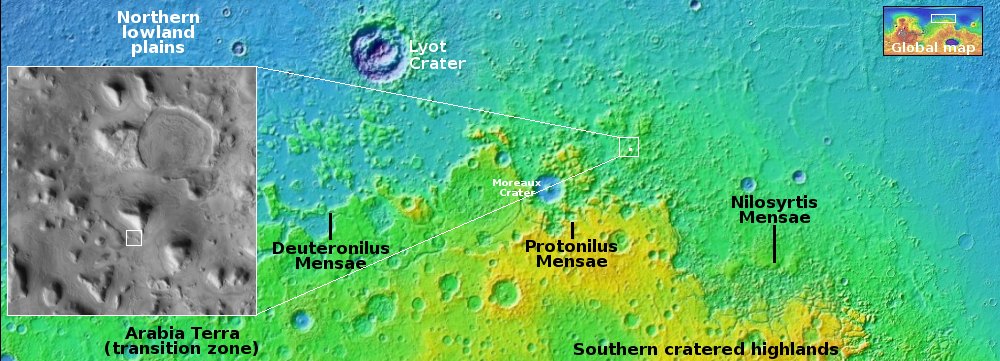
The science team labels this as “layering”, which surely is an apt description. As the latitude is 9 degrees south, this location is within the dry tropics of Mars, where no near surface ice has yet been found. Thus, the terraced layers of this low 20-foot-high mesa are not indicative of the many glacial climate cycles found in the mid-latitudes.

Instead, we are looking at sedimentary layers of rock or dust, laid down over time and later exposed by erosion.

So what caused the layers? And what is causing them to be exposed, one by one? As always the overview map helps provide a possible explanation.
» Read more

2 comments

Peeling brain terrain in Martian crater

Overview map

Peeling brain terrain on Mars
Click for original image.

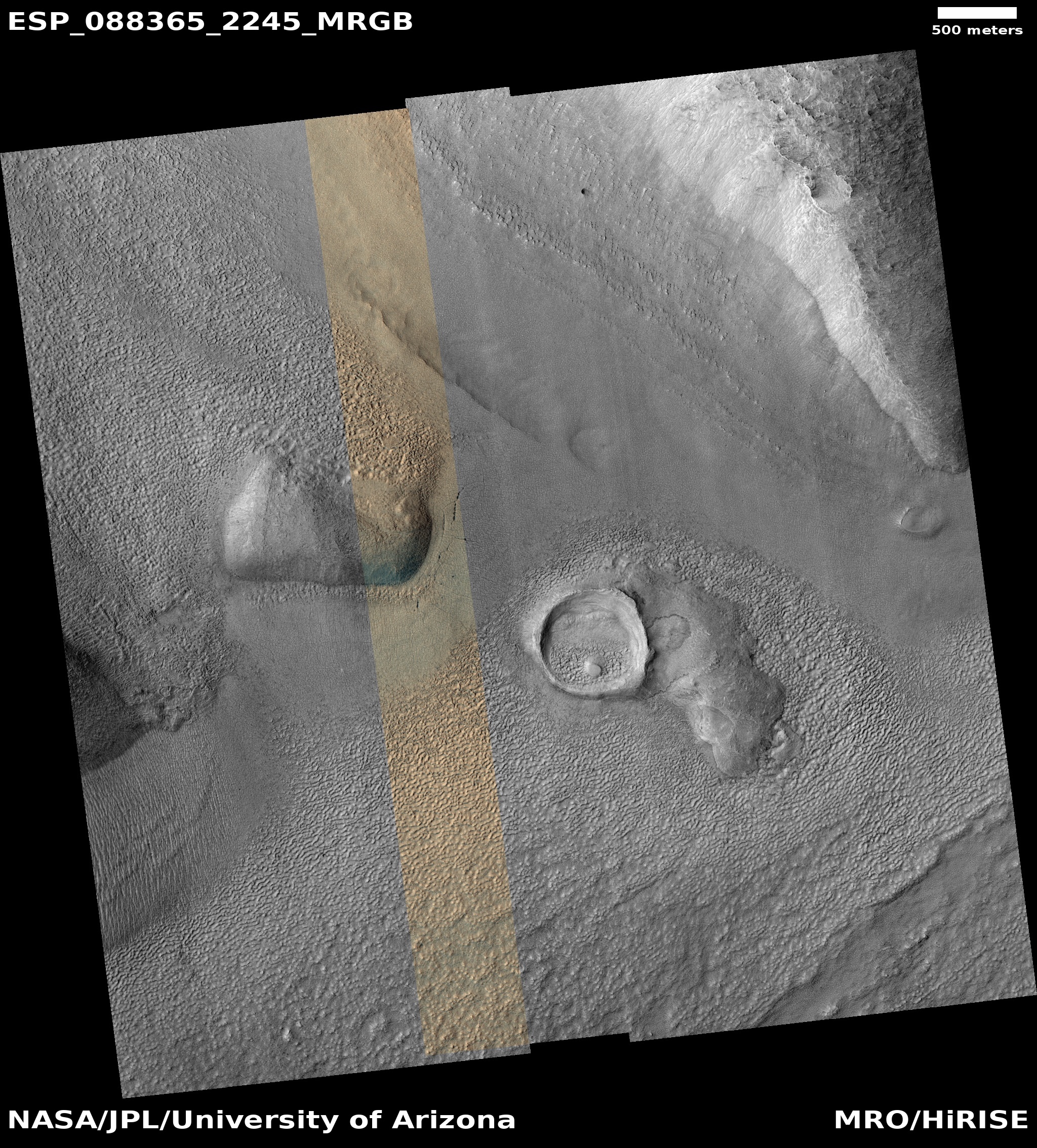
Today’s cool image takes us once again back to Mars’ glacier country, the 2,000 mile-long mid-latitude strip in the northern hemisphere where almost every image shows glacier features. The picture to the right, cropped, reduced, and sharpened to post here, was taken on September 4, 2025 by the high resolution camera on Mars Reconnaissance Orbiter. It shows a small section of the floor of an unnamed 13-mile-wide crater, highlighting what the science team labels vaguely as “features.”

Those features appear to be glacial debris whose surface alternates between peeling gaps and the unique Martian geology dubbed “brain terrain”, whose formation is not yet understood but is believed to be associated with near surface ice.

The location is indicated by the white rectangle on the overview map above. At 36 degrees north latitude, this crater is deep within that mid-latitude strip where a lot of glacial features are routinely found. If you look at the inset, you can see that all the nearby craters appear to have formed in what appears to be slushy ground, their rims not very pronounced or distorted and their floors shallow, as if the ground melted like ice upon impact but very quickly solidified.

Mars is not a dry place. Future colonists will likely build their first cities around 30 degrees latitude, close enough to the equator to get warmer temperatures, but close enough to the near-surface ice found just a few degrees poleward, in a place such as this.

0 comments

New research confirms the steady decline of Martian ice with each glacial cycle

The obliquity cycles of Mars

Using orbital data from Mars Reconnaissance Orbiter (MRO) of glaciers inside mid-latitude craters, scientists have concluded that there was a steady decline in the growth of those glaciers with each new glacial cycle.

They focused on craters with indicative signs of glaciation, such as ridges, moraines (piles of debris left behind by glaciers), and brain terrain (a pitted, maze-like surface formed by ice-rich landforms). By comparing the shapes and orientations of these features with climate models, they found that ice consistently clustered in the colder, shadowed southwestern walls of craters. This trend was consistent across various glacial periods, ranging from approximately 640 million to 98 million years ago.

The results show that Mars didn’t just freeze once—it went through a series of ice ages driven by shifts in its axial tilt, also known as obliquity. Unlike Earth, Mars’ tilt can swing dramatically over millions of years, redistributing sunlight and triggering cycles of ice build-up and melting. These changes shaped where water ice could survive on the planet’s surface. Over time, however, each cycle stored less ice, pointing to a gradual planetary drying. [emphasis mine]

You can read the paper here [pdf]. This result is not new. Based on the orbital data scientists have theorized now for almost a decade that as Mars’ rotational tilt (its obliquity) swings from 11 to 60 degrees, it produces extreme climate cycles on the planet. Those swings are shown on the graph to the right, taken from this 1993 paper [pdf]. When the obliquity is low, the mid-latitudes are warm and the glaciers there shrink, with the snow falling at the poles. When obliquity is high, the poles are warmer and its ice sublimates away to fall as snow in the mid-latitudes, thus causing those glaciers to grow instead.

The orbital data has consistently shown that with each new cycle, the glaciers grew less, suggesting that less global water was available on the planet. This new study further confirms these conclusions.

One last point: Though the amount of water ice on Mars has declined, we mustn’t think the red planet now has none. The orbital data shows that there is a lot of near surface ice on Mars, covering the planet from 30 degrees latitude poleward. As I’ve noted numerous times, Mars is a desert like Antarctica.

9 comments
1 3 4 5 6 7 90