Japan to attempt sample return mission to Martian moon

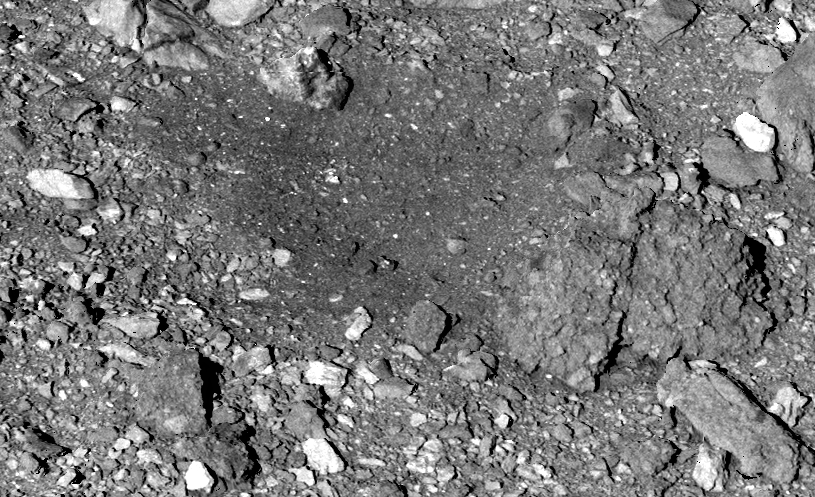
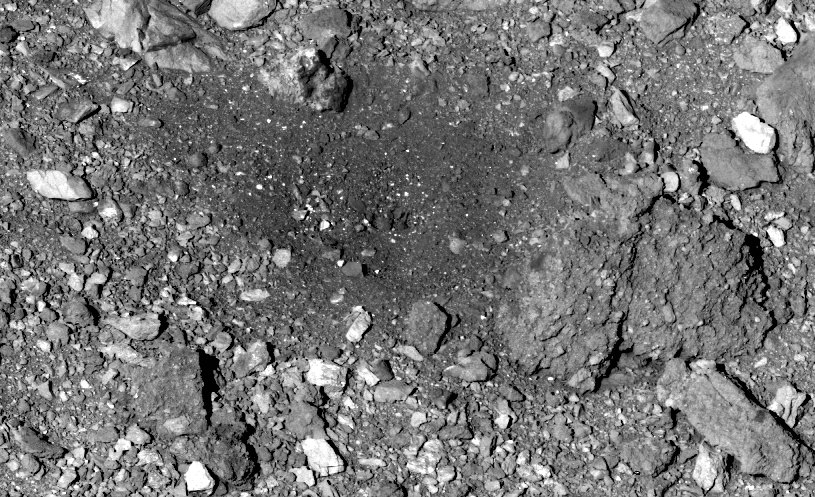
Japan’s space agency JAXA today announced that it will launch in ’24 an unmanned probe to the Martian moon Phobos that will return a sample to Earth in ’29.

The plan is to bring back about 10 grams of material.

If launched as planned, Japan will beat everyone in getting the first samples back from Martian space. China says it hopes to grab samples from Mars itself by 2030, while the U.S. and Europe hope to launch a mission to return the Perseverance cached samples sometime in the 2030s.

3 comments

Two new smallsat rockets now set for launch

Capitalism in space: The launch dates of two different new smallsat rockets is now confirmed.

First, Astra has obtained from the FAA a launch operator license that will allow it to launch rockets from now until March 2026. This license now allows the company to proceed with its August 27th first orbital launch of its Rocket-3 rocket. If successful, Astra hopes to move to monthly launches before the end of the year.

Second, Firefly has announced that it will attempt its own first orbital launch of its Alpha rocket on September 2nd. The company had been promising a launch before the end of the year, but until now had not set a date. The successful completion of a static fire test of the rocket cleared the way.

Three other smallsat rocket companies, Relativity, ABL, and Aevum, have also said they are targeting this year for their first orbital launches, but none has set any dates yet.

If successful, these companies will join Rocket Lab and Virgin Orbit in providing launch capabilities for tiny satellites like cubesats and nanosats.

0 comments

A weak avalanche season on Mars?

The north pole scarp
Click for full image.

Today’s cool image from Mars is cool both for what is visible in the photo and for what is not, the latter of which might turn out to be a discovery of importance.

The photo to the right, cropped and reduced to post here, was taken on June 24, 2021 by the high resolution camera on Mars Reconnaissance Orbiter (MRO). It shows a section of the edge of Mars’ north polar ice cap, with north at the top.

This scarp is probably more than 2,000 feet high, though that height drops to the south as the upper layers disappear one by one from either long term erosion or sublimation. Those layers represent the visible information in the photo that is cool. They give us tantalizing clues about the geological and climatic history of Mars. Each layer probably represents a climate period when the north icecap was growing because the tilt of the planet’s rotation was even less than the 25 degrees it is now. When that tilt is small, as small as 11 degrees, the poles of Mars are very cold, and water ice migrates from the mid-latitudes to the poles, adding thickness to the icecaps. When the tilt grows, to as much as 55 degrees, the mid-latitudes are colder than the poles, and the water ice migrates back to the mid-latitudes.

What is not visible in this picture, however, might be far more significant.
» Read more

0 comments

The knives aimed at SpaceX are getting sharpened

Starship must be banned!
Banning Starship: The new goal of our leftist masters.

Two stories today mark what appears to be a growing political campaign focused on squelching by any means possible the continued unparalleled success of the company SpaceX. And the simultaneous publication of both stories on the same day also suggests that this campaign is deliberately timed to force the FAA to shut down SpaceX at Boca Chica.

First we have a story at Space.com aimed at SpaceX’s Starlink constellation, making it the big villain in the growing threat of satellite collisions.

SpaceX’s Starlink satellites alone are involved in about 1,600 close encounters between two spacecraft every week, that’s about 50 % of all such incidents, according to Hugh Lewis, the head of the Astronautics Research Group at the University of Southampton, U.K. These encounters include situations when two spacecraft pass within a distance of 0.6 miles (1 kilometer) from each other.

Lewis, Europe’s leading expert on space debris, makes regular estimates of the situation in orbit based on data from the Socrates (Satellite Orbital Conjunction Reports Assessing Threatening Encounters in Space ) database. This tool, managed by Celestrack, provides information about satellite orbits and models their trajectories into the future to assess collision risk.

Though his data appears accurate and the growing risk of collisions is real, it appears from the story that Lewis, one of only two experts interviewed, has a strong hostility to SpaceX. He doesn’t like the fact that SpaceX is so successful in such a short time, and appears to want something done to control it.

The article also nonchalantly sloughs off one very significant fact: Very few satellite collisions have actually occurred. While the risk is certainly going to increase, that increase is not going to be fueled just by SpaceX. At least four large constellations are presently in the works, all comparable to Starlink in some manner. To focus on SpaceX in particular makes this article appear like a hatchet job.

Then we have a news story from CBS and its very partisan and leftist news show, Sixty Minutes+, providing a loud soapbox for the very small number of anti-development environmentalists fighting to block SpaceX’s operations in Boca Chica, Texas.
» Read more

31 comments

Firefly hires noted SpaceX engineer

Capitalism in space: Firefly Aerospace announced earlier this week that it has hired as it chief operating officer Lauren Lyons, a former SpaceX engineer familiar to many for her regular appearances as a announcer on SpaceX’s launch telecasts.

The company said that Lyons will focus on “transitioning Firefly from an R&D environment to a production environment” for its Alpha small launch vehicle, Space Utility Vehicle tug and Blue Ghost lunar lander. “Firefly is entering a pivotal and exciting phase of its growth,” Lyons said in the statement. “I’m thrilled to take on the challenge of leading the efforts in scaling the company’s infrastructure to support rapid growth, high execution rate, and deliver exceptional value and service to our customers.”

Translation: Using Lyons expertise from SpaceX, Firefly intends to operate much like SpaceX, upgrading its rockets and spacecraft continuously even as they operate commercially.

The launch date for the company’s first orbital attempt remains unannounced, though it says it will occur before the end of the year. It appears they are ready to go, except for one component of their flight termination system.

7 comments

China launches two more military surveillance satellites

China today used its Long March 4B rocket to put two more military surveillance satellites into orbit.

No word on whether the spent first stage landed near habitable areas in China. China also said nothing about whether that stage carried grid fins or parachutes for bringing it back to Earth more precisely.

The leaders in the 2021 launch race:

27 China
20 SpaceX
12 Russia
4 Northrop Grumman

Russia plans a launch later today (tomorrow in Russia) of another 34 OneWeb satellites. In the national rankings, the U.S. still leads China 31 to 27.

1 comment

A dry bedrock Martian crater floor?

A dry bedrock crater floor?
Click for full image.

Cool image time! The photo to the right, cropped and reduced to post here, was taken on June 21, 2021 by the high resolution camera on Mars Reconnaissance Orbiter (MRO). The location is a very eroded crater at about 26 degrees north latitude. The image shows the crater’s crater floor, with a variety of bedrock-type features, sharp ridges, abrupt scarps, and flat smooth plateaus, with a hint of lobate glacial flows in the image’s southeast quadrant.

At 26 north latitude, it is unlikely that anything here is icy, unless it is very well protected by debris. Most of these features are almost certainly bedrock, though their formation could very well have been shaped by ice in past eons when this location was more amenable to water ice.

The wider MRO context camera image of the entire crater, plus the overview map, give a larger picture, and raise some interesting questions.
» Read more

2 comments

Curiosity produces new 360 degree hi-res panorama

360 degree hi-res panorama from Curiosity
Click for full resolution image.

The Curiosity science team has used the rover’s high resolution camera to produce a new 360 degree panorama, with the center of the image looking directly up at Navarro Mountain.

To get a really good idea of what this panorama shows, I have embedded below a video the scientists have produced giving a tour of the image, which reveals two especially interesting details. First, their future route will go between Navarro Mountain (the highest visible peak) and the 80-foot-high dark butte to its right. This is as planned, as indicated by the red dotted line on the overview map show in this July 8, 2021 post.

Second, the air was very clear when this panorama was taken, and so the rim of Gale Crater can be distinctly seen, 20 miles away.

» Read more

2 comments

Russian space junk hit Chinese satellite in March

It now appears that the partial breakup of a Chinese military satellite in March 2021 was caused when it collided with a piece of rocket space junk leftover from a 1996 Russian launch.

It appears that the object that hit the satellite was one of eight pieces left over in orbit from that Russian launch that have been tracked over the years, and was somewhere between 4 and 20 inches in size. The result of the collision?

Thirty-seven debris objects spawned by the smashup have been detected to date, and there are likely others that remain untracked, he added.

Despite the damage, Yunhai 1-02 apparently survived the violent encounter, which occurred at an altitude of 485 miles (780 kilometers). Amateur radio trackers have continued to detect signals from the satellite, McDowell said, though it’s unclear if Yunhai 1-02 can still do the job it was built to perform (whatever that may be).

According to the article, this was the first major orbital collision since 2009, though similar collisions are suspected in 2013 and 2015.

2 comments

Zhurong completes its planned 90-day mission on Mars

China’s state-run press announced today that its Mars rover Zhurong has successfully completed its planned 90-day mission, is operating without issues, and will continue its exploration of the Red Planet.

The rover has traveled 889 meters as of Aug. 15, and its scientific payloads have collected about 10 Gb of raw data. Now the rover runs stably and operates in good condition with sufficient energy. The CNSA added that the rover will continue to move to the boundary zone between the ancient sea and the ancient land in the southern part of Utopia Planitia and will carry out additional tasks.

According to the administration, Zhurong operated with a cycle of seven days during its exploration and detection. Its navigation terrain camera obtained topographic data along the way to support the rover’s path planning and detection target selection.

Zhurong’s subsurface detection radar acquired the data of the layered structure below the Martian surface, which analyzes the shallow surface structure and explores the possible underground water and ice. [emphasis mine]

This announcement reveals two tantalizing details. First, they are extending the mission, and plan to continue traveling to the south, with a very long term fantasy goal of reaching the transition zone between the northern lowland plains that Zhurong landed in and the southern cratered highlands. That fantasy goal is about 250 miles away. At the pace Zhurong is traveling, about 1,000 feet per month, it will take about a 100 years to cover that ground. Even so, as they move south they are slowly going up hill, and have the chance of seeing some change in the geology along the way.

The second tantalizing detail is indicated by the highlighted last sentence, and is probably the most important data obtained by Zhurong. It suggests they obtained good data from the rover’s ground penetrating radar, and it indicated the existence of underground layers. Whether those layers contain ice however is not clear. From the story it appears the data has not yet been analyzed enough to say.

0 comments

Lacy patterns in the high north of Mars

lacy patterns in the high north of Mars

Cool image time! The photo to the right, cropped, reduced, and rotated so that north is up, was taken on May 12, 2021 by the high resolution camera on Mars Reconnaissance Orbiter (MRO). It shows the strange lacy patterns seen routinely in the very high northern latitudes surrounding the Martian north pole.

Located in a region of the vast northern lowland plains dubbed Scandia Tholi, such features are apparently common here. From a 2011 geology paper of the region’s geological history:

We find that Scandia Tholi display concentric ridges, rugged peaks, irregular depressions, and moats that suggest uplift and tilting of layered plains material by diapirs and extrusion, erosion, and deflation of viscous, sedimentary slurries as previously suggested. These appear to be long-lived features that both pre-date and post-date impact craters.

The small circular feature near the bottom of the picture appears to be a mesa, and might be a pedestal crater, so old that the surrounding terrain has worn away and left the hardened-by-impact crater as a butte. To its right is a larger circular mesa with its scarp well eroded into hollows. This might also be a pedestal crater, or not.

The white lacy patterns could be frost, either water ice or dry ice. That the white lace tends to favor the north-facing slopes lends support to this guess. The photo was taken in the early spring, so the thin mantle of carbon dioxide that falls to cover the polar region south to sixty degrees latitude is only beginning to sublimate away.

0 comments
1 51 52 53 54 55 126