Study: The Moon’s poles might not be the only places to find lunar water

Global map of hydrogen abundances on Moon
Click for full image.

According to a new study published in June in the Journal of Geophysical Research: Planets, while the lunar poles might contain water ice in permanently shadowed craters — based on detected hydrogen abundances — there is an even higher concentration of hydrogen found in the Aristarchus Plateau region in the lower mid-latitudes.

The map to the right is figure 9 from the paper, annotated to post here, showing the Moon’s hydrogen abundances globally, with lighter areas having higher concentrations. The boxes indicate five lunar regions that appear to hold higher levels of hydrogen and thus might contain higher amounts of water. From the paper’s conclusions:

The bulk hydrogen map also led to the first identification of bulk hydrogen enhancements within a pyroclastic deposit (Aristarchus Plateau), an identification that corroborates previous suggestions that hydrogen was among the volatiles involved in the eruption and emplacement of pyroclastic deposits. Further, with the understanding that there are enhanced bulk hydrogen abundances within at least one pyroclastic deposit and not just a surface enhancement, this leads to the implication that the hydrogen contained within just the Aristarchus Plateau may represent a significant fraction of the hydrogen that exists in the Moon’s near-subsurface, including that at both lunar poles. [emphasis mine]

It is important to note that finding high hydrogen abundances does not automatically mean you have found water. For hydrogen to exist on the Moon the atom must be bound in a molecule, and usually water is chosen as the most likely candidate. In the case of Aristarchus, however, the paper instead suggests that hydrogen was placed there as pyroclastic deposits, when active volcanism was occurring a long time ago. While water ice might not be present now in these regions, the data also suggests that water played a major role in its formation.

These hydrogen abundances however also signal the faint possibility of that water ice might be buried here, below the surface, left over from those early volcanic processes. The data also suggests even if the hydrogen is bound in other materials, mining and processing might be able to extract water from it.

0 comments

Update on status of first orbital Starship/Superheavy

Link here. The main focus of the article is the state of Superheavy prototype #7, which experienced an explosion and some damage during testing earlier this month.

The day after the anomaly, Elon indicated on Twitter that Booster 7 would roll back to the production site to work on repairs to the vehicle and assess the next steps. Rollback occurred on July 14, and in the following days, it’s been observed that several Raptor engines have been taken off from the vehicle, likely for further inspection and testing at SpaceX’s McGregor test facility a few hours drive up north from Starbase.

As of writing, repairs are continuing on Booster 7, and it will likely still be undergoing repairs for the next week or two. So while an early retirement for the vehicle could be expected, the current target by teams is still an orbital flight by Booster 7 and Ship 24 with a notional target date of late August for the flight.

If SpaceX decides to retire #7, it already is prepping #8 and #9, with #8 likely to be put on the launchpad for testing in the next week.

The target date for that first orbital launch is still in August, but that schedule appears increasingly unlikely.

0 comments

Space Foundation: Global space economy grew by 9% compared to last year

Capitalism in space: According to its annual report, the Space Foundation has determined that the global space economy grew by 9% in 2021, totaling almost half a trillion dollars total.

Most of the money generated by the space industry came in the commercial sector, which saw a 6.4% boost in revenues, with more than $224 billion coming from products and services delivered by space firms and nearly $138 billion spent on infrastructure and support for commercial space enterprises.

The report also found a 19% increase in government spending on both military and civilian space projects, with India, China, and the U.S. leading the way.

Because of the shift to a competitive and independent space industry in the U.S. the government is also now getting a lot more bang for buck. The increased funding is not simply funding pork on the ground, it is actually producing results in space, and doing so more efficiently.

1 comment

Long March 2D launches two military satellites for China

China today successfully launched two military reconnaissance satellites, using its Long March 2D rocket.

The launch was from an interior spaceport, which means the rocket’s lower stages, which use very toxic hypergolic fuels, crashed to Earth inside China.

The leaders in the 2022 launch race:

33 SpaceX
26 China
9 Russia
5 Rocket Lab
4 ULA

American private enterprise still leads China 46 to 26 in the national rankings, and the entire world combined 46 to 42.

0 comments

Long March 5B core stage crash window narrows to 12 hours

Predicted re-entry as of July 29, 2022

The Aerospace Corporation has now narrowed its predicted window for the uncontrolled re-entry of the core stage of China’s Long March 5B, launched on July 24th, to twelve hours, centered over southeast China in the early morning hours of July 31st.

The window still covers almost all inhabitable places on Earth. It will also narrow considerably in the next 24 hours, though not enough to make a reliable precise prediction until just prior to re-entry.

Just remember: China will repeat this farce in October, when it launches the next module to its Tiangong space station.

15 comments

The big storms at Jupiter’s poles are coherent and stable

Storms on Jupiter
Click for full image.

After four years of observations by Juno in orbit around Jupiter, scientists studying the storms at the gas giant’s poles have found that those storms are stable, long-lasting features. From the abstract of their paper:

These data have shown cyclones organized in snowflake-like structures. The Jupiter’s polar cyclones are long-lasting features, which did not disappear or merge during four years of observations.

The image to the right, posted by me earlier this week, shows several of these storms, or vortices, at Jupiter’s north pole. Previous work had documented the overall pattern, as described in the paper:

The observed vortices display geometrical symmetries around both poles: circumpolar cyclones (CPCs), organized in a regular pattern, surround a central one. At the north pole, eight circumpolar vortices form an octagonal structure, while at the south pole, five circumpolar vortices are arranged in a pentagonal pattern; both central polar vortices show some degree of displacements to the geometrical pole, about 0.5° for the Northern Polar Cyclone (NPC) and 1°-2° for the Southern Polar Cyclone (SPC).

While this research has found little change in these storms over four years, it is unknown what their long term evolution will be for an entire Jupiter year, twelve Earth years long.

5 comments

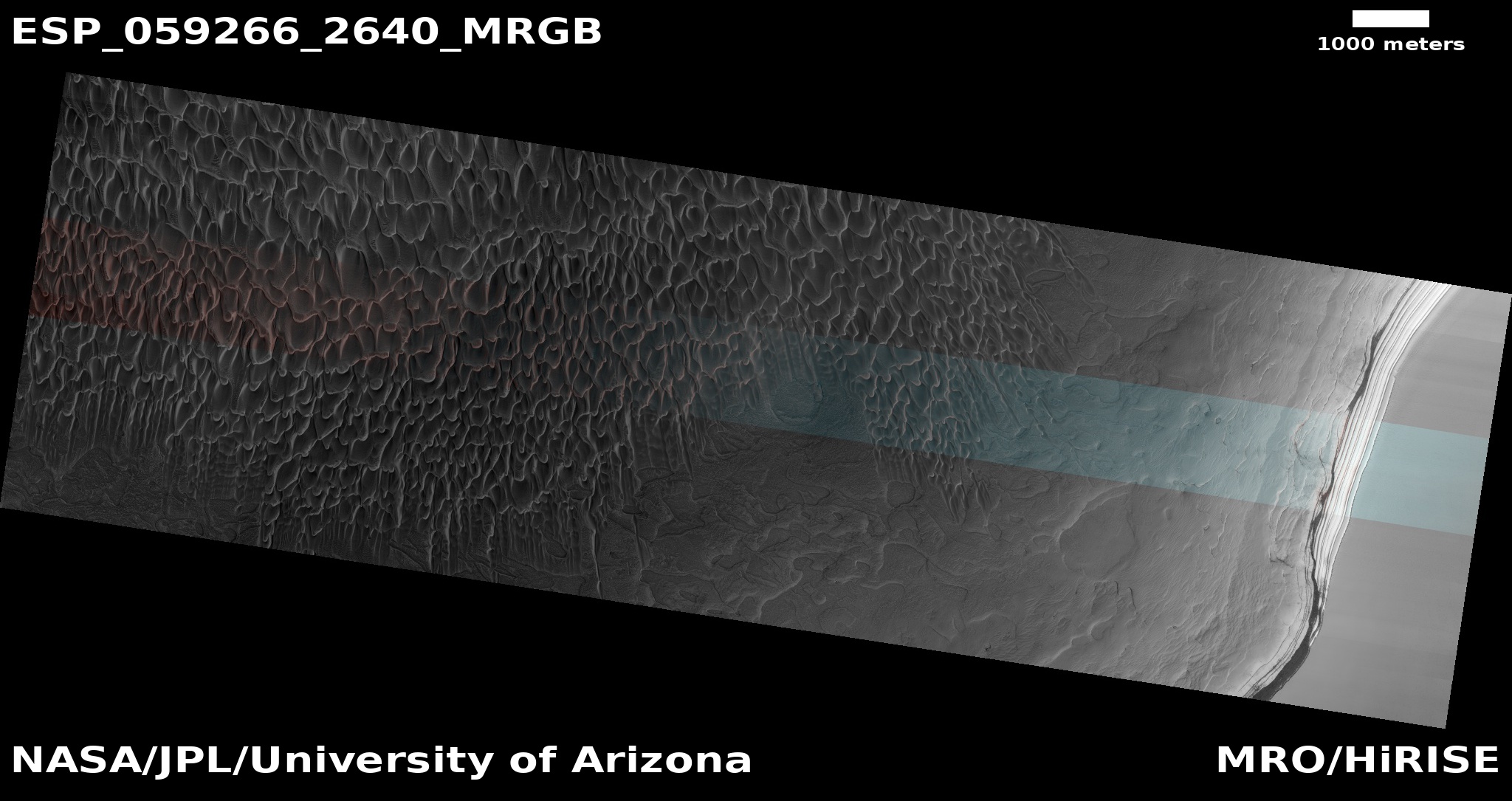
New paper: Glaciers on Mars could have been extensive, despite the lack of expected subsequent landforms

glacial drainage patterns as expected on Mars
Click for full figure.

According to a new paper published this week, scientists now posit that glaciation could have been much more extensive in the geological history of Mars than presently believed, despite the lack of the expected subsequent landforms as seen on Earth.

From the abstract:

The lack of evidence for large-scale glacial landscapes on Mars has led to the belief that ancient glaciations had to be frozen to the ground. Here we propose that the fingerprints of Martian wet-based glaciation should be the remnants of the ice sheet drainage system instead of landforms generally associated with terrestrial ice sheets. We use the terrestrial glacial hydrology framework to interrogate how the Martian surface gravity affects glacial hydrology, ice sliding, and glacial erosion. …[W]e compare the theoretical behavior of identical ice sheets on Mars and Earth and show that, whereas on Earth glacial drainage is predominantly inefficient, enhancing ice sliding and erosion, on Mars the lower gravity favors the formation of efficient subglacial drainage. The apparent lack of large-scale glacial fingerprints on Mars, such as drumlins or lineations, is to be expected. [emphasis mine]

In other words, on Earth the higher gravity causes glaciers and ice sheets to slide, with the liquid water at the base acting as a lubricant. On Mars, the lower gravity slows that slide, so that the water at the glacier’s base drains away instead, causing erosion and the formation of a drainage pattern in the ground beneath the glacier or ice sheet.

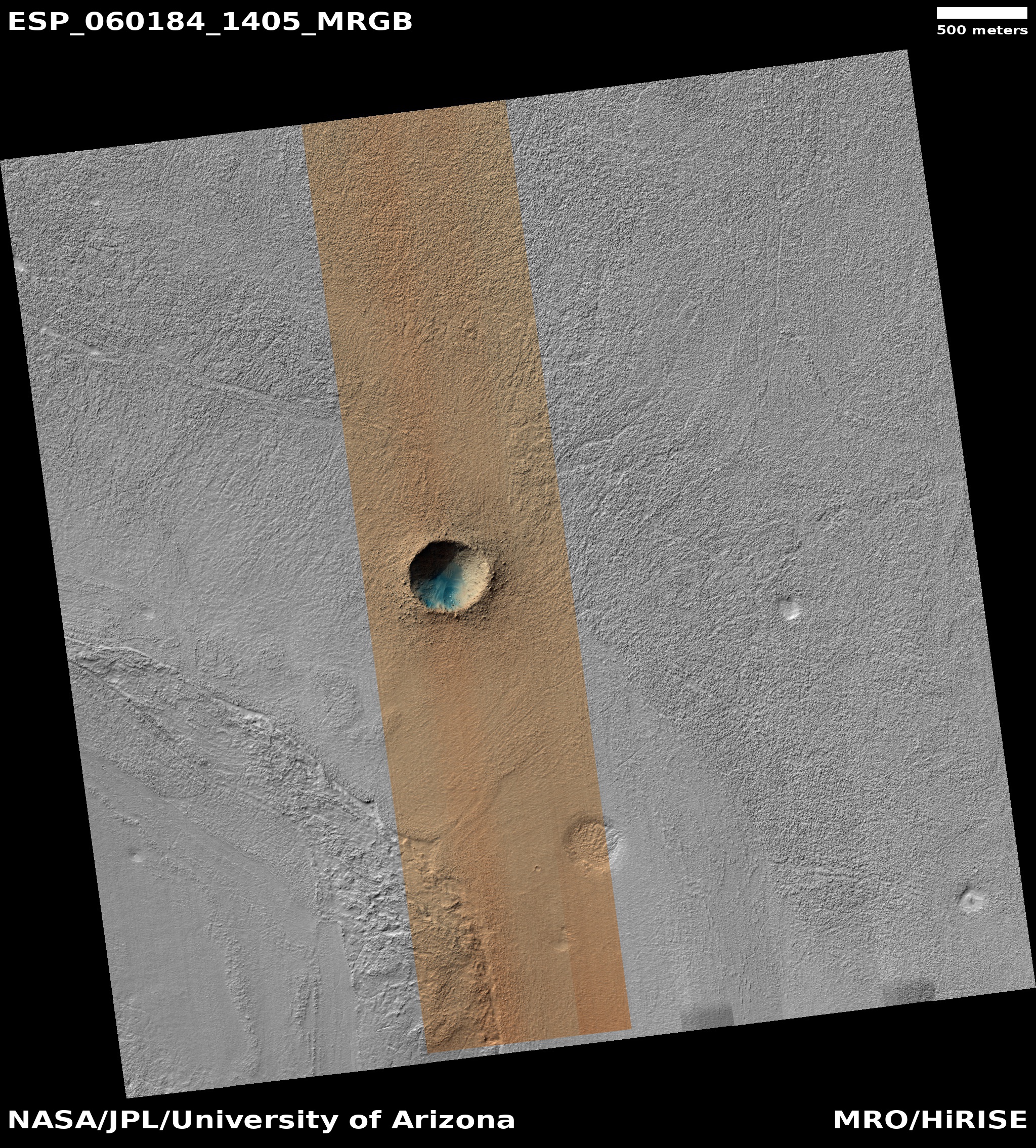
The image above, from figure 1 of the paper, shows on the left a graphic of the two types of drainage patterns expected, and on the right two examples found on Earth (D1: Devon Island; D2: Northwest Territories). Orbiter images of Mars have found variations of these types of drainage patterns in numerous places in Mars’ mid-latitude glacial bands, as shown below.
» Read more

1 comment

NASA is apparently withdrawing its permit for Starship launches in Florida

We’re here to help you: In requesting public input into SpaceX’s plans to expand operations in Florida to accommodate launches of its Starship/Superheavy rocket, NASA is apparently withdrawing the permit it issued in 2019, allowing for such launches.

While a Final Environmental Assessment for Starship was issued in September 2019, NASA said that communication with SpaceX will be ongoing prior to a future first flight from Florida.

“NASA will review the risks to the area and programs at KSC [Kennedy Space Center] prior to any hazardous work,” Bob Holl told Spectrum News in a statement. “NASA will be involved in the lead-up of activities prior to the first loading and any static fire events of Starship and coordinate impacts across the spaceport.” Holl serves as the chief of the Spaceport Management and Integration Division in the Spaceport Integration and Services Directorate at KSC.

It appears NASA and the federal bureaucracy have decided that a new environmental assessment is necessary for SpaceX’s proposed new operation in Florida. After a 30-day period for public input, ending on July 29th, NASA will issue a new draft environmental assessment by September, which will then be subject to another public comment period. Then, the agency will issue a final decision in November, either declaring the new work causes no further impact or that a new environmental impact statement is required.

If the latter, expect Starship launches at Kennedy to be delayed several years.

This action continues the increased regulatory oversight on new space activities being imposed since the arrival of the Biden administration. The federal government is now apparently trying to set a new policy whereby any new work by a private company on or even near federal land will require its full approval, and even if given that approval will carry with it strict and endless governmental demands, all designed to slow things down.

The political timing of this new action however is significant, since this decision will occur after the November midterms. If control of Congress shifts significantly into Republican hands, as expected, the Biden administration’s new heavy-handed regulatory approach might face some pushback.

19 comments

Russia backs off ’24 ISS exit

Russia has apparently backed off its earlier announcement this week that it is leaving ISS by ’24, instead informing NASA officially that it will stay with the partnership through at least ’28, until it gets its own independent space station in orbit.

All this still remains unclear, and still suggests the Russians are playing a negotiating game in public. Nonetheless, it will be no surprise at all if the Russians remain on the station until its lifespan ends, since it is highly unlikely that it will get its own space station launched in ’28, ’30, or even ’50, based on its past history.

3 comments

Space Perspective unveils design of its Neptune tourist balloon capsule

Space Perspective's Neptune Capsule

Capitalism in space: Space Perspective yesterday unveiled the final design of its Neptune balloon capsule that it hopes to fly tourists to altitudes of almost 20 miles.

The graphic to the right reveals the biggest takeaway from this design: The “splash cone” at the bottom of the capsule tells us that the company intends to land its Florida-launched missions in the ocean, not on land.

An enhanced patent pending splash cone, refined from hundreds of digital iterations, to attenuate splashdown for a gentle and safe landing that improves customer experience and hydrodynamics. With water landings considered by NASA as the low risk way of returning a capsule from space, following the gradual, two-hour descent to Earth and a gentle splash down in the ocean, a Space Perspective crew will retrieve passengers, the capsule, and the SpaceBalloon™ by ship.

The company is presently targeting the end of ’24 for the start of commercial flights. It says it has sold about 900 $125K tickets.

The U.S. now has two balloon companies planning similar near-space missions. World View is planning flights from a variety of locations worldwide for a ticket price of $50K, with the first flights occurring no earlier than ’24.

3 comments

Boeing adds another $93 million charge against earnings for Starliner manned capsule

Capitalism in space: Boeing officials revealed yesterday that they have been forced to add another $93 million charge against earnings for its much delayed Starliner manned capsule the company is building.

This is on top of $410 million in the fourth quarter of 2019 and another $185 million in the third quarter of 2021. All together, Boeing has had to cover $688 million in cost growth.

At the moment the first manned launch is tentatively scheduled to occur before the end of this year, with NASA supposedly announcing a firm date before the end of July. This new charge however suggests that the manned launch will not happen until ’23.

Boeing has not simply lost $688 million. It also has lost potential business because of the delays, both from NASA and private citizens. Instead, that business went to SpaceX.

7 comments

NASA/ESA revise plan to recover Perseverance core samples from Mars

NASA and ESA yesterday announced that the agencies have revised their plan to recover Perseverance core samples from Mars, dropping the launch of a rover to pick up the samples.

Instead, they have decided to use Perseverance to bring the samples to the return vehicle, which will also carry two small helicopters.

In 2030, if all goes as planned, the NASA lander will touch down near where Perseverance is working. The rover will drive over to the lander, and an ESA-built robot arm will extract the tubes one by one and place them inside a spherical container the size of a basketball. In early 2031, a rocket on the lander will loft the container into Mars orbit, where a return craft built by ESA will snare it, enclose it in several layers of shielding for safety, and then head for home. In 2033, a saucer-shaped descent pod will carry the samples down to the Utah desert.

If Perseverance gets into difficulties during its 9-year wait for company, controllers can instruct it to drop its cargo of sample tubes onto the ground, creating a second depot. If that happens, the helicopters come into play: they can fly up to 700 meters, land next to a sample tube—each weighs up to 150 grams—and, with wheels on the bottom their feet, roll over the tube and pick it up with a grabber. On returning to the lander, they will drop the tubes on the ground for the arm to pick up.

The change means that the rover the United Kingdom was planning to build will either be abandoned, or repurposed as a lunar rover.

4 comments
1 455 456 457 458 459 1,327