
June 29, 2022 Zimmerman/Batchelor podcast
Embedded below the fold in two parts.
To listen to all of John Batchelor’s podcasts, well worth your time, go here.
» Read more
Embedded below the fold in two parts.
To listen to all of John Batchelor’s podcasts, well worth your time, go here.
» Read more
An evening pause: From the film FM (1978).
Hat tip Dan Steele.
Capitalism in space: SpaceX today successfully launched a SES communications satellite, using its Falcon 9 rocket.
The first stage, making its second flight, successfully landed on a drone ship in the Atlantic. As of this writing, the satellite itself has not yet been deployed.
The leaders in the 2022 launch race:
27 SpaceX
21 China
8 Russia
4 Rocket Lab
American private enterprise now leads China 37 to 21 in the national rankings, and the entire world combined 37 to 34.
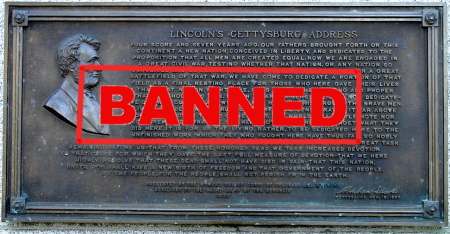
Our modern dark age: Apparently because some unidentified individual “complained” about the presence of a bust of Abraham Lincoln and a bronzed plaque of his Gettysburg address, officials running the library at Cornell University immediately removed both.
“Someone complained, and it was gone,” Cornell professor Randy Wayne told the College Fix, referring to a Gettysburg Address plaque and Lincoln bust that had been on display in the Ivy League university’s Kroch Library since 2013. The professor said that he had noticed that the items were gone after stopping by the library several weeks ago, adding that when he asked the librarians about it, they were unable to give any details, other than saying it was removed as a result of some type of complaint.
The plaque and bust have been replaced with, “Well, nothing,” Wayne told the College Fix.
According to professor Wayne, when he asked the librarians why the bust and plaque were gone “they had no details to provide, except to say it was removed after some sort of complaint.”
» Read more

Click for full figure.
In a new paper detailing work they first began in 2019, scientists have now carefully mapped the extensive lava tubes that appear to radially descend westward from the caldera of Alba Mons, the volcano on Mars that has the largest surface area but with a relatively low peak.
The mapped population of 331 lava tube systems has a mean length of 36.2 km, with a total length in the western flank geologic map quadrangle of ∼12,000 km. Individual lava tube systems extend up to ∼400 km, and it is likely that some of our mapped lava tubes are connected such that the total number is actually smaller and lengths (average and maximum) longer.
The map above, figure 10 of their paper, shows volcanic ridges as yellow, collapsed lava tube segments as red, and collapsed lava tube on the volcanic ridge as maroon. The wider map below, shows where this region is located, and gives the larger context.
» Read more
Sierra Space and ESEN (another affiliated company of Sierra Space’s mother company Sierra Nevada) have signed a partnership agreement with the Turkish Space Agency to work together over the next five years in developing Sierra Space’s Dream Chaser spacecraft and its LIFE orbital space station.
Though the agreement mentions how the three will work together to develop both Dream Chaser and LIFE, because of State department security regulations Sierra Space must be very careful about what technology it reveals to Turkey. I therefore expect the heart of the agreement are these two bullet points from the press release:
- Space environment utilization on-orbit in LEO, including use of Sierra Space’s Large Integrated Flexible Environment (LIFE) space habitat module
- Sending payloads to low Earth orbit (LEO) and the moon
Turkey wants to launch its own planetary probes as well as astronauts in order to compete with its Middle East neighbor the UAE. It has thus decided to pay Sierra Space to help it do that. The company can use the cargo Dream Chaser to lift smallsat payloads into orbit, and later use the manned version to lift Turkish astronauts to the LIFE station.
Capitalism in space: The private commercial space station company Axiom has leased a former Fry’s retail building that also happens to house the only fullscale mock-up of ISS anywhere.
Axiom Space, which has a contract with NASA to test components of its planned Axiom Station at the International Space Station, has leased the former location of Fry’s Electronics in Webster, Texas to house its engineering operations. The former big-box retail store, which closed when the national chain went out of business in 2021, is unique for its football-field-long representation of the ISS.
…Contained within a building that itself was shaped to resemble oversized space station modules, the former Fry’s ISS includes most of the real complex’s major components. The mockup features the U.S. Destiny laboratory, Quest airlock and Cupola; Russia’s Zvezda service module and Zarya functional cargo block (FGB); Japan’s Kibo laboratory; and the European Space Agency Columbus module.
The space station installation also has a replica of the Canadarm2 robotic arm, a Russian Soyuz spacecraft, two models of NASA’s never-realized X-38 emergency crew return vehicle and astronauts (mannequins) in replica spacesuits. Additional oversized modules previously served as product demonstration rooms and an in-store cafe, while most of the station sat among and above aisles of computers and other devices.
Most of the mock-up hangs overhead, out of the way. In reconfiguring the building for its own use, Axiom intends to leave these mock-up units untouched. Engineers will do design work and module development of Axiom’s own station below.
Axiom’s occupation of this building is only temporary. Once its larger facility is completed in the next few years in the industrial park dubbed Houston Spaceport it will shift all operations there.
In order to fully identify all the clouds seen in the sixteen years of data collected by the cloud instrument on Mars Reconnaissance Orbiter (MRO), scientists have now organized a citizen-scientist project to catalogue those clouds.
The project revolves around a 16-year record of data from the agency’s Mars Reconnaissance Orbiter (MRO), which has been studying the Red Planet since 2006. The spacecraft’s Mars Climate Sounder instrument studies the atmosphere in infrared light, which is invisible to the human eye. In measurements taken by the instrument as MRO orbits Mars, clouds appear as arches. The team needs help sifting through that data on Zooniverse, marking the arches so that the scientists can more efficiently study where in the atmosphere they occur.
You can join up by going here.
Capitalism in space: Having moved its 7th prototype Superheavy booster to the launch pad in Boca Chica even as its installs the six Raptor engines on the 24th prototype of Starship, SpaceX is now about to begin the final engines tests prior to the first orbital Starship/Superheavy flight.
For the first time the chopstick arms on the launch tower were used to lift and place the Superheavy booster onto the pad. It is expected that static fire tests of its 33 Raptor engines could begin within the next few weeks.
The orbital Starship meanwhile is still in the assembly building, where engineers are installing its own six Raptor engines.
Though SpaceX has not made public the exact schedule of tests leading to launch, it is expected that the company will do a short static fire test program with Superheavy alone, and then do a follow-up short series of tests once the Starship prototype is stacked on top. Based on past history, if the tests show no problems SpaceX will quickly move to launch. Though there have been indications that it is targeting July, it would not be surprising if that date slips to August.
The race between Starship and SLS for which will get into orbit first appears to be tightening.
An evening pause: Unlike yesterday’s song, this song should be the anthem for today’s generation, especially the men. The chorus:
How to know when it’s love
How to stay when it’s tough
How to know you’re messing up a good thing
And how to fix it fore it’s too late
And yea I know a boy
Who gave up and got it wrong
If you really love a woman you don’t let her go
Yeah I know few things a man oughta know
Hat tip Dan Morris.
Your tax dollars at work! Psychology researchers at Florida Atlantic University have found to their shock that the friendships school children form are strongly influenced by their seat assignments in class.
Results of the study, published in the journal Frontiers in Psychology, revealed that friendships reflect classroom seat assignments. Students sitting next to or nearby one another were more likely to be friends with one another than students seated elsewhere in the classroom. Moreover, longitudinal analyses showed that classroom seating proximity was associated with the formation of new friendships. After seat assignments changed, students were more likely to become friends with newly near-seated classmates than with those who remained or became seated farther away.
You can read the actual paper here. The research itself was apparently funded by a grant from National Institute of Child Health and Human Development (NICHD), apparently an agency within NIH, that stellar agency that pushed masks, lockdowns, and social distancing during the past two years based on zero data and contrary to research results going back decades.
It seems to me that this result would be obvious to any first grade teacher who is focused on teaching kids. It is also obvious to anyone who ever went to school and made friends there. To spend money on such research is utterly idiotic. Worse, it diverts funds from research that is considerably more important.
But no matter. What is really important is to get funding, no matter how trivial or useless the research. And our corrupt and bankrupt federal bureaucracy is most willing to oblige.

Chike Uzuegbunam: A winner against college censorship
Bring a gun to a knife fight: Because the Supreme Court had ruled 8-1 in March 2021 that Georgia Gwinnett College and its officials could be held liable for damages for illegally denying several religious students their first amendment rights, the university last week finally settled the five-year-long case in favor of those students, paying nominal damages and attorneys’ fees totaling more than $800,000.
The case began when the university in 2016 twice prevented two students, Chike Uzuegbunam and Joseph Bradford, from talking to other students about their religious faith on campus. The first time the university claimed that, according to its speech zone policies, the students could only do so after getting permission from the school and then limiting their speech to a tiny free speech zone on campus. When Uzuegbunam followed this policy, school officials then banned him from speaking entirely because someone had complained. From the Supreme Court’s March 2021 ruling [pdf]:
» Read more
Junk science: This week NOAA government scientists published a paper claiming that the upcoming increase in rocket launches worldwide is a threat to the ozone layer and will also — my heart be still — promote climate change!
The study found that a tenfold increase in the amount of soot injected into the stratosphere every year would after 50 years lead to an annual temperature increase in that layer of 1 to 4 degrees Fahrenheit (0.5 to 2 degrees Celsius). The stratosphere is the layer of the atmosphere just above the lowest troposphere. The study found that the projected warming would slow down subtropical jet streams, bands of strong wind circling the planet at the lower edge of the stratosphere that influence the African and Indian summer monsoons.
Warmer temperatures in the stratosphere would also degrade the protective ozone layer, which blocks harmful ultraviolet radiation from the sun from reaching the planet’s surface.
The paper’s abstract also said this:
We show that the rocket black carbon increases stratospheric temperatures and changes the global circulation, both of which cause a reduction in the total ozone column, mainly in the northern high latitudes. Comparing the amplitude of the atmospheric response using different emission rates provides insight into stratospheric adjustment and feedback mechanisms. Our results show that the stratosphere is sensitive to relatively modest black carbon injections.
This is garbage science, and I wouldn’t bother posting a link to it if other news sources weren’t promoting it. These predictions — based on a very simple computer model — are nothing more than guesses, and are apparently designed to both attack the growing space industry as well as garner funding for more such junk science, as illustrated by this quote from the NOAA press release:
“We need to learn more about the potential impact of hydrocarbon-burning engines on the stratosphere and on the climate at the surface of the Earth,” said lead author Christopher Maloney, a CIRES research scientist working in NOAA’s Chemical Sciences Laboratory. “With further research, we should be able to better understand the relative impacts of different rocket types on climate and ozone.”
For almost a half century climate scientists — many working for government agencies like NASA and NOAA — have been publishing junk papers like this, predicting climate doom in only a few decades unless we do as they say, while funneling boatloads of cash into their pockets. Almost none of those predictions have turned out to be correct.
This report is equally suspect, especially because it touts the false statistic that “launch rates have tripled in recent decades.” The number of launches has not tripled from its long-term average since Sputnik. The only way you can get manufacture that fake statistic is if you compare last year’s total (134) with the launch numbers from the early 1960s, before the space race had even begun. And while the launch numbers are likely to rise dramatically in the coming years, the numbers will still be infinitesimal compared to other industries. Going from 50-100 launches to 200-500 launches is hardly the end of the world.
It really is far past time for the press and the general public to stop listening to these fake papers.
Capitalism in space: Virgin Orbit yesterday announced that it has signed an agreement with the Brazil Space Agency (AEB) to establish facilities and conduct launches from that nation’s long unused Alcântara spaceport.
The license is granted to Virgin Orbit Brasil Ltda. (VOBRA), a newly formed and wholly owned Brazilian subsidiary dedicated to bringing the LauncherOne air-launch rocket system to the Alcântara Launch Center (Centro de Lançamento de Alcântara, CLA).
The formation of the VOBRA entity for dedicated Brazilian space activities is designed to bring an important new capability to the country and economic value to the region. Virgin Orbit’s LauncherOne system, which uses a customized 747 aircraft, Cosmic Girl, as its flying and fully reusable launch pad, will conduct launches from the existing airbase at the Brazilian site, flying hundreds of miles before releasing the rocket directly above the equator — a global sweet spot — or at other optimal locations identified for each individual mission.
Being able to launch smallsats from the equator gives Virgin Orbit the ability to place those satellites in any orbit around the Earth for far less fuel, an advantage not available to spaceports at higher latitudes.
Two launches this morning herald the upcoming busy launch schedule for the last few days of June.
First China launched from its Jiuquan interior spaceport an Earth observation satellite using its Long March 4C rocket. As is usual with China, the first stage crashed on land, though no details have been provided.
Next, Rocket Lab used its Electron rocket to send NASA’s CAPSTONE cubesat lunar probe on its way to the Moon. More information here.
CAPSTONE is currently in low-Earth orbit, and it will take the spacecraft about four months to reach its targeted lunar orbit.
…CAPSTONE is attached to Rocket Lab’s Lunar Photon, an interplanetary third stage that will send CAPSTONE on its way to deep space. Shortly after launch, Lunar Photon separated from Electron’s second stage. Over the next six days, Photon’s engine will periodically ignite to accelerate it beyond low-Earth orbit, where Photon will release the CubeSat on a ballistic lunar transfer trajectory to the Moon. CAPSTONE will then use its own propulsion and the Sun’s gravity to navigate the rest of the way to the Moon. The gravity-driven track will dramatically reduce the amount of fuel the CubeSat needs to get to the Moon.
Once at the Moon, the spacecraft will enter a polar orbit varying from 1000 to 43,500 miles from the surface, with its prime mission to test operations in that lunar orbit.
Not only did NASA hire a private company, Rocket Lab, to launch it, the agency also hired a private company, Terran Orbital, to build it.
The leaders in the 2022 launch race:
26 SpaceX
21 China
8 Russia
4 Rocket Lab
American private enterprise still leads China 36 to 21 in the national rankings, and the entire world combined 36 to 34.
For the rest of June, the American companies SpaceX, Virgin Orbit, and ULA all have planned launches, as well as India. If all succeed, that would put the total launches in the first half of ’22 at 74, a pace that would almost reach 150 launches by the end of the year, smashing the annual record set last year. The U.S.’s pace in turn is likely to exceed the number of launches it completed in all of ’22 in July, with the possibility it could complete 75-80 launches by the end of the year, exceeding the U.S. annual record of 70 set in 1966.
According to a tweet from a Twitter account that specializes in reporting on the Chinese space program, at least one piece of the upper stage from the Long March 2F rocket that launched the present Tiangon space station crew on the Shenzhou-14 crashed into the middle of Mediterranean Sea when the stage’s orbit decayed.
Most parts burned during the reentry while small debris splashed in Mediterranean Sea around E5.2° N39.1°
According to both this Twitter site as well as the Aerospace Corporation’s re-entry site, the event occurred on June 20, 2022. The latter site however says the stage burned up over the Atlantic, though it also indicated a one hour margin of error both before or after that time. If the stage thus stayed up just a bit longer, its orbit would have brought it down exactly where the former site states.
If this is so, it indicates that the Chinese either could not or made no effort to control the de-orbit, something that should be standard for any upper stage that has mass that could hit the ground.
Hat tip from reader Jay.
An evening pause: This could be the anthem of anyone younger than 20 after their experience during the past two years. Masks and fear-mongering and lies, lies, LIES. It breaks my heart to know that these lies have robbed a whole generation of hope and faith in the greatness that is possible in all humans. And without hope or faith in doing the impossible, not even the possible will be easy.
Note too that Hedy Lamarr proved in her life that the impossible was possible.
Hat tip Wayne Devette.

Click for full image.

Cool image time! The photo above, rotated, cropped, and reduced to post here, was taken on March 5, 2022 by the high resolution camera on Mars Reconnaissance Orbiter (MRO). It shows what the scientists label as a “viscous flow feature,” which is another way of saying the flow was thick and syrupy.
Nor is such a flow unusual in this area of Mars. It is located in a region of chaos terrain dubbed Protonilus Mensae, which is also the central mensae region in the 2,000-mile-long strip in the northern mid-latitudes of Mars I label glacier country. The overview map above of Protonilus Mensae — covering about 500 miles in width — shows how common such flows are in this place. The black rectangles mark the locations of other cool images I have featured, as follows:
The red rectangle indicates the location of today’s cool image.
The glacial aspect of everything in this region is even more emphasized by the wider view provided by MRO’s context camera below.
» Read more

Joe Kennedy: An American once again free to pray,
when and where he wishes.
Bring a gun to a knife fight: In a 6-3 decision, the Supreme Court today ruled in favor of high school coach Joe Kennedy, who was fired by the Bremerton School District in Washington because he choose to kneel and pray quietly on the football field at the end of each game.
Joe Kennedy was a junior varsity head coach and varsity assistant coach with the Bremerton School District in Washington from 2008 to 2015. He began the practice of reciting a post-game prayer by himself, but eventually students started joining him. According to court documents, this evolved into motivational speeches that included religious themes. After an opposing coach brought it to the principal’s attention, the school district told Kennedy to stop. He did, temporarily, then notified the school that he would resume the practice.
The situation garnered media attention, and when Kennedy announced that he would go back to praying on the field, it raised security concerns. When he did pray after the game, a number of people stormed the field in support.
The school district then offered to let Kennedy pray in other locations before and after games, or for him to pray on the 50-yard line after everyone else had left the premises, but he refused, insisting that he would continue his regular practice. After continuing the prayers at two more games, the school district placed Kennedy on leave.
He eventually lost the job when the school district refused to renew his contract.
You can read the Supreme Court’s ruling here [pdf].
Initially Kennedy was holding locker room prayer sessions and postgame religious talks, actions by a public school teacher that are certainly inappropriate. However, when the district demanded these stop he did so.
Subsequently he began praying on the field, alone and silent, after games. This action did attract some students to join him, but since he did not require participation he was violating no one’s rights, nor was he acting as a government agent at that time.
» Read more
Based on a study of alluvial fans on Mars, river sediment thought to have been placed at the foot of mountains, scientists have concluded that liquid water could have been flowing from as 2.5 to 3.6 billion years ago.
“We’ve known for decades that Mars had rivers and lakes around 3.5 billion years ago, but in the past few years there has been a growing body of evidence that substantial amounts of liquid water continued to erode the Martian surface for hundreds of millions of years,” said Morgan, lead author on “The global distribution and morphologic characteristics of fan-shaped sedimentary landforms on Mars” that appears in Icarus. “Water-formed landforms, such as river deltas and alluvial fans, are the most unambiguous markers of past climate. So we conducted a global survey for these features and explored patterns in their distribution and morphologic properties.”
Morgan and co-authors including PSI Senior Scientist Alan Howard found that alluvial fans are found at lower elevations than the more ancient valley networks, suggesting that stable liquid water became restricted to lower, warmer regions as Mars cooled and dried.
…What is particularly interesting about the Martian fans is that many formed much later than the valley networks, which have long been considered the strongest evidence for surface water on early Mars. Valley networks largely date to around 3.6 billion years ago, but alluvial fans date to 2.5 to 3 billion years ago.
This research merely increases the fundamental geological mystery of Mars. While the surface evidence strongly tells us that liquid water once flowed on the surface, no climate model exists that satisfactorily makes that possible. The atmosphere appears to have always been too cold and thin for liquid water.