SpaceX says it is targeting October 13, 2024 for 5th Starship/Superheavy launch

Superheavy being captured by the tower chopsticks at landing
Artist rendering of Superheavy being captured by
the tower chopsticks at landing. Click for video.

The hint last week that SpaceX might attempt its fifth test orbital launch of Starship/Superheavy launch by mid-October was confirmed yesterday by the company. It announced on its Starship/Superheavy webpage that it is now targeting October 13, 2024 for 5th Starship/Superheavy launch, “pending regulatory approval.”

SpaceX’s announcement noted that the flight’s primary goals will be an attempted chopstick landing of Superheavy at the launch tower in Boca Chica and a test of Starship’s ability to return and land using its newly redesigned heat shield.

The returning booster will slow down from supersonic speeds, resulting in audible sonic booms in the area around the landing zone. Generally, the only impact to those in the surrounding area of a sonic boom is the brief thunder-like noise with variables like weather and distance from the return site determining the magnitude experienced by observers.

Starship will fly a similar trajectory as the previous flight test with splashdown targeted in the Indian Ocean. » Read more

20 comments

FAA and the Biden administration proves it is out to destroy SpaceX

The FAA to SpaceX
The FAA to SpaceX “Nice company you got here.
Sure would be a shame if something happened to it.”

In the past week the FAA proved unequivocally that it is abusing its regulatory powers for political reasons, imposing much harsher regulatory restrictions on SpaceX while allowing other companies much more free rein.

That reality became most evident first with the FAA response to the serious failure of one of the strap-on solid-fueled boosters during the second test launch of ULA’s Vulcan rocket on October 4, 2024. During that launch something went seriously wrong with that booster 38 seconds after launch, involving an explosion and what appeared to be ejection of that booster’s nozzle. Though the launch succeeded in placing its payload into the correct orbit, it required the rocket’s main engines to compensate aggressively.

Despite this, the FAA decided no investigation by it was necessary.

The Federal Aviation Administration, which licenses commercial space launches in the United States, said in a statement that it assessed the booster anomaly and “determined no investigation is warranted at this time.” The FAA is not responsible for regulating launch vehicle anomalies unless they impact public safety.

This decision is correct, but the contrast with the FAA’s treatment of SpaceX is quite striking. If the FAA applied the absurd standard it has been using against SpaceX, it would claim that this Vulcan launch threatened public safety because the incident occurred 38 seconds after launch and was thus relatively close to Florida, where an out of control rocket could potentially threaten public safety.

Such a threat of course really doesn’t exist, as the FAA correctly concluded, because the rocket has a self-destruct system to prevent it from crashing in habitable areas.

Yet the agency failed to use this logic with SpaceX. Instead the FAA decided anything SpaceX launches that doesn’t work perfectly poses a serious public safety threat, no matter where or how it happens, and thus has repeatedly grounded SpaceX launches. A first stage, flown already 23 times, falls over after soft-landing successfully on its drone ship in the middle of the Atlantic, and somehow this justified the FAA grounding SpaceX due to the threat to public safety. A second stage, after successfully placing two astronauts into orbit, misfires during its de-orbit burn but still lands in the middle of the ocean, far from any habitable regions, and somehow this justified the FAA grounding SpaceX due to the threat to public safety.

And the fact that a Superheavy returning to its launchpad at Boca Chica will cause a sonic boom — as do every Falcon 9 landings at Cape Canaveral or Vandenberg — is now justification for grounding Starship/Superheavy test launches, even though sonic booms pose zero threat to anyone other than startling them with the sudden noise.

The FAA further illustrated its bias against SpaceX when it decided to allow the company to do its launch this morning of Europe’s Hera asteroid mission, but specifically stated that the company’s other launches remain grounded.
» Read more


38 comments

FAA: No Starship/Superheavy launch before late November

In response to speculation that the fifth Starship/Superheavy test launch could happen in mid-October — based on a recent notice to mariners from the Coast Guard, the FAA on Wednesday made it clear that its stonewalling of SpaceX will continue.

“We are not issuing launch authorization for a launch to occur in the next two weeks — it’s not happening,” an FAA spokesman said Wednesday afternoon. “Late November is still our target date.”

The report comes from the San-Antonio Express-News, and as is typical of the reporting in the propaganda press, the article only gives the FAA’s side of this story, making absolutely no mention of SpaceX’s detailed and very public objections. As far as this news outlet is concerned, the FAA is god, whatever it says must be true. So much for a skeptical free press whose goal is supposed to be to hold government accountable.

16 comments

European phone companies demand the FCC stop SpaceX’s cell-to-satellite Starlink plans

Several European phone companies have now submitted a request to the Federal Communications Commission (FCC) to block a waiver that would allow SpaceX to operate its new cell-to-satellite Starlink satellites at radio frequencies normally not permitted.

This request follows similar requests by Verizon and AT&T to the FCC. The fear is that the use of these frequencies in the low orbit of Starlink satellites will interfere with satellites in the much higher geosynchronous orbits that these phone companies presently use.

While those concerns might be valid (SpaceX says no), these companies also fear the competition of Starlink itself, as its low orbit means it can provide better service, and are clearly hoping the FCC will act to protect them from that competition.

In a more sane world, the FCC would decide this issue on purely technical grounds. It was formed expressly to police the frequencies so that users would not interfere or pirate each others licenses, and had done that job quite well for decades.

Sadly, the FCC no longer confines itself to this one job. For the past four years the FCC has arbitrarily decided its job should include many other things not listed in its statutory authority, such as policing the de-orbiting of satellites and determining the acceptable lifespans of orbiting spacecraft, while also making many decisions based entirely on political factors, sometimes even favoring some companies over others for partisan reasons.

Thus we should have no confidence that the FCC will make this decision on purely technical grounds, especially since it has shown a clear hostility to SpaceX in its recent decisions.

3 comments

Mid-October date for the 5th Starship/Superheavy test orbital launch?

A US Coast Guard announcement issued today includes a notice to mariners of a rocket launch window at Boca Chica from October 12th to October 19th, suggesting that SpaceX has gotten an update from the FAA that a launch license will be issued for those dates, more than a month earlier than previously predicted by the FAA.

It must be emphasized that this notice is from the Coast Guard, not the FAA. The FAA has said nothing new about SpaceX’s launch license application. This notice suggests several possiblilites, all or none of which may be true:

1. The FAA has told SpaceX privately that it expects to issue that license in time for a launch in two weeks, and SpaceX then moved quickly to get the Coast Guard in line.

2. SpaceX and the Coast Guard are working together to increase the pressure on the FAA to get out of the way.

3. The public condemnations of the FAA by SpaceX in the past few weeks have worked to force that agency to back off its hardnosed regulatory over-reach.

All of this is wild speculation. For all we know, this Coast Guard notice is something it always issues prior to major static fire tests at Boca Chica. We shall have to wait to get a better sense of what is happening.

Hat tip to reader Steve Richter.

4 comments

Gogo buys competitor Satcom Direct

Gogo, which provides internet access for business jets, has now purchased its main competitor Satcom Direct, in order to provide a service that can better compete with Starlink.

Satcom Direct would get $375 million in cash and five million shares from Gogo under a deal announced Sept. 30, subject to regulatory approvals, and up to $225 million in extra payments tied to performance targets over the next four years, suggesting around $636 million in maximum total proceeds.

Gogo has historically dominated the small and midsize part of the business aviation market and connects about 7,000 planes, according to William Blair analyst Louie DiPalma, while Satcom Direct has a commanding market share for long-haul.

Combined, William Blair estimates the companies are providing Wi-Fi to around 8,200 of the 9,200 business jets that currently have connectivity — or nearly 90% of the market.

Gogo’s share price has dropped 70% since 2022 in the face of Starlink’s recent signing of numerous airline companies. The stock market obviously thinks Starlink is eventually going to capture the business jet customer as well. This deal will possibly allow Gogo to compete more effectively.

8 comments

Rocket Lab completes new capsule for Varda

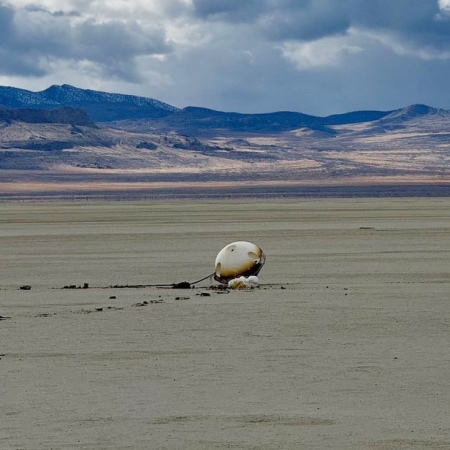
Varda's space capsule, on the ground in Utah
Varda’s first capsule on the ground in Utah.

Rocket Lab today announced it has completed testing and intergration of a new recoverable capsule for the in-space manufacturing company Varda, to be used in orbit to produce pharmaceuticals that can only be created in weightlessness.

No launch date was announced. This was the second of four capsules Rocket Lab is building for Varda, with the first having already completed its flight, where it returned to Earth after successfully crystallizng the HIV drug Ritonavir.

The most important tidbit in the press release however was this:

Varda received permission from the FAA under a Part 450 license earlier this month, making them the only company to ever secure a second reentry license.

With the first capsule, the capsule’s return was delayed almost six months because the FAA and the military couldn’t get their paperwork together to approve the return license. Varda now has that return license in hand before launch, meaning it will get the capsule back when it wants.

1 comment

Musk and Shotwell once again blast red tape against the company

The EPA to SpaceX
The EPA to SpaceX “Nice company you got here.
Sure would be a shame if something happened to it.”

In a follow-up to SpaceX’s blunt critical response to the attacks against it by the head of the FAA, Mike Whitaker during House testimony on September 24, 2024, Elon Musk in a tweet yesterday called for Whitaker to resign.

That blast however was only the start. During a different hearing on September 24th before the Texas state house appropriations committee, Gywnne Shotwell, the CEO of SpaceX, called the actions of the EPA to regulate the launch deluge system for Starship/Superheavy “nonsense.”

“We work very closely with organizations such as the (Texas Commission on Environmental Quality),” she said. “You may have read a little bit of nonsense in the papers recently about that, but we’re working quite well with them.”

…On Tuesday, Shotwell maintained that the the system — which she said resembles “an upside down shower head” — was “licensed and permitted by TCEQ [Texas Commission on Environmental Quality] … EPA came in afterwards and didn’t like the license or the permit that we had for that and wanted to turn it into a federal permit, which we are working on right now.”

…The state agency has said the company received a stormwater permit — a type that’s usually quickly approved — but did not have the permit required for discharge of industrial wastewater produced by launches. That type of permit requires significant technical review and usually takes almost a year to approve. [emphasis mine]

The problem with this demand by both EPA and TCEQ is that SpaceX is not dumping “industrial wastewater produced by launches.” The deluge system uses potable water, essentially equivalent to rain water, and thus does zero harm to the environment. In fact, a single rainstorm would dump far more water on the tidal islands of Boca Chica that any of SpaceX’s Starship/Superheavy launches.

Thus, this demand by the EPA clearly proves the political nature of this regulatory harassment. The unelected apparatchiks in the federal bureaucracy are hunting for ways to stymie and shut down SpaceX, and they will use any regulation they can find to do so — even if that use makes no sense. And they are doing this because they support the Democratic Party wholesale, and thus are abusing their power to hurt someone (Elon Musk) who now opposes that party.

11 comments

New Zealand’s new government abandons promise to streamline red tape

With the release of a new space strategy document [pdf] today, it appears that New Zealand’s new government has abandoned a promise it had made during the election campaign to streamline its space licensing requirements.

It appears that the new leading party in the government had promised to eliminate the present complex licensing rules that require an entirely new license every time a rocket or satellite company makes any change in its plans. The new space strategy however makes no mention of this change, and in fact seems more focused on expanding the government’s reach into space operations, including building and launching its own satellite by 2030. The article at the link suggests this change is possibly because the leading party is in a coalition government that must satisfy its coalition partners.

Three years ago I would have said this policy change would have guaranteed that Rocket Lab would shift more operations to the U.S., but the increased red tape imposed by the FAA’s new “streamlined” Part 450 regulations doesn’t make such a shift helpful any longer. Since the UK government also appears to be favoring heavy regulations that have stalled spaceports there, these government actions might help explain why there has been a sudden burst of new rocket companies and spaceports in Europe and in India in the past two years. Private concerns in both sense an opportunity.

1 comment

FAA administrator claims SpaceX wasn’t following regulations; SpaceX says that’s false

FAA administrator Mike Whitaker today said this to SpaceX:
FAA administrator Mike Whitaker today to SpaceX:
“Nice company you have there. Shame if something
happened to it.”

In a hearing today before the House transportation committee, the FAA administrator Mike Whitaker claimed repeatedly that the red tape his agency has imposed on SpaceX, as well as the fines it recently imposed on the company, were due to safety concerns as well as SpaceX not following the regulations and even launching without a license.

Mike Whitaker, the administrator of the FAA, told lawmakers on the House Transportation Committee that his decision to delay SpaceX’s launch for a few months is grounded in safety, and defended the $633,000 fine his agency has proposed against SpaceX as the “only tool” the FAA has to ensure that Musk’s company follows the rules.

… [Kevin Kiley (R-California)] argued those reviews don’t have anything to do with safety, prompting Whitaker to shoot back: “I think the sonic boom analysis [related to returning Superheavy back to Boca Chica] is a safety related incident. I think the two month delay is necessary to comply with the launch requirements, and I think that’s an important part of safety culture.”

When Kiley asked what can be done to move the launch up, Whitaker said, “complying with regulations would be the best path.”

SpaceX immediately responded with a detailed letter, published on X, stating in summary as follows:

FAA Administrator Whitaker made several incorrect statements today regarding SpaceX. In fact, every statement he made was incorrect.

The letter then detailed very carefully the falseness of each of Whitaker’s claims. You can read images of the letter here and here. The company noted:

It is deeply concerning that the administrator does not appear to have accurate information immediately available to him with respect to SpaceX licensing matters.

Based on SpaceX’s detailed response, it appears its lawyers are extremely confident it has a very good legal position, and will win in court. Moreover, the politics strongly argue in favor of fighting now. Though such a fight might delay further Superheavy/Starship test launches in the near term, in the long run a victory has a good chance of cleaning up the red tape for good, so that future work will proceed without this harassment.

Whitaker’s testimony also suggests strongly that he — a political appointee by the Biden administration –is likely the source of many of the recent delays and increased red tape that SpaceX has been forced to endure. He clearly thinks he knows better than SpaceX on these technical areas, even though his education and work history has never had anything to do with building rockets.

21 comments

Isar begins static fire tests of its Spectrum rocket

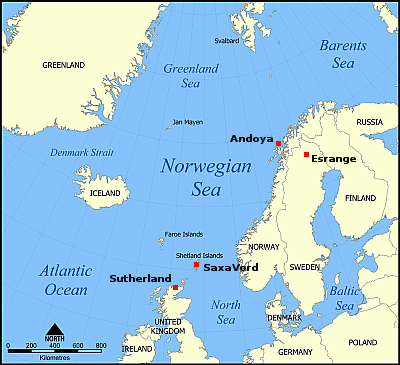
Proposed spaceports surrounding Norwegian Sea

Isar Aerospace, one of three German rocket startups vying to the be first to complete an orbital launch, has now revealed that it has begun static fire tests of its Spectrum rocket at its launch facility at the Andoya spaceport in Norway.

In response to questioning from European Spaceflight, Isar confirmed that all components of the Spectrum rocket that will be utilized for its inaugural flight had arrived in Andøya and that testing of the first and second stages had begun.

“All components of our launch vehicle Spectrum have arrived in Andøya and the final preparations for the first test flight of Spectrum are in full swing,” an Isar Aerospace spokesperson said. “We are currently performing hot fire tests of the first and second stages. These tests will determine whether the systems meet all the necessary requirements for the first test flight.”

The company has a 20-year lease at Andoya, and though it has not announced a launch date, these ground tests suggest that launch could occur quite soon. If so, Isar will have beaten Rocket Factory Augsburg and Hyimpulse to space. Rocket Factory had apparently been in the lead until a fire during a full static fire test of its RFA-1 rocket’s first stage in August destroyed the rocket.

This race is also between the spaceports surrounding the Norwegian Sea. Rocket Factory is launching from Saxavord in the Shetland Islands, a spaceport that has been under development the longest, since before 2020, and has been plagued with the red tape problems that appear systemic in the United Kingdom. Andoya however is a latecomer in this race. Though it has been used for suborbital tests for decades, it only started its effort to become a commercial spaceport for orbital flights in November 2023, less than eleven months ago.

0 comments

Brazil approves space bill that appears to crush that country’s future in space

The Brazillian legislature has now approved a new space regulatory bill that appears to create a whole range of new agencies and regulatory bodies, all designed to heavily supervise all space activities while giving a great deal of arbitrary power to the government.

The quote below says it all. Note that the term “space operators” refers to any private aerospace operation.

The [government] may economically exploit, directly or indirectly, without bidding, the space infrastructure, including ground equipment and logistical resources, installations and computer systems necessary to carry out space activities.

The regulatory authorities, AEB and the Air Force Command, will have free access to the facilities and equipment of space operators. They may, at any time, cancel or change the licenses granted in the event of non-compliance with obligations or when there is a threat to national security or violation of international commitments. Even if its activities are suspended or canceled, the operator remains responsible for the artifacts that are in operation. [emphasis mine]

There is a lot more, all of it adding more heavy regulation while imposing great responsibilities both legal and financial on the private companies, all to the benefit of the government.

Who is going to invest billions, even millions, under such an arbitrary regime? No one, especially because the Brazillian government has already proven its willingness to unilaterially block or take over private companies with its actions in connection with Starlink and X.

7 comments

SpaceX and Elon Musk blast the FAA’s red tape again

Are Americans finally waking up and emulating their country's founders?

Fight! Fight! Fight! Yesterday both SpaceX and Elon Musk renewed their attack on the FAA’s apparent arbitrary harassment of the company, both by slowing down development of Starship/Superheavy as well as imposing fines and delays on the company for petty issues relating to Falcon 9 launches.

First, Elon Musk sent out a tweet on X, highlighting a successful static fire launchpad engine test of the Starship prototype the company plans to fly on the sixth Starship/Superheavy orbital flight. As he noted with apparent disgust, “Flight 5 is built and ready to fly. Flight 6 will be ready to fly before Flight 5 even gets approved by FAA!”

Second, and with more force, the company released a public letter that it has sent to the leading Republican and Democratic representatives of the House and Senate committees that have direct authority over space activities, outlining its issues with the FAA’s behavior. The letter details at length the irrational and inexplicable slowdown in FAA approvals that caused two launches last summer to occur in a confused manner, with SpaceX clearly given the impression by the FAA that it could go ahead which the FAA now denies. In one case the FAA claims SpaceX removed without its permission a poll of mission control during its countdown procedure. SpaceX in its letter noted bluntly that the regulations do not require that poll, and that the company already requires two other polls during the count.

In another case involving SpaceX’s plan to change to a new mission control center, the company submitted its request in June, and after two months the FAA finally approved the control center’s use for one launch, but had still not approved it for a second. The first launch went off, so SpaceX thus rightly assumed it could use the control center for the second. Yet the FAA is now trying to fine SpaceX for that second launch.

The third case of FAA misconduct appears to be the most egregious. » Read more

8 comments

FCC commissioner slams FCC for its partisan hostility to SpaceX

The FCC proves its partisan hostility to SpaceX

Even as the FAA has increasingly appeared to be harassing SpaceX with red tape, FCC commissioner Brendan Carr this week slammed his own agency for what appears to be clearly partisan hostility to SpaceX in its recent decisions and public statements.

Carr noted how only last year the FCC had canceled an almost $900 million grant that it had previously awarded to SpaceX for providing rural communities internet access. When it did so, the FCC claimed that the company had failed to “demonstrate that it could deliver the promised service.”

That claim of course was absurd on its face, considering that Starlink was the only available commercial system that was actually doing this, directly to individual rural customers.

Carr noted however that this absurd FCC decision was made even more ridiculous this week by the FCC’s chairperson, Jessica Rosenworcel, who accused SpaceX of being a “monopoly” because of its success in launching Starlink satellites and providing this service ahead of everyone else.
» Read more

11 comments

Musk: We will sue the FAA for “regulatory overreach” and “improper, politically-motivated behavior”

In a series of tweets yesterday Elon Musk announced that SpaceX is going to sue the FAA for its recent actions that have delayed development of Starship/Superheavy and have also fined the company for what appear to be petty reasons.

In the second case, the FAA threatened to fine SpaceX $633K because it had not gotten some minor approvals prior to successfully completing two launches safely. The agency gave SpaceX 30 days to respond.

Musk responded bluntly in a tweet, stating that “SpaceX will be filing suit against the FAA for regulatory overreach.” In a second tweet immediately thereafter Musk added that that the fines were “More lawfare.”

In a third tweet he stated unequivocally, “I am highly confident that discovery will show improper, politically-motivated behavior by the FAA.”

As noted in the first link above, the agency took no action against SpaceX for more than a year after those two launches, only issuing the threat to fine the company now, just before the election, and just after the company had publicly criticized the agency for its delays in issuing a launch license for the fifth Starship/Superheavy test flight. I suspect Musk has some good information of solid evidence that some officials either in the FAA or at the White House instigated this action for political reasons. An honest appraisal of the FAA’s actions sure suggests it.

23 comments

FAA fines SpaceX $633K for acting without its permission

The FAA to SpaceX
The FAA to SpaceX “Nice company you got here.
Sure would be a shame if something happened to it.”

The FAA today revealed that it wants to fine SpaceX a total of $633,009 for two different actions where the company did something without the agency’s express permission.

In May 2023, SpaceX submitted a request to revise its communications plan related to its license to launch from Cape Canaveral Space Force Station in Florida. The proposed revisions included adding a new launch control room at Hangar X and removing the T-2 hour readiness poll from its procedures. On June 18, 2023, SpaceX used the unapproved launch control room for the PSN SATRIA mission and did not conduct the required T-2 hour poll. The FAA is proposing $350,000 in civil penalties ($175,000 for each alleged violation).

In July 2023, SpaceX submitted a request to revise its explosive site plan related to its license to launch from the Kennedy Space Center in Florida. The proposed revision reflected a newly constructed rocket propellant farm. On July 28, 2023, SpaceX used the unapproved rocket propellant farm for the EchoStar XXIV/Jupiter mission. The FAA is proposing a $283,009 civil penalty.

To understand the absurdity and abuse of power going on here, one must look at the dates. » Read more

19 comments

A space journalist suddenly notices that the FCC has no legal authority to regulate space junk

An article posted yesterday at Space News was unusual in that this mainstream media space news source and its reporter suddenly recognized, more than a year late, that the FCC’s effort to impose regulations on all satellite companies requiring they build satellites a certain way to facilitate their de-orbit at the end of their lifespan, is based on no statutory authority and is thus illegal.

[A] Supreme Court ruling in June struck down a principle widely known as “Chevron deference,” which gave agencies greater latitude in interpreting ambiguities in laws they enforced. The move has raised questions over the FCC’s space sustainability jurisdiction without a federal law that explicitly authorizes it or other agencies to establish and enforce debris mitigation rules.

Still, the FCC is seen as the logical agency to handle the risk of orbital debris. If courts rule that the FCC has not been granted the authority, Congress will likely address this once it gets around to tackling the issue.

My, my! You mean a federal bureaucrat doesn’t have the right to make law out of thin air, just to facilitate what that bureaucrat thinks should be done? Who wudda thought it!

As an old-fashioned American who believes in freedom and limited government (as clearly established by our Constitution) I had recognized this legal fact immediately in January 2023, when the FCC first made its power grab. That our young modern journalists don’t understand this is both tragic and disgraceful.

What makes this even more disgraceful is that the entire article lobbies hard for the FCC, claiming with no real evidence that “the FCC is seen as the logical agency to handle the risk of orbital debris.”

What this reporter should have known and reported is that both the House and the Senate have disgreed, forcefully. In the House one bill was introduced to give the de-orbit regulatory power to the FAA, while later rejecting a second bill that would have given that power to the FCC. The Senate meanwhile introduced its own bill giving this de-orbit regulatory power to the FAA and Commerce, not the FCC.

Sadly it is probably a mistake to give any government agency too much power in this matter, but our Congress will do so regardless. That is how things are done nowadays. Americans are expected to kow-tow to Washington regulators, in everything they do. Freedom is not the default approach. Regulation is.

6 comments

FAA attempts to justify its red tape

The FAA today responded to SpaceX’s harsh criticism of the licensing process that is delaying the next test orbital launch of Starship/Superheavy, claiming the delays were entirely SpaceX’s fault for changing the flight profile of the mission, likely involving the landing of Superheavy at the launch tower rather than in the Gulf of Mexico.

The agency also claimed that this change meant that the “environmental impact” would cover a wider area, requiring imput from “other agencies.”

An FAA official reiteriated these claims at a conference yesterday, stating that the delay was “largely set by the choices that the company makes.”

All crap and utter rationalizations. The FAA has decided that any change of any kind in the launch operations will now require major review, including bringing in Fish & Wildlife, the Coast Guard, and others to have their say. This policy however has nothing to do with reality, as there is absolutely no additional threat to the environment by these changes. Nor is there any significant increase in safety risks by having Superheavy land at Boca Chica. Even if there were, the only ones qualified to determine that risk are engineers at SpaceX. The FAA is merely rubberstamping SpaceX’s conclusions, and taking its time doing so.

This is America today. Unless something changes soon, freedom is dead. To do anything new and challenging Americans will have to beg permission from bureaucrats in Washington, who know nothing but love to exert their power over everyone else. Under these circumstances, we shall see the end of a great and free nation.

10 comments

Space industry and Congress blast FAA for its so-called “streamlined” regulations

At hearings yesterday before the House Science committee numerous space companies as well as elected officials heaped numerous complaints about the FAA’s regulartory framework, called Part 450, that it adopted in March 2021 supposedly to “streamline” and “speed up” the licensing required to launch.

The result has been the exact opposite, as predicted by many in the industry when the agency was writing these regulations.

Many in the launch industry have warned since the regulations went into force in March 2021 that it was difficult for companies to obtain licenses under Part 450. Industry officials raised concerns about Part 450 at an October 2023 hearing of the Senate Commerce Committee’s space subcommittee, with one witness, Bill Gerstenmaier of SpaceX, warning the “entire regulatory system is at risk of collapse” because of the difficulties getting licenses under the new regulations.

Witnesses at the House hearing made clear those concerns have not abated. “The way it is being implemented today has caused severe licensing delays, confusion and is jeopardizing our long-held leadership position,” said Dave Cavossa, president of the Commercial Spaceflight Federation, an industry group whose members include several launch companies.

He cited specific concerns such as a long “pre-application” process with the FAA where companies, he said, “get stuck in an endless back-and-forth process” with the agency to determine how they can meet the performance-based requirements of Part 450 with limited guidance. “This process is taking years,” he argued.

It first must be noted that this hearing was not called in connection with the FAA’s stonewalling of SpaceX Starship/Superheavy test program. It was called because since 2021 the entire new rocket industry in the U.S. has ground to a halt, with launches from new rocket companies practically ending because of the red tape imposed on them by Part 450. If something is not done to fix this, new companies in Europe and India will quickly grab market share, choking off profits for the new American companies.

5 comments

FAA delays launch license approval of next Starship/Superheavy test launch until late November


The White House to SpaceX: “Great business you got there! Really be
a shame if something happened to it!”

According to an update today on SpaceX’s Starship webpage, the FAA has told the company to not expect a launch license for its next Starship/Superheavy orbital test launch until late November.

We recently received a launch license date estimate of late November from the FAA, the government agency responsible for licensing Starship flight tests. This is a more than two-month delay to the previously communicated date of mid-September. This delay was not based on a new safety concern, but instead driven by superfluous environmental analysis. The four open environmental issues are illustrative of the difficulties launch companies face in the current regulatory environment for launch and reentry licensing.

This two month delay is actually a four month delay, since SpaceX had previously stated it was ready to launch in early August. » Read more

20 comments
1 6 7 8 9 10 105