Glaciers in the Martian south latitudes

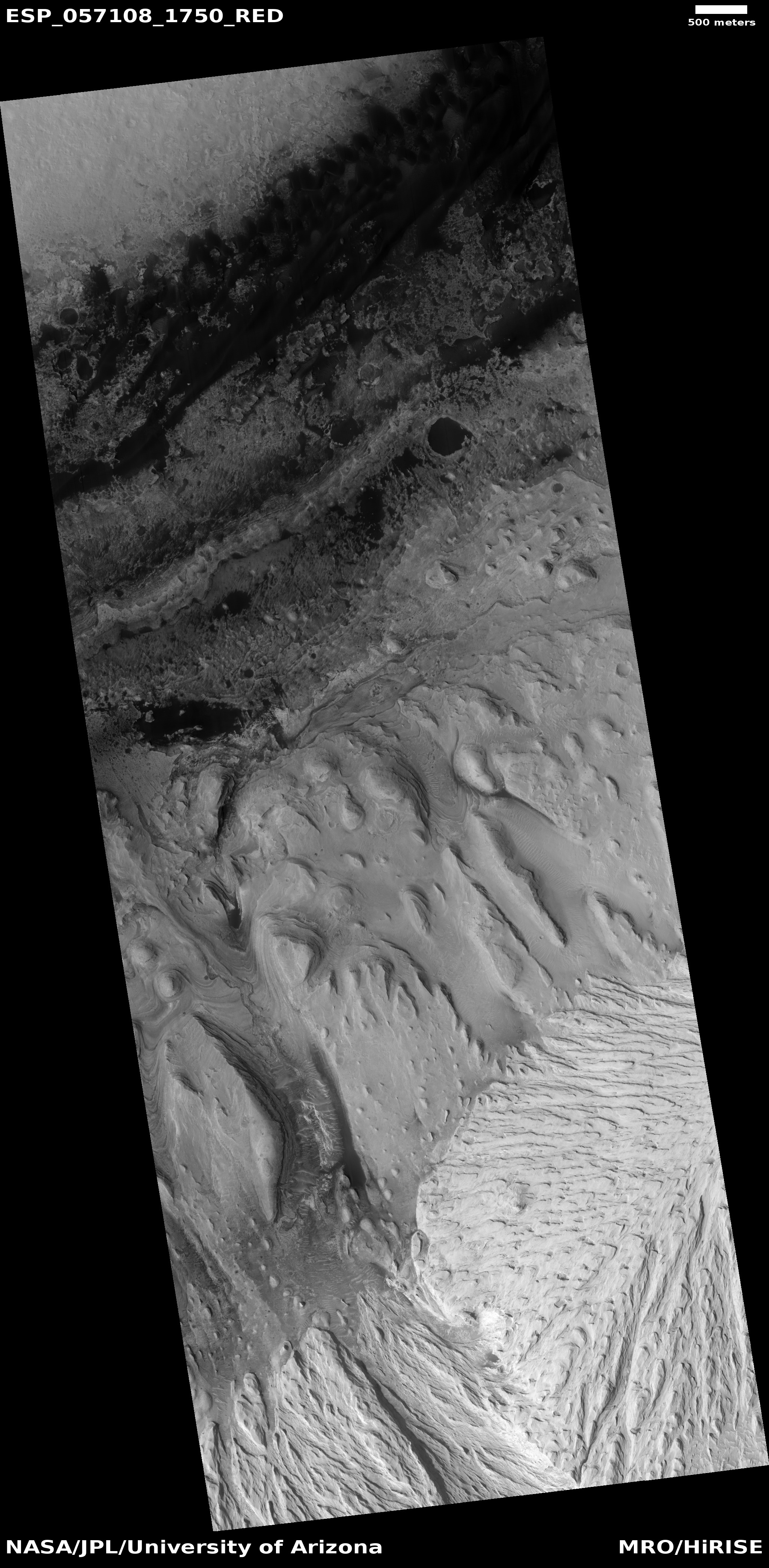
Glaciers in Mars' southern hemisphere
Click for full image.

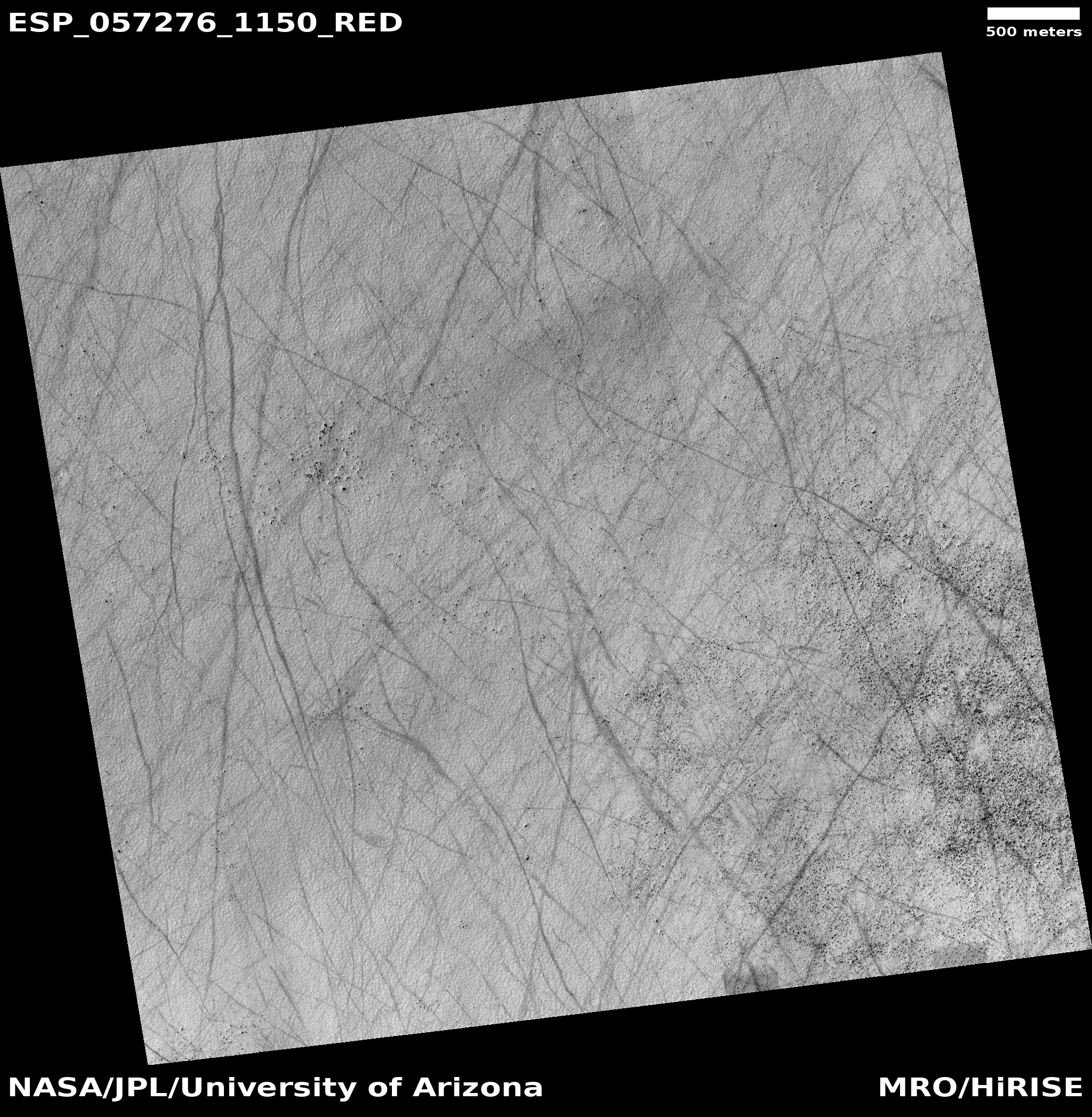
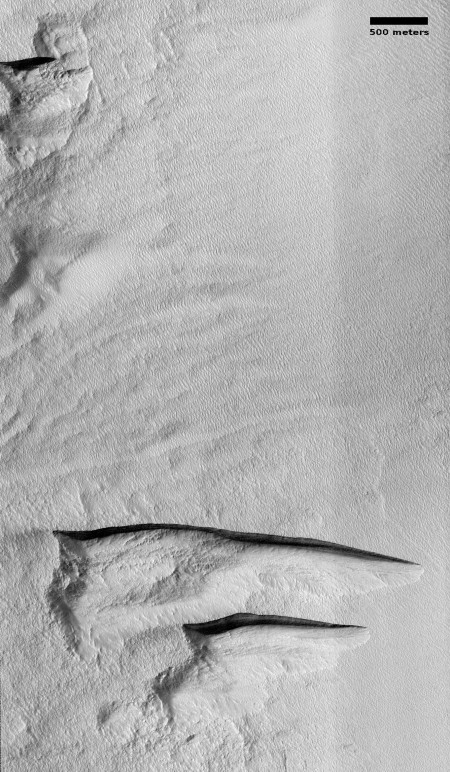
Most of the glacier cool images I have posted in the past few years from the high resolution camera on Mars Reconnaissance Orbiter (MRO) have shown the obvious glacial features found in the northern hemisphere in that 2,000 mile long strip of chaos terrain at about 40 degrees latitude I dub “Glacier Country.”

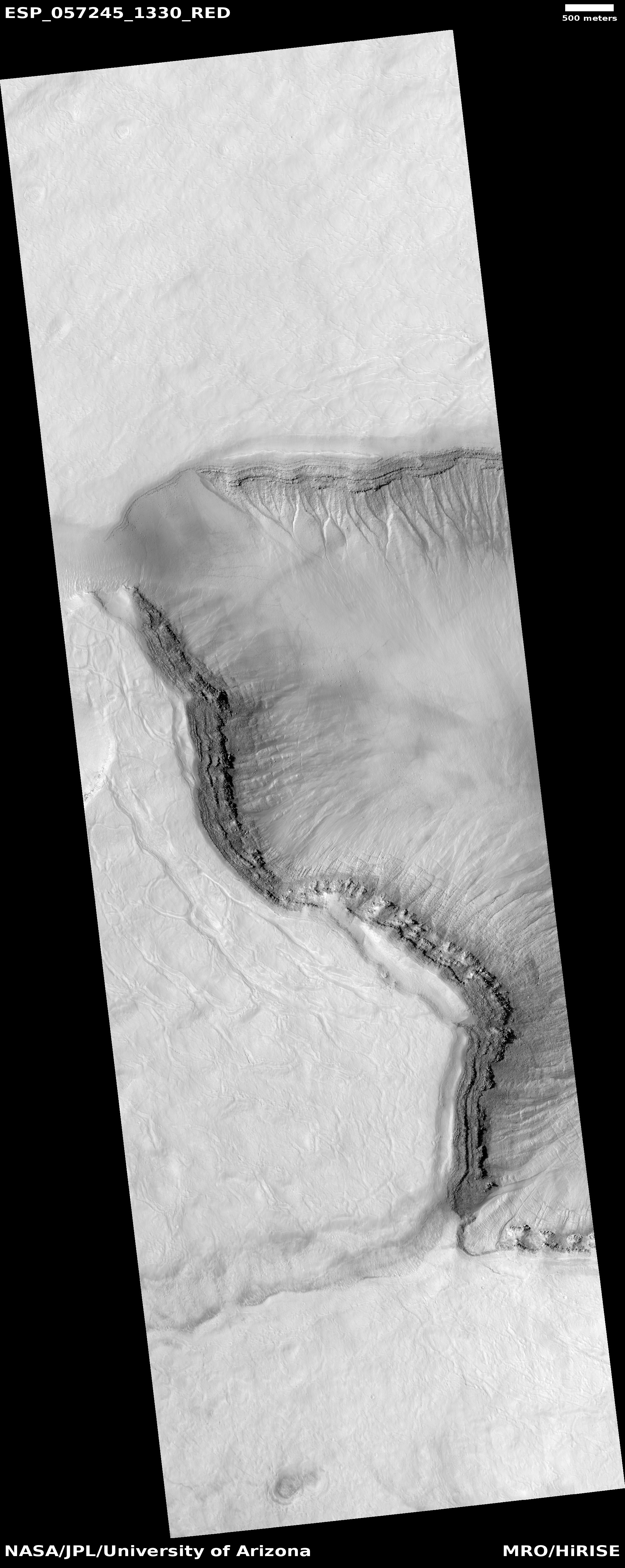
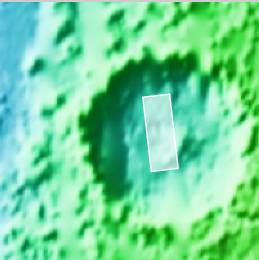
Today’s glacier image to the right, cropped and reduced to post here, takes us instead to the southern hemisphere, into Hellas Basin, the death valley of Mars. The picture was taken on April 8, 2021, and in the full picture gives us a myriad of examples of glacial features. The section featured to the right focuses in on what appears to be an ice covered south facing slope, which in the southern hemisphere will get the least sunlight.

Think of the last bits of snow that refuse to melt after a big blizzard. They are always found in shadowed areas, which in the southern hemisphere would be this south-facing slope.

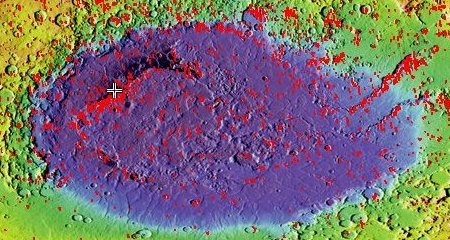
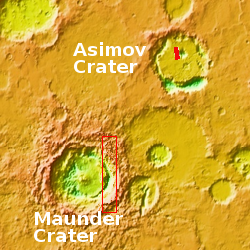
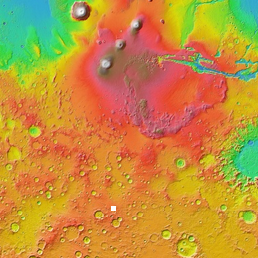
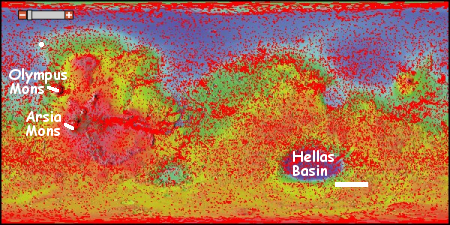
The overview map below shows how this location, marked by the small white rectangle, is inside Hellas Basin, at a low altitude comparable to the northern lowland plains. The feature is also a comparable latitude, 43 degrees south, to the glacier country of the north.
» Read more

0 comments

InSight detects the three more large quakes on Mars, the most powerful measured so far

In the past month InSight’s seismometer has detected the three most powerful earthquakes so far measured on Mars, with one located in a region where no quakes had as yet been seen.

InSight spotted 4.2- and 4.1-magnitude temblors on Aug. 25, then picked up another roughly 4.2-magnitude quake on Sept. 18 that lasted for nearly 90 minutes, NASA officials announced on Wednesday (Sept. 22).

The previous record holder, which InSight measured in 2019, clocked in at magnitude 3.7 β€” about five times less powerful than a 4.2-magnitude quake.

At this time scientists have only been able to roughly pinpoint the location of the two August quakes, with the 4.1 quake occurring about 575 miles away, putting it in the volcanic plains where InSight sits and closer than the location of most of the previous large quakes near the long surface fissures dubbed Cerberus Fossae 1,000 miles away.

The August 4.2 quake’s is even more interesting, as its location is the farthest away of any so far detected, at an estimated distance of 5,280 miles away. The scientists presently suspect but have not yet confirmed that it may be located in the western end of Valles Marineris, Mars’ largest canyon.

The lander itself continues to fight a loss of power due to the amount of dust on its solar panels, forcing the science team to shut down practically all its other instruments so that the seismometer could continue operating.

0 comments

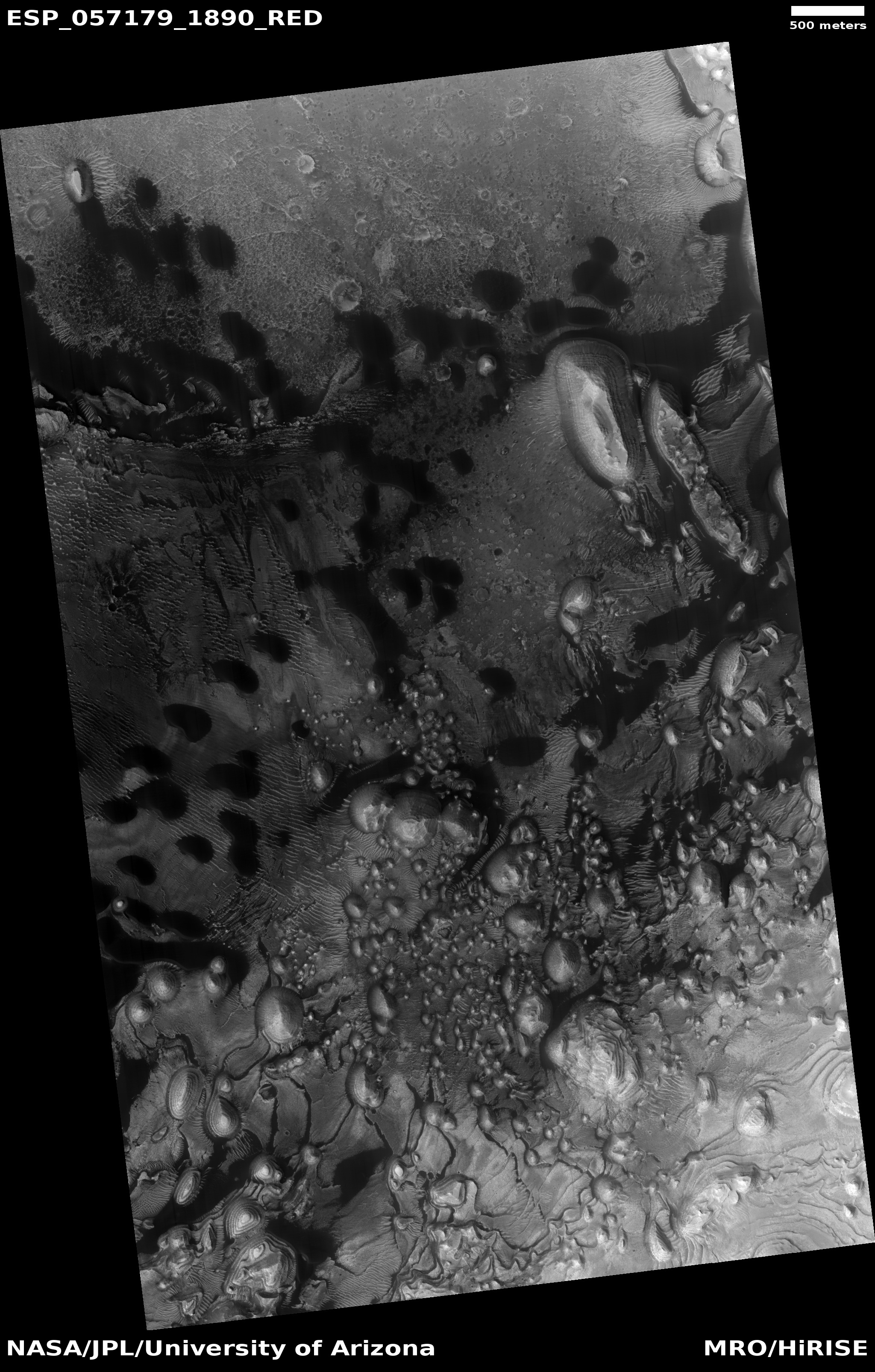
A clue to the Martian history of volcanic eruptions

Dark layers in Medusae Fossae Formation
Click for full image.

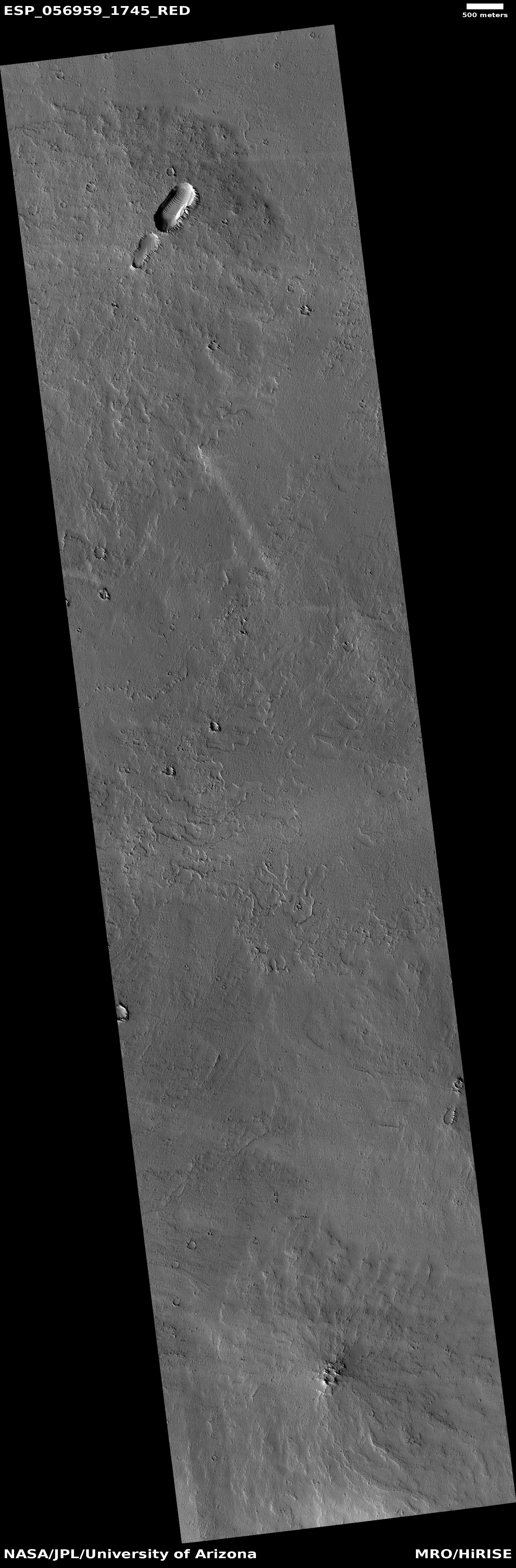
Anyone who has taken even a single glance at a map of Mars cannot help but recognize that the red planet was once engulfed with repeated gigantic volcanic eruptions able to build numerous volcanoes larger than anything seen anywhere else in the solar system.

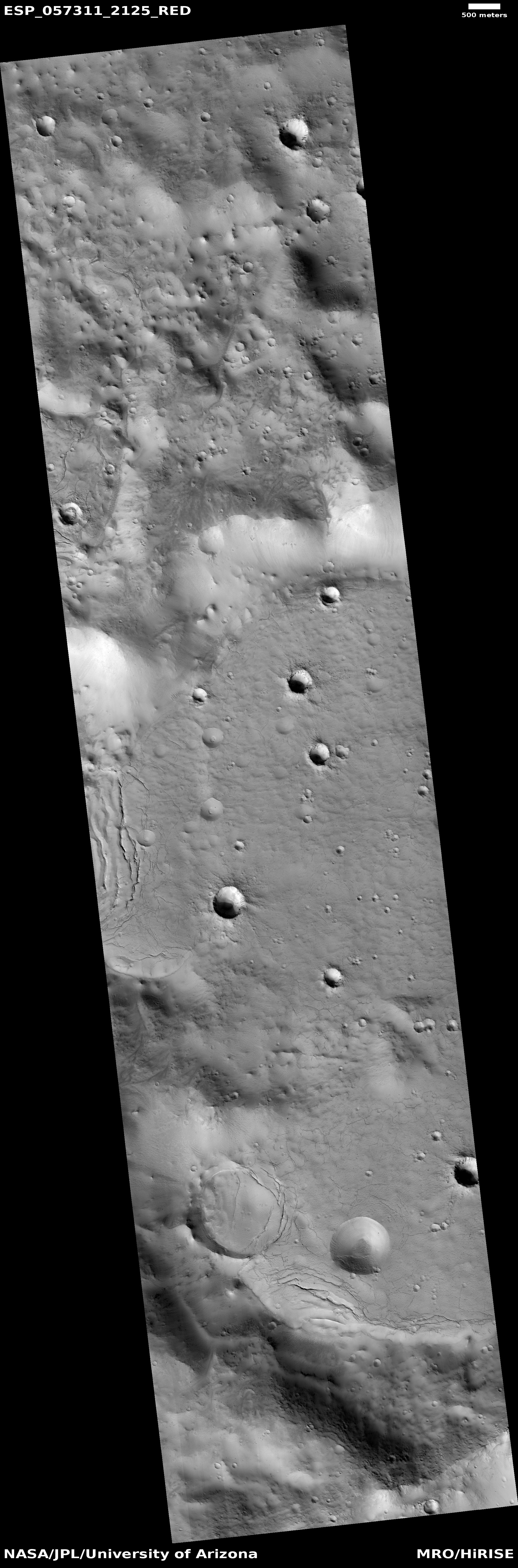
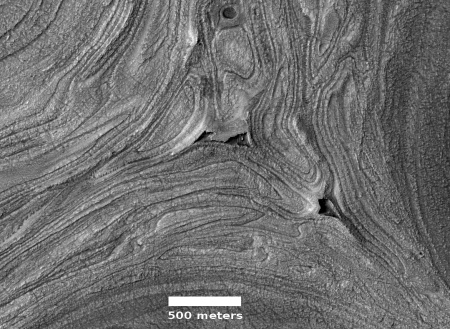
The cool image to the right, rotated, cropped, and enlarged to post here, provides a clue into those past eruptions, now thought to have been active for more than several billion years, with the most recent large activity ending several tens of millions of years ago. The photo was taken on May 7, 2021 by the high resolution camera on Mars Reconnaissance Orbiter (MRO), and shows just one tiny portion of the vast Medusae Fossae Formation, the largest thick volcanic ash deposit on Mars, about the size of India and what scientists think is the source of most of the planet’s dust.

What makes this picture interesting are the dark layers in the lower hollows. They indicate that this deposit was placed down in multiple eruptions, some of which produced material that appears dark blue in MRO images, and suggest that eruption was different than previous and subsequent eruptions.

The white cross on the overview map below notes the location of this picture in the Medusae Fossae Formation.
» Read more

3 comments

Martian mountaintop

Mountains on Mars
Click for full image.

The outcrop top
Click for full image.

Cool image time! The photo to the right, cropped, reduced, and enhanced to post here, was taken on September 21, 2021 by Curiosity’s high resolution mast camera, and shows the top of that spectacular rock outcrop about 200 feet to the west of where the rover presently sits. The top image, from my September 16, 2021 post, “Curiosity: Into the Mountains!”, indicates the location of the photo with the black rectangle. The red dotted line indicates the rover’s future planned route.

I estimate the whole outcrop is about 100 feet high, which means the cliff section seen in the photo to the right is probably about 30 feet high. It would make a great challenge for any number of rock climbers I know.

What makes this image especially striking are the overhanging rocks at the peak’s top. In the Martian gravity, about one third that of Earth’s, it is possible for much more delicate rock shapes to remain structurally stable, and the sharp jagged boulders hanging out at the top of this cliff demonstrate that in a quite breath-taking way. On Earth such delicate rocks would likely have quickly fallen.

The Curiosity science team is obviously most interested in the massive layers revealed by this cliff. I am also sure they are also as enthralled by the scenery as I am.

4 comments

How to discover interesting things on Mars

Overview map

Today’s cool image will do something a little different. We are going to begin in orbit, and by step-by-step zooming in we will hopefully illustrate the great challenge of finding cool geological features on the surface of Mars.

The first image to the right is an overview map of the Valles Marineris region. To its east, centered at the white dot, is a vast region of chaos terrain, endless small buttes and mesas and criss-crossing canyons. Travel in this region will always be difficult, and will likely always require some form of helicopter to get from point to point.

What is hidden in that terrain? Well, to find out you need to take a global survey from orbit with a good enough resolution to reveal some details. Below is a mosaic made from two wide angle context camera pictures taken by Mars Reconnaissance Orbiter (MRO).

Context mosaic of chaos terrain
For full images go here and here.

This mosaic, rotated, cropped, and reduced to post here, only captures a small section of the long north-south strips taken by MRO. The orbiter has taken tens of thousands of these strips, in its effort to produce a global map of Mars that shows some reasonable detail.

Do you see anything in this mosaic that looks interesting? Scientists need to pore over such images, one by one, searching for geology that is both puzzling and revealing. Sometimes the features are obvious, such as a single blobby crater in the flat relatively featureless northern lowlands.

Sometimes however the search can be slow and time-consuming because the terrain is complex, as is the example to the right. The many mesas and canyons can hide many interesting features. Since MRO can’t possibly take high resolution photos of everything, scientists have to pick and choose.

The planetary scientists who use MRO did find something here worth looking at in high resolution. Can you find it? Normally I’d provide a box to indicate it, but this time I’d thought I’d challenge my readers. Before you click below to see the feature, see if you can find it yourself in this mosaic. What would you want to photograph in high resolution?
» Read more

5 comments

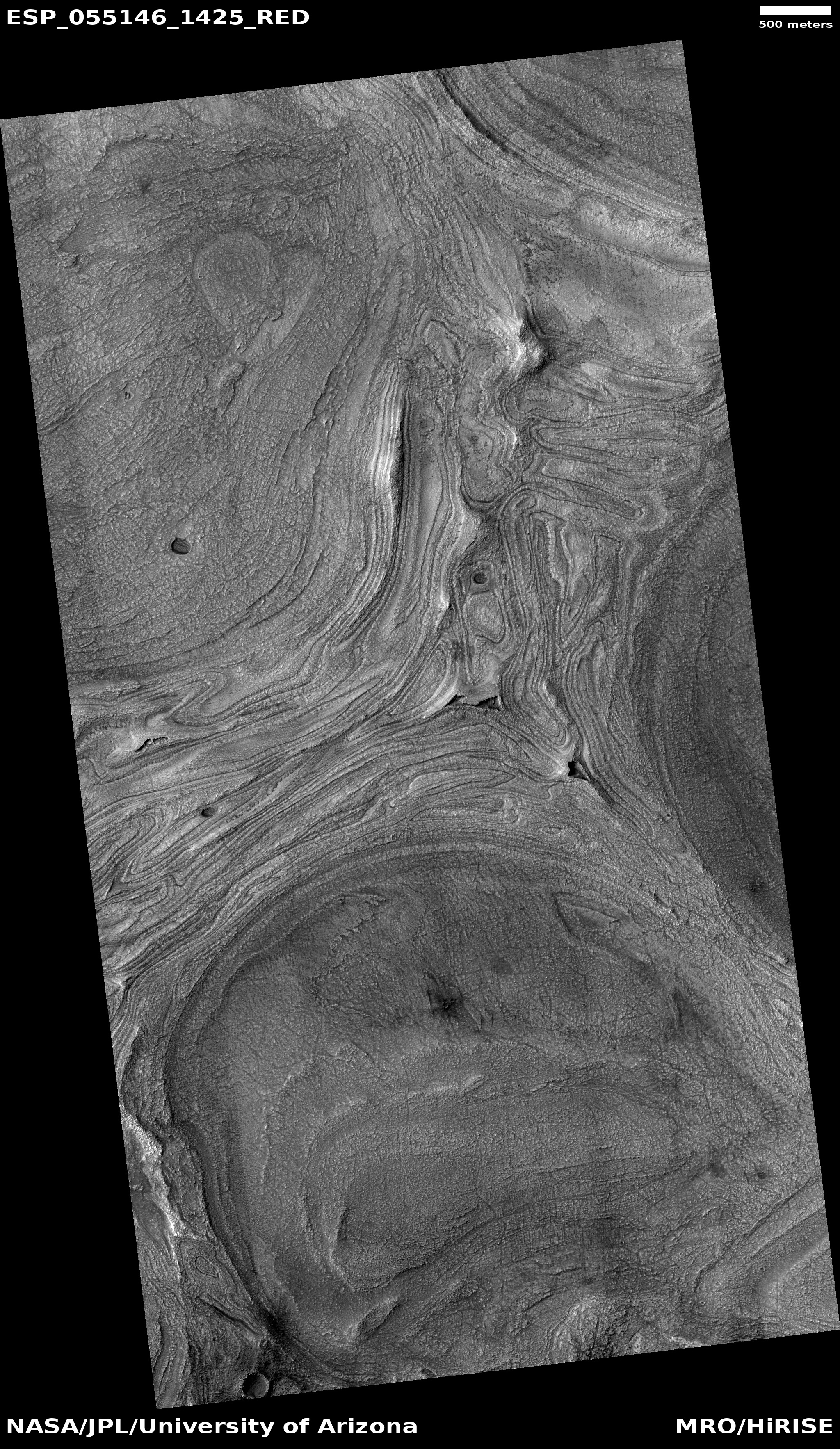
Glacial falls on Mars

A glacial falls on Mars
Click for full image.

Cool image time! The photo to the right, cropped and reduced to post here, was taken on July 2, 2021 by the high resolution camera on Mars Reconnaissance Orbiter (MRO). It provides us just one more clear example of the many glaciers found in that 2,000-mile-long strip of chaos terrain at 30 to 47 degrees north latitude that runs between the northern lowland plains and the southern cratered highlands, a region I like to call Mars’ glacier country.

What makes this glacial feature interesting is that these ice-filled alcoves are south-facing, which in the northern hemisphere means they get the most sunlight. Yet, the ice here remains, well-protected by its layer of dust and debris. Think of the dirty ice slush that manages to survive the longest on city streets in the spring. The dirt acts as protection so that the ice takes more time to melt.

The overview map as always provides our context.
» Read more

0 comments

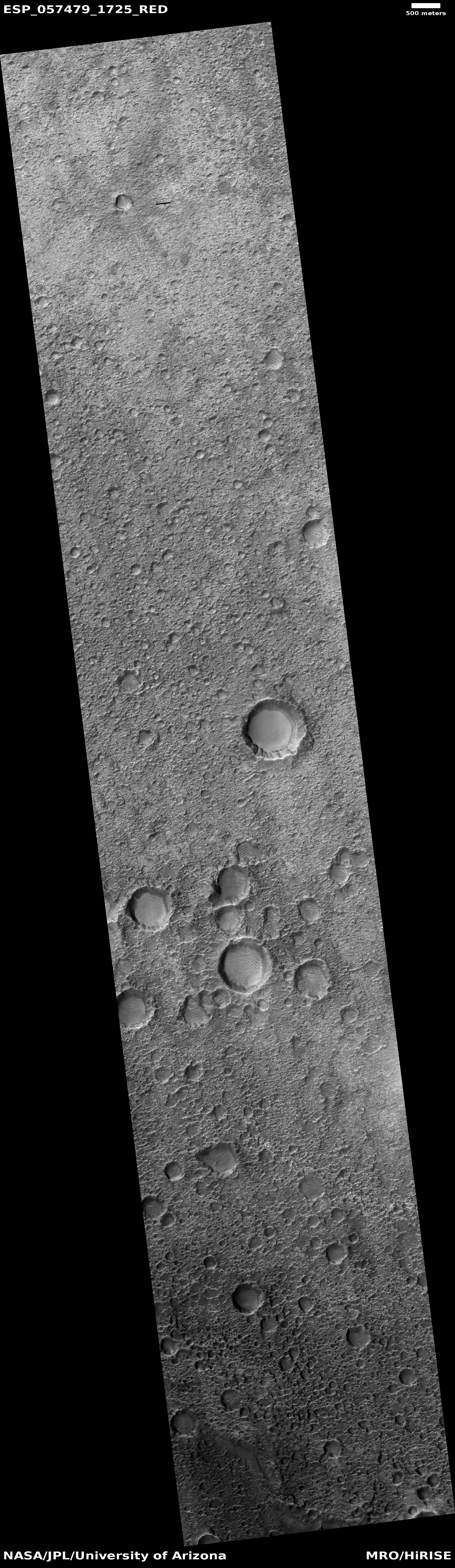
Badlands on the floor of a Martian crater

Badlands on the floor of a Martian crater
Click for full image.

Cool image time! The photo to the right, rotated, cropped, and reduced to post here, shows one small section of a 30-mile-wide unnamed crater in the cratered equatorial regions of Mars northeast of Hellas Basin. Taken on July 21, 2021 by the high resolution camera on Mars Reconnaissance Orbiter (MRO), the science team labeled merely as “Rocky crater fill.”

Being at 17 degrees south latitude, there shouldn’t be any ice features in this crater, and the high resolution image to the right seems to confirm this. All we see is an endless plain made up of innumerable small sharp rock ridges interspersed with small low areas filled with sand dunes. This is bed rock, and if its strange stucco-like appearance was caused by a past glacial era, that era is long gone.

Below is a mosaic showing the entire crater, created from two MRO context camera images.
» Read more

0 comments

Curiosity: Into the mountains!

Curiosity's path into the mountains
Click for full image.

Overview map
Click for interactive map.

Time for another cool image from Curiosity. The photo above was taken by one of the rover’s navigation cameras today, and looks south in the direction of Curiosity’s future travels. The red dotted line shows that planned route, along the cliff face to then turn west into what the science team has dubbed Maria Gordon Notch, in honor of a Scottish scientist from the early 20th century.

The map to the right gives the context as seen from above, as well as the planned travels beyond the notch. The white dotted route marks Curiosity’s actual travel route. The red dotted line marks the planned route. The yellow lines the area seen in the above picture.

At present Curiosity is paused as it performs a new drilling campaign about 200 feet from the base of that cliff face, drilling the rover’s 33rd hole on Mars.

The outcrop resembling a ship’s prow on the image’s right, which I still consider the most spectacular rock outcrop seen yet on any planetary mission anywhere, is about 100 feet high.

3 comments

Lozenge-shaped hole in Martian crater

Hole in crater floor
Click for full image.

Cool image time! The photo to the right, rotated, cropped, reduced, and enhanced to post here, was taken on June 7, 2021 by the high resolution camera on Mars Reconnaissance Orbiter (MRO).

The left image shows what the scientists have dubbed a “lozenge-shaped depression” in the middle of an unnamed 60-mile-wide crater in the southern cratered highlands of Mars. The right image shows the same exact depression, but I have brightened the photo in order to see the details in the shadowed depression.

Though the image is inconclusive, the bottom of the darkest spot in that depression cannot be seen, suggesting it could be an entrance into a larger void below.

Even if there is no voids below, why is this depression here? What caused it? The wider view of MRO’s context camera below might give us a hint.
» Read more

1 comment

The layered history of Mars as revealed in Valles Marineris

Layered cliff in Valles Marineris
Click for full image.

Cool image time! The photo to the right, rotated, cropped, and reduced, shows just one tiny cliff face in the gigantic canyon on Mars dubbed Valles Marineris. The photo was taken on June 13, 2021 by the high resolution camera on Mars Reconnaissance Orbiter (MRO).

Like many other similar cliff faces that MRO has photographed and that I have previously highlighted, there are many many layers visible here. In fact, it appears that almost every cliff in this part of Valles Marineris is many layered, suggesting that like the Grand Canyon on Earth, the canyon as it was carved exposed in great detail the long geological history of Mars.

In this part of Mars, each layer probably represents the placementof a new layer of volcanic material, pouring out from the giant volcanoes in the Tharsis Bulge to the west. In addition, overlain on this volcanic record are probably deposits lain down by the atmosphere as Mars underwent its many climate cycles due to the regular shifts in its orbit and rotational tilt.
» Read more

0 comments

Make concrete on Mars using human blood?

What could possibly go wrong? Scientists at the University of Manchester in the United Kingdom have developed a new formulation that can use material known to exist on Mars, combined with the addition of astronaut blood, to produce useful concrete.

Working with simulated lunar and Martian soils, the team experimented with using human blood and waste products as binding material, and turned up some interesting results.

The work showed that a common protein in the blood called serum albumin could be used as a binder to produce a concrete-like material with compressive strength comparable to ordinary concrete. In investigating the mechanisms at play, the team found the blood proteins “curdle” to form “beta sheets” that extend outward to hold the material together.

Even more interestingly, the team found that urea, a waste product found in urine, sweat and tears, could be incorporated to increase this compressive strength by more than 300 percent. That is to say, the key to cosmic concrete stronger than what we have here on Earth might be found in our blood, sweat and tears (and urine).

This work was inspired by ancient building techniques, which often used pig blood in concrete for similar reasons.

Though a lot of this makes sense, especially the utilization of waste products like urine, the idea that future colonies will tap the blood of their citizens for construction purposes raises so many moral questions I can’t list them all here.

For example, let me throw out one possibility should no one think about this too much on Mars. Why not use this need for blood as a method of criminal punishment? Do something the ruling powers think is wrong and we will suck your blood from you to build the colony!

The moral consequences of our actions require long careful thought. Unfortunately, long careful thought simply no longer exists among today’s intellectual and political classes. Instead, they make almost all their decisions off the cuff, based on what “feels” right to them. You merely have to watch the many interviews of Dr. Anthony Fauci in the past year to see what I mean. Nothing he says about masks or mandates is really based on new research or data. He merely throws out an opinion that feels right, at the moment. Thus, he contradicts himself repeatedly, and most of his advice has been worse than useless, resulting in so many unexpected negative consequences they almost cannot be counted.

Try to imagine the horrors that could take place in a colony on Mars, where resources are in short supply, should construction require the use of human blood and the leadership there approaches its problems with the same cavalier attitude toward moral consequences? I can, and it chills my own blood to the core (no pun intended).

17 comments

An example why scientists think there were catastrophic floods on Mars

Broken mesas on Mars
Click for full image.

Today’s cool image provides a nice illustration why scientists have long assumed that in the distance past there had been catastrophic floods of liquid water on Mars. The photo to the right, rotated, cropped, and reduced to post here, was taken on July 6, 2021 by the high resolution camera on Mars Reconnaissance Orbiter (MRO). It shows an east-west gully cutting between mesas to the north and south.

Because the highest mesas seem to be aligned, this suggests they were once part of the same formation, and something came along to carve that gap and gully between them.

What made the break? The overview map below as usual provides some context, which also provides a possible explanation.
» Read more

4 comments
1 87 88 89 90 91 212