Inverted river on Mars

Inverted river on Mars

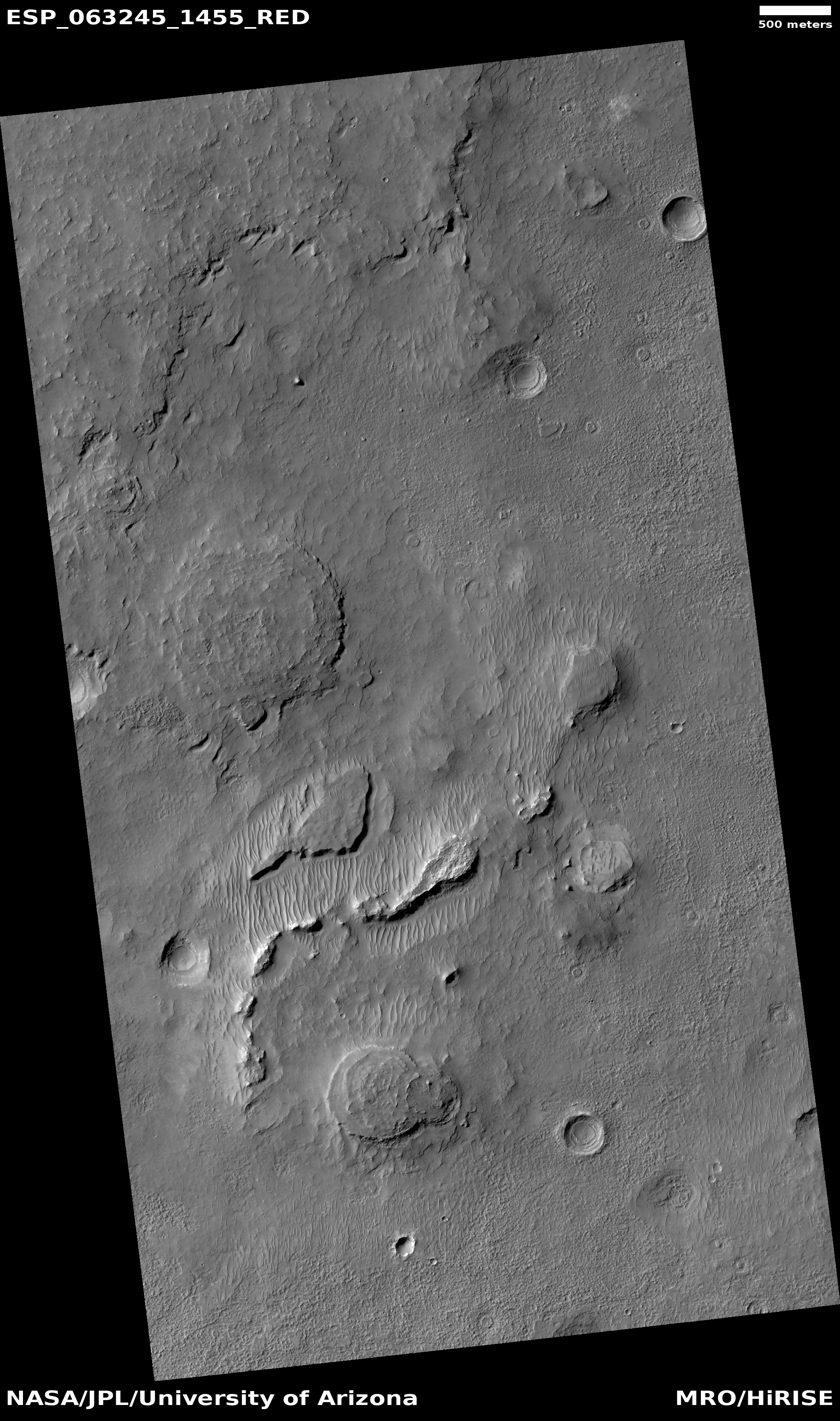
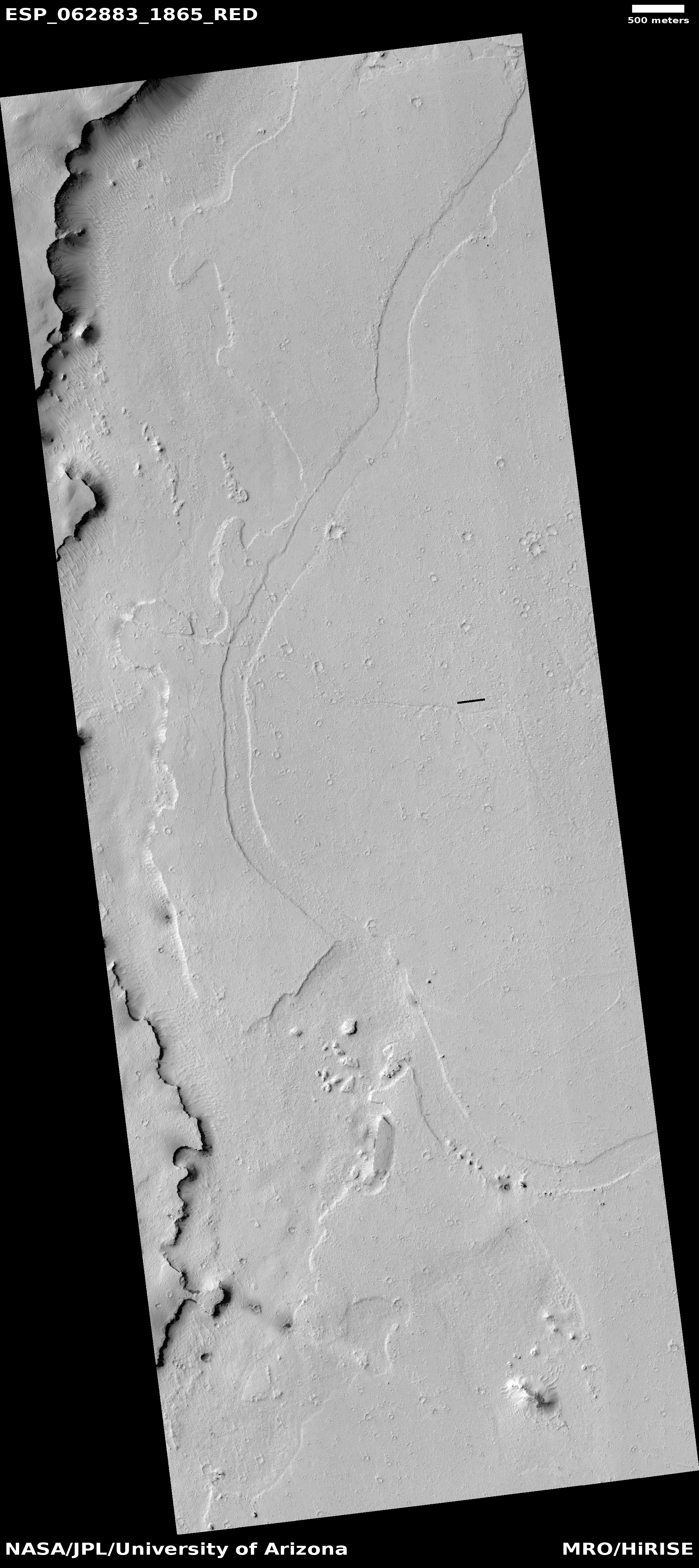
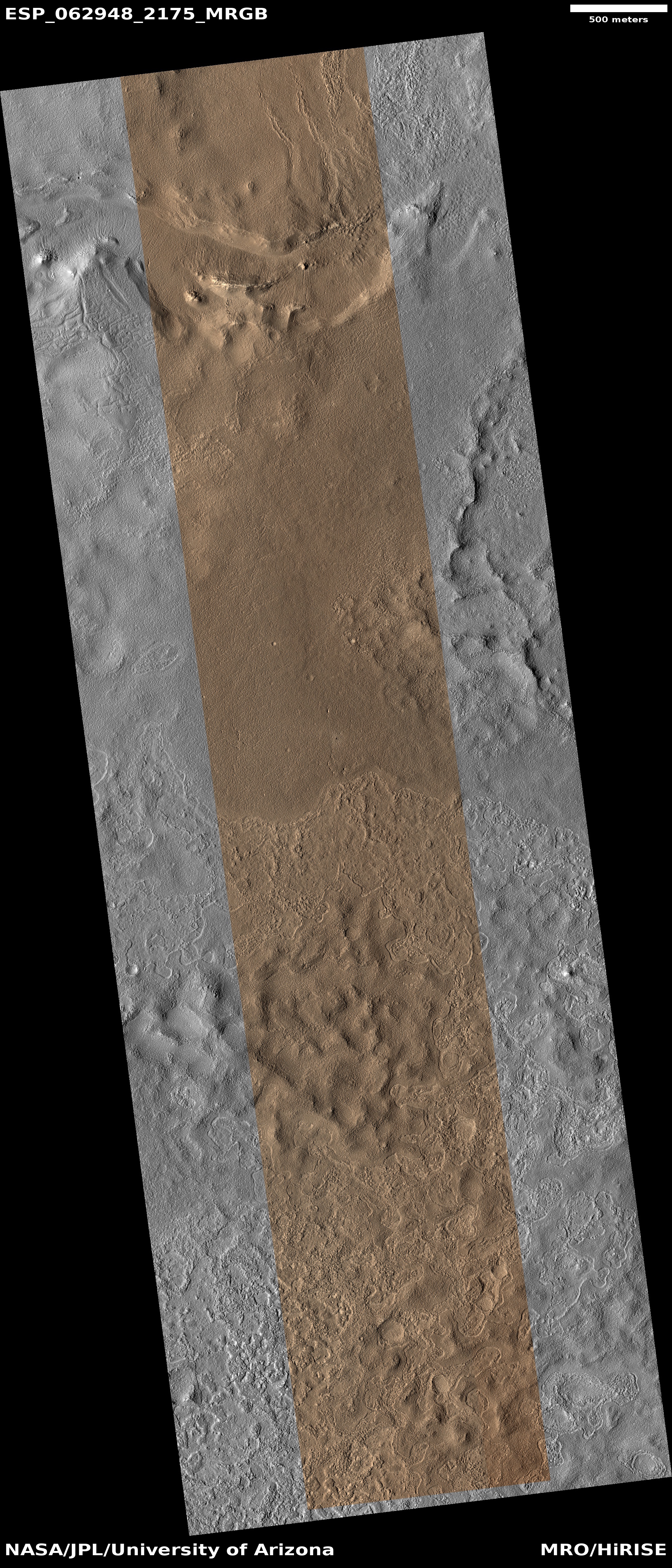
Cool image time! The photo to the right, rotated, cropped, reduced, and enhanced to post here, was taken on May 30, 2022 by the high resolution camera on Mars Reconnaissance Orbiter (MRO). It shows what the scientists label as a “inverted fluvial system”.

Such features are not unusual on Mars. The theory explaining their formation is that this was once a channel where either water or ice flowed, packing the streambed down so that it was more dense than the surrounding terrain. After the flowing material disappeared, the less dense surrounding terrain eroded away, leaving the channel as a meandering ridge.

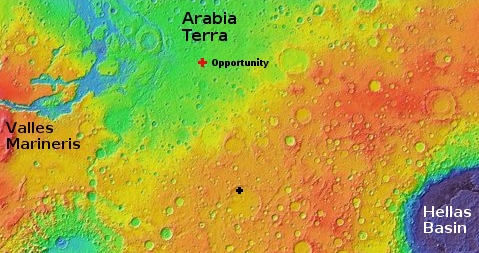
The location of this inverted channel, as shown in the overview map below, lends some weight to the flowing material being water or ice.
» Read more

0 comments

Changing slope streaks on Mars

Overview map

Changing slope streaks on Mars
Click for full image.

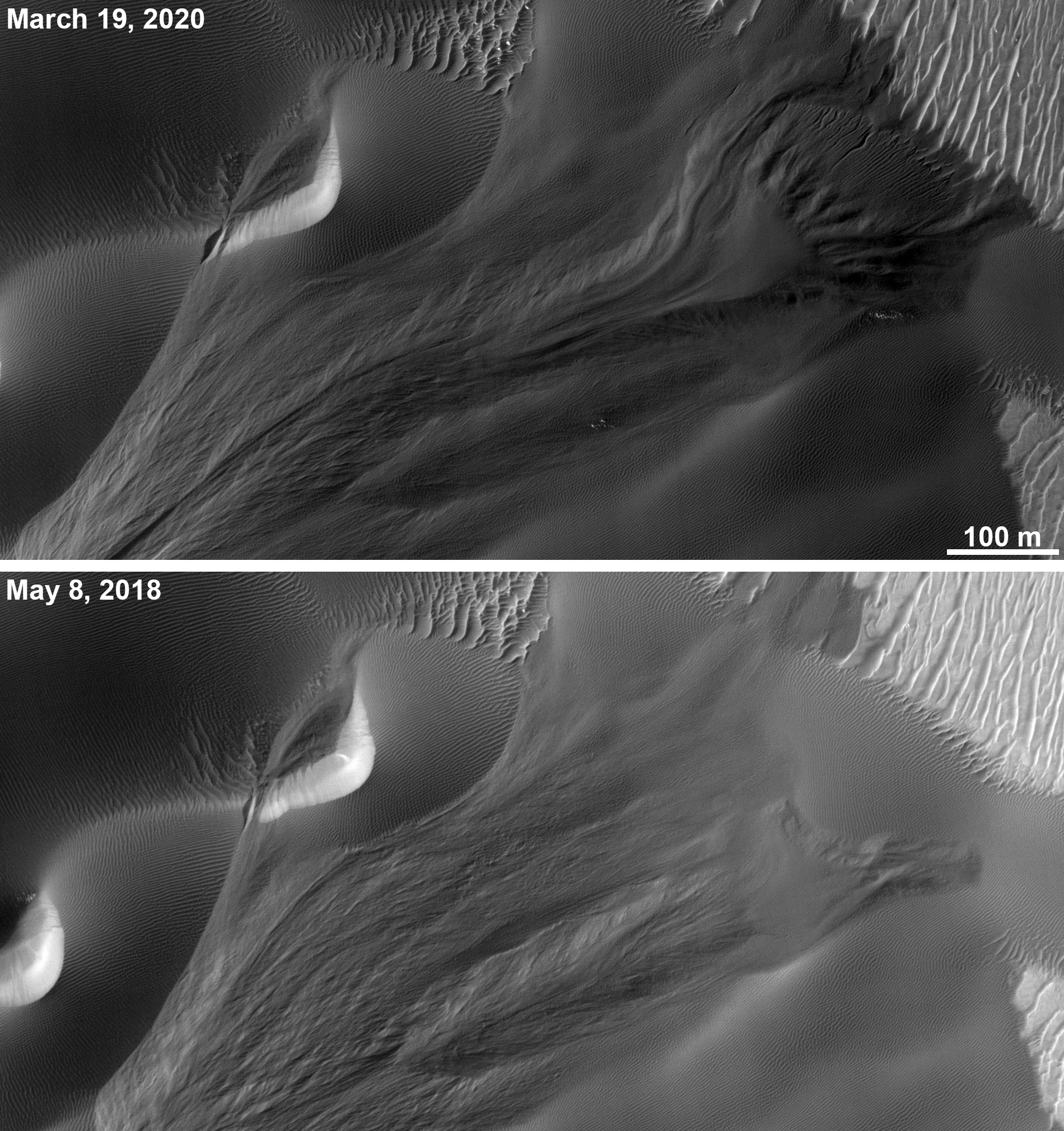
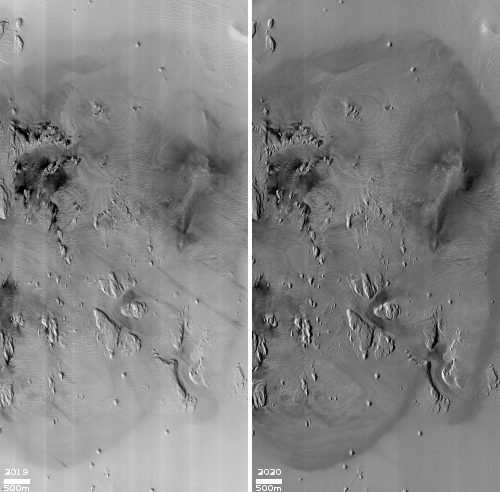
Cool image time! The photo to the right, cropped and reduced to post here, was taken on July 20, 2022 by the high resolution camera on Mars Reconnaissance Orbiter (MRO). It shows what the scientists have labeled a “Splitting Slope Streak” on a mound/hill near the equator and located almost midpoint between the giant volcano Olympus Mons about 2,000 miles to the east and the almost as big volcano Elysium Mons about 2,500 miles to the west. The white cross on the overview map above marks this location, north of the Medusae Fossae volcanic ash deposit.

The slope streak in question is the biggest and darkest at about 7 o’clock. Slope streaks are a feature unique to Mars that remain as yet unexplained. They are not ordinary avalanches, despite their appearance. They seem to have no effect on the topography, and thus are more a stain on the surface. Moreover, some are bright, some dark, and all happen randomly and fade with time. Some think they may be brine-related, while others link them to dust. No theory explains them completely.

What makes this slope streak interesting is that it is relatively new. Compare it with the picture taken in 2016 below.
» Read more

0 comments

An icy hollow on Mars

A icy hollow on Mars
Click for full image.

Cool image time! The photo to the right, cropped, reduced, and enhanced to post here, was taken on August 20, 2022 by the high resolution camera on Mars Reconnaissance Orbiter (MRO). It shows a somewhat typical example of the many ice scarps that scientists have identified in MRO pictures.

Though this is not a hard fast rule, most of the ice scarps so far found tend to have the steep cliff on the pole-facing side, with the scarp very slowly retreating towards the equator. In today’s example, the scarp where an ice layer in the cliff wall has been identified is indicated by the white arrow, though three sides of the hollow, on the east, north, and west sides, could all also have exposed ice.

Nor is that the only likely ice at this location at 56 degrees south latitude. The stippled plain surrounding the hollow clearly looks like an eroded ice layer, likely covered with a thin protective coat of dust to protect if from quickly sublimating away. The dark streaks across this surface are likely dust devil tracks.

As documented by the global map below, Mars is like Antarctica, a desert with water ice everywhere.
» Read more

0 comments

Icebergs of Martian lava

Icebergs of Martian lava
Click for full image.

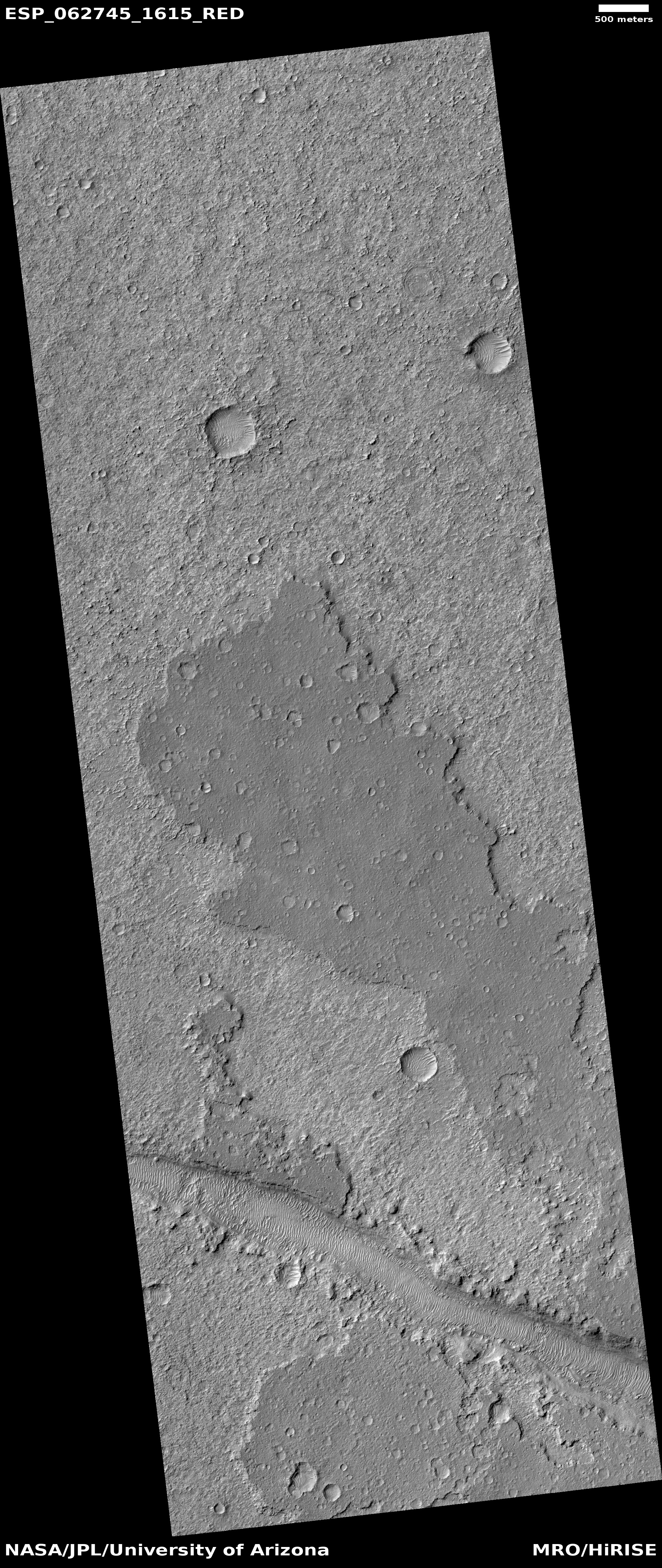
Cool image time! The photo to the right, cropped, reduced, and enhanced to post here, was taken on July 24, 2022 by the high resolution camera on Mars Reconnaissance Orbiter (MRO). The scientists label this “platy-ridged lava” but to my eye this more resembles lava ice bergs trapped within a now frozen lava stream flowing I think from the northeast to the southwest.

My guess that the flow follows that direction is based on two bits of data. First, the shape of the lava ice flows suggests vaguely a flow to the southwest. The wiggling black ridges inside the streams suggest that these flows occurred in two parts, a stronger wide flow that narrowed as the lava on the edges hardened. When the edges solidified the interior flow scraped against it, forming the wiggling ridges.

Second, the location of this image, as shown on the overview map below, strongly suggests the lava streams flowed to the southwest.
» Read more

1 comment

Thick flow exiting dramatic canyon on Mars

Thick flow into Mamers Valles on Mars
Click for full image.

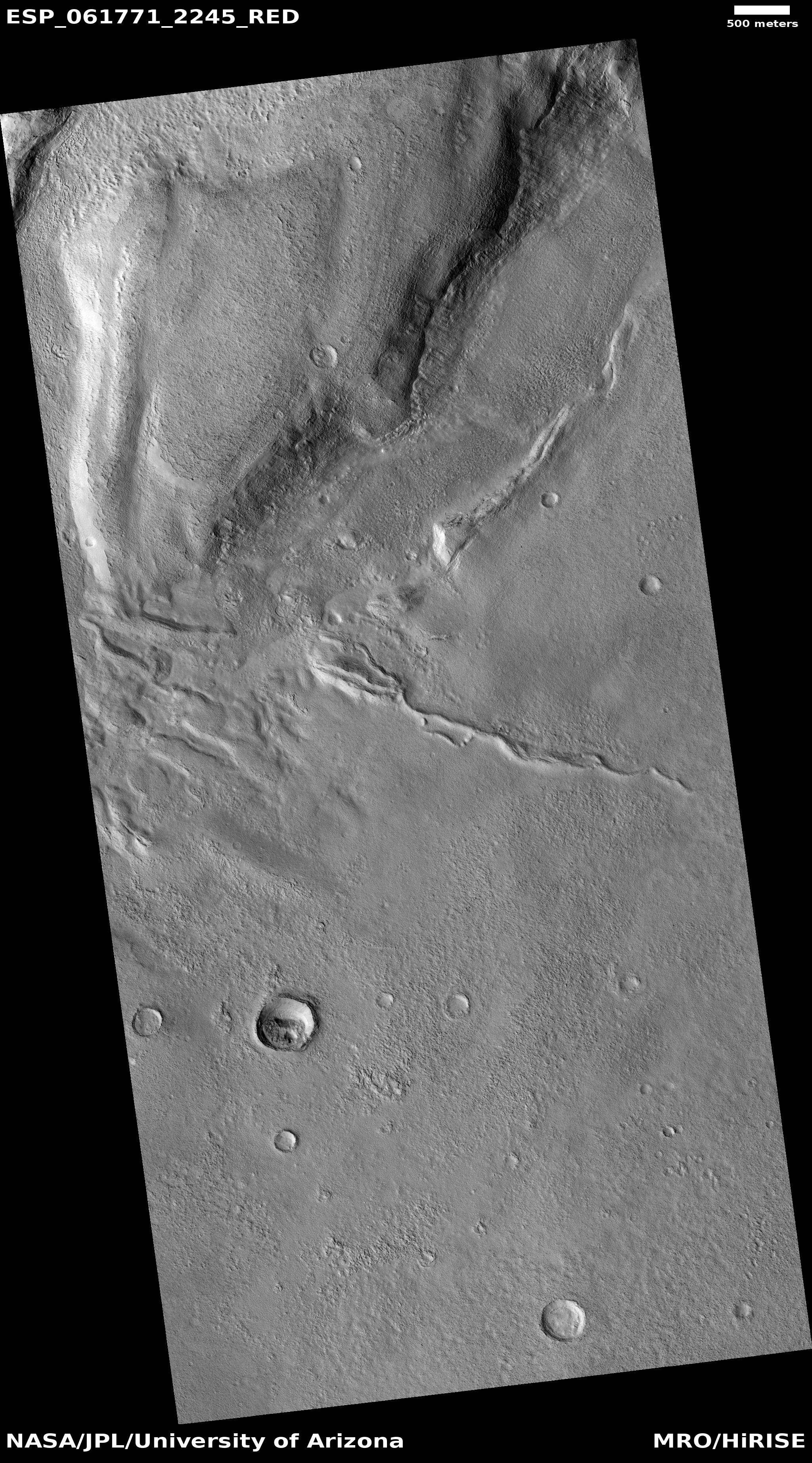
Cool image time! The photo to the right, cropped and reduced to post here, was taken on July 24, 2022 by the high resolution camera on Mars Reconnaissance Orbiter (MRO). It shows what the scientists label as a “viscous flow” that has apparently carved the wide curving canyon as it slowly flows into open country to the south.

I would estimate the height of that canyon wall to be around 3,000 feet, though this is a very rough guess. I also image a trail switchbacking up the nose of that canyon wall would make for a truly stupendous hiking experience.

The flow filling the canyon floor appears very glacial, which is not surprising as this canyon is at 37 degrees north latitude, in the mid-latitude band where many glacial features are found. The overview map below provides some more detailed context.
» Read more

2 comments

Martian crater and mesa sculpted by ancient flow

Martian crater and mesa sculpted by ancient flow
Click for full image.

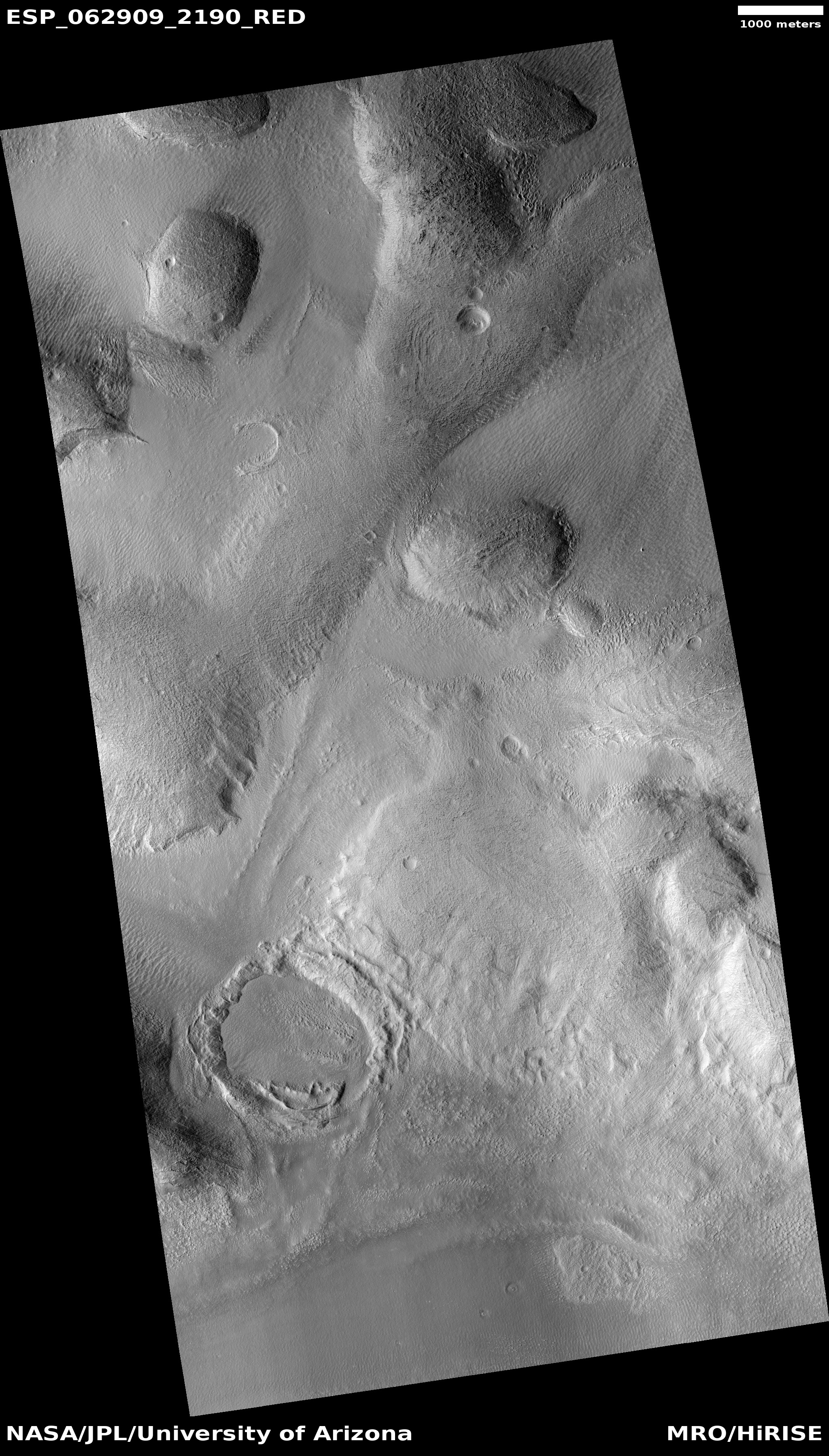
Cool image time! The picture to the right, rotated, cropped, and reduced to post here, was taken on June 15, 2022 by the high resolution camera on Mars Reconnaissance Orbiter (MRO). It shows a crater whose ejecta has been sculpted to the east into a teardrop-shaped mesa by some ancient flow, coming from the west.

The crater itself is located in one of several outflow canyons draining out from the volcanic Tharsis Bulge into the northern lowland plain of Chryse Planitia, the biggest of which is Valles Marineris. This particular canyon is one of the smaller and is dubbed Ravi Vallis.

The overview map below illustrates why many scientists think the flow that shaped this mesa came from a catastrophic flood of liquid water, billions of years ago.
» Read more

2 comments

Another “What the heck?” formation on Mars

Another
Click for full image.

Cool image time! The photo to the right, cropped, reduced, and enhanced to post here, was taken on May 28, 2022 by the high resolution camera on Mars Reconnaissance Orbiter (MRO), and shows what the scientists label “unique terrain.”

I have increased the contrast to bring out the details. It appears that we have a flat plain of criss-crossing ridges that in large areas have somehow gotten flattened across their top. Imagine someone laying plaster on a wall and using a scraper tool to smooth the surface, but only partially. In this case on Mars, our imaginary worker only smoothed the surface a little, and only in some areas. To try to come up with a geological process however to explain this seems daunting.

And what created the criss-crossing ridges? The overview map provides only a little help in answering these questions.
» Read more

5 comments

More glaciers in Mars’ glacier country

Overview map

glacial layering in Clasia Vallis
Click for full image.

Cool image time! The photo to the right, rotated, cropped, and reduced to post here, was taken on June 18, 2022 by the high resolution camera on Mars Reconnaissance Orbiter (MRO). It shows what appear to be layered glacial features on the floor of what at first glance appears to be a crater.

It is not a crater however. The depression in the lower right of this image is the rim and floor of a 77-mile-long meandering canyon on Mars dubbed Clasia Vallis. The red cross in the overview map above marks its location, at 34 degrees north latitude. This channel drains downward from the southern cratered highlands into the 2,000-mile-long mid-latitude strip of mensae terrain that I dub glacier country because almost every hi-res image from this region shows glacial features.

Below is a wider view of Clasia Vallis, taken by the context camera on MRO on March 19, 2014.
» Read more

0 comments

Zig-zag ridges on Mars

Zig-zag ridges on Mars
Click for full image.

Cool image time! The photo to the right, cropped and reduced to post here, was taken on April 9, 2022v by the high resolution camera on Mars Reconnaissance Orbiter (MRO). It shows a series of parallel zig-zag ridges in a flat, knobby terrain.

I don’t presume to explain this at all. According to one research paper,

This interplana region consists of extensive networks of ridgesโ€”the eponymous Aeolis Dorsaโ€”and is interpreted as having formed by topographic inversion of fluvial and alluvial deposits.

Why these ridges zig-zag however does not seem to fit into either a fluvial or alluvial explanation, both of which involve the flow of water. The quote implies these could be inverted stream channels (where the compacted streambed becomes a ridge when the surrounding terrain erodes away), but once again, the distinct zig-zag pattern seems wrong. Rivers meander, but they don’t generally turn right and left so sharply. And why should we see parallel zig-zags? This doesn’t seem to fit with a river channel origin.

The particular location, as shown on the overview map below, is close to the dry Martian equator, on the edge of Medusae Fossae Formation, the largest field of volcanic ash dust on Mars.
» Read more

1 comment

Above ground and underground Martian drainages

Overview map

Cool image time! Today we are going to zoom into our cool image. The overview map to the right provides us the context. Our target is the small white rectangle inside the small box just below the north rim of 185-mile-wide Newton Crater, located 200 to 800 miles from the southwest edge of the lava plains dubbed Daedalia Planum that flowed down from Mars’s biggest volcanoes.

Newton Crater has a number of interesting features. Only two weeks ago I featured 4-mile-wide Avire Crater in Newton’s western quadrant, long known to have many gullies on its interior slopes as well as glacier features on its floor. Scientists have been monitoring those gullies now for more than a decade to see if they change seasonally, in a attempt to figure out their cause.

Today’s cool image looks at the very intriguing meandering canyons that appear to flow south from Newton’s north rim.
» Read more

0 comments

Martian layers everywhere!

Layers in Argyre Basin
Click for full image.

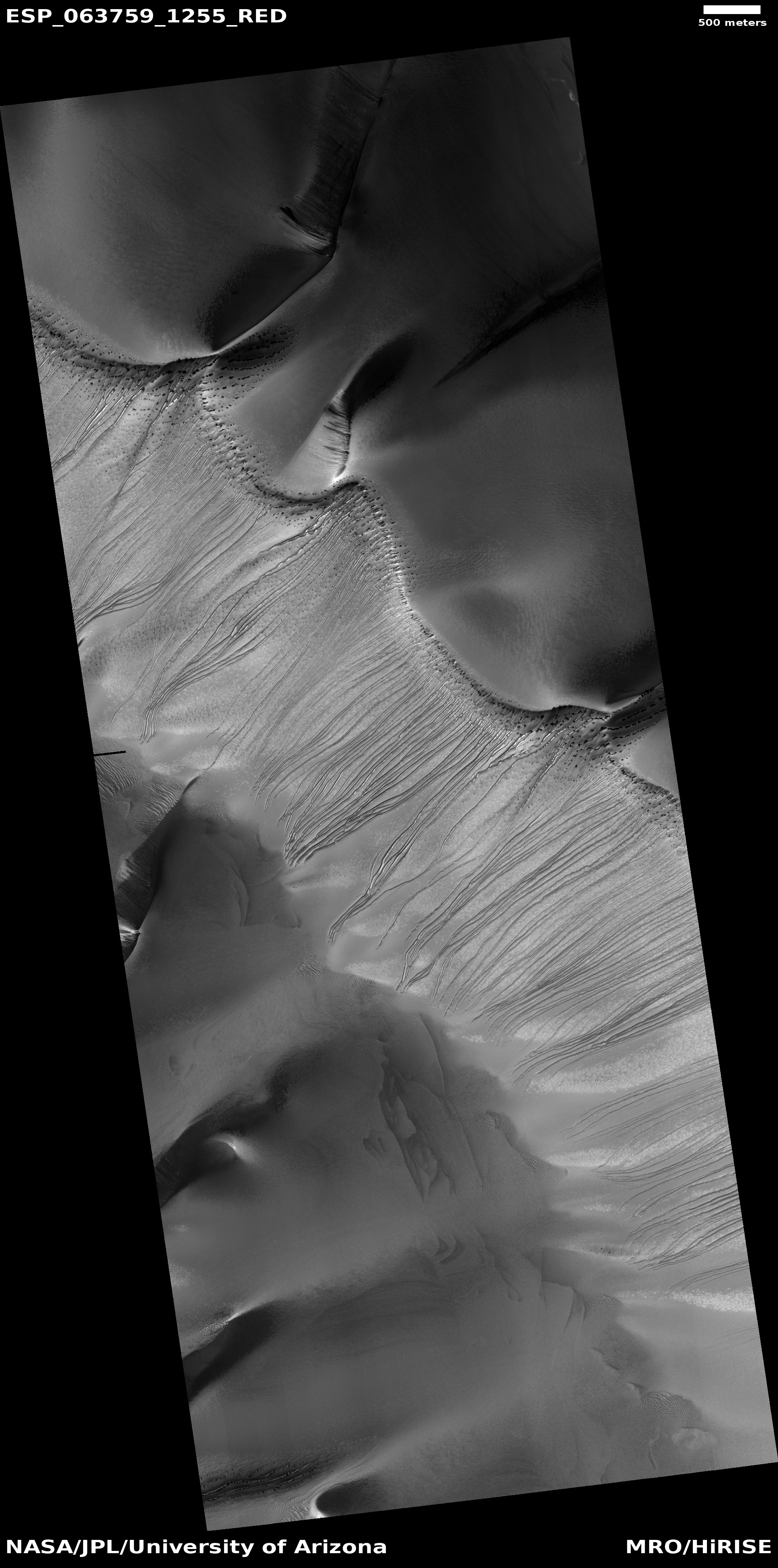
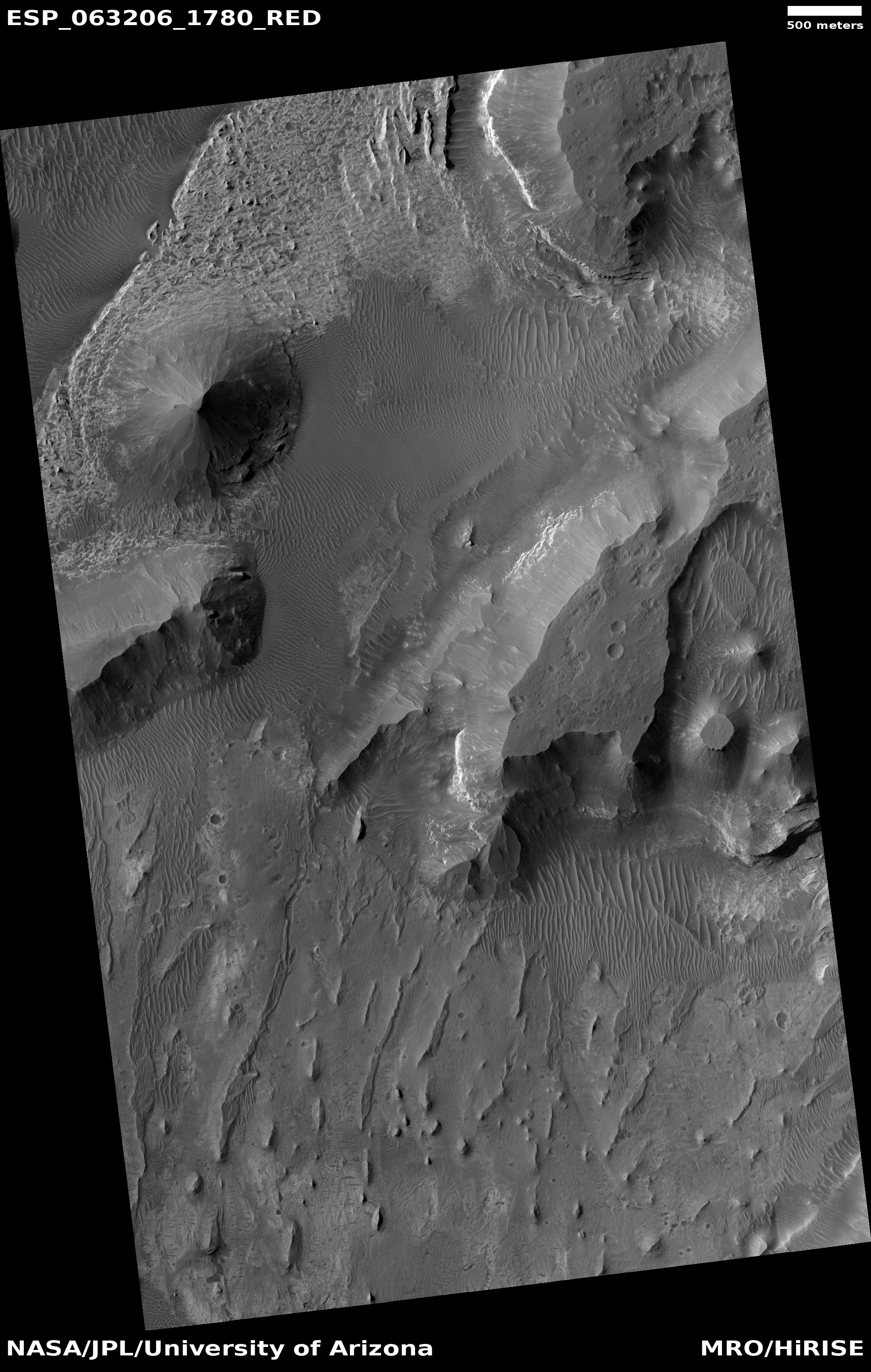
Cool image time! The photo to the left, rotated, cropped, and reduced to post here, was taken on June 1, 2022 by the high resolution camera on Mars Reconnaissance Orbiter (MRO). It shows the rim edge to a fifteen-mile-wide canyon, with many apparent layers exposed on the high plateau.

The layers are intriguing in that they suggest several things. First, they give us a glimpse into the top and youngest layers that make up the interior canyon wall. Second, they tell us that erosion has removed much of those top and youngest layers, resulting in the mesas on that plateau.

Finally, the gullies flowing down into the canyon indicate further erosion processes, eating away at the canyon wall over time.

The location of this canyon is also intriguing.
» Read more

1 comment

InSight’s seismometer detects its first new impact on Mars

Martian impact discovered by InSight
Click for full image.

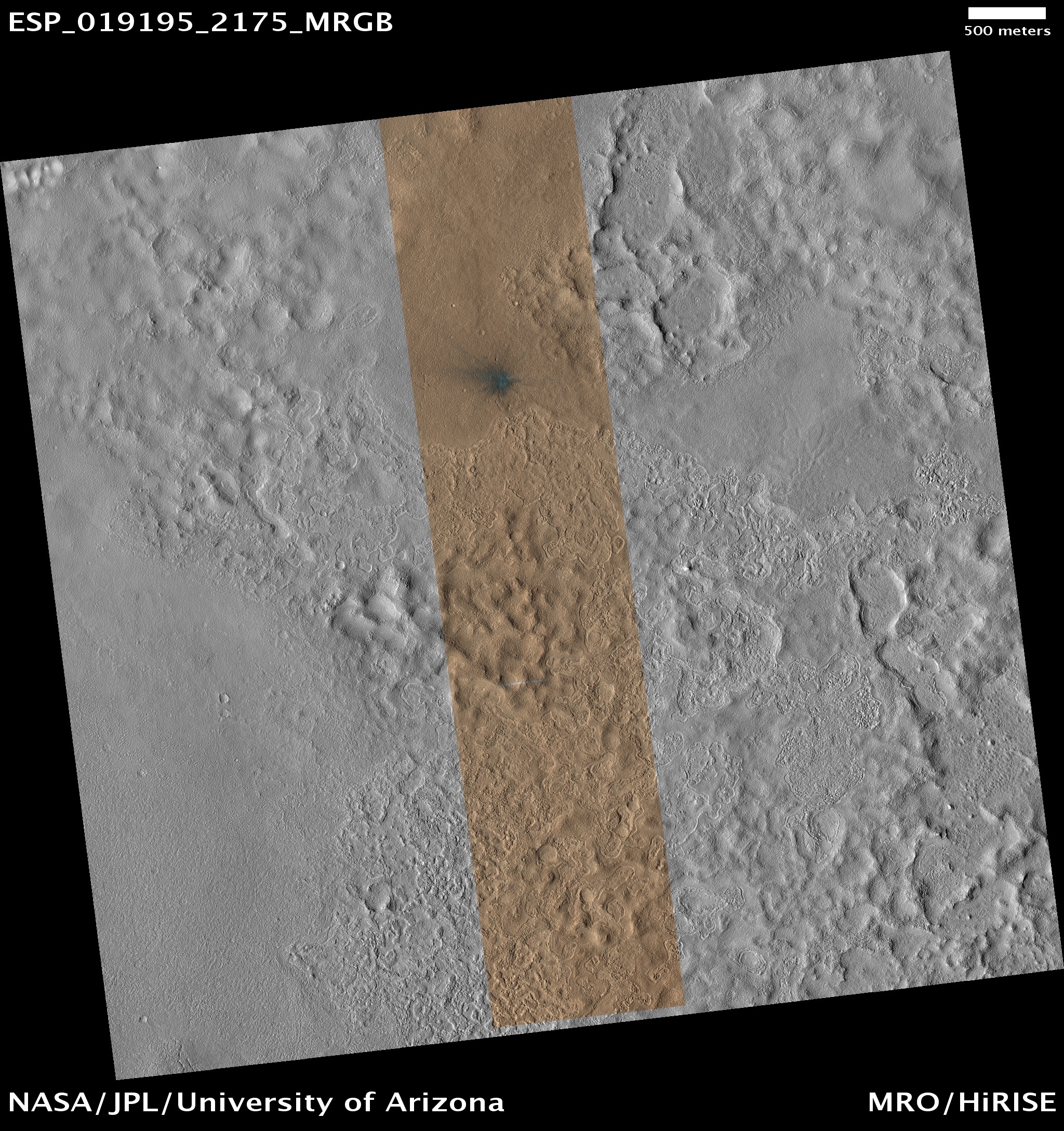
Using data from InSight’s seismometer that suggested a new impact had occurred at a specific location on September 5, 2022 on Mars, scientists used the high resolution camera on Mars Reconnaissance Orbiter (MRO) to search and find that impact.

The photo to the right, reduced to post here, is that MRO photo.

The initial impact itself created a small marsquake that was detected by InSight’s seismometer. The instrument recorded seismological data that showed the moment the meteoroid entered Mars’ atmosphere, its explosion into pieces in the atmosphere, and finally, the impact that created a series of at least three craters in the surface.

MRO then flew over the approximate site where the impact was “felt” to look for darkened patches of ground using its Context Camera. After finding this location, HiRISE captured the scene in color. The ground is not actually blue; this enhanced-color image highlights certain hues in the scene to make details more visible to the human eye โ€“ in this case, dust and soil disturbed by the impact.

This was thus the first new Martian impact detected based on its actual occurrence, rather than simply finding a change between two photos taken at different times. The latter only tells you a time period when the impact occurred. InSight’s detection here marks the impact’s exact moment.

Nor is this the only such discovery. It appears that InSight detected at least two other impacts (here and here), that only subsequently were linked to MRO impacts. In those cases, the new impact had already been found by MRO, and only afterward were scientists able to identify its seismic vibration in InSight data, thus pinpointing the exact date it took place.

0 comments
1 42 43 44 45 46 90