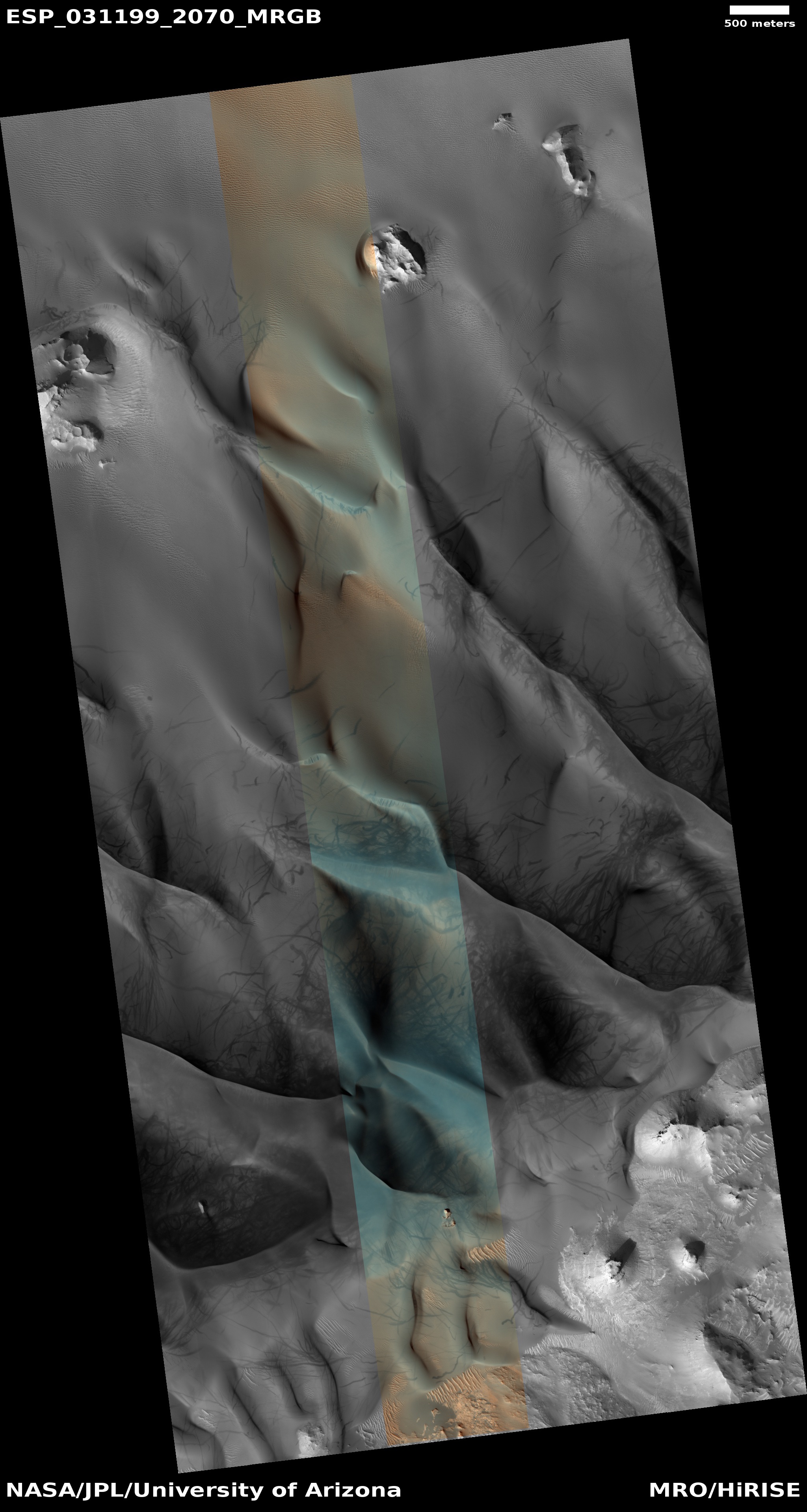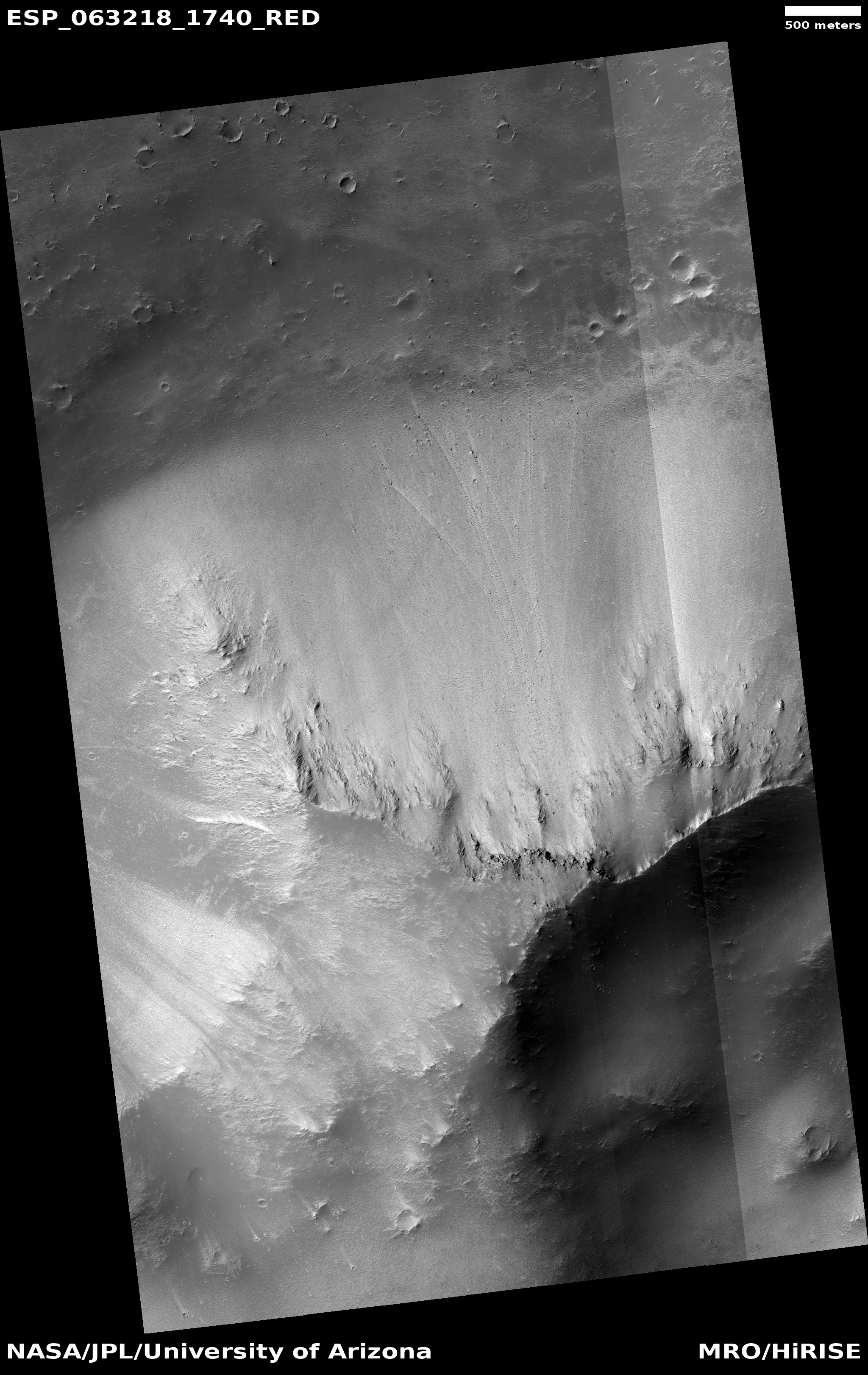
Deep inside the youngest flood lava event on Mars

Deep inside the youngest flood lava event on Mars
Click for full image.

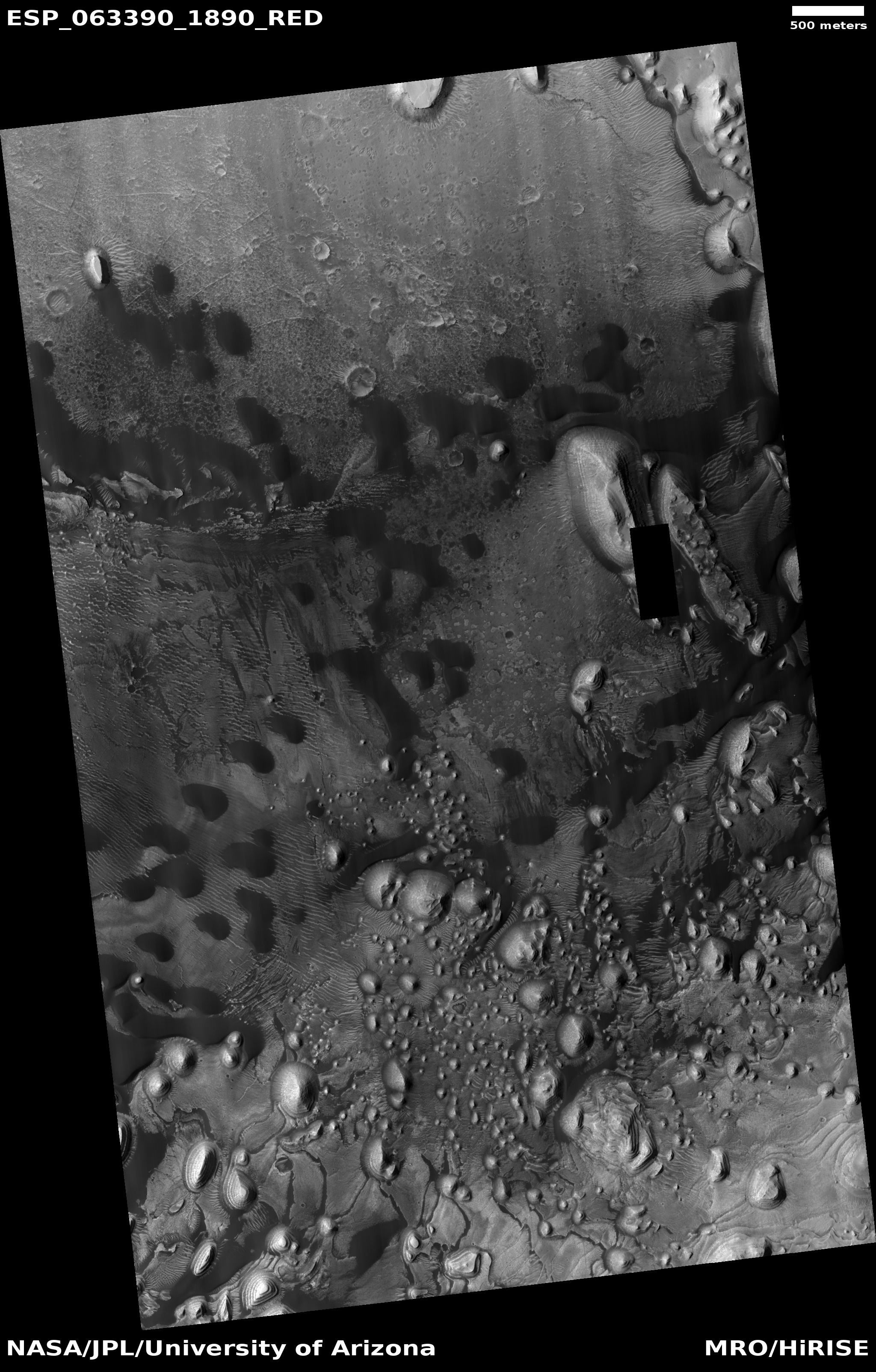
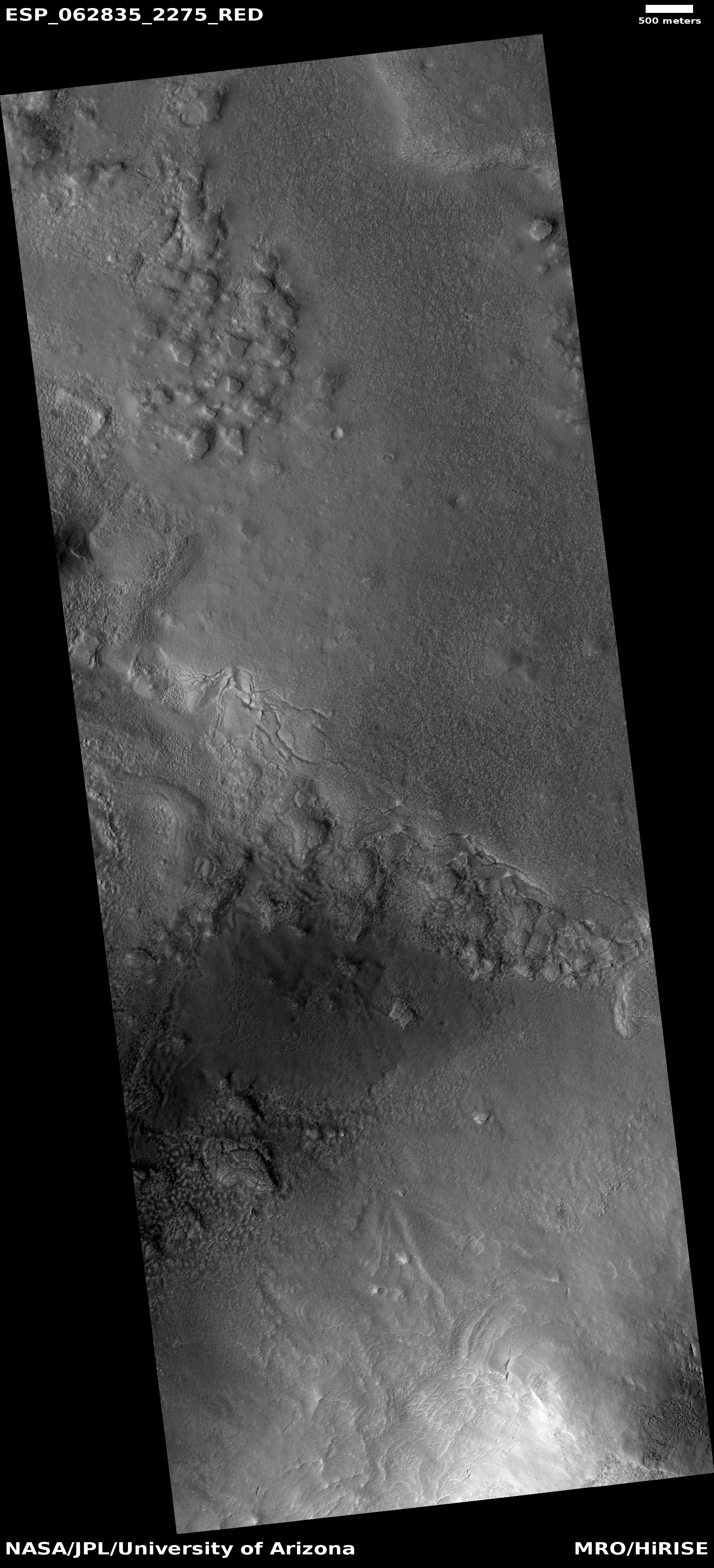
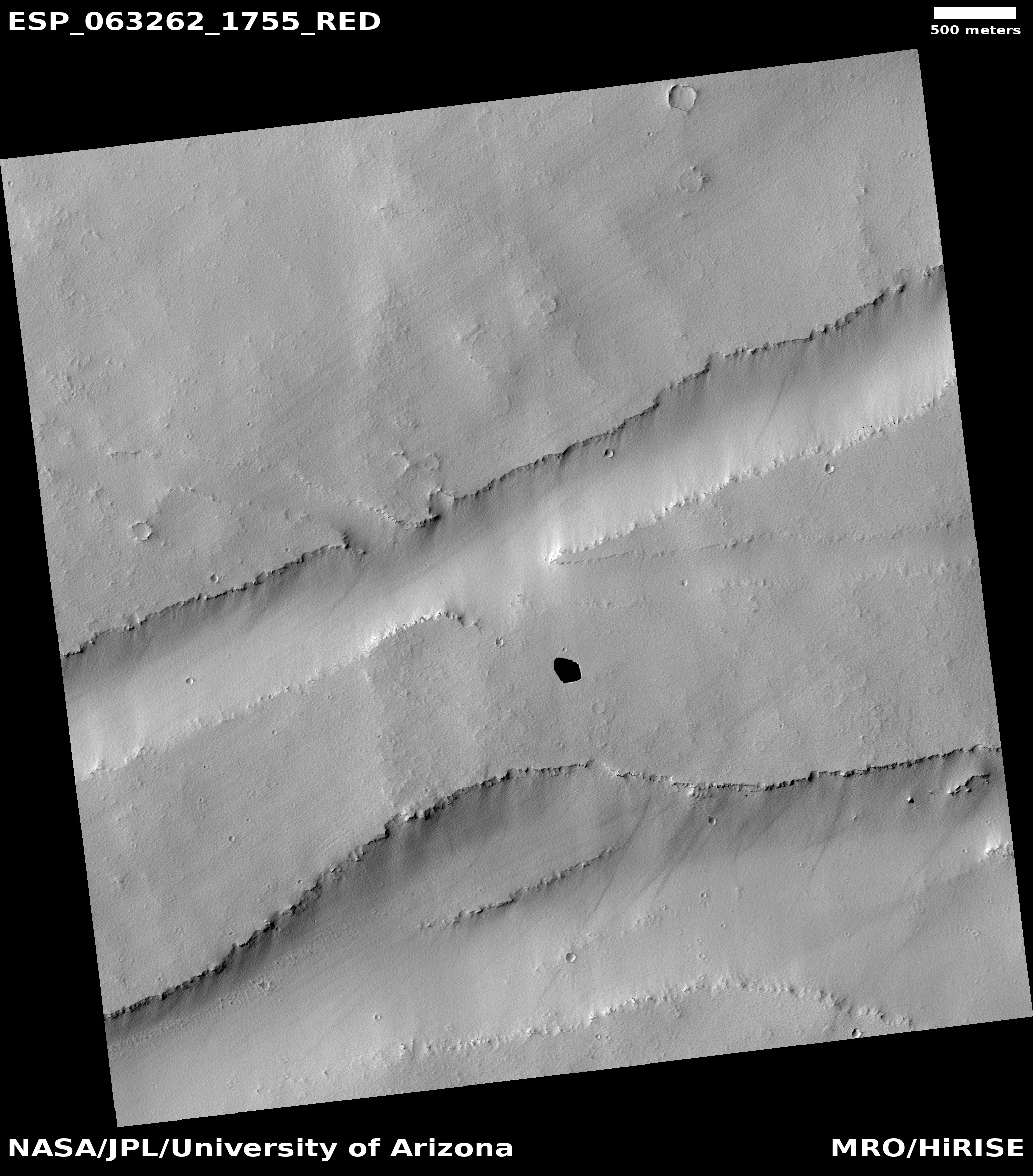
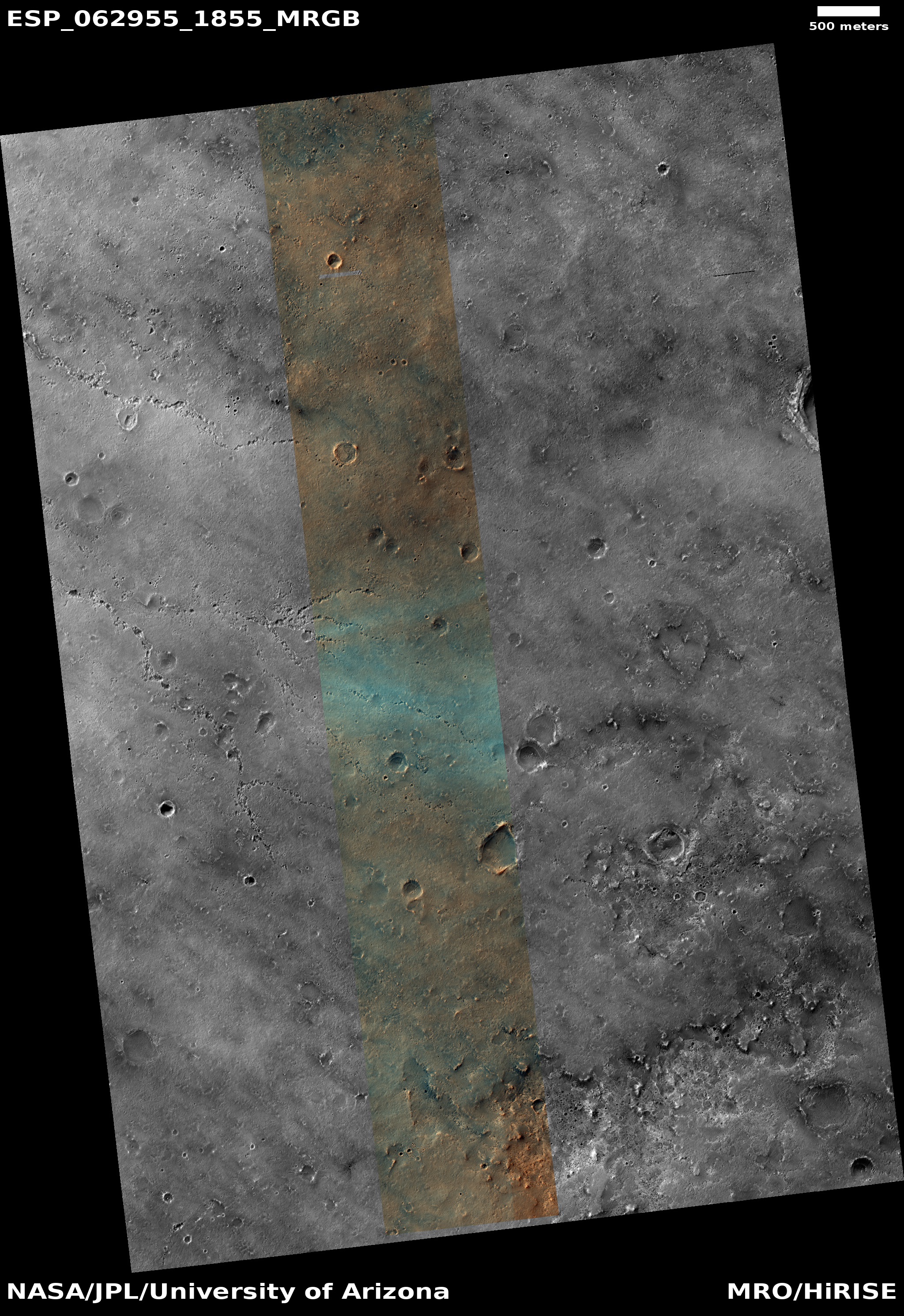
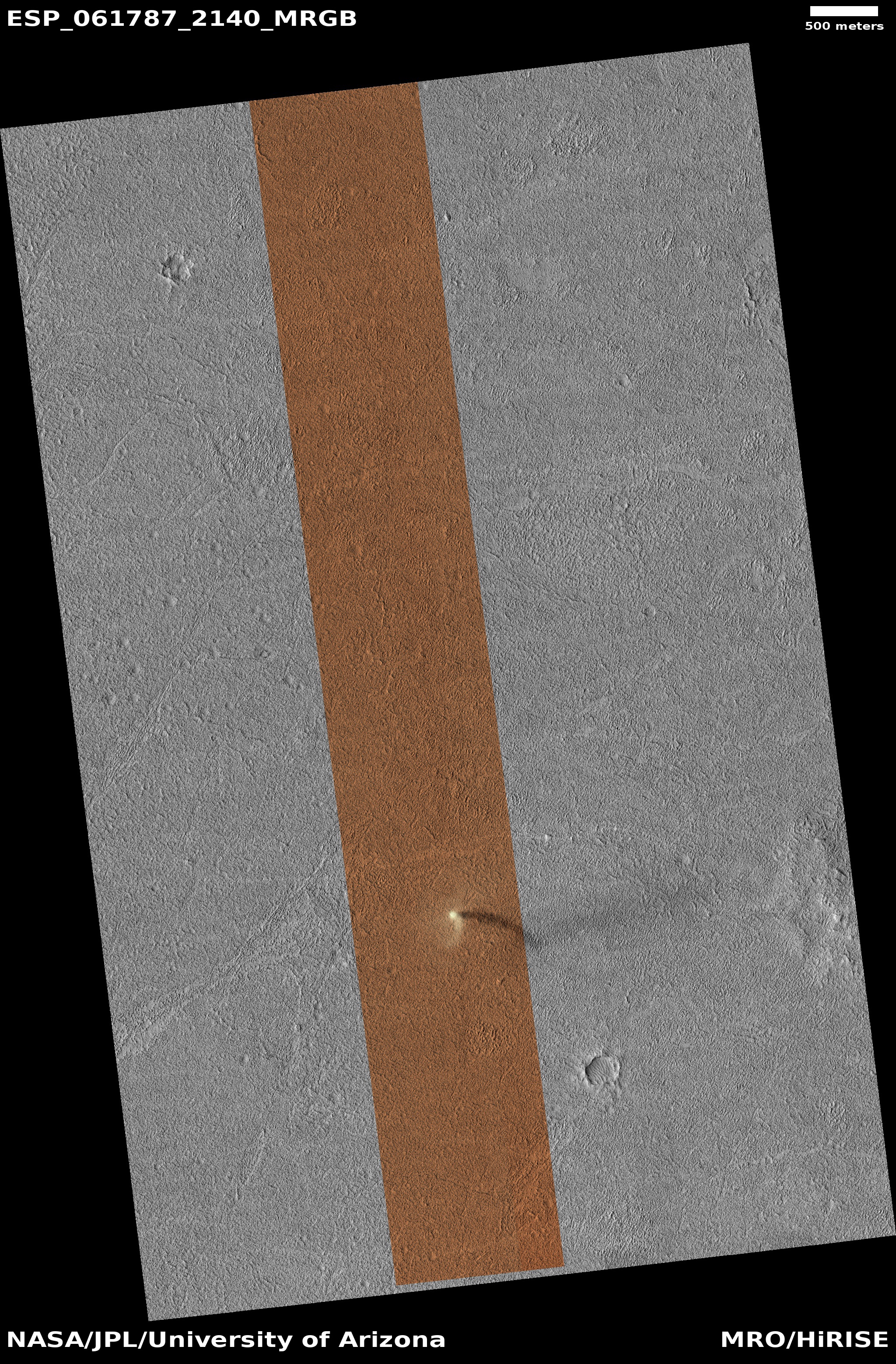
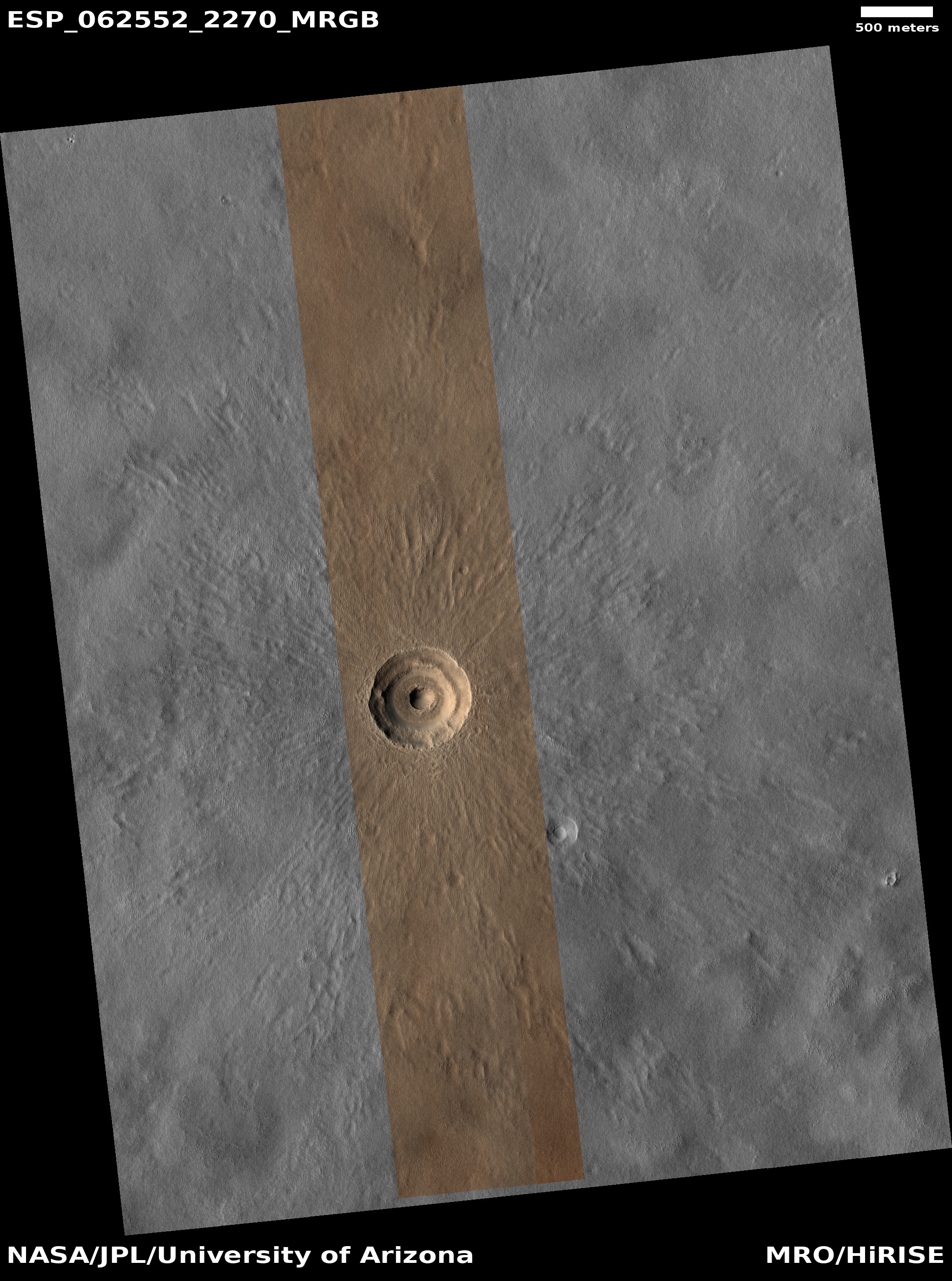
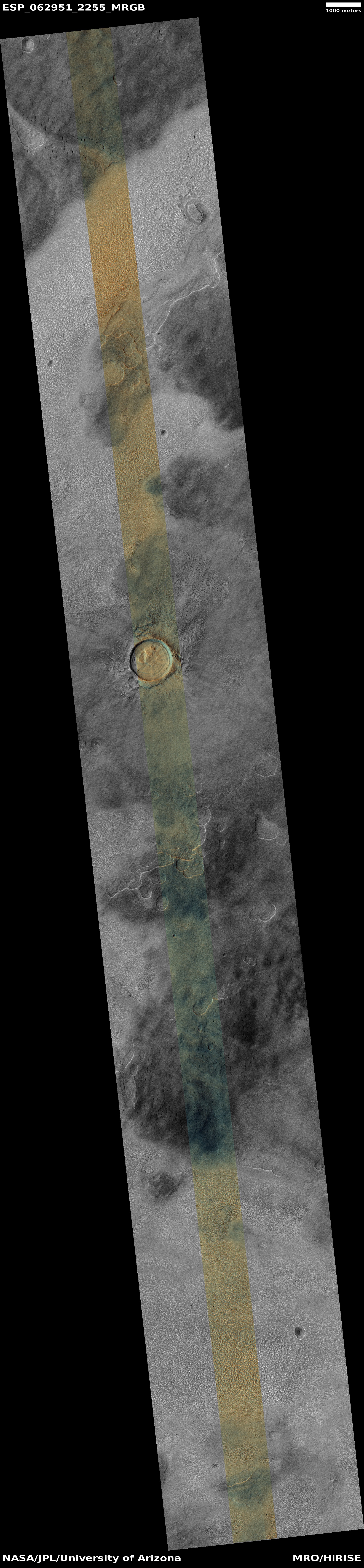
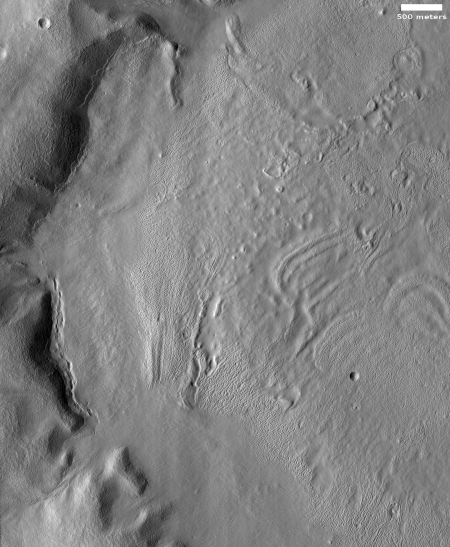
Cool image time! Today we return to the Athabasca Valles flood lava event, believed to be the youngest major lava event on Mars that I highlighted in a cool image last week.

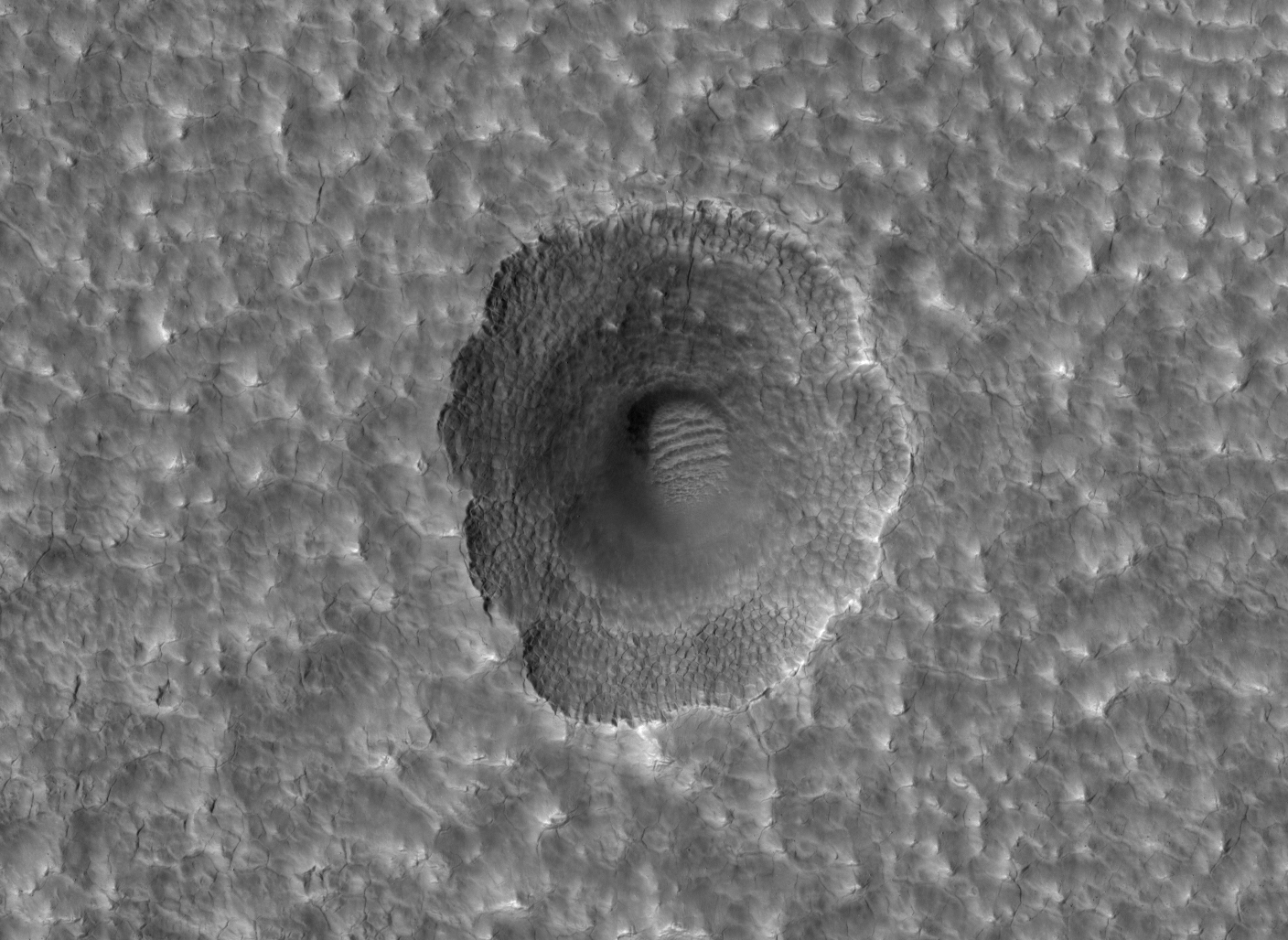
Then, I showed two meandering lava flows near the edge of this Great Britain-sized flood lava plain, produced 600 million years ago in only a matter of weeks. Today, we take a look deep within the lava plain. The photo to the right, rotated, cropped, and reduced to post here, was taken on May 6, 2022 by the high resolution camera on Mars Reconnaissance Orbiter (MRO). It shows what the scientists label “a lava-crater interaction.”

In plain English, we are looking at a crater that has been inundated by the flood lava, filling it.
» Read more

1 comment

Crazy badlands in the equatorial region of Mars

Badlands in the equatorial regions of Mars
Click for full image.

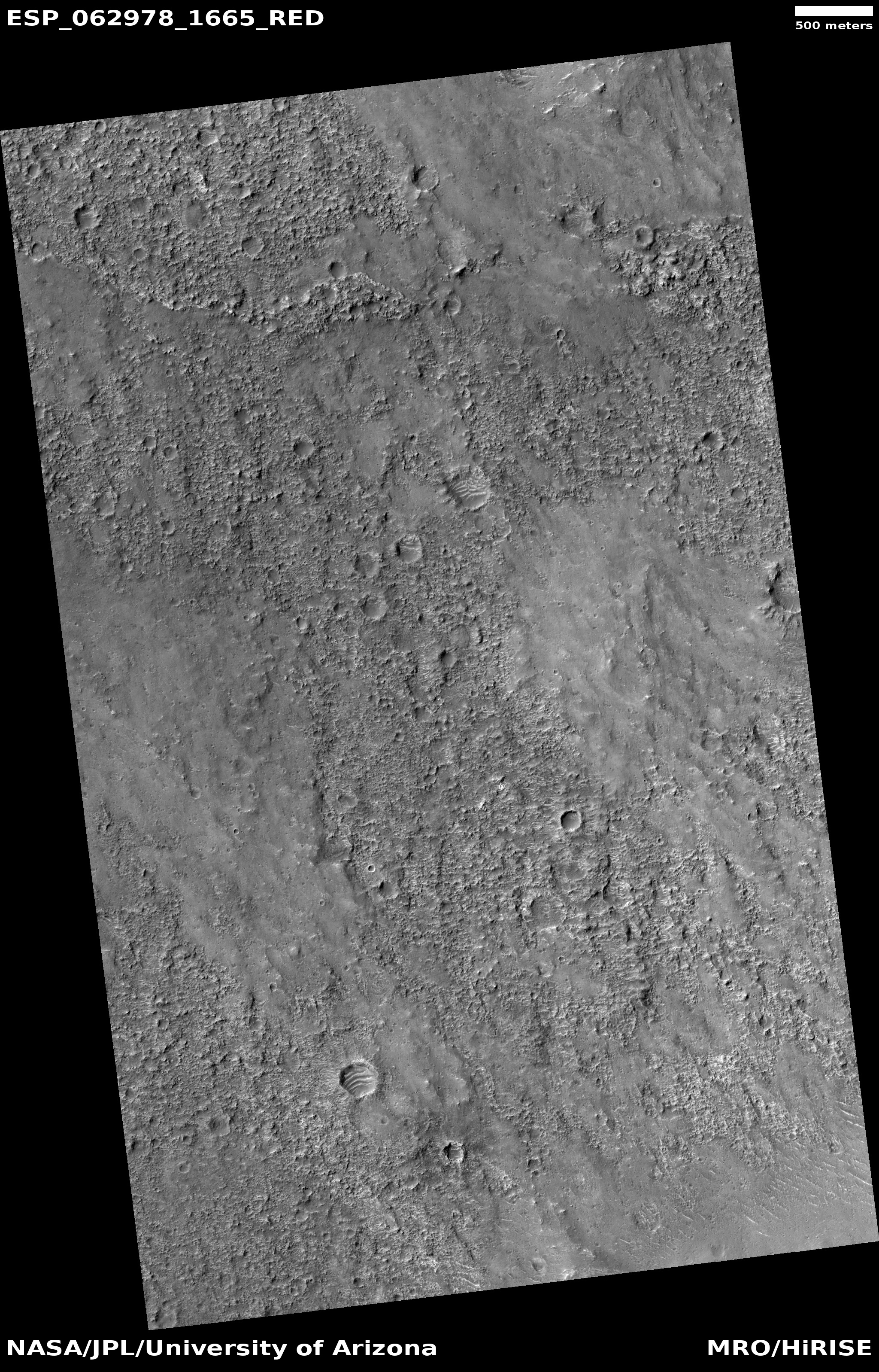
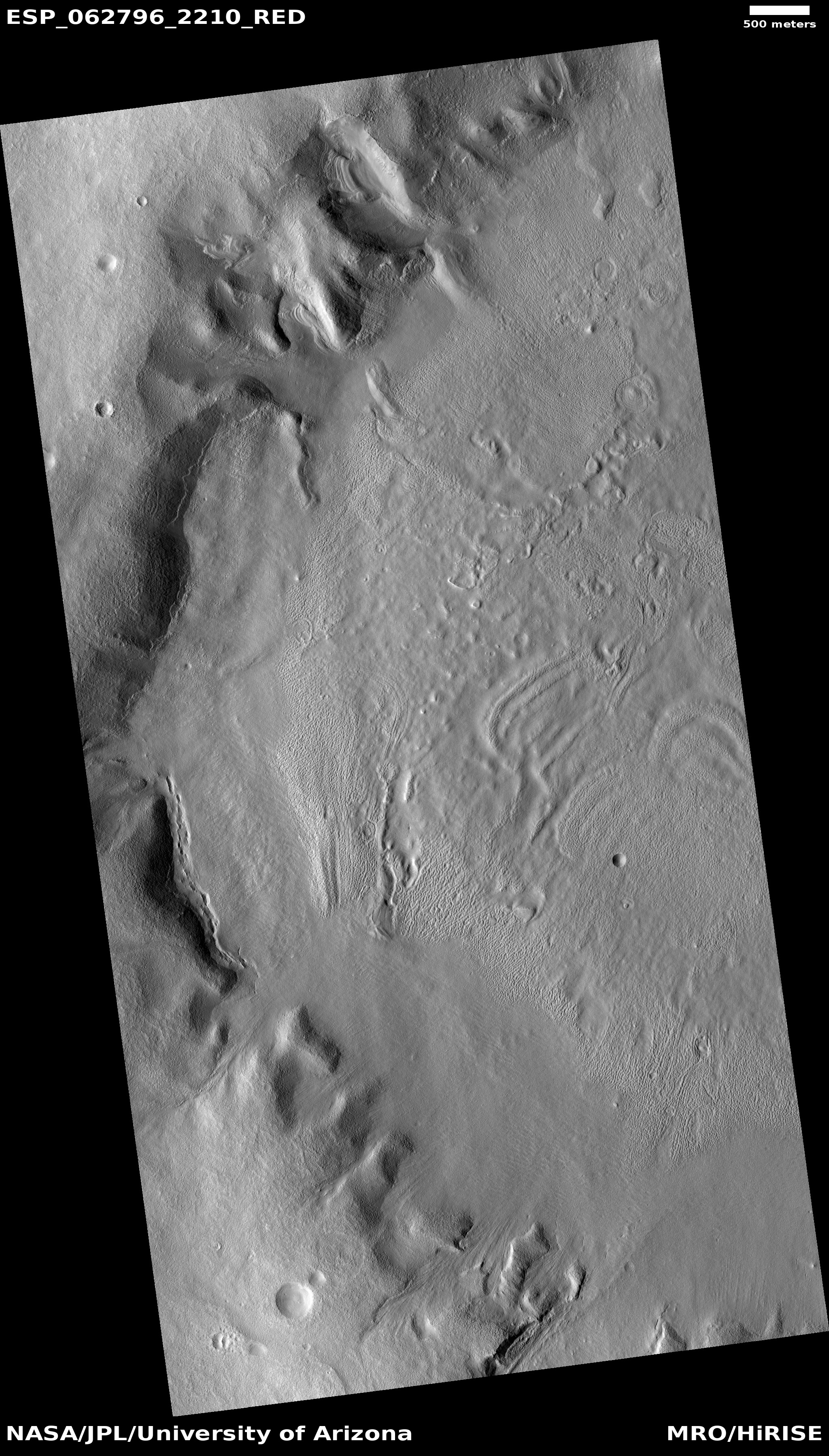
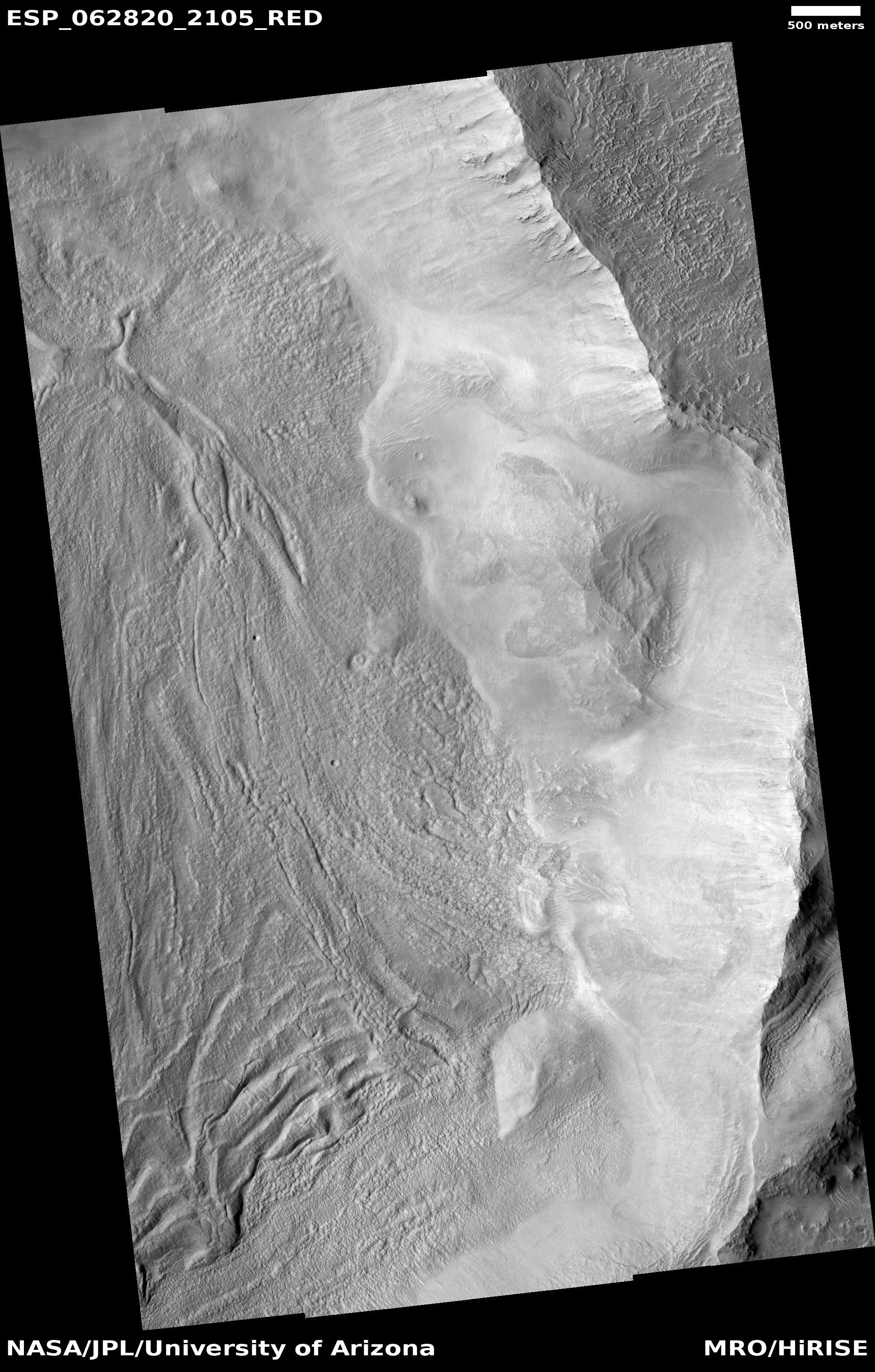
Cool image time! The photo to the right, rotated and cropped to post here, was taken on June 17, 2022 by the high resolution camera on Mars Reconnaissance Orbiter (MRO). The section highlighted is at full resolution, in order to make clear the absolutely crazy and complex terrain seen in the full image.

This terrain is not glacial, as the location is only about 1 degree south of the Martian equator. There might have been surface or near surface ice here once in the past, but there is none now.

Could we be looking at some form of lava flow? This is possible, because a close look at the context map at the image link suggests this region has been partly covered by some material, obscuring some craters to the east and west. However, there is no visible evidence anywhere in this region of a volcanic vent or caldera. If this covering material was volcanic it is very unclear where it came from.

The overview map below does not really provide any answers, but at least gives the context.
» Read more

5 comments

An example of the youngest big lava flow on Mars

An example of the youngest big lava flow on Mars
Click for full image.

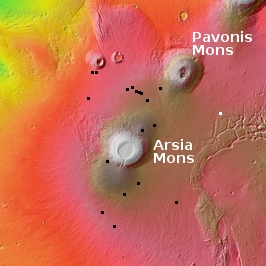
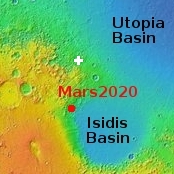
Overview map

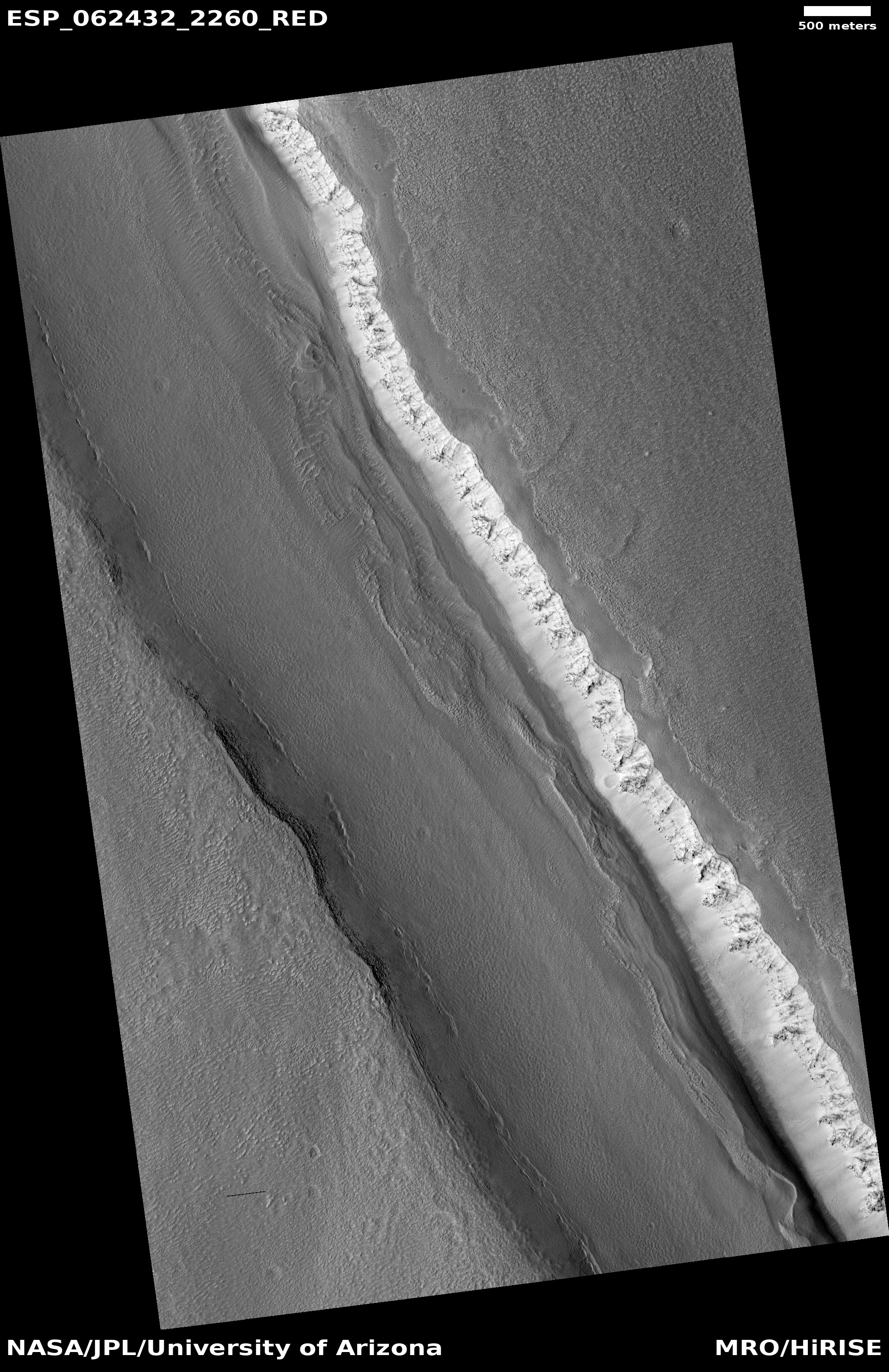
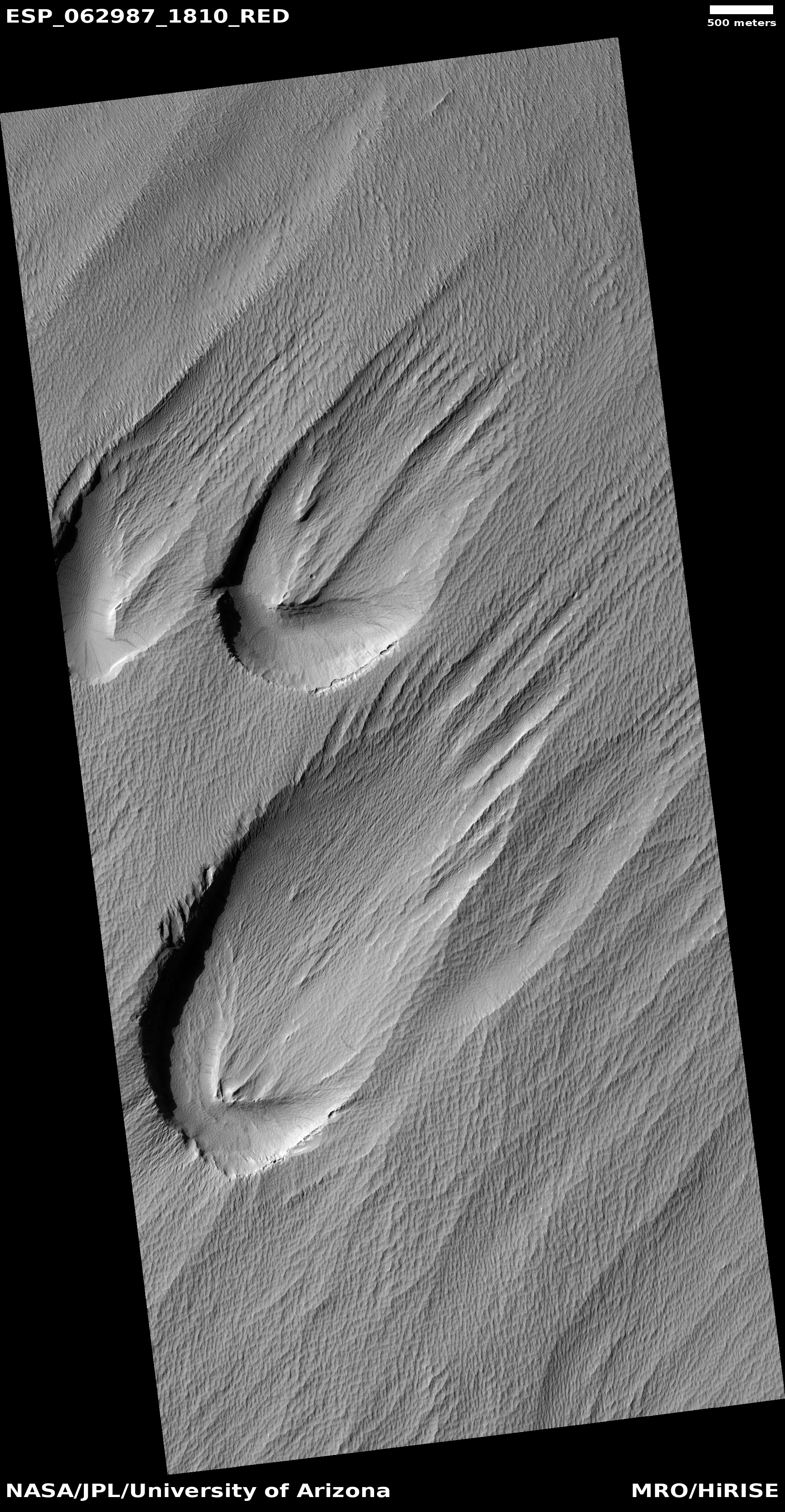
Cool image time! The photo above, rotated, cropped, and reduced to post here, was taken on May 13, 2022 by the high resolution camera on Mars Reconnaissance Orbiter (MRO), and shows two dramatic ancient flows of flood lava. The arrows indicate what I think is the direction of flow for each, though the direction of the flow to the north appears more certain. In a wider context camera image the bulk of the evidence suggests the southern flow is heading west (as indicated by the arrow), but there are scalloped mesas within it that suggest the opposite.

The overview map above marks the location of this picture by the white cross inside the Athabasca Valles flood lava, thought by some scientists [pdf] to be Marsโ€™ youngest major lava event that erupted about 600 million years ago and in just a matter of a few weeks poured out enough lava to cover an area about the size of Great Britain.

The general trend of the Athabasca flow was to the south, splitting into a big western and southeastern flows. This picture captures the southern edge of that southeastern flow, which might help explain why the flow directions in the picture seem so different from the main Athabasca flow. On a large scale, the flow was to the southeast. On a small scale at the edges the flow could go in many directions as the lava looks to find its level.

The Medusa Fossae Formation is the largest volcanic ash deposit on Mars, and is thought to be the source of most of the red planet’s dust. Though the origin of the ash is not yet known, it likely came from the eruptions that formed the planet’s giant volcanoes to the east and west.

0 comments

Gullies and glaciers in a crater on Mars

The gullies and glaciers in Avire Crater
Click for full image.

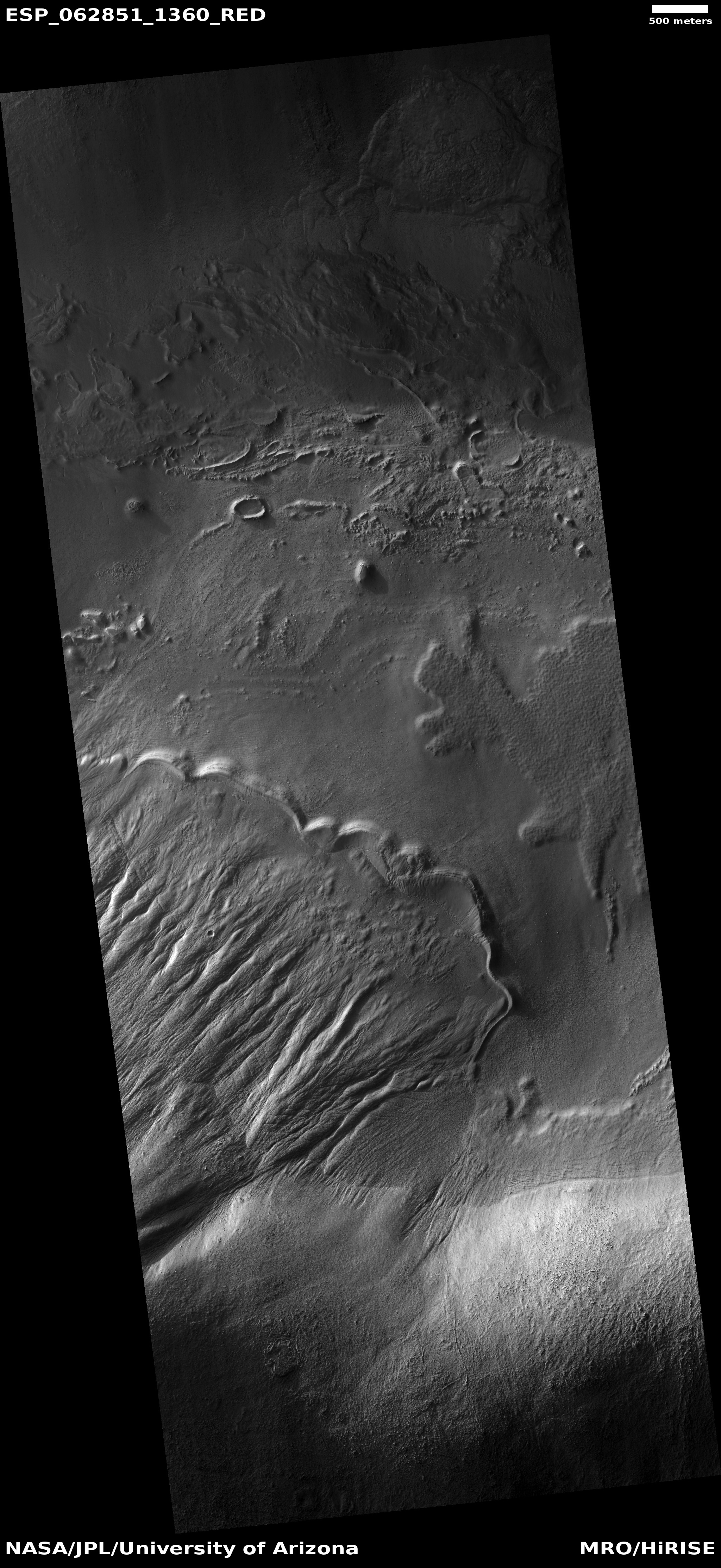
Cool image time! The photo to the right, rotated, cropped, and reduced to post here, was taken on July 10, 2022 by the high resolution camera on Mars Reconnaissance Orbiter (MRO). It shows the floor of 4-mile-wide Avire Crater, located at about 41 degrees south latitude inside the much larger 185-mile wide Newton Crater.

This picture was taken as part of a long term monitoring program of the many gullies that flow down the slopes of the crater’s interior rim. In fact, the gullies of this crater have so interested scientists that one even proposed [pdf] this location as a potential future rover landing site.

Avire Crater, a small … gullied crater within Newton Crater, provides many aspects ideal to a future rover mission. It has been previously hypothesized to be the location of a former paleolake with multiple episodes of ponding and deposition. Gullies occur almost continuously on the southwest wall clockwise to the northeastern wall. Dark-toned dunes are present in the northern portion of the crater, in some places obscuring gullies while cut by gullies in others. No changes in the extent or appearance of the dunes have been observed since they were first imaged … in January of 2000. The dunes lack superimposed craters, indicating that the gullies that cut through them are geologically very youthful. Layered lobate features are present at the base of the gullies on the northern wall, seen in many other craters on Mars (not always in association with gullies), which have been suggested to have formed as terminal moraines of ice-rich flows; in Avire, these features have also been suggested to be paleolake deposits. The crater floor is obscured by mid-latitude โ€œfillโ€ material, hypothesized to be partially comprised of ice based on morphologic evidence that the material has been partially removed.

As gullies, dunes, and โ€œfillโ€ material occur in many places on Mars, a single rover mission to a site containing these features would provide valuable information applicable to thousands of other locations across the planet.

The curved ridgeline in the crater floor is thought to be a moraine. The “fill” material to the south is essentially glacial in nature. Both, as well as the gullies, appear to have been shaped either a paleolake that once existed in the crater or by cyclical glacier activity. By going to this one crater, scientists could study all these different geological features at one time.
» Read more

0 comments

Swirls and mesas in Valles Marineris

Swirls and mesas in Valles Marineris
Click for full image. For the original of the inset go here.

Cool image time! The picture to the right, rotated and cropped to post here, was taken on June 13, 2022 by the high resolution camera on Mars Reconnaissance Orbiter (MRO). It shows what the scientists label as “fractures in West Candor Chasma,” one of the side canyons that form Mars’ gigantic Valles Marineris, the largest canyon system known in the solar system.

To my eye, I don’t see fractures as much as swirling and curving outcrop ridges, as if the twisted layering here is so steeply tilted so that it is almost vertical, with the more resistant edges sticking up out of the dust and dunes. The color corrected inset zooms in on some of these swirls, though this better view hardly clarifies things. Note how the upper curves seem to suddenly cut off, almost as if someone had sliced them with a knife. Don’t ask me to explain.

The overview map shows us where this spot is within Valles Marineris.
» Read more

1 comment

Eroding glacial ice on Mars, dipping in the wrong direction

Dipping wrongway ice terraces
Click for full image.

Today’s cool image is a variation of a similar phenomenon shown in a cool image I posted in July, dipping terraced layers stepping downhill toward a cliff face, rather than away from the cliff as you would expect. That previous example was located in chaos region in the northern mid-latitudes that I dub glacier country.

This example is instead found a completely different region of Mars, halfway across the planet. The photo to the right, cropped, reduced, and annotated to post here, was taken on March 1, 2022 by the high resolution camera on Mars Reconnaissance Orbiter (MRO). The arrows indicate the downward trend of those dipping layers, toward the cliff face.

The overview map below provides the context.
» Read more

0 comments

A pit in the dry-ice polar cap of Mars

A pit in the dry-ice cap of Mars
Click for full image.

This cool image is possibly of some of the most alien terrain on Mars. The photo to the right, rotated and cropped to post here, shows a pit (not a peak) in the dry-ice cap that covers a small portion of the southern polar ice cap on Mars. North is up. It was taken on June 16, 2022 by the high resolution camera on Mars Reconnaissance Orbiter (MRO). In fact, at 88 degrees south latitude, the image is just about as far south as it is possible for MRO to take pictures. Beyond this the orbit does not reach.

If you look close, you can see that there are several distinct layers in the sunlight eastern interior slopes of the pit. The base of the pit itself appears to have ripples, as if their might be Martian dust trapped inside.

This is a very cold and alien place. The ground is made of dry ice. The temperatures are always cold, well below minus 100 degrees Fahrenheit.

If you look at the full image, you will see that, except for the very tiny pit nearby to the east, this pit is all by itself. If the underlying terrain caused this sinkhole to form, why only here?

The overview map below shows the location, which might help explain things.
» Read more

0 comments

A global map of Mars’ future mining regions

A global map of Mars' future mining regions
Click for labeled image.

Using data accumulated in the past decade from orbiters, scientists have now published a global map of Mars, showing the regions on the red planet where there are high concentrations of hydrated minerals, minerals formed in the past in conjunction with the presence of water.

The maps to the right show those regions in various colors, indicating different types of minerals.

On Earth, clays form when water interacts with rocks, with different conditions giving rise to different types of clays. For example, clay minerals such as smectite and vermiculite form when relatively small amounts of water interact with the rock and so retain mostly the same chemical elements as the original volcanic rocks. In the case of smectite and vermiculite those elements are iron and magnesium. When the amount of water is relatively high, the rocks can be altered more. Soluble elements tend to be carried away leaving behind aluminium-rich clays such as kaolin.

The big surprise is the prevalence of these minerals. Ten years ago, planetary scientists knew of around 1000 outcrops on Mars. This made them interesting as geological oddities. However, the new map has reversed the situation, revealing hundreds of thousands of such areas in the oldest parts of the planet.

Though this data once again suggests that liquid water once flowed on the surface of Mars, for future colonists it is more important in that it identifies the regions where the most valuable resources will likely be found. For example, most of the colored regions on the map are located in the dry equatorial parts of Mars. However, south of the giant canyon Valles Marineris is a mineral region at about 30 to 40 degrees south latitude, to the northwest of Argyre Basin. This is also a region with a high concentration of glacial features. The two combined will likely make this region very valuable real estate.

1 comment

A “What the heck!?” crater on Mars

A
Click for full image.

Today’s cool image falls into what I call my “What the heck?” category. The photo to the right, cropped and reduced to post here, was taken on May 31, 2022 by the high resolution camera on Mars Reconnaissance Orbiter. It was also picked by the science team as that camera’s picture of the day on July 12, 2022. From the caption:

This seems to belong to a class of craters in the Cerberus Plains that was flooded by lava, which was subsequently uplifted and fractured by an unknown process. This class of filled, uplifted and fractured craters is informally called โ€œthe waffle.โ€ A combination of volcanic and periglacial processes seems possible.

In other words, the scientists only have a vague idea what created the broken up floor of this crater. For example, why did only the material in the interior of the crater get uplifted and fractured? Did this uplift occur before, during, or after the lava event?

The overview map below tells us a little about where that lava came from, and when.
» Read more

1 comment

Get above 30 degrees latitude on Mars and you can find ice everywhere

Global overview of Mars' ice features

Glacial features inside a Mars crater
Click for full image.

Today’s cool image provides further proof that there is ample near surface ice almost anywhere on Mars once you get above 30 degrees latitude, in either the northern or southern hemispheres. The photo to the right, rotated, cropped, reduced, and annotated to post here, was taken on May 26, 2022 by the high resolution camera on Mars Reconnaissance Orbiter (MRO). It shows the interior slope of an unnamed 15-mile-wide crater that sits inside the much larger 185-mile-wide Newton crater, located in the cratered southern highlands of Mars.

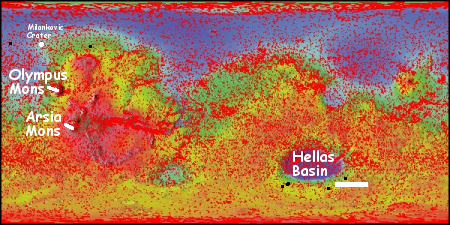
The black cross on the global map of Mars above marks the location of this crater.

The photo was taken as part of the routine monitoring planetary scientists are doing of the gullies that flow down this crater’s interior rim, a monitoring program that goes back to 2007. It is thought that those gullies might be created by seasonal frost, either water ice or dry ice, that causes erosion.

What struck me about the photo however was the glacial features on the floor of the crater. Near the bottom of the interior slope those features look broken up, as if the pressure from above pushed the ice sheets apart. Farther from the interior slope the features more resemble a typical glacial flow, slowly inching downward toward the crater’s low spot. All these glacial features also lend weight to the theory that water ice somehow caused or contributed to the formation of those gullies.

The global map above shows that this crater, while well within the 30 to 60 degrees mid-latitude band where many Martian glaciers are found, is also far from the many regions on Mars that scientists have mapped as having high concentrations of glaciers. And yet, the glacial features are here as well.

Near surface ice will not be found at every spot on Mars. However, once you get above 30 degrees latitude, the evidence increasingly suggests that you won’t have to go far or dig down deep to find it.

0 comments

Cones south of Starship’s prime landing sites on Mars

Cones near Phlegra Mountains
Click for full image.

Cool image time! The photo to the right, cropped and reduced to post here, was taken on May 7, 2022 by the high resolution camera on Mars Reconnaissnace Orbiter (MRO). It shows what the scientists have labeled as “Cones in Phlegra.”

Cones such as these are one of the prime geological mysteries of Mars’ northern lowland plains. Scientists do not know yet whether they are either mud or lava volcanoes, or even if they are sedimentary mesas that resisted subsequent erosion. In fact, it was hoped by some American scientists that the Chinese would send its Zhurong rover north towards a nearby cone to find out, but alas, the Chinese decided to head south instead.

Zhurong however was on the other side of Mars. The overview map below shows us where these cones are located.
» Read more

2 comments

Fractures in the Martian northern lowland plains

Fractures in the northern lowland plains
Click for full image.

Cool image time! The photo to the right, rotated, cropped, and reduced to post here, was taken on April 21, 2022 by the high resolution camera on Mars Reconnaissance Orbiter (MRO) of a spot in the Martian northern lowland plains.

Generally the surface of these lowland plains — especially at high latitudes above 30 degrees — tends to appear very water saturated, producing blobby features and what look like mud volcanoes. This picture however features something different, what the scientists have labeled fractures, geological features that appeared caused by dry conditions and sudden quake-like events. The break in the fracture near the top of the photo illustrates why water flow had little if anything to do with its formation. Other fractures in the full image show the same thing. Also the stippled surface along the picture’s right edge also suggest there is little near surface water or ice at this location.

The location, as shown by the overview map below, suggests that water might still have played a part, but only a long time ago.
» Read more

1 comment
1 43 44 45 46 47 90