Traveling in the mountains of Mars

Traveling in the mountains of Mars
Click for full resolution. Original images can be found here and here.

Overview map
Click for interactive map.

Cool image time! The panorama above was created by two photos taken by the Mars rover Curiosity’s right navigation camera on November 30, 2022. It looks to the south, into Gediz Vallis, the slot canyon that has been the rover’s major goal since it landed in Gale Crater a decade ago.

The blue dot on the overview map to the right marks Curiosity’s present position, now on its way east after making a short detour to the west towards Gediz Vallis Ridge. The yellow lines indicate the approximate area shown by this panorama. The red dotted line in both images marks the rover’s planned future route. The white arrows indicate what scientists have labeled the marker band, a distinct smooth layer seen at about the same elevation in many places on the flanks of Mount Sharp. According to the most recent update from the science team, the rover’s next drive will place it on that marker band, the second time it has been there.

From here the rover will continue south, climbing up into Gediz Vallis.

0 comments

A Martian knife mesa with terraces

A Martian knife mesa with terraces
Click for full image.

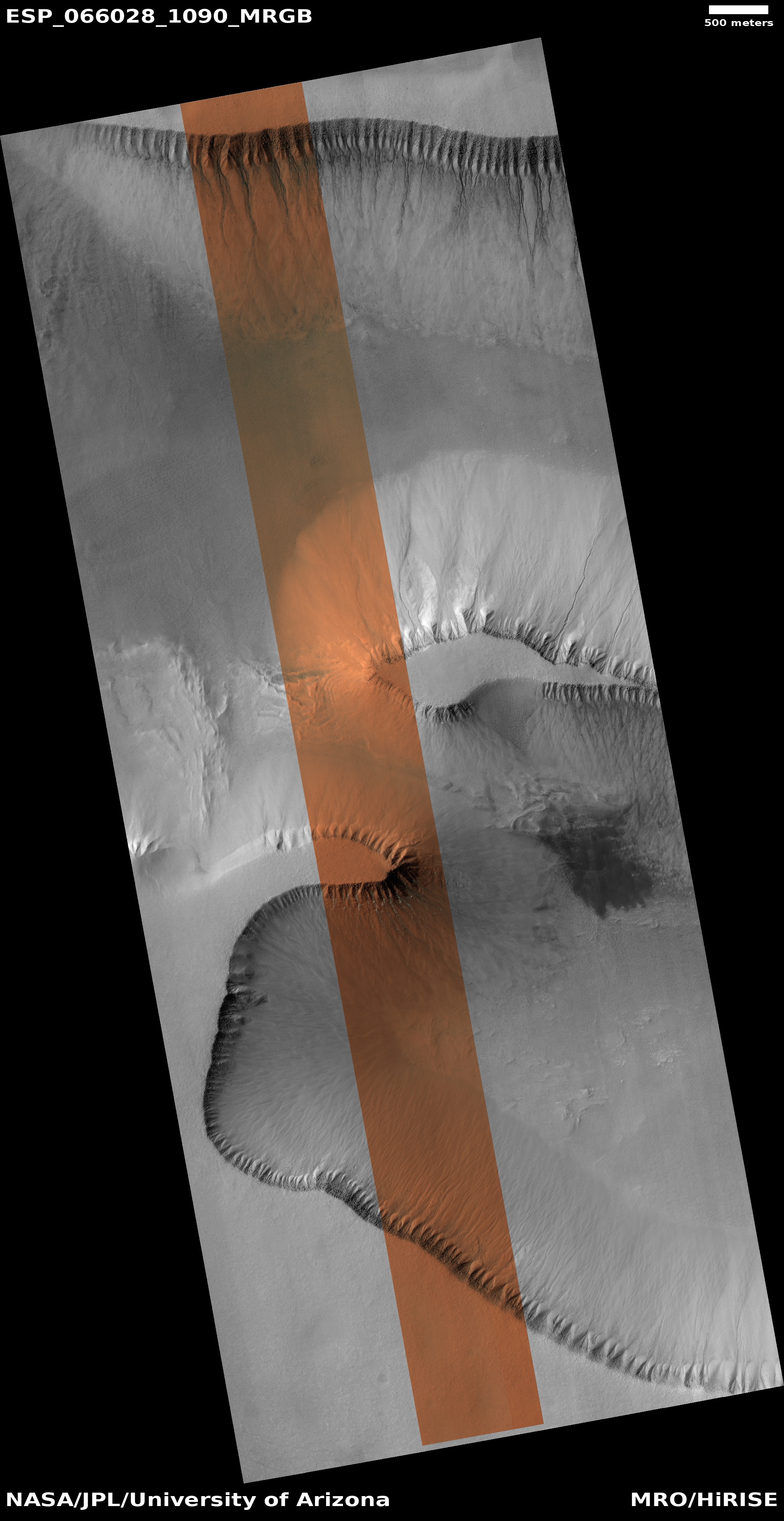
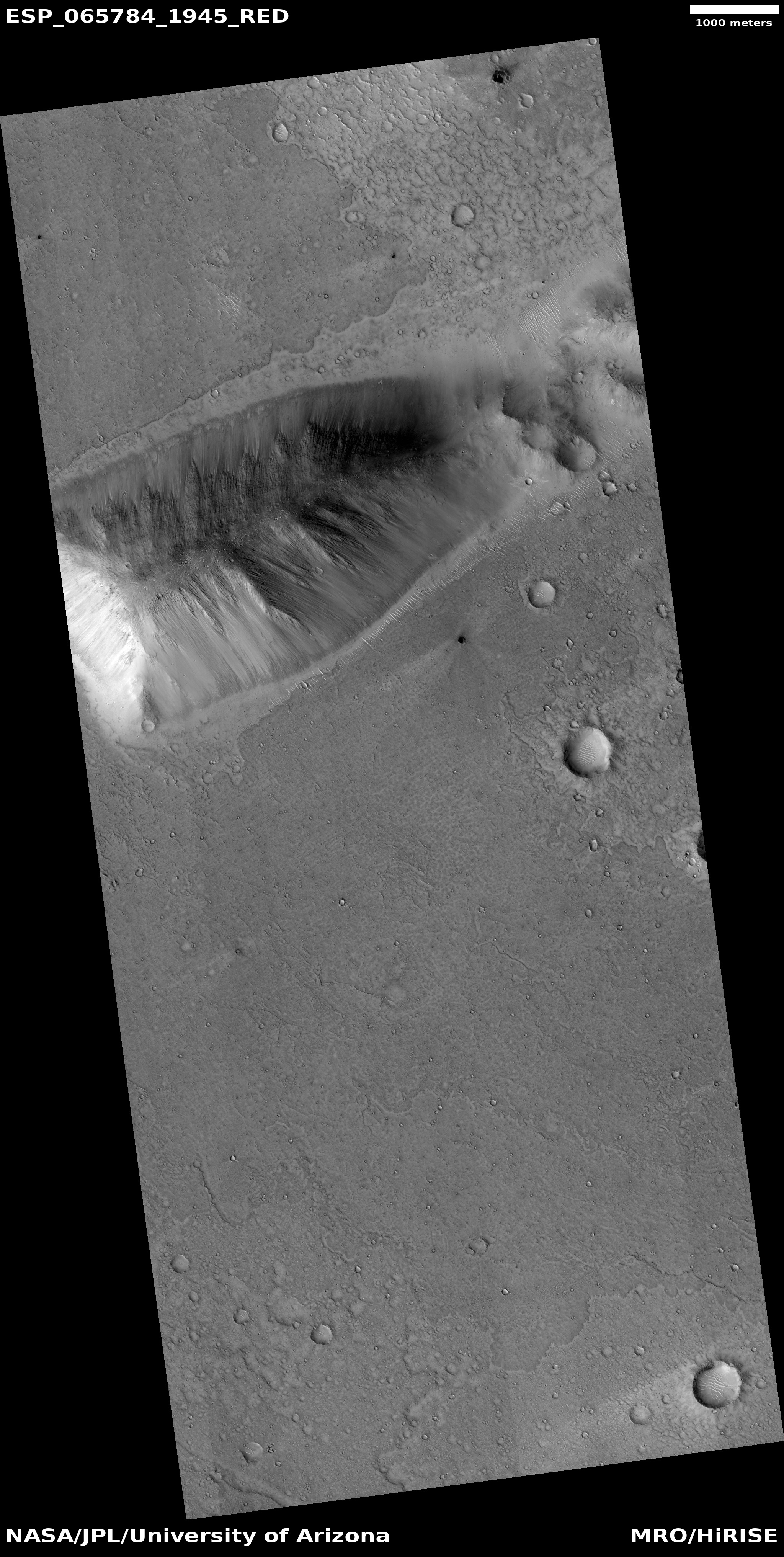
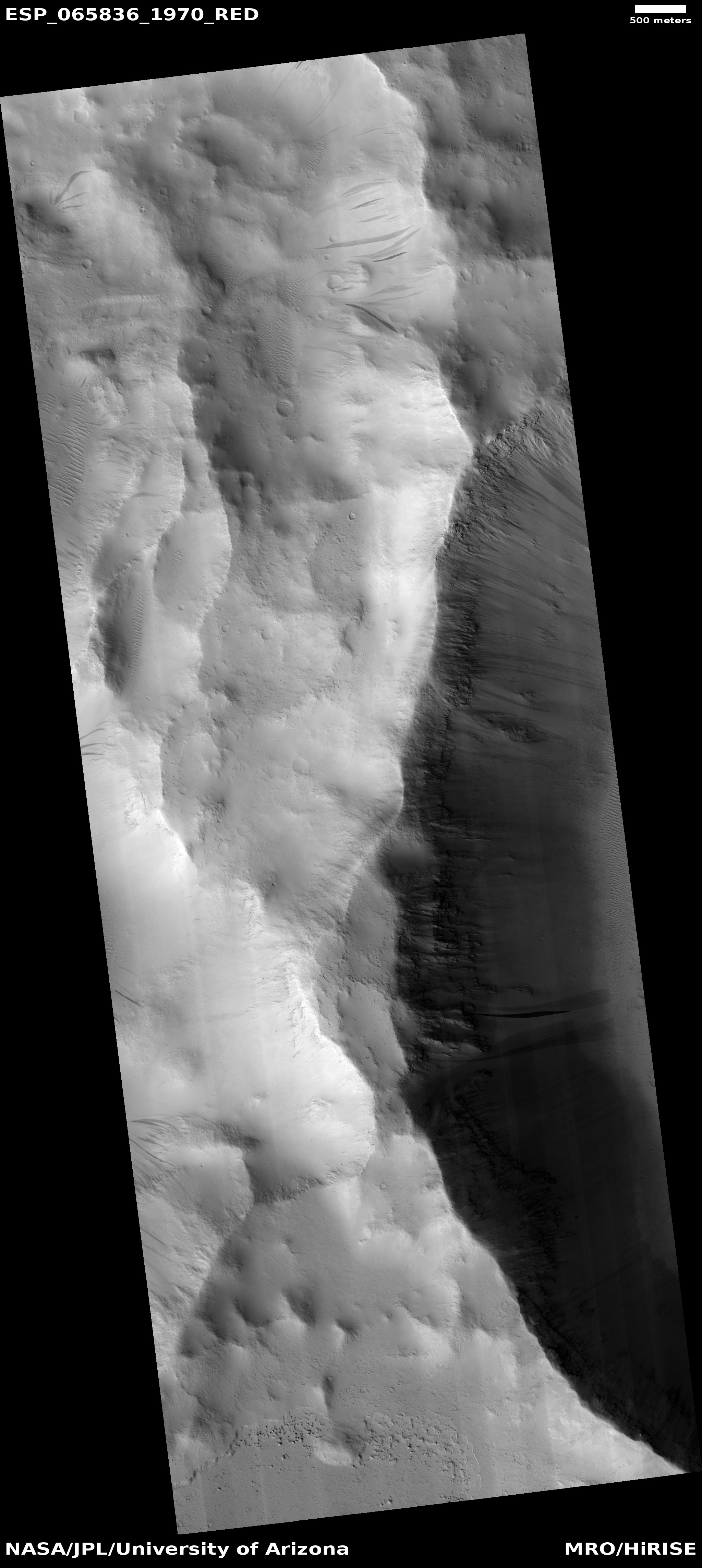
Cool image time! The photo to the right, rotated, cropped, reduced, and sharpened to post here, was taken on August 21, 2022 by the high resolution camera on Mars Reconnaissance Orbiter (MRO). It shows what the scientists label as a “layered mound.” It also shows a plethora of geological mysteries, all of which relate to the as yet not quite understood geological history of Mars.

First, note the different colors north and south of the ridgeline. According to the science team’s understanding of what these colors mean [pdf], the orange-red to the north suggests dust, while the bluish-green to the south suggests coarser materials, such as rocks and sand. Though frost and ice are generally bluer, such things are generally found on the pole-facing slopes where there is less sunlight. Thus the bluish-green material to the south is unlikely to be ice or frost, though this is not impossible, as the picture was taken in the winter and the latitude is 35 degrees north.

Why however is there such a dichotomy of rocks, sand, and dust between the north and south slopes? And if frost and ice, why is it more prominent to the south, when it should instead be more prominent to the north?

Other mysteries: Is the circular depression on the ridgetop an impact crater or a caldera? If the latter, this suggests the mound is some kind of volcano, likely mud, though lava is not excluded. If so, however, why is there no caldera on top of the ridge to the south?

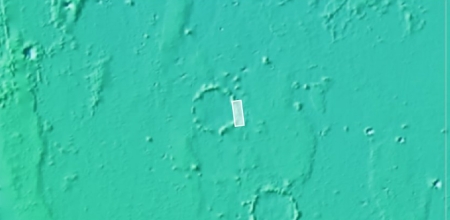
The location, as shown in the overview map below, reveals other puzzles.
» Read more

1 comment

Perseverance data so far finds no evidence of lake in Jezero Crater

The uncertainty of science: Though scientists had assumed the presence of an ancient delta that once flowed into Jezero Crater meant a lake once filled the crater, Perseverance data from its first year of roving has so far found no evidence that a lake every existed.

[A] summary of the first year of data from the rover, published in three different papers being released today, suggests that Perseverance has yet to stumble across any evidence of a watery paradise. Instead, all indications are that water exposure in the areas it explored was limited, and the waters were likely to be near freezing. While this doesn’t rule out that it will find lake deposits later, the environment might not have been as welcoming for life as “a lake in a crater” might have suggested.

Jezero Crater, like Gale Crater where Curiosity is roving, is located in the Martian dry equatorial regions. Though the data from Gale suggests a lake had once existed there, the data also suggests strongly that any water there acted more like water in cold climates like Iceland, existing mostly as glacial ice.

The jury is still out, but these results from Perseverance once again point to ice and glaciers as a possible explanation for many of the geological features on Mars that we on Earth automatically assume were caused by liquid water.

3 comments

Ingenuity completes 34th flight using new hazard avoidance software

Overview map
Click for interactive map.

Ingenuity yesterday completed its 34th flight on Mars, a short vertical up-and-down flight lasting only eighteen seconds in order to test just installed new hazard avoidance software.

The tan dotted line on the map to the right shows Ingenuity’s recent flights and ends where it sits today. The white dotted line marks Perseverance’s travels.

Ingenuity’s navigation software was designed to assume the vehicle was flying over flat terrain. When the helicopter is flying over terrain like hills, this flat-ground assumption causes Ingenuity’s navigation software to think the vehicle is veering, causing Ingenuity to start actually veering in an attempt to counter the error. Over long flights, navigation errors caused by rough terrain must be accounted for, requiring the team to select large airfields. This new software update corrects this flat-ground assumption by using digital elevation maps of Jezero Crater to help the navigation software distinguish between changes in terrain and vehicle movement. This increases Ingenuity’s accuracy, allowing the pilots to target smaller airfields going forward.

The new software is part of an effort to use Ingenuity to test helicopter flying in Jezero Crater in preparation for the two sample return helicopters which will eventually land here to grab Perservance’s core samples and bring them to the ascent vehicle for return to Earth.

4 comments

Frozen glacial eddies on Mars?

Overview map

Frozen glacial eddies on Mars?
Click for full image.

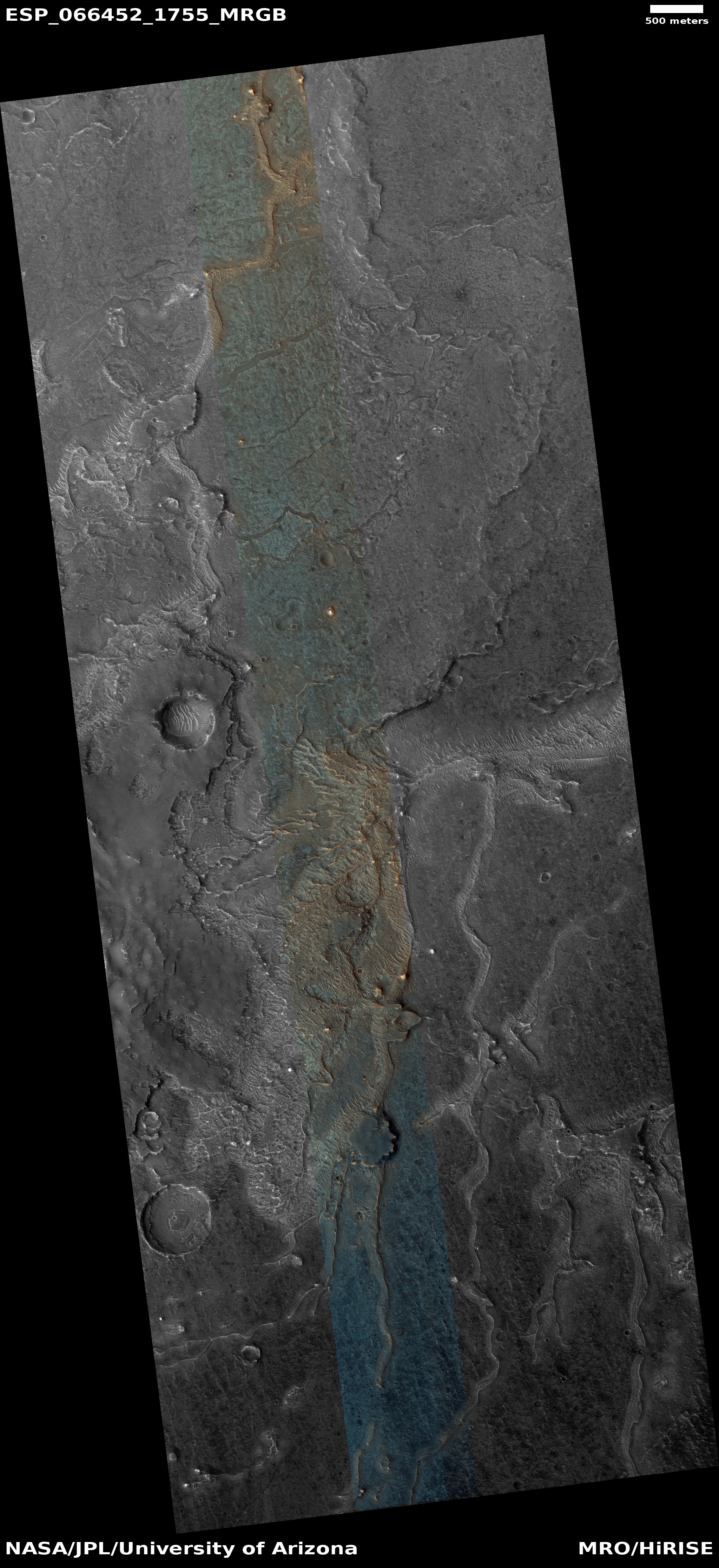
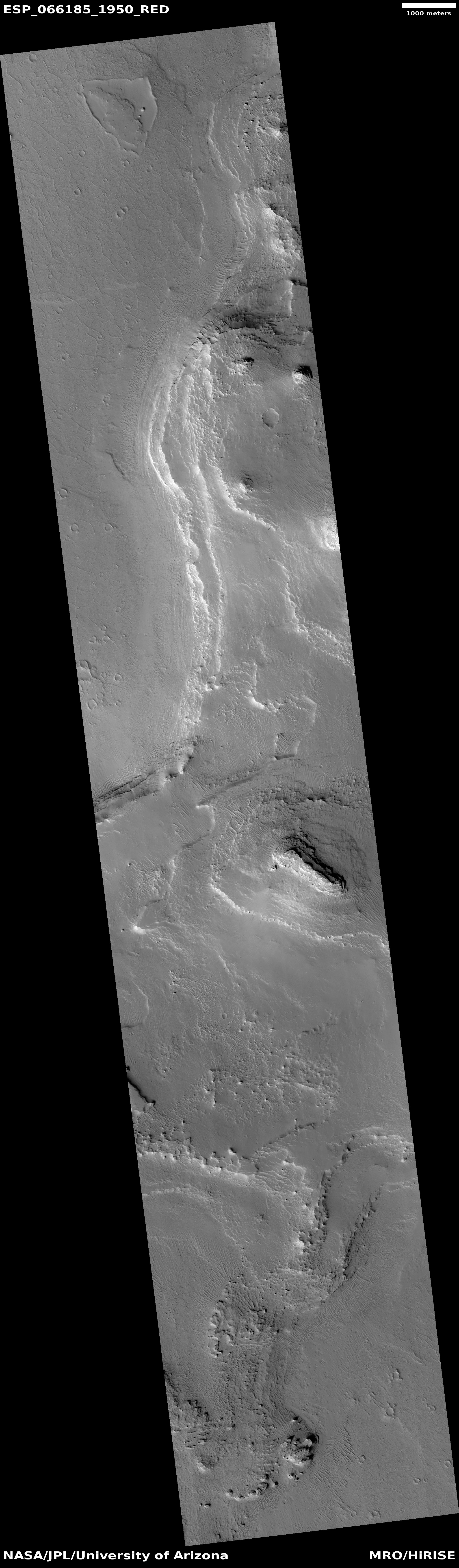
Cool image time! The photo to the right, cropped, reduced, and enhanced to post here, was taken on August 26, 2022 by the high resolution camera on Mars Reconnaissance Orbiter (MRO). Though the science team labels this image vaguely as showing “Features in Mamers Valles,” the features are likely glacial ice since this location is at the western end of the 2,000-mile-long northern mid-latitude strip I dub glacier country, where glacial features are seen everywhere.

The white dot marks this picture’s location in Mamers Valles, as shown on the overview map above. This particular Martian channel, that meanders in a wildly random manner (including a few sharp ninety degree turns), is theorized [pdf] by some scientists to have formed not by surface flows but by a subterranean drainage that created voids. On the surface the voids caused sagging, collapses, and the eventual formation of the surface channel.

Under such conditions, any ice in the channel would not necessarily have a clear flow direction, thus providing an explanation (though hardly certain) of the eddy-like shape of these features.

1 comment

Curiosity’s wheels: Maybe not so bad after all

Comparison of one wheel on Curiosity
To see the original images, go here and here.

Today the science team for the Mars rover Curiosity downloaded more photos of its wheels, a survey taken routinely now after every 500 meters or 1640 feet of travel. Unlike the pictures made available yesterday that showed some of the worst damage to one of Curiosity’s middle wheels, these new images included the wheel I have been tracking since 2017 as a baseline to see if further damage has occurred.

The photos to the right show that wheel, with the top photo from August and the bottom created from two pictures taken on November 20, 2022. The numbers indicate the matching treads. The “+” sign in the top image indicates a location where new damage was spotted in August.

As you can see, this wheel does not appear to have experienced any additional damage in the more than three months since that August update. While the damage to Curiosity’s wheels remains very concerning, it does appear based on this one wheel that — despite the generally very rough terrain the rover has been traversing since it entered the foothills of Mount Sharp — the wheels in general seem to be holding up.

Though I have not done a careful comparison of these new wheel images with earlier ones, none of the new images appear to show any additional significant damage. It appears that the travel criteria the science team adopted years ago — right after discovering the wheel damage — continues to work to protect the wheels. It picks the rover’s path more carefully to avoid sharper rocks, and includes software that stops the rover should it sense it is crossing a rock sharper than desired.

2 comments

InSight still alive

InSight's power levels

The InSight science team today posted another update on the power status of the Mars lander, as shown in the graph to the right.

As of Nov. 21, 2022, InSight is generating an average between 300 and 310 watt-hours of energy per Martian day, or sol. The tau, or level of dust cover in the atmosphere, was estimated at 1.33 (typical tau levels outside of dust season range from 0.6-0.7).

Power levels, while critically low, remained level and sufficient to run the seismometer, though nothing else. At the beginning of the month the science team said these levels would only allow operations for a few more weeks, but here we are, a few weeks later, and InSight is still alive, though barely.

At this moment the situation is essentially day-to-day. If the lander misses two scheduled communications sessions, they will declare it dead. So far, that has not happened.

0 comments

Colliding glaciers

Overview map

Colliding glaciers

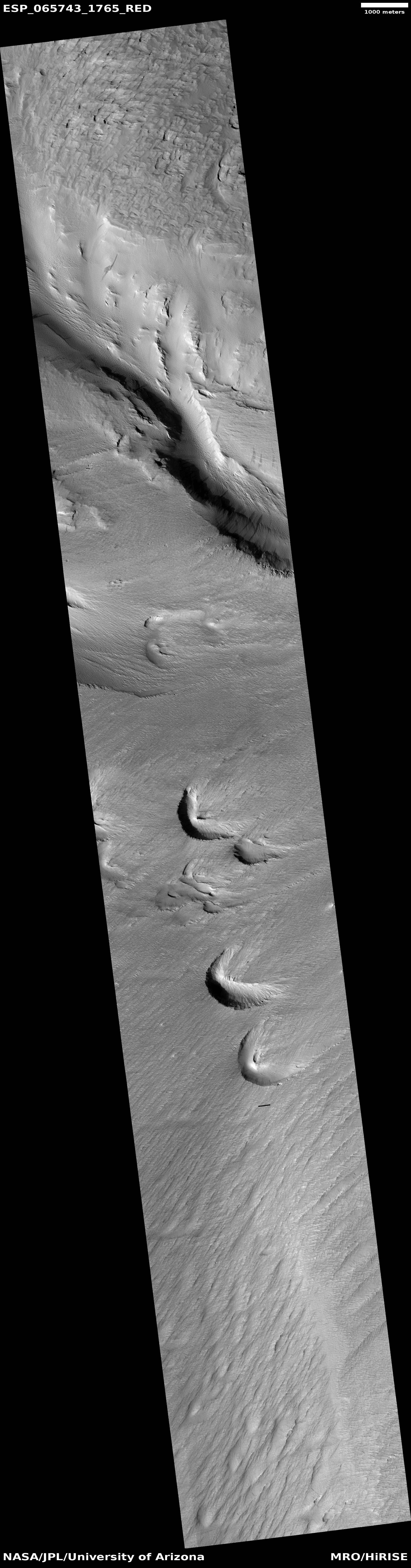
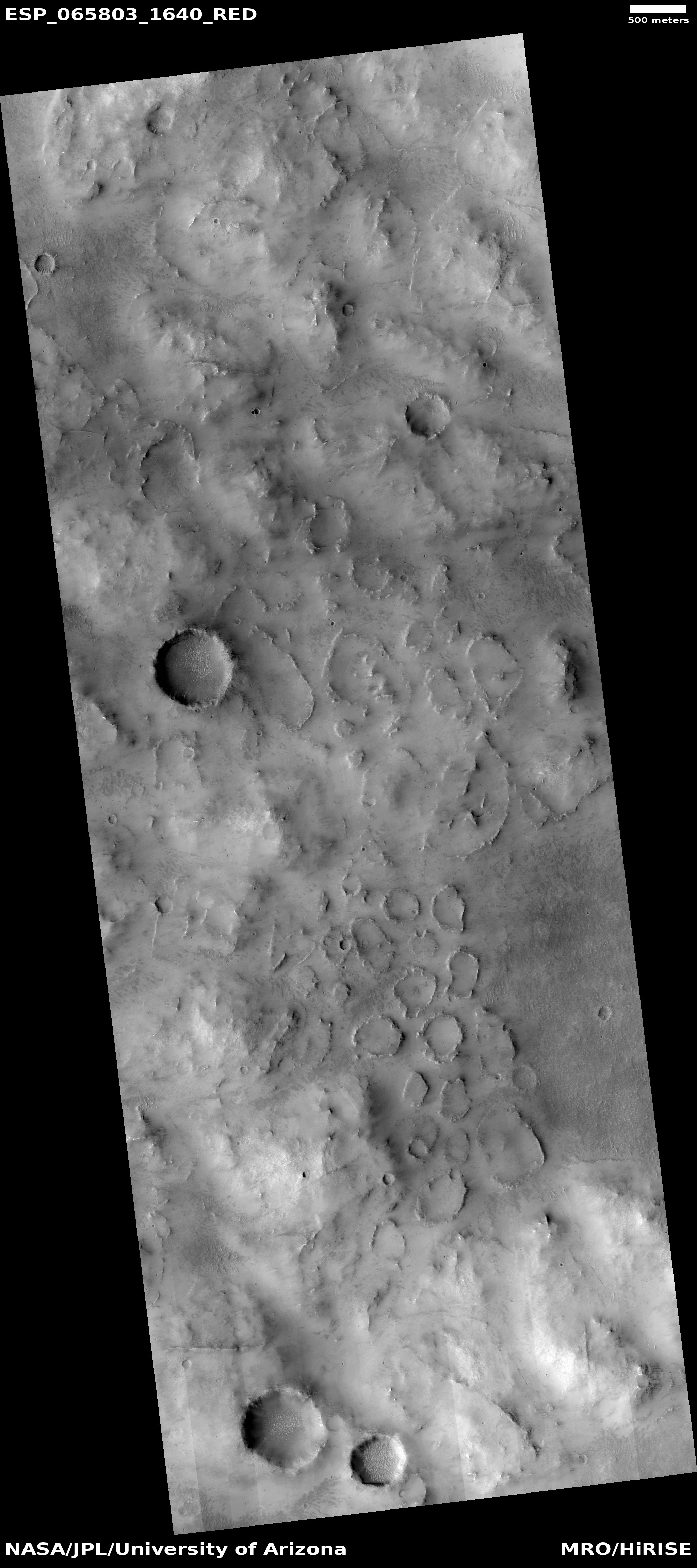
For today’s cool image we return once again to glacier country in the northern mid-latitudes of Mars. The picture to the right, rotated, cropped, reduced, and enhanced to post here, was taken on August 28, 2022 by the high resolution camera on Mars Reconnaissance Orbiter (MRO). It shows a spot where I think glacial flows coming from the north and south have collided at a low point. The white dot in the box on the overview map above marks its location, with the inset showing the mesas to the north and south that suggest this flow pattern.

What makes these colliding flows especially cool is the source of the northern flow. It appears that came out of the impact heat from that crater, which caused the ice on the downhill side to flow. You can also see the same phenomenon a short distance to the east, with a much smaller crater, likely a secondary impact from the first.

Note also the glacial fill inside the larger crater. This impact happened on top of older glaciers, but later climate cycles caused more ice to be deposited within the crater afterward. That this glacial fill appears terraced and thus layered also suggests that there were several if not many such later climate cycles.

1 comment

Glaciers everywhere in Mars’ glacier country

Glaciers everywhere in Mars' glacier country
Click for full image.

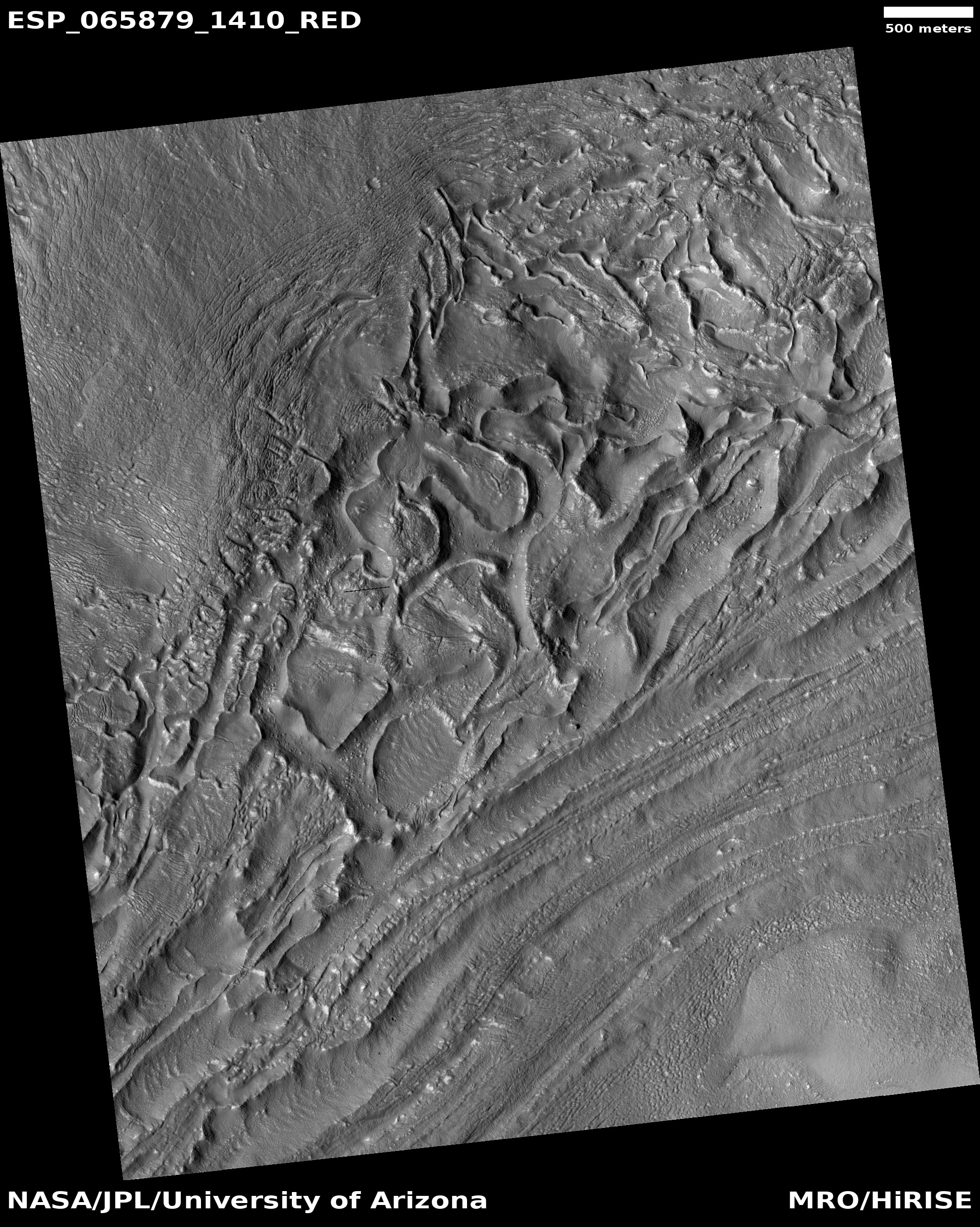
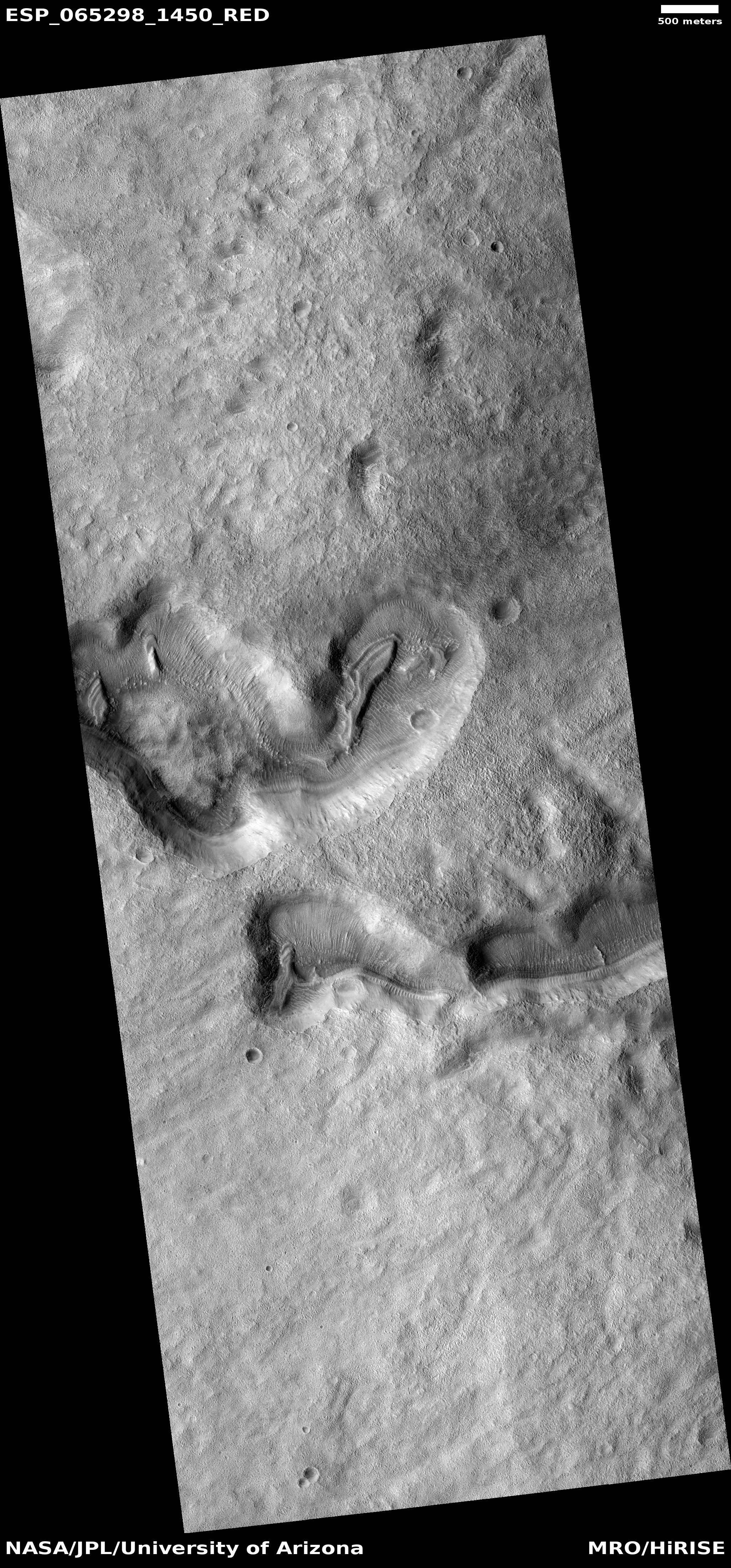
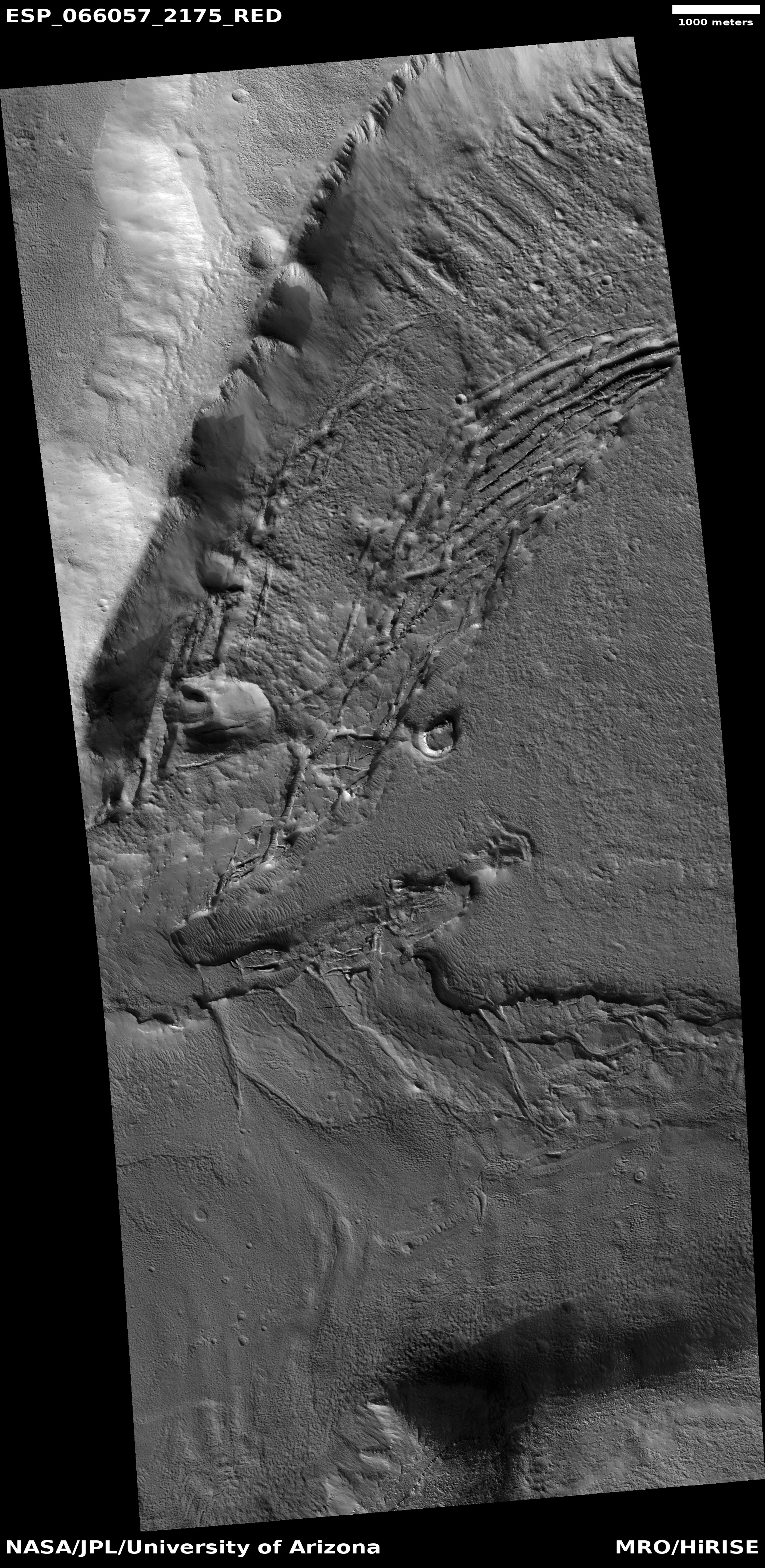
Cool image time! The picture to the right, rotated, cropped, reduced, and annotated to post here, was taken on August 24, 2022 by the high resolution camera on Mars Reconnaissance Orbiter (MRO). It shows glaciers apparently flowing down from two different mesas to the north and south.

The arrows indicate a major glacial stream coming from two directions. The many layered flow on the image’s upper right illustrates the many past climate cycles of Mars, with each subsequent period of snowfall and glacial growth producing progressively less ice. The chaotic region in the lower right marks what I think is the lowest point between the two mesas. Here the flows form eddies as the glaciers collide.

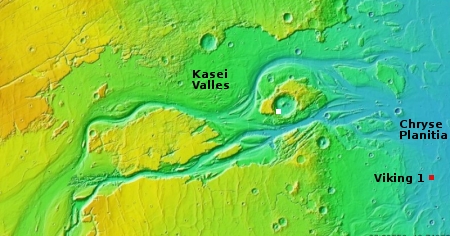
The overview map below shows us why there are so many glaciers at this spot on Mars.
» Read more

0 comments

The lunar surface is arid

The uncertainty of science: According to a paper published at the end of October, scientists have used data from the LADEE lunar orbiter (that circled the Moon in 2013-2014) and found that the surface of the Moon is extremely arid, and if there is any ice trapped in the permanently shadowed craters at the poles it did not come from meteorite impacts elsewhere on the Moon. From the abstract:

The upper bound for exospheric water derived here from data collected in 2013–2014 by the neutral mass spectrometer on the Lunar Atmosphere and Dust Environment Explorer spacecraft [LADEE], about three molecules/cc, pales in comparison to the concentration of ∼15,000 molecules/cc needed to sequester the meteoritic water influx. The only pragmatic conclusion is that the hypothesis for water ice accumulation at the poles due to exospheric transport is false.

The theory had been that any water from these meteorites could have been transported by various processes to the polar cold traps. This data says that did not happen, and if there is water ice in the polar cold traps, its origin remains unknown, though comet impacts at the poles might have been a source.

This result also appears to contradict other orbital data that has suggested there is some water in the lunar regolith at mid and low latitudes.

0 comments

Martian helicopters of the future

Today Bob Balaram, the chief engineer for the Mars helicopter Ingenuity, wrote up a short essay summarizing the helicopter’s successes on Mars.

This aircraft, very much also a spacecraft, has been on its own on the surface of Mars, detached from its traveling companion Perseverance, for over 500 Martian days or sols. It has operated way beyond its original planned mission of 30 sols, including surviving a brutal winter that it was not designed for. With 33 flights, almost an hour of flight time, over 7 km of travel in Jezero crater, takeoffs and landings from 25 airfields, almost 4000 navigation camera images, and 200 high-resolution color images, it has proven its worth as a scout for both scientists and rover planners. Currently, it is getting ready to use its fourth software update – this one with advanced navigation capabilities that will allow it to safely fly up the steep terrain of the Jezero river delta, scouting ahead of the rover Perseverance as it searches for signs of past life on Mars. [emphasis mine]

I have highlighted the number of flights above because Ingenuity was supposed to do a very short 34th flight on November 10th that would only have the helicopter go straight up 16 feet, hover, and then come straight back down. Yet, I have seen no postflight reports, and Ingenuity’s flight log still does not include it as of today. One image from Ingenuity that was taken on November 9th has been released, and shows the ground directly below it. No other recent images of this 34th flight however have been released.

The flight could still have happened, or was scrubbed for a later time. What is important however is all those other 33 flights, and what Ingenuity’s overall success has meant for future Martian exploration. As Balaram writes,
» Read more

5 comments
1 62 63 64 65 66 157