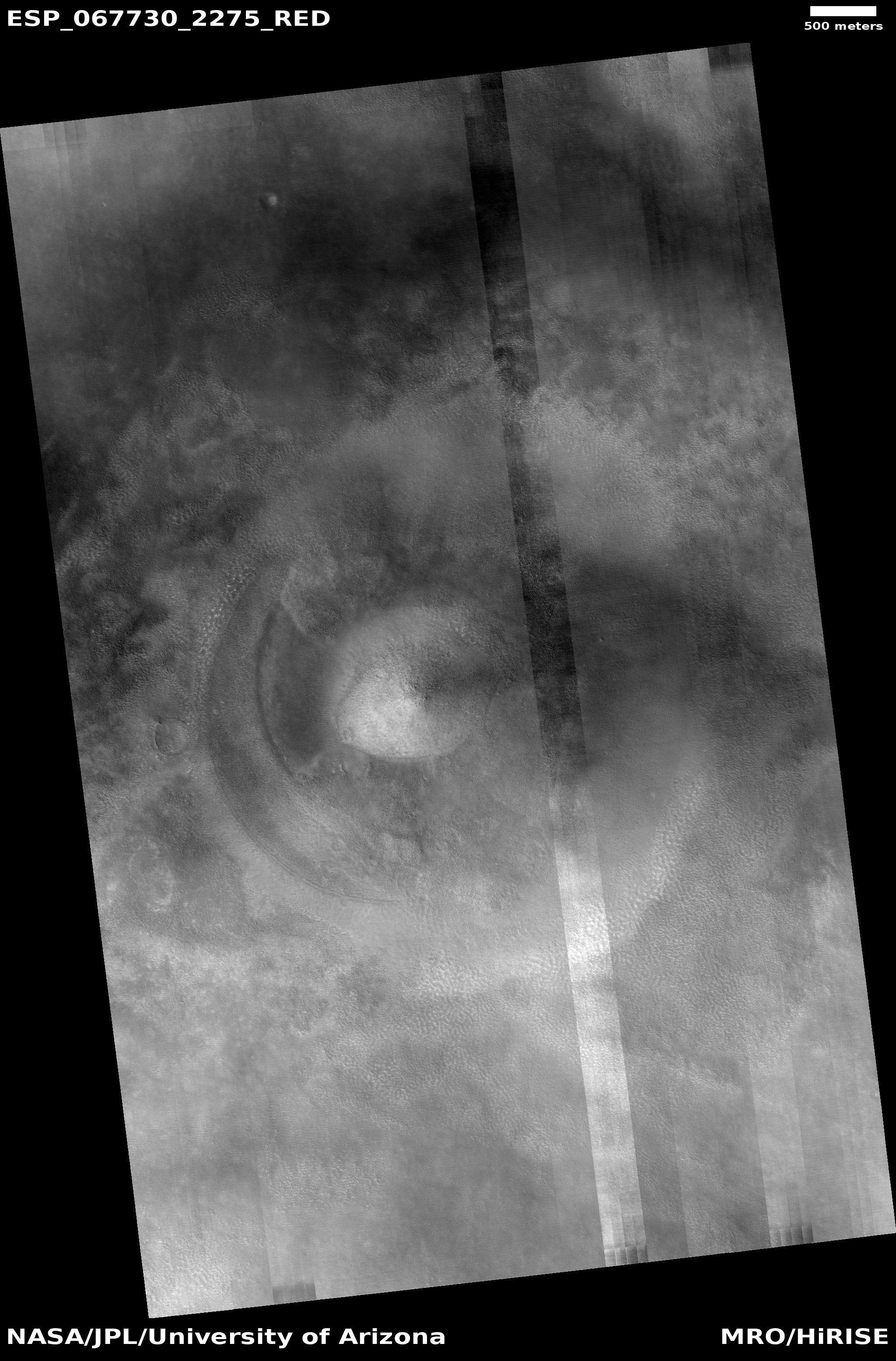
Weird dome near Starship candidate landing zone on Mars

Weird dome near Starship candidate landing zone on Mars
Click for original image.

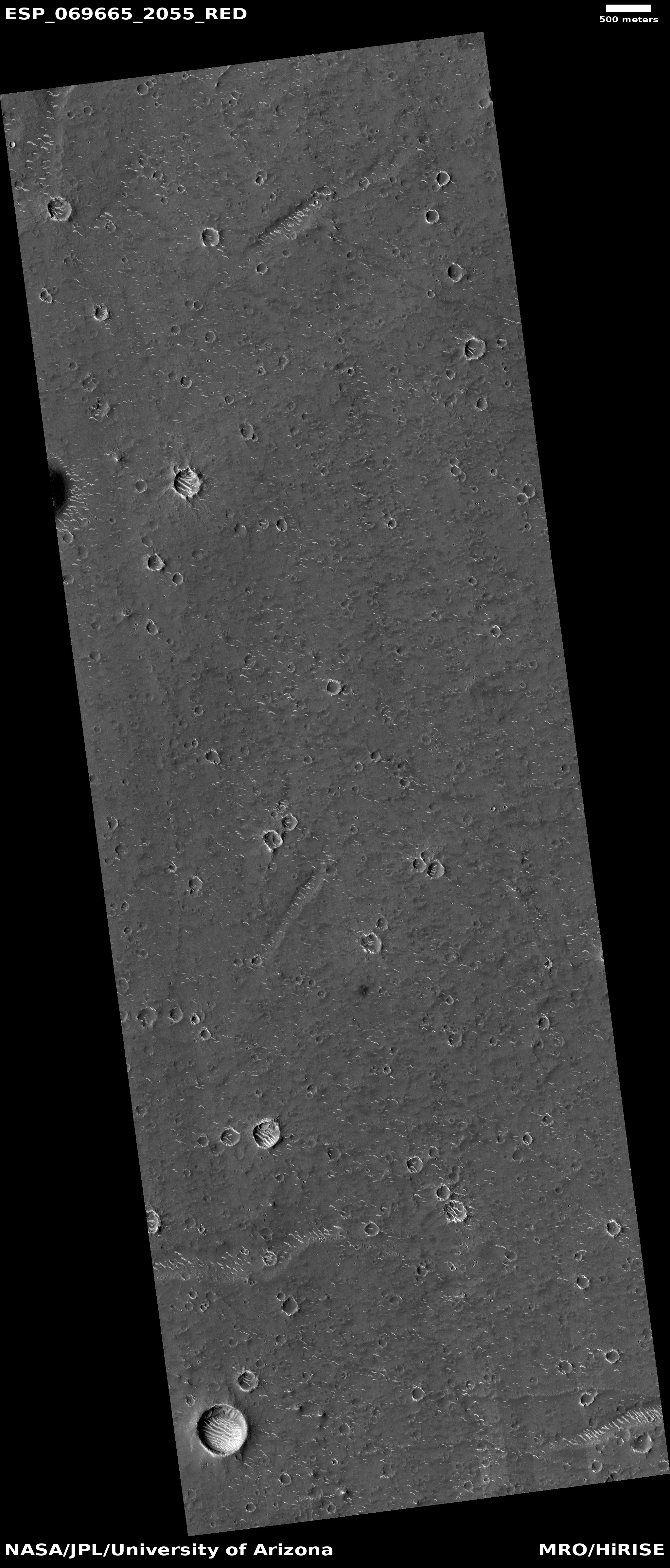
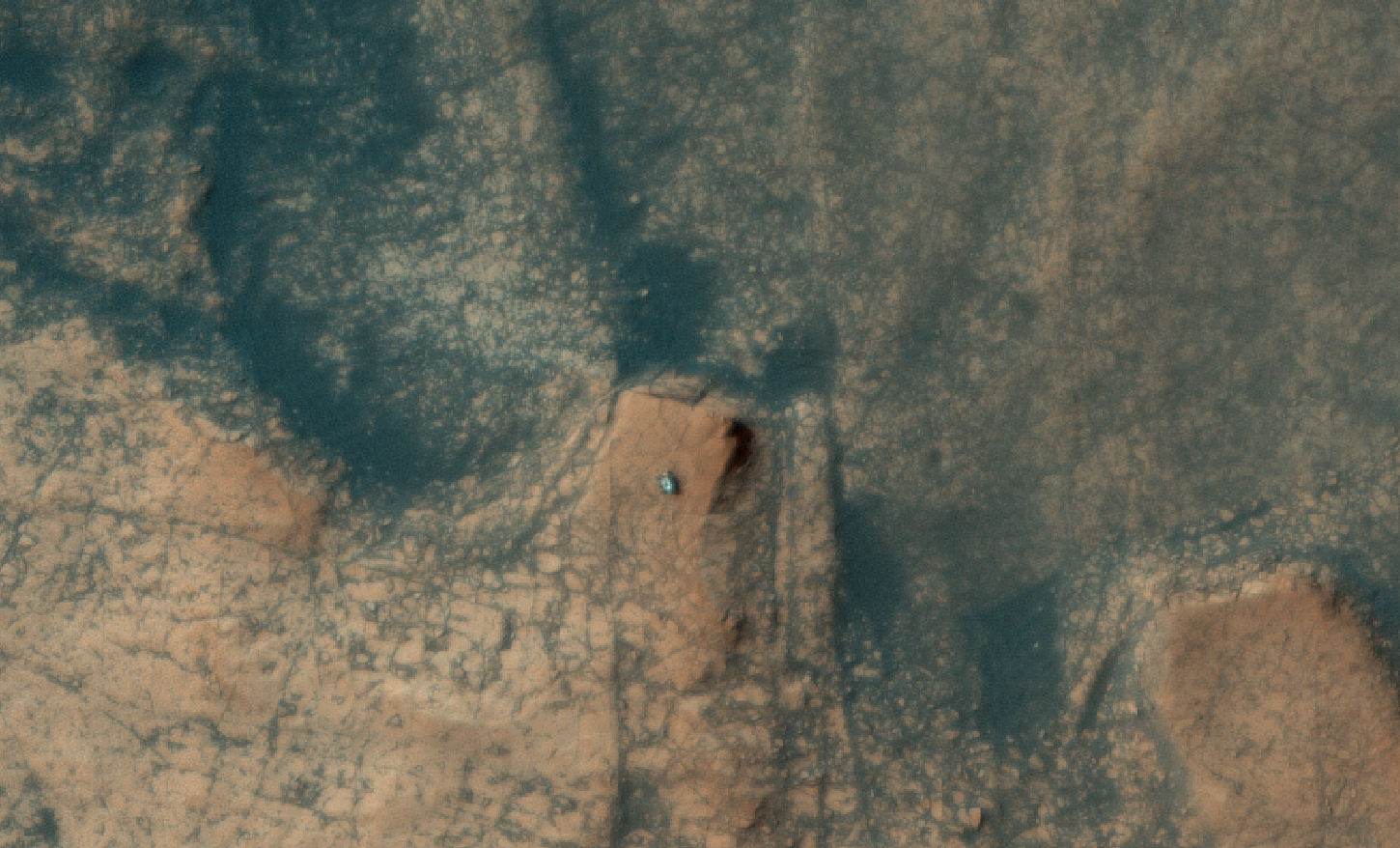
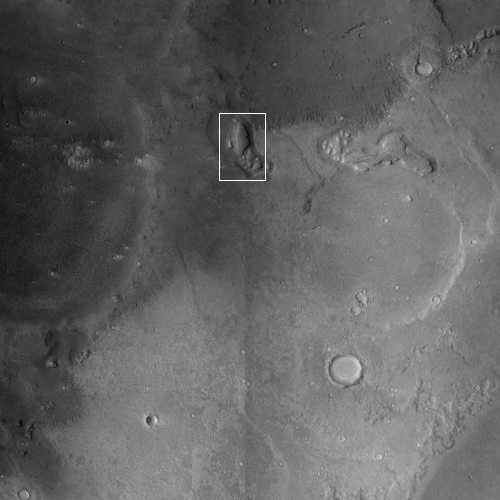
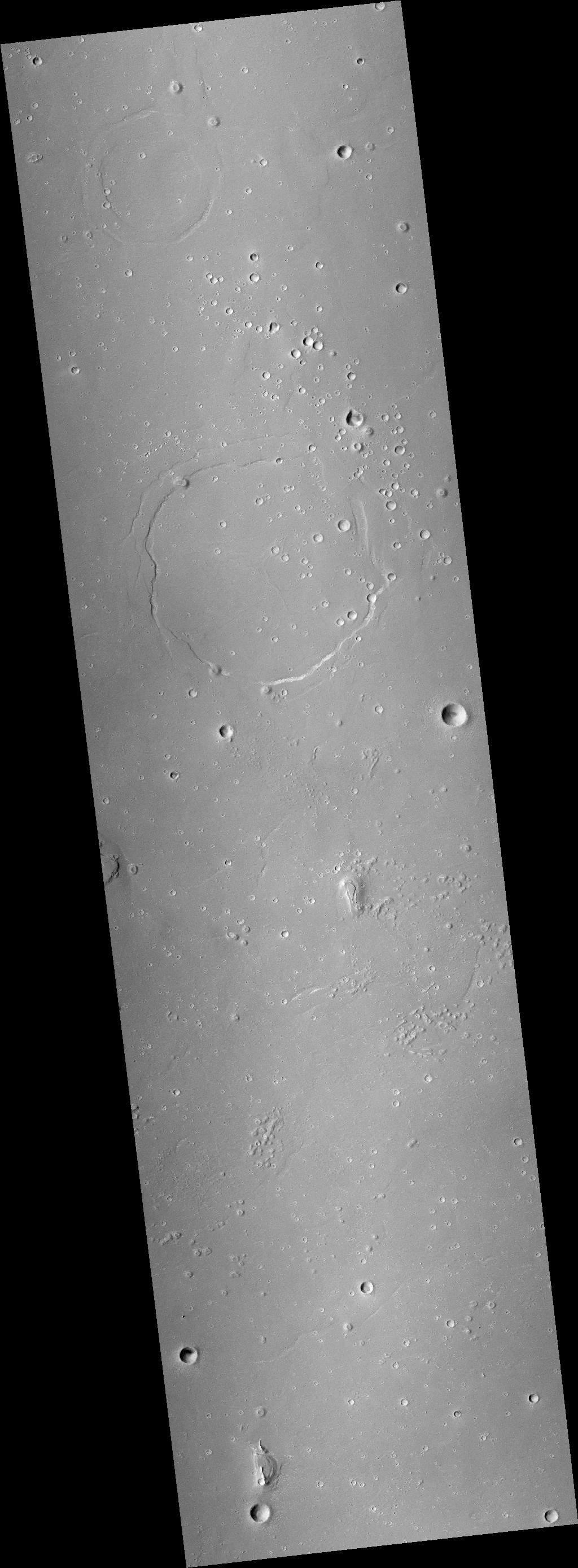
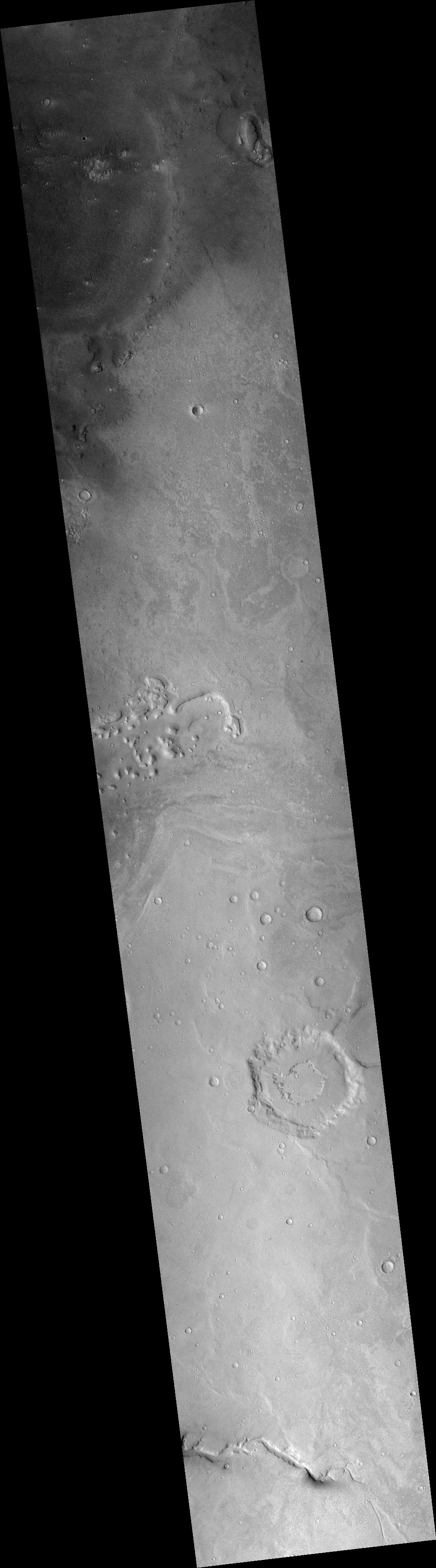
Cool image time! The picture to the right, rotated, cropped, reduced, and sharpened to post here, was taken on February 27, 2023 by the high resolution camera on Mars Reconnaissance Orbiter (MRO). It shows what the scientists label as domes in Arcadia Planitia, one of the many large northern lowland plains of Mars.

This to me is a “What the heck?” image. I won’t dare try to explain the warped concentric ringed pattern at the top of the mesa, nor the bright and dark splotch that surrounds it. The small craters around it appear to have glacier material within them, and the terrain here likely has a lot of near surface ice, being at 37 degrees north latitude in a region where the data suggests such ice exists. The different colors here likely indicate the difference between dust (orange) and coarser material (aqua).

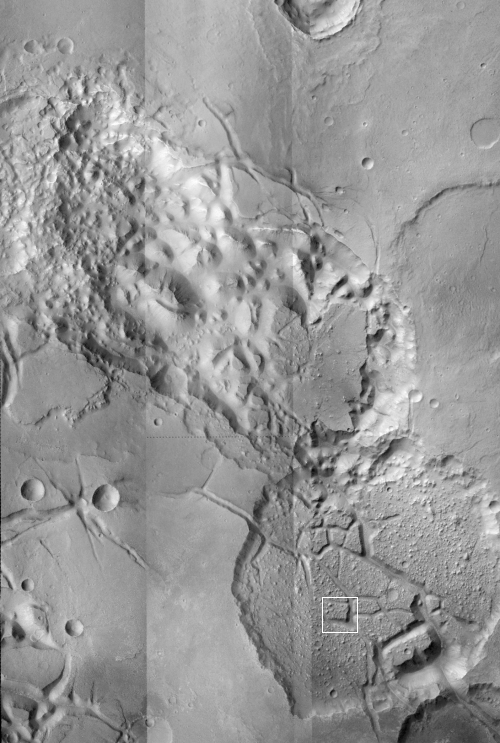
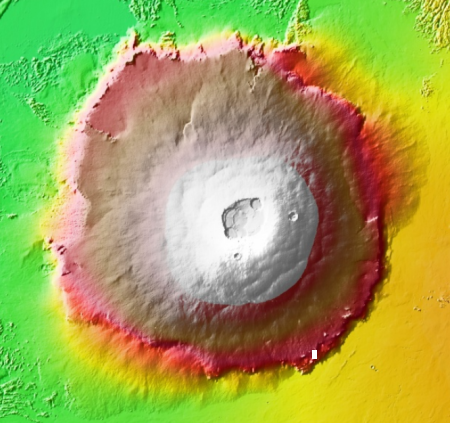
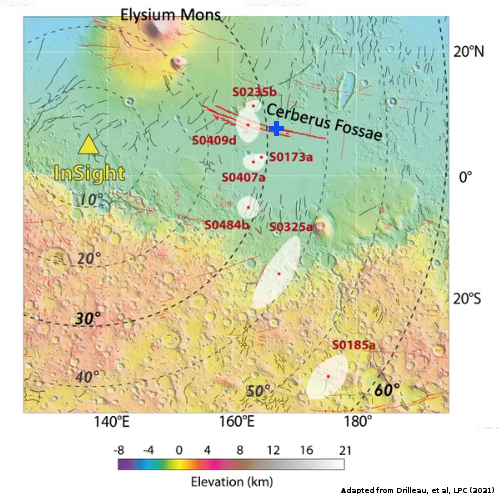
The location, as shown in the overview map below, makes this mesa more tantalizing.
» Read more
5 comments

In a Martian cold cauldron, boil and bake

bubbles and boiling ground
Click for original image.

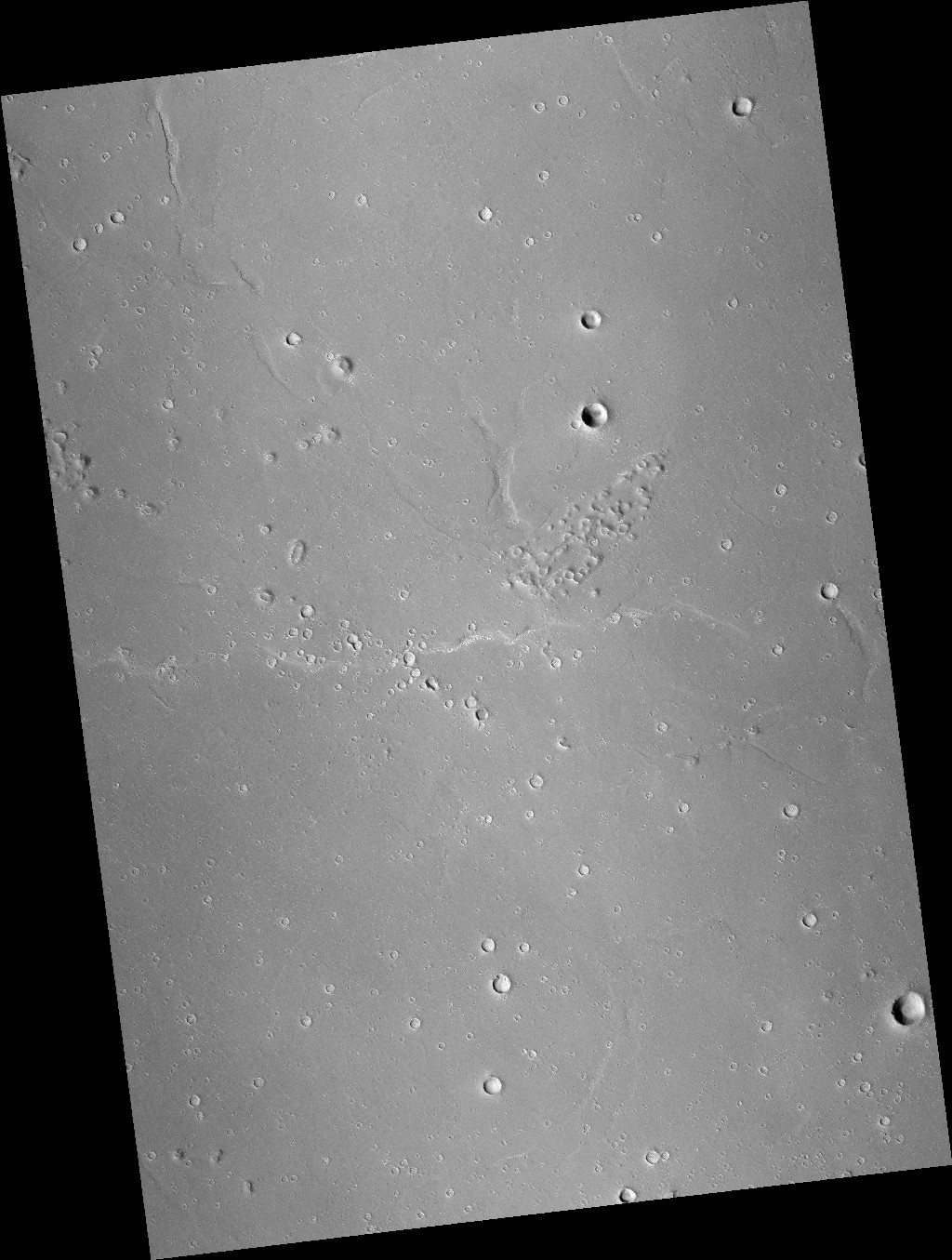
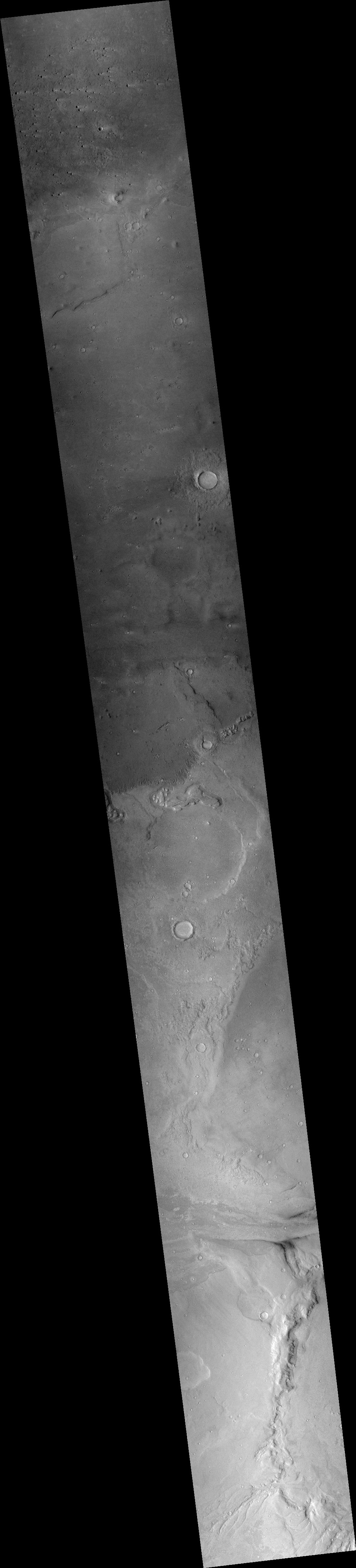
Cool image time! My headline paraphrases slightly the witches’ chant from Shakespeare’s MacBeth, if only to make it more accurately describe the picture to the right, cropped and reduced to post here. Taken on January 5, 2023 by the high resolution camera on Mars Reconnaissance Orbiter (MRO), it shows a patch of mid-latitude terrain in the icy northern lowland plains of Mars.

While some of the craters here were certainly caused by impact, it is also likely that most were instead cryo-volcanic in nature, whereby ice bubbles up from below as changing temperature conditions — none of which need to be very warm — cause it to either melt temporarily into liquid or sublimate directly into a gas. The dark pimplelike hole on the picture’s right edge is a perfect example, with the hole sitting at the top of a cone.
» Read more
0 comments

The cliff wall of ancient Martian lava channel

The cliff wall of an ancient Martian lava channel
Click for original image.

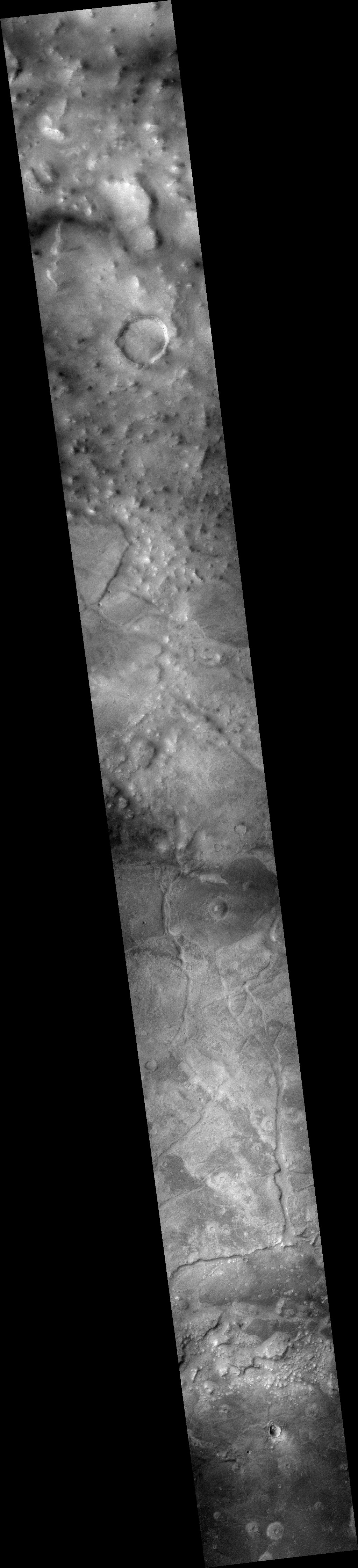
Cool image time! The picture to the right, cropped, reduced, and sharpened to post here, was taken on January 17, 2023 by the high resolution camera on Mars Reconnaissance Orbiter (MRO) by the camera team not as part of any particular research project but in order to fill a gap in the camera’s schedule so as to maintain its proper temperature. In such cases the camera team tries to pick potentially interesting spots.

This cliff, about 1,100 feet high, is the north wall of a major volcano channel flowing across the Tharsis Bulge, the lava plains that surround Mars’ giant volcanoes. Located in the dry equatorial regions, there is no near surface ice here, but a lot of dust, much of it likely volcanic ash. In the full picture are several ancient craters, all of which are almost entirely buried by this dust and ash.

The cliff wall itself is made up of numerous layers, each representing a past volcanic flood lava event that covered this region with a new flow of material. These events occurred over more than a billion years.
» Read more
1 comment

Exploring just one small corner of Valles Marineris, Mars’ Grand Canyon

One corner of Valles Marineris
Click for original image.

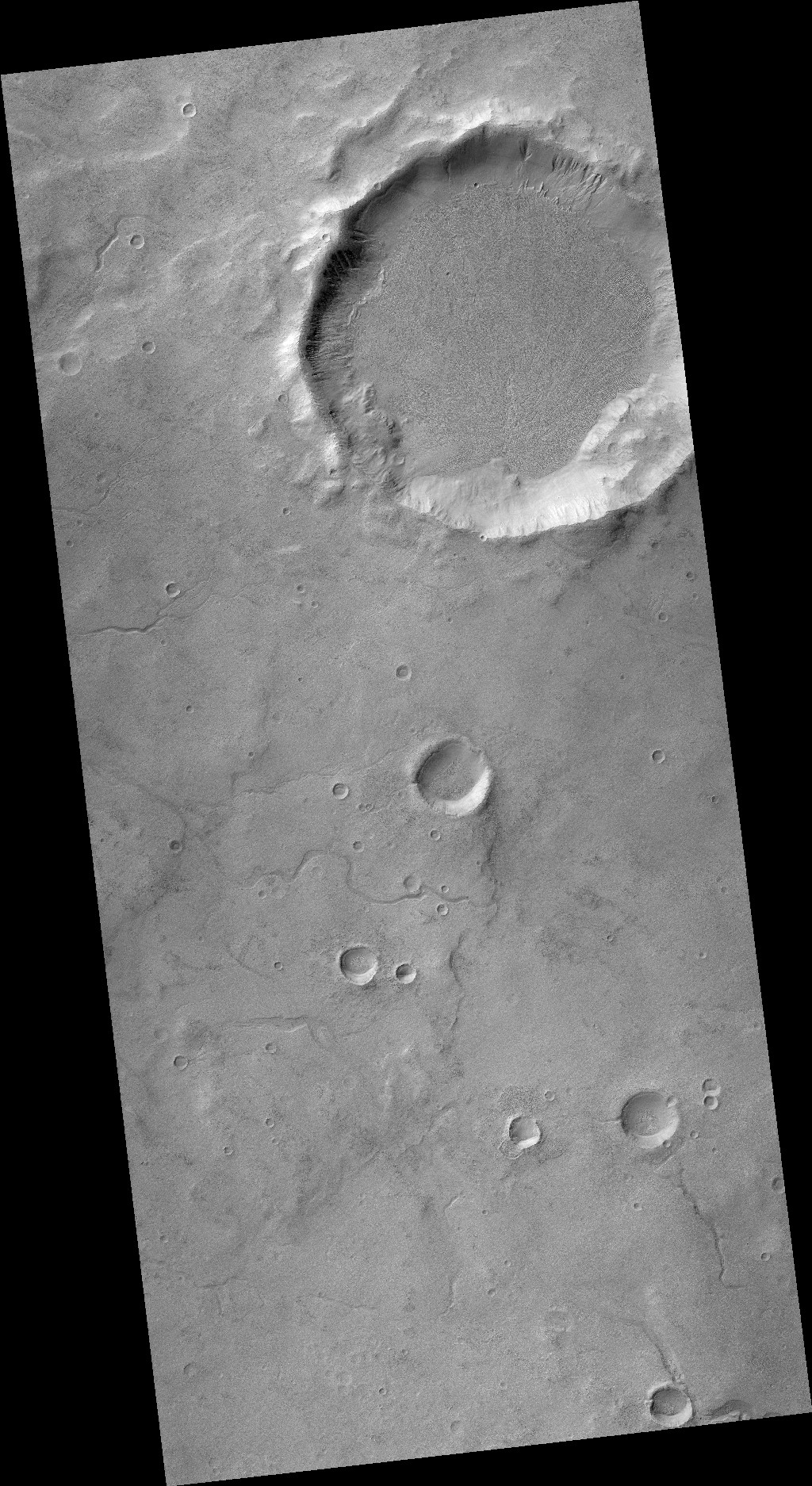
Cool image time! The picture to the right, rotated, cropped, reduced, and sharpened to post here, was taken on February 19, 2023 by the high resolution camera on Mars Reconnaissance Orbiter (MRO). It shows the many many many layers that are found in the cliffs of Valles Marineris, the largest known canyon in the solar system and far far larger that Earth’s Grand Canyon.

The elevation difference between the red dots is just under 4,000 feet. Yet that high point is still more than 7,000 feet below the rim of the canyon, more than thirty miles to the south. And the lower dot is still about 18,000 feet above the low point in this side canyon of Valles Marineris, about thirty miles away to the northeast.

In other words, in sixty miles from rim to floor the canyon at this location drops about 25,000 feet, only 4,000 feet less than the height of Mount Everest. Compare that with the Grand Canyon’s slopes, which drops in eleven miles about 5,000 feet, beginning at the main south rim lookout at the start of Bright Angel trail.
» Read more
0 comments

Glacier layers on the border of Hellas Basin

Dipping glacial layers
Click for original image.

Cool image time! The picture to the right, cropped and reduced to post here, was taken on February 21, 2023 by the high resolution camera on Mars Reconnaissance Orbiter (MRO). It shows what the scientists label as “dipping layers”, referring specifically to the mesas with the terraces on their western flanks.

The layers obviously signify past cycles of geological events on Mars. That the terraces are only on one side of the mesas suggests that they are tilted, with the downhill grade to the east.

These layers however pose several mysteries. First, why are they located so specifically in only certain places of this region? It appears that the layered terrain is only found in the lower hollows and valleys. Why?

Second, why are they tilted at all?
» Read more

0 comments

Frozen waves of lava on Mars

Frozen waves of lava on Mars

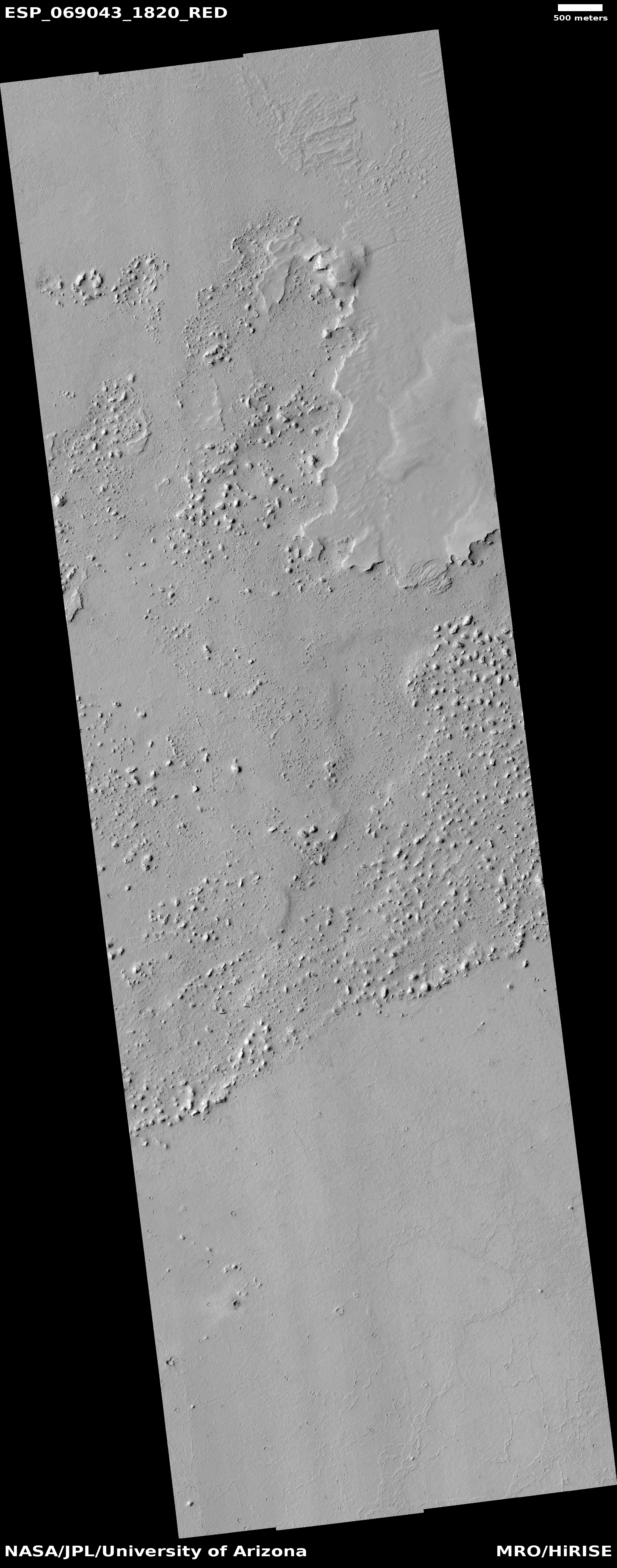
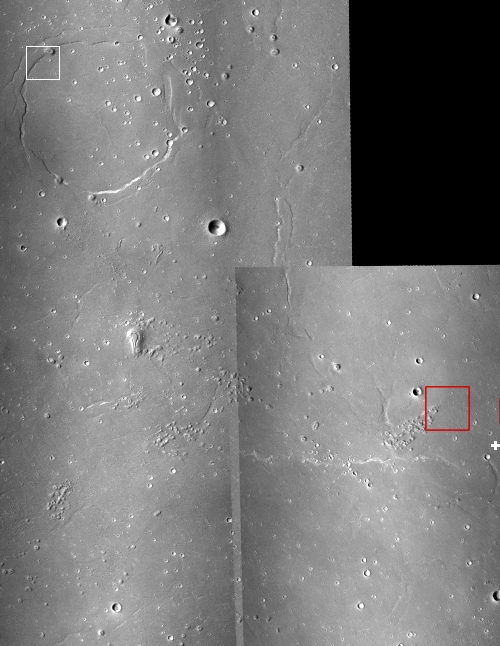
Cool image time! The picture to the right, cropped and reduced to post here, was taken on January 15, 2023 by the high resolution camera on Mars Reconnaissance Orbiter (MRO). It shows an area where the ground suddenly transitions from a crazy quilt of criss-crossing hollows and ridgelines to a very flat and smooth plain.

The location is at 21 degrees south latitude, so this is in the dry equatorial regions. Though it has a small resemblance to the chaos terrain that is found in many places on Mars, mostly in the mid-latitudes where glaciers are found, the scale here is too small and the ridges and canyons are not as sharply drawn. While chaos terrain usually forms sharply defined large flat-topped mesas with steep cliffs, here the ridges are small and the slopes to the peaked tops are somewhat gentle.
» Read more

0 comments

One instrument on Mars Reconnaissance Orbiter ends its mission

Because Mars Reconnaissance Orbiter’s (MRO) CRISM instrument needed to be cooled to low temperatures to use infrared wavelengths for detecting underground minerals and ice on Mars, and the cryocoolers have run out of coolant, the science team has shut the instrument down.

In order to study infrared light, which is radiated by warm objects and is invisible to the human eye, CRISM relied on cryocoolers to isolate one of its spectrometers from the warmth of the spacecraft. Three cryocoolers were used in succession, and the last completed its lifecycle in 2017.

All the remaining instruments on MRO, including its two cameras, continue to operate nominally.

In its final task, CRISM produced a global map showing water related minerals on Mars, released last year, and a global map showing iron deposits, to be released later this year.

1 comment

The breakup of a Martian glacier

The breakup of a Martian glacier
Click for original image.

Cool image time! The picture to the right, cropped and reduced to post here, was taken on January 29, 2023 by the high resolution camera on Mars Reconnaissance Orbiter (MRO). It shows what the scientists label a “contact” in the glacier country in the northern mid-latitudes of Mars.

The contact is clearly the region of breakup in the middle of the picture. To the right the surface is whole and very smooth. As we move to the left that surface begins to show cracks and holes until those holes and cracks eliminate that surface entirely, revealing a lower layer that is soft-looking and stippled.

In other words, this is the edge of a glacier, and is the place in which it is breaking up. Unlike Earth glaciers however this breakup process is entirely different.
» Read more

0 comments

The strange terrain in the basement of Mars

Strange terrain inside Hellas Basin
Click for original image.

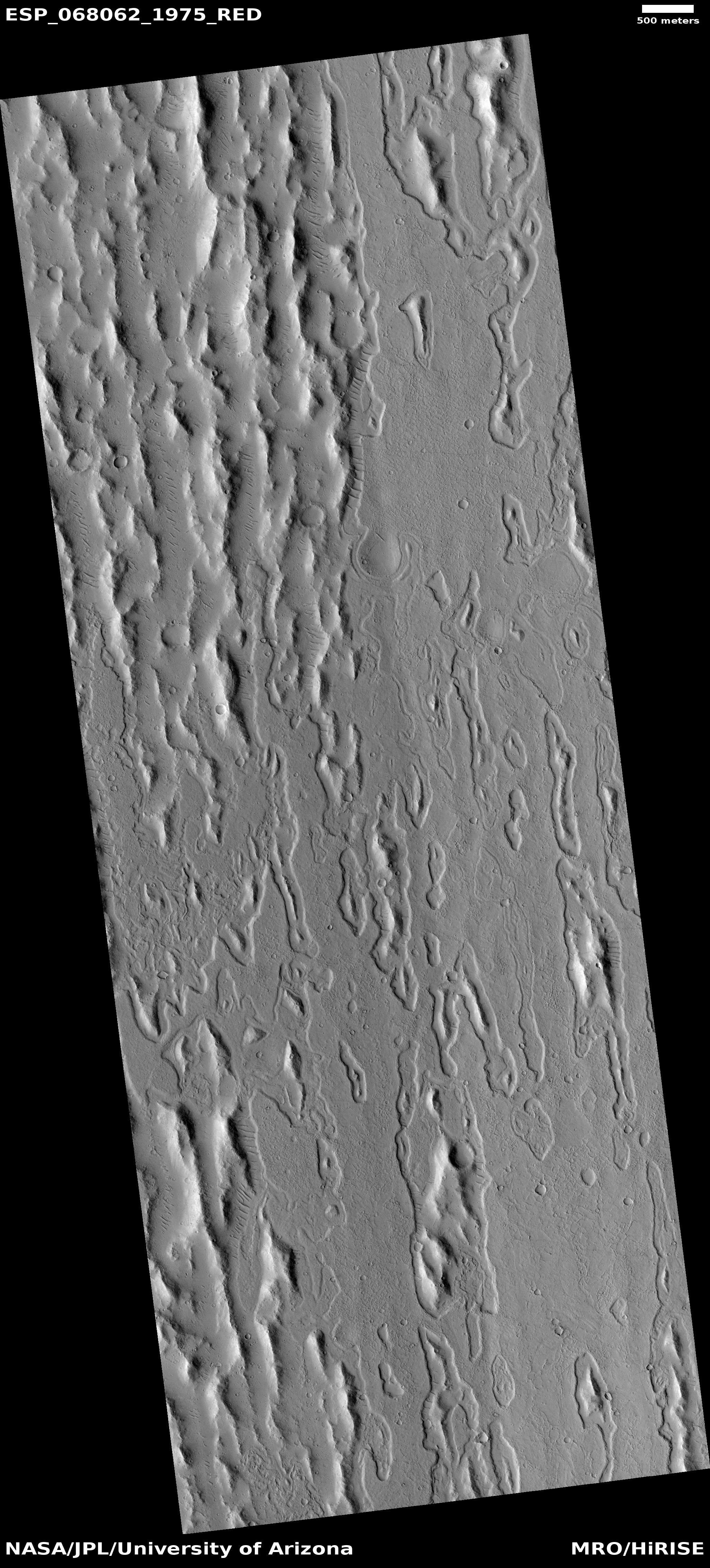
I’ve posted numerous cool images about the weird and alien terrain found routinely in what is Mars’ death valley, Hellas Basin. Today is no different. The picture to the right, rotated, cropped, reduced, and sharpened to post here, was taken on February 23, 2023 to fill a gap in the schedule of the high resolution camera on Mars Reconnaissance Orbiter (MRO). Thus, it isn’t linked to any particular research, and its target was chosen by the camera science team almost at random.

What it shows is a strangely striated plain interspersed with rounded mesas and partly buried craters. The shape of the striations suggests that they were formed from wind blowing consistently from the north. This hypothesis is reinforced by the material that seems piled up at the base of the two bottom mesas, as if it was blown there.

Is ice or lava however?
» Read more

2 comments

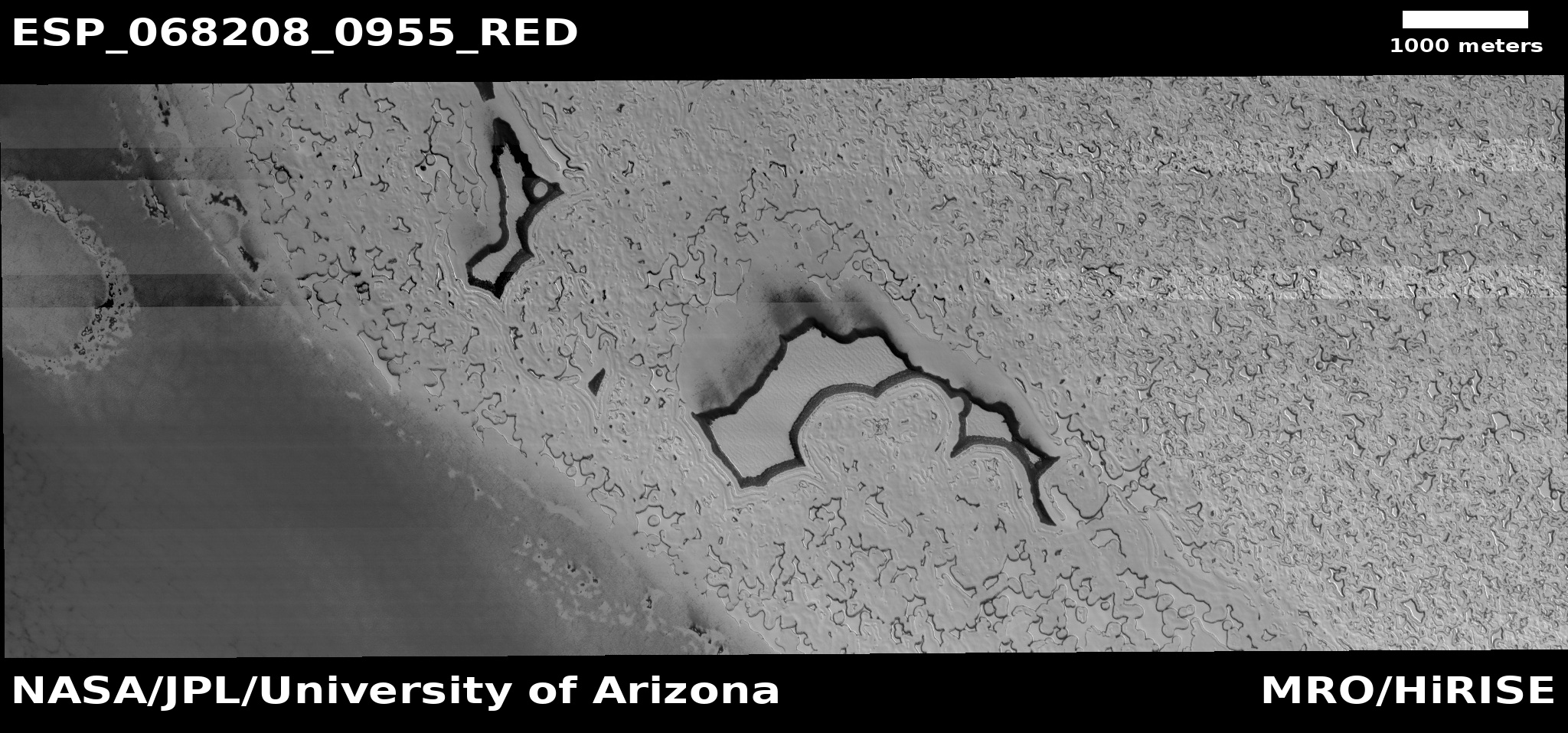
A spray of small impacts melting Martian ice?

A spray of small impacts melting Martian ice?

Cool image time! The picture to the right, cropped and reduced to post here, was taken on March 2, 2023 by the high resolution camera on Mars Reconnaissance Orbiter (MRO), and was taken not as part of any specific research request but by the MRO science team to fill a gap in its schedule while also maintaining the camera’s temperature. Sometimes these somewhat random times show nothing of interest. Sometimes they are fascinating, as in this case.

The photo shows what appear to be a spray of small impacts on an easily melted surface. Imagine spraying hot molten lava on a sheet of ice. Instead of creating a crater with an upraised rim, on impact each droplet would quickly melt a hole.

Did these small impacts all occur at the same time? My guess is yes, based on the overview map below.
» Read more

4 comments

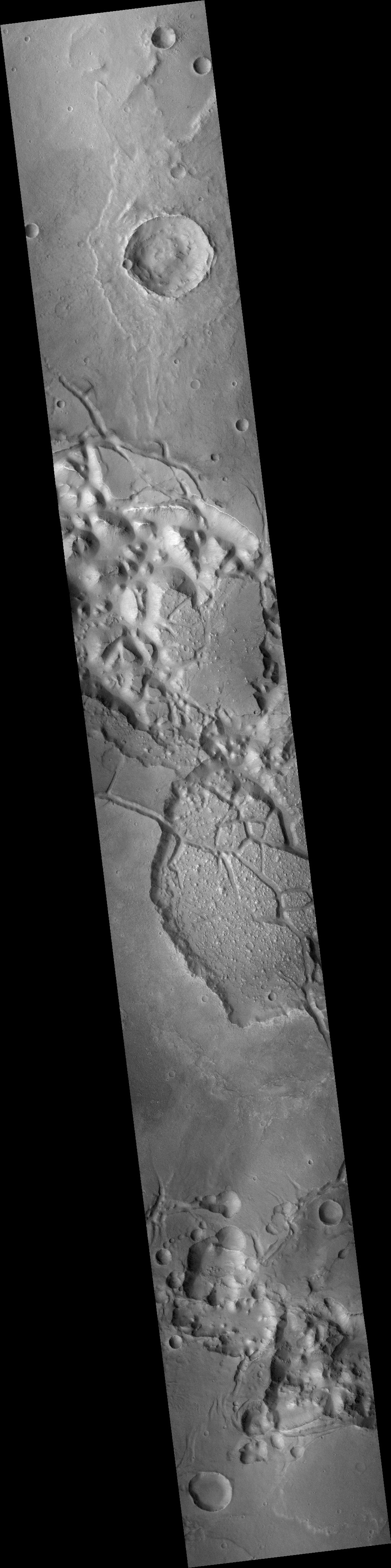
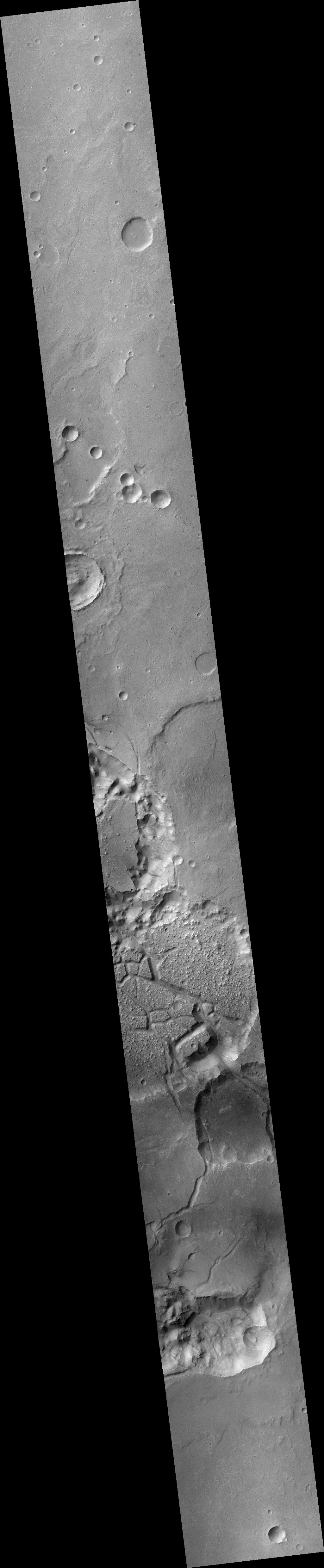
Jumbled floor of ancient Martian channel

Jumbled floor of ancient Martian channel
Click for original image.

Cool image time! The picture to the right, rotated, cropped, reduced, and sharpened to post here, was taken on February 2, 2023 by the high resolution camera on Mars Reconnaissance Orbiter (MRO).

At first glance I thought I was looking at a variety of eroding glacial flows. I was completely wrong. This terrain is located on the floor of 900-mile-long Ares Vallis, thought to have been carved eons ago by some flow, either liquid catastrophic floods or glacial ice, but is now located in the very dry equatorial regions of Mars.

Then what caused these meandering ridges? The overview map below, plus the wider view of MRO’s context camera, provides us more data but little illumination. In fact, both leave us more questions and mysteries.
» Read more

0 comments

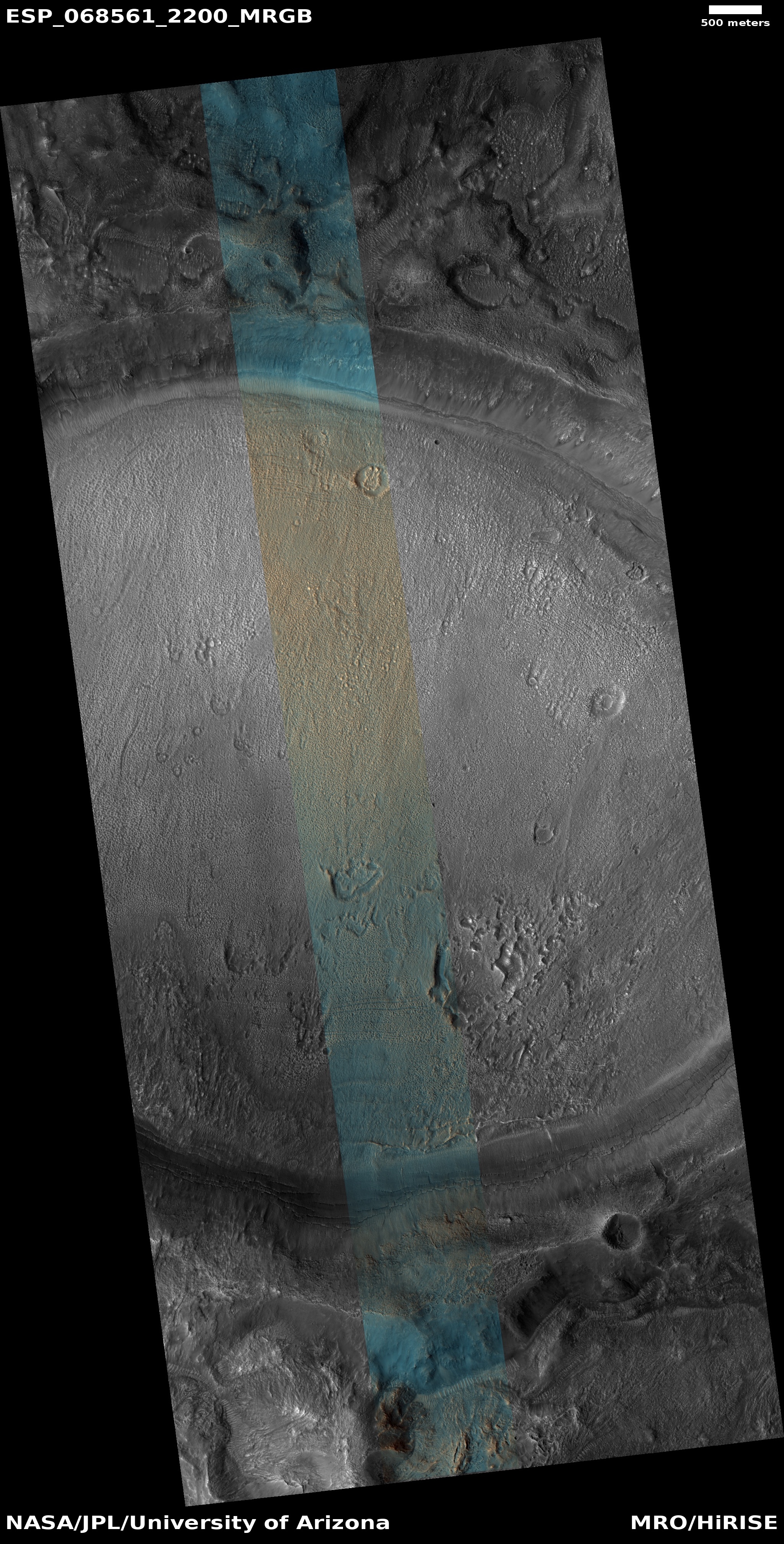
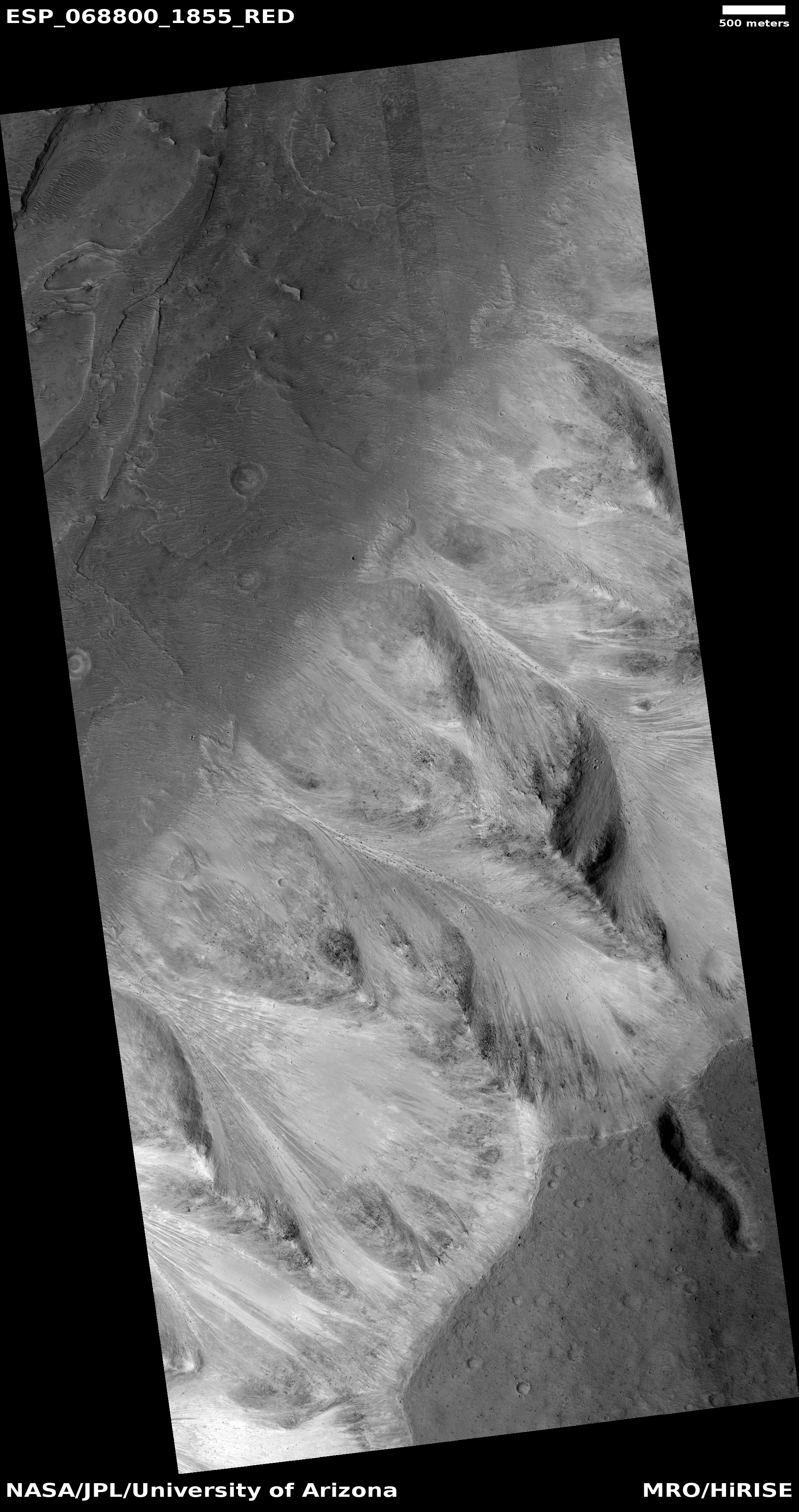
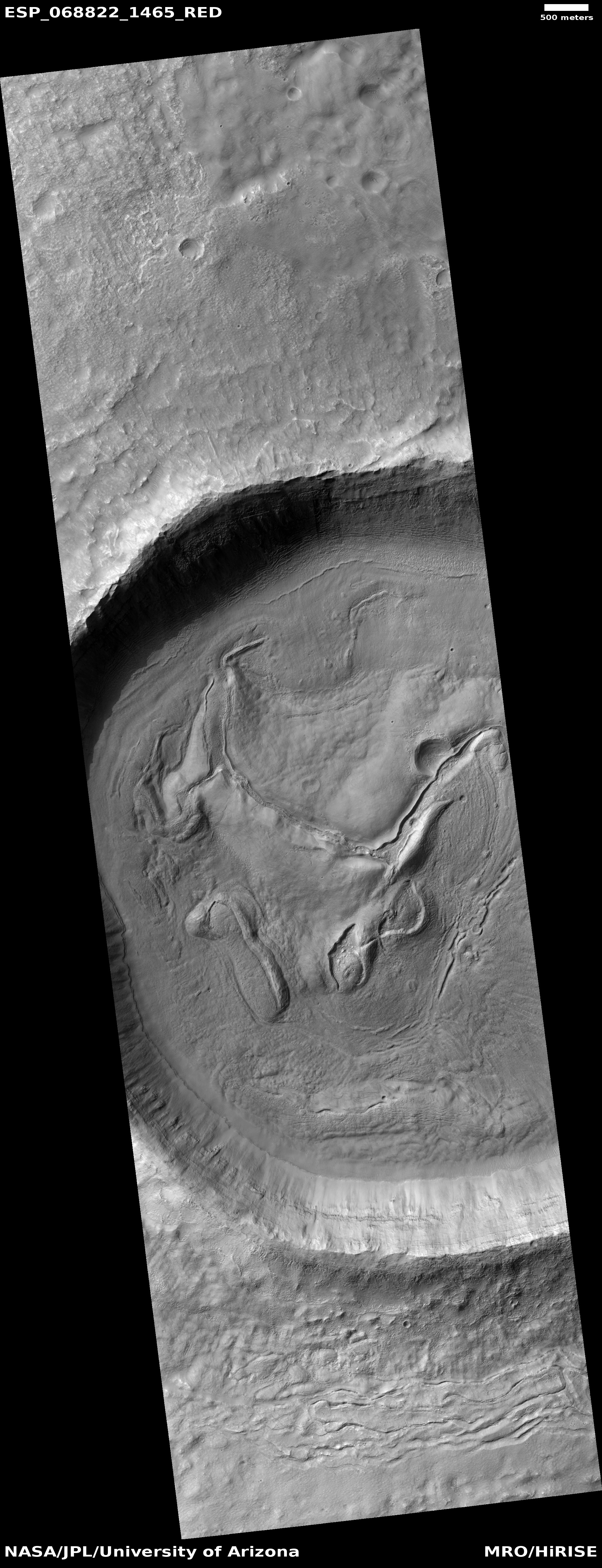
The peeling floor of a crater in the southern cratered highlands

Overview map
From Argyre Basin to Hellas Basin is about 7,000 miles.

The peeling floor of a crater in the southern cratered highlands of Mars
Click for original image.

Cool image time! The picture to the right, rotated, cropped, reduced, and sharpened to post here, was taken on February 25, 2023 by the high resolution camera on Mars Reconnaissance Orbiter (MRO).

The scientists labeled this image “Crater fill”, but that hardly suffices. First, the fill appears at first glance to resemble peeling paint. At closer inspection, rather than peeling paint we have instead a collection of ridges vaguely resembling cave rimstone dams that either enclose a blob-shaped region or simply meander about until they reach the crater’s interior rim.

The crater interior itself appears largely filled with material so that its rims are subdued. The location, as indicated by that black dot near the center of the overview map above, marks the location at 49 degrees south latitude, in the middle of the cratered southern highlands of Mars where many craters have strangely eroded interiors.

What makes this crater however more puzzling is that none of the surrounding nearby craters look like this. A context camera image taken March 23, 2019 shows that while some of the nearby craters have what appears to be glacial material in their interiors, none exhibit these meandering ridges. This crater stands unique, for reasons that are utterly unknown.

Are these ridges a manifestation of the glacial material filling the crater? Or are they bedrock sticking up through that glacial debris? Your guess is as good as mine.

3 comments
1 33 34 35 36 37 90