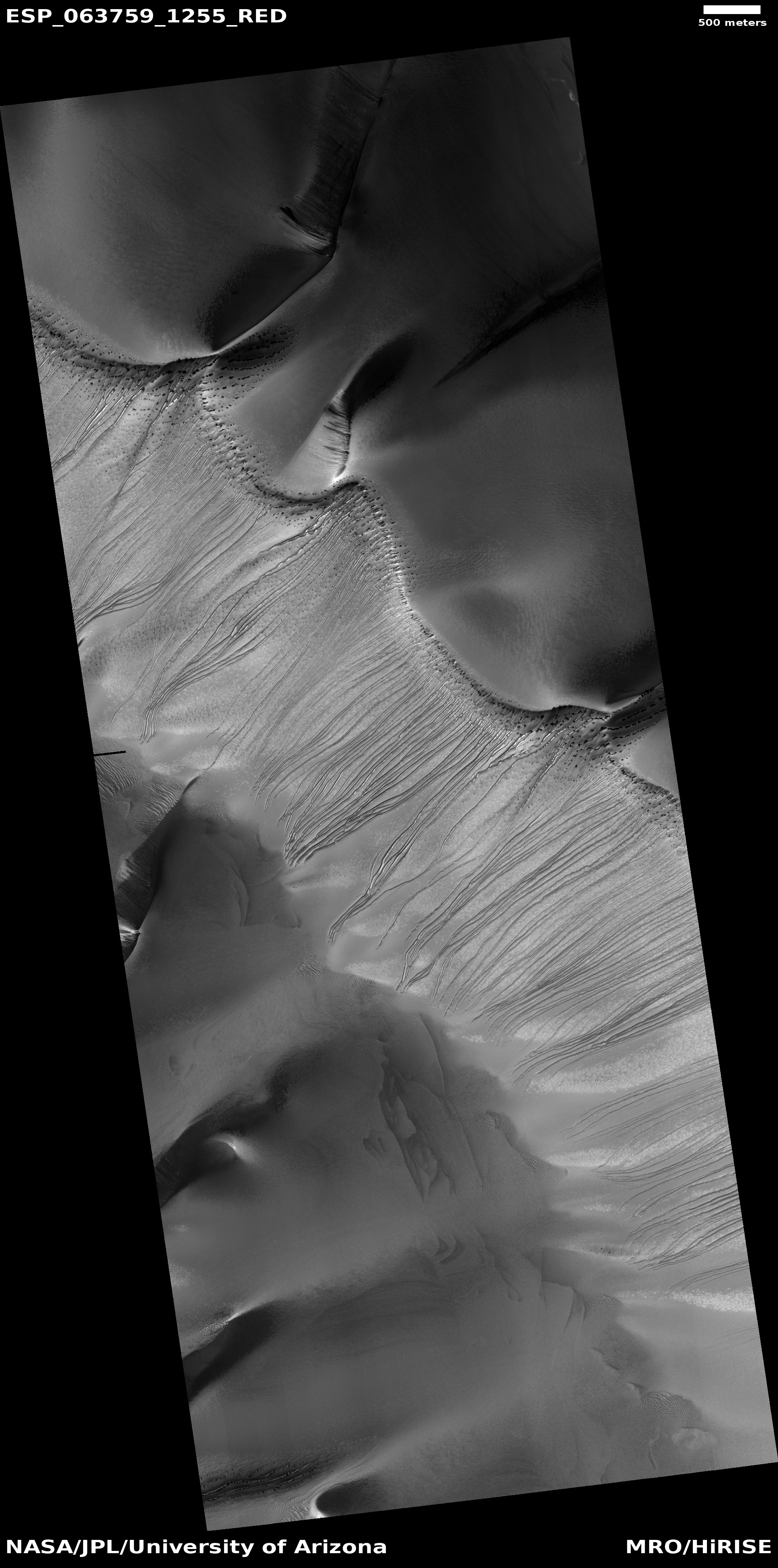
A Martian crater with a surface pattern that resembles hanging draperies

A Martian crater with a surface pattern like hanging draperies

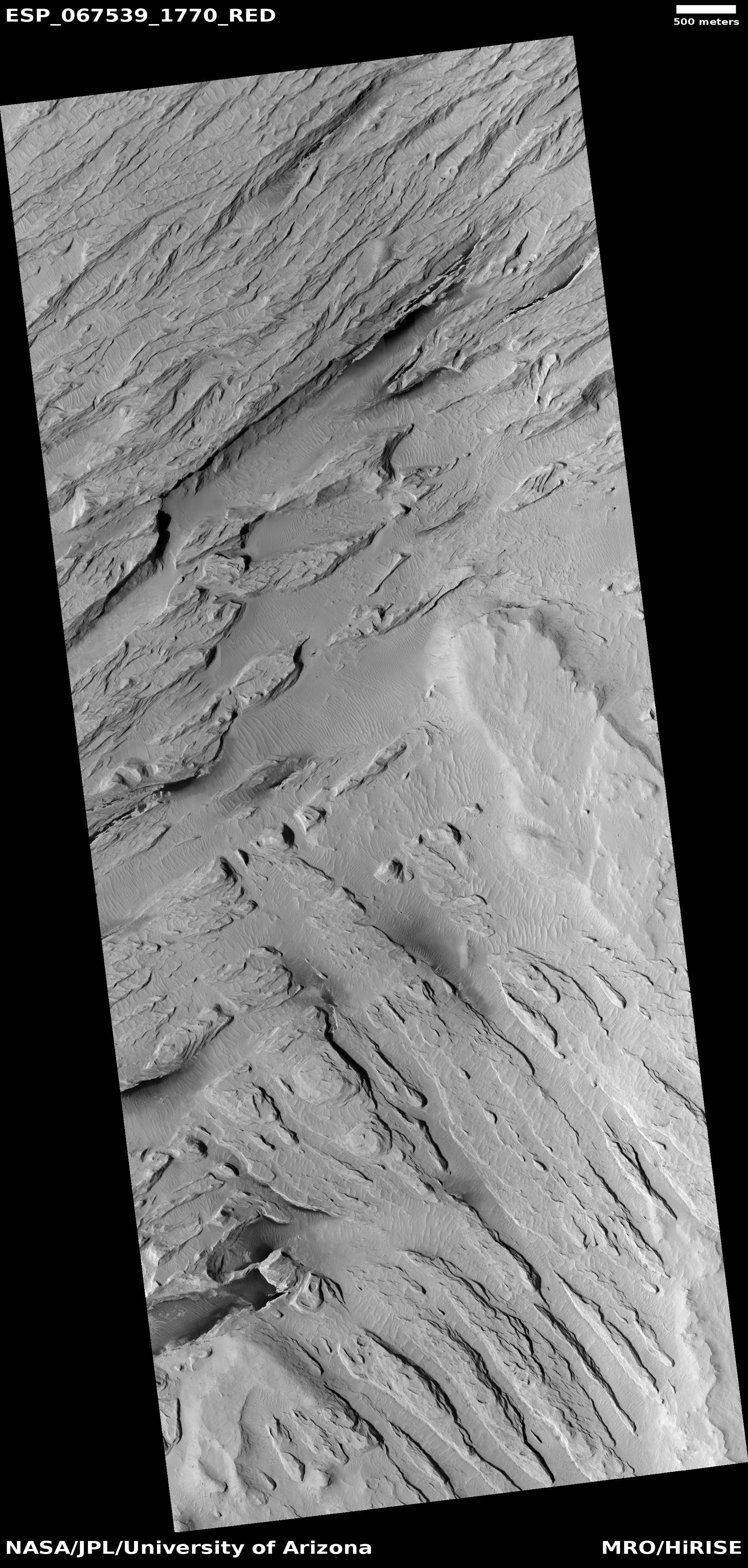
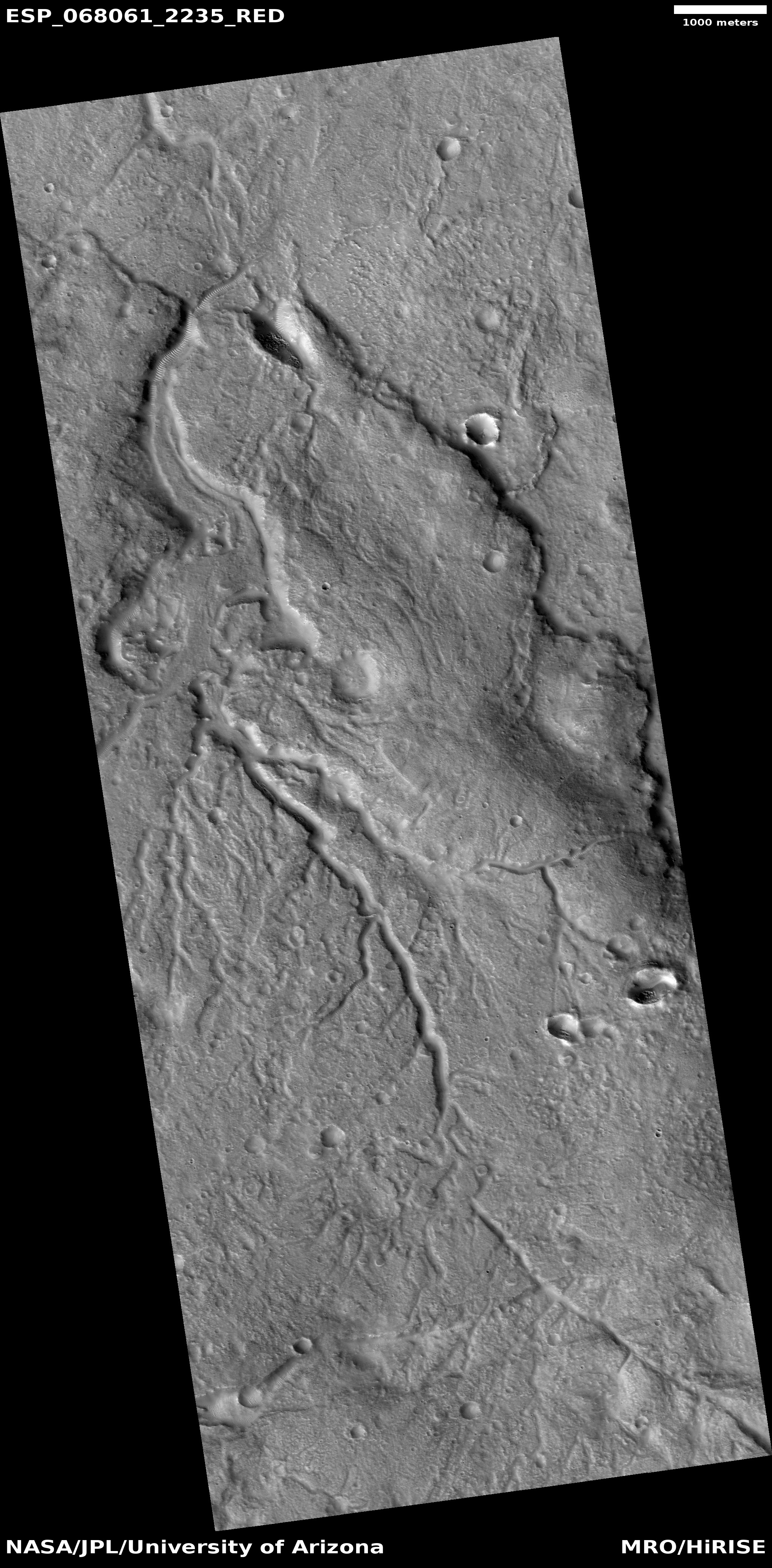
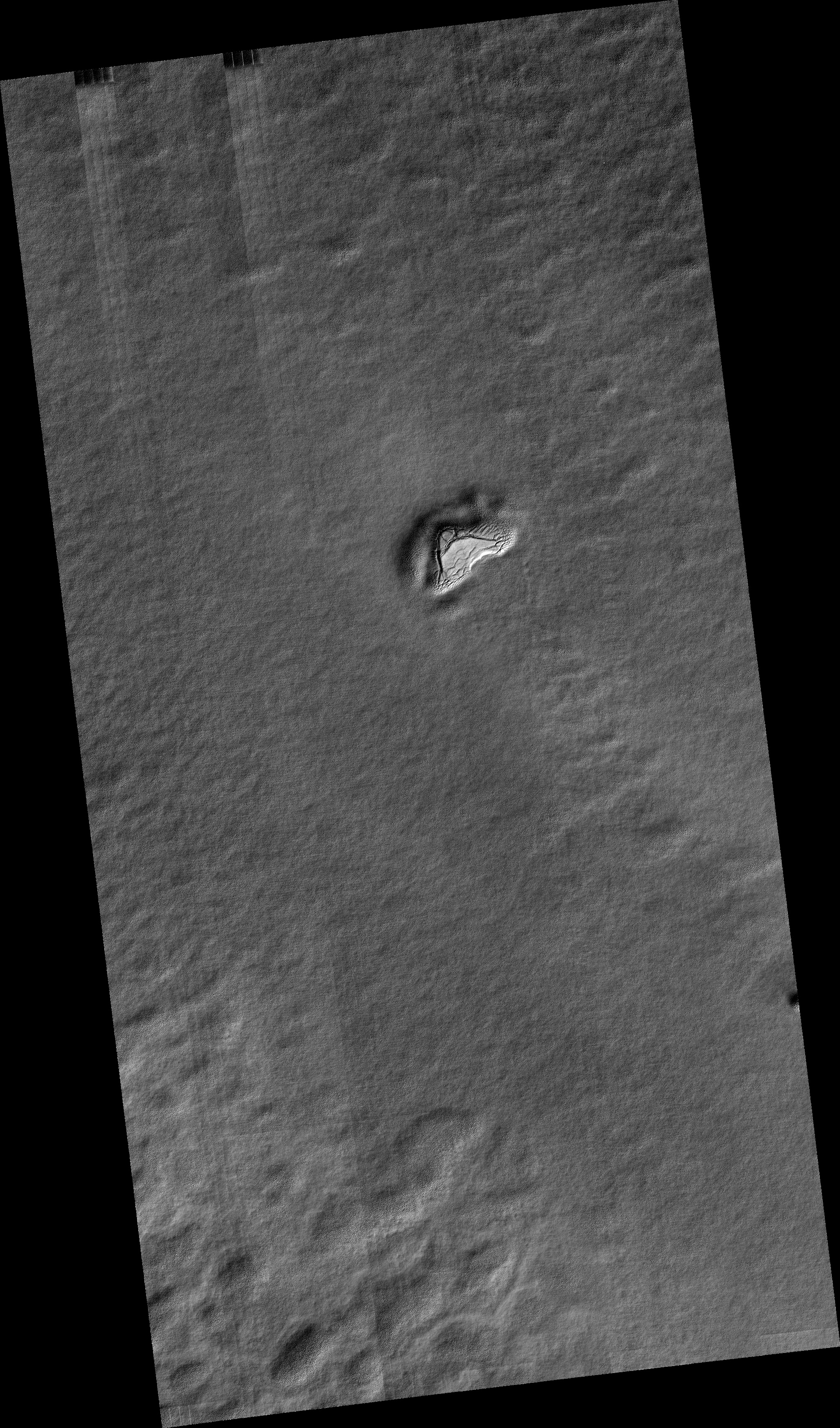
Cool image time! The picture to the right, rotated, cropped, reduced, and enhanced to post here, was taken on January 27, 2023 by the high resolution camera on Mars Reconnaissance Orbiter (MRO), and shows what the scientists label a “streak-spoke pattern” inside the crater. To my eye, the pattern more resembles hanging draperies, neatly tied near the top and then pulled apart as they descend to the ground.

This photo was a follow-up to a previous picture by MRO on February 4, 2008, more than seven Martian years ago, to see if there had been any identifiable changes in that time. Both images were taken in springtime, and despite the passage of time, the 2023 image shows no obvious changes from the 2008 photo.

What caused this distinct pattern? The first guess would be the wind, except if so shouldn’t there have been some change over seven Martian years?
» Read more

1 comment

Ancient Martian landslides

Ancient Martian landslides
Click for original image.

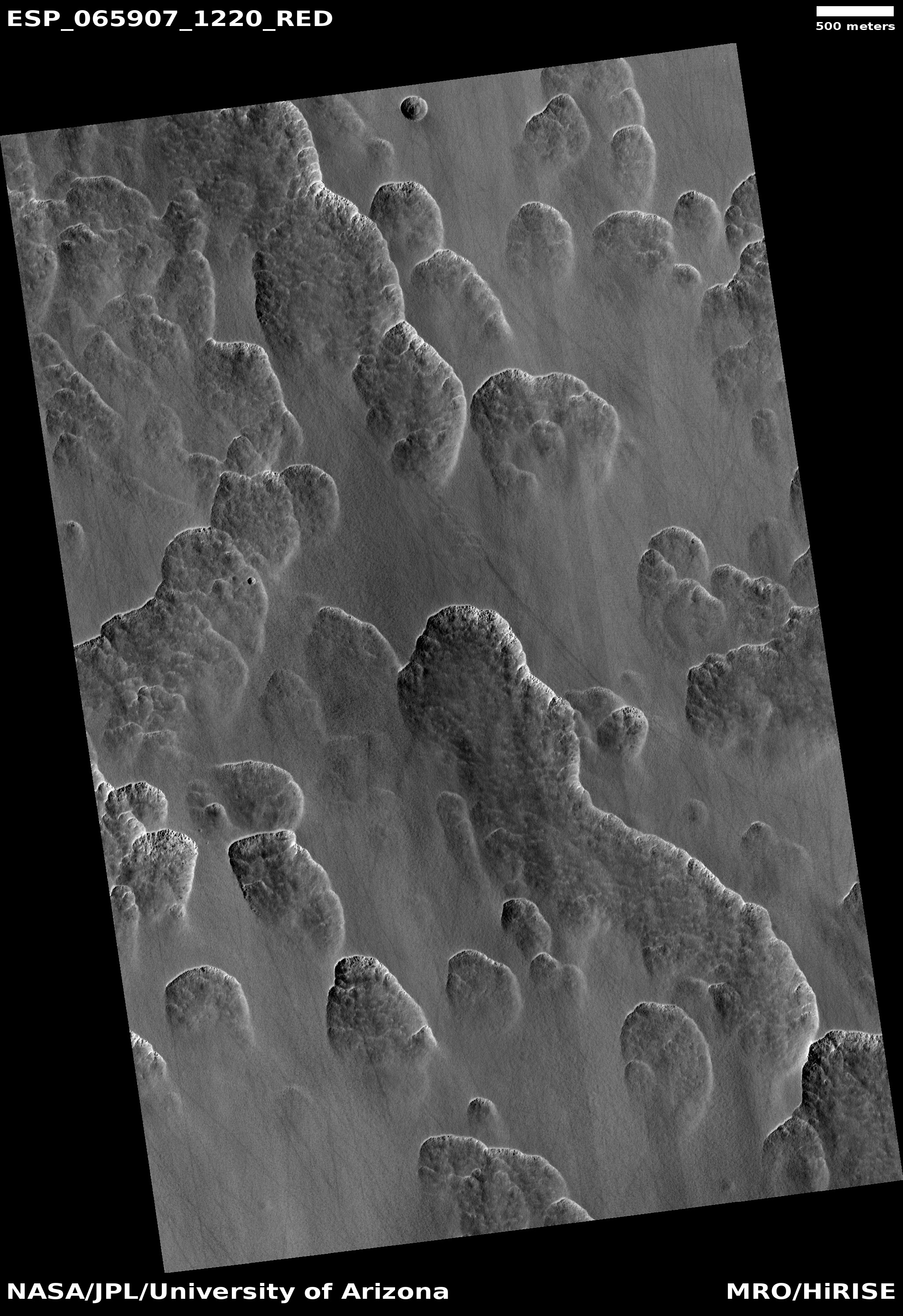
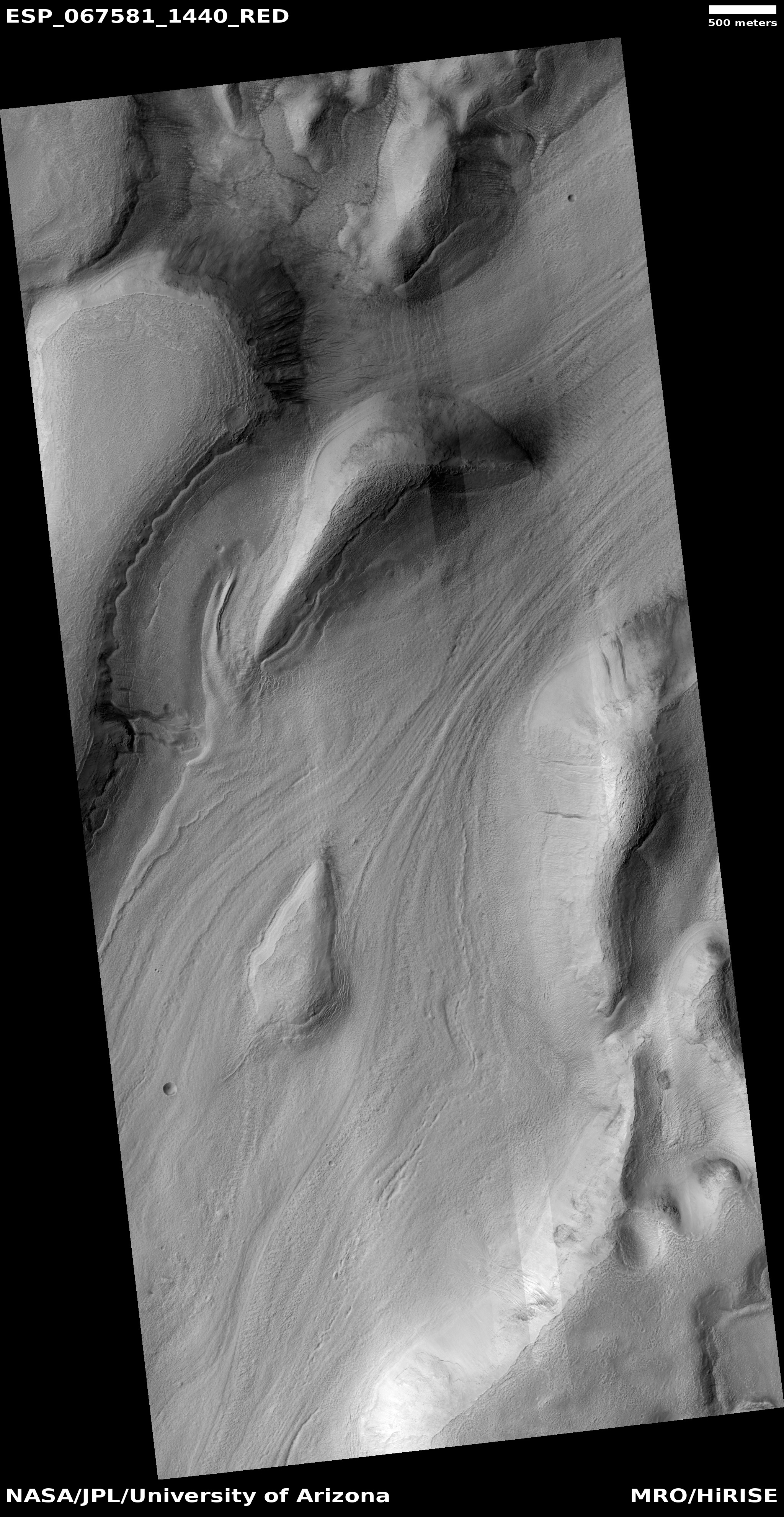
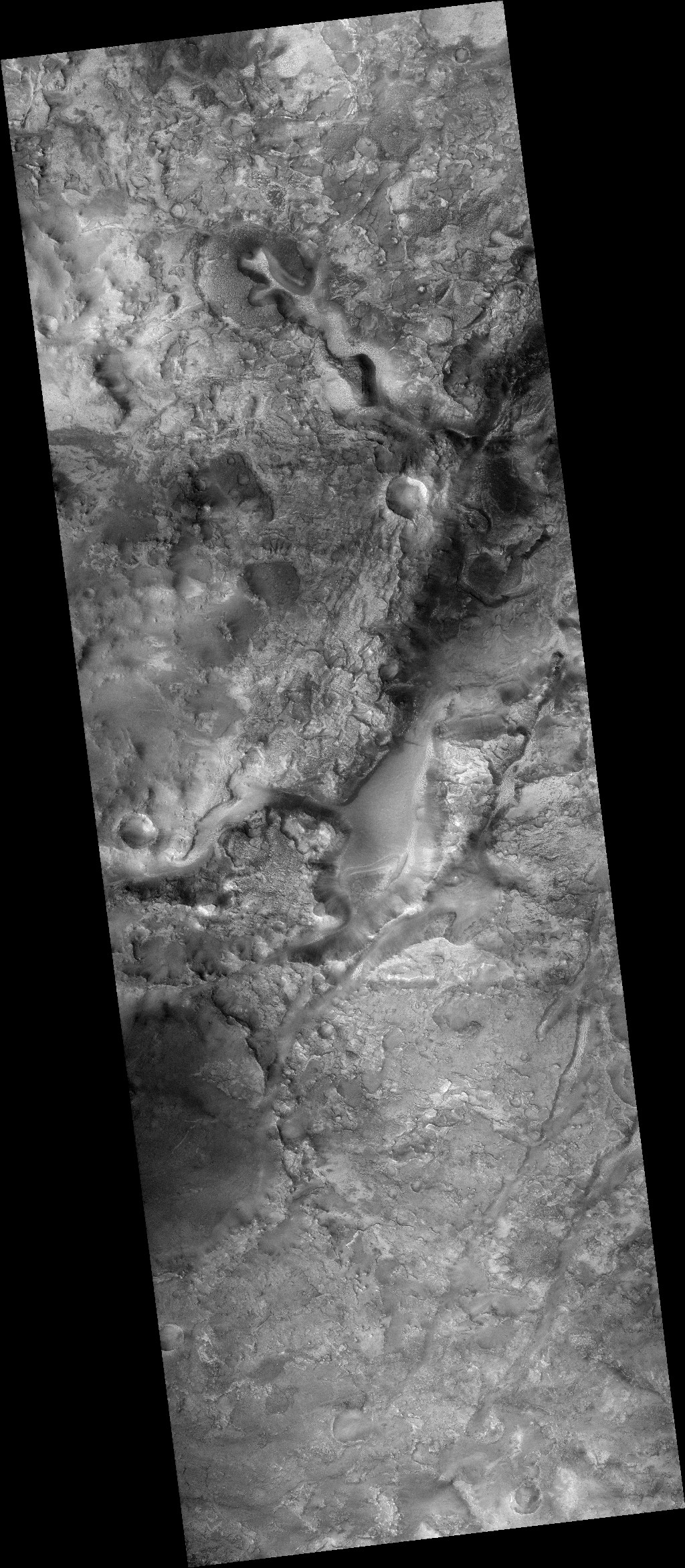
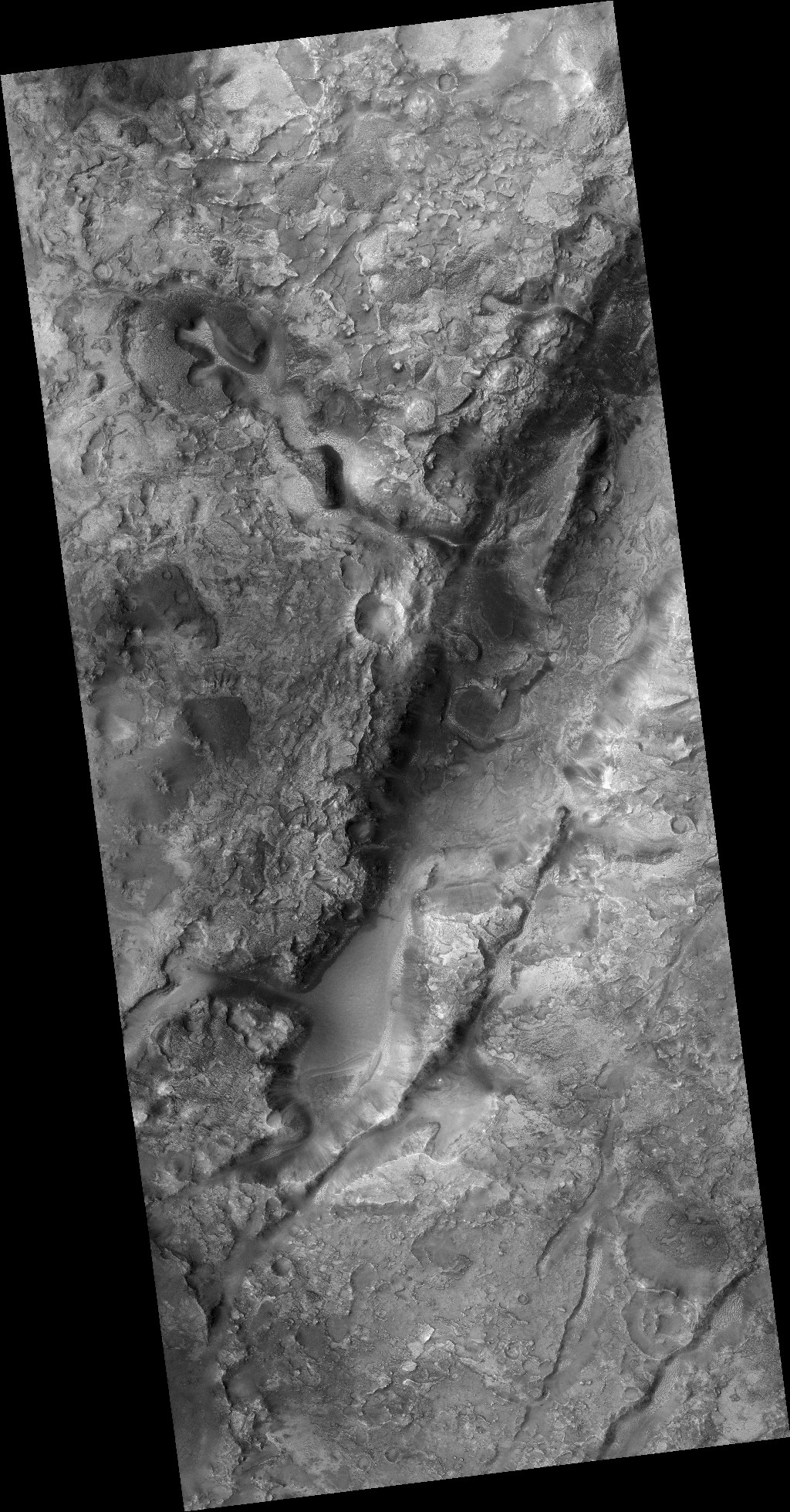
Cool image time! The picture to the right, rotated, cropped, reduced, and sharpened to post here, was taken on December 23, 2022 by the high resolution camera on Mars Reconnaissance Orbiter (MRO). The image was labeled “Landslides in Orson Welles Crater” because the full photo shows at least two large and obvious slides, with the biggest shown to the right.

These avalanches are likely ancient because both have craters on them suggesting the material has not moved for a very long time. Yet when both flowed they did so almost like mud, the material moving downhill almost in a single blobby mass. Both have this look, as do many Martian landslides, which I think is why the scientists usually label them mass wasting events.
» Read more

0 comments

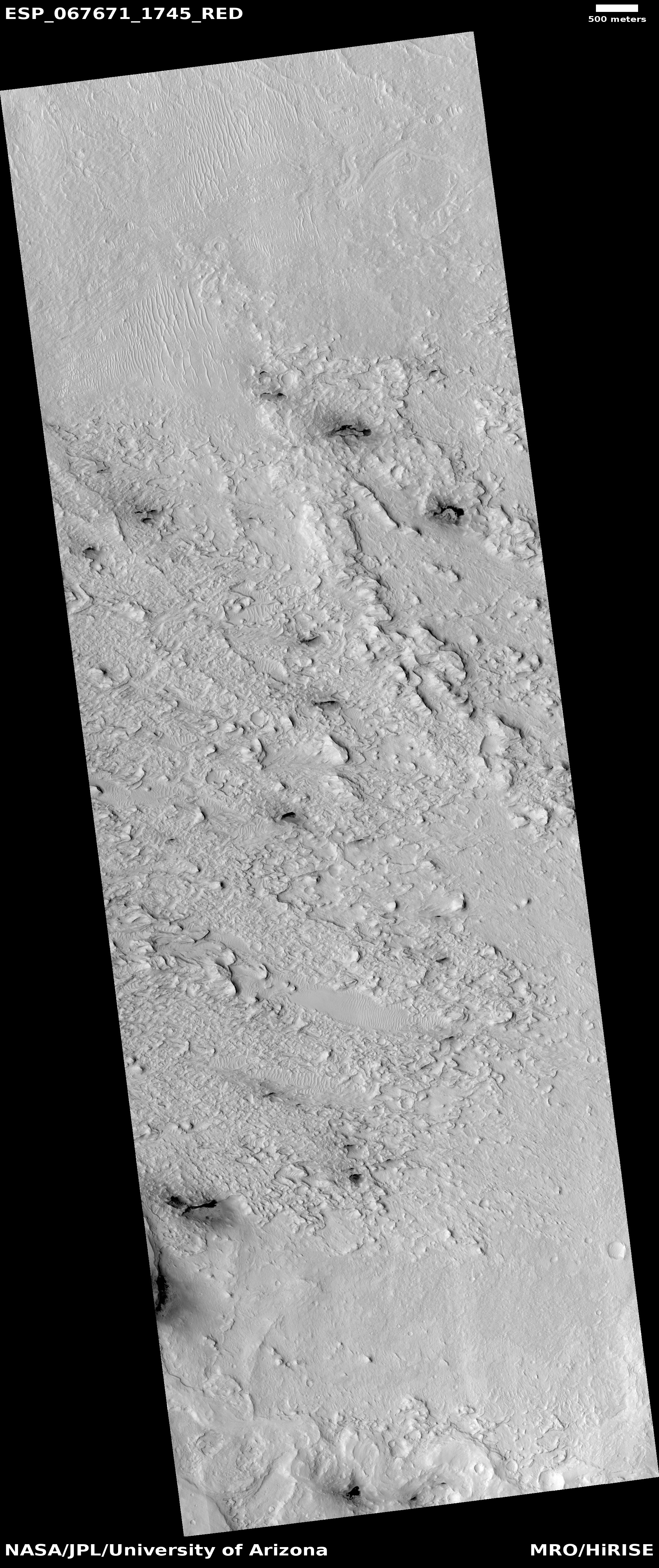
Where the flood lava of two gigantic Martian volcanoes meet

Where the flood lava of two gigantic Martian volcanoes meet
Click for original image.

Today’s cool image illustrates once again the importance of looking not simply at the picture but at the surrounding larger context in order to understand the Martian features within the photograph.

The photo to the left, cropped, reduced, and sharpened to post here, was taken on January 31, 2023 by the high resolution camera on Mars Reconnaissance Orbiter (MRO). The location is at 26 north latitude, so it is in the dry equatorial regions. It shows what appears to be a large Martian flood lava plain, with at least two different flood lava events appearing to flow to the northeast, with the second only partly covering the first.

From this high resolution image it seemed probable that the source of the flow was from the southwest, an assumption that at first glance is strengthened by the overview map below.
» Read more

0 comments

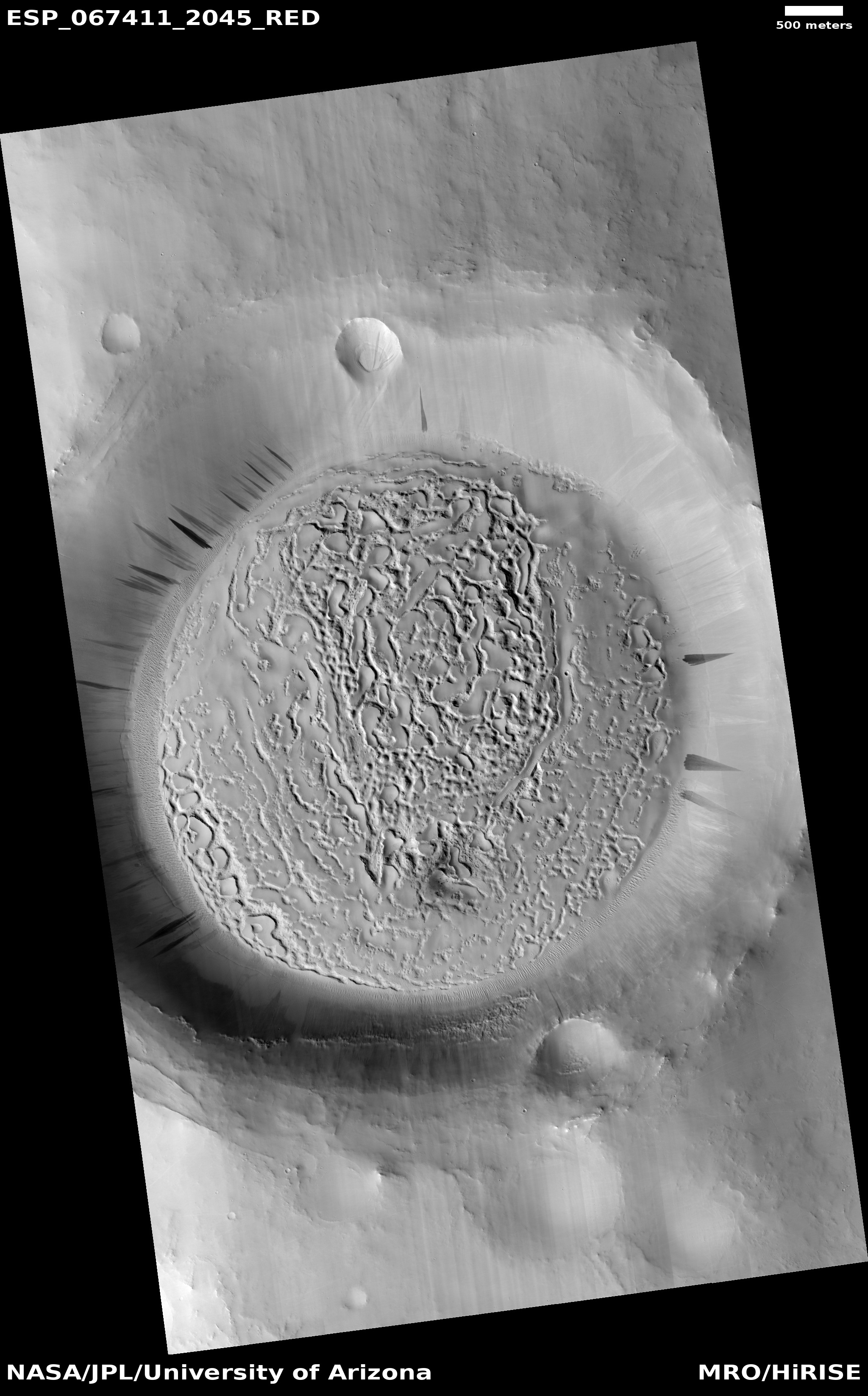
Confused glaciers in a Martian crater

Confused glaciers in a Martian crater
Click for original image.

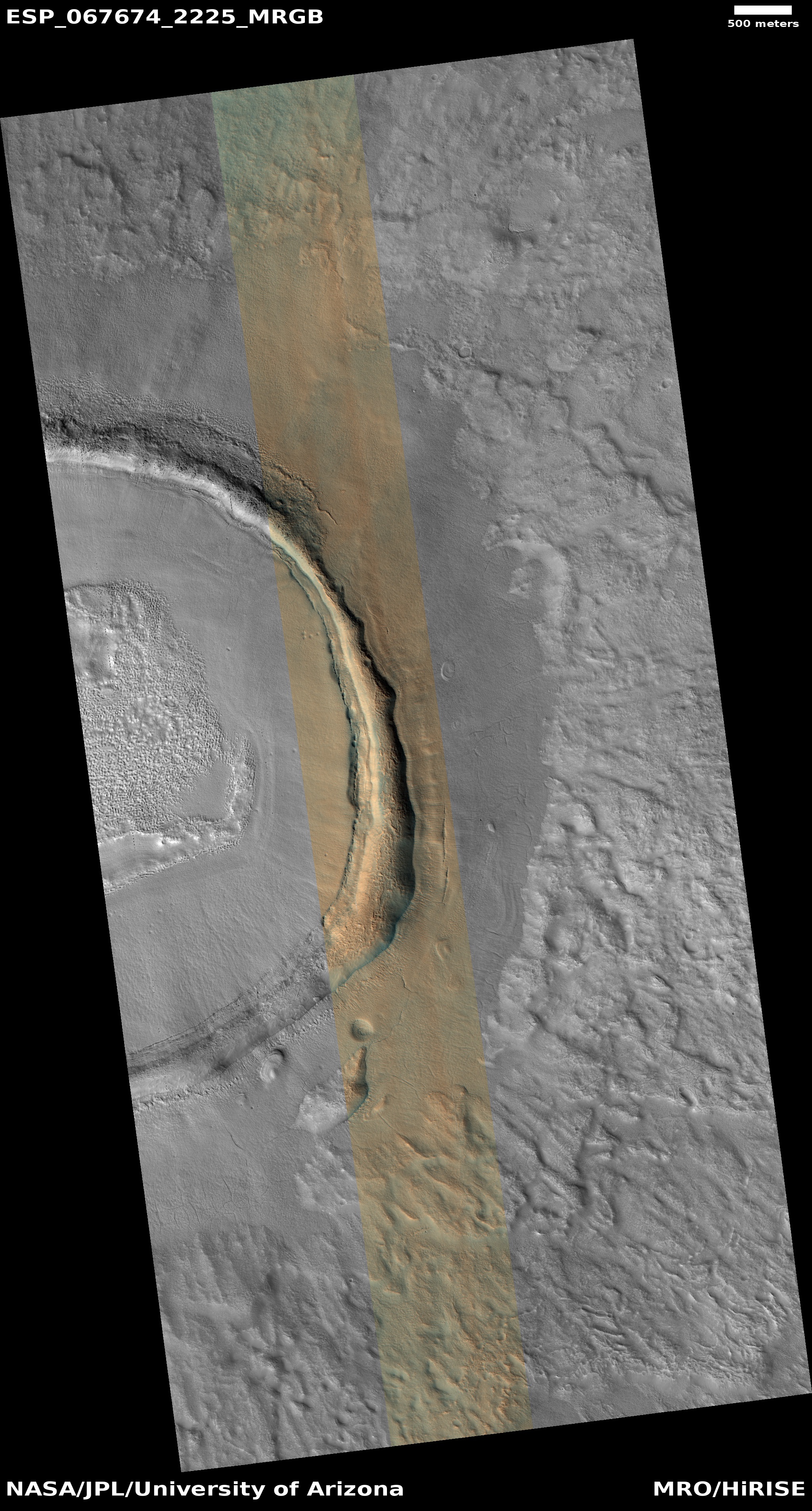
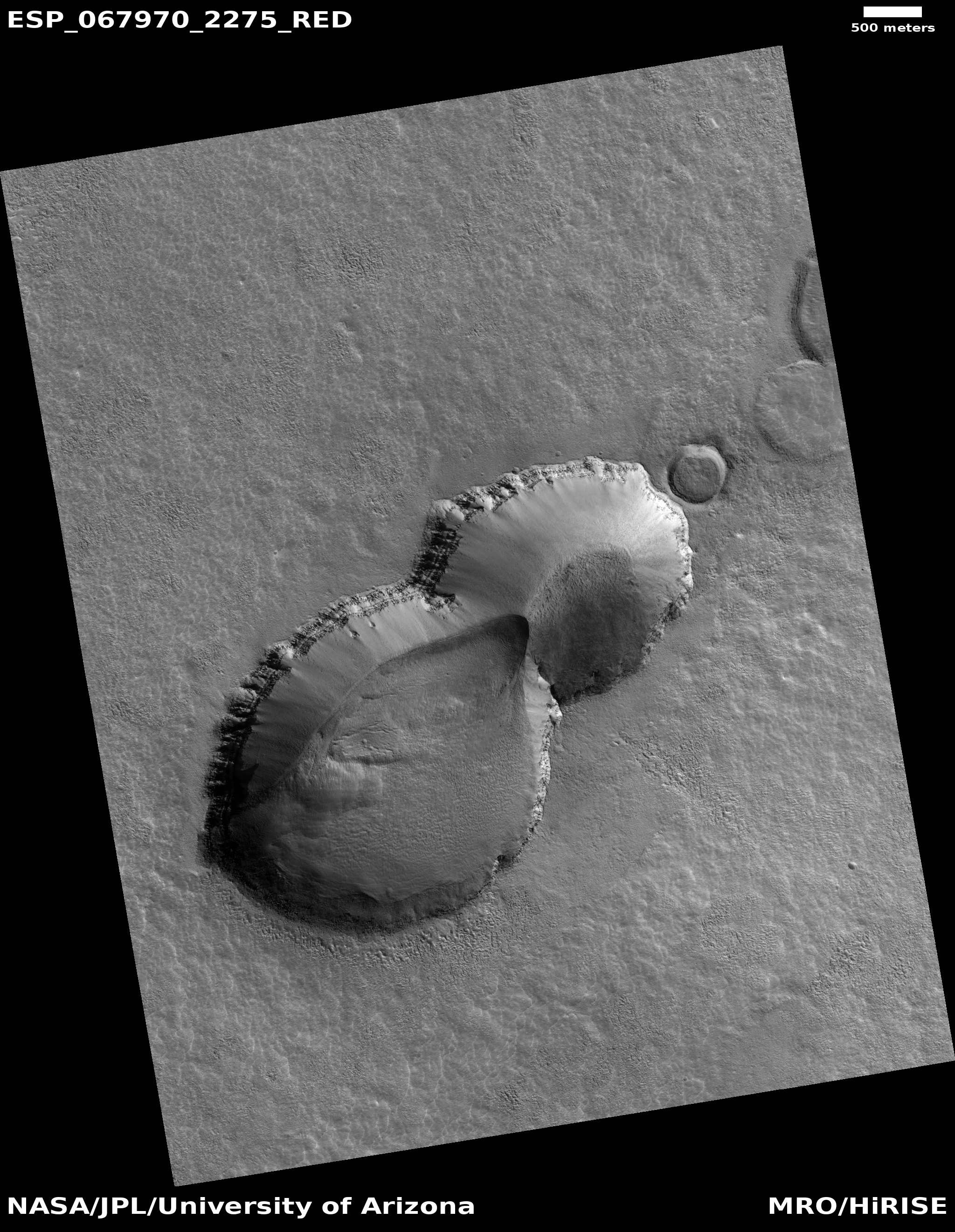
Cool image time. The picture to the right, cropped to post here, was taken on February 2, 2023 by the high resolution camera on Mars Reconnaissance Orbiter (MRO), and shows a strangely blobby crater in the northern mid-latitudes where glacial features are frequently found inside craters.

In this case however the glacier seems very confused. As this is in the northern hemisphere, you would expect glacial material to survive on the north-facing southern interior slopes of the crater, where there is year-round less sunlight. The mottled eroded terrain in the south part of the crater floor suggests this. However, the crater also clearly has a terraced glacier on its south-facing northern interior slopes.

Why has the glacial material survived in both places, but not in the center of the crater?

In addition, there is that strange roughly circular feature attached to the south side of the crater. What formed it? Is it a glacier on the plains surrounding the crater? Or are we looking at volcanic material?

This crater is also unique. The crater just to its southwest (partly seen in the cropped image above), is a much more typical glacial-filled mid-latitude crater, its interior material more evenly distributed and its circular rim only slightly distorted.
» Read more

0 comments

A half-mile high Martian cliff on the verge of collapse

A half-mile Martian cliff on the verge of collapse
Click for original image.

Cool image time! The picture to the right, cropped and reduced to post here, was taken on December 24, 2022 by the high resolution camera on Mars Reconnaissance Orbiter (MRO). It shows erosion gullies coming down off a mountain side, just north of a massive cliff that I estimate to be around 2,000 to 3,000 feet high.

Note the north-south-trending cracks. These suggest that this entire half-mile-high cliff face is slumping downward, cracking as it does so. The cracks at the start of the high flat-topped thumb-shaped mesa near the image bottom are especially intriguing. They suggest that this entire mesa might eventually separate and give way.

There is a specific reason this cliff face is slumping, as shown in the overview map below.
» Read more

12 comments

A verde valley on Mars

A verde valley on Mars
Click for original image.

In the southwest where I live, a valley dubbed “verde” (which means “green” in Spanish) is generally a place with a somewhat persistent river with lots of lush plant life. The Verde Valley in Arizona is the perfect example, with “close to 80% of the valley’s land … national forest.”

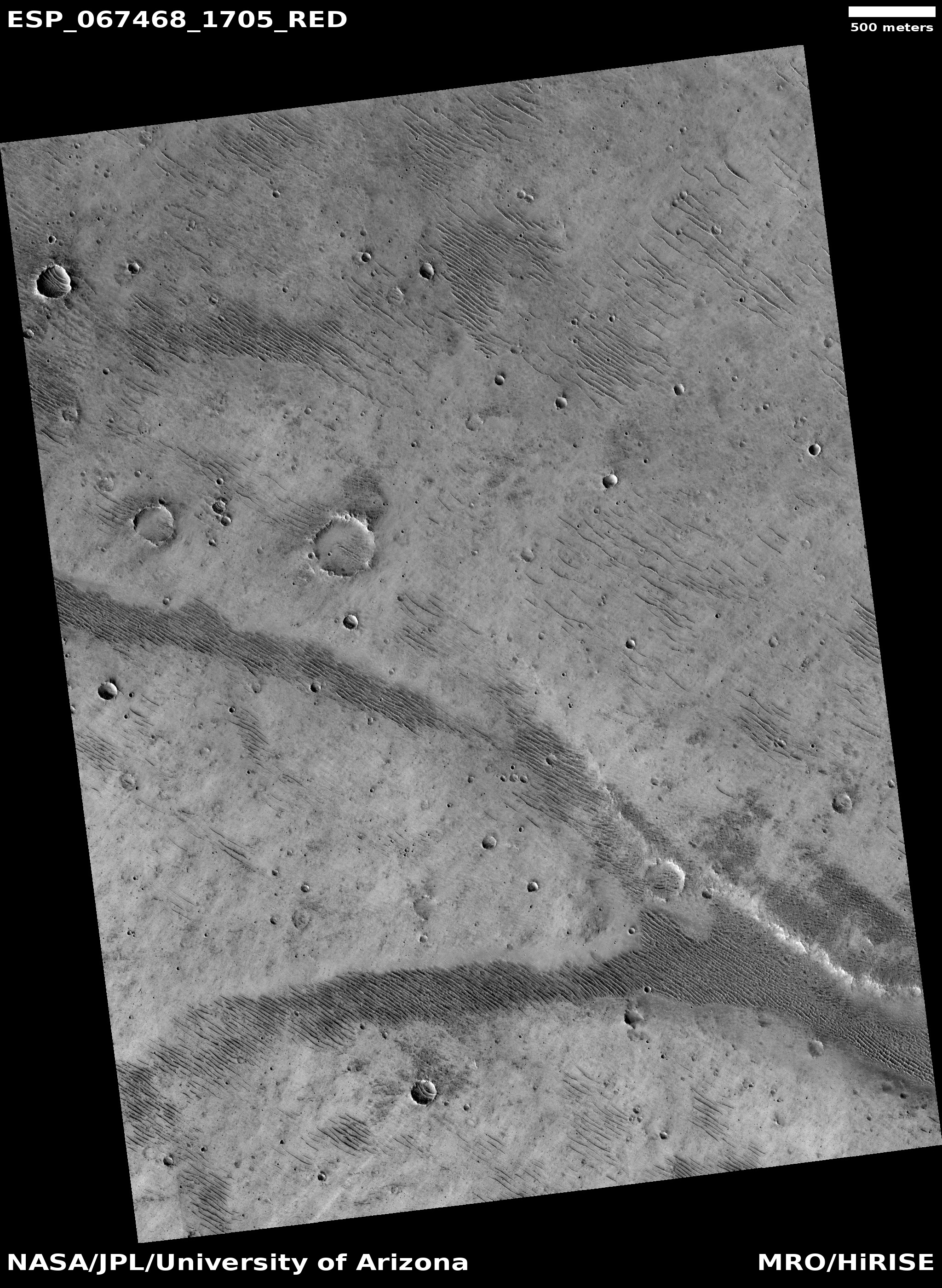
On Mars there is also a verde valley, but the name is not descriptive in the least. The picture to the right, rotated, cropped, and reduced to post here, was taken on January 22, 2023 by the high resolution camera on Mars Reconnaissance Orbiter (MRO) and shows one section of the Martian Verde Vallis, draining south to north.

The dark rippled patches inside this shallow canyon are sand dunes. In fact, though MRO has not taken many high resolution images of Verde Vallis, every one shows the valley with further patches of ripple dunes. See for example this image of a section of the valley just a bit farther north.
» Read more

2 comments

The ubiquitous presence of ice in the Martian mid-latitudes

Ice in the Martian mid-latitudes
Click for original image.

Cool image time! The picture to the right, rotated, cropped, rotated, and sharpened to post here, was taken on November 28, 2022 by the high resolution camera on Mars Reconnaissance Orbiter (MRO). Labeled merely as a “crater with mesa”, it gives us another example of the presence of glacial ice in the mid-latitudes of Mars.

That mesa is what planetary scientists have labeled “concentric crater fill,” a glacial feature found in numerous craters throughout the mid-latitude bands from 30 to 60 degrees latitude. The ground in the terrain surrounding the crater could be also be impregnated with ice, but based on the location as shown in the overview map below, it is just as likely to be lava.

In fact, the location of this particular crater illustrates why concentric crater fill might become the best source of ice for future colonists.
» Read more

0 comments

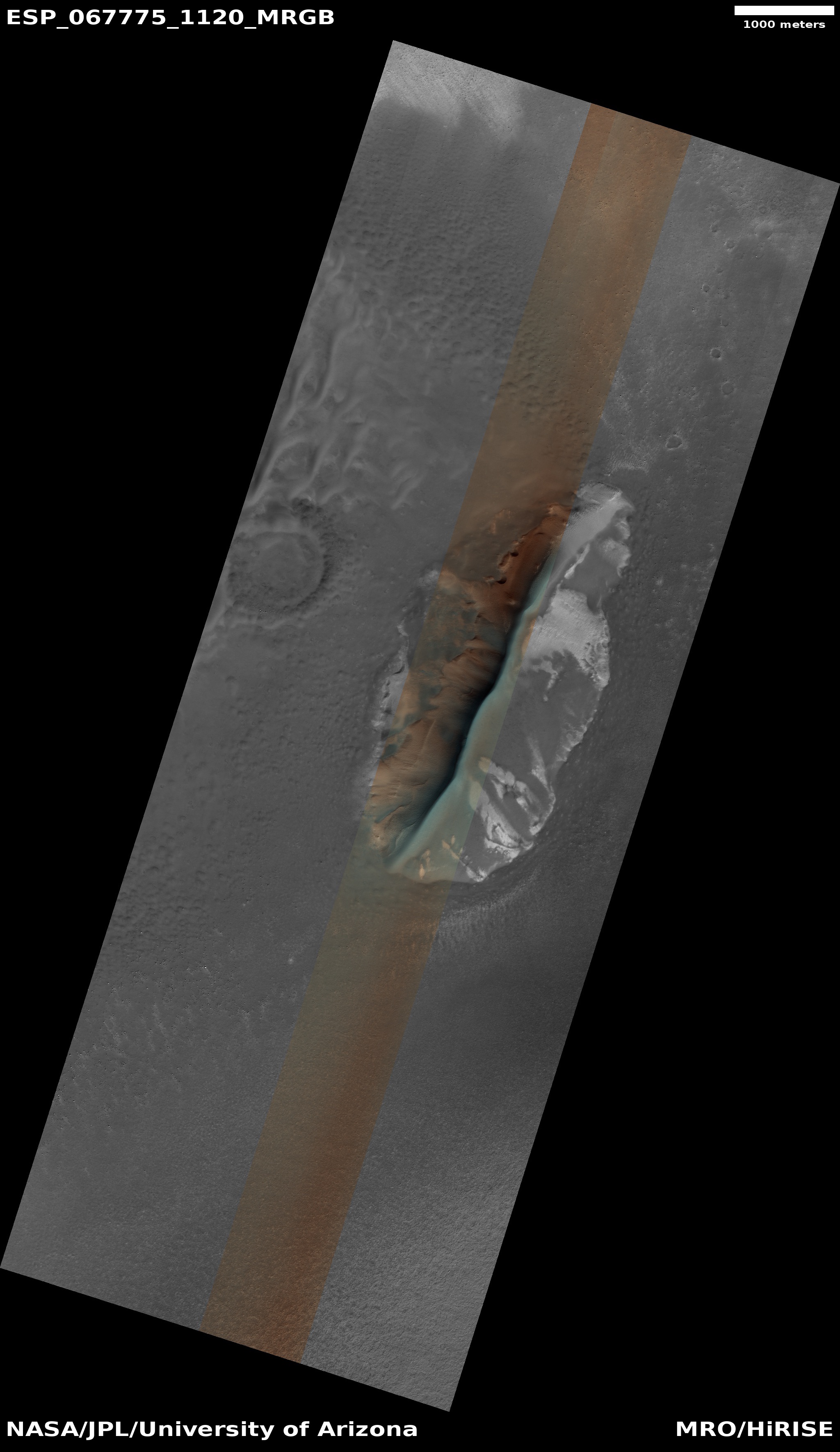
Endless ripple dunes in Mars’ third largest impact basin

Ripple dunes in Mars' third biggest impact basin
Click for original image.

Cool image time! The picture to the right, cropped to post here, was taken on November 30, 2022 by the high resolution camera on Mars Reconnaissance Orbiter (MRO).

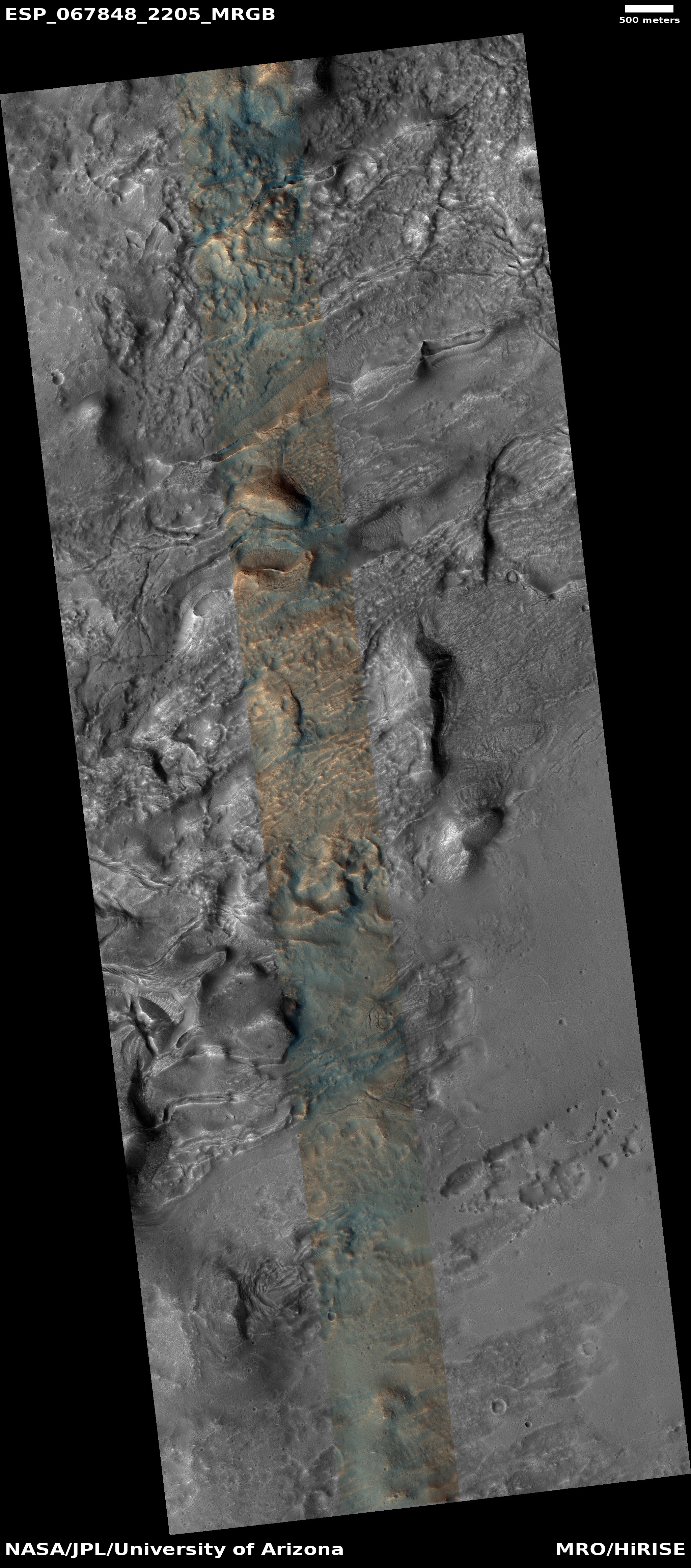
The section cropped shows only a small portion of the endless ripple dunes seen in this area. The color strip provides us some interesting other details as well as mysteries. The orange indicates dust on the ridges as well as the higher terrain near the center of the picture. The green in the hollows as well as to the east and west suggests coarser materials that have settled in lower elevations. This supposition is reinforced by the orange area near the bottom of the picture where the ripples have mostly dissipated. This is a high spot, and we appear to be looking at a dusty surface. (This impression is clearer in the full image.)

The latitude is high, 48 degrees south, but as far as I know orbital images have not found a lot of ice evidence in this part of Mars.
» Read more

0 comments

Geological evidence of past glacier found in Mars’ dry equatorial regions

Overview map

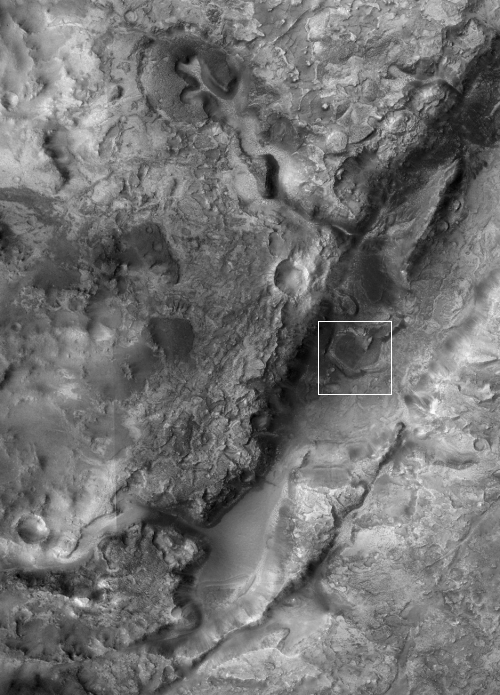
Scientists have uncovered geological evidence of a past glacier in westernmost end of the giant Martian canyon Valles Marineris, right at the point where it transitions into the complex chaos region dubbed Noctis Labyrinthus. The white dot on the map to the right indicates the location.

The surface feature identified as a “relict glacier” is one of many light-toned deposits (LTDs) found in the region. Typically, LTDs consist mainly of light-colored sulfate salts, but this deposit also shows many of the features of a glacier, including crevasse fields and moraine bands. The glacier is estimated to be 6 kilometers long and up to 4 kilometers wide, with a surface elevation ranging from +1.3 to +1.7 kilometers. This discovery suggests that Mars’ recent history may have been more watery than previously thought, which could have implications for understanding the planet’s habitability.

β€œWhat we’ve found is not ice, but a salt deposit with the detailed morphologic features of a glacier. What we think happened here is that salt formed on top of a glacier while preserving the shape of the ice below, down to details like crevasse fields and moraine bands,” said Dr. Pascal Lee, a planetary scientist with the SETI Institute and the Mars Institute, and the lead author of the study. [emphasis mine]

You can read the paper here [pdf]. The research specifically suggests that near surface water ice in the dry equatorial regions of Mars could have been there much more recently that previously believed. It also suggests, by the rarity of this discovery, that there is likely almost no near surface ice in the equatorial regions, at present.

1 comment

A Martian crater, ice, and dust devil tracks

A Martian crater, ice, and dust devil tracks
Click for original image.

Cool image time! The picture to the right, rotated, cropped, reduced, and sharpened to post here, was taken on January 2, 2023 by the high resolution camera on Mars Reconnaissance Orbiter (MRO). It is once again a terrain sample image, taken not for any specific research but to fill a gap in the schedule so as to maintain the camera’s proper temperature.

What this picture shows is that even though Mars has a thin atmosphere that produces dust devils, the propagation of dust devils is not uniform across the red planet’s surface. In this picture there are a lot of devil tracks, going in many different directions. Yet few of the many cool images I post from MRO show this number of tracks. In many cases the ground might not be agreeable to leaving tracks, but that cannot be the entire explanation.
» Read more

3 comments

Splats on Mars!

Splats on Mars
Click for original image.

Cool image time! The picture to the right, cropped and sharpened to post here, was taken on February 3, 2023 by the high resolution camera on Mars Reconnaissance Orbiter (MRO). It shows a number of crater splats of varying sizes. If you look at the full image, you will find several even bigger splats to the north of the one in the picture to the right. You will also see many more similar-sized crater splats to the south.

I cannot provide any confident explanation about what caused these splats, other than to assume that most here are secondary impacts from ejecta thrown out by a larger impact somewhere nearby. I also assume all these small impacts occurred at the same time because they all appear to have hit the ground when it had the same thick liquid consistency, a condition that was probably temporary. Note for example how many of the other craters in the full image do not have this same splattered look.
» Read more

1 comment

Ice volcano in the Martian high northern latitudes?

Ice volcano on Mars
Click for original image.

That the Martian surface becomes increasingly icy as one approaches its poles is becoming increasingly evident from orbital images. Today’s cool image provides us another data point.

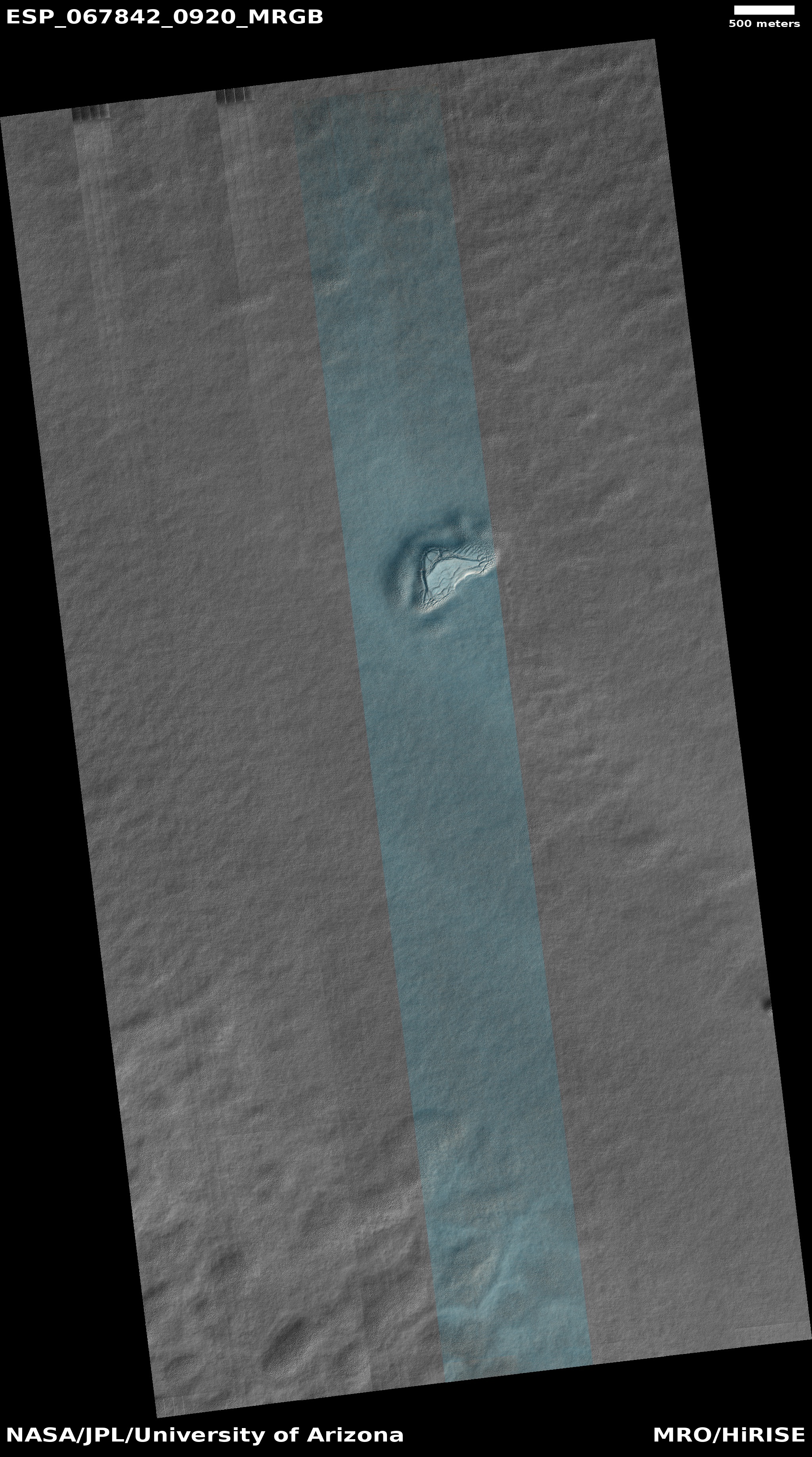
The picture to the right, rotated, cropped, reduced, and enhanced to post here, was taken on January 4, 2023 by the high resolution camera on Mars Reconnaissance Orbiter (MRO). It is once again another terrain sample image, taken not as part of any particular research project but to fill a gap in the camera’s schedule so as to maintain its temperature. With such pictures, it is hard to predict what will be seen, though the scientists try to find interesting things. In this case the camera team succeeded quite nicely, capturing what appears to me to be a small volcano with two calderas.

This volcano however has almost certainly not spouted lava but mud and water.
» Read more

1 comment
1 35 36 37 38 39 90