Cracks in Martian lava

Cracks in Martian lava
Click for original image.

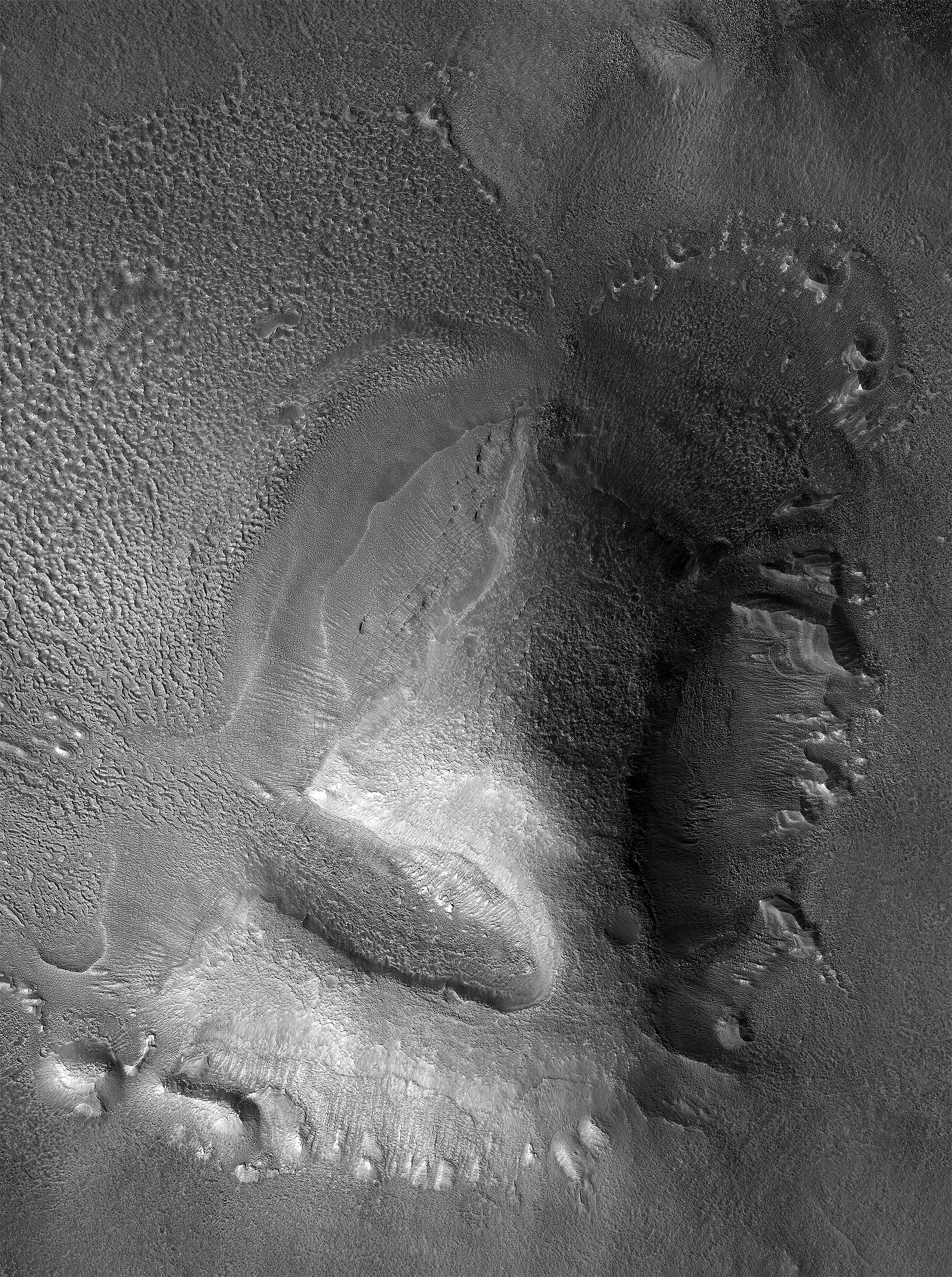
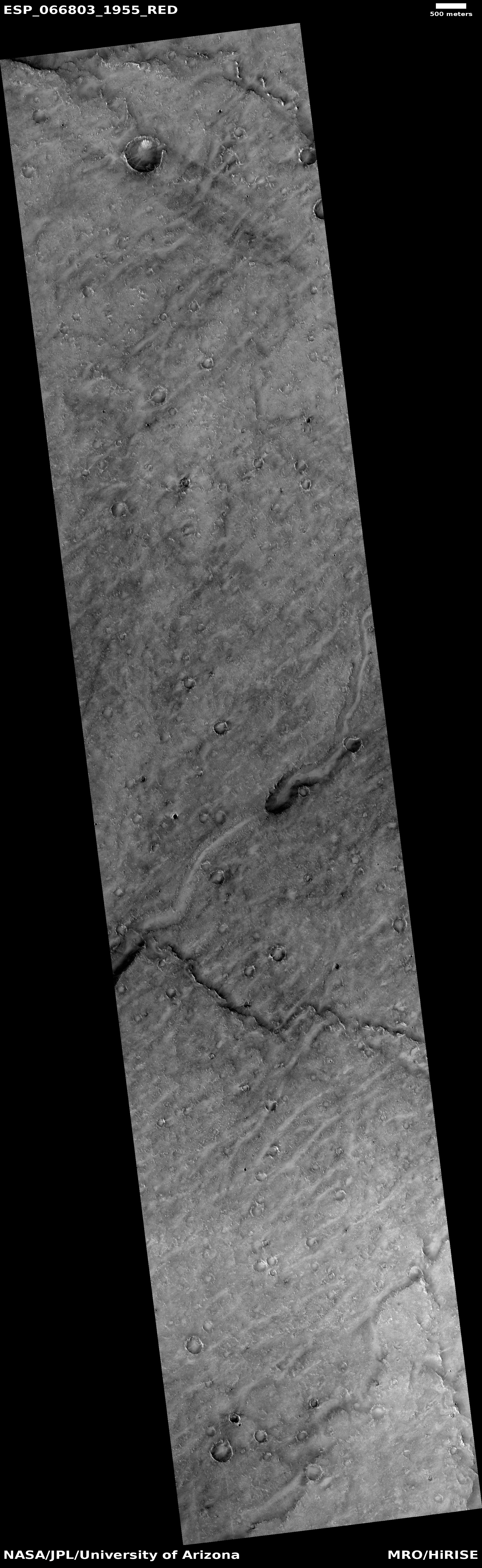
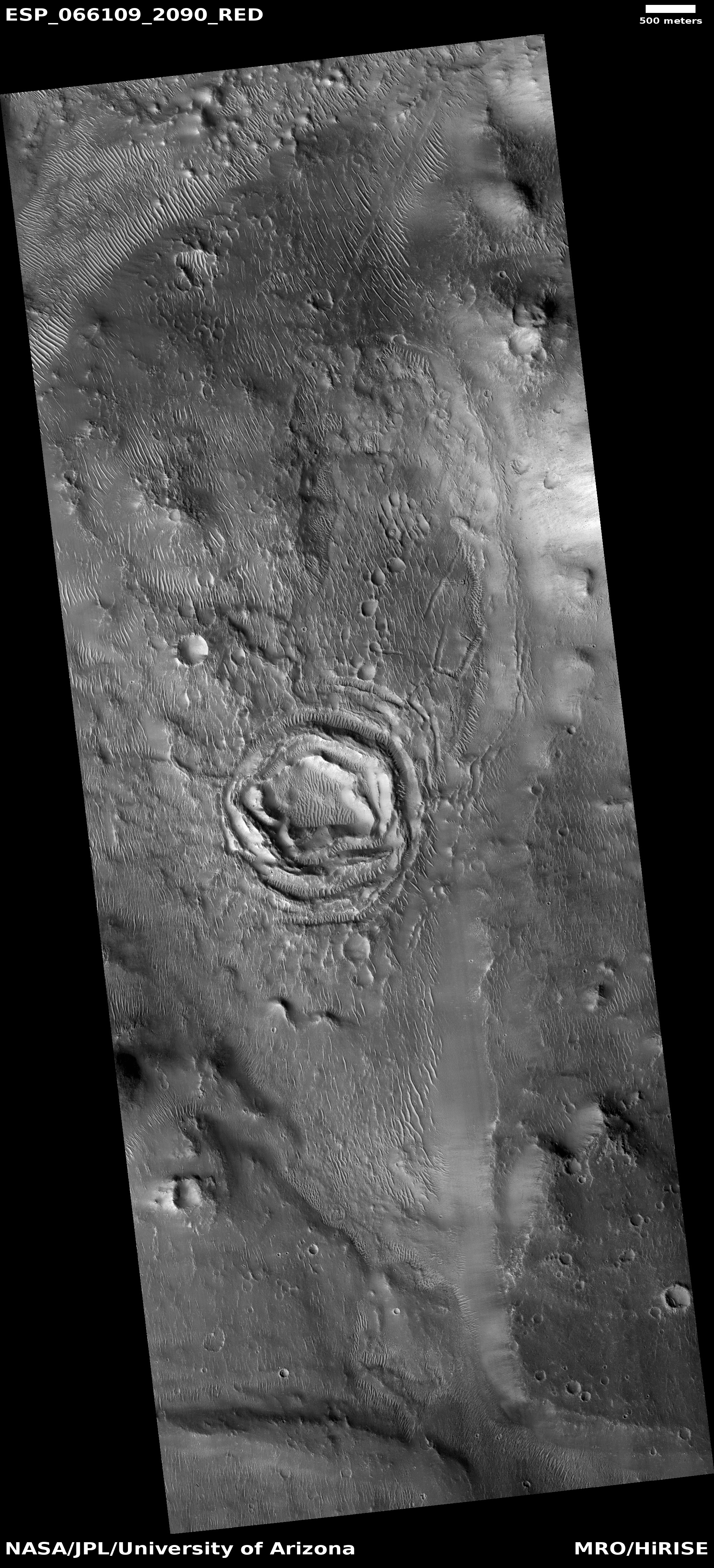
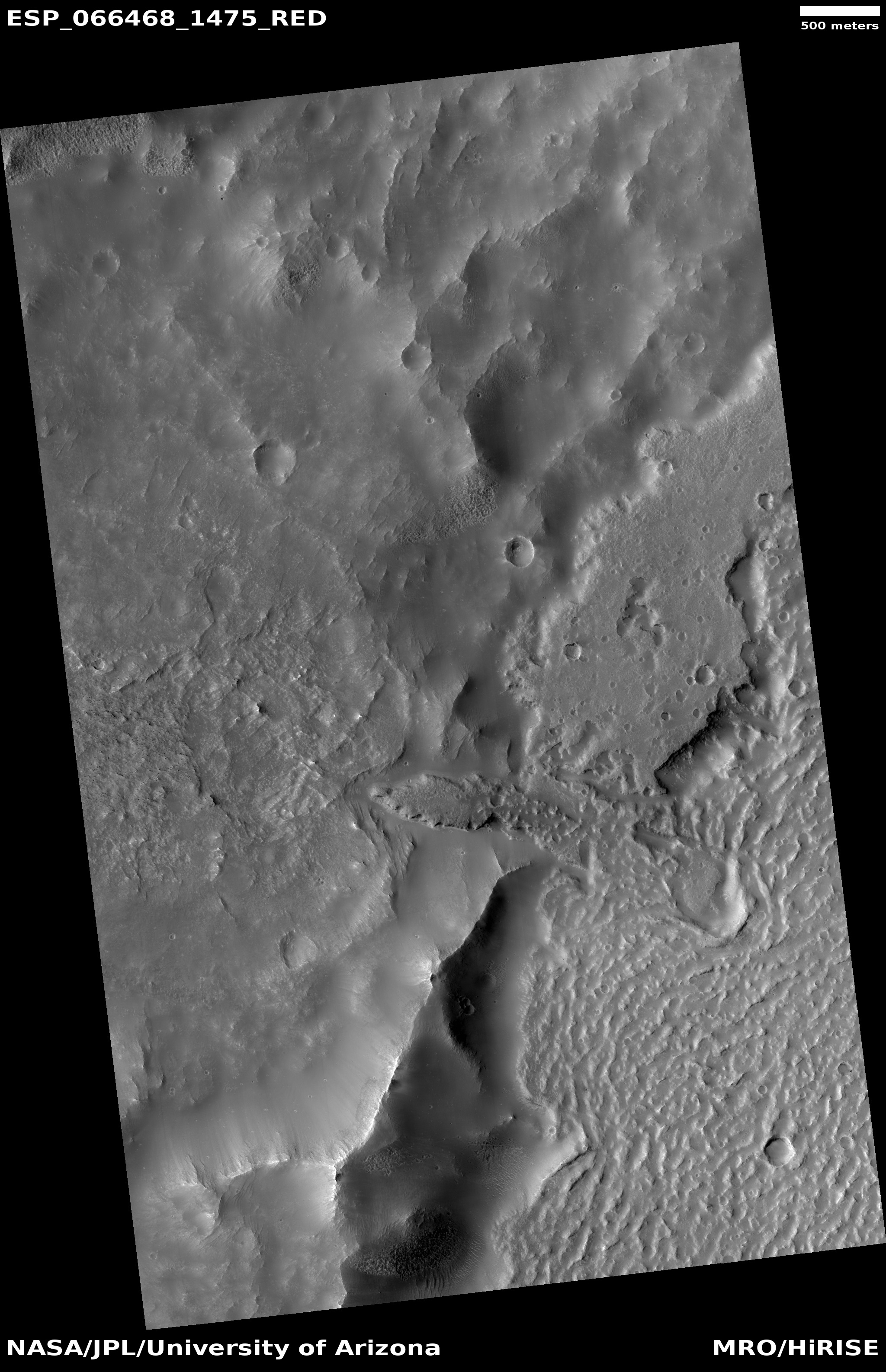
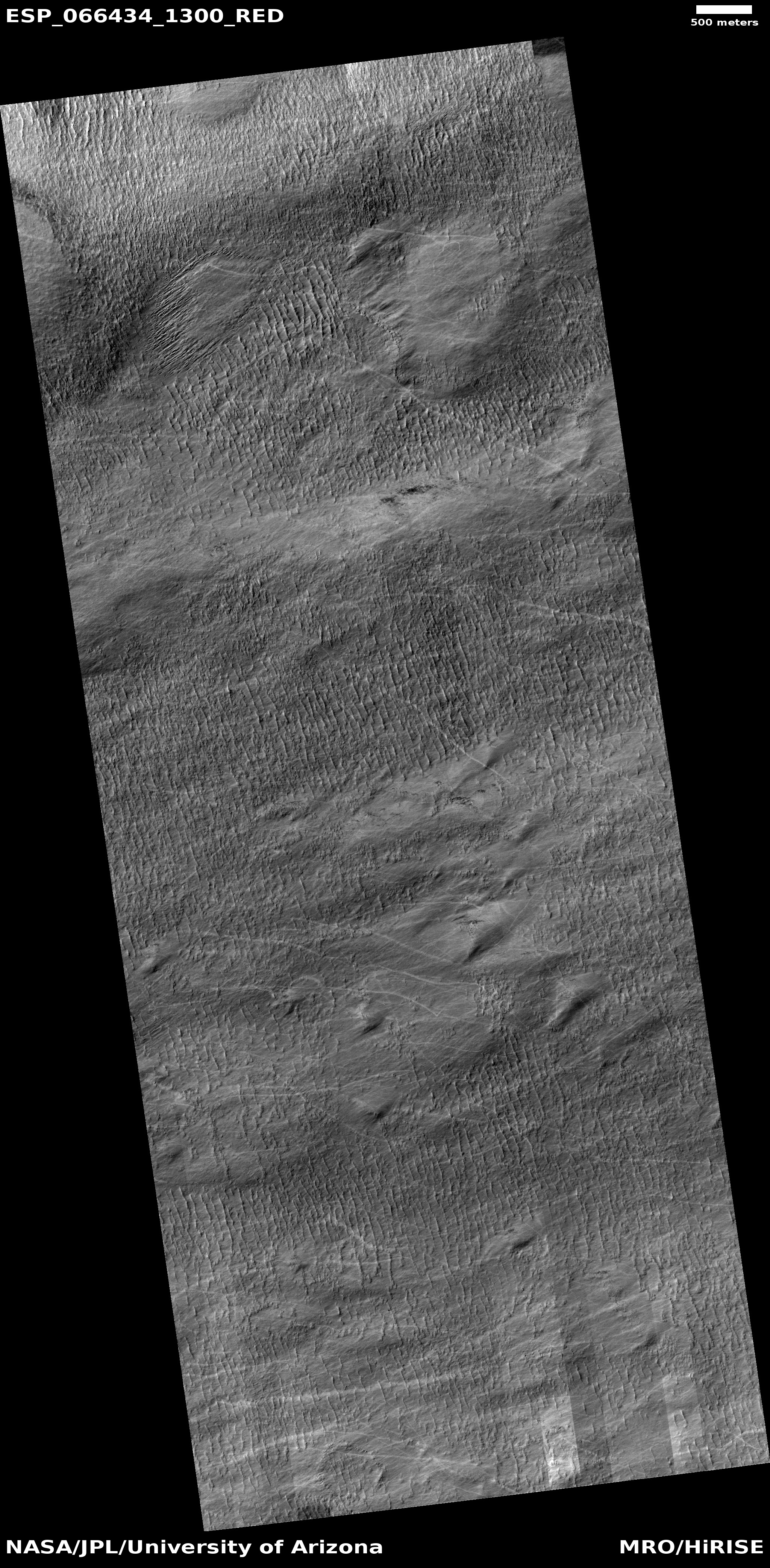
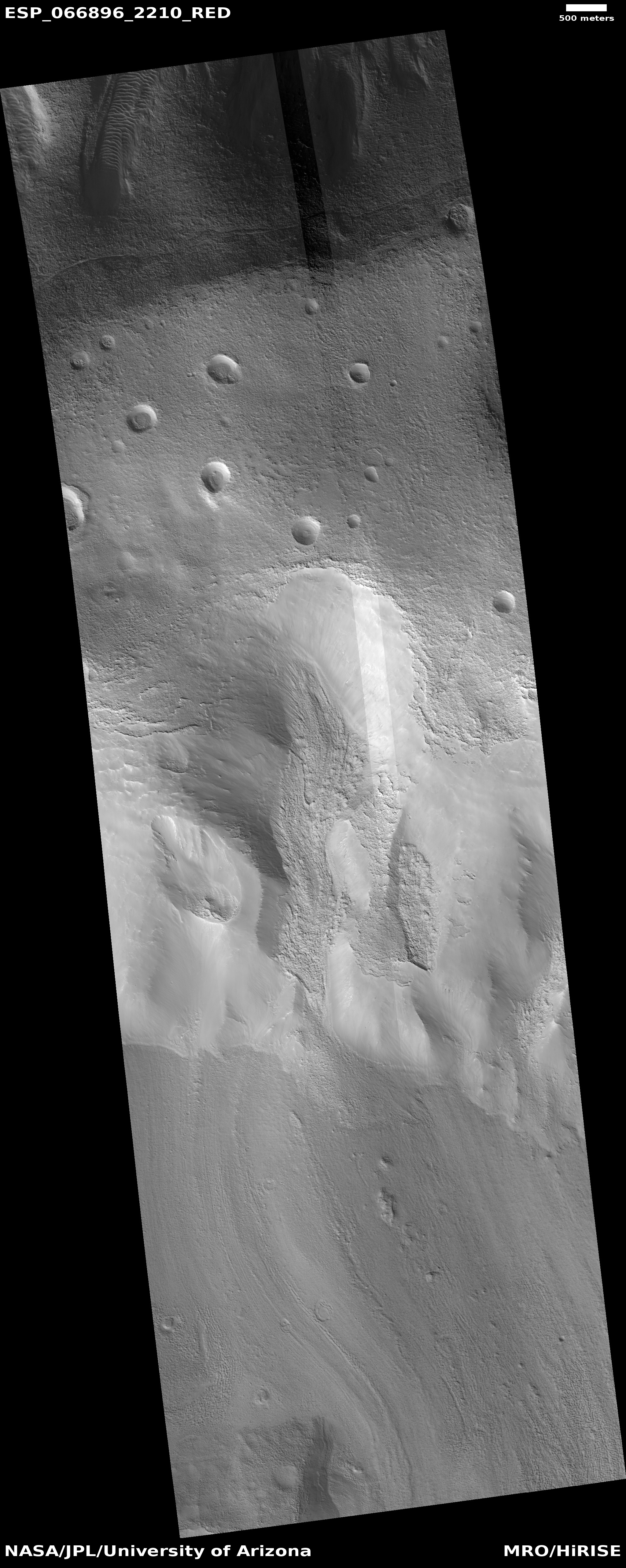
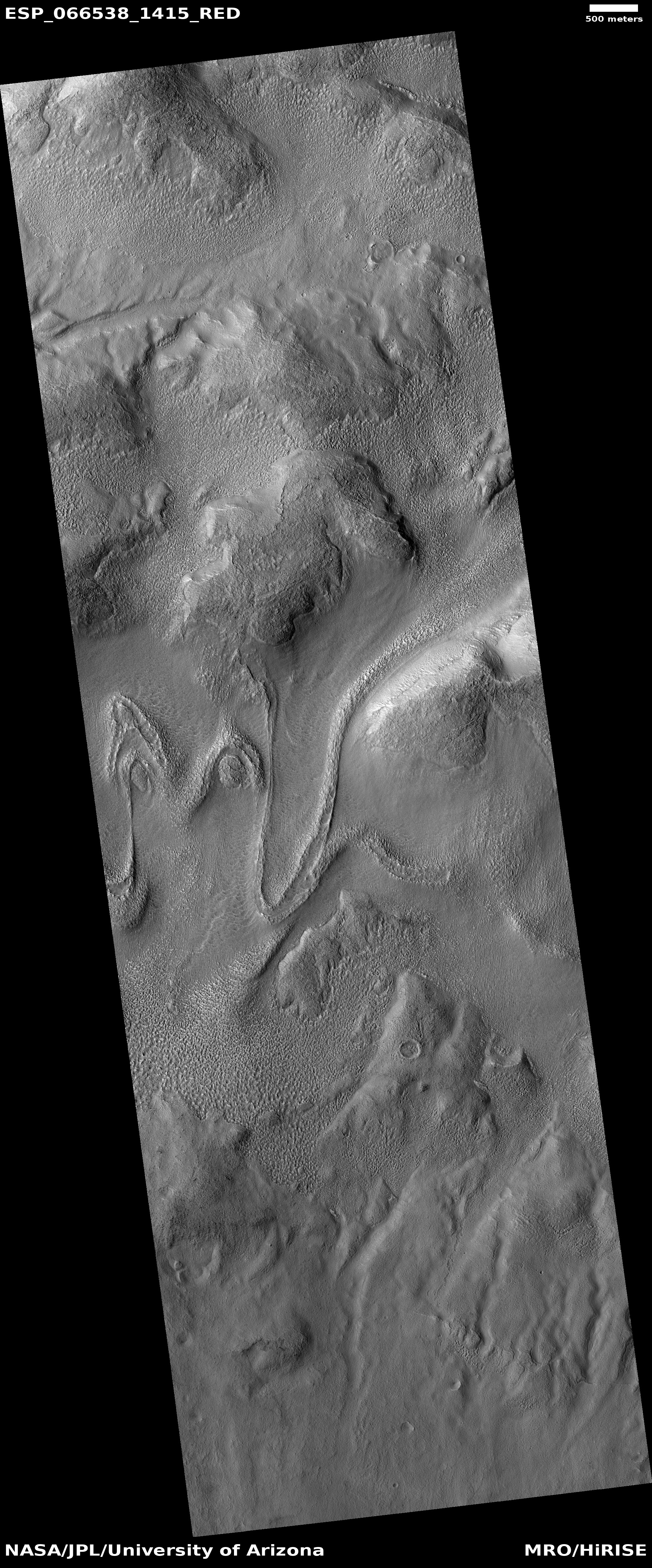
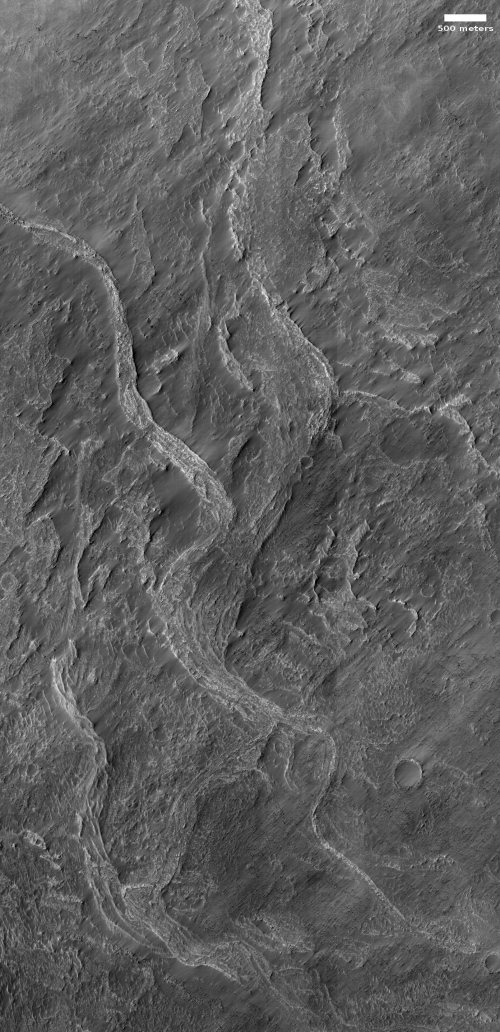
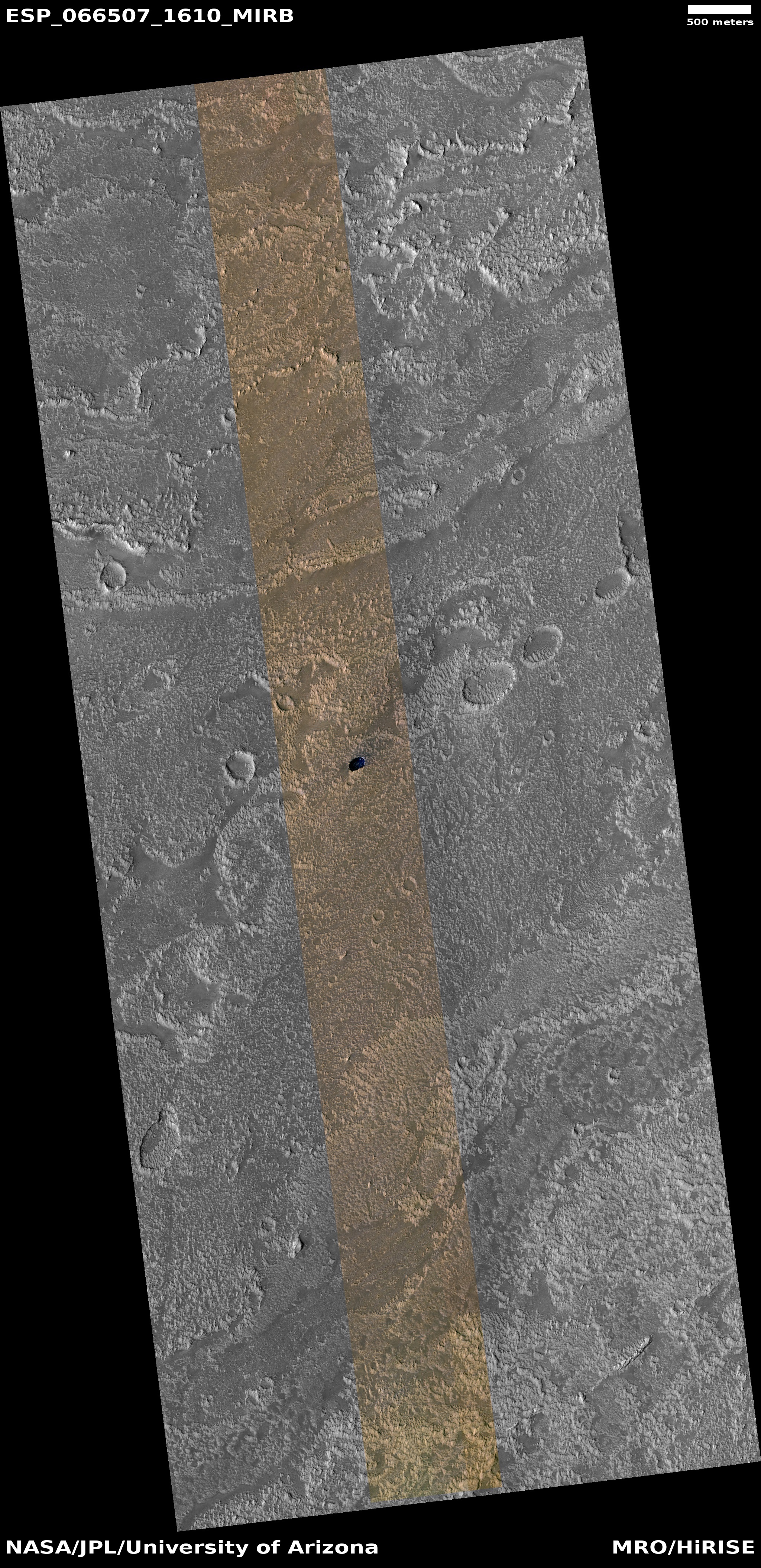
Cool image time! The picture to the right, rotated, cropped, and reduced to post here, was taken on January 25, 2023 by the high resolution camera on Mars Reconnaissance Orbiter (MRO). It was taken not as part of any specific research project, but to fill a gap in MRO’s picture-taking schedule in order to maintain the camera’s temperature. When such pictures need to be taken, the camera team tries to find something of interest in the area to be shot. Sometimes the picture is boring. Sometimes fascinating. Today’s picture I think falls into the latter category.

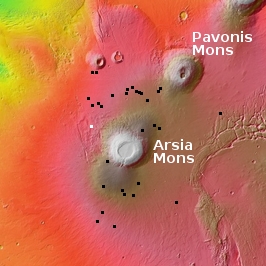
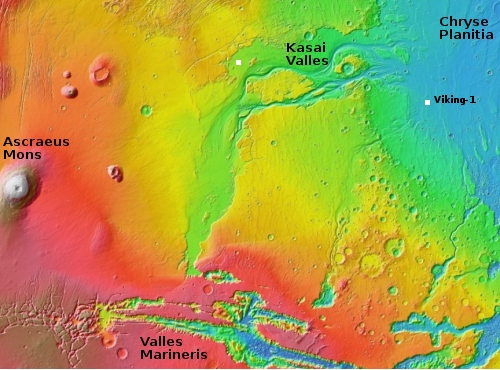
This is a lava flood plain, as shown in the overview map below. The meandering ridges are likely what geologists call lava dikes, places where lava was extruded out through a fissure. This suggests that the flat flood lava was an older crust, and that there was hot molten lava below it that eventually pushed its way up through cracks in that crust.

This hypothesis however is not certain, as the meandering nature of the ridges does not correspond well with what one would expect from such crustal cracks.
» Read more
0 comments

Flat-topped mesas in the icy northern lowland plains of Mars

Flat-topped Martian craters
Click for full image.

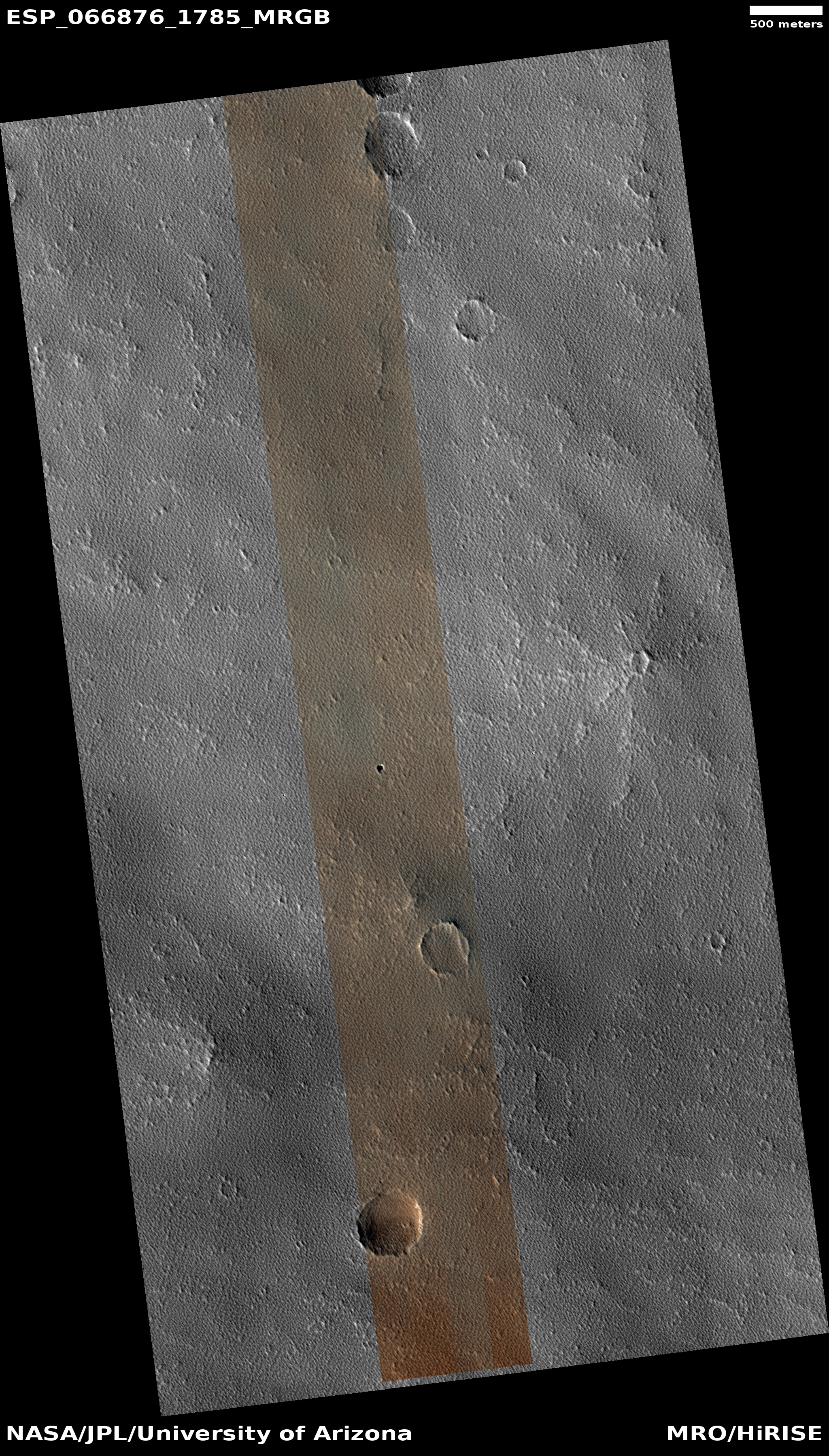
Cool image time! The picture to the right, cropped and rotated to post here, was taken on December 27, 2022 by the high resolution camera on Mars Reconnaissance Orbiter (MRO), and shows what the scientists have labeled “flat topped hills in Utopia Planitia.”

Utopia Planitia is the largest impact basin on Mars, approximately 2,100 miles across and located in the northern lowland plains.

Orbital evidence strongly suggests it is a region with a lot of near surface ice. The picture to the right reinforces that conclusion, as the entire flat plain surrounding these buttes appears like an ice field. Moreover, the full image shows many craters filled with glacial features, most of which also have softened features, as if with time the ice that impregnates their material has sublimated away.
» Read more
0 comments

An inactive volcanic vent on Mars

An inactive volcanic vent on Mars
Click for full image.

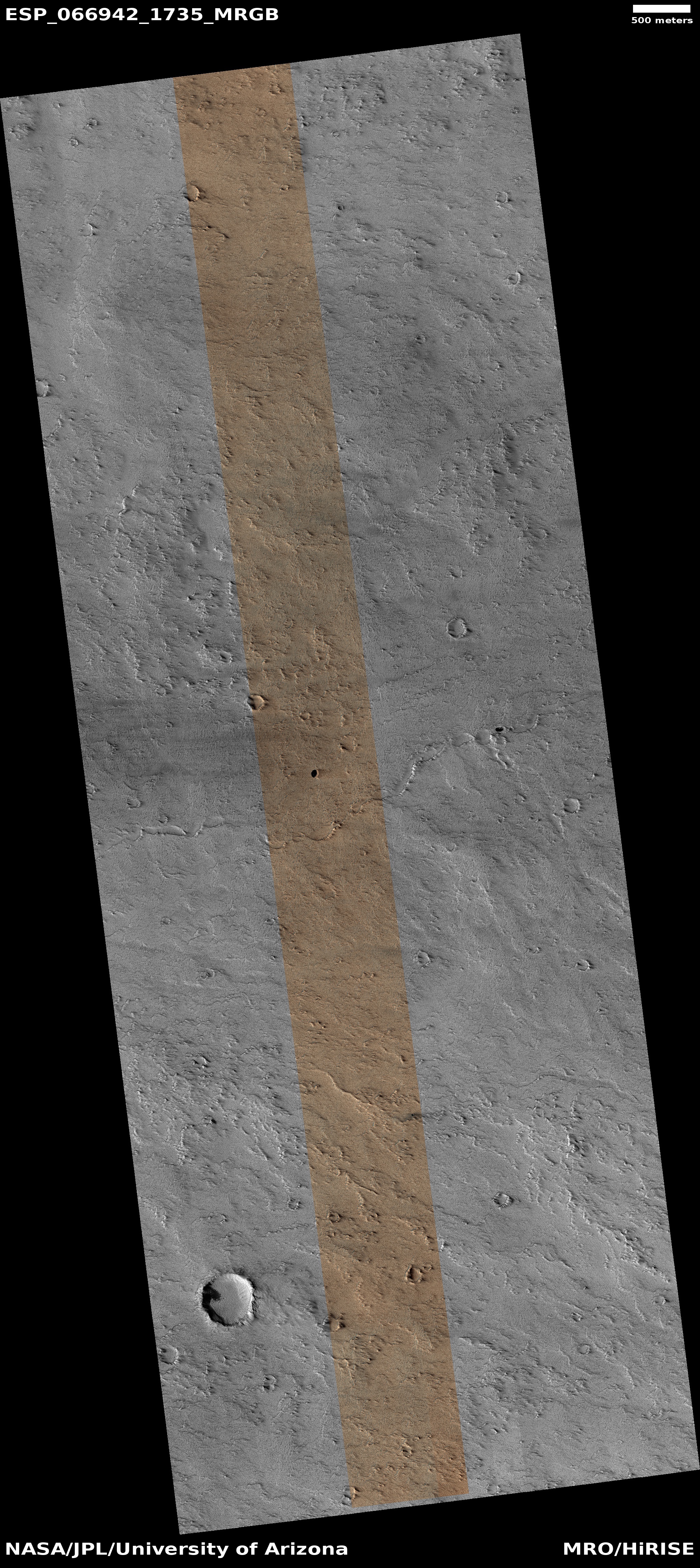
Cool image time! The picture to the right, rotated, cropped, and reduced to post here, was taken on October 5, 2022 by the high resolution camera on Mars Reconnaissance Orbiter (MRO). Labeled by the science team as “Vents and Lava Flows on Flank of Pavonis Mons,” the section to the right shows the picture’s largest vent. The downhill grade is to the south.

In the full photo you can see that this vent sits on top of a flat mound of hardened lava, all of which flowed from the vent in the distant past. The main flow of course went to the south, out the channel and down the flanks of Pavonis Mons, the middle volcano in the line of three just to the west of Mars’ giant Valles Marineris canyon. The caldera peak of Pavonis Mons is about 35 miles away, and sits at a height of 47,000 feet elevation, far higher than Mount Everest but still only the fourth highest Martian volcano.

In the full picture, the entire surface also generally flows south, except for a crack that goes from northeast to southwest, possibly caused when the mountain flank sagged to the south.
» Read more
2 comments

Sightseeing in the region near the Starship Mars landing zone

Sightseeing in the region near Starship's landing zone
Click for original image.

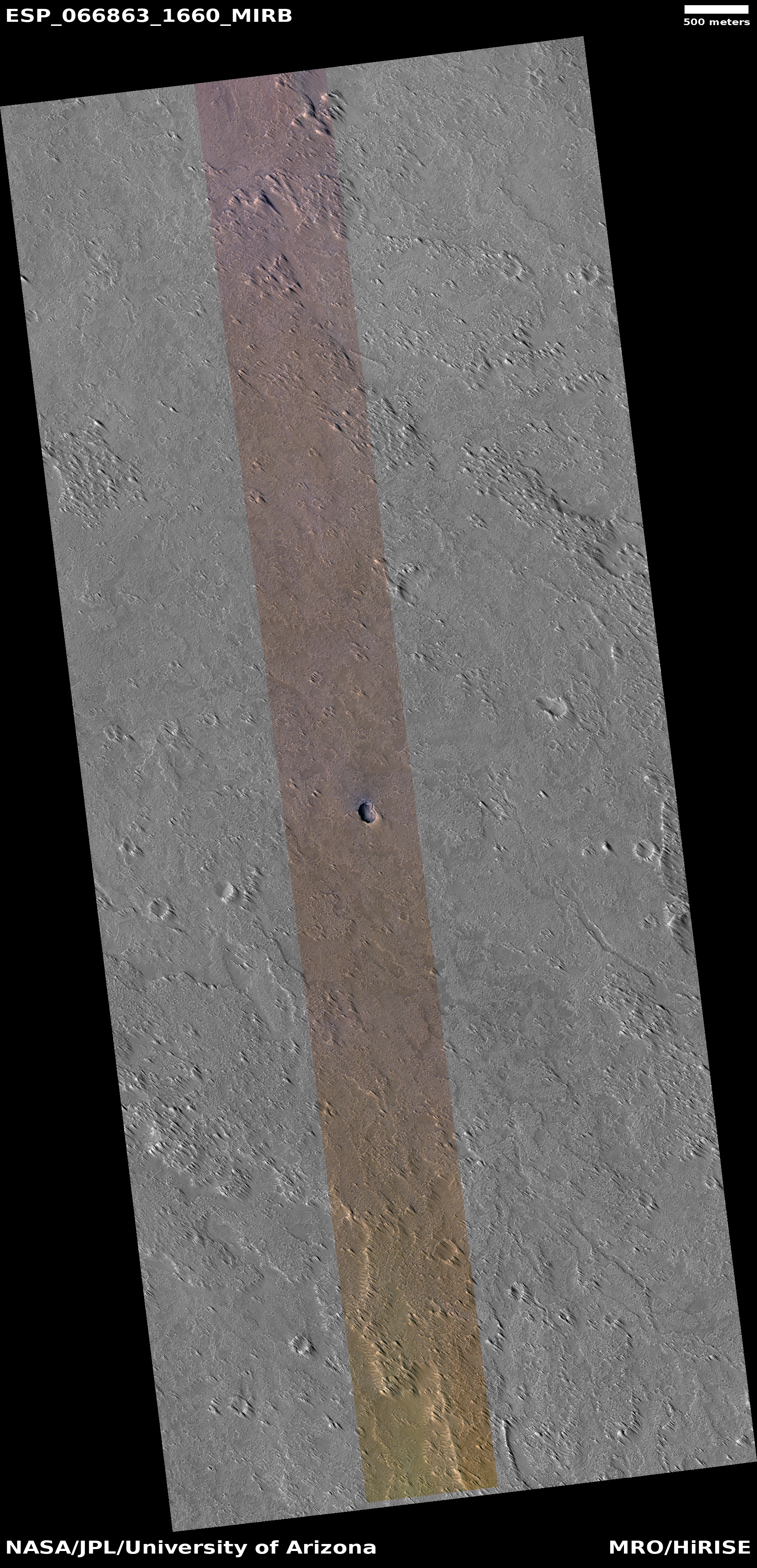
Cool image time! The picture to the right, cropped and reduced to post here, was taken on November 30, 2022 by the high resolution camera on Mars Reconnaissance Orbiter (MRO). It shows a bulbous hill in the icy northern lowland plains of Mars. That it is icy here is indicated by the glacier features that appear to fill the small crater near the bottom of the picture.

You can get a better sense of stark alien nature of this terrain by looking at an MRO context camera image of the same area, taken on April 1, 2008. The subject hill is the first hill on the image’s west side, going from the top. This is a flat plain interspersed with crater splats, mounds of a variety of sizes, and a puzzling meandering dark line that suggests a crack from which material is oozing.

The geology to be studied here might be endless but for tourists the views will be astounding in their alienness.
» Read more
2 comments

A Martian glacier waterfall?

A Martian glacier waterfall?
Click for original image.

Cool image time! The photo to the right, cropped, reduced, and sharpened to post here, was taken on October 25, 2022 by the high resolution camera on Mars Reconnaissance Orbiter (MRO). It shows a small meandering canyon that appears to drain into a larger side canyon, all part of a region of chaos terrain dubbed Galaxias Chaos in the Martian northern mid-latitudes.

Though the latitude is 35 degrees north, where we should see lots of evidence of glacial features, especially because this is chaos terrain — terrain unique to Mars — that generally appears formed by such processes, I find few outright obvious glacial features in this cropped portion or in the full image.
» Read more

2 comments

The barren and icy northern lowland plains of Mars

The barren and icy northern lowland plains of Mars
Click for original image.

Cool image time! The picture to the right, cropped and sharpened to post here, was taken on January 2, 2023 by the high resolution camera on Mars Reconnaissance Orbiter (MRO). Taken to fill a gap in the camera’s planned image schedule in order to maintain its temperature, the location was in this sense picked not for any particular scientific research project, but because the camera team decided they might find something interesting at this spot.

What they found is a vast flat plain of polygons, a feature found frequently on the surface of Mars and thought to be formed from processes similar to the drying that creates similar polygon cracks in dried mud here on Earth. In this case, the cracks are almost certainly in ice. As Colin Dundas of the U.S. Geological Surveyโ€™s Astrogeology Science Center in Arizona explained to me previously,
» Read more

0 comments

Layers upon layers on Mars

Layers on Mars
Click for original image.

Today’s cool image once again illustrates that the geology of Mars will almost certainly center on a study of layers, as increasingly the orbital and rover images are telling us that the red planet is covered with innumerable layers, one after another, each created by another cycle, some seasonal, some global, and some related to climate and the planet’s fluctuating rotation tilt as well as its orbit around the Sun. And some might also be random volcanic events, unrelated to the cycles.

The picture to the right, rotated, cropped, reduced, and sharpened to post here, was taken on October 10, 2022 by the high resolution camera on Mars Reconnaissance Orbiter (MRO). Labeled by the science team “Layering in western Arabia Terra”, this section only shows a small amount of the layering visible in the full image. From east to west the ground rises in a series of terraces, each representing a different layer of distinct geology.
» Read more

0 comments

Meandering ridges in Greg Crater

Meandering ridges in Greg Crater
Click for original image.

Cool image time! The picture to the right, cropped, reduced, and sharpened to post here, was taken on November 29, 2022 by the high resolution camera on Mars Reconnaissance Orbiter (MRO). It shows what the scientists label “curved ridges.”

These might be inverted channels, the beds on which either water or ice flowed, compacting it down so that it became very resistant to erosion, and thus remains when the surrounding terrain was worn away. However, none of them seem to follow any grade. A more likely explanation is that these are ancient moraines, the debris pile pushed ahead of a glacier and then left behind when the glacier goes away.

The location is the reason I favor this explanation.
» Read more

0 comments

Soft Martian buttes

Soft Martian buttes
Click for original image.

Cool image time! The picture to the right, rotated, cropped, reduced, and sharpened to post here, was taken on January 1, 2023 by the high resolution camera on Mars Reconnaissance Orbiter to fill a gap in its shooting schedule so that the scientists could maintain the camera at its proper temperature.

In other words, the picture was not taken as part of any particular research project. Its target was in a sense chosen almost at random, though the science team always tries to find something of interest in such situations. In this case I think they succeeded, as these soft terraced buttes illustrate well the alien nature of Mars. The ground is barren, with absolutely no evidence of any life, and it appears that the buttes have been softened and eroded by eons of wind action. You can see evidence of this by the handful of dust devil tracks that cross the buttes.

There is more.
» Read more

0 comments

Cliffs inside 285-mile-wide Schiaparelli Crater on Mars

Cliffs inside Schiaparelli Crater
Click for original image.

Cool image time! The picture to the right, rotated, cropped, reduced, and sharpened to post here, was taken on December 2, 2022 by the high resolution camera on Mars Reconnaissance Orbiter (MRO), and was labeled by the science team as showing “dramatic cliffs and swirls in mound-skirting unit.”

I estimate the tallest point of this cliff butte to be somewhere between 500 and 800 feet high. And while the cliff is what first attracts the eye, one mustn’t ignore the vast amounts of dust and sand that cover everything here. The small teardrop-shaped buttes on the upper plateau suggest the prevailing wind direction there is from the north to the south. However, the north-south orientation of the ripple dunes on the floor below suggests that the prevailing wind direction below the cliff is east-west. Explaining how the topography could so quickly change the prevailing wind direction is beyond my skill.

The swirls mentioned by the scientists can be seen at the top of the cliff (on the left) and just below its base, in areas where there appears to be less dust. Those swirls reveal the many geological layers here.
» Read more

1 comment

Splashed lava from a Martian impact

Splashed lava from a Martian impact
Click for original image.

Almost always it is impossible to understand a high resolution image from Mars Reconnaissance Orbiter (MRO) unless you also take a wider view. Today’s cool image to the right, rotated, cropped, reduced, and sharpened to post here, is a perfect example.

Taken on January 6, 2023, it shows what the science team labeled as a “rocky deposit on crater floor.” To my eye however none of this appeared tremendously rocky. Instead, what I saw was a curved and layered flow feature whose ancient age was suggested by the many later craters scattered across its surface.

Still, its origin was unclear. It isn’t ice, not only because of its apparent resistance from disturbance from those later crater impacts but because it is located at about 20 degrees north latitude, in the dry equatorial regions of Mars. If lava, what is its source? As I noted, a wider look was necessary to answer that question.
» Read more

0 comments

The endless volcanic ash of Mars’ Medusae Fossae Formation

The endless volcanic ash of Mars' Medusae Fossae Formation
Click for original image.

Cool image time! The picture to the right, cropped, reduced, and enhanced to post here, was taken on January 6, 2023 by the high resolution camera on Mars Reconnaissance Orbiter (MRO), and shows a small but typical area of the Medusae Fossae Formation, what is thought to be the largest volcanic ash deposit on Mars.

The picture itself was a “terrain sample,” taken by the MRO science team not as part of any specific research but to fill a gap in the camera’s schedule so as to maintain its temperature. The terrain itself looks like a field of sand that someone had run a fine comb across. In this case, the comb was the winds of Mars, prevailing from the southeast to the northwest. The crescent-like divots in the picture’s lower right are probably caused by some hard underground feature that the winds cannot blow away. Instead, it blows around, like water in rapids flowing around a rock, and takes the ash with it as it does so.
» Read more

1 comment
1 36 37 38 39 40 90