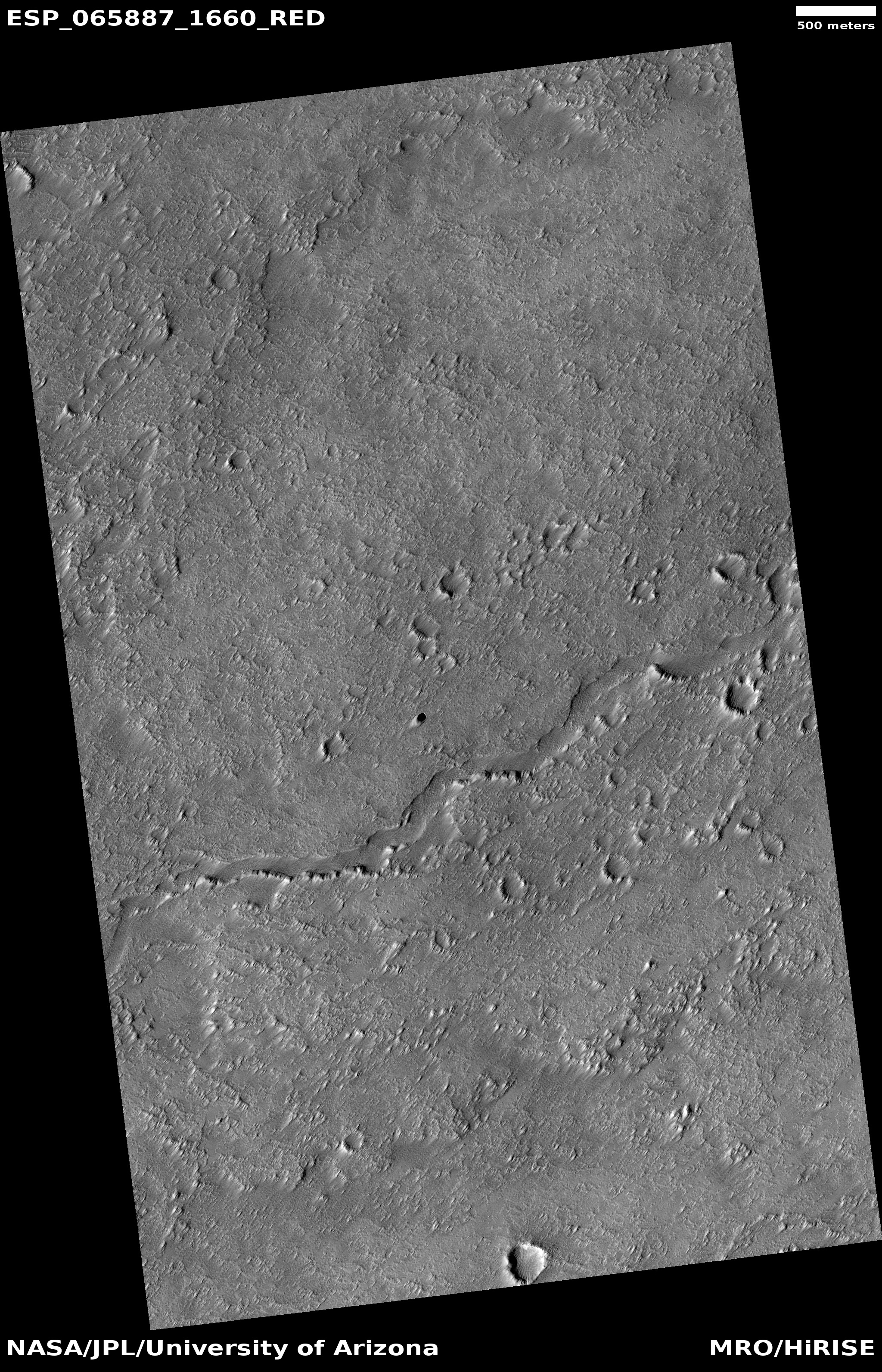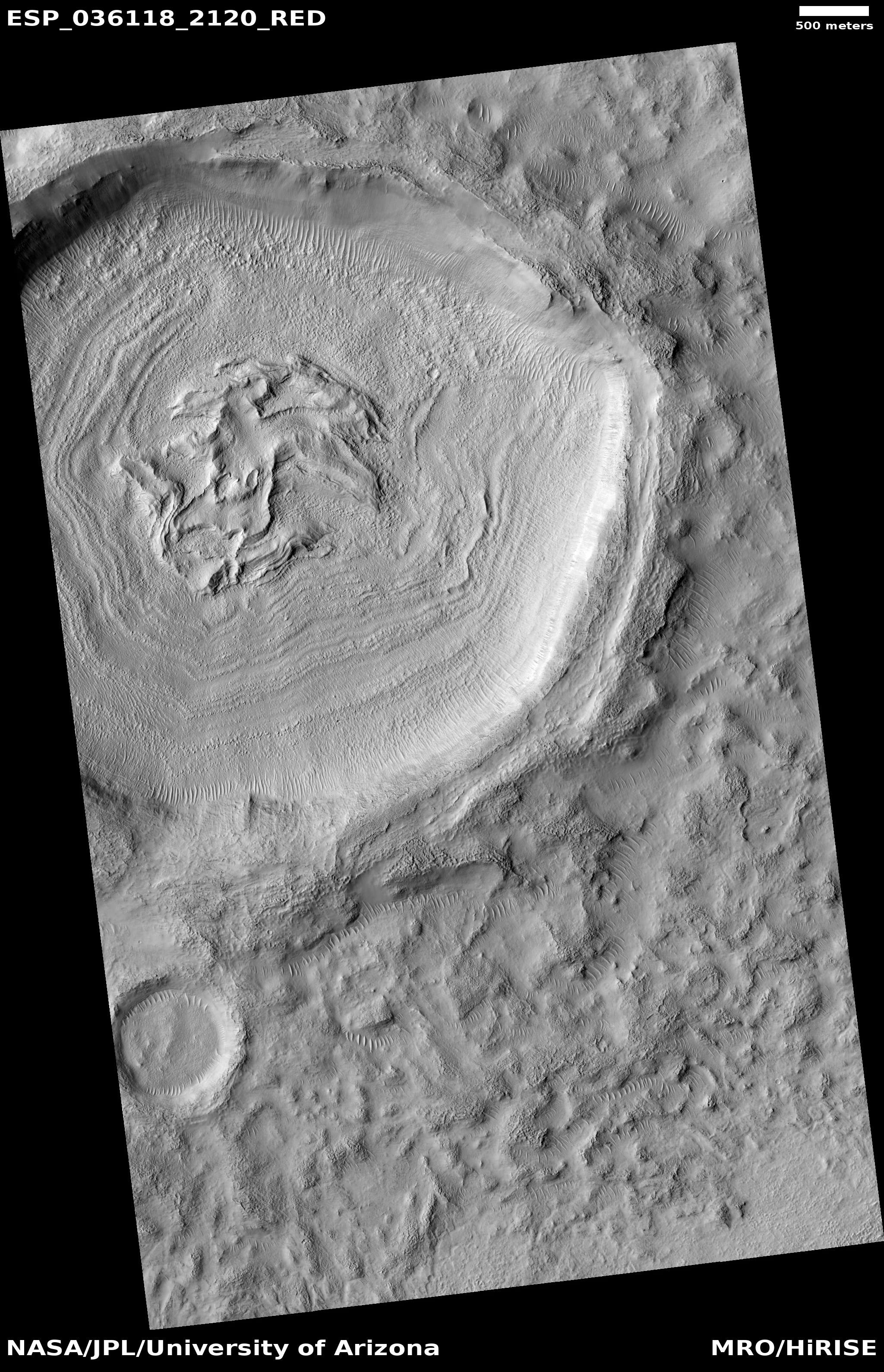
A dry lakebed on Mars?

Evidence of a past lake in a crater on Mars
Click for original image.

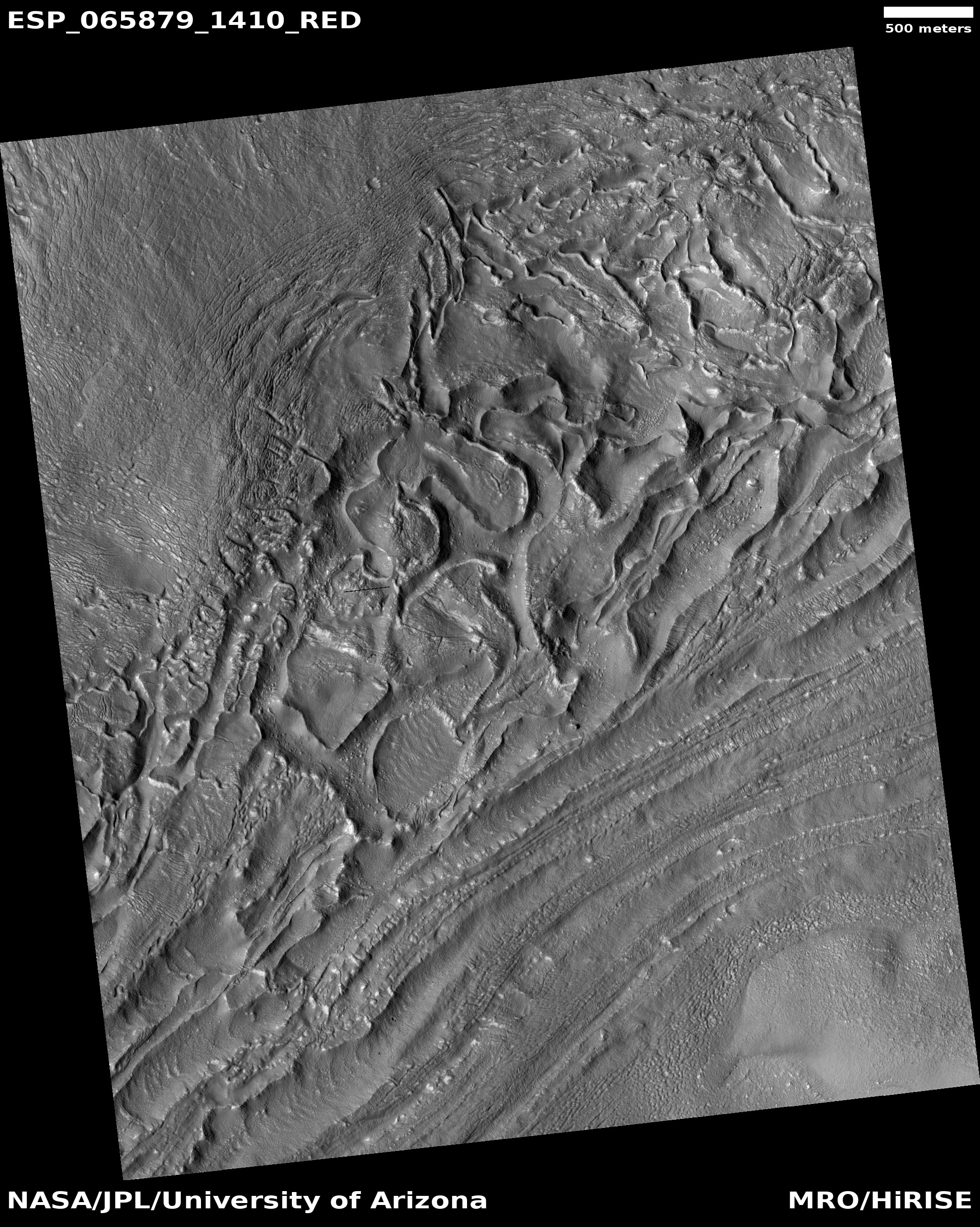
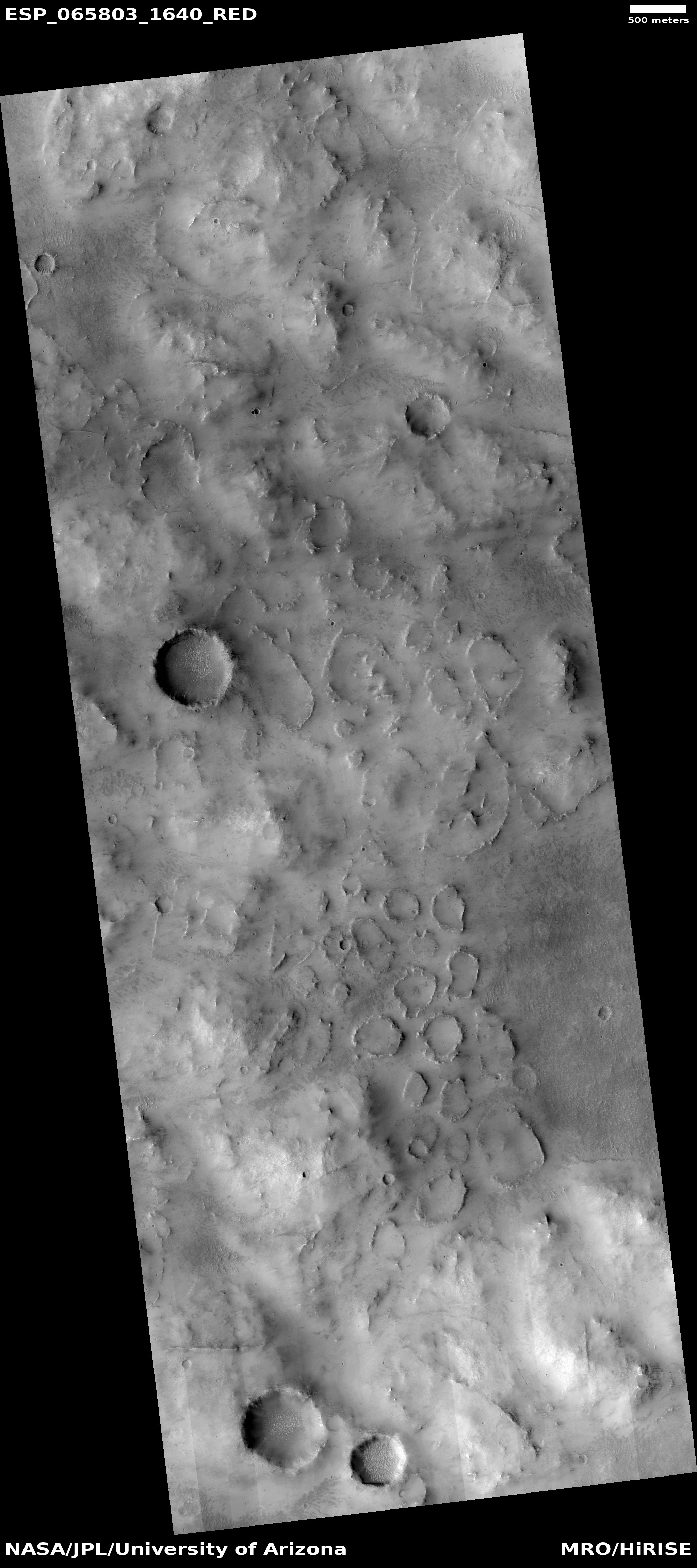
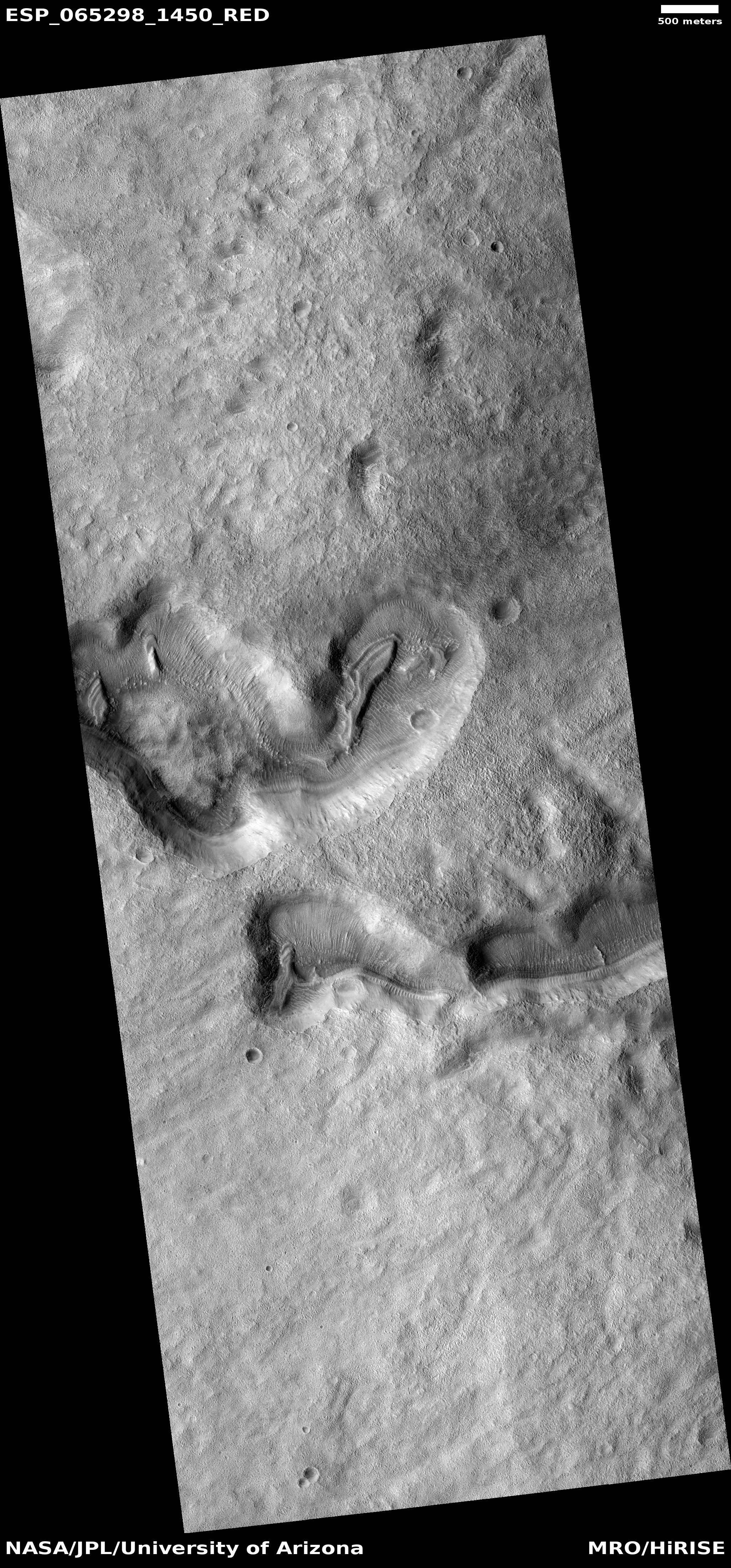
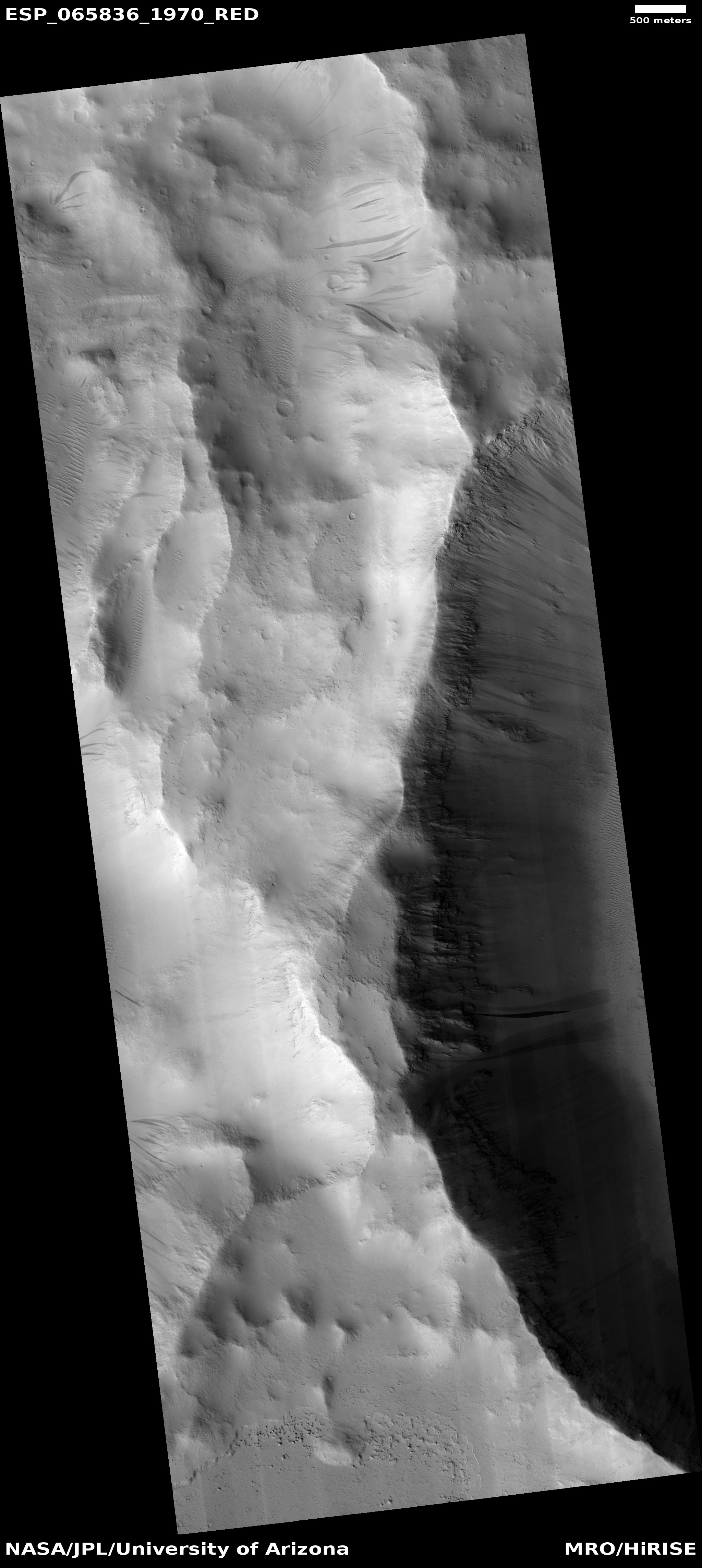
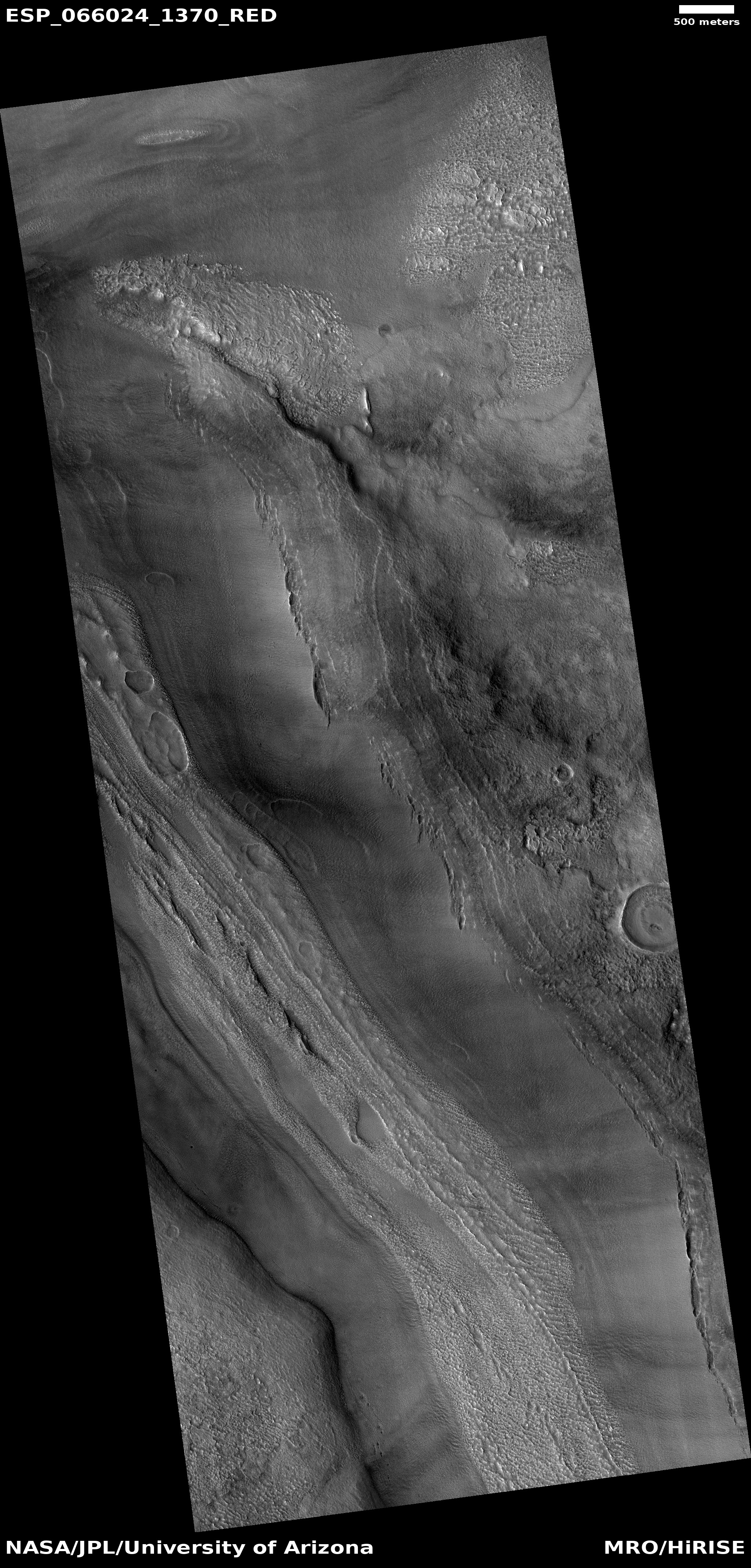
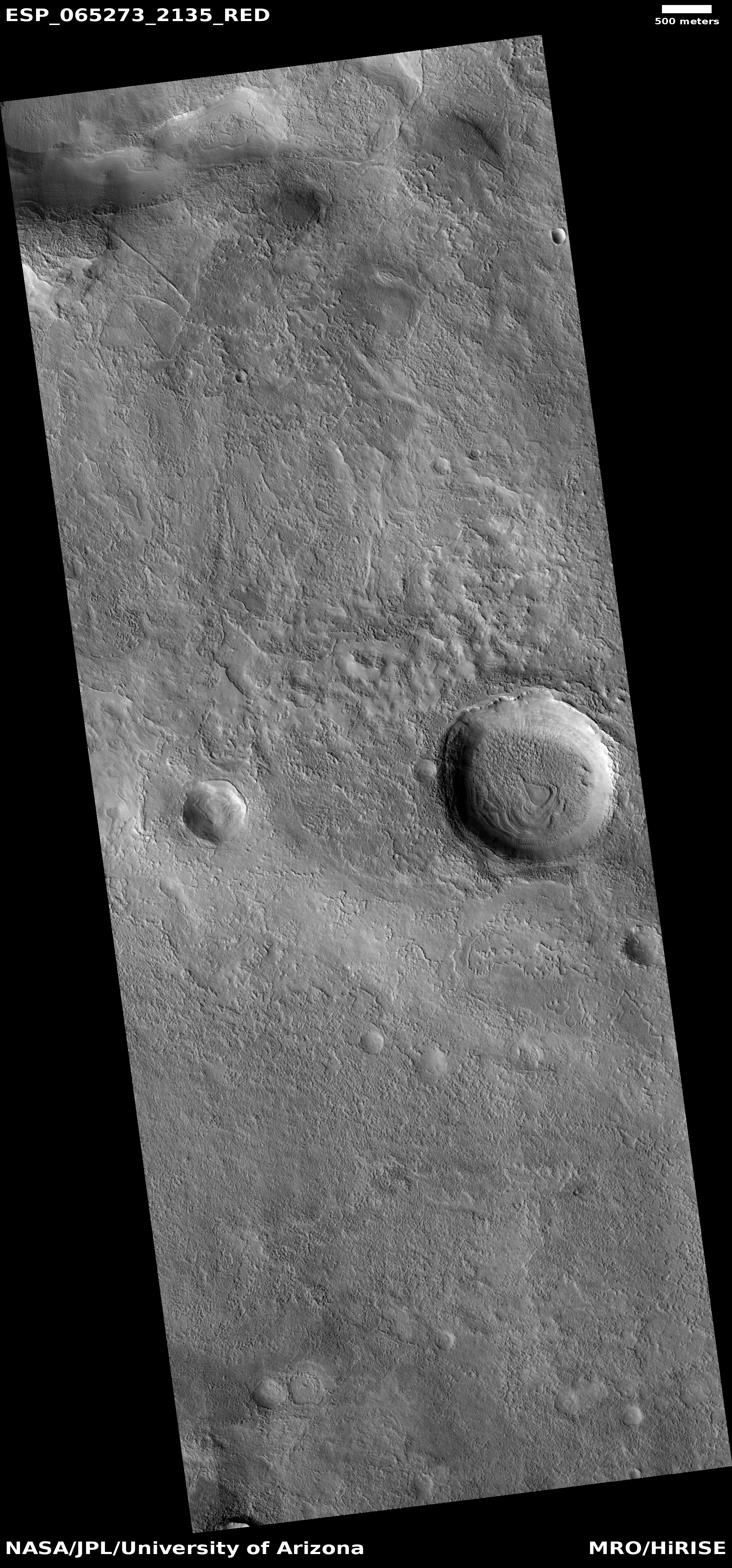
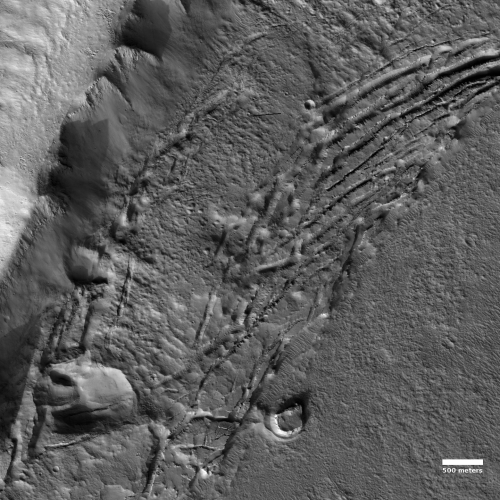
Today’s cool image illustrates in some ways the uncertainty of science. The photo to the right, rotated, cropped, reduced, and sharpened to post here, was taken on December 1, 2022 by the high resolution camera on Mars Reconnaissance Orbiter (MRO). The science team intriguingly labeled it “Small Candidate Lake Deposit Downstream of Alluvial Fan.” I am not sure what they consider that lake deposit in the full image, so I have focused on the area of stucco-like ground, which resembles bedrock that has been corroded by some water process.

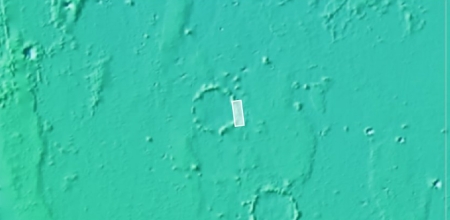
This area is just to the east of the central peaks of an unnamed 25-mile-wide crater in the southern cratered highlands. Many of the craters in this region are believed by scientists to have once harbored lakes formed by run-off from the glaciers that once existed on the craters’ inner rim. In this case it appears this stucco area is the head of an alluvial fan, coming down from the crater’s central peaks. You can see its beginning in this MRO high resolution image of the central peaks, taken in November 2016. As defined geologically,

An aluvial fan is an accumulation of sediments that fans outwards from a concentrated source of sediments, such as a narrow canyon emerging from an escarpment. They are characteristic of mountainous terrain in arid to semiarid climates, but are also found in more humid environments subject to intense rainfall and in areas of modern glaciation.

In this case the terrain is now arid, but shows evidence it once was icy wet.
» Read more

0 comments

Martian crater with mound of ice? mud? hardened sand?

Crater with mound
Click for full image.

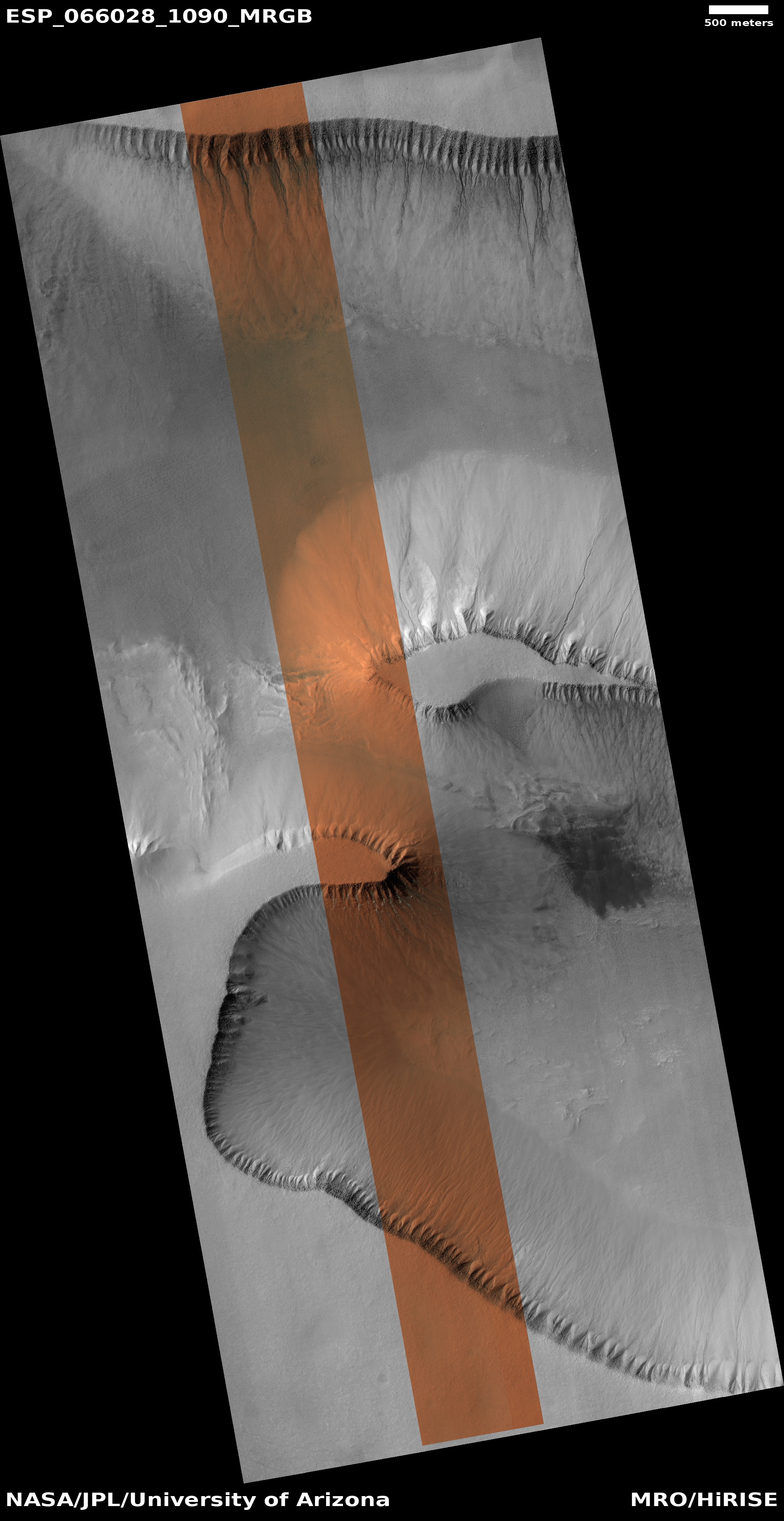
Cool image time! The photo to the right, cropped to post here, was taken on October 31, 2022 by the high resolution camera on Mars Reconnaissance Orbiter (MRO). It shows a small 4,000-foot-wide crater that is practically filled with a smooth, almost perfectly spherical mound, with the rest of the crater interior filled with sand dunes and what appears to be glacial debris.

Is that mound also glacial debris, covered with a layer of dirt and dust to protect it? If so, one wonders how the ice ended up in this shape. There are other craters with similar mounds in this region, all suggesting glacial debris but with the same question. Craters with lots of near surface ice in this region more often have a squishy blobby look.

Is the mound instead possibly mud, expressing the existence of a mud/ice volcano? If so, it shows no central pit or caldera, which is typical of such things.

Is it hardened sand? Martian dust that gets blown into craters generally gets trapped there, building up over time. If so, however, why does it have a smooth almost perfectly rounded shape? The ripple sand dunes surrounding it are more like what you would expect.

The small craters on the mound also tell us that it is hardened and old, no matter what it is made of.
» Read more

1 comment

The youngest flood lava on Mars, flowing past a crater

Crater with lava flow
Click for full image.

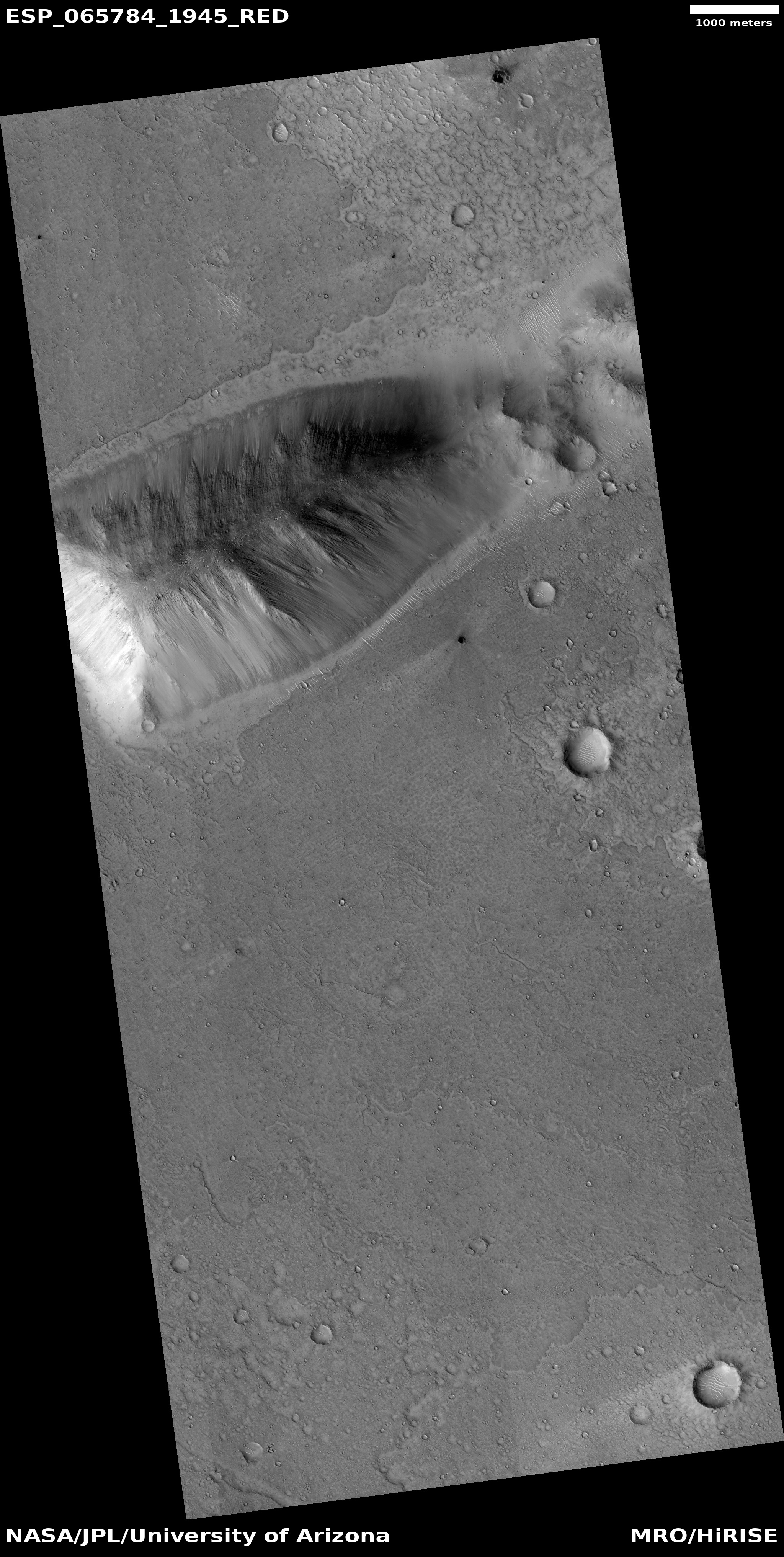
Cool image time! The photo to the right, rotated, cropped, reduced to post here, was taken on December 3, 2022 by the high resolution camera on Mars Reconnaissance Orbiter (MRO).

The title given to this image by the MRO science team is “Upstream Edge of Crater in Athabasca Valles.” The crater itself is a pedestal crater, uplifted from the surrounding terrain because it was more resistant to erosion.

The material to the east of the crater’s rim definitely appears to have flow characteristics, but is it wet mud, glacial ice, or lava?

To figure this out we need as always some context. The latitude, 8 degrees north, immediately eliminates mud or glacial material. This location is in the dry equatorial regions of Mars, where no near surface ice has yet been found. Thus, the flow features are likely hardened lava.

What direction however was the flow? Was it flowing to the north, widening as it moved past the pedestal crater? Or was it to the south, narrowing as it pushed past that crater? To answer this question we need to widen our view.
» Read more

0 comments

Machete Mesa on Mars

Machete Mesa on Mars
Click for full image.

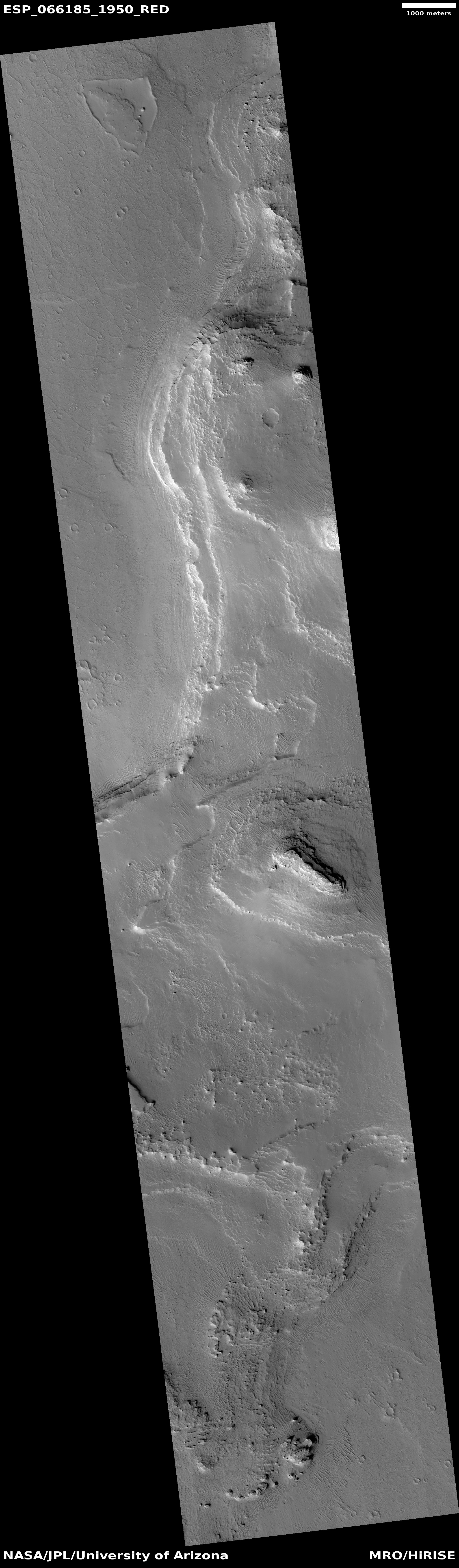
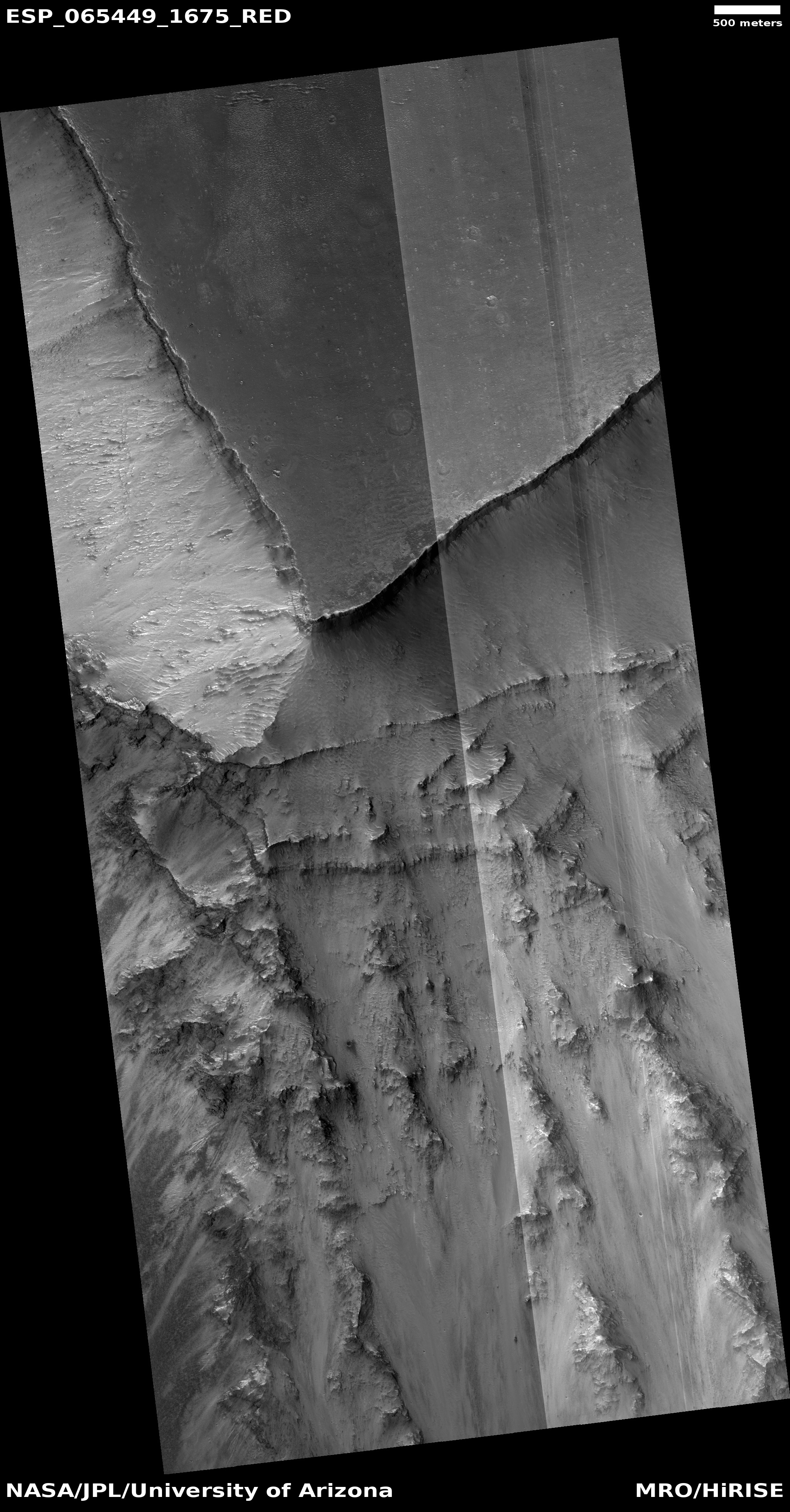
Cool image time! The picture to the right, cropped to post here, was taken on November 30, 2022 by the high resolution camera on Mars Reconnaissance Orbiter (MRO). It shows a variety of ridges in a region of Mars called Arabia Terra, which is also the largest transition zone between the Martian southern cratered highlands and the northern lowland plains.

While this picture illustrates some nice geological facts about Mars (see below), I post it simply because of the dramatic sharpness of the ridge on top of the mesa, which I guess is several hundred feet high, but only a few feet across, at most, at its peak. A hike along this ridgeline would be a truly thrilling experience, one that the future human settlers on Mars will almost certainly find irresistible. Put this location on your planned tourist maps of Mars. It will likely be an oft-visited site.
» Read more

2 comments

The sea of dunes surrounding the Martian north pole

The sea of dunes surrounding the Martian north pole
Click for full image.

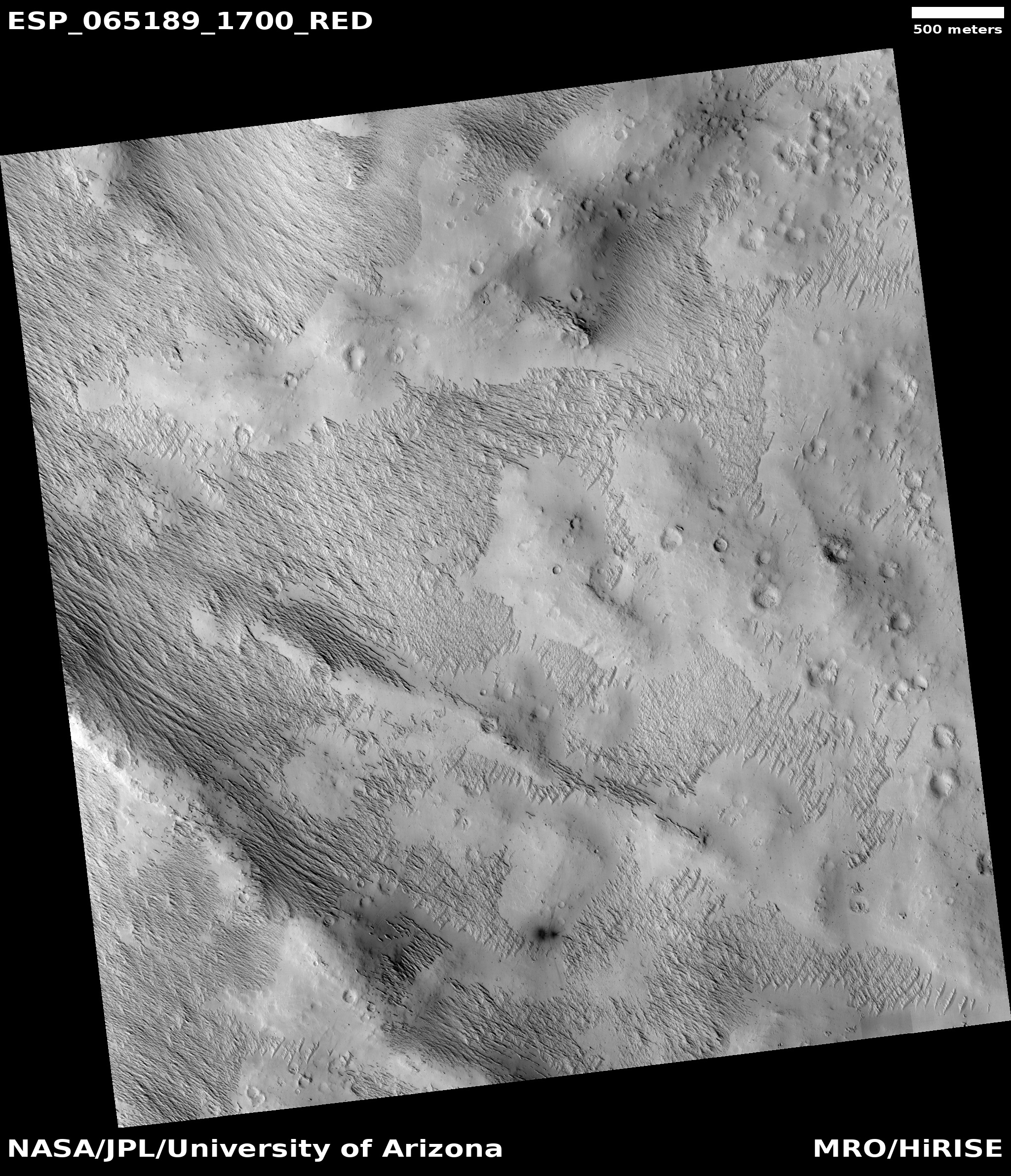
Cool image time! The photo to the right, rotated, cropped, and reduced to post here, was taken on December 5, 2022 by the high resolution camera on Mars Reconnaissance Orbiter (MRO). It shows a collection of wormlike dunes located in the giant sea of dunes that surrounds the Martian north pole ice cap.

North is to the top. The season when this picture was taken was northern winter. The Sun is barely above the horizon, only 8 degrees high, and shining from the southeast. Because it is winter it is also dust season, making the atmosphere hazy and thus making the light soft. No distinct shadows, except that the sides of the dunes facing away from the Sun are darkly shadowed.

The consistent orientation of the dunes suggests that the prevailing winds blow from the northeast to create the steep-sided alcoves. The wind however might not be the only factor to form these dunes.
» Read more

1 comment

A Martian river canyon?

A Martian river canyon?
Click for full image.

Today’s cool image highlights the biggest mystery of Mars that has baffled scientists since the first good pictures of its surface were taken in the early 1970s by the Mariner 9 orbiter. The picture to the right, rotated, cropped, reduced, and sharpened to post here, was taken on October 24, 2022 by the high resolution camera on Mars Reconnaissance Orbiter (MRO), and shows a very small segment of the 400-mile-long meandering canyon on Mars called Nigal Vallis. From the Wikipedia page:

The western half of Nirgal Vallis is a branched system, but the eastern half is a tightly sinuous, deeply entrenched valley. Nirgal Vallis ends at Uzboi Vallis. Tributaries are very short and end in steep-walled valley heads, often called “amphitheater-headed valleys.”

We can see one of those short tributaries on the image’s left edge. The overview maps below provide a wider view of this entire canyon.
» Read more

5 comments

Searching for surface changes caused by the biggest recorded Martian quake

Location of May quake
The white patches mark the locations on Mars of the largest quakes detected by InSight

On May 4, 2022, the seismometer on the InSight Mars lander detected a 4.7 magnitude earthquake on Mars, the largest ever detected.

The map to the right shows the approximate location of that quake by the white patch with the green dot. (You can read the paper describing this quake here [pdf].) This is also the same approximate location of a small five-mile-wide crater known to have many slope streaks on its interior walls.

Slope streaks are a uniquely Martian geological feature whose origin remains unknown. They resemble dark avalanche streaks flowing downhill, but make no changes in the topography, and lighten with time. They also occur randomly throughout the year. Two slightly different theories for their formation suggest that the streaks are triggered by the fall of dust particles, though neither is proven or even favored.

If either of these theories are true, then the 4.7 magnitude earthquake at this location should have caused the formation of more streaks. To find out, scientists have used the high resolution camera on Mars Reconnaissance Orbiter (MRO) to compare that crater both before and after the quake to see if any new streaks has appeared. Below is a side-by-side comparison of these images.
» Read more

1 comment

A collapse on Mars

A collapse on Mars
Click for full image.

The photo to the right, cropped, reduced, and enhanced to post here, was taken on October 27, 2022 by the high resolution camera on Mars Reconnaissance Orbiter (MRO). The full photo was simply labeled as a “collapse feature”, and because it contained a few other sinks to the north beyond the top edge of this cropped picture, it is unclear if the scientists were referring to this sink in particular.

This sink is the most interesting however, because it really looks like something had sucked material out from below, causing the surface crust to fall downward, intact except for some cracks along the perimeter of the collapse.

The overview map below as always provides some context that might explain what we are seeing.
» Read more

0 comments

Defrosting Martian Dunes

Defrosting Martian dunes
Click for full image.

Cool image time! The photo to the right, cropped, reduced, and sharpened to post here, was a captioned image on January 6, 2023 from the science team of the high resolution camera on Mars Reconnaissance Orbiter (MRO). From the caption by Alfred McEwen of the Lunar & Planetary Laboratory in Arizona:

In the late winter when first illuminated, the carbon dioxide frost at high latitudes will begin to sublimate. Over sand dunes, the defrosting spots and mass wasting on steep slopes produce striking patterns. This scene is especially artistic given the shapes of the dunes as well as the defrosting patterns.

» Read more

5 comments

The dry and dusty equatorial regions of Mars

The dry cratered highlands of Mars
Click for full image.

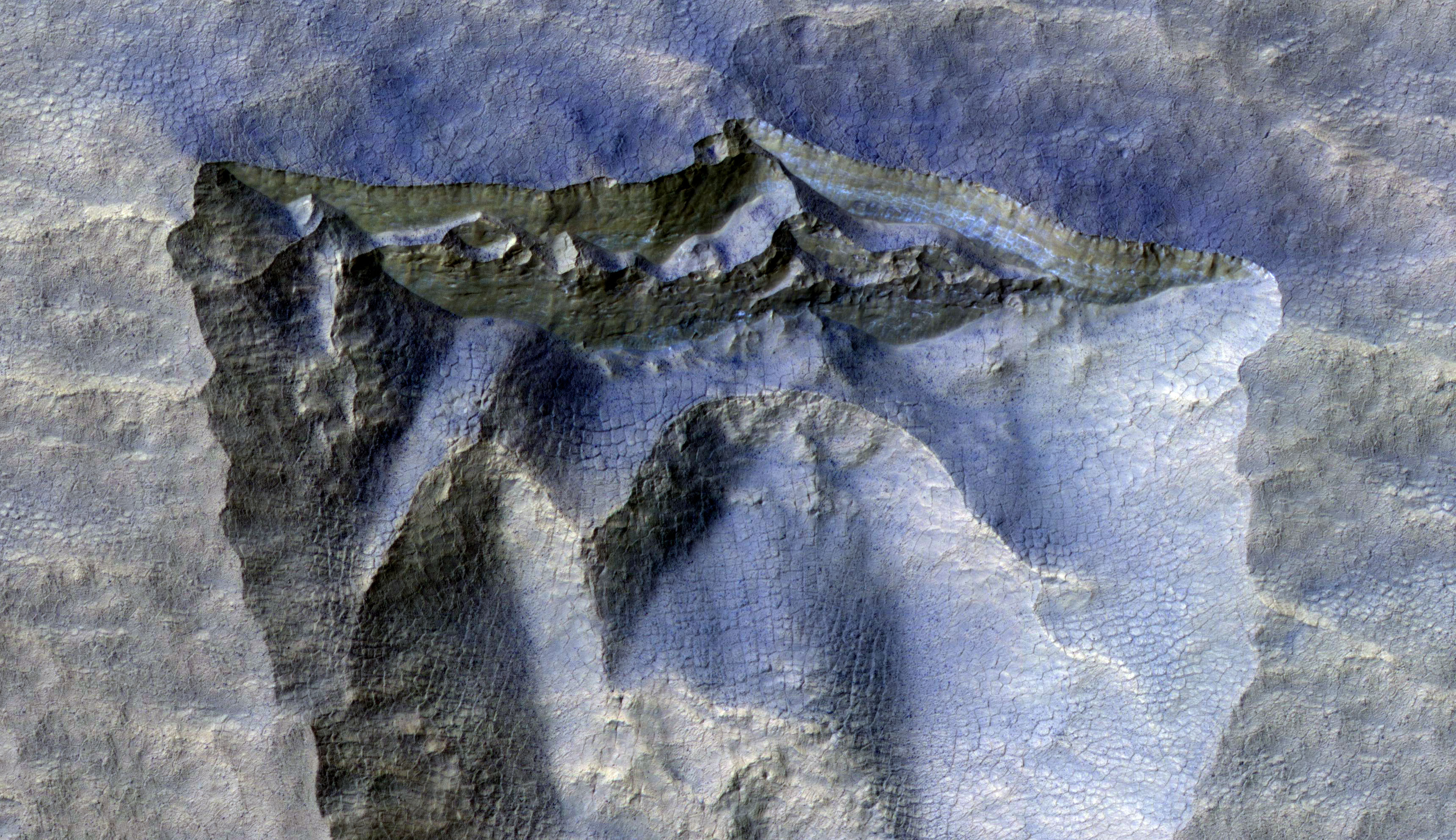
Cool image time! The photo to the right, rotated, cropped, and reduced to post here, was taken on October 2, 2022 by the high resolution camera on Mars Reconnaissance Orbiter (MRO). It shows a cluster of craters filled with ripple dunes.

The color strip tells us something [pdf] about the surface materials here. The reddish-orange in the craters is thought to be dust. The greenish terrain above the craters is likely coarse rock or bedrock, covered with a veneer of dust.

There is no ice here, just dust that over time has become trapped in the craters and cannot escape. And though there is also dust on the surrounding terrain, there is not that much. The craters themselves are likely very ancient, based on their shape and the eroded condition of their rims.

» Read more

1 comment

Drainage out of a Martian crater

Drainage out of a Martian crater
Click for full image.

Today’s cool image to the right, rotated, cropped, reduced, and sharpened to post here, not only gives us another example of a Martian geological feature that is unique to Mars and whose origins are not yet understood, it also shows what appears to have once been a lake-filled crater that over time drained out to the east through a gap.

This picture was taken on October 14, 2022 by the high resolution camera on Mars Reconnaissance Orbiter (MRO). The inexplicable geology is called brain terrain, and it fills the floor of the crater on the picture’s left side. The rim shows a gap, from which a meandering channel continues downhill to the east. The lake inside the crater might not have been liquid water, but ice. The channel might not have been formed by flowing water, but by a glacial flow downhill.

What makes this glacial evidence especially interesting is that it is located in a very different part of the Martian mid-latitudes.
» Read more

1 comment

The soft icy Martian northern lowland plains

The soft icy Martian northern lowland plains
Click for full image.

In a cool image post last week, I noted that the near surface “ice sheets in the northern lowland plains are never … smooth, even if well protected.” The picture to the right, cropped, reduced, and sharpened to post here, provides an excellent example. It was taken on November 2, 2022 by the high resolution camera on Mars Reconnaissance Orbiter (MRO).

It is winter, and the sunlight is coming from the southwest, only 27 degrees above the horizon. The mound on the left is soft, while the depression on the upper right appears to have sand dune ripples sitting on top of a flat glacial mound. This depression may be an eroded crater (no upraised rim) or it could be a sink caused by the sublimation of the near surface ice.

Everywhere else the flat plains are stippled with small knobs.

The overview map below provides more context.
» Read more

0 comments
1 38 39 40 41 42 90