A Martian bear!

A Martian bear!
Click for original image. Full image here.

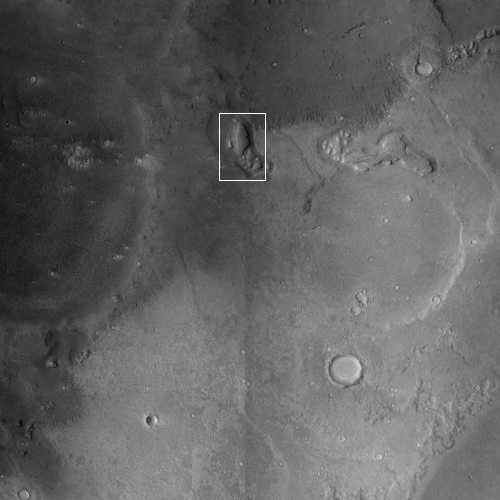
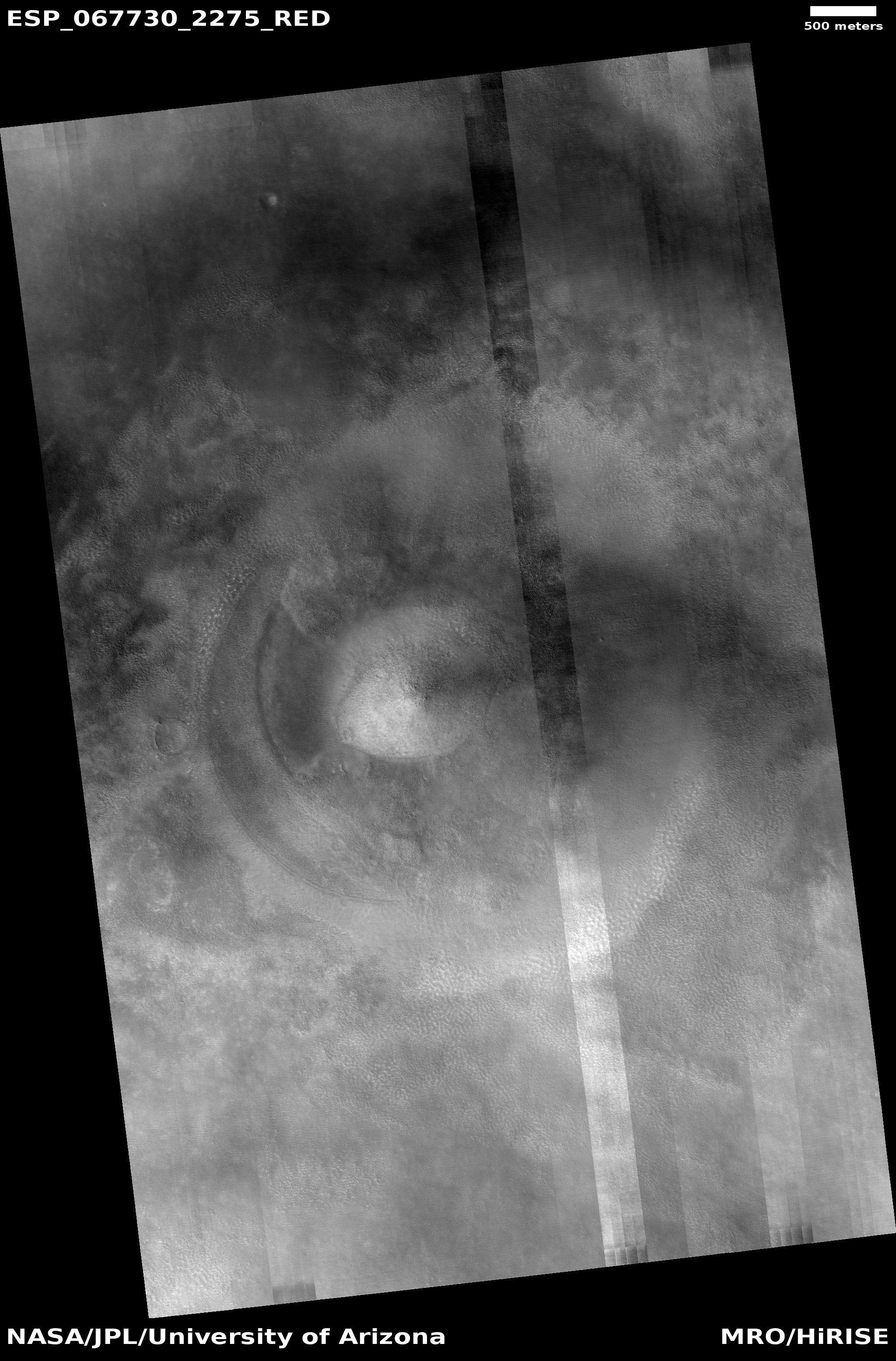
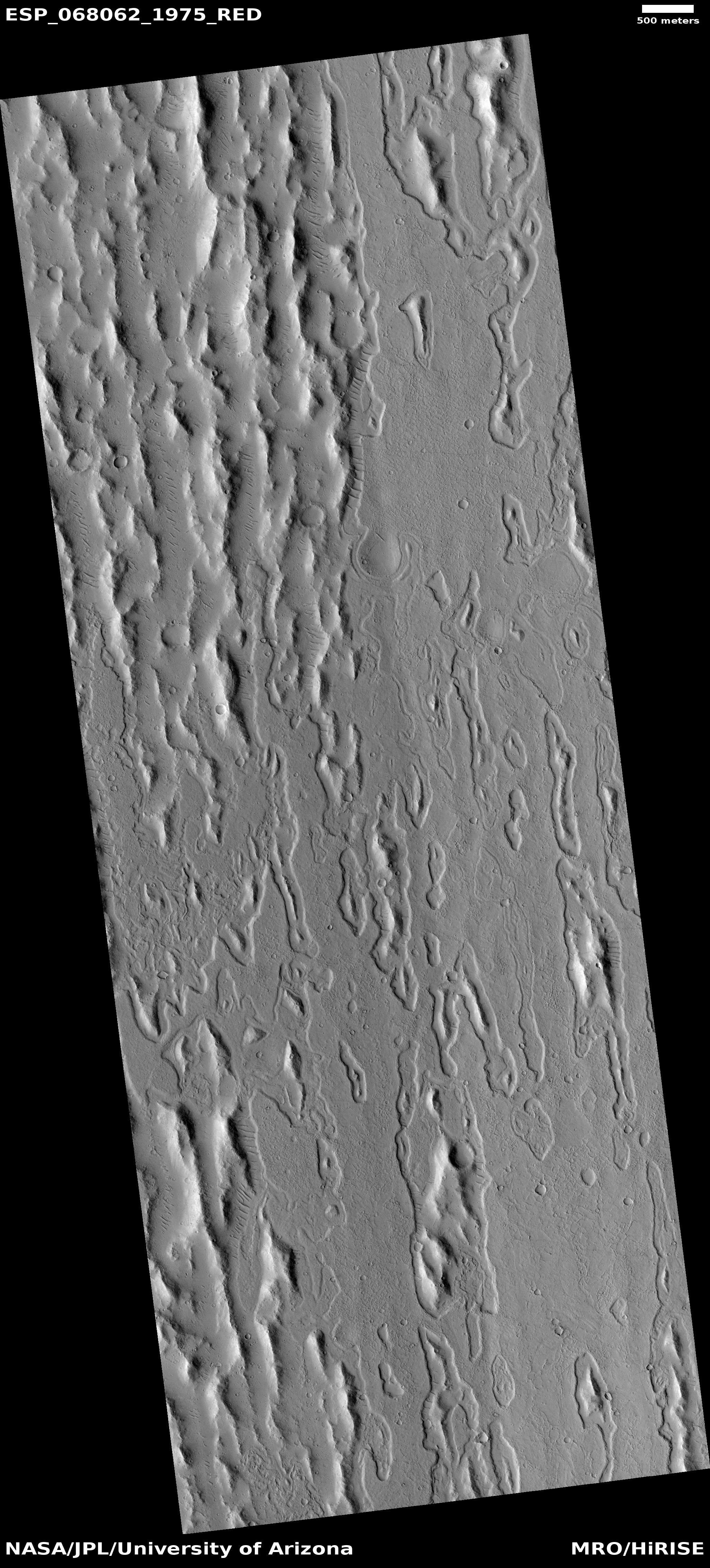
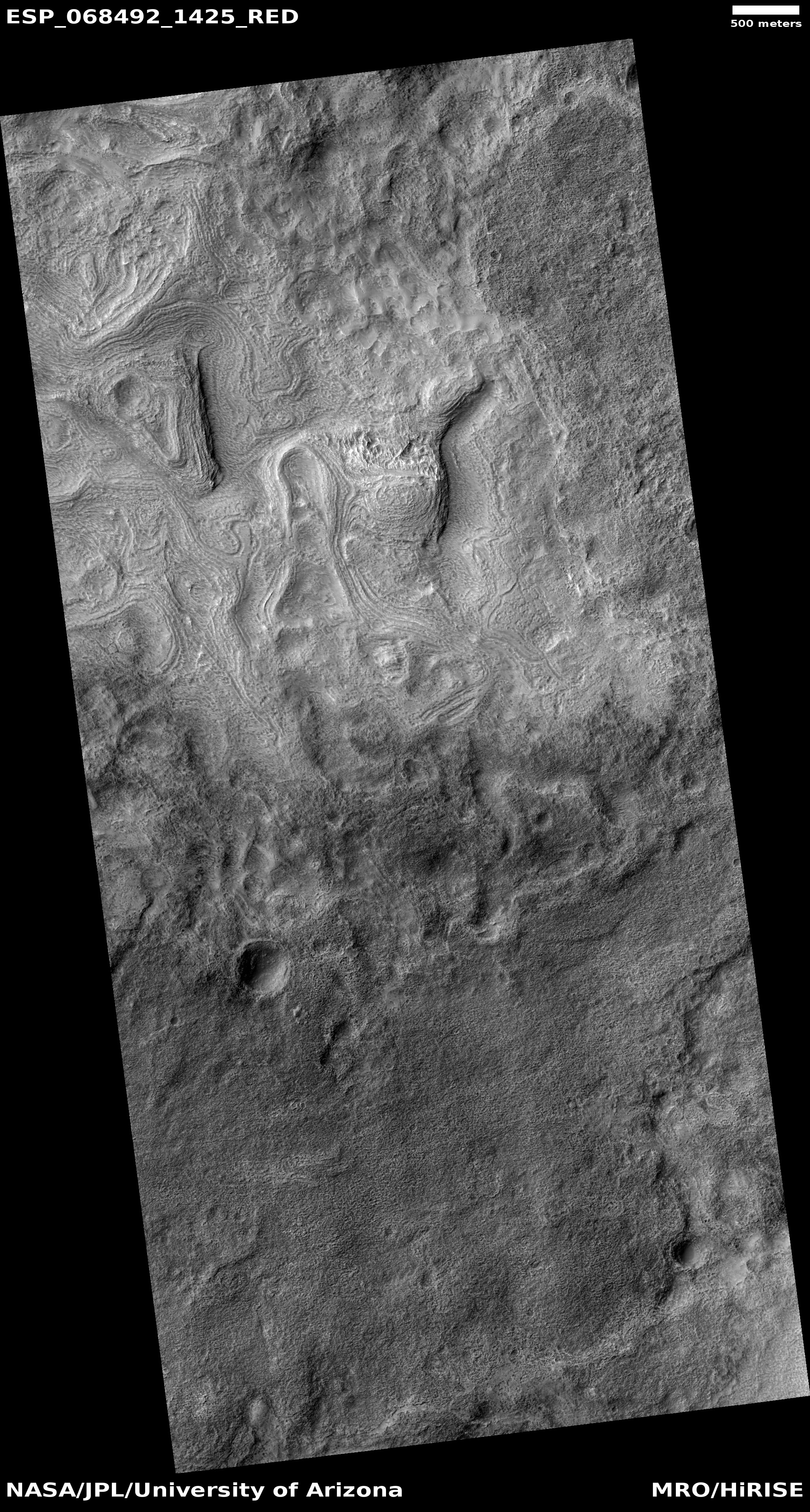
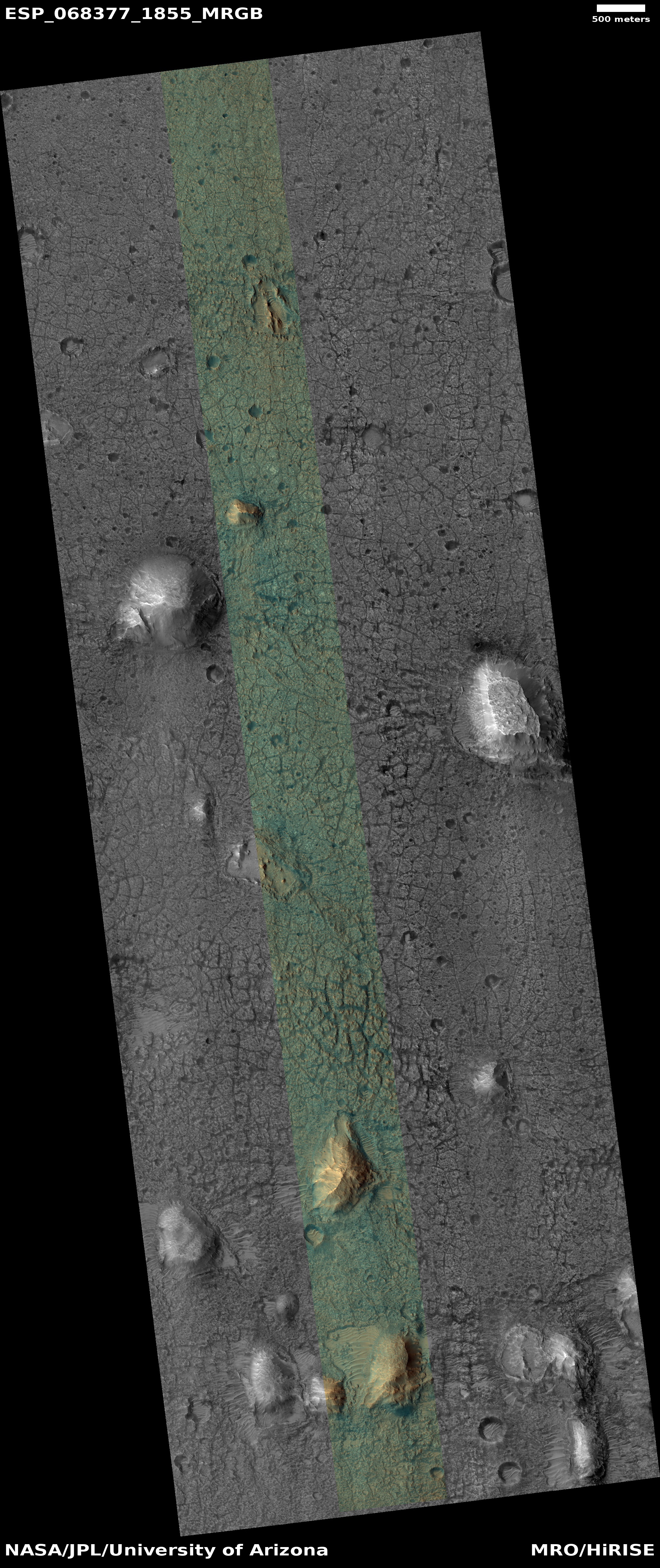
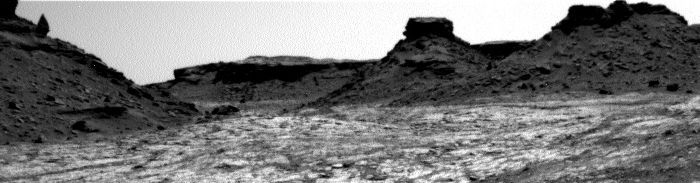
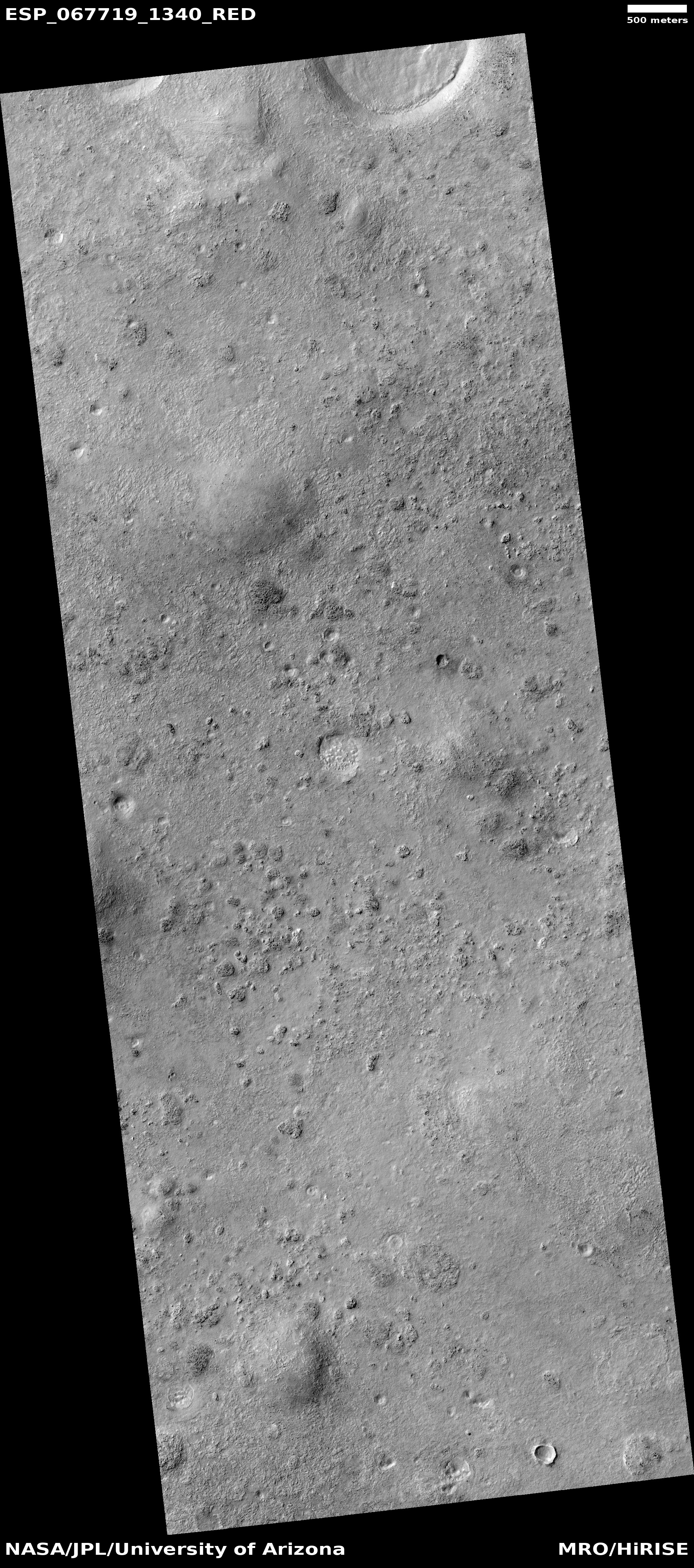
Silly image time! Today the science team for the high resolution camera on Mars Reconnaissance Orbiter posted the photo to the right, which I have cropped, reduced, and annotated to post here. It was taken on December 12, 2022, and was rotated so that north is to the right in order to make its resemblance to a bear’s face obvious. As noted in the caption by Alfred McEwen of the Lunar & Planetary Laboratory in Arizona:

There’s a hill with a V-shaped collapse structure (the nose), two craters (the eyes), and a circular fracture pattern (the head). The circular fracture pattern might be due to the settling of a deposit over a buried impact crater. Maybe the nose is a volcanic or mud vent and the deposit could be lava or mud flows?

Maybe just grin and bear it.

If you have red-green glasses you can see a 3D anaglyph of this image here. The feature itself is located in the southern cratered highlands of Mars at 41 degrees south latitude, so the presence of near surface ice that would cause a mud volcano is definitely possible.

7 comments

Lucy team adds 10th asteroid to the spacecraft’s tour

Lucy's route through the solar system
Lucy’s route through the solar system

The Lucy science team has now added a tenth asteroid to the spacecraft’s tour of the solar system, planning its route so that it will pass within 280 miles on November 1, 2023.

The Lucy mission is already breaking records by planning to visit nine asteroids during its 12-year tour of the Jupiter Trojan asteroids, which orbit the Sun at the same distance as Jupiter. Originally, Lucy was not scheduled to get a close-up view of any asteroids until 2025, when it will fly by the main belt asteroid (52246) Donaldjohanson. However, the Lucy team identified a small, as-yet unnamed asteroid in the inner main belt, designated (152830) 1999 VD57, as a potential new and useful target for the Lucy spacecraft.

The asteroid is about 2,300 feet wide. The primary goal of this visit however will be engineering, testing Lucy’s new method of tracking an object as the spacecraft flies past. On the map to the right the dots along Lucy’s path indicate the asteroids to be visited.

0 comments

A dry lakebed on Mars?

Evidence of a past lake in a crater on Mars
Click for original image.

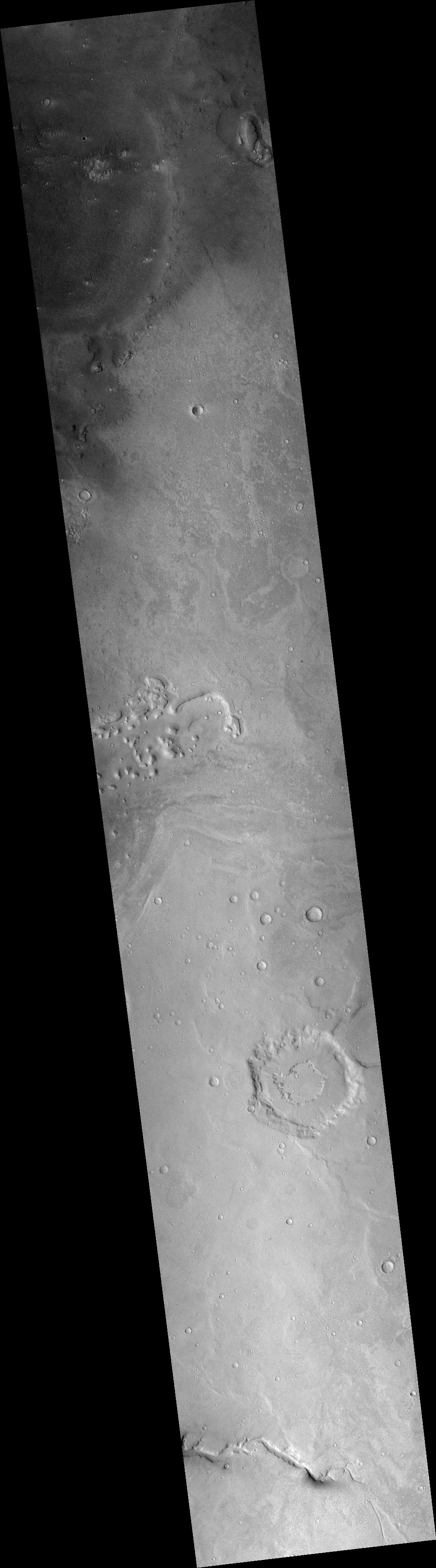
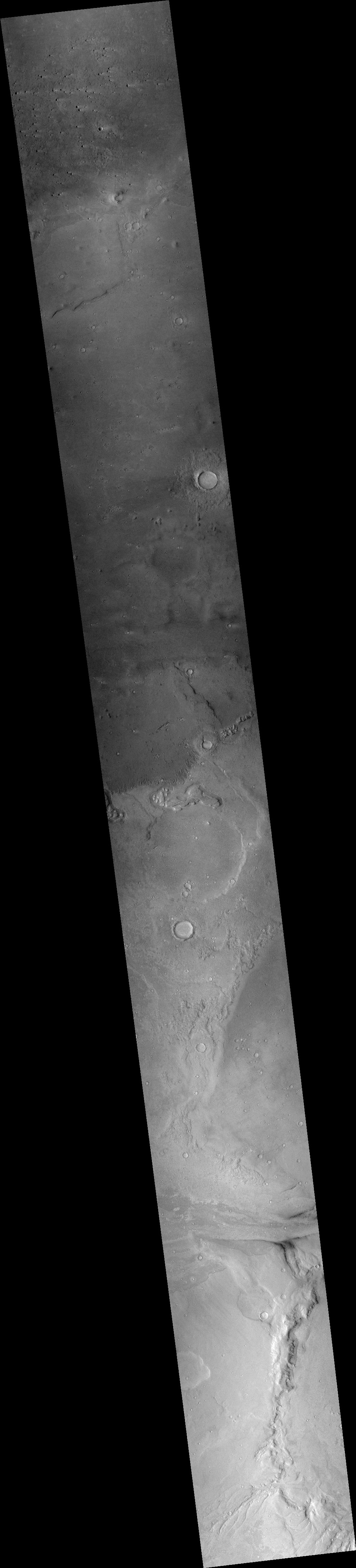
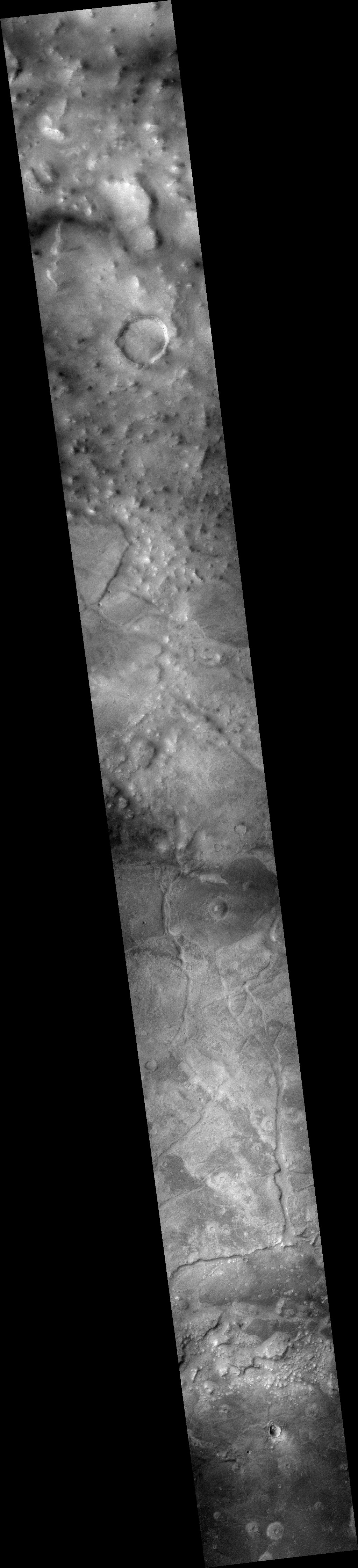
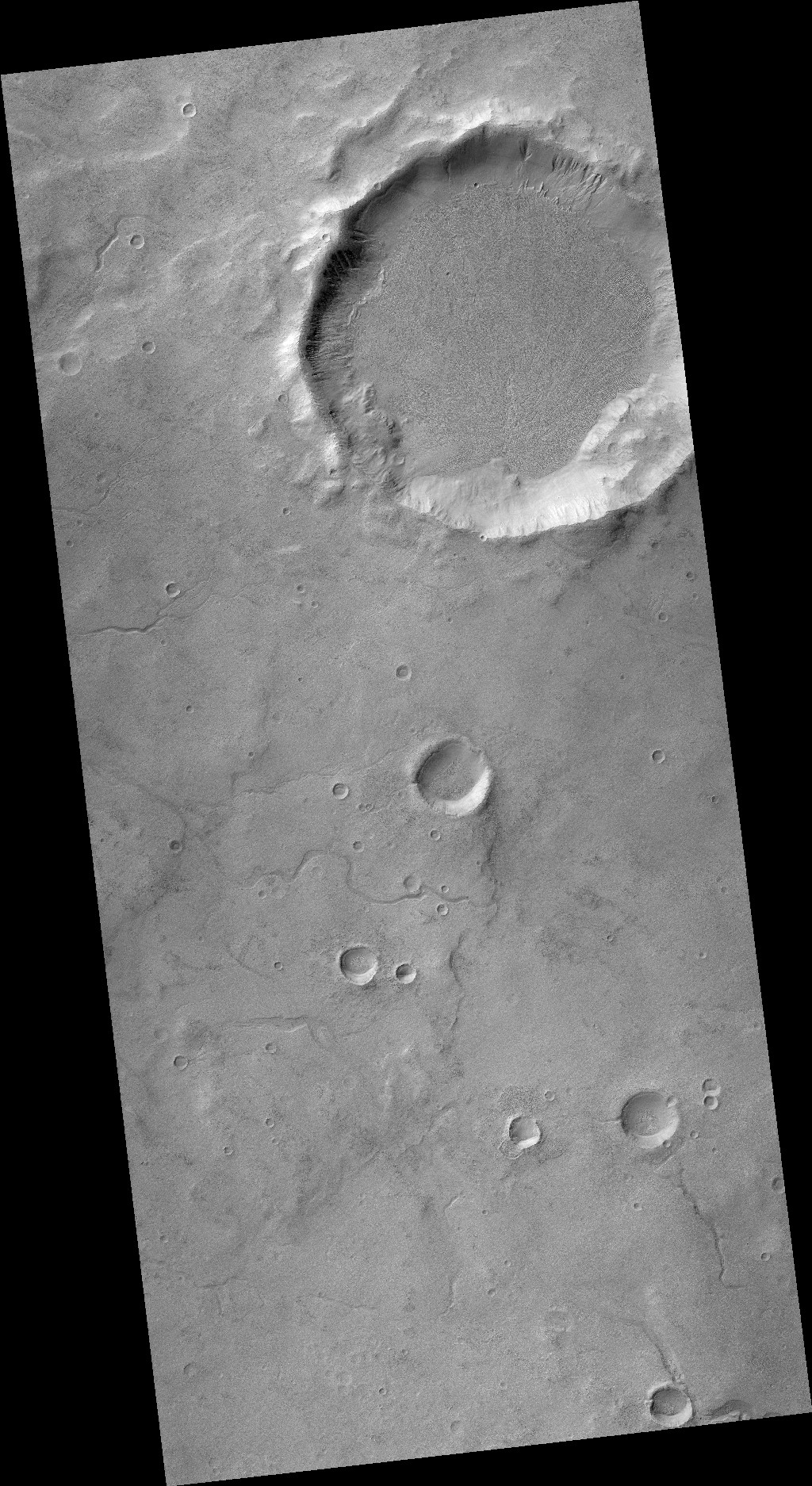
Today’s cool image illustrates in some ways the uncertainty of science. The photo to the right, rotated, cropped, reduced, and sharpened to post here, was taken on December 1, 2022 by the high resolution camera on Mars Reconnaissance Orbiter (MRO). The science team intriguingly labeled it “Small Candidate Lake Deposit Downstream of Alluvial Fan.” I am not sure what they consider that lake deposit in the full image, so I have focused on the area of stucco-like ground, which resembles bedrock that has been corroded by some water process.

This area is just to the east of the central peaks of an unnamed 25-mile-wide crater in the southern cratered highlands. Many of the craters in this region are believed by scientists to have once harbored lakes formed by run-off from the glaciers that once existed on the craters’ inner rim. In this case it appears this stucco area is the head of an alluvial fan, coming down from the crater’s central peaks. You can see its beginning in this MRO high resolution image of the central peaks, taken in November 2016. As defined geologically,

An aluvial fan is an accumulation of sediments that fans outwards from a concentrated source of sediments, such as a narrow canyon emerging from an escarpment. They are characteristic of mountainous terrain in arid to semiarid climates, but are also found in more humid environments subject to intense rainfall and in areas of modern glaciation.

In this case the terrain is now arid, but shows evidence it once was icy wet.
» Read more

0 comments

Curiosity’s drill fails for the fourth time to drill into the marker band layer on Mt Sharp

The fourth attempt yesterday to use Curiosity’s drill to drill into the marker band layer on Mount Sharp once again was unable to drill down deep enough to obtain a sample.

Despite giving it the “old college try,” Curiosity’s attempt to drill into the Marker Band at the “Encanto” site did not reach sampling depth. Because other rocks around the rover look similar to “Encanto” and are likely also too hard to drill, the Science Team decided to convert the plan to a “Touch and Go.”

Although the Science Team is disappointed to leave this Marker Band location without a sample, Curiosity will use MAHLI, APXS, and ChemCam LIBS to analyze the chemistry and texture of the shallow “Encanto” drill hole and tailings, targeting the intriguing light-toned material exposed in the wall of the drill hole. We may see another location in the Marker Band worth sampling in the near future, but even if we don’t, there will certainly be many more exciting drilling opportunities to look forward to as Curiosity continues her climb up Mt. Sharp!

This drilling difficulty is not a surprise. The marker band is a very distinct flat layer that is seen at about the same elevation on all sides of Mount Sharp. It flatness suggests it is resistant to erosion, which also suggests its material will be hard. The inability of Curiosity’s drill to penetrate it only confirms this.

It also makes getting a drill sample to test even more intriguing. I suspect that the science team is going to try a few more times as it travels forward across the band, as indicated by the red dotted line in the panorama below.
Panorama as of January 17, 2023
Click for full image.

3 comments

New evidence suggests the Earth’s inner core no longer rotates faster than the planet’s outer layers

The uncertainty of science: The same scientists who in the late 1990s thought they had detected evidence that the Earth’s inner core rotates faster than the planet’s mantle now say that this faster rotation ceased sometime around 2009.

In 1996, Song and another researcher reported studying earthquakes that originated in the same region over three decades, and whose energy was detected by the same monitoring station thousands of kilometres away. Since the 1960s, the scientists said, the travel time of seismic waves emanating from those earthquakes had changed, indicating that the inner core rotates faster than the planet’s mantle, the layer just beyond the outer core.

…Now, Yang and Song say that the inner core has halted its spin relative to the mantle. They studied earthquakes mostly from between 1995 and 2021, and found that the inner core’s super-rotation had stopped around 2009. They observed the change at various points around the globe, which the researchers say confirms it is a true planet-wide phenomenon related to core rotation, and not just a local change on the inner core’s surface.

It is important to note that there has not been a consensus on this data, that some scientists even doubt the super-rotation ever existed. The data itself is sparse enough and includes enough gaps to allow for this disagreement, which also means this new conclusion is also uncertain.

12 comments

Martian crater with mound of ice? mud? hardened sand?

Crater with mound
Click for full image.

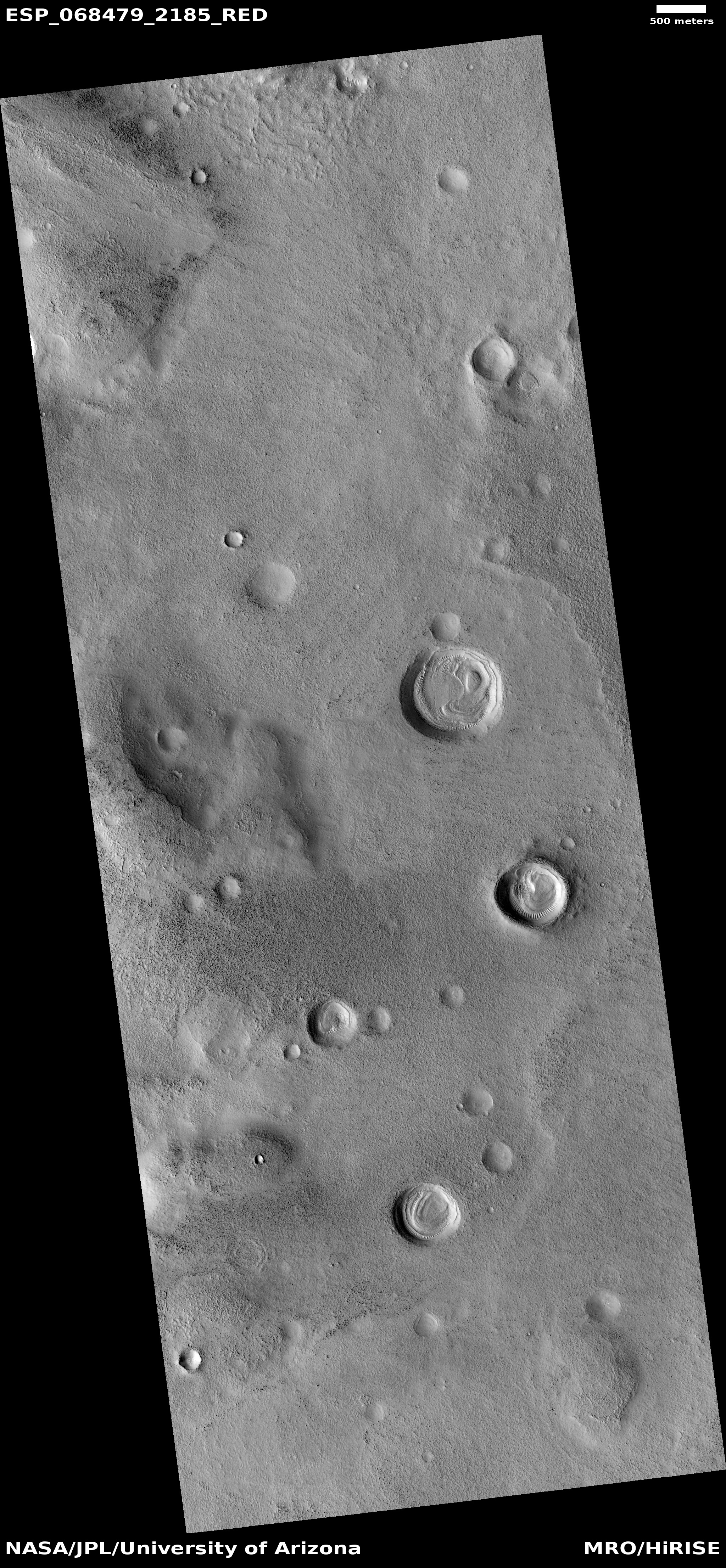
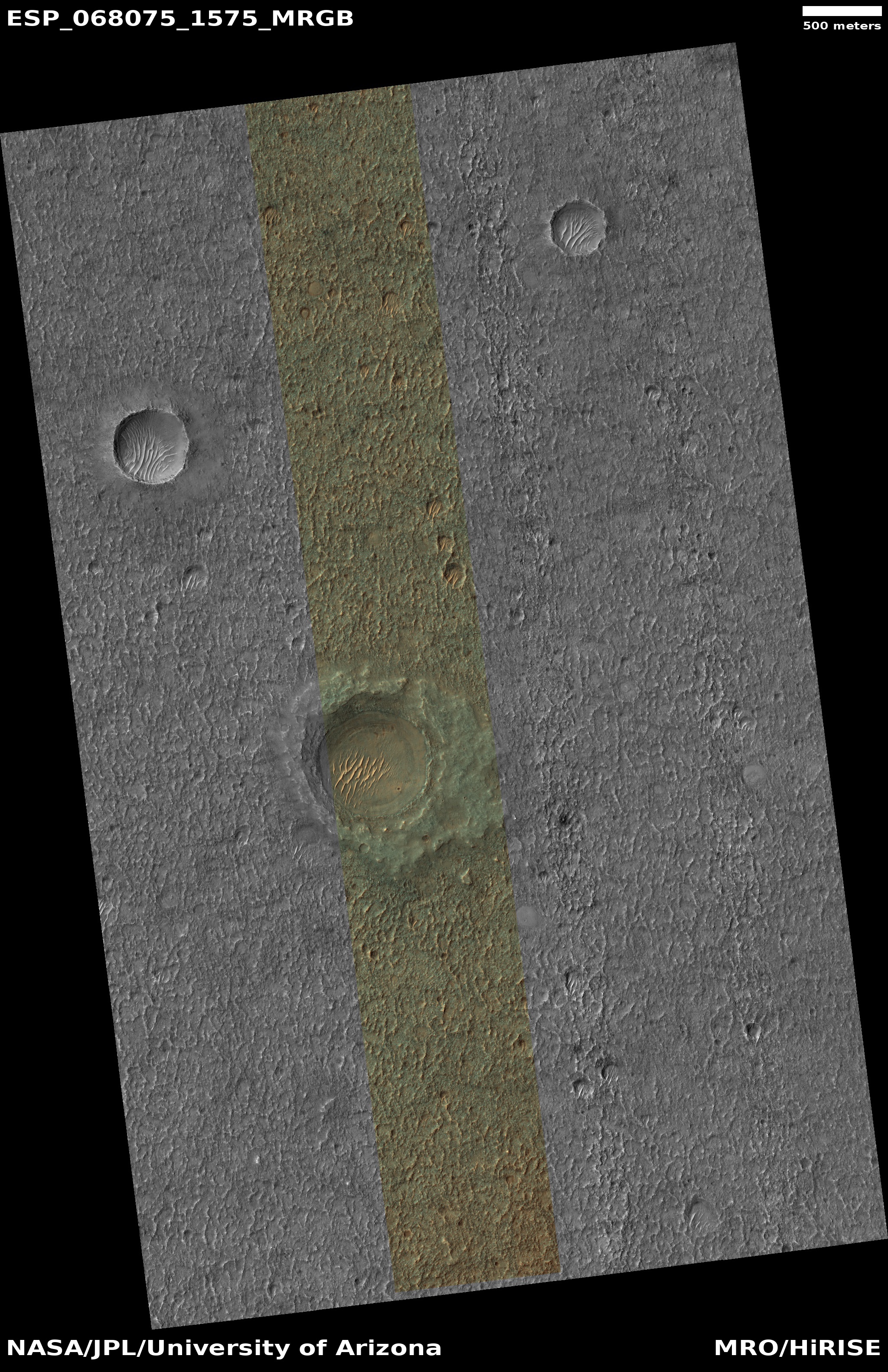
Cool image time! The photo to the right, cropped to post here, was taken on October 31, 2022 by the high resolution camera on Mars Reconnaissance Orbiter (MRO). It shows a small 4,000-foot-wide crater that is practically filled with a smooth, almost perfectly spherical mound, with the rest of the crater interior filled with sand dunes and what appears to be glacial debris.

Is that mound also glacial debris, covered with a layer of dirt and dust to protect it? If so, one wonders how the ice ended up in this shape. There are other craters with similar mounds in this region, all suggesting glacial debris but with the same question. Craters with lots of near surface ice in this region more often have a squishy blobby look.

Is the mound instead possibly mud, expressing the existence of a mud/ice volcano? If so, it shows no central pit or caldera, which is typical of such things.

Is it hardened sand? Martian dust that gets blown into craters generally gets trapped there, building up over time. If so, however, why does it have a smooth almost perfectly rounded shape? The ripple sand dunes surrounding it are more like what you would expect.

The small craters on the mound also tell us that it is hardened and old, no matter what it is made of.
» Read more

1 comment

The youngest flood lava on Mars, flowing past a crater

Crater with lava flow
Click for full image.

Cool image time! The photo to the right, rotated, cropped, reduced to post here, was taken on December 3, 2022 by the high resolution camera on Mars Reconnaissance Orbiter (MRO).

The title given to this image by the MRO science team is “Upstream Edge of Crater in Athabasca Valles.” The crater itself is a pedestal crater, uplifted from the surrounding terrain because it was more resistant to erosion.

The material to the east of the crater’s rim definitely appears to have flow characteristics, but is it wet mud, glacial ice, or lava?

To figure this out we need as always some context. The latitude, 8 degrees north, immediately eliminates mud or glacial material. This location is in the dry equatorial regions of Mars, where no near surface ice has yet been found. Thus, the flow features are likely hardened lava.

What direction however was the flow? Was it flowing to the north, widening as it moved past the pedestal crater? Or was it to the south, narrowing as it pushed past that crater? To answer this question we need to widen our view.
» Read more

0 comments

Ingenuity completes 40th flight

Overview map
Click for interactive map.

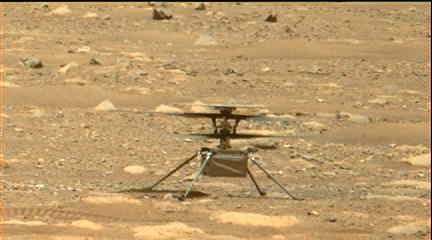
As predicted by the Ingenuity engineering team on January 17, 2023, the Mars helicopter yesterday completed its 40th flight, flying approximately 92 seconds and 584 feet to the northwest to place it at the head of the hollow that Perseverance will travel to climb up onto the delta that flowed into Jezero Crater sometime in the past.

The green dot on the overview map to the right shows the helicopter’s position, post flight. The blue dot shows Perseverance’s present position. The red dotted line indicates the rover’s future route.

At the moment, only eleven images have been returned from the flight, and these only show the first 20 seconds of flight. The flight however has been added to the helicopter’s flight log, which shows that Ingenuity actually flew about 23 feet farther and 7 seconds longer than expected. This extra distance was likely because the helicopter needed to find a good landing site, using its upgraded software that allows it to fly over rougher terrain.

1 comment

Machete Mesa on Mars

Machete Mesa on Mars
Click for full image.

Cool image time! The picture to the right, cropped to post here, was taken on November 30, 2022 by the high resolution camera on Mars Reconnaissance Orbiter (MRO). It shows a variety of ridges in a region of Mars called Arabia Terra, which is also the largest transition zone between the Martian southern cratered highlands and the northern lowland plains.

While this picture illustrates some nice geological facts about Mars (see below), I post it simply because of the dramatic sharpness of the ridge on top of the mesa, which I guess is several hundred feet high, but only a few feet across, at most, at its peak. A hike along this ridgeline would be a truly thrilling experience, one that the future human settlers on Mars will almost certainly find irresistible. Put this location on your planned tourist maps of Mars. It will likely be an oft-visited site.
» Read more

2 comments

Curiosity climbs onto the Marker Band

Panorama as of January 17, 2023
Click for full image.

Overview map
Click for interactive map.

Curiosity’s exploration of the foothills of Mount Sharp continues. The panorama above, cropped, reduced, and annotated to post here, was taken on January 17, 2023 by the rover’s right navigation camera. It looks forward across the flat marker band terrain that the rover has been studying for the past few weeks.

From orbit, this marker band appears very smooth and flat, and is found in many places on the flanks of Mount Sharp, always at about the same elevation. The arrows in the overview map to the right mark several places near Curiosity where the band is evident. The blue dot marks Curiosity’s present location, the red dotted line its planned route, and the yellow lines indicate the approximate area covered by the panorama above. The distance across the marker band to the uphill slope is about 500 feet.

Now that Curiosity is on the marker band, it no longer looks smooth. Instead, it is a flat plain of many uneven paving stones interspersed with dust. While not as rough as the Greenheugh Pediment, which Curiosity had to retreat from because it was too hard on the rover’s wheels, the marker band is hardly the smooth soft terrain implied by the orbital images.

These paving stones have also proven difficult to drill into, with Curiosity’s drill already failing twice previously because the rock was too hard. That hardness should not be a surprise, however, as this layer’s flatness in many places shows its resistance to erosion.

As it crosses this wide section of the marker band the science team will obviously be looking for more candidate drill sites. Sooner or later one should work.

1 comment

The sea of dunes surrounding the Martian north pole

The sea of dunes surrounding the Martian north pole
Click for full image.

Cool image time! The photo to the right, rotated, cropped, and reduced to post here, was taken on December 5, 2022 by the high resolution camera on Mars Reconnaissance Orbiter (MRO). It shows a collection of wormlike dunes located in the giant sea of dunes that surrounds the Martian north pole ice cap.

North is to the top. The season when this picture was taken was northern winter. The Sun is barely above the horizon, only 8 degrees high, and shining from the southeast. Because it is winter it is also dust season, making the atmosphere hazy and thus making the light soft. No distinct shadows, except that the sides of the dunes facing away from the Sun are darkly shadowed.

The consistent orientation of the dunes suggests that the prevailing winds blow from the northeast to create the steep-sided alcoves. The wind however might not be the only factor to form these dunes.
» Read more

1 comment

A Martian river canyon?

A Martian river canyon?
Click for full image.

Today’s cool image highlights the biggest mystery of Mars that has baffled scientists since the first good pictures of its surface were taken in the early 1970s by the Mariner 9 orbiter. The picture to the right, rotated, cropped, reduced, and sharpened to post here, was taken on October 24, 2022 by the high resolution camera on Mars Reconnaissance Orbiter (MRO), and shows a very small segment of the 400-mile-long meandering canyon on Mars called Nigal Vallis. From the Wikipedia page:

The western half of Nirgal Vallis is a branched system, but the eastern half is a tightly sinuous, deeply entrenched valley. Nirgal Vallis ends at Uzboi Vallis. Tributaries are very short and end in steep-walled valley heads, often called “amphitheater-headed valleys.”

We can see one of those short tributaries on the image’s left edge. The overview maps below provide a wider view of this entire canyon.
» Read more

5 comments
1 57 58 59 60 61 157