Ice in the Martian equatorial region?

Global overview of ice on Mars

Glacial features in low latitude Martian crater

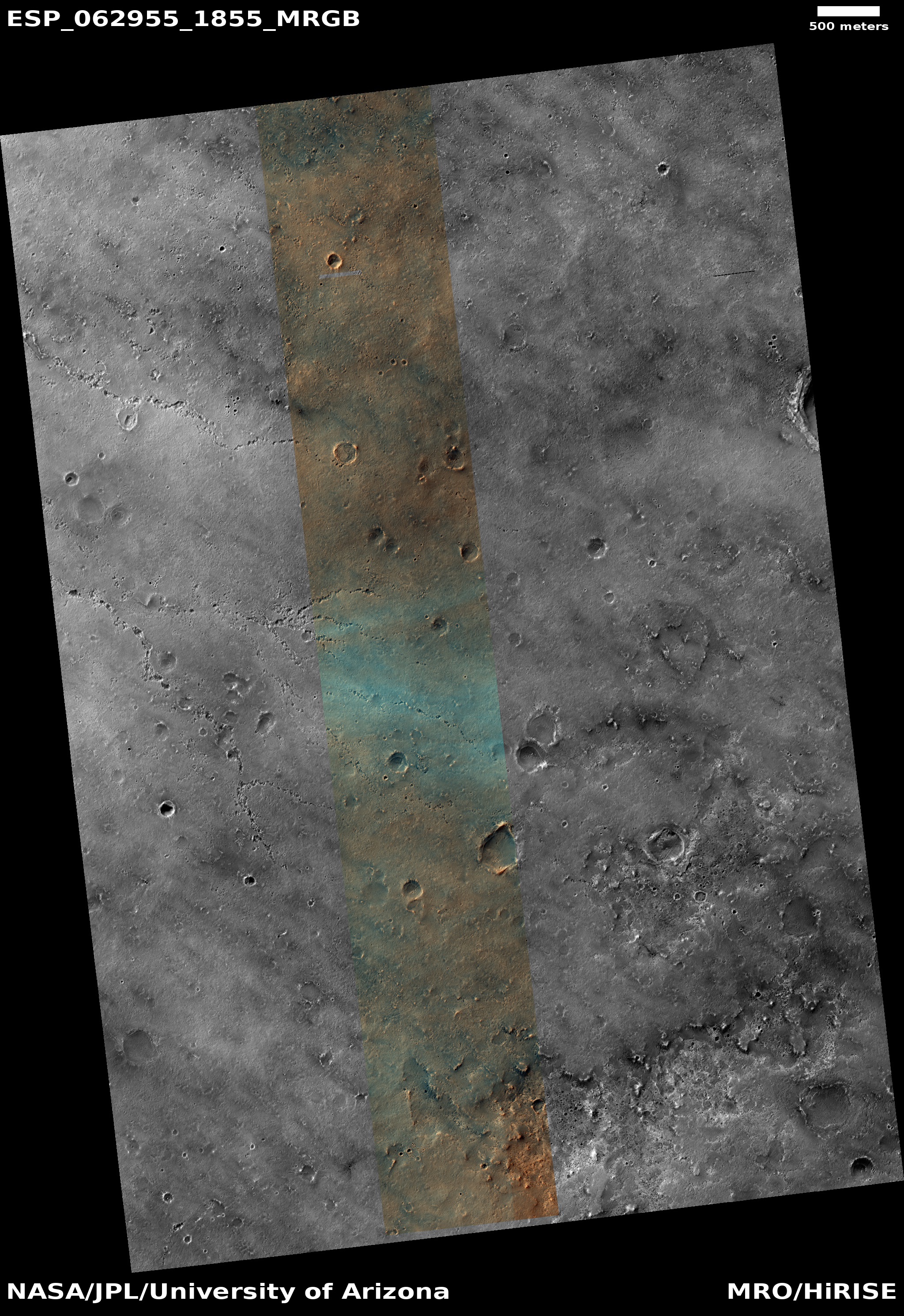
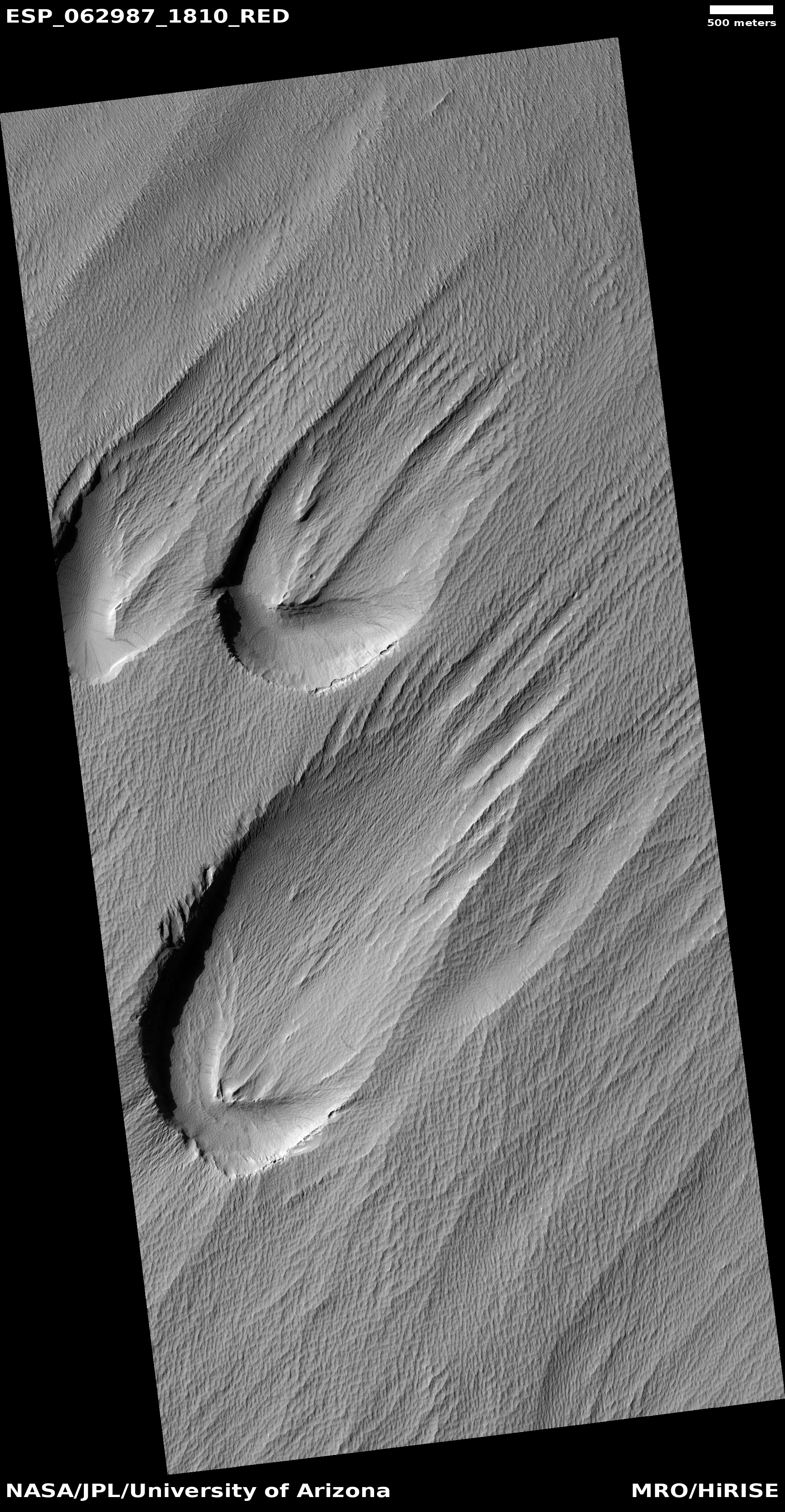
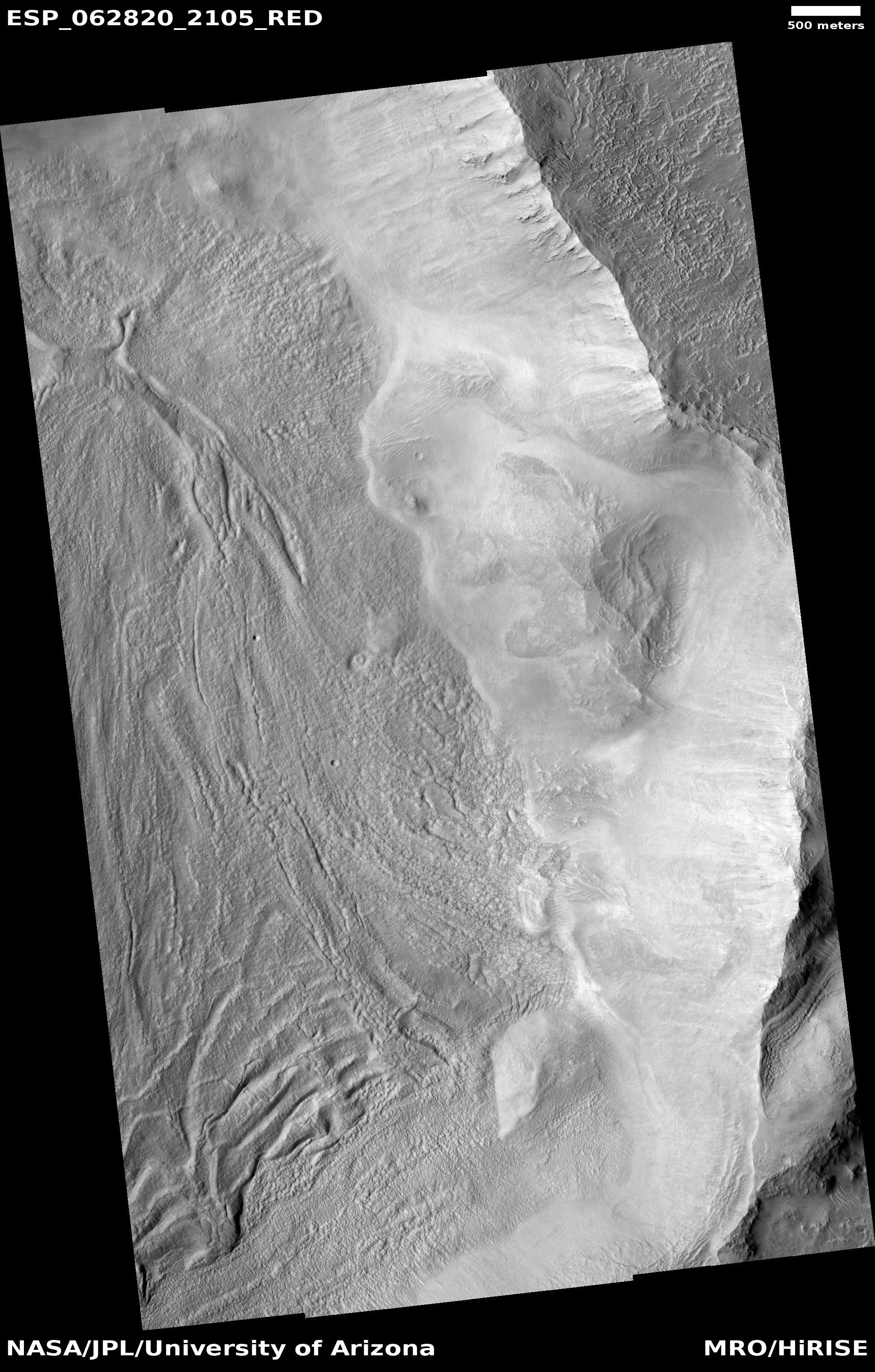
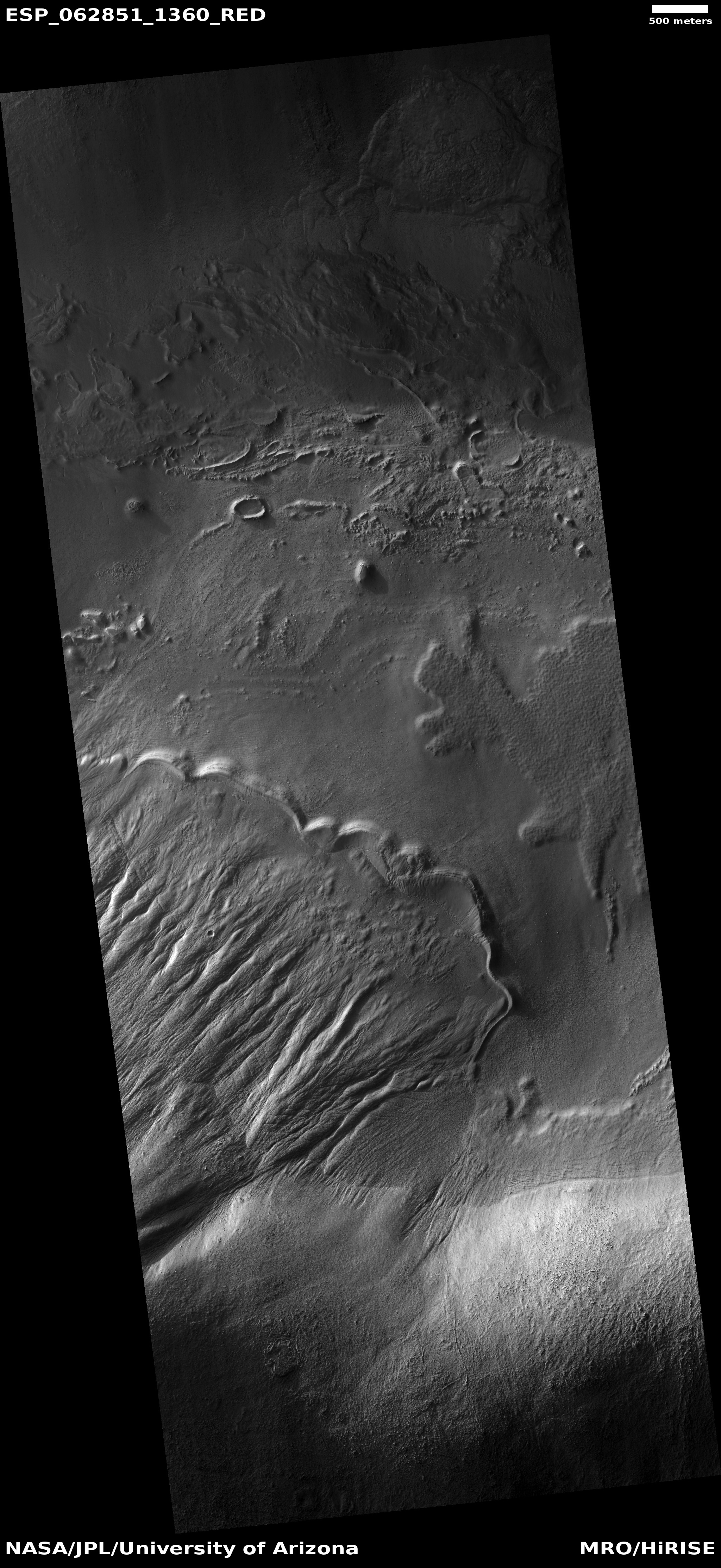
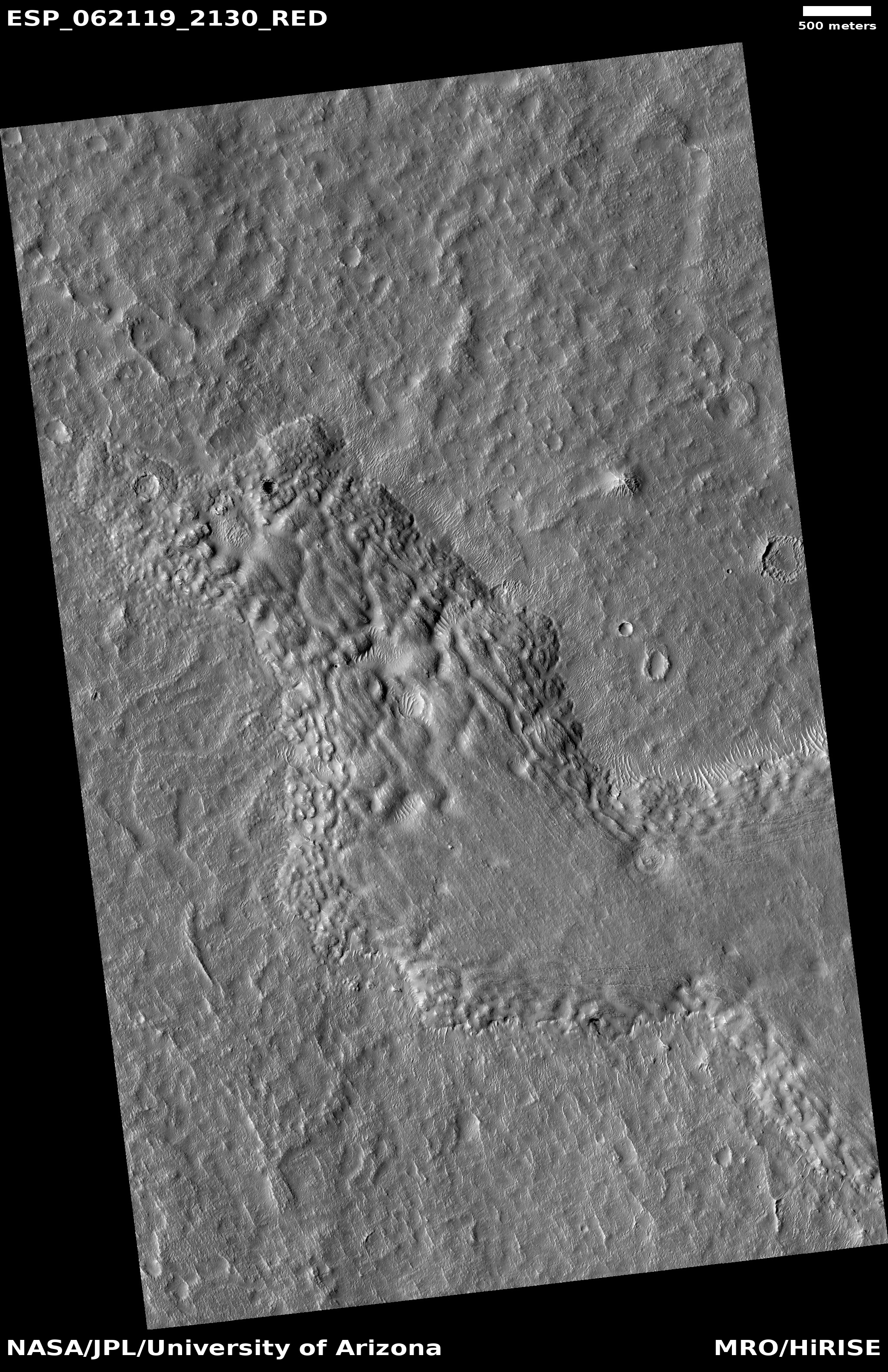
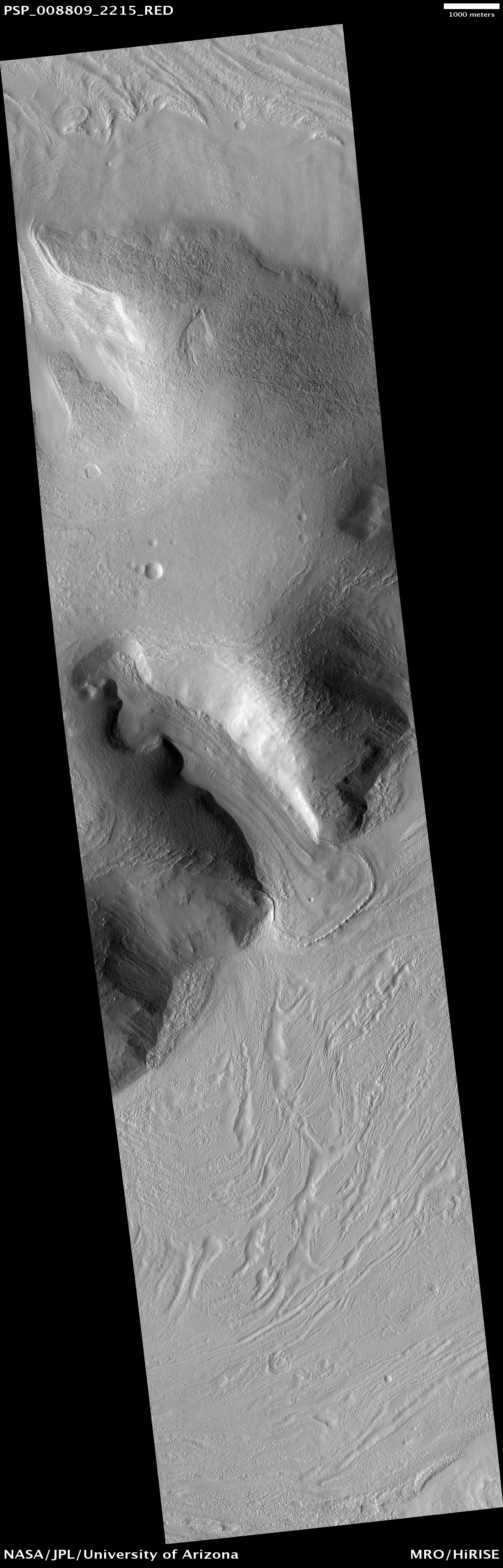
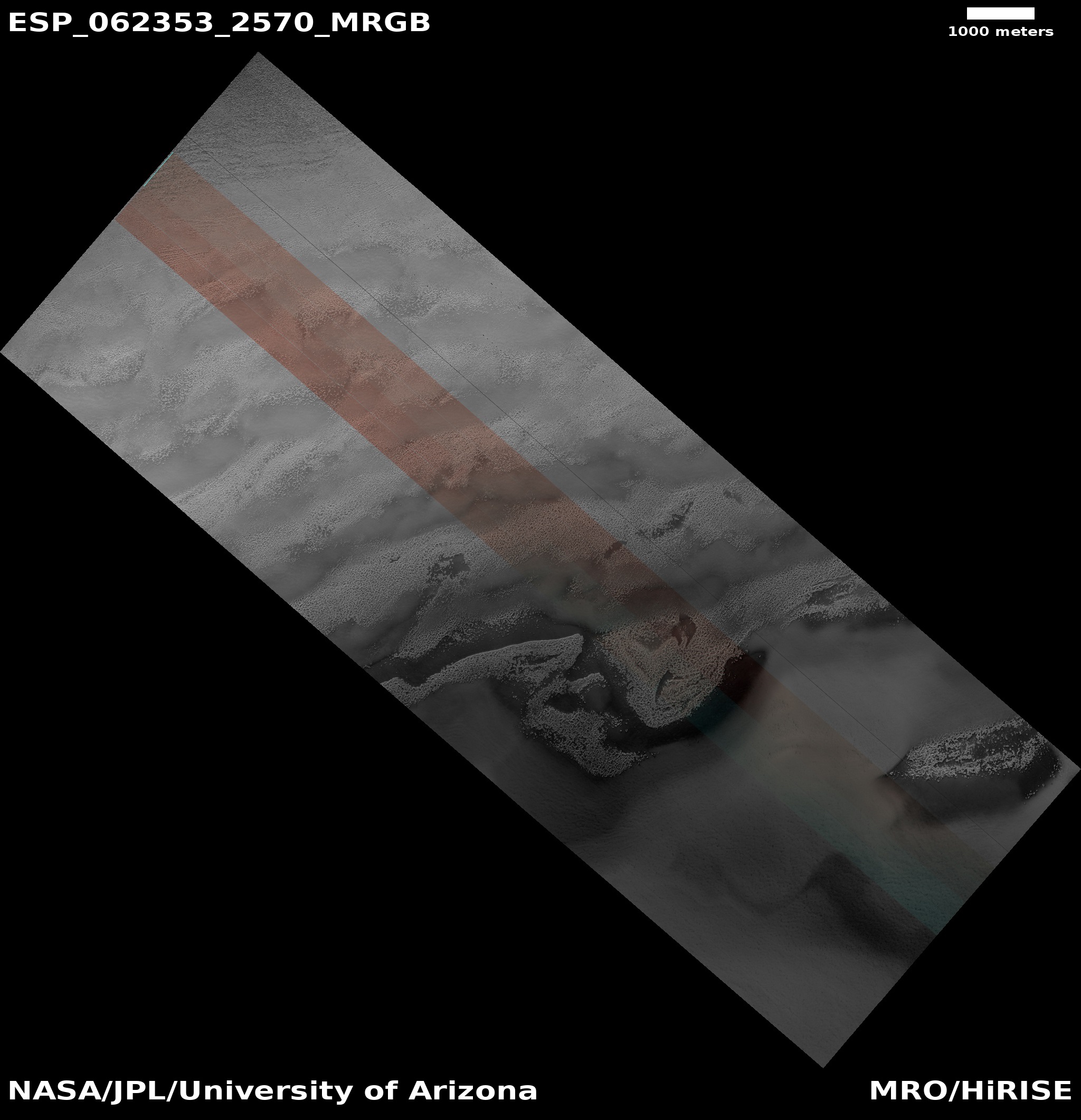
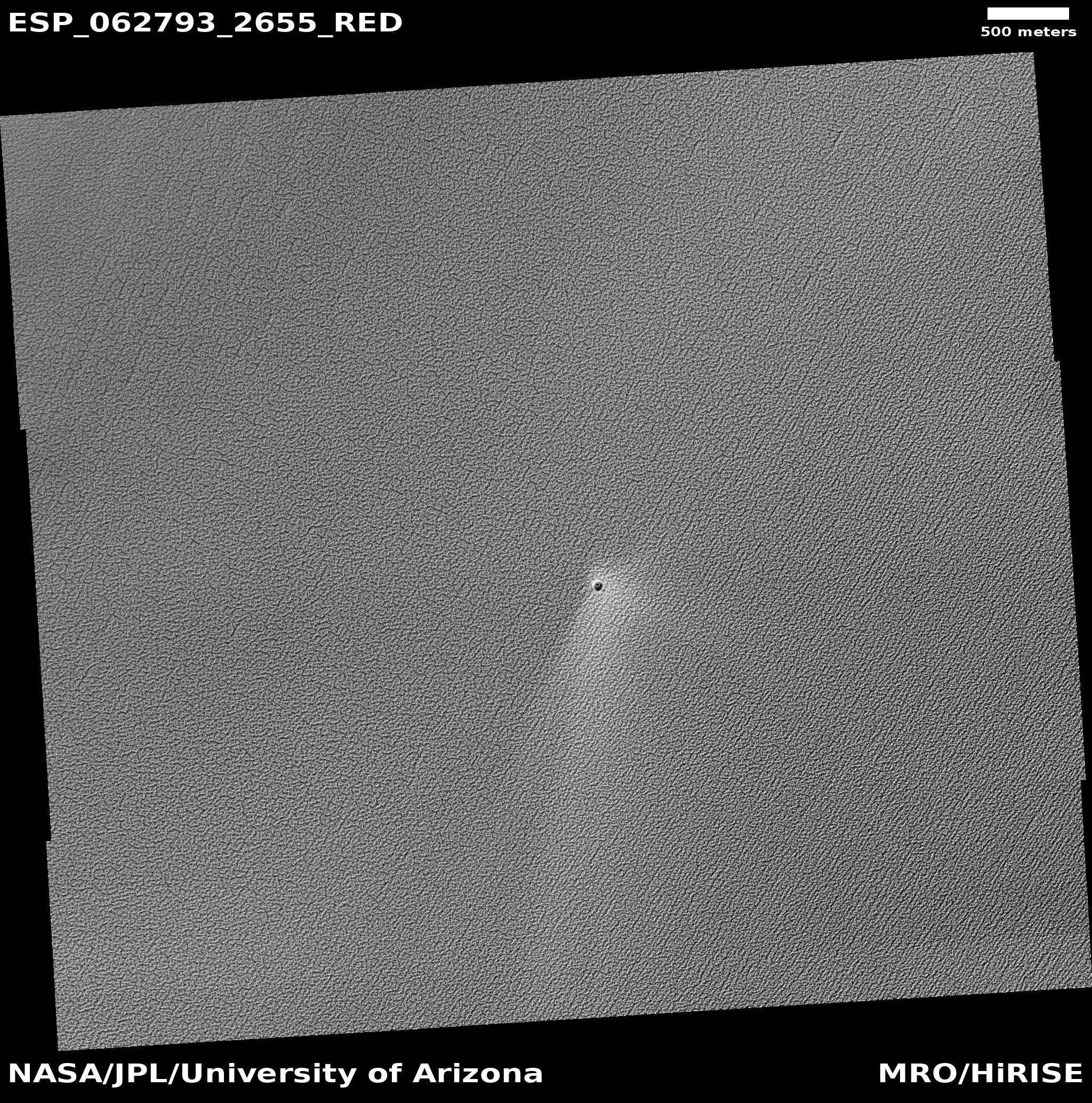
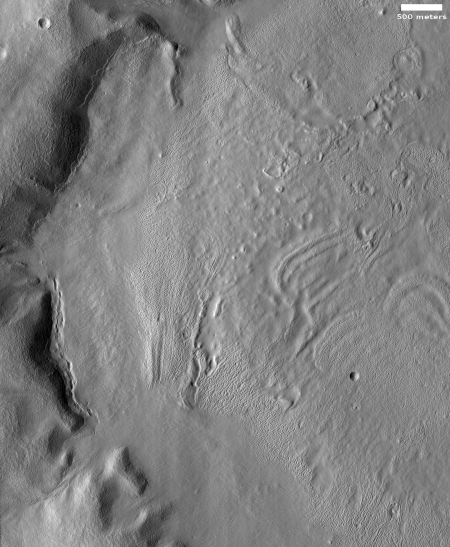
Today’s cool image to the right, rotated, cropped, and reduced to post here, is actually an older captioned image, published in 2017 by the science team for the high resolution camera on Mars Reconnaissance Orbiter (MRO). I missed its significance when it was first released. From the caption by Alfred McEwen of the Lunar & Planetary Laboratory in Arizona:

The material on the floor of this crater appears to have flowed like ice, and contains pits that might result from sublimation of subsurface ice. The surface is entirely dust-covered today. There probably was ice here sometime in the past, but could it persist at some depth?

This crater is at latitude 26 degrees north, and near-surface ice at this latitude (rather than further toward one of the poles) could be a valuable resource for future human exploration.

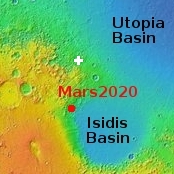
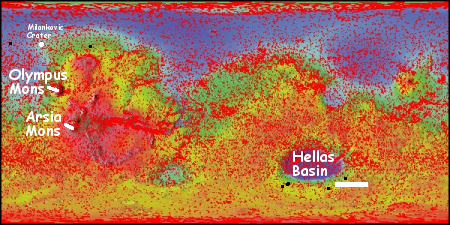
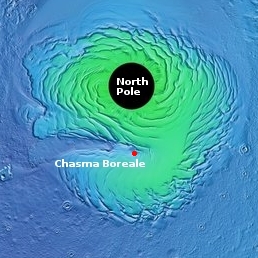
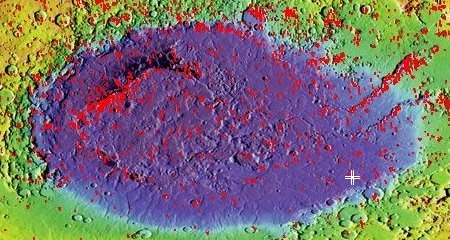
As shown in the global map of Mars above, this 26-mile-wide unnamed crater, marked by the black cross, is well inside the equatorial region 30 degrees north and south from the equator where almost no evidence of near surface ice has been found. Whenever I look at an image from MRO, if the picture appears to show ice or glacial features, its latitude is always 30 degrees or higher. If it does not, it is almost always in this equatorial region.

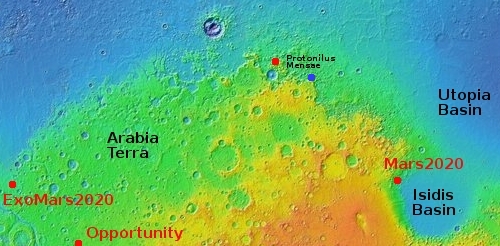
This crater however shows evidence of glacial features in its interior, but is far closer to the equator than normal. How could this be? It is possible that its high altitude, sitting in the southern cratered highlands, might have helped preserve its buried but near surface glacial features.

Regardless, as McEwen notes, its location closer to the equator is tantalizing, because it suggests that such ice could exist even in the equatorial regions, though buried and thus not detected by the instruments presently available in Mars orbit.

0 comments

Inverted Martian tadpole

Inverted Martian tadpole
Click for full image.

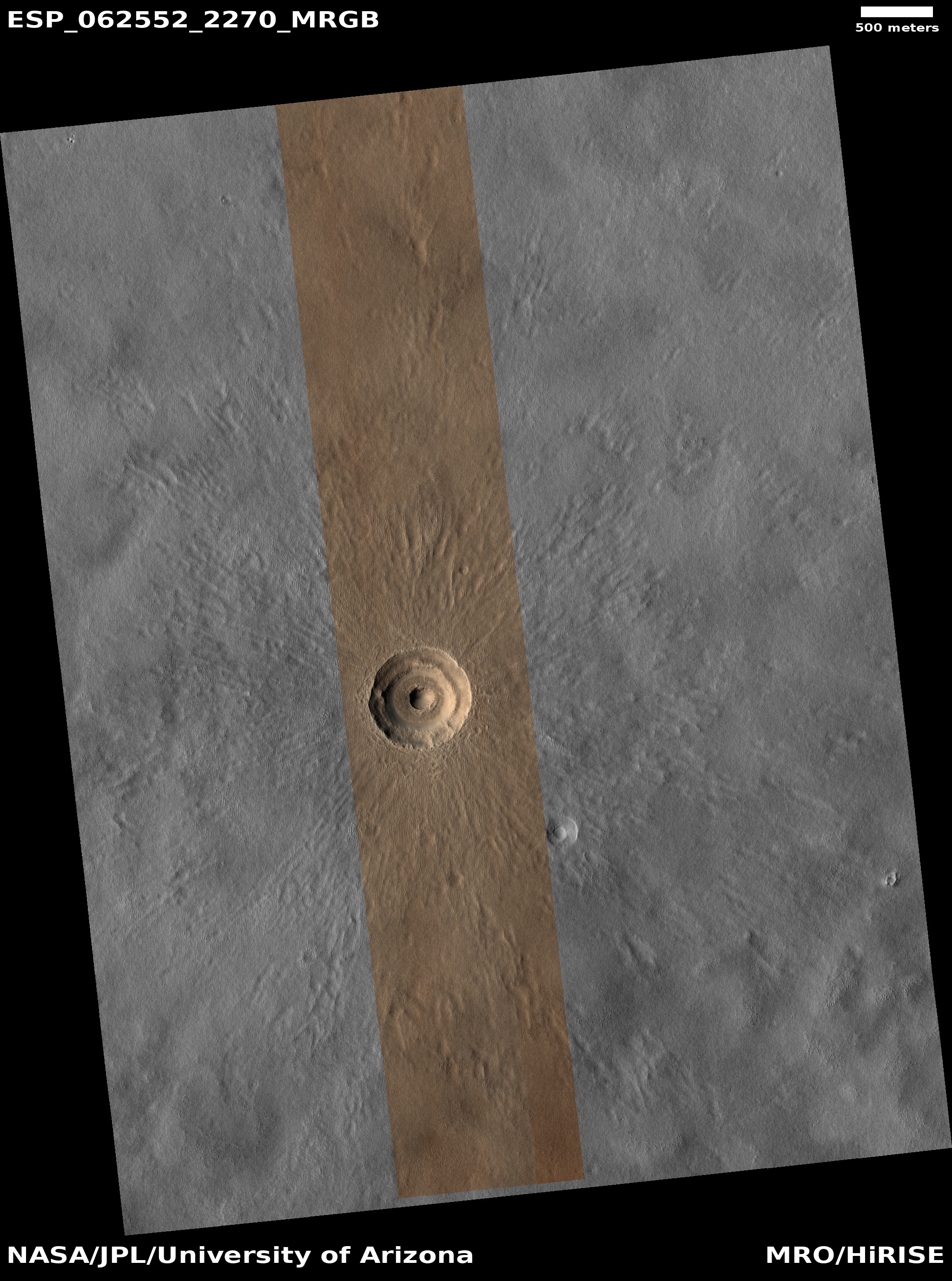
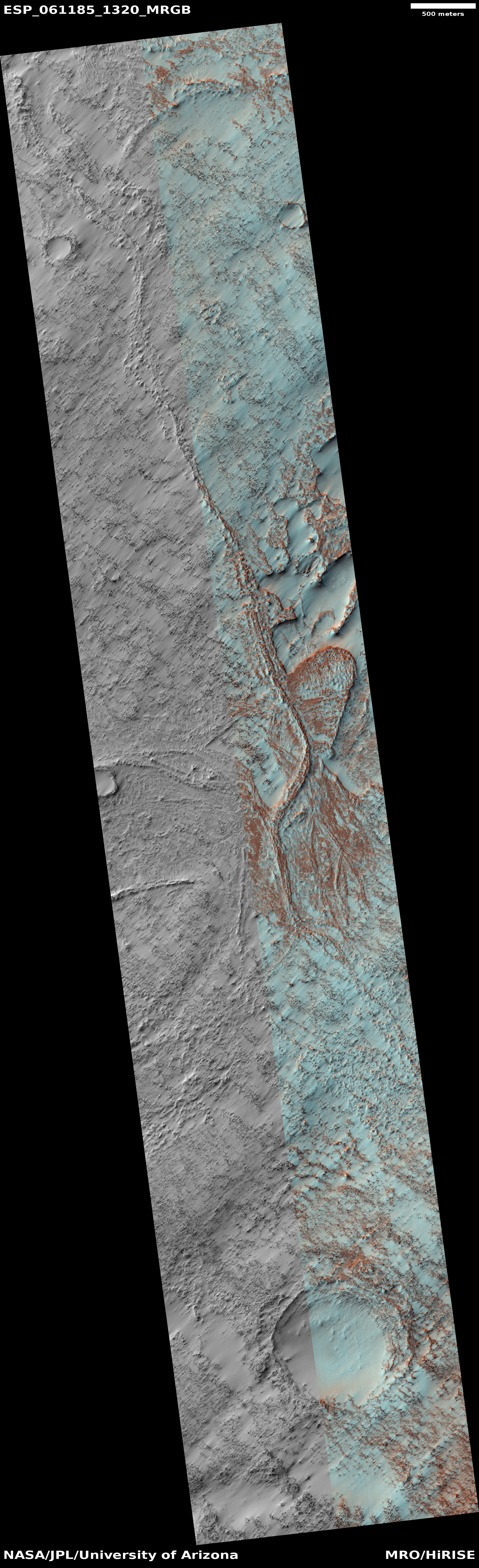
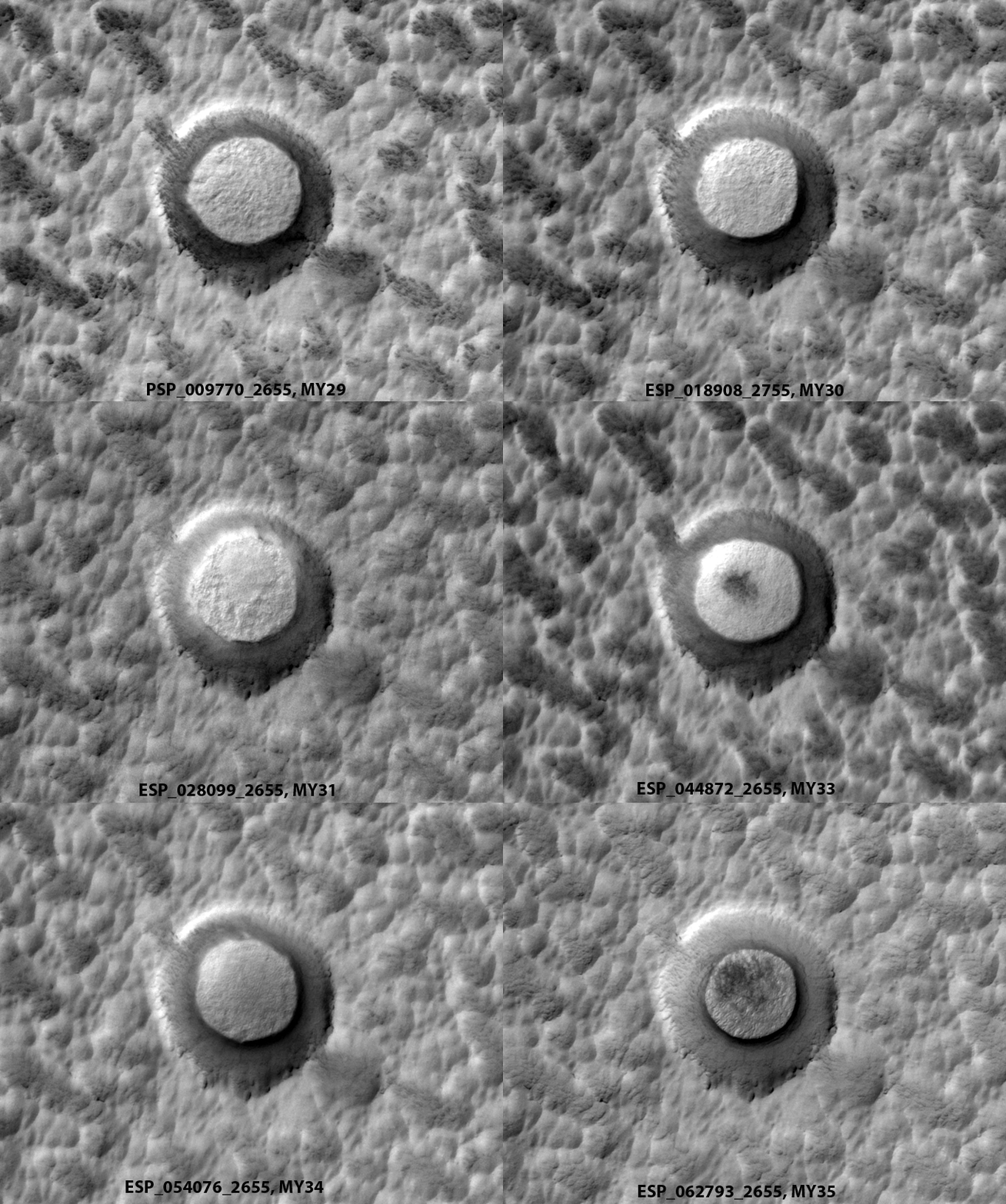
Cool image time! On Mars it is not unusual to see what scientists call tadpole features, craters with meandering canyons or channels either flowing into or out from the crater’s rim. The photo to the right, rotated, cropped, and reduced to post here, is another example, though with one major difference. The channel and crater are inverted, with the channel instead a ridge and the crater a circular plateau. The picture itself was taken on April 16, 2022 by the high resolution camera on Mars Reconnaissance Orbiter (MRO).

Orbital images have found on Mars a lot of what scientists call pedestal craters, where the impact packed and hardened the ground under the crater so that when the surrounding terrain eroded away the crater remained, as a plateau.

Scientists have also found on Mars a lot of what they call “inverted channels,” places where the channels of a drainage pattern followed the same geological process, becoming more resistant to erosion so that over time it turned from a channel to a ridge.

Here we have a combination of both. The overview map below provides us the larger picture.
» Read more

0 comments

Study: The Moon’s poles might not be the only places to find lunar water

Global map of hydrogen abundances on Moon
Click for full image.

According to a new study published in June in the Journal of Geophysical Research: Planets, while the lunar poles might contain water ice in permanently shadowed craters — based on detected hydrogen abundances — there is an even higher concentration of hydrogen found in the Aristarchus Plateau region in the lower mid-latitudes.

The map to the right is figure 9 from the paper, annotated to post here, showing the Moon’s hydrogen abundances globally, with lighter areas having higher concentrations. The boxes indicate five lunar regions that appear to hold higher levels of hydrogen and thus might contain higher amounts of water. From the paper’s conclusions:

The bulk hydrogen map also led to the first identification of bulk hydrogen enhancements within a pyroclastic deposit (Aristarchus Plateau), an identification that corroborates previous suggestions that hydrogen was among the volatiles involved in the eruption and emplacement of pyroclastic deposits. Further, with the understanding that there are enhanced bulk hydrogen abundances within at least one pyroclastic deposit and not just a surface enhancement, this leads to the implication that the hydrogen contained within just the Aristarchus Plateau may represent a significant fraction of the hydrogen that exists in the Moon’s near-subsurface, including that at both lunar poles. [emphasis mine]

It is important to note that finding high hydrogen abundances does not automatically mean you have found water. For hydrogen to exist on the Moon the atom must be bound in a molecule, and usually water is chosen as the most likely candidate. In the case of Aristarchus, however, the paper instead suggests that hydrogen was placed there as pyroclastic deposits, when active volcanism was occurring a long time ago. While water ice might not be present now in these regions, the data also suggests that water played a major role in its formation.

These hydrogen abundances however also signal the faint possibility of that water ice might be buried here, below the surface, left over from those early volcanic processes. The data also suggests even if the hydrogen is bound in other materials, mining and processing might be able to extract water from it.

0 comments

New paper: Glaciers on Mars could have been extensive, despite the lack of expected subsequent landforms

glacial drainage patterns as expected on Mars
Click for full figure.

According to a new paper published this week, scientists now posit that glaciation could have been much more extensive in the geological history of Mars than presently believed, despite the lack of the expected subsequent landforms as seen on Earth.

From the abstract:

The lack of evidence for large-scale glacial landscapes on Mars has led to the belief that ancient glaciations had to be frozen to the ground. Here we propose that the fingerprints of Martian wet-based glaciation should be the remnants of the ice sheet drainage system instead of landforms generally associated with terrestrial ice sheets. We use the terrestrial glacial hydrology framework to interrogate how the Martian surface gravity affects glacial hydrology, ice sliding, and glacial erosion. …[W]e compare the theoretical behavior of identical ice sheets on Mars and Earth and show that, whereas on Earth glacial drainage is predominantly inefficient, enhancing ice sliding and erosion, on Mars the lower gravity favors the formation of efficient subglacial drainage. The apparent lack of large-scale glacial fingerprints on Mars, such as drumlins or lineations, is to be expected. [emphasis mine]

In other words, on Earth the higher gravity causes glaciers and ice sheets to slide, with the liquid water at the base acting as a lubricant. On Mars, the lower gravity slows that slide, so that the water at the glacier’s base drains away instead, causing erosion and the formation of a drainage pattern in the ground beneath the glacier or ice sheet.

The image above, from figure 1 of the paper, shows on the left a graphic of the two types of drainage patterns expected, and on the right two examples found on Earth (D1: Devon Island; D2: Northwest Territories). Orbiter images of Mars have found variations of these types of drainage patterns in numerous places in Mars’ mid-latitude glacial bands, as shown below.
» Read more

1 comment

A Martian slot canyon!

A Martian slot canyon
For originals go here, here, and here.

Overview map
Click for interactive map.

Cool image time! The mosaic to the right is made up of three images produced by the high resolution camera on the Mars rover Perseverance (found here, here, and here). All three were taken on July 24, 2022 and look north to the nearest cliff face at the head of the large delta that flowed into Jezero Crater some time in the distant past.

The rover was about 80 feet away from the feature when the photo was snapped. Though scale in the photo is not provided, using the scale in the overview map below I would guess this slot canyon is several feet wide, with some spots narrow enough that your body would touch both walls at spots. Its height is likely nor more than 20 feet high, at the very most.

On the overview map, the blue dots mark Perseverance’s location, in both the main map and the inset. The green dot marks where the helicopter Ingenuity presently sits. The red dotted line is my guess as to the future route of the rover up into the delta. The yellow lines indicate the area viewed in the mosaic.

Though hardly as deep as the many slot canyons found in the American southwest, that this slot exists on Mars is quite intriguing. Did it form like those southwestern slots from water flow? Probably not. More likely we are looking at a fracture produced by shifts in the entire delta itself, and then later widened by wind.

That the cliff shows multiple layers suggests the delta was laid down in multiple events, and that the fracture occurred after the delta was emplaced. That the layers on either side of the fracture appear to match up strengthens this conclusion. These layers also suggest that the layering is not simply in a series of small events. The layers are also grouped into larger aggregates, suggesting those larger groupings mark longer epochs, each with its own unique conditions.

3 comments

The very end of an 800-mile-long Martian canyon

The very end of an 800-mile-long Martian canyon
Click for full image.

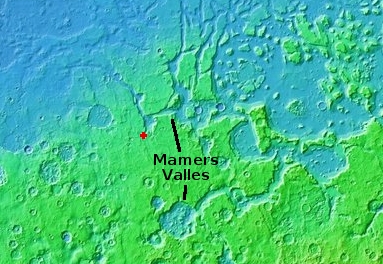
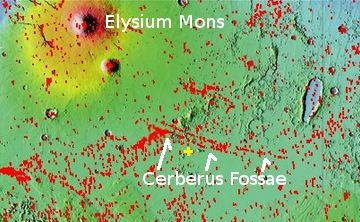
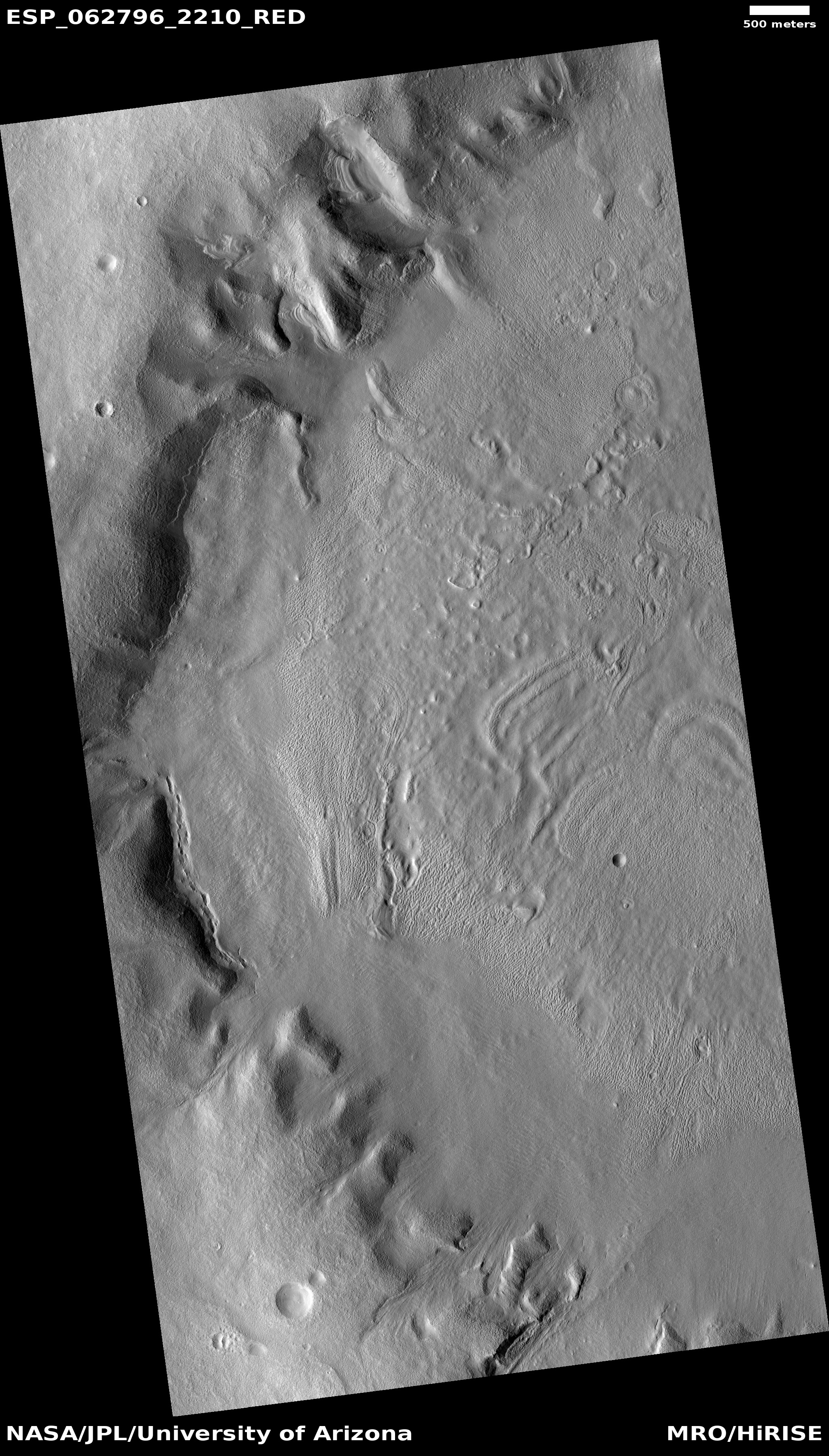
Cool image time! While most geeks interested in Mars are familiar with Valles Marineris, the largest canyon in the solar system, Mars has other large canyons that while not a big are impressive in their own right. The picture to the right, rotated, cropped, and reduced to post here, shows us the very very end of one such canyon. Taken on April 19, 2022 by the high resolution camera on Mars Reconnaissance Orbiter (MRO), it shows the easternmost spot where Cerberus Fossae begins. From here, this narrow fracture-caused canyon extends another 800 miles to the west, sometimes splitting into two or three parallel cracks, but always oriented in the same direction, slightly north of due west.

The overview map below provides the context and wider view.
» Read more

3 comments

Curiosity looks ahead

Curiosity looks ahead
Click for full resolution. For original images go here and here.

Overview map
Click for interactive map.

Cool image time! The panorama above, taken by one of the navigation cameras on the Mars rover Curiosity on July 23, 2022, forms a nice bookend to yesterday’s panorama. Yesterday Curiosity looked back at its past travels. Today it looks forward at where it is almost certainly heading in the days ahead.

On the overview map to the right, the yellow lines indicate the approximate area viewed by the panorama. The large red dotted line marks the rover’s original planned route, abandoned when the science team found the terrain on the Greenheugh Pediment too rough for Curiosity’s wheels. The smaller red dotted line is my present guess as to the rover’s future route to get back on course.

The flat-topped mountain dubbed Kukenán by the science team has probably been one of the prime goals of the entire mission, from the beginning. Its almost vertical face has innumerable layers, all of which record in great detail the geological history of Mars and Gale Crater. As noted by Abigail Fraeman from the Jet Propulsion Laboratory on June 30, 2022:

Kukenán’s Earth namesake is a tepui, or distinctive isolated table-top mountain, found in South America. The Martian Kukenán is also somewhat flat topped and an impressive expression in Mt. Sharp’s topography. While it looks like it’s about the same size as the hills that bound it in the above Navcam image (“Deepdale” on the left and the edge of “Bolivar” on the right), this effect is just due to forced perspective. In reality, Kukenán is nearly five times farther away and over three times as tall as Deepdale! Curiosity’s strategic traverse path takes the rover right past Kukenán in about a kilometer or so, so this feature will become a familiar landmark rising in our windshield for months to come.

The science team will likely park Curiosity in the saddle of the gap ahead for at least a week and spend a lot of time documenting that cliff face with multiple cameras, since at this location the rover will have an excellent view of that entire face. As it gets closer the angle looking up will get steeper, thus making viewing of the upper layers more difficult.

1 comment

Curiosity looks back

Curiosity looks back
Click for full image.

Overview
Click for interactive map.

Cool image time! Normally I’d be hiking today, but since it is raining in southern Arizona at every mountain location we might want to go, I am forced to imagine hiking on Mars instead. The photo above, cropped to post here, was part of a mosaic of images taken on July 22, 2022 by the right navigation camera on the rover Curiosity.

Curiosity had just completed several drives that had it skirt around those two boulders visible in the center of the picture, as shown in the inset in the overview map to the right. The yellow lines indicate the approximate area covered by the photo. The blue dot marks Curiosity’s present location. The larger red dotted line the rover’s original planned route, with the smaller dotted line my guess as to the route the science team now plans to take to return to that course.

The rim of Gale Crater can be seen in the far distance, about 20 to 30 miles away and largely obscured by the winter dust that presently fills the atmosphere.

The science team had hoped to get close enough to these two boulders to touch them with the rover’s instruments, but decided to keep away because of both appeared a bit unstable.

2 comments

Collapsed dunes in Jezero Crater

Collapsed dune on Mars
Click for full image.

Cool image time! The photo above, cropped and reduced to post here, was taken on July 20, 2022 by one of high resolution cameras on the rover Perseverance. It shows what appears to be a collapsed dune on the floor of Jezero Crater.

The arrows mark the highest dune ridge line that suddenly ends at a cliff, with the sand that is piled up at its base appearing almost like it flowed like thick mud outward away from that cliff. Apparently, that material broke off in one single event sometime in the past.

Note the many parallel lines pointing outward from the base of the cliff. These lines appear to reflect the internal structure visible in the cliff itself. Somehow, when that sand collapsed, it flowed away while retaining some of that structure.

When this collapse happened is unclear. I don’t think it has happened recently, since Perseverance’s arrival, but I could be wrong.

1 comment

Martian terraces

Overview map
Glacier country on Mars

Martian terraces
Click for full image.

Cool image time! The photo to the right, cropped and reduced to post here, was taken on May 17, 2022 by the high resolution camera on Mars Reconnaissance Orbiter (MRO). It shows what the scientists have labeled “Dipping layers against mound in Deuteronilus Mensae.”

Deuteronilus is the westernmost mensae region in the 2,000-mile-long strip of heavy glaciers found in the northern mid-latitudes that I dub glacier country. This photo, the location of which is marked by the white cross on the overview map above, is another example, though somewhat strange and puzzling. Normally the layers will dip away from the high point. Here, the layers dip towards the mound. I can think of only one explanation, that of prevailing winds causing the erosion in this unusual manner, but I also find that explanation very unsatisfactory.

The layers themselves illustrate the cycles that have shaped Martian geology, caused by the wide swings in the planet’s rotational tilt, from 11 to 60 degrees. When that tilt is high, the poles are warmer than the mid-latitudes, and water ice migrates from the poles towards the equator. When the tilt is low, the mid-latitudes are warmer, and the water ice heads back towards the poles. Thus, the many many layers the orbiters and rovers are now finding everywhere on Mars.

Right now scientists think, because Mars’ tilt is in the middle of these swings at 25 degrees, the planet is in equilibrium, with the water at the poles and mid-latitudes essentially going no where. This conclusion however is not yet confirmed.

0 comments

Perseverance gains a little height

View of Jezero Crater from Perseverance
Click for full image.

Overview map
Click for interactive map.

Cool image time! The photo above, rotated and cropped to post here, was taken on July 18, 2022 by the right navigation camera on the Mars rover Perseverance.

The view isn’t that remarkable, when compared to many other pictures from Mars. What makes it newly interesting is that it shows that Perseverance has gained a little elevation as it explores the base of the delta that flowed into Jezero Crater. It is no longer on the crater floor, but above it, though not by much.

You can see the far rim of Jezero Crater in the distance, obscured somewhat by the dust that builds up in the Martian atmosphere during the winter. You can also see the gentle left-to-right downward slope of material that flowed down from that delta some time in the past. Also, though the resolution isn’t good enough to show it, the helicopter Ingenuity probably sits somewhere near the center of this picture, just to the right of the nose of the biggest ridgeline.

The overview map on the right gives the context, with the yellow lines showing my estimate of the area viewed by the picture above. The blue dot is Perseverance, the green dot is Ingenuity. The red dotted line is my present guess as to the planned route of Perservance up onto the delta.

2 comments

Layered mesa on Mars

Layered mesa on Mars
Click for full image.

Cool image time! The photo to the right, cropped and reduced to post here, was taken on May 26, 2022 by the high resolution camera on Mars Reconnaissance Orbiter (MRO). It shows a mesa about three quarters of a mile in length that appears to be many-layered, from top to bottom.

The brightness of the mesa, compared to the surrounding plains, also emphasizes the different layers, though in this case it suggests two major epochs where the material being laid down in each was fundamentally different.

Or the difference could simply mean that the surrounding terrain is covered with dust, hiding its true color.

There is no question that winds in the thin Martian atmosphere have contributed to the erosion that formed this mesa, much like the buttes in the American southwest are shaped by winds. Whether water was a factor for this Martian butte is far less certain.

The overview map below provides context.
» Read more

1 comment
1 70 71 72 73 74 157