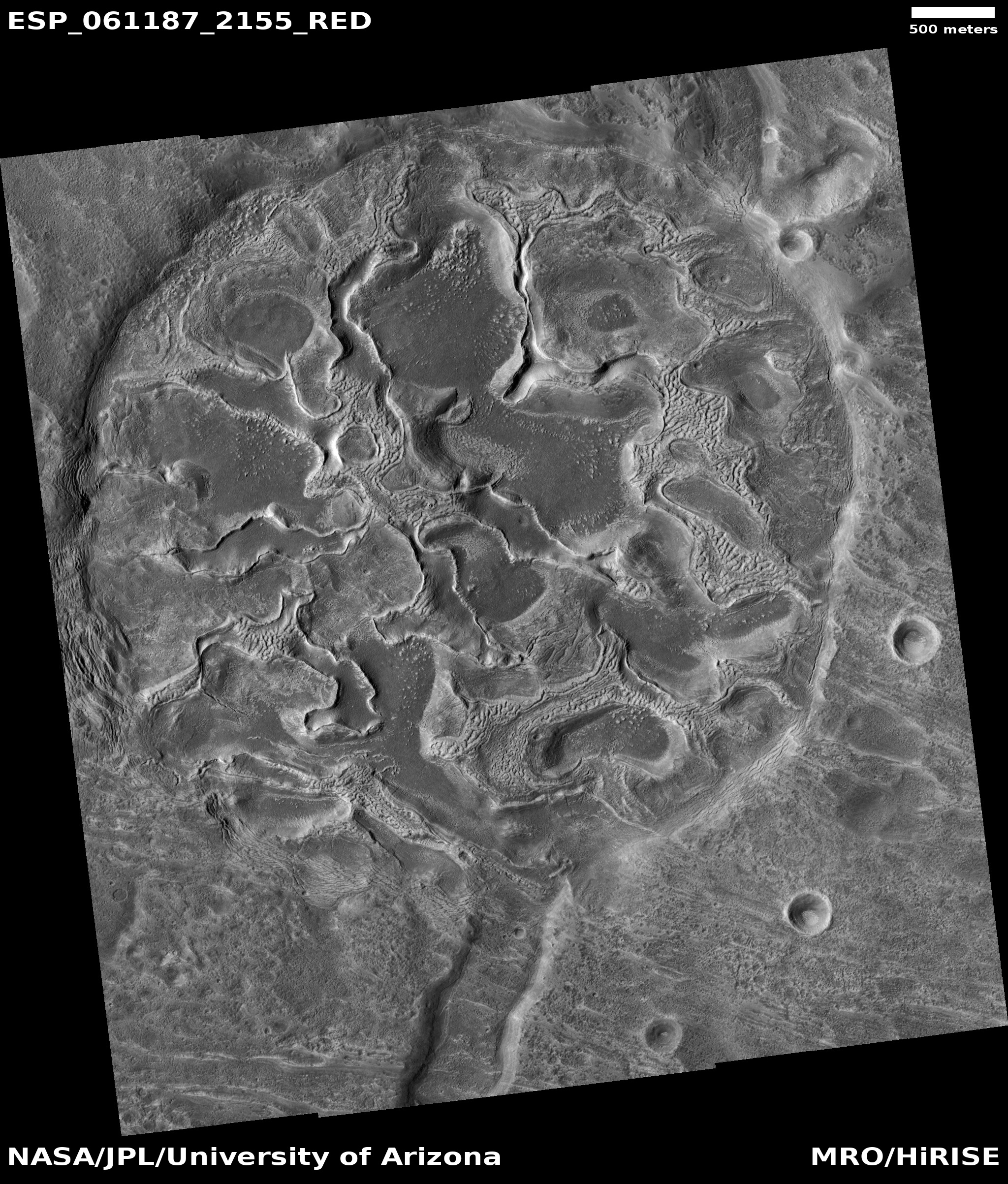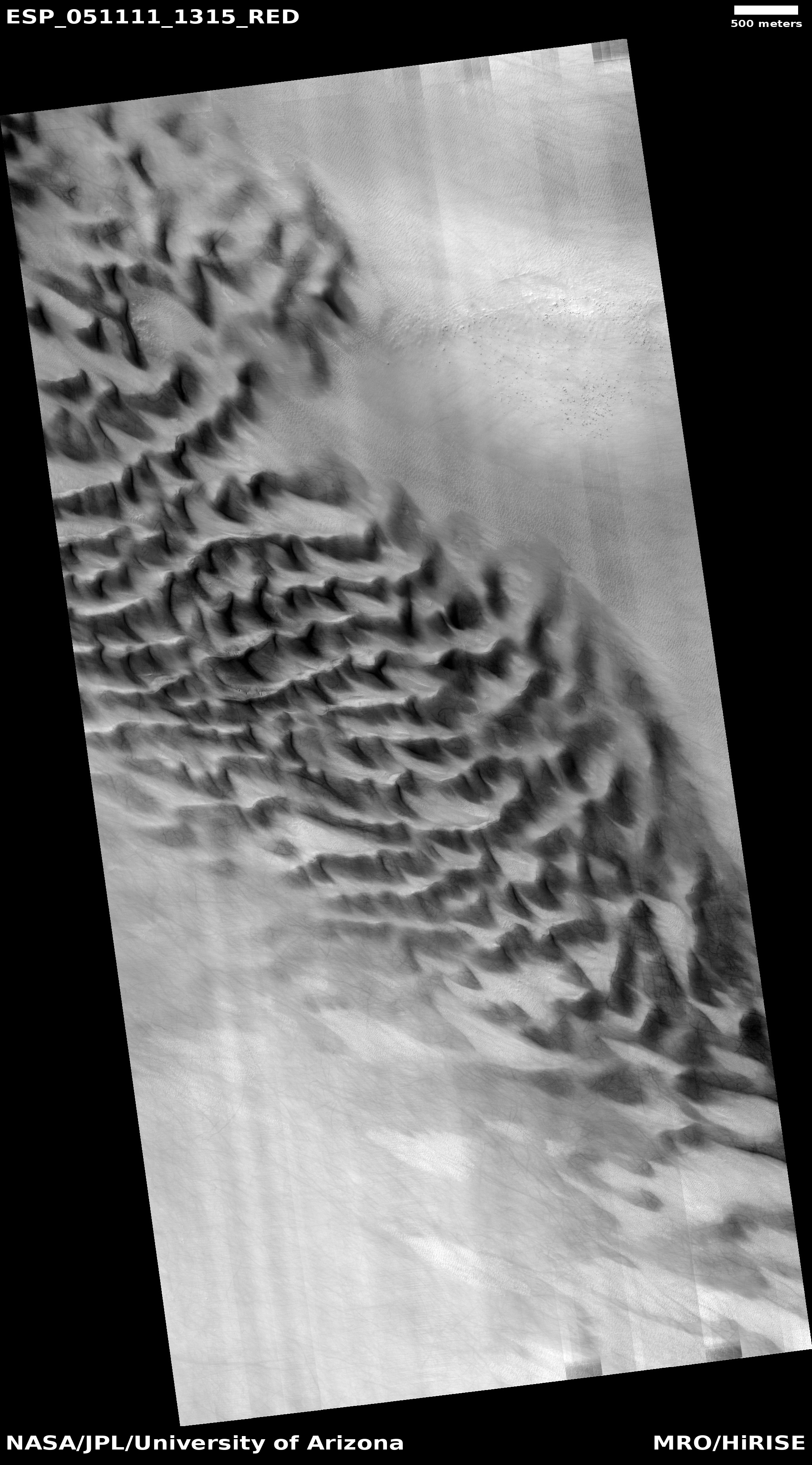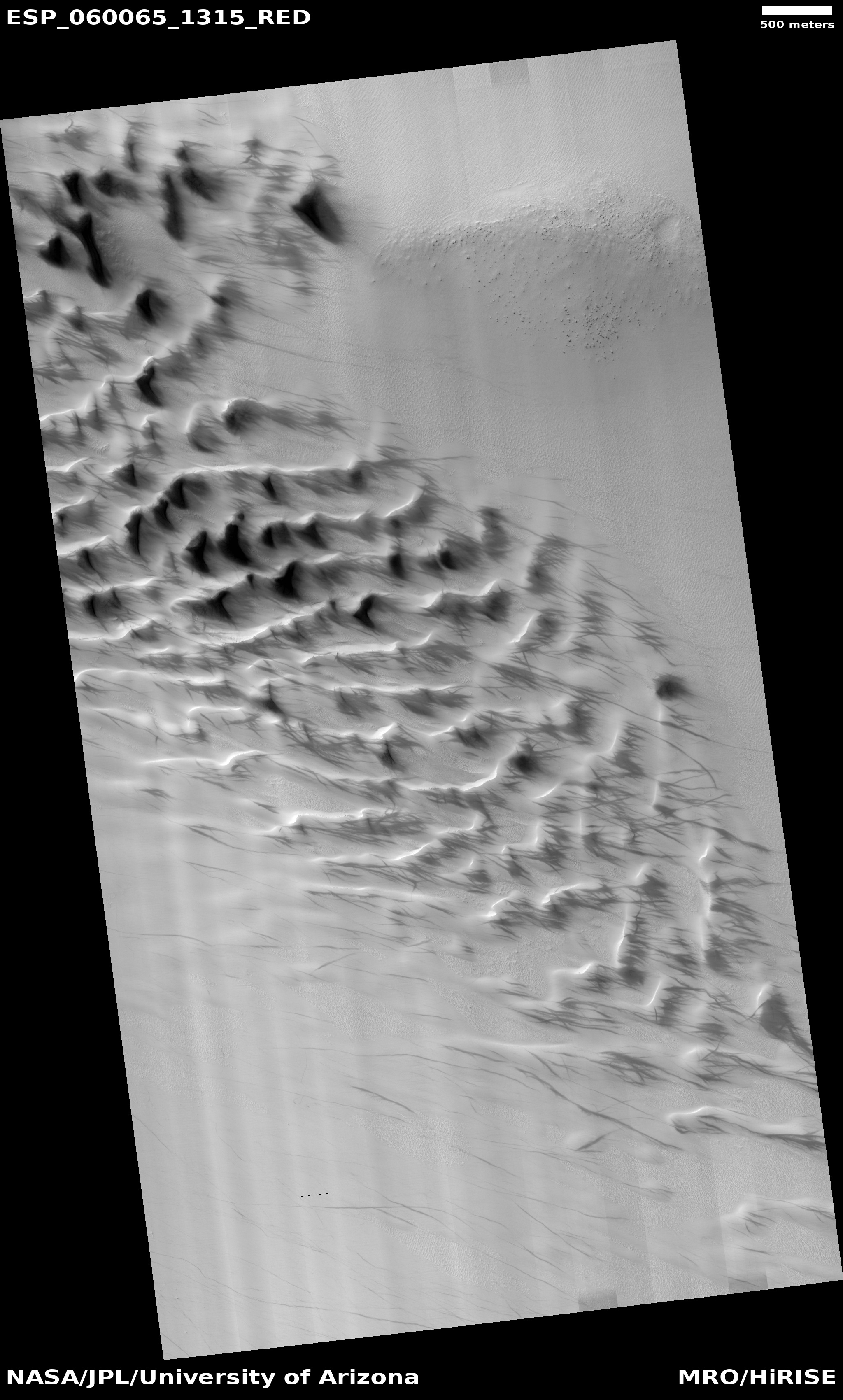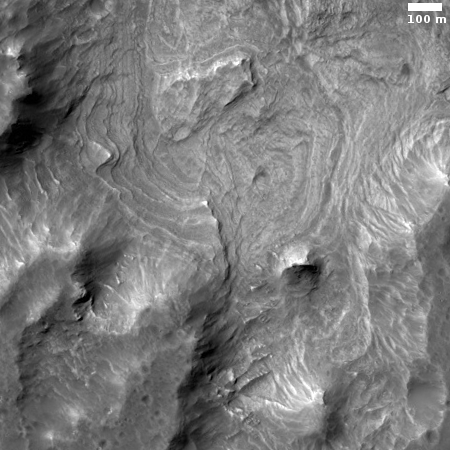
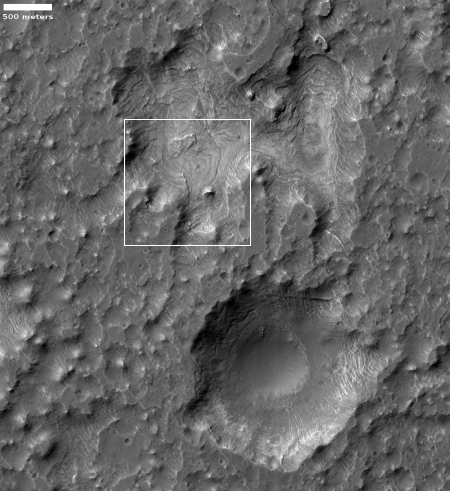
Strange pitted and isolated ridges on Mars

Context camera image of isolated ridges
Click for full image.

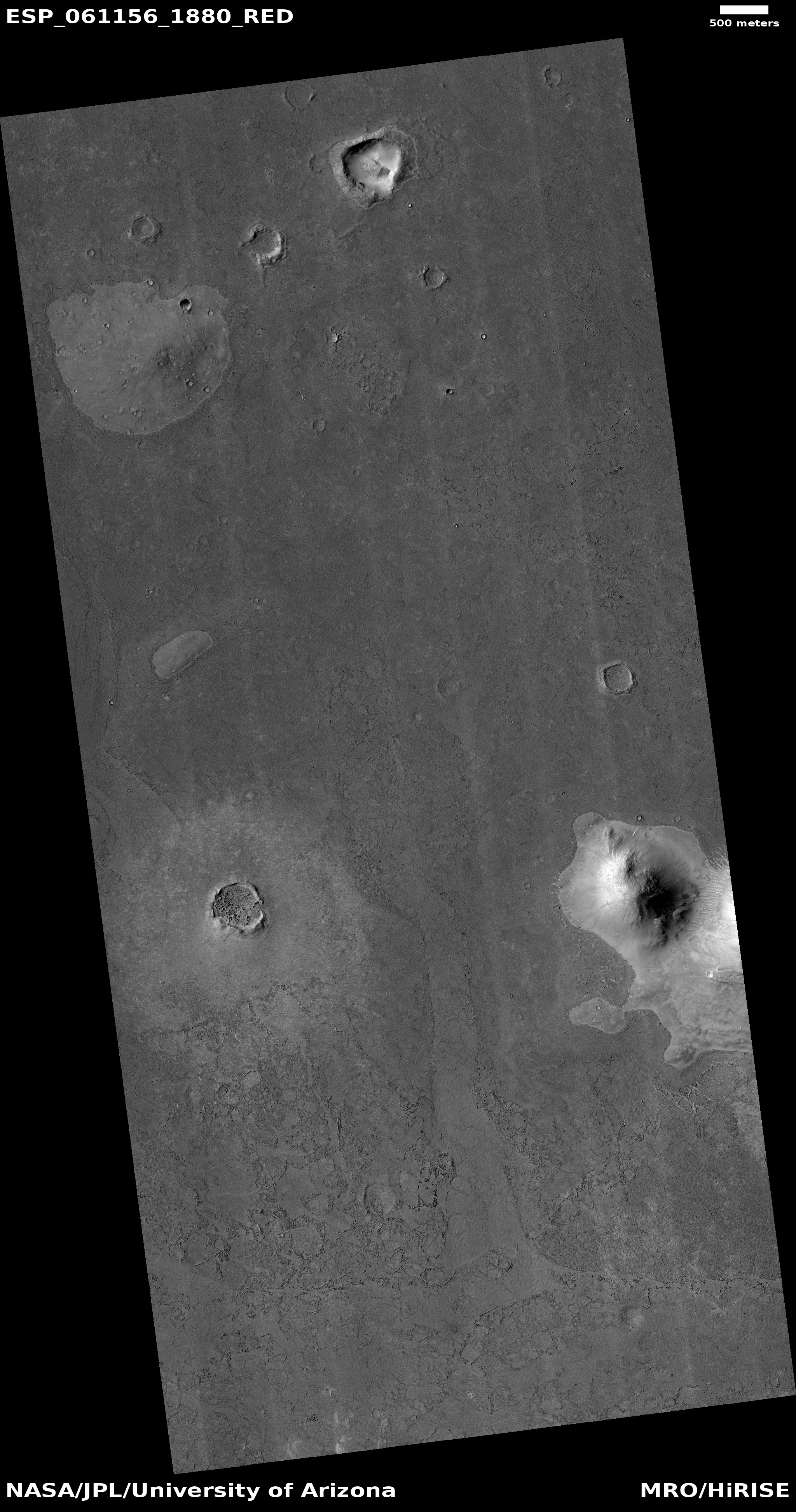
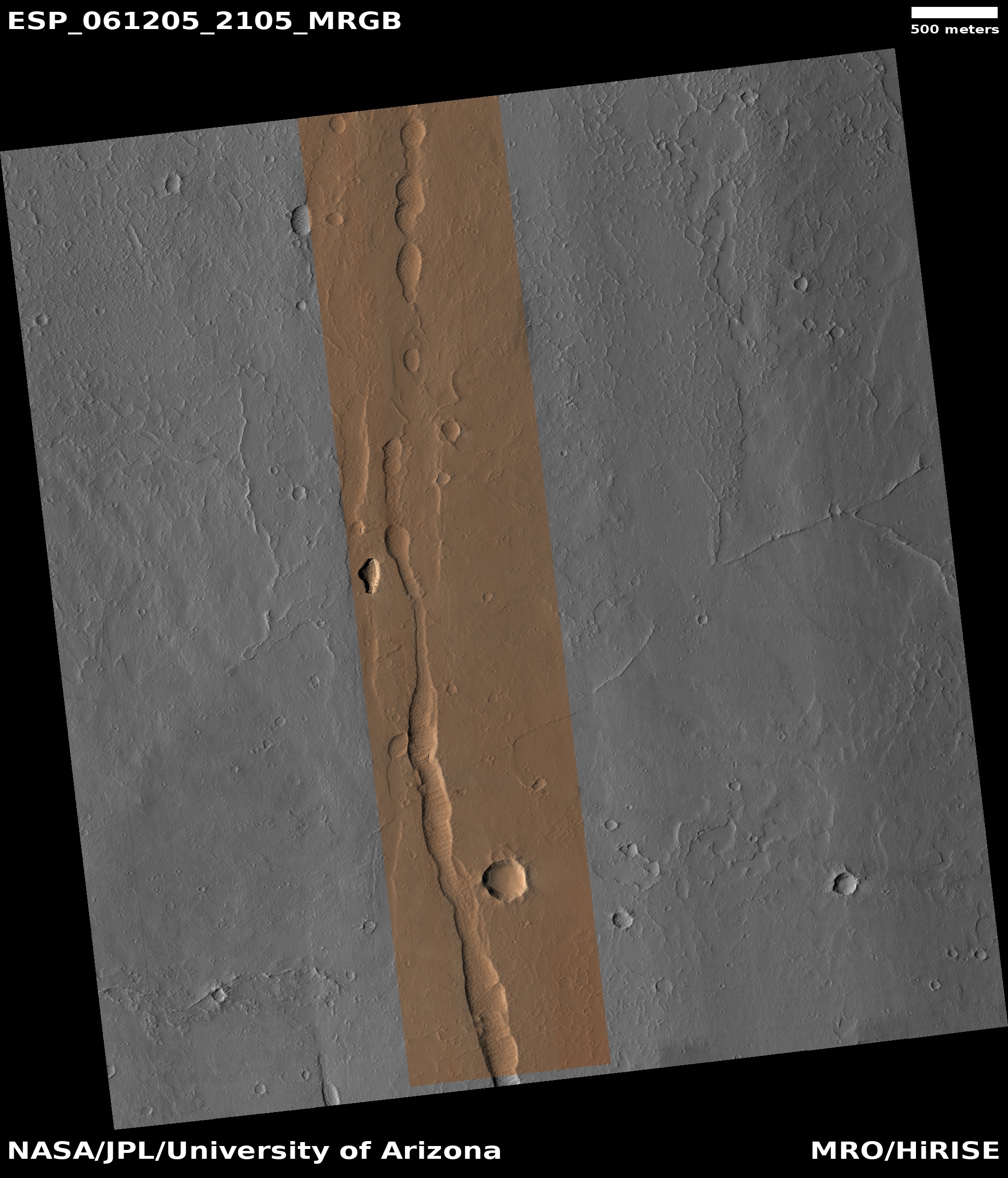
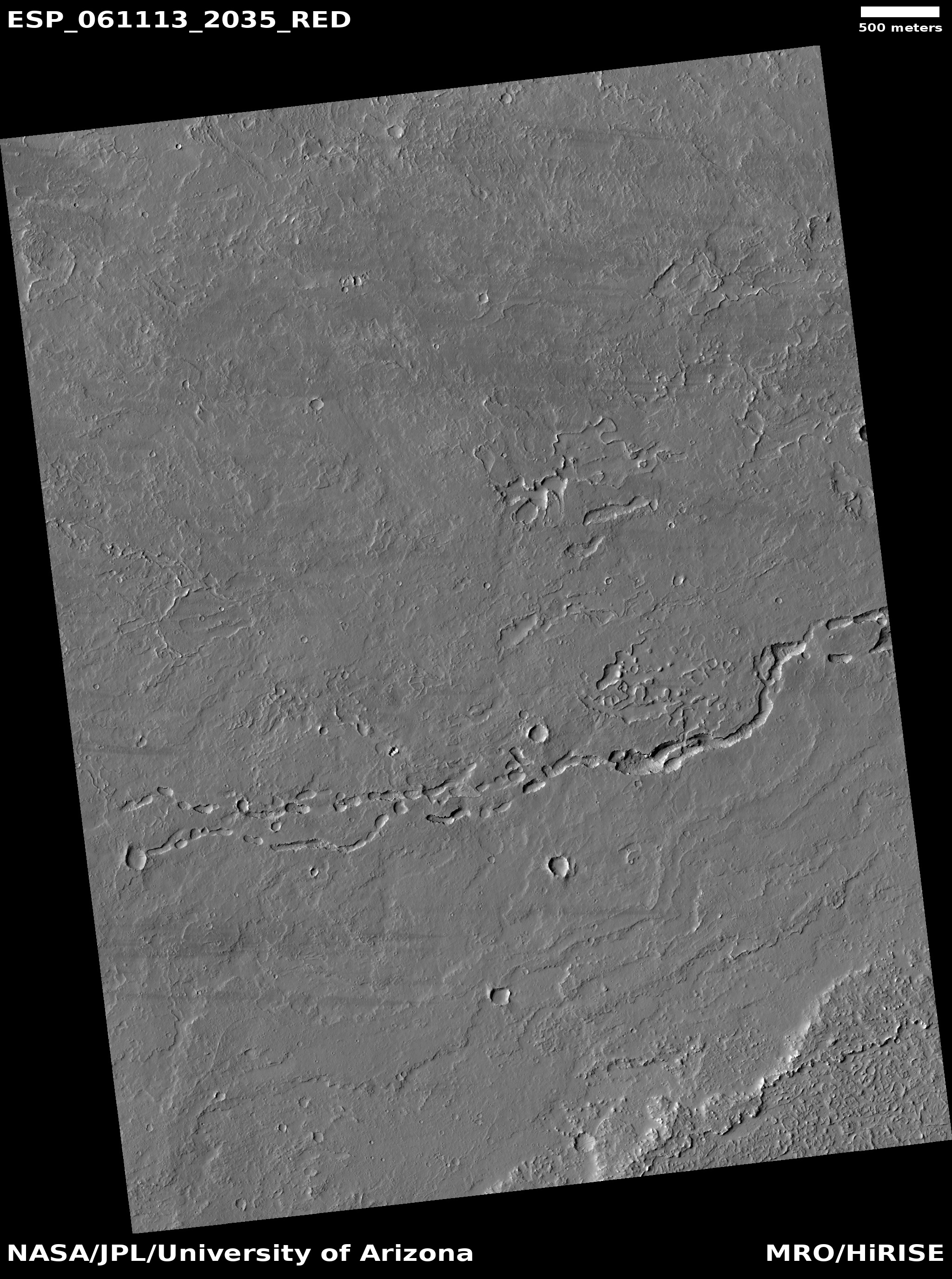
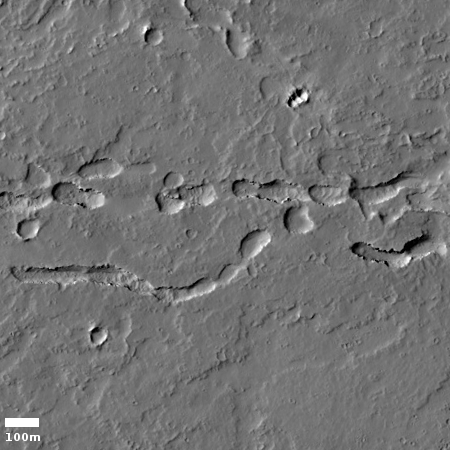
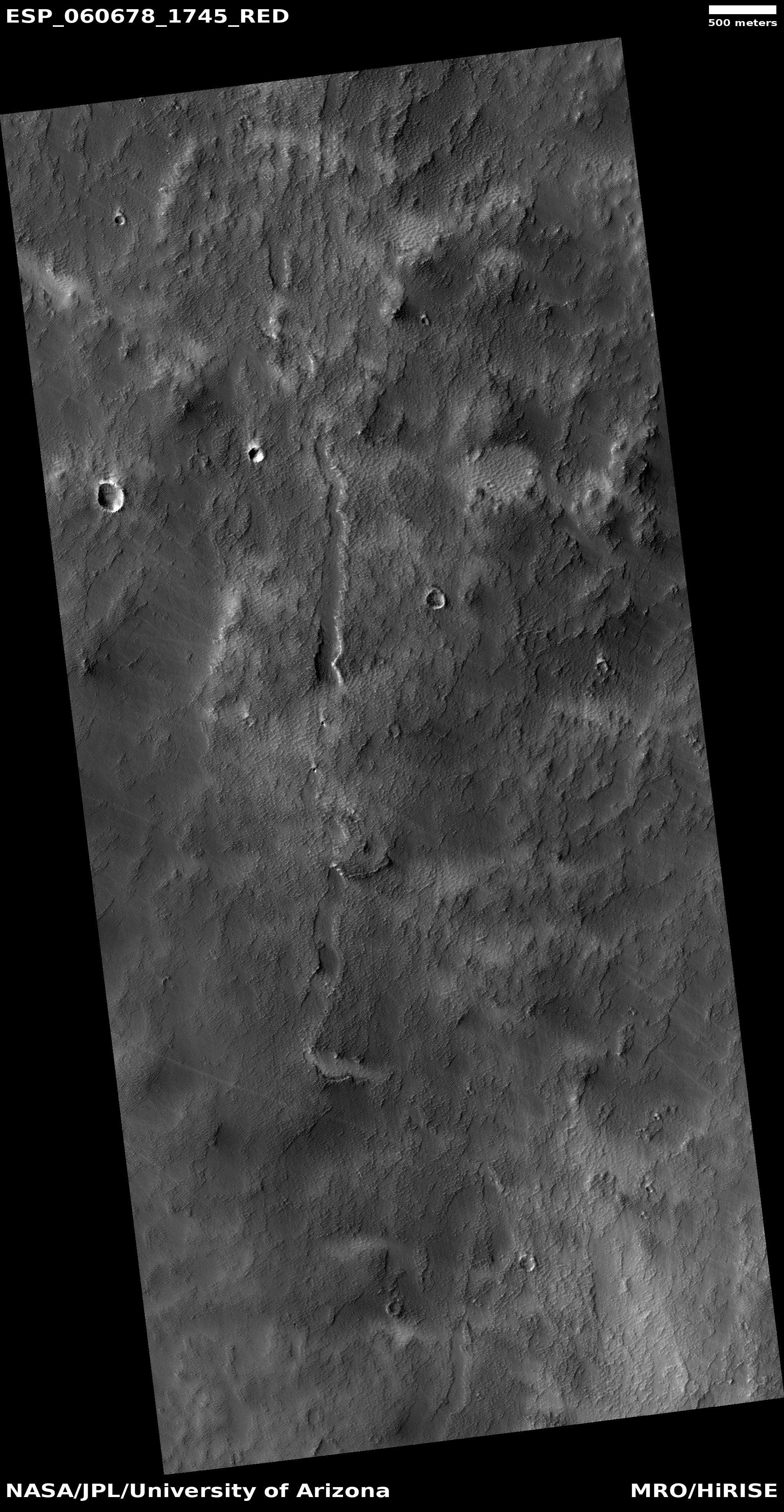
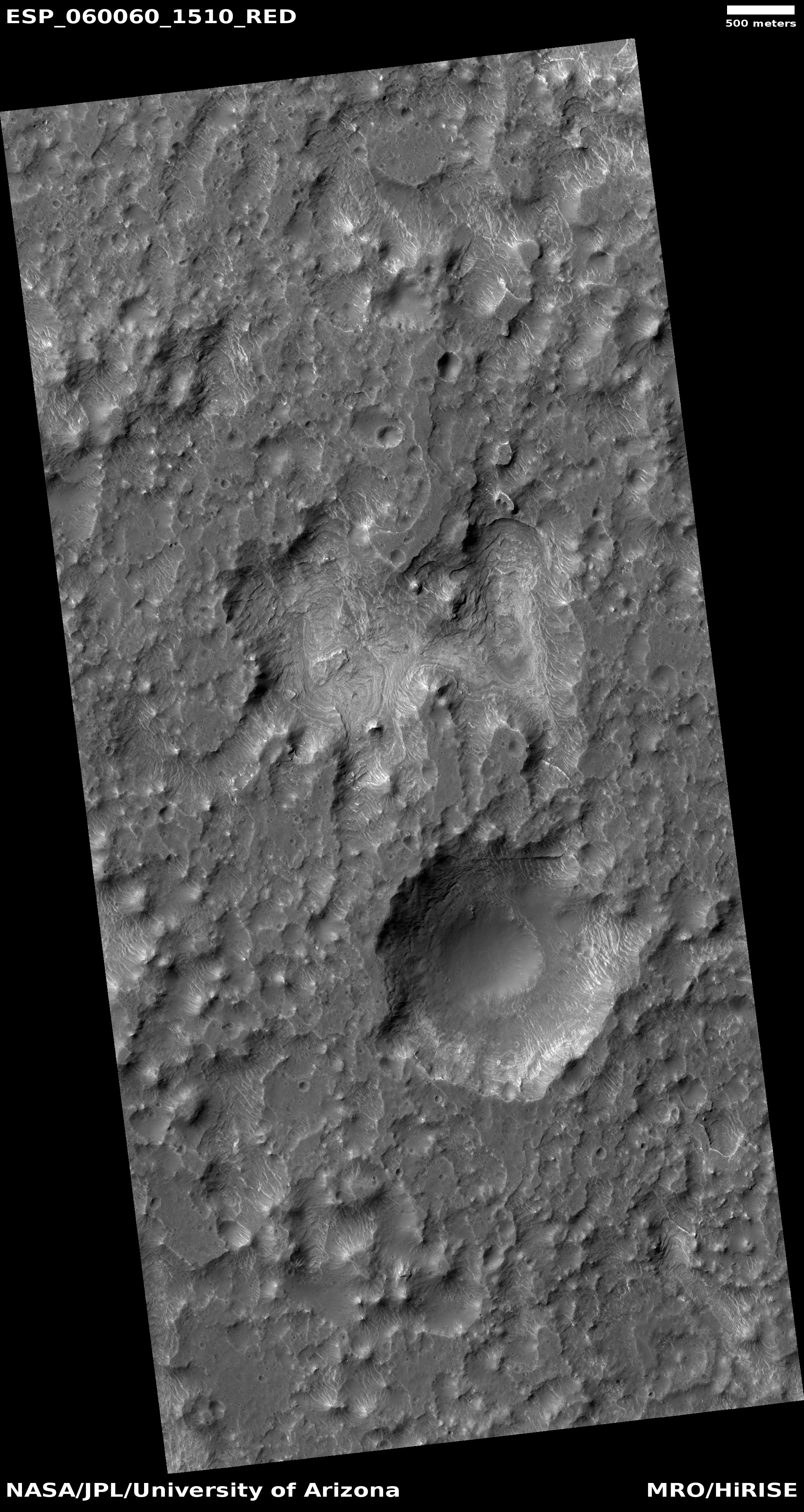
Cool image time! The photo to the right, rotated, cropped, and reduced to post here, was taken on February 17, 2012 by the wide-view context camera on Mars Reconnaissance Orbiter (MRO). It shows a section of the northern lowland plains of Mars, latitude 31 degrees north, where several very inexplicable and isolated ridges can be seen.

One ridge meanders mostly in a north-south direction, while a second instead meanders east-west. The shape of both says that neither has anything to do with any past impact crater. In fact, their random snakelike shape doesn’t really fit any obvious explanation. For example, they do not fit the look of the many fossil rivers found on Mars, where the hardened and dry riverbed channel resists erosion and becomes a ridge when the surrounding terrain erodes away.

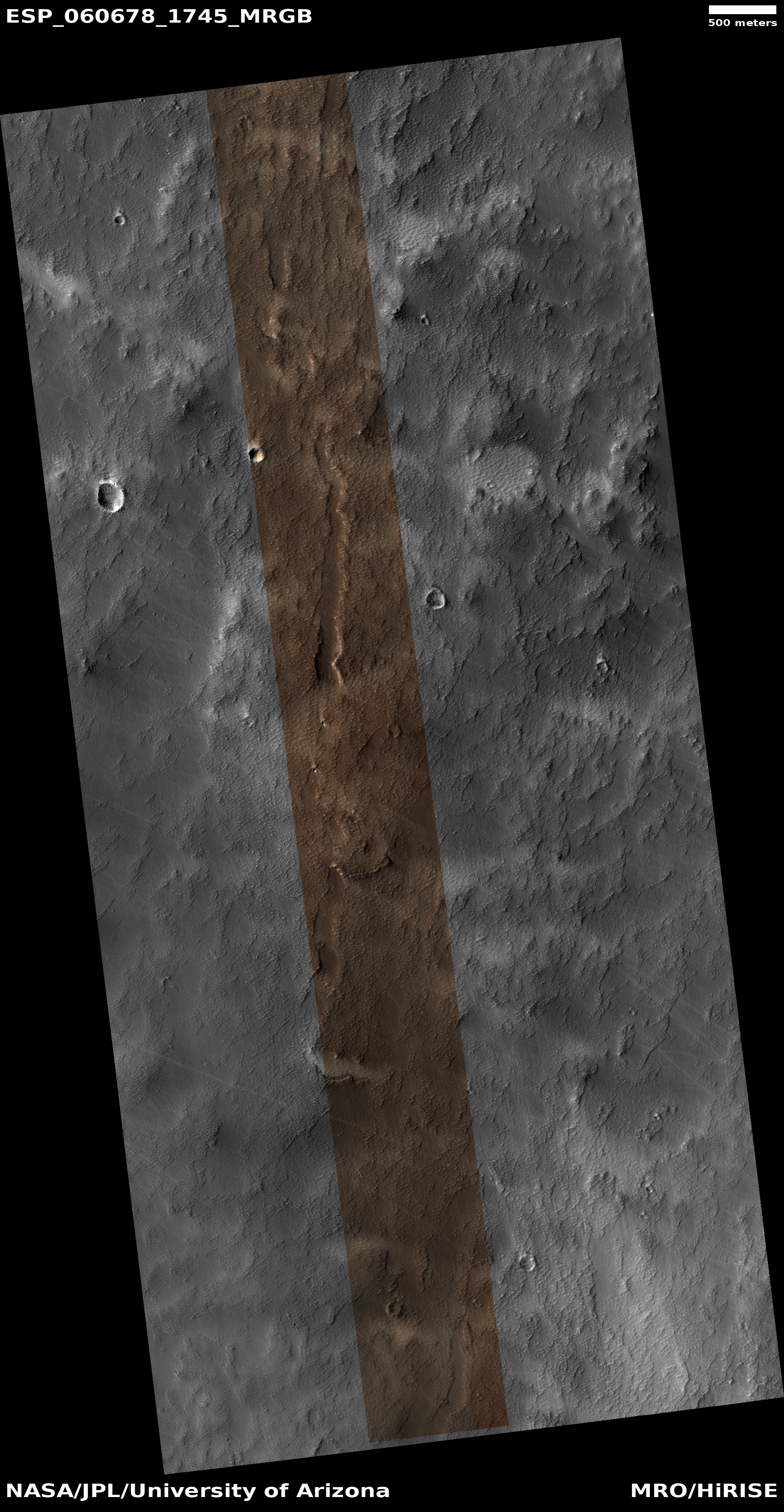
What geological process caused them? In the decade since this photo was taken the scientists who use MRO have only been able to snap a handful of high resolution images of these ridges. The image below is the most recent, covering the area in the white rectangle above.
» Read more

2 comments

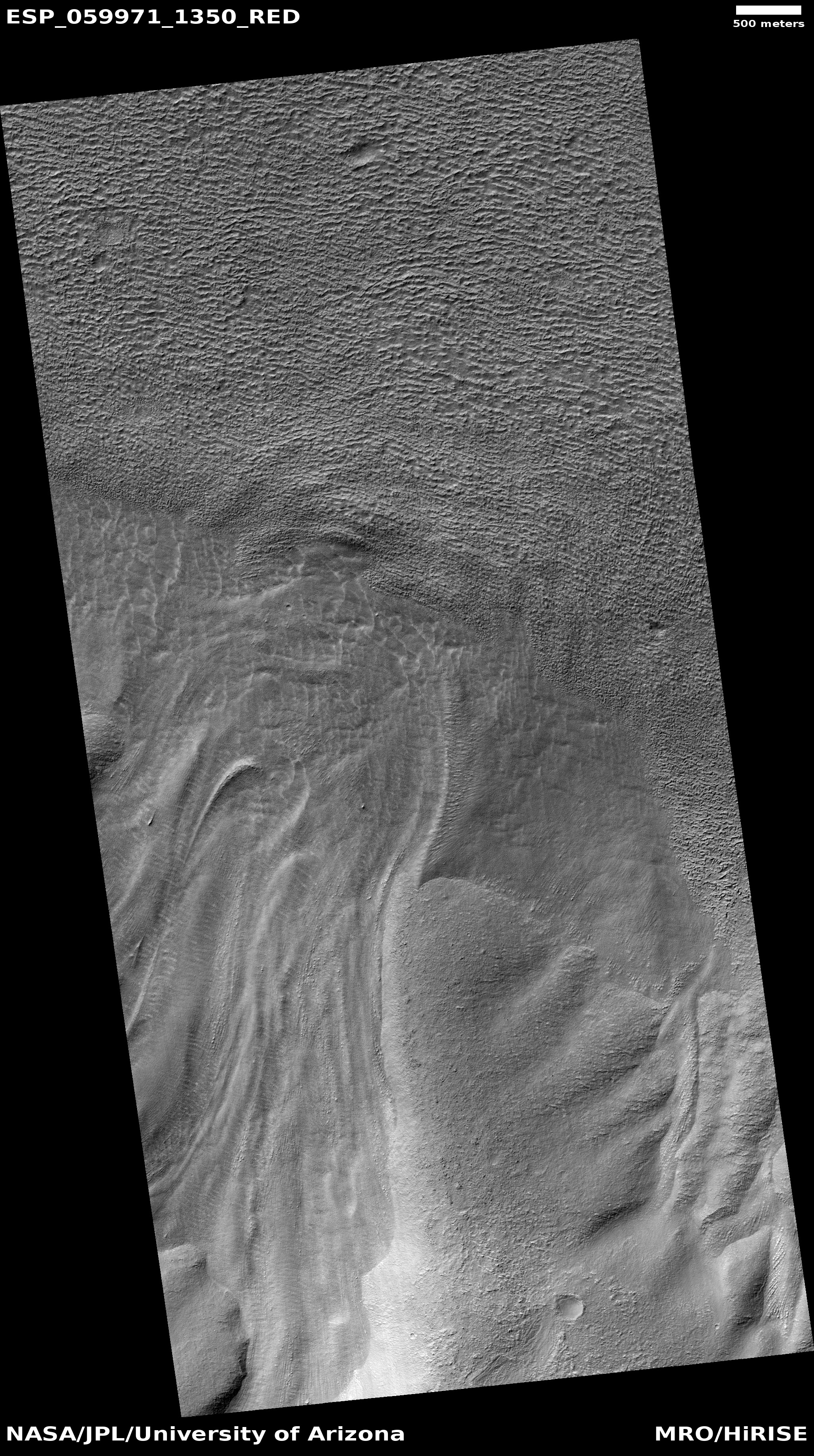
Glacial features in a Mars crater at 29 degrees south latitude?

Glacial features in Mars crater
Click for full image.

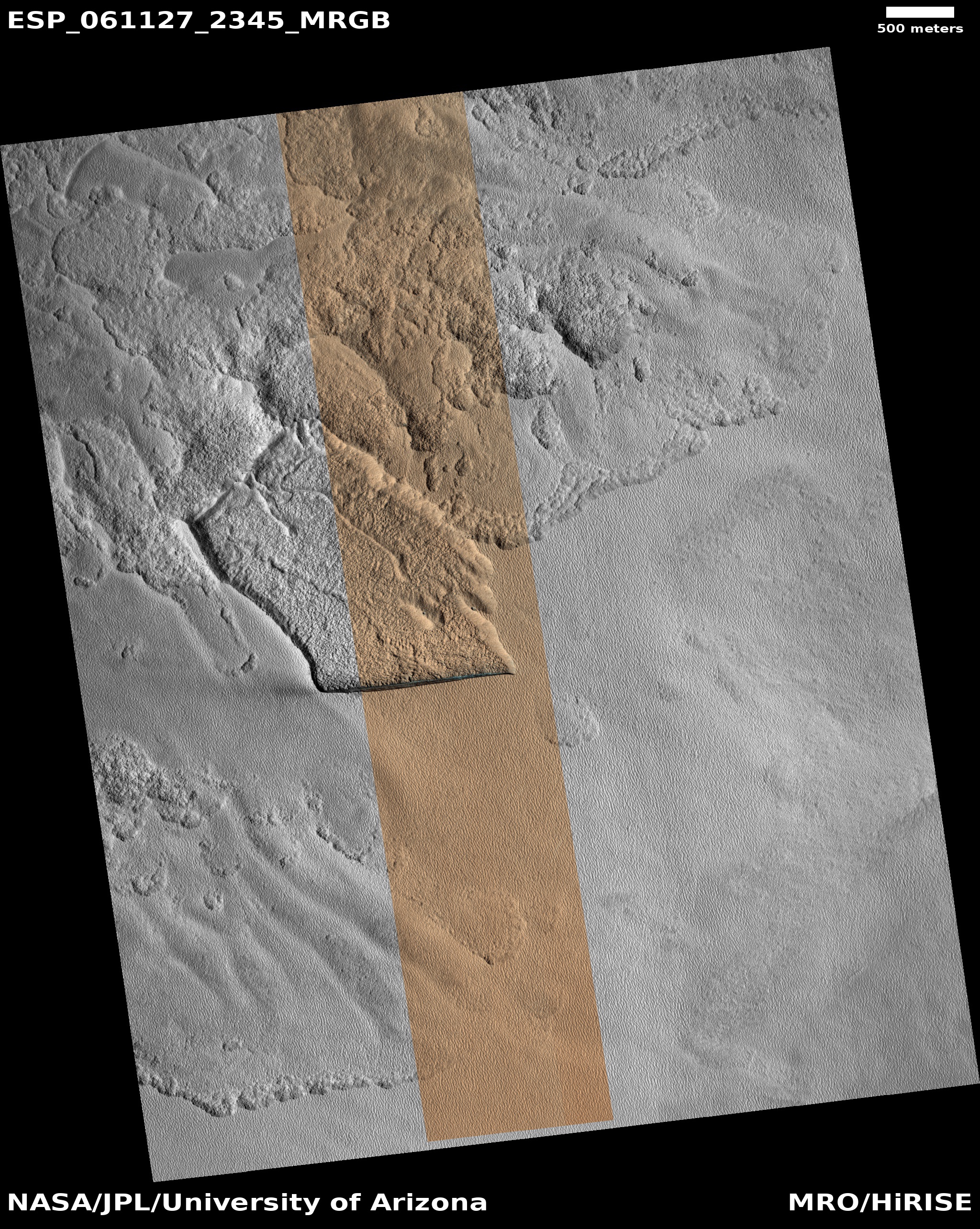
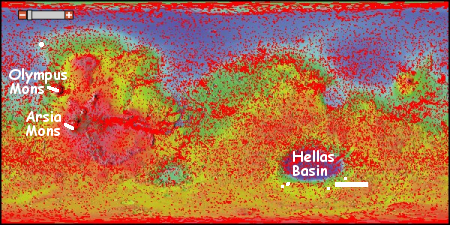
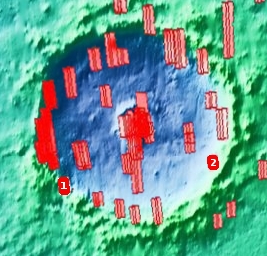
Cool image time! The photo to the right, cropped and reduced to post here, was taken on January 2, 2022 by the high resolution camera on Mars Reconnaissance Orbiter (MRO). Simply labeled “slope features,” it was likely taken to monitor the gullies and streaks on the interior walls of this 4-mile-wide crater. Scientists have been using MRO to track the coming and going of frost on this crater’s interior walls since 2016.

Equally intriguing however are what appear to be squashed layers within the crater’s interior. These appear to be some form of glacial feature created by repeated climate cycles, similar to the glacial features routinely seen throughout the 30 to 60 degree mid-latitude strips north and south.

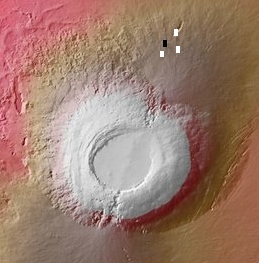
What makes the glacial features in this particular crater particularly intriguing is its location, as shown in the overview map below.
» Read more

0 comments

The lava tubes on the western slopes of Alba Mons as potential Martian colonies

Lava tubes on western flank of Alba Mons
Click for full figure.

In a new paper detailing work they first began in 2019, scientists have now carefully mapped the extensive lava tubes that appear to radially descend westward from the caldera of Alba Mons, the volcano on Mars that has the largest surface area but with a relatively low peak.

The mapped population of 331 lava tube systems has a mean length of 36.2 km, with a total length in the western flank geologic map quadrangle of ∼12,000 km. Individual lava tube systems extend up to ∼400 km, and it is likely that some of our mapped lava tubes are connected such that the total number is actually smaller and lengths (average and maximum) longer.

The map above, figure 10 of their paper, shows volcanic ridges as yellow, collapsed lava tube segments as red, and collapsed lava tube on the volcanic ridge as maroon. The wider map below, shows where this region is located, and gives the larger context.
» Read more

7 comments

A thick and syrupy flow on Mars

A thick and syrupy flow on Mars
Click for full image.

Overview map

Cool image time! The photo above, rotated, cropped, and reduced to post here, was taken on March 5, 2022 by the high resolution camera on Mars Reconnaissance Orbiter (MRO). It shows what the scientists label as a “viscous flow feature,” which is another way of saying the flow was thick and syrupy.

Nor is such a flow unusual in this area of Mars. It is located in a region of chaos terrain dubbed Protonilus Mensae, which is also the central mensae region in the 2,000-mile-long strip in the northern mid-latitudes of Mars I label glacier country. The overview map above of Protonilus Mensae — covering about 500 miles in width — shows how common such flows are in this place. The black rectangles mark the locations of other cool images I have featured, as follows:

The red rectangle indicates the location of today’s cool image.

The glacial aspect of everything in this region is even more emphasized by the wider view provided by MRO’s context camera below.
» Read more

1 comment

New research suggests flowing water existed intermittently on Mars from 2.5 to 3.6 billion years ago.

Based on a study of alluvial fans on Mars, river sediment thought to have been placed at the foot of mountains, scientists have concluded that liquid water could have been flowing from as 2.5 to 3.6 billion years ago.

“We’ve known for decades that Mars had rivers and lakes around 3.5 billion years ago, but in the past few years there has been a growing body of evidence that substantial amounts of liquid water continued to erode the Martian surface for hundreds of millions of years,” said Morgan, lead author on “The global distribution and morphologic characteristics of fan-shaped sedimentary landforms on Mars” that appears in Icarus. “Water-formed landforms, such as river deltas and alluvial fans, are the most unambiguous markers of past climate. So we conducted a global survey for these features and explored patterns in their distribution and morphologic properties.”

Morgan and co-authors including PSI Senior Scientist Alan Howard found that alluvial fans are found at lower elevations than the more ancient valley networks, suggesting that stable liquid water became restricted to lower, warmer regions as Mars cooled and dried.

…What is particularly interesting about the Martian fans is that many formed much later than the valley networks, which have long been considered the strongest evidence for surface water on early Mars. Valley networks largely date to around 3.6 billion years ago, but alluvial fans date to 2.5 to 3 billion years ago.

This research merely increases the fundamental geological mystery of Mars. While the surface evidence strongly tells us that liquid water once flowed on the surface, no climate model exists that satisfactorily makes that possible. The atmosphere appears to have always been too cold and thin for liquid water.

1 comment

Perseverance’s first climb

Perseverance's first climb
Click for full image.

Cool image time! The photo to the right, rotated, cropped, and reduced to post here, was taken by the high resolution camera on the Mars rover Perseverance on June 16, 2022, shortly after it began its first climb up from the generally flat floor of Jezero crater and onto the delta that once in the far past flowed through a gap into that crater.

I have rotated the image about 8.5 degrees to make horizontal the crater floor and the distant rim of the crater (barely visible through the atmosphere’s thick winter dust). This shows that the rover was then climbing what appears to be a relative low angle grade, hardly as challenging as the serious grades that Curiosity has been dealing with now for the past two years in the foothills of Mount Sharp. Nonetheless, Perseverance has begun climbing.

To see where the rover is see the overview map from the start of this week. Unfortunately, I have been unable to determine the direction of this photo. It could be looking west, south, or east, based on features inside Jezero Crater. I therefore cannot tell you the distance to the rim, which depending on the direction, could be from five to twenty-five miles away.

3 comments

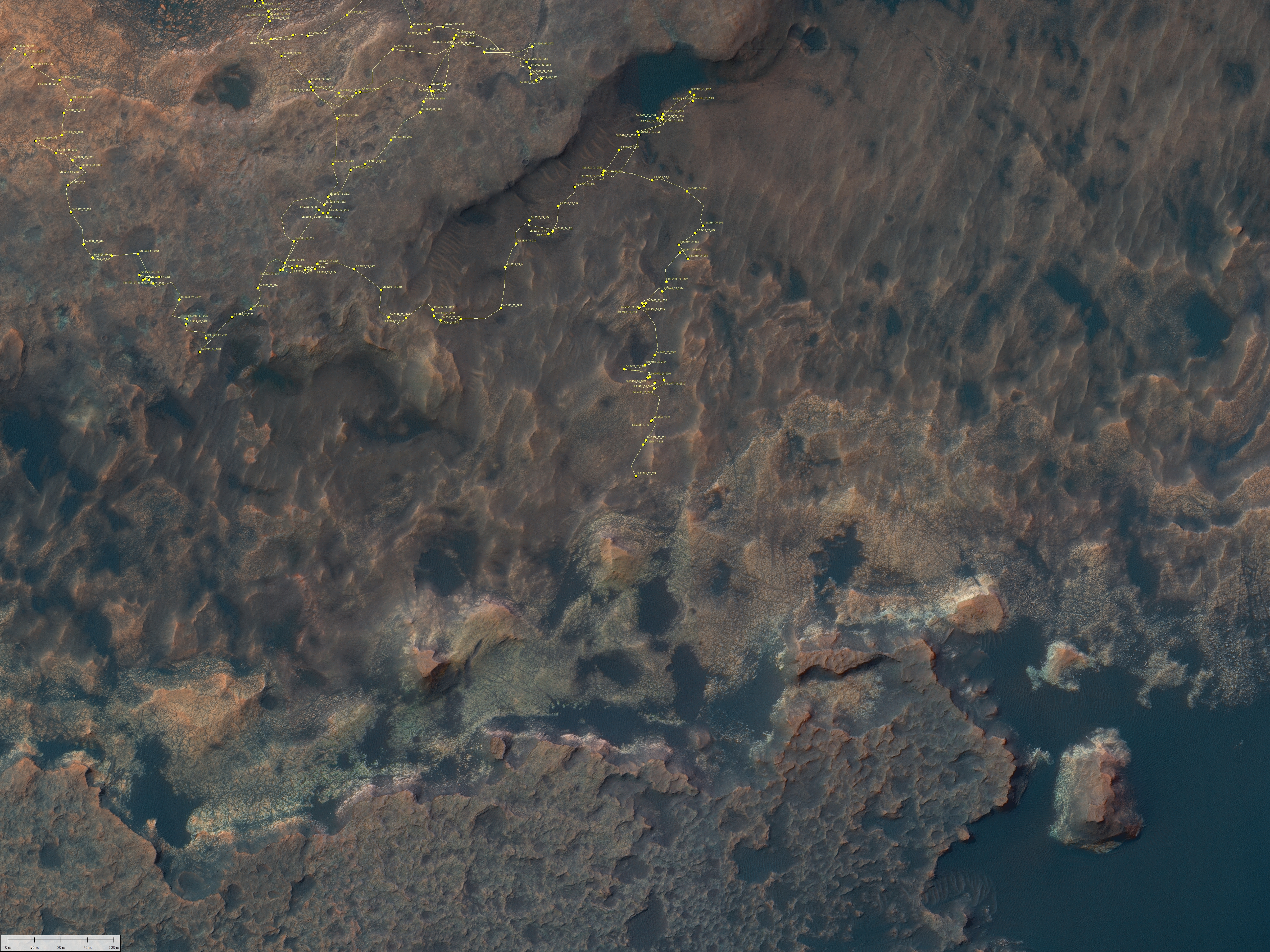
A major update from Curiosity’s science team

Panorama of Mars
Click for full image.

layered flaky rocks
Click for full image.

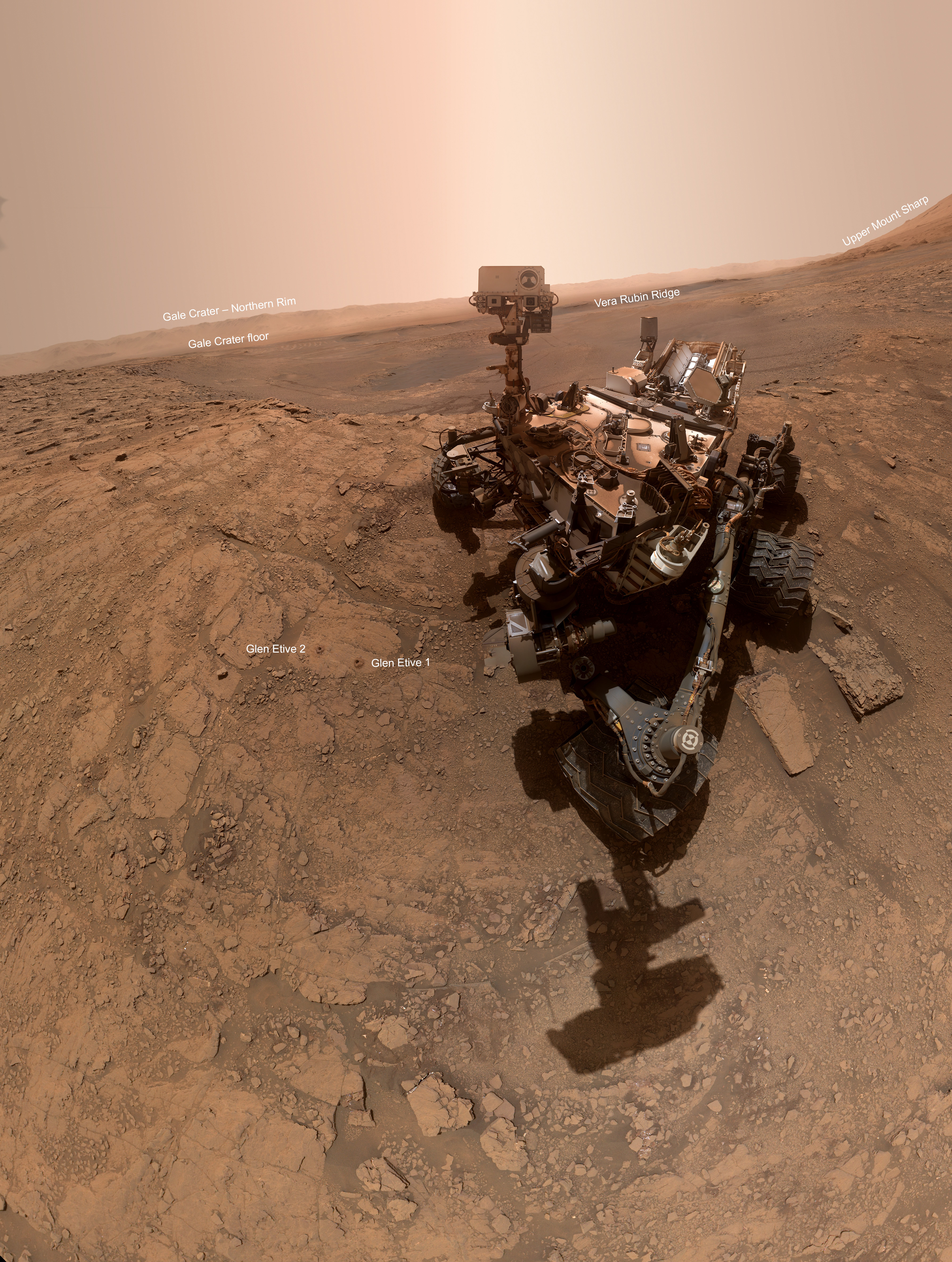
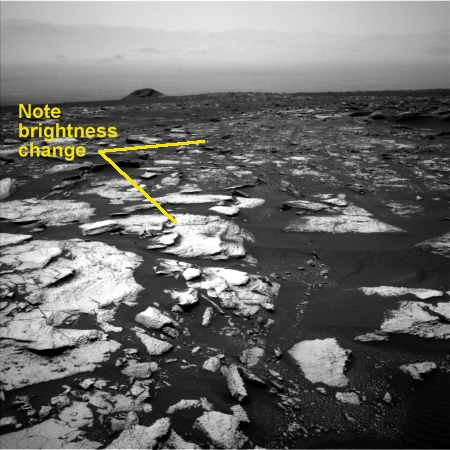
In a press release today, the Curiosity science team provided a major update on the rover’s recent travels in the mountain foothills of Gale Crater.

First and foremost was the new information about the rover’s wheels, which was buried near the bottom of the release:

The rover’s aluminum wheels are … showing signs of wear. On June 4, the engineering team commanded Curiosity to take new pictures of its wheels – something it had been doing every 3,281 feet (1,000 meters) to check their overall health. The team discovered that the left middle wheel had damaged one of its grousers, the zig-zagging treads along Curiosity’s wheels. This particular wheel already had four broken grousers, so now five of its 19 grousers are broken.

The previously damaged grousers attracted attention online recently because some of the metal “skin” between them appears to have fallen out of the wheel in the past few months, leaving a gap.

The team has decided to increase its wheel imaging to every 1,640 feet (500 meters) – a return to the original cadence. A traction control algorithm had slowed wheel wear enough to justify increasing the distance between imaging.

» Read more

0 comments

A snakelike Martian ridge

A snakelike Martian ridge
Click for full image.

Cool image time! The photo to the right, rotated, cropped, and reduced to post here, was taken on November 22, 2021 by the high resolution camera on Mars Reconnaissance Orbiter (MRO). It shows what the science team labeled a sinuous ridge. Make sure you also look at the full image. The ridge goes on to the south, but then fades way as an almost perfect ramp, only to have another even more wiggly but thinner north-south ridge begin only a few feet to the west.

Sinuous ridges like this are found in many places on Mars. Almost always their origin is thought the result of a former river channel that became a ridge when the surrounding softer material eroded away.

That explanation however does not seem to work for this ridge. It has too many other inexplicable features. For example, note how the peak of the ridge smoothly transitions from sharp to flat-topped. It has a soft appearance that is strengthened by the gap near the top.

It is almost as if this ridge is a kind of elongated sand dune! And guess what: The overview map below gives that explanation some believability.
» Read more

1 comment

InSight team decides to shorten lander’s life to operate seismometer longer

The InSight science team has decided to continue to operate the lander’s seismometer through August rather than turning it off at the end of June, even though that longer use will drain InSight’s batteries sooner and kill the lander shortly thereafter.

The previous plan would have allowed the lander to survive through the end of the year, but would have meant no earthquake data would have been gathered after June.

To enable the seismometer to continue to run for as long as possible, the mission team is turning off InSight’s fault protection system. While this will enable the instrument to operate longer, it leaves the lander unprotected from sudden, unexpected events that ground controllers wouldn’t have time to respond to.

“The goal is to get scientific data all the way to the point where InSight can’t operate at all, rather than conserve energy and operate the lander with no science benefit,” said Chuck Scott, InSight’s project manager at NASA’s Jet Propulsion Laboratory in Southern California.

Apparently they have realized that it is now very unlikely that a dust devil will come by and clear the dust from InSight’s solar panels, so keeping the spacecraft alive longer — but getting no data — does not make sense.

0 comments

Has work begun on a dedicated helicopter mission to Mars?

Overview map

The easternmost point in the Mars Helicopter traverse
Click for full image.

In my routine searches through the image archive for the high resolution camera on Mars Reconnaissance Orbiter, I recently came upon several images labeled “Candidate Mars Science Helicopter Traverse” that I at first thought referred to Ingenuity’s extended mission in Jezero Crater.

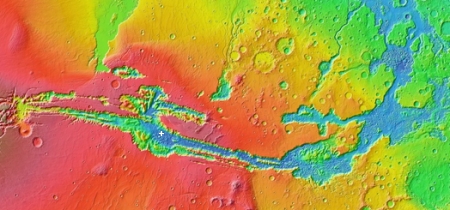
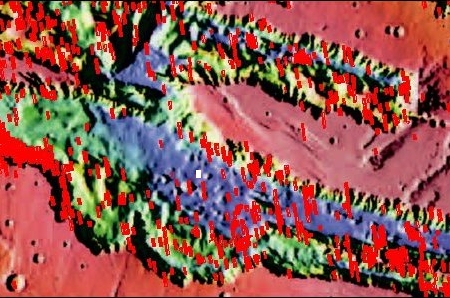
A closer look however revealed these photos have nothing to do with Ingenuity or Jezero Crater. Taken in November ’21, January ’22, and March ’22, the images instead cover parts of the south rim of Valles Marineris, the solar system’s largest canyon, and appear to be research for a future dedicated Mars helicopter mission. The overview map above shows the location of these photos by the black dots. Three locations have each been imaged twice to produce a stereoscopic view that can precisely measure the topography.

The photo to the right, cropped and reduced to post here, shows the easternmost image, taken November 3, 2021. Not only does it show ample flat areas, the picture captures an impressive avalanche flow coming down from that southern interior canyon slope.

All the images were requested by planetary scientist Edwin Kite of the University of Chicago. Though I tried several times to contact Dr. Kite to get more information, he unfortunately did not respond. It could be this work is still too preliminary and thus he does not wish to comment.

Nonetheless, the extent of the three sets of images give us a fair idea of the kind of missions Kite and others might be considering. From east to west the distance between the images is about four hundred miles, and covers a traverse of the southern interior slopes of Valles Marineris along that entire length. The photos look mostly at the base of the canyon’s slope, each showing clearly that a helicopter flying there would have plenty of landing spots.

Obviously this first dedicated Mars helicopter mission might not cover this entire distance. Right now these images could simply be the first tentative research on choosing potential landing areas. Regardless, it appears that at least one scientist has already concluded that Ingenuity has proven such helicopter missions make sense, and is beginning to target one of Mars’s most spectacular locations, Valles Marineris, for that mission.

6 comments

Water and dry ice at the Martian north polar ice cap

water and dry ice at the Martian north pole
Click for original image. Click here for full image.

In our third Martian cool image of the day, we go to the north pole of Mars, as seen from orbit by the high resolution camera of Mars Reconnaissance Orbiter (MRO). Taken on March 30, 2022 and cropped and reduced to post here, this picture shows some of the distinct and unique geological features found only on the polar caps of Mars. From the caption by Candy Hansen of the Planetary Science Institute in Tucson, Arizona:

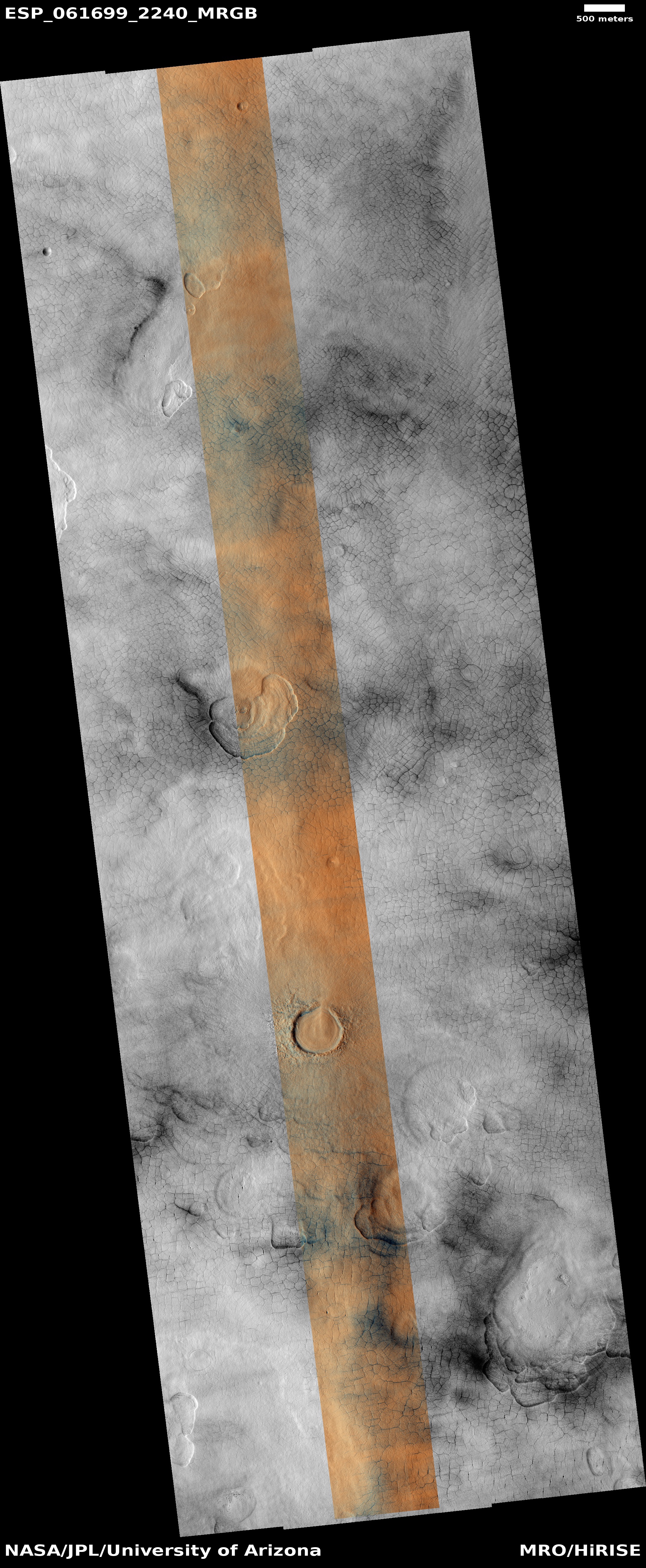
Both water and dry ice have a major role in sculpting Mars’ surface at high latitudes. Water ice frozen in the soil splits the ground into polygons. Erosion of the channels forming the boundaries of the polygons by dry ice sublimating in the spring adds plenty of twists and turns to them.

Spring activity is visible as the layer of translucent dry ice coating the surface develops vents that allow gas to escape. The gas carries along fine particles of material from the surface further eroding the channels. The particles drop to the surface in dark fan-shaped deposits. Sometimes the dark particles sink into the dry ice, leaving bright marks where the fans were originally deposited. Often the vent closes, then opens again, so we see two or more fans originating from the same spot but oriented in different directions as the wind changes.

The top layer of translucent dry ice falls as dry ice snow during the winter, than sublimates away with the arrival of spring. Since this photo was taken in autumn, we are looking at features left over from the activity from the spring and summer.

1 comment

Perseverance peers towards the rim of Jezero Crater

Perseverance peers through winter haze
Click for full image.

Overview map
Click for interactive map.

In our second cool image from Mars today, the Mars rover Perseverance gives us its own long distance view of the dusty winter air inside Jezero Crater. The photo above, cropped and reduced to post here, was taken on June 16, 2022 by the rover’s left high resolution camera, and looks to the southwest towards the crater’s western rim.

As with today’s previous cool image from Curiosity, we can see several ranges, each with distance faded more by the dust that hangs in the air during the winter on Mars. In the foreground right is the nearest cliff of the delta that flowed into Jezero over time in the past. Next is a knob and ridge line, also part of that delta flow but farther away. Third are some farther ridges that might have been part of that flow but maybe not.

Faintest of all are the highest mountains that form the western ridge of Jezero Crater, barely visible in the haze.

The blue dot in the overview map to the right marks Perseverance’s approximate position when the photo was taken. The yellow lines my guess as to the area covered by the photo. The green dot marks Ingenuity’s present position after its last flight, much closer to the delta that I had predicted.

3 comments
1 72 73 74 75 76 157