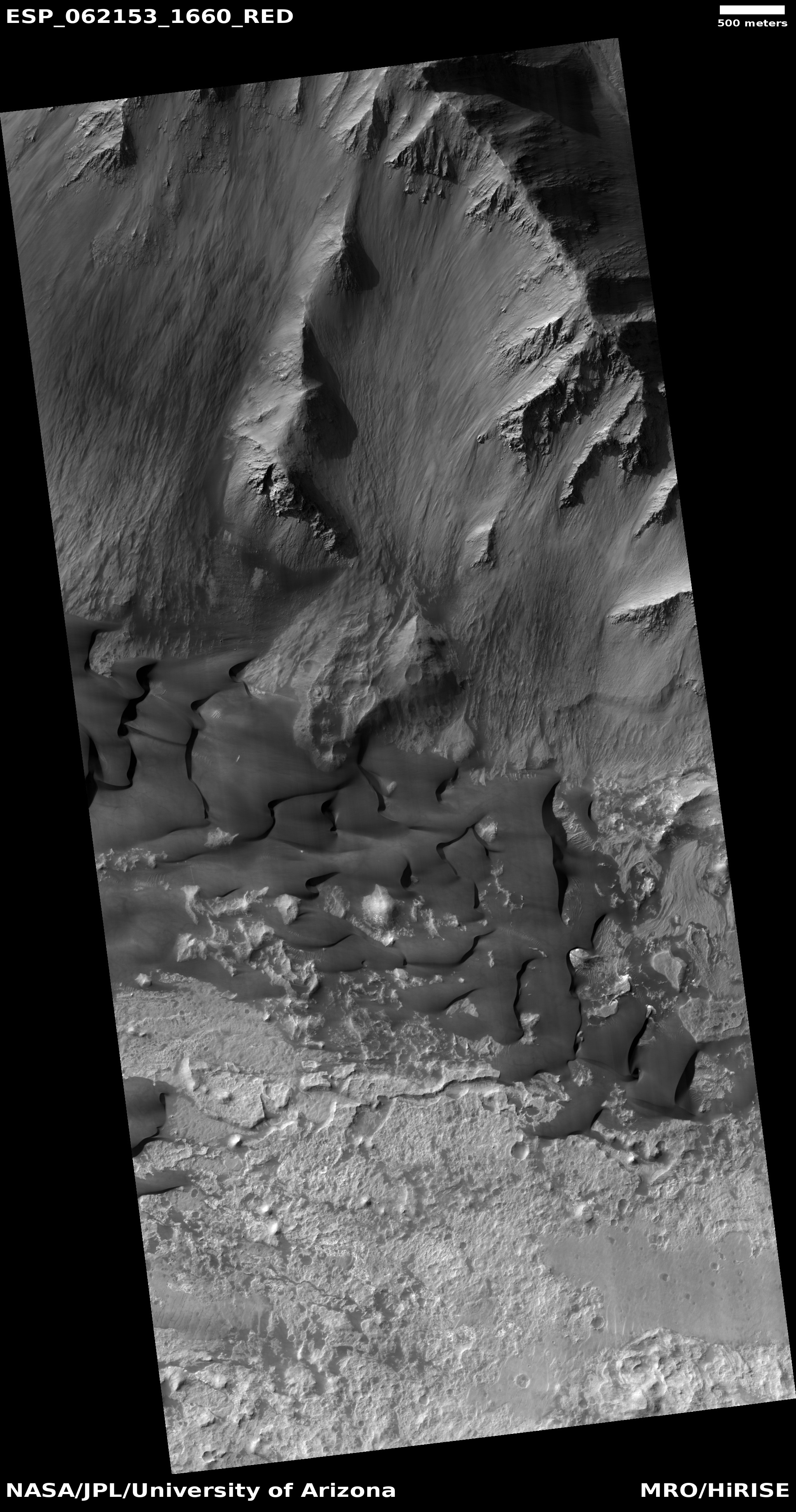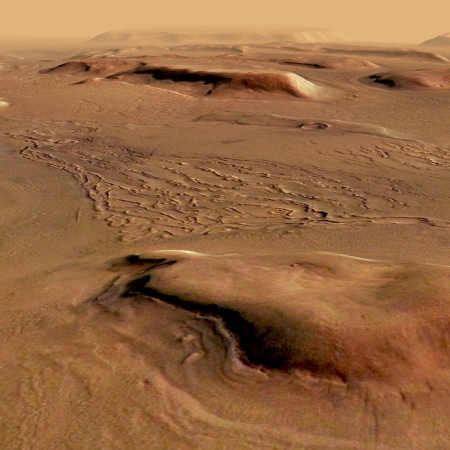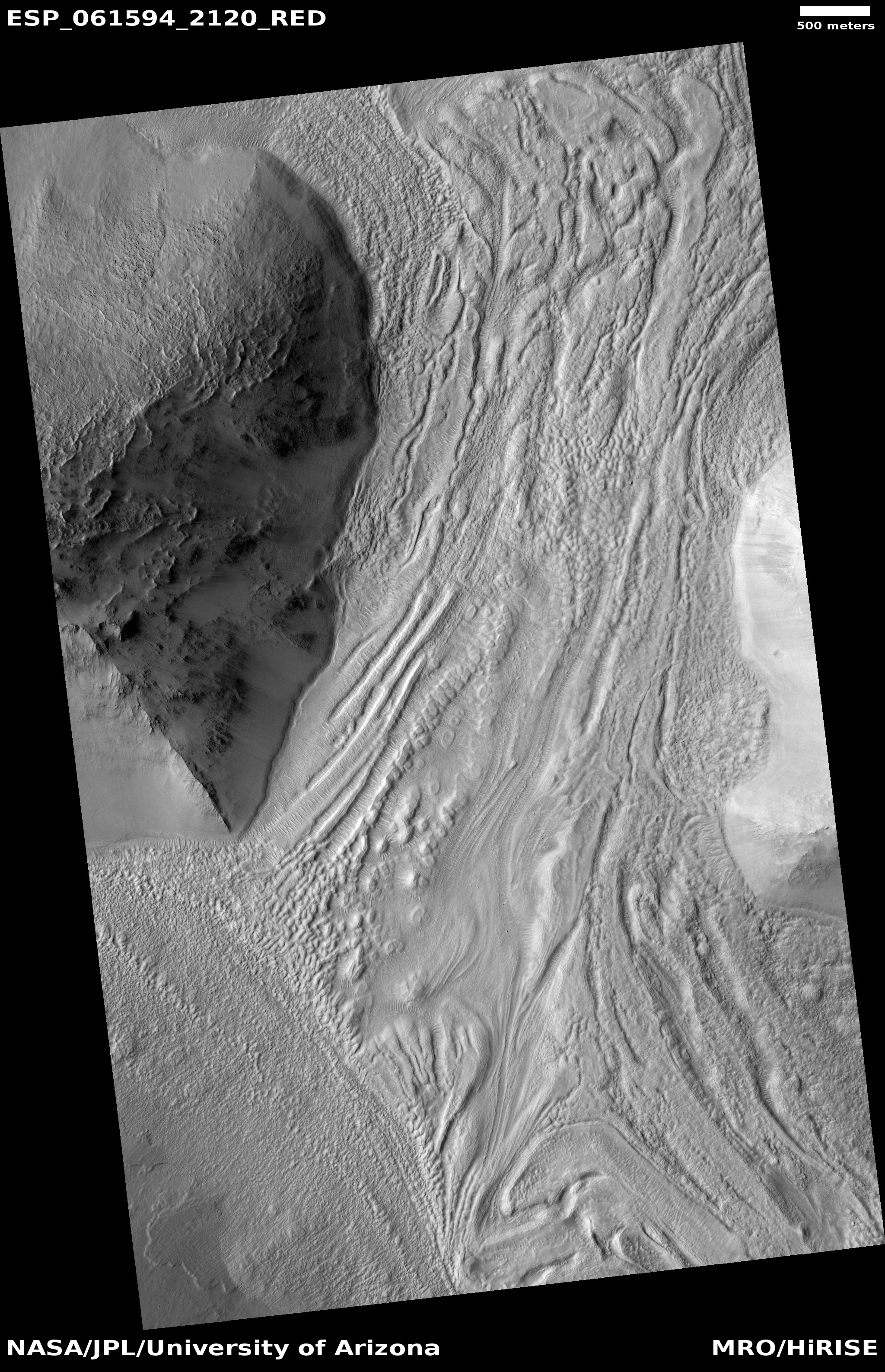
Icy scarps in the high southern latitudes of Mars

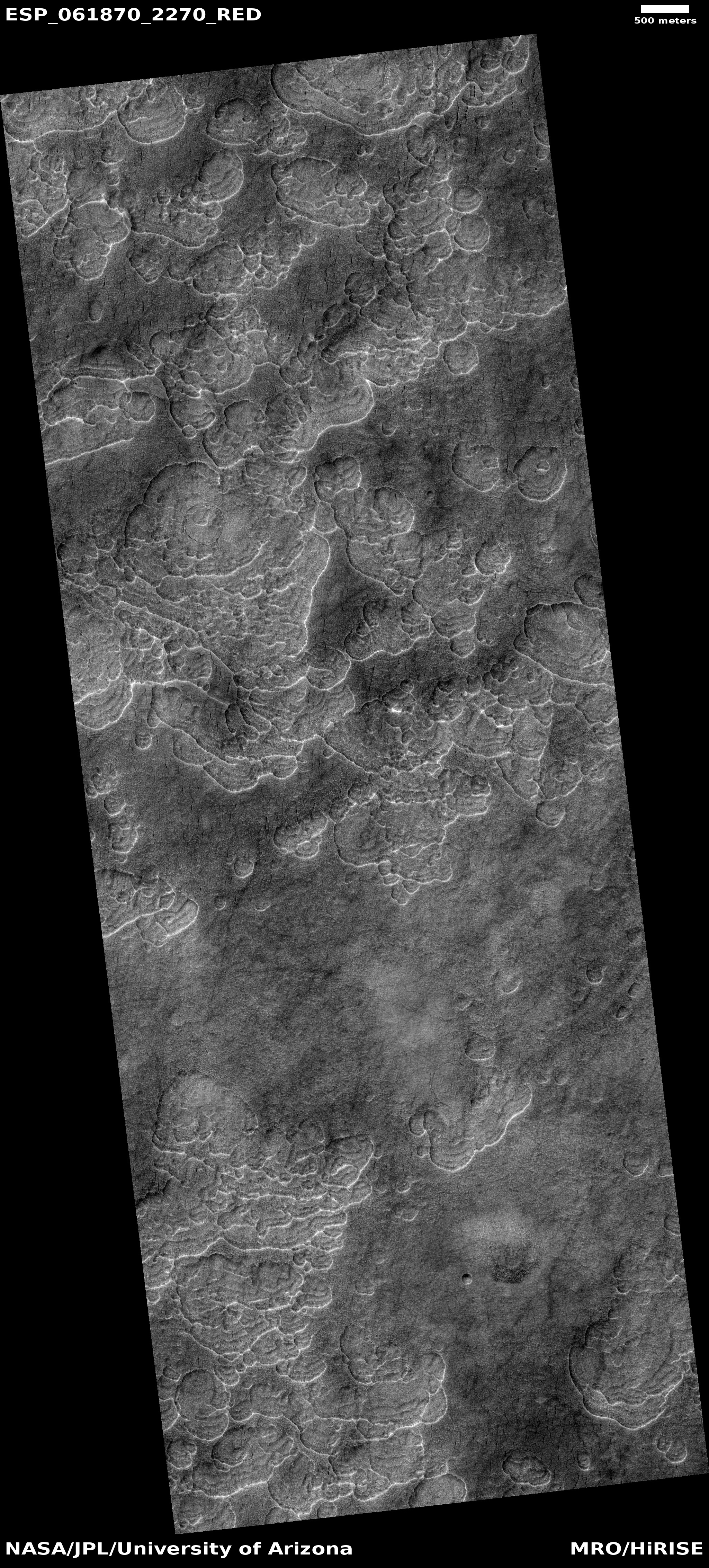
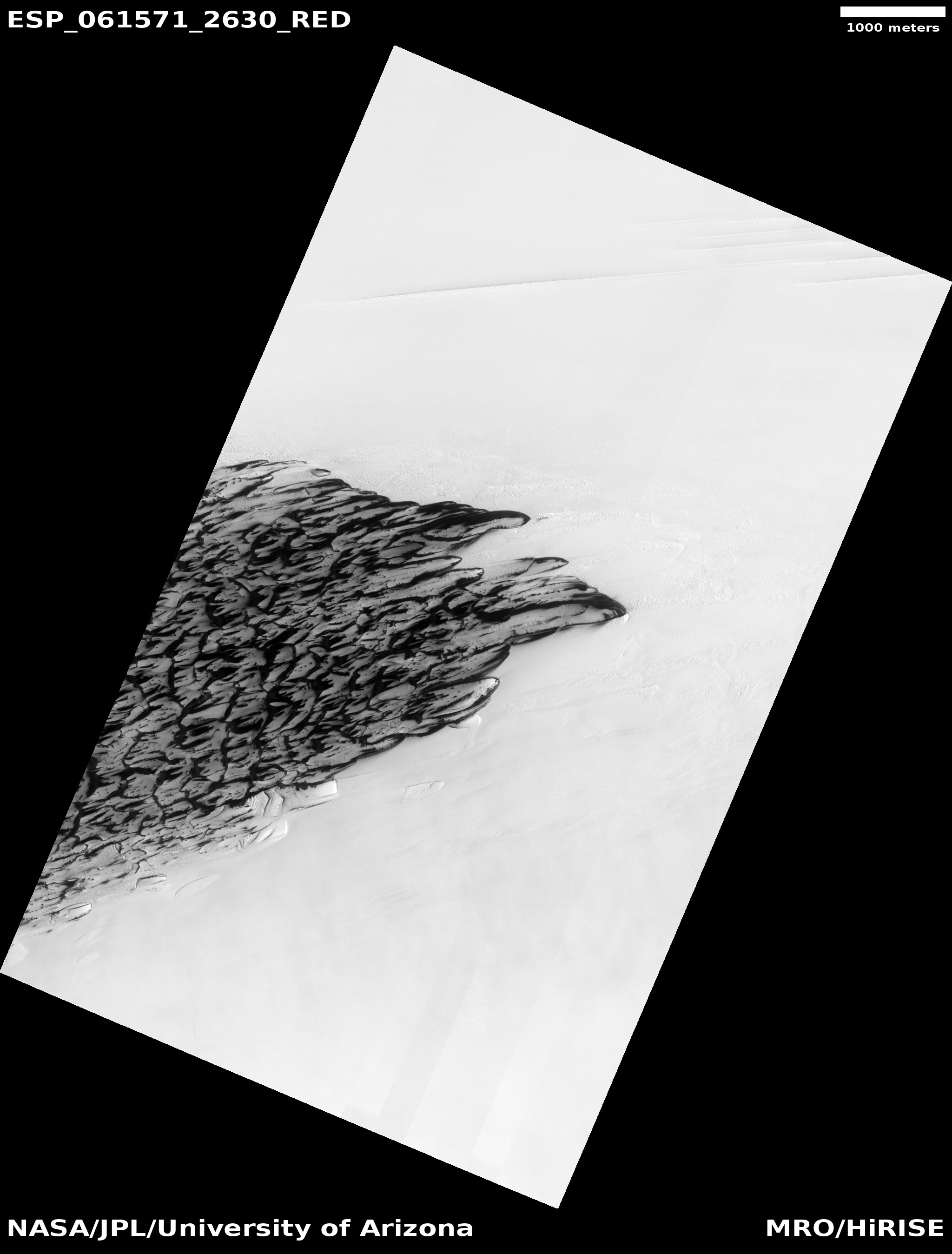
Icy scallops in the high southern latitudes of Mars
Click for full image.

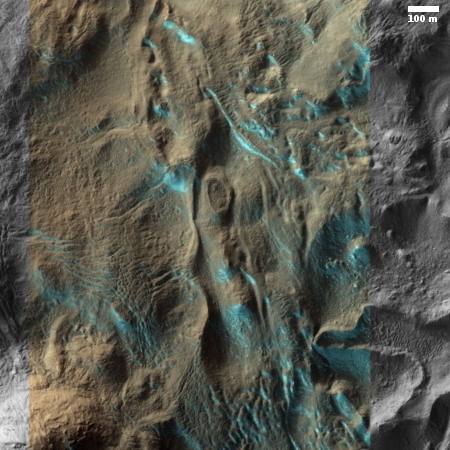
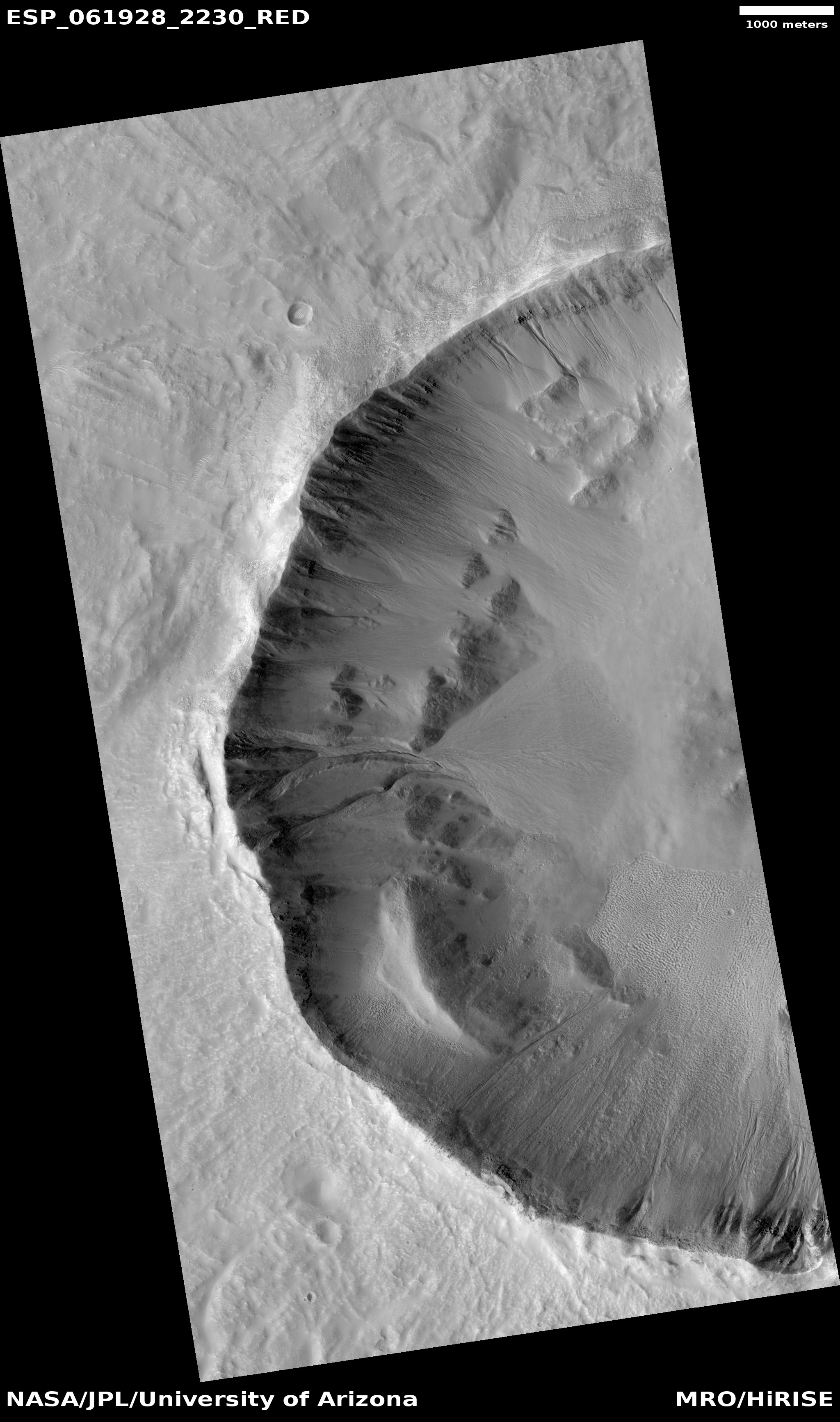
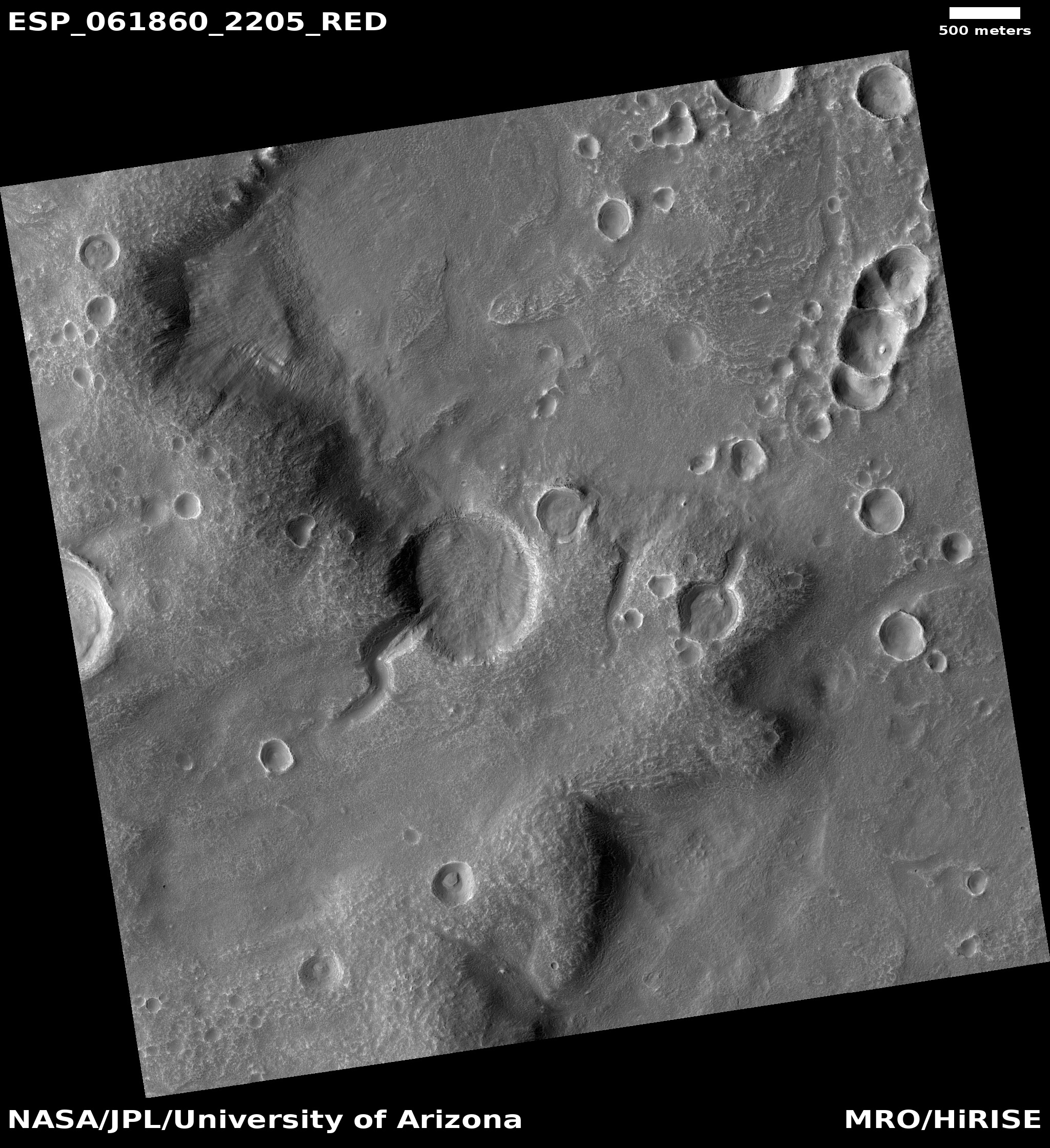
Cool image time! The photo to the right, rotated, cropped, and reduced to post here, was taken on May 30, 2022 by the high resolution camera on Mars Reconnaissance Orbiter (MRO). It shows what the scientists label “Patching Mantling Unit,” located at about 57 degrees south latitude in a region where scientists have found good evidence of near surface ice. The top layer, or mantle, is likely patchy because it has a high content of water ice and is sublimating away. That almost all the cliffs are south-facing, which in the southern hemisphere gets the least direct sunlight, supports this supposition. For example, in the crater at the bottom of the image the ice would have disappeared first from the north-facing interior rim slopes, with the sublimation slowly working its way northward. Thus we have that butte extending out from the north rim.

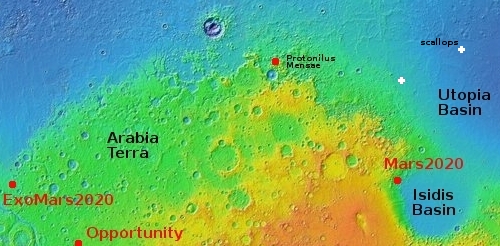
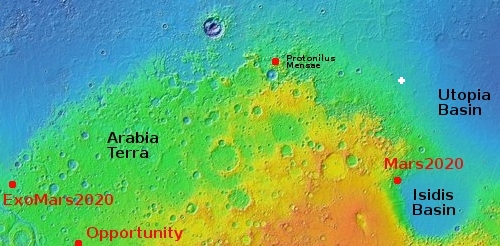
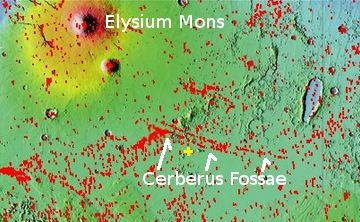
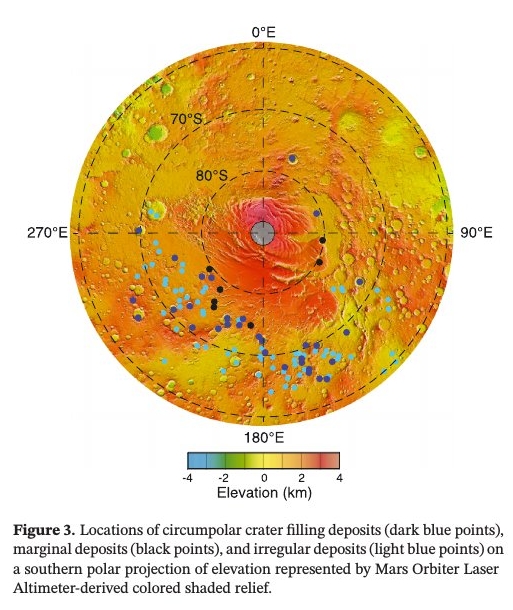
The global map below not only indicates the location of these scallops with the green dot, it illustrates the overall icy nature of most of the Mars.
» Read more

0 comments

The highest point on Mars

The highest point on Mars
Click for full image.

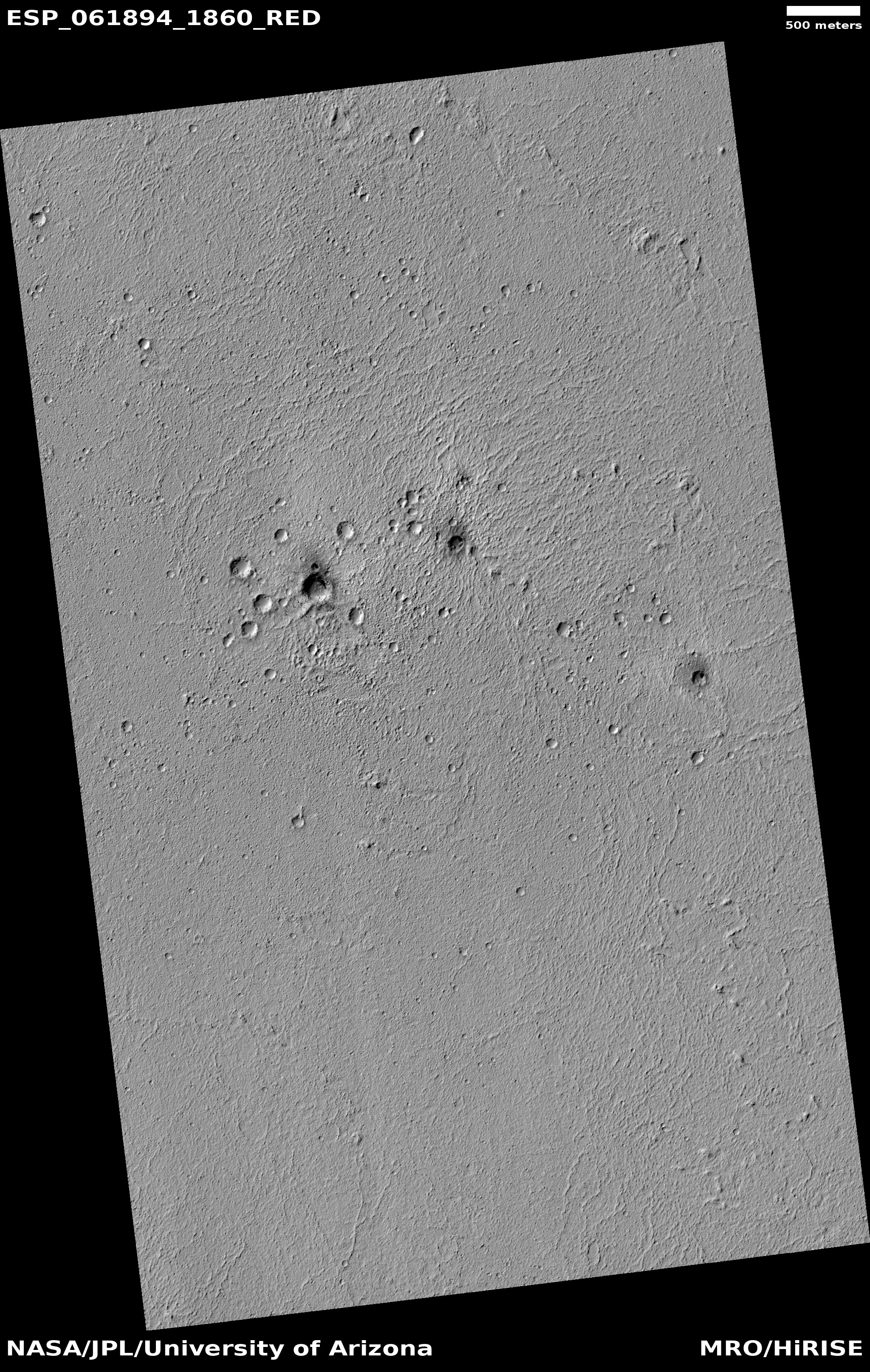
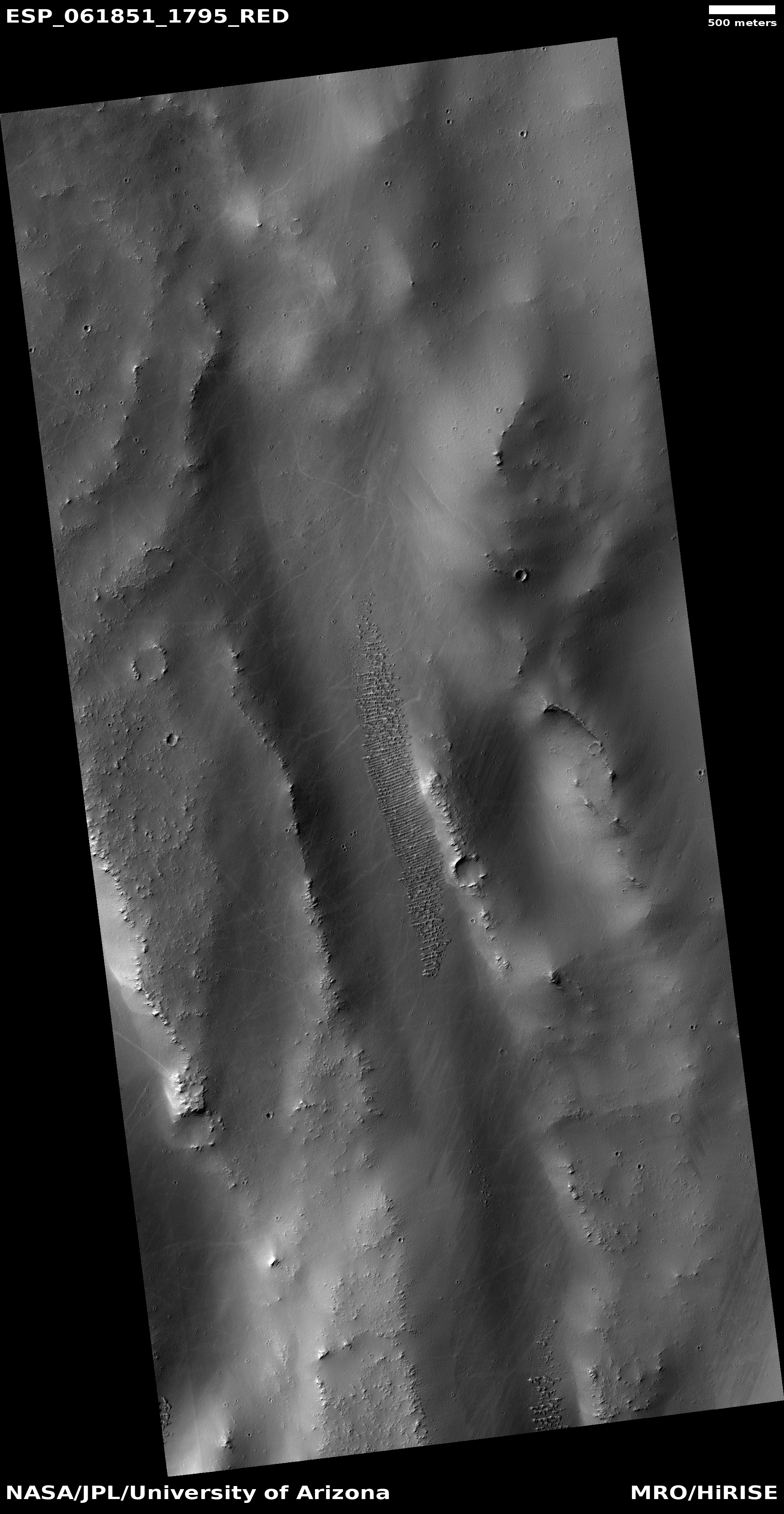
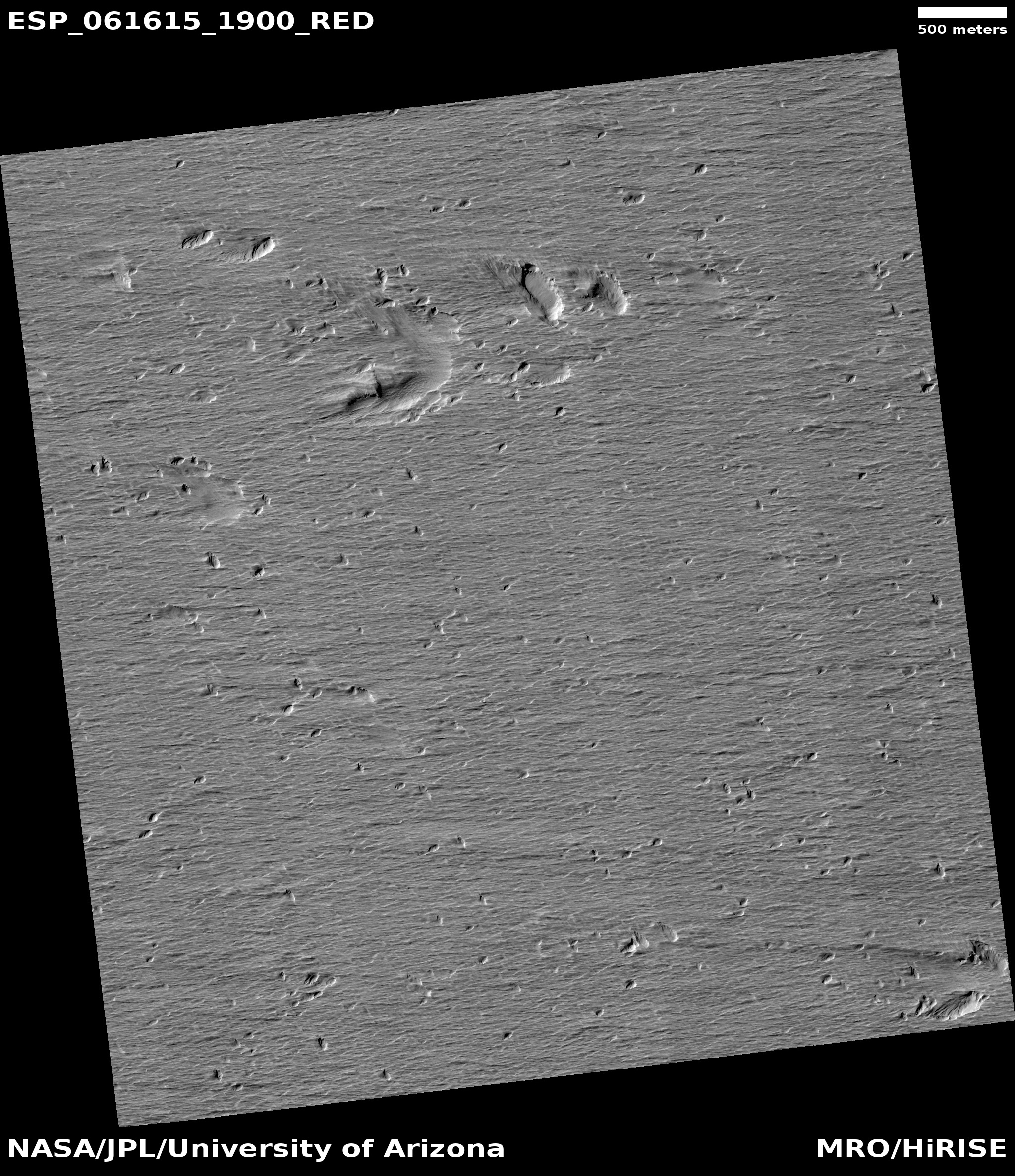
Today’s cool image is cool not because of anything visible within it, but because of its location. The picture to the right, cropped to post here, was taken on May 27, 2022 by the high resolution camera on Mars Reconnaissance Orbiter (MRO). While the terrain shown is a relatively featureless plain of craters and gullies not unlike the surface of the Moon, what we are really looking at is the peak of Mars’ tallest mountain, Olympus Mons.

That’s right, this spot on Mars sits about 70,000 feet above Mars’ mean “sea level”, the elevation scientists have chosen as the average elevation on Mars from its center. At 70,000 feet, this peak is more than twice as high as Mount Everest on Earth.

Yet you wouldn’t really know you are at this height if you stood there. The scale of this mountain is so large that this peak, which actually forms the southern rim of the volcano’s 50 to 60 mile wide caldera, is actually relatively flat. If you stood here, you would not see the vast distant terrain far below. Instead, you’d see an ordinary horizon line in the near distance only slightly lower than where you stand.
» Read more

1 comment

Collapse pits on Mars

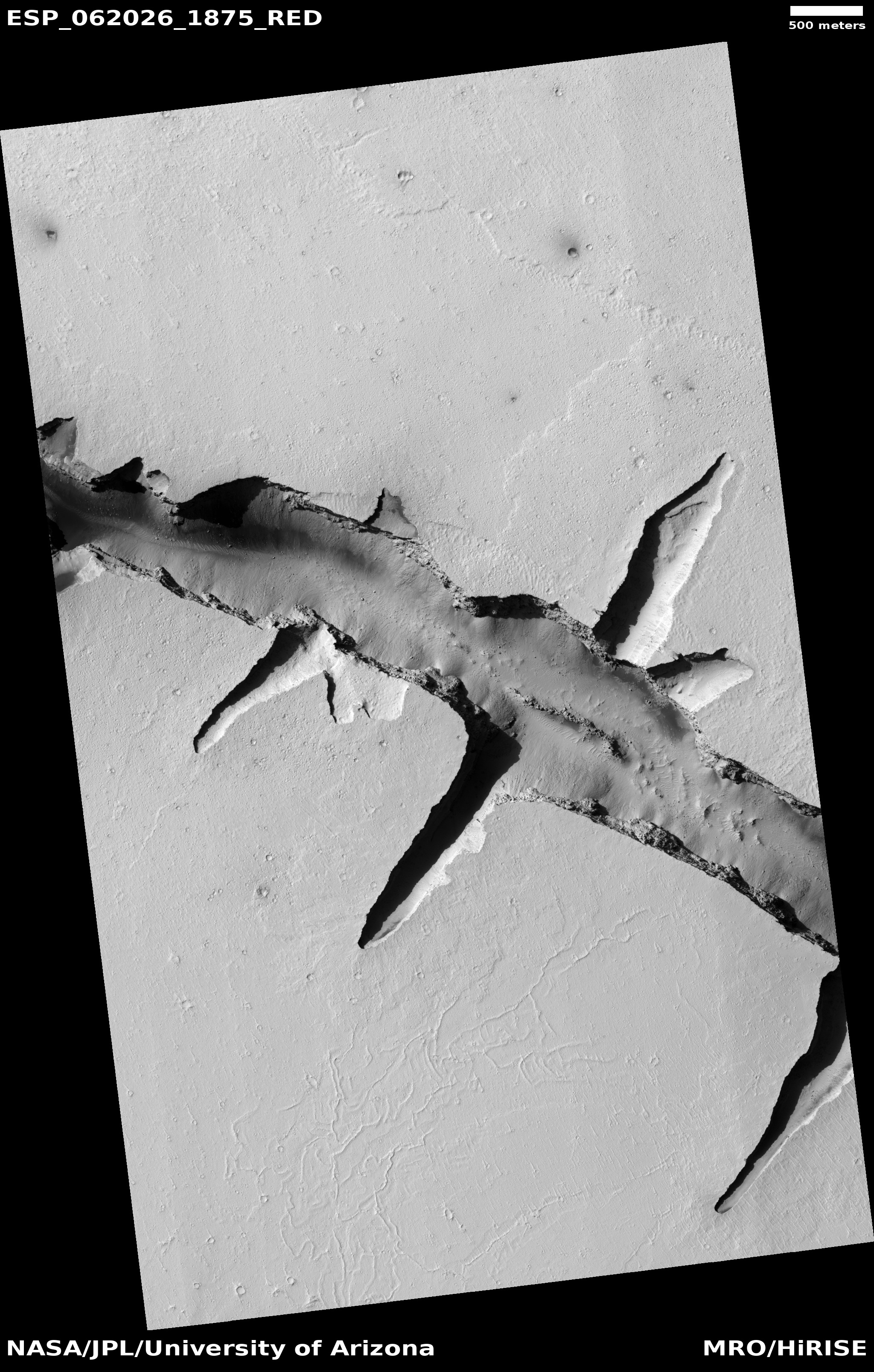
Elongated collapse pit on Mars
Click for full image.

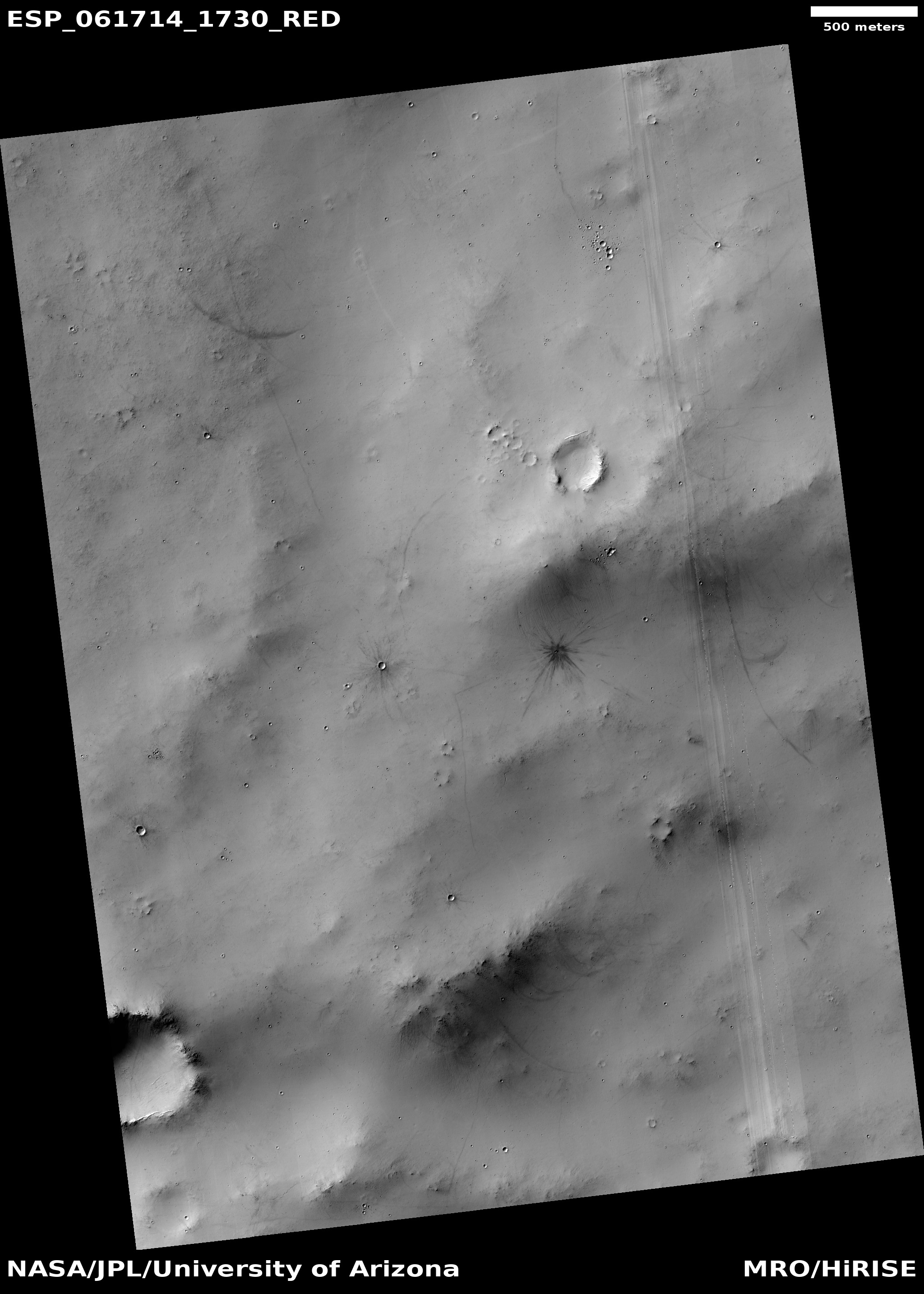
Cool image time! The photo to the right, cropped to post here, was taken on May 21, 2022 and was today’s picture of the day from the high resolution camera on Mars Reconnaissance Orbiter (MRO). Dubbed “An Elongated Collapse Pit” by the science team, their caption explains:

This observation can help to tell whether or not there is a subterranean connection to this pit. As an added bonus, the much smaller depression to its south also appears to be another collapse pit.

This image had already been in my queue for a future cool image post, but since the scientists have posted it, it is time that I did as well.

In the inset I have brightened the image drastically to try to illuminate the darkest spots in both pits. The elongated pit appears to slope downward towards a hole in the southeast corner, while the interior of the second pit to the south remains completely dark. Both appear to suggest a void below that both reach.

The wider context image and overview map below shows that there is further evidence of more voids in this region of Mars, dubbed Ceraunius Fossae, because of its many north-south parallel fissures.
» Read more

3 comments

More lacy Martian rocks

lacy Martian rock
Click for full image.

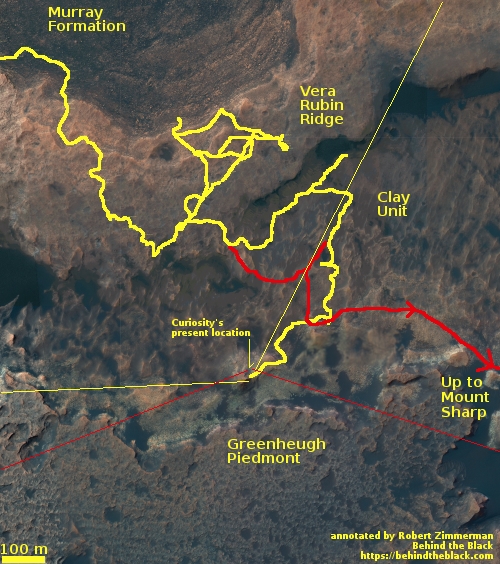
Cool image time! Because the Curiosity team is presently conducting a drilling campaign at its present position in the lower mountains of Gale Crater, the rover has not moved in the past few weeks. At these times, the science team also has the rover’s other cameras do extensive surveys of the surrounding terrain, including high resolution mosaics by its high resolution camera.

To the right is one photo from the most recent mosaic, cropped to post here. It was taken on July 10, 2022, and shows one many layered rock on the ground near the rover. Though no scale is provided, I suspect the extended flake from this rock is somewhere between six to twelve inches long.

Another illustration of the alien nature of Mars. This flake could not exist on Earth, where the heavier gravity and atmosphere would have acted to break it.

1 comment

The colorful layers of the Martian north pole icecap

Colorful layers in the Martian north pole ice cap
Click for full image.

Wider view
Click for full image.

Today’s cool image above, rotated, reduced, and annotated to post here, comes from today’s picture of the day for the high resolution camera on Mars Reconnaissance Orbiter (MRO), which in turn is a retrospective of a captioned image first taken in 2010. The photo to the right, rotated, cropped, and reduced to post here, shows a larger area to provide some context. For this image north is towards the top. The rectangle indicates the area covered by the picture above.

The ice cap at the north pole is about 600 miles across and a little less than 7,000 feet deep, made up of many layers that are a mixture of water ice and cemented dust and sand. From the picture’s caption:

In many locations erosion has created scarps and troughs that expose this layering. The tan colored layers are the dusty water ice of the polar layered deposits; however a section of bluish layers is visible below them. These bluish layers contain sand-sized rock fragments that likely formed a large polar dunefield before the overlying dusty ice was deposited.

The lack of a polar ice cap in this past epoch attests to the variability of the Martian climate, which undergoes larger changes over time than that of the Earth.

The overview map below provides some further context.
» Read more

1 comment

OSIRIS-REx’s sample grab at Bennu in 2020 proved the rubble-pile asteroid has far less cohesion than predicted

The post touchdown crater on Bennu

The OSIRIS-REx science team, using data gathered during the spacecraft’s sample grab at Bennu in 2020, has determined that the rubble-pile asteroid has far less cohesion than predicted, with its rubble behaving less like a solid object and more like the playground ball-pits found in amusement parks.

After analyzing data gathered when NASA’s OSIRIS-REx spacecraft collected a sample from asteroid Bennu in October 2020, scientists have learned something astonishing: The spacecraft would have sunk into Bennu had it not fired its thrusters to back away immediately after it grabbed dust and rock from the asteroid’s surface.

It turns out that the particles making up Bennu’s exterior are so loosely packed and lightly bound to each other that if a person were to step onto Bennu they would feel very little resistance, as if stepping into a pit of plastic balls that are popular play areas for kids.

The image above shows what the touch down crater looked like after the sample grab, taken from the video that was part of the press release. The false colors indicate the depth changes produced by the touch down. The final crater was 26 feet across and more than two feet in depth, far larger than expected. Moreover, the energy from the spacecraft’s thrusters as it lifted off had increased the size of that crater further, by about 40%.

These results about the asteroid’s lack of cohesion match the earlier results studying a different impact crater on Bennu.

3 comments

From the rim to the floor of Valles Marineris

Overview map

From the rim to the floor of Valles Marineris
Click for full image.

For today’s cool Martian image, we begin from afar and zoom in. The overview map above shows the solar system’s largest canyon, Valles Marineris, 1,500 miles long, and 400 miles wide at its widest. The white dot on the north rim of the section of the canyon dubbed Melas marks the location of the photo to the right, rotated, cropped and reduced to post here and taken on January 28, 2011 by the wide angle context camera on Mars Reconnaissance Orbiter (MRO).

I have added elevation numbers to this picture to give it some understandable scale. From the rim to the interior canyon floor — a distance of about ten miles — the canyon wall drops about 19,000 feet. Compare this with Bright Angel Trail in the Grand Canyon, which from the rim to the Colorado River drops about 4,400 feet in about the same distance. The wall of Valles Marineris is about four times steeper.

Even that doesn’t give you the full scale. Having hiked down to that interior canyon floor, you are still about 10,000 feet above Valles Marineris’s main canyon floor, with fifteen more miles of hiking to go to reach it.

The white rectangle marks the area covered by the MRO high resolution image below.
» Read more

0 comments

Scientists: Impacts on rubble-pile asteroid are different than on planets

Landslide on Bennu from impact
Click for full image.

Using data collected by OSIRIS-REx at the asteriod Bennu, scientists have determined that the ejecta from impacts on a rubble-pile asteroid behaves in a very different manner than on planets with higher gravity.

Instead of flying away at about the same speed as the impactor and escaping into space, as expected in the weak gravity, the material is lifted up at a very slow speed, falls back down, and then rolls downhill like a landslide. The graphic to the right from the press release, reduced and enhanced to post here, illustrates what the scientists think happened when one of Bennu’s larger craters was created.

[M]ost of that material, called ejecta, returned to the surface and slid down the face of the asteroid, starting a wide avalanche that slowly rolled toward Bennu’s equator. Perry said the only way this could happen on a small object like Bennu, which is less than 500 meters (1,640 feet) in diameter and has low gravity, is if the dust had low or next to no cohesion.

“Because Bennu is so small, its escape velocity is less than a few tenths of a mile per hour, so any particle ejected faster than that would leave the surface,” he said. “These slow speeds are possible only if Bennu’s surface is weaker than we thought, even weaker than very loose, dry sand. This extremely low surface strength also means material on a slope is easily disturbed, and that’s what led to the landslide.”

In other words, the low cohesion prevents the impact’s energy from being transferred efficiently to the asteroid’s particles. They move, but only slowly, and thus end up sliding away more or less along the asteroid’s surface.

This discovery helps explain how these rubble-pile asteroids accumulate material, despite their low gravity.

9 comments

How did sand dunes get to the top of a Martian mesa?

Sand dunes at the top of a Martian mountain
Click for full image.

Cool image time! The photo to the right, cropped and reduced to post here, was taken on January 1, 2022 by the high resolution camera on Mars Reconnaissance Orbiter (MRO) and shows one of the peaks of a 5,000+ foot high mesa inside Juventai Chasma, one of Mars’ deep mostly-enclosed chasms north of Valles Marineris.

I grabbed this picture because its label, “Bedform Change Detection in Juventae Chasma”, suggested something had changed from past photos, probably related to the sand dunes that hug the upper slopes of this peak. Unfortunately, in comparing this image with the earliest high-res image taken by MRO back in February 2018, I could not spot any change, probably because the resolution of the pictures released is not as high as MRO’s raw images.

However, the caption written for that 2018 image tells us where that change has likely occurred:

This image reveals a unique situation where this small dune field occurs along the summit of the large 1-mile-tall [mesa] near the center of Juventae Chasma. The layered [mesa] slopes are far too steep for dunes to climb, and bedform sand is unlikely to come from purely airborne material. Instead, the mound’s summit displays several dark-toned, mantled deposits that are adjacent to the dunes and appear to be eroding into fans of sandy material.

In other words, somewhere in the full resolution image scientists have spotted a change in the bedform sands that make-up these high mountain dunes that hug the peak. Since the data so far has suggested that the source for the sand of these high elevation dunes likely comes from the mesa itself — not from any distant source — any change found will help confirm or disprove that hypothesis.

The white box indicates the area covered by the close-up higher resolution picture below. Also below is an overview map, showing both the location of this mountain in Juventai Chasma as well as Juventai’s location relative to Valles Marineris.
» Read more

1 comment

Engineers propose flying gliders on Mars

Proposed sailplane flights in Valles Marineris
Proposed sailplane flights in Valles Marineris. Click for full image.

Engineers at the University of Arizona are developing a prototype sailplane that they think could fly for long distances on Mars at higher altitudes than a helicopter and not be reliant on solar batteries.

Using dynamic soaring, the sailplane utilises increases in horizontal wind speed with gaining altitude to continue flying long distances. It’s the same process albatrosses use to fly long distances without flapping their wings and expending crucial energy.

After lifting themselves up into fast, high-altitude air, albatrosses then turn their bodies to descend rapidly into regions of slower, low-altitude air. With the force of gravity providing downward acceleration, the albatross uses this momentum to slingshot itself back to higher altitudes. Continuously repeating this process enables albatross and other seabird species to cover thousands of kilometres of ocean, flap-free.

It’s the inspiration for the sailplane’s own propulsion system, enabling it to cover the canyons and volcanoes dotted across the red planet currently inaccessible to Mars rovers.

The graphic above, figure 1 from the engineers’ research paper, shows one possible sailplane mission, deploying two gliders, one to observe the canyon wall and a second to survey the canyon floor. Both would become a weather station upon landing. While the paper doesn’t state a Mars location for this concept, the graphic strikes a strong resemblance to the section of Valles Marineris where scientists have recently taken “Mars Helicopter” high resolution images using Mars Reconnaissance Orbiter (MRO). This paper and those images might be related, or they could be illustrating the general interest by many scientists for this Mars’ location.

Regardless, the engineers are now planning test flights at 15,000 feet elevation, an elevation that will most closely simulate the atmosphere of Mars, on Earth.

8 comments

Scientists: Comet 67P/C-G’s make-up matches the rest of the solar system

A detailed review of the archived data from the Rosetta mission that studied Comet 67P/Churyumov-Gerasimenko closely in 2014-2016 now strongly suggests that the comet’s overall make-up closely matches the rest of the solar system.

“It turned out that, on average, [the comet’s] complex organics budget is identical to the soluble part of meteoritic organic matter”, explains [Nora Hänni of the University of Bern] and adds: “Moreover, apart from the relative amount of hydrogen atoms, the molecular budget of [comet 67P/C-G] also strongly resembles the organic material raining down on Saturn from its innermost ring, as detected by the INMS mass spectrometer onboard NASA’s Cassini spacecraft”.

“We do not only find similarities of the organic reservoirs in the Solar System, but many of [comet 67P/C-G]’s organic molecules are also present in molecular clouds, the birthplaces of new stars”, complements Prof. Dr. Susanne Wampfler, astrophysicist at the Center for Space and Habitability (CSH) at the University of Bern and co-author of the publication. “Our findings are consistent with and support the scenario of a shared presolar origin of the different reservoirs of Solar System organics, confirming that comets indeed carry material from the times long before our Solar System emerged.”

These results are not unexpected, but having those expectations confirmed was one of the main scientific goals of the Rosetta mission. Now, almost a decade later, the results are in.

1 comment

One of Perseverance’s two wind sensors damaged by wind-blown material

According to the principal investigator for Perseverance’s two wind sensors, one was recently damaged by a wind-blown tiny pebble.

Pebbles carried aloft by strong Red Planet gusts recently damaged one of the wind sensors, but MEDA can still keep track of wind at its landing area in Jezero Crater, albeit with decreased sensitivity, José Antonio Rodriguez Manfredi, principal investigator of MEDA, told Space.com. “Right now, the sensor is diminished in its capabilities, but it still provides speed and direction magnitudes,” Rodriguez Manfredi, a scientist at the Spanish Astrobiology Center in Madrid, wrote in an e-mail. “The whole team is now re-tuning the retrieval procedure to get more accuracy from the undamaged detector readings.”

…Like all instruments on Perseverance, the wind sensor was designed with redundancy and protection in mind, Rodriguez Manfredi noted. “But of course, there is a limit to everything.” And for an instrument like MEDA, the limit is more challenging, since the sensors must be exposed to environmental conditions in order to record wind parameters. But when stronger-than-anticipated winds lifted larger pebbles than expected, the combination resulted in damage to some of the detector elements.

The term “pebble” implies a larger-sized particle than what probably hit the sensor. I suspect the “pebble” was no more than one or two millimeters in diameter, at the most.

1 comment
1 71 72 73 74 75 157