Maven makes first map of Mars’ high altitude winds

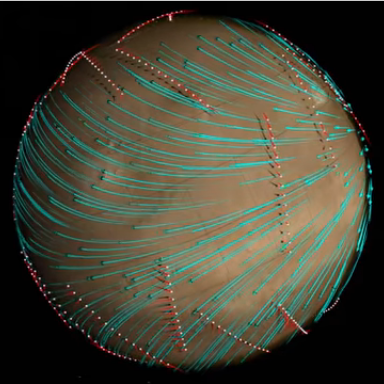
High altitude wind patterns on Mars

Scientists using the Martian orbiter Maven have produced the first global map of the high altitude wind circulation of Mars.

The measurements of winds that were recently mapped above Mars were found at an altitude range of about 140-240 kilometers (85-150 miles) above the planetโ€™s surface.

The wind data has been gathered by the Neutral Gas and Ion Mass Spectrometer (NGIMS). NGIMSโ€™ original purpose was to determine the structure and composition of the Martian atmosphere by measuring in it the amounts of ions (electrically charged particles) and gases. However, although it was not originally designed to do so, in April 2016, the MAVEN team began using NGIMS to observe horizontal winds. Pausing normal collection of data, scientists on Earth programmed the instrument to nod back and forth so that it could detect the direction of winds along its track.

By combining data from many tracks as MAVEN orbits Mars, scientists slowly built up a map of wind behavior. This led to a startling discovery: the wind patterns actually correlated with the Martian topography below.

They have found that even at this high altitude the winds shift around the high volcanoes of the Tharsis Bulge.

To my eye, the wind pattern seen in the image, taken from the video at the link, is remarkably similar to the global wind patterns found on Venus, forming a widening V-pattern moving from east to west. Though the two are vastly different, the similarity is quite intriguing.

0 comments

A new map of the water ice on Mars

Annotated water ice map of Mars
Click for full resolution image.

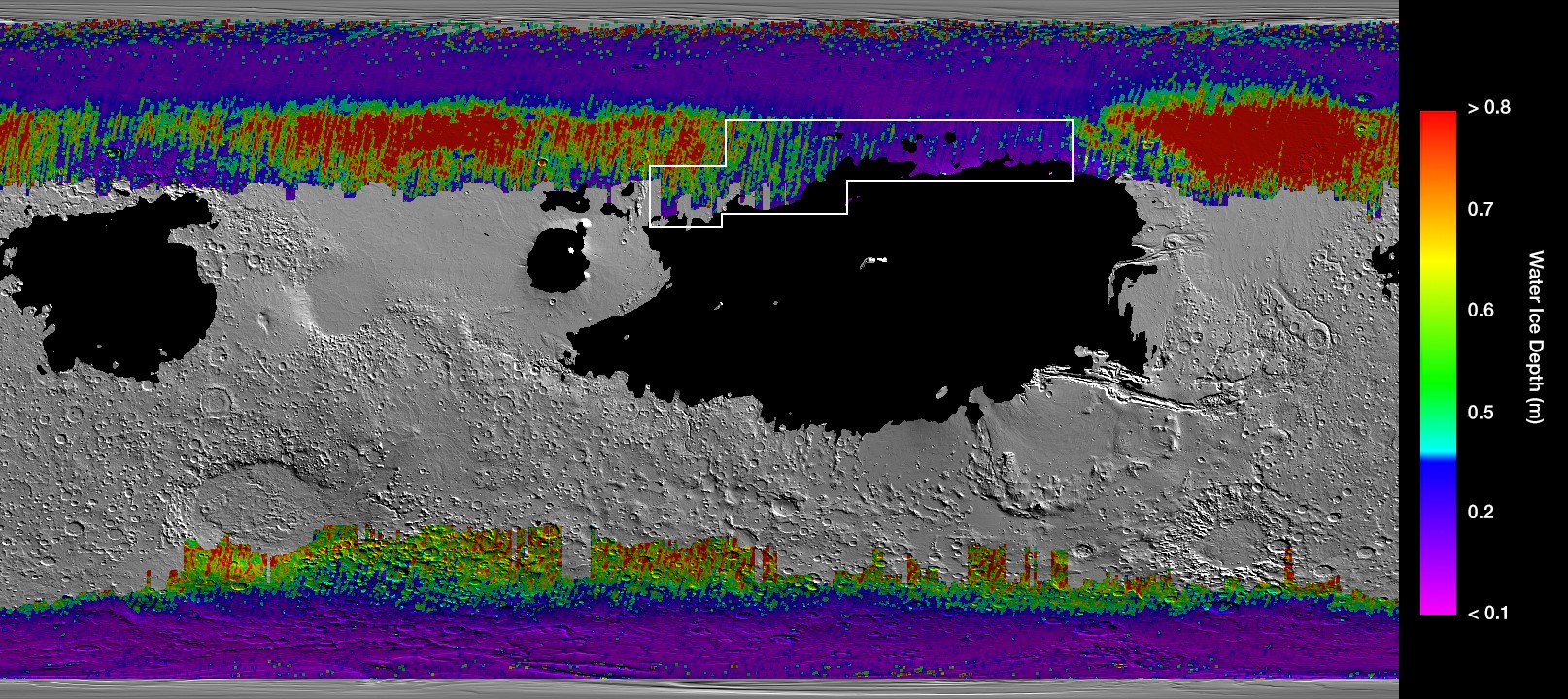
In a new science paper planetary scientists have produced a new global map of the water ice of Mars, based on data from Mars Reconnaissance Orbiter (MRO) and Mars Odyssey.

The image above is a lower resolution version of that map, annotated by me. The black areas are regions covered with a thicker layer of dust, so no good data was obtained. As you go from red to green to blue to purple the ice is thought to be closer to the surface, with the depth as small as an inch in the dark purple areas. The white rectangular represents the region best for human settlement, as it has ice near the surface and is at lower latitudes.

The red box indicates the location in Arcadia Planitia that is SpaceX’s candidate landing zone for Starship. Based on this new water ice map it appears that SpaceX has chosen very well. And the scientists who wrote this paper agree, as noted in the press release: “A large portion of a region called Arcadia Planitia is the most tempting target in the northern hemisphere.”

The map also confirms the existence of the 30 to 60 degree latitude bands where scientists believe a lot of buried glaciers exist. Both bands are both very evident in this new map.

To provide some further context, below is a global map of Mars labeled to show its major geographic features as well as the locations of all previous and upcoming landers/rovers, rearranged to match the water ice map above.
» Read more

10 comments

How the Mars2020 rover differs from Curiosity

A JPL press release today outlines some of the main engineering differences between Curiosity, the rover that has been exploring Gale Crater for the past fifteen years, and Mars2020, the unnamed rover that will be launched in July 2020 to explore Jezero Crater

One of the major the engineering improvements, based on what was learned with Curiosity, are the Mars2020 wheels:

Curiosity has prepared Mars 2020’s team for “off-roading” on the Red Planet. When holes began appearing in the veteran rover’s aluminum wheels, engineers realized that sharp rocks cemented on the Martian surface exert more pressure on the wheels than expected. Careful drive planning, along with a software upgrade, will keep them in shape for the rest of Curiosity’s journey up Mount Sharp.

While Mars 2020’s wheels are made from the same materials, they’re slightly bigger and narrower, with skins that are almost a millimeter thicker. Instead of Curiosity’s chevron-pattern treads, or grousers, Mars 2020 has straighter ones and twice as many per wheel (48 versus 24). Extensive testing in JPL’s Mars Yard has shown these treads better withstand the pressure from sharp rocks but work just as well on sand.

The computer and software has also been upgraded to speed daily operations. In addition, the new rover will have 23 cameras, six more than Curiosity, all of which will be capable of producing color images. And most important, the drill will be larger and will drill cores for obtaining samples that will be stored for possible return by a later mission.

The landing is set for February 18, 2021. If all goes well this rover will be exploring the Martian surface well in to the 2030s.

2 comments

The dark splotches on Mars: Magnets for dust devils

Olympus Maculae, land of dark splotches

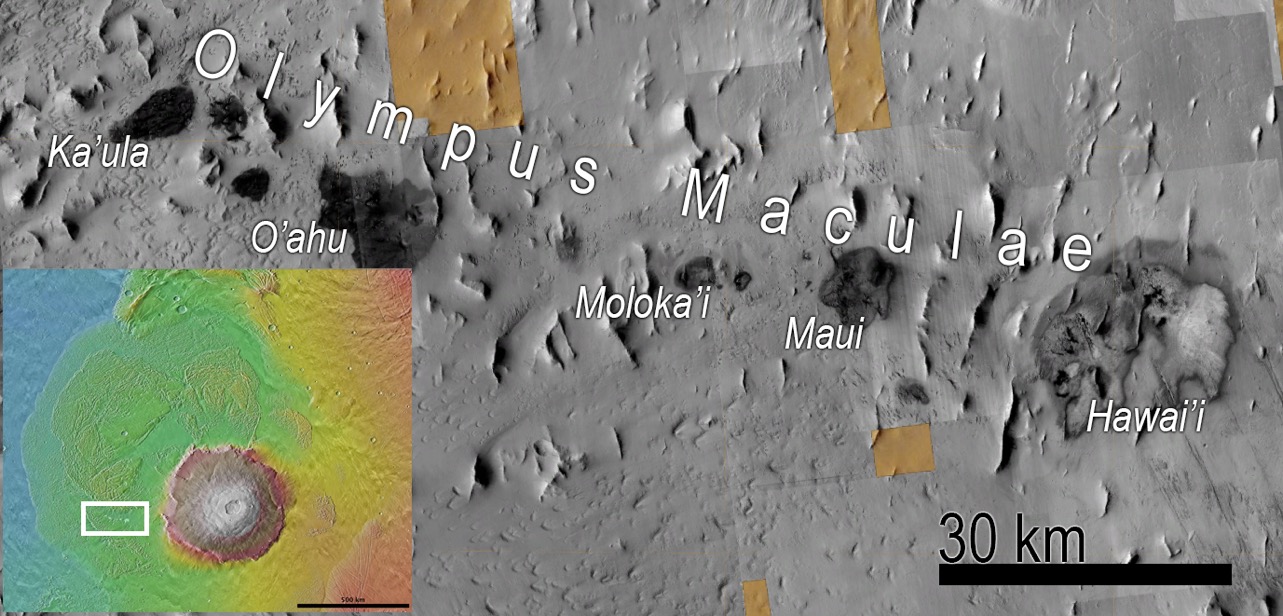
One of the numerous geological mysteries that planetary scientists have discovered among the many high resolution images taken by the various Martian orbiters are a series of dark splotches, ranging in diameter from one to fifteen miles, running in an east-west line on the lower western slopes of the giant volcano Olympus Mons.

Scientists have dubbed this string of splotches Olympus Maculae and, because of their superficial resemblance to the islands of Hawaii, have labeled each splotch, or macula, after those islands, as shown in the overview map above, created by geologist Kirby Runyon of the Applied Physics Lab in Maryland as part of a presentation [pdf] given at a science conference in September 2019.

Prior to the 2018 global dust storm on Mars scientists were not quite sure what caused these dark patches. The data suggested the maculae were less dusty than the surrounding terrain, but why this was so was not clear.

The advent of that storm however gave them a chance to get before and after photos. In October 2018 I found several images in monthly download of new images from the high resolution camera of Mars Reconnaissance Orbiter (MRO) and posted them, making a vain attempt to locate what had changed. As I wrote,

I found that MRO has taken images of this location twice before, in 2007 and in 2009. I spent about fifteen minutes trying to find something that had changed, but was unable to locate anything, other than what look like a few wind-blown streaks probably caused by dust devils. I suspect I do not know what to look for.

I then made some guesses about what caused these splotches, all wrong I have since learned.

Since then more images of these splotches have been downloaded from MRO, all once again indicating that changes have been detected. Below is a sequence of images of the splotch dubbed Kaโ€™ula, the first taken in 2008, the second in 2018 just after the global dust storm, and the third in 2019, one year after the storm. Set side-by-side the changes are more obvious.
» Read more

2 comments

A crack in the Martian crust

Crack in the Martian crust
Click for full image.

Cerberus Fossae

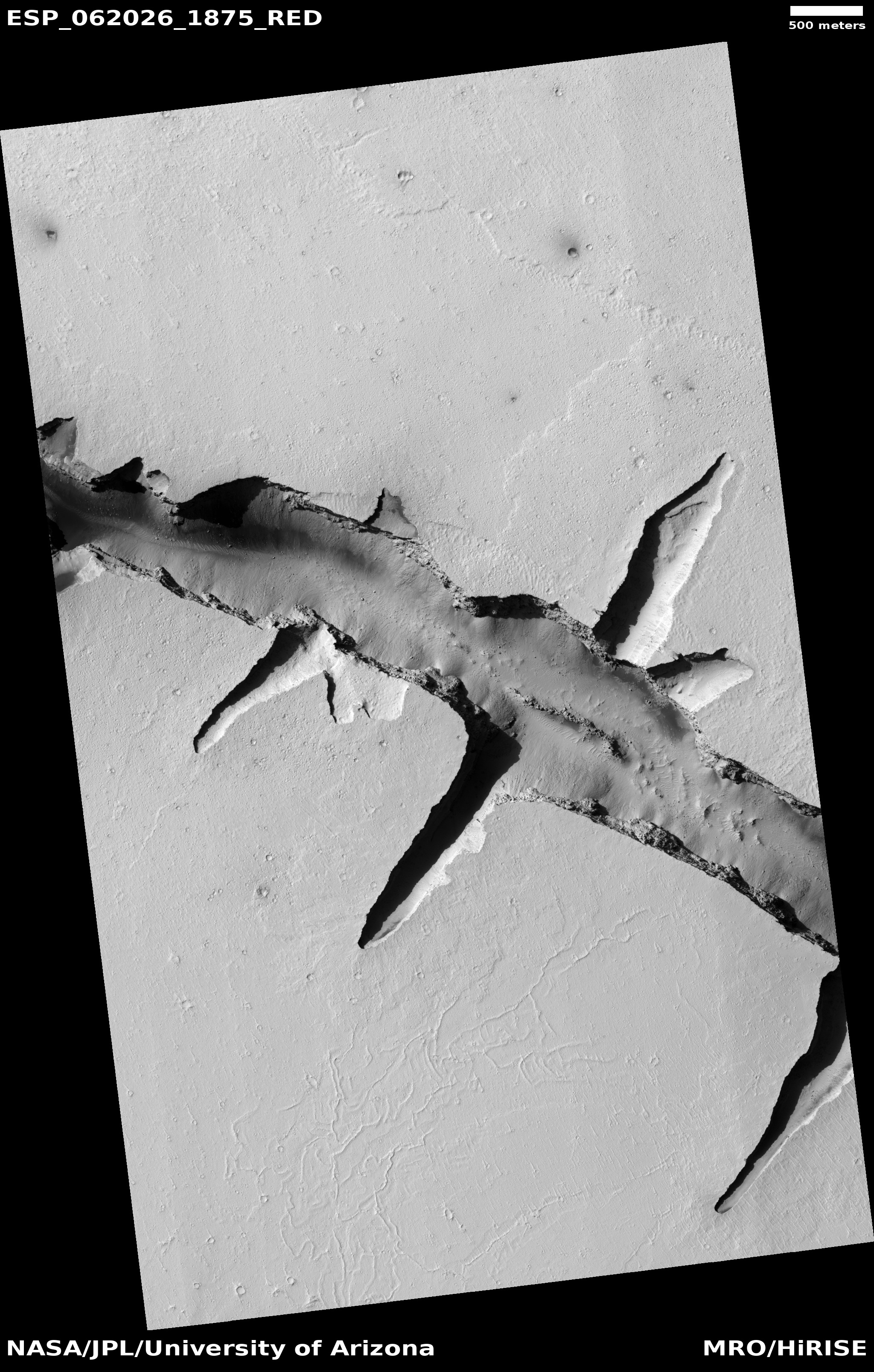
The photograph to the right, reduced and cropped to post here, was imaged on October 20, 2019 by the high resolution camera on Mars Reconnaissance Orbiter (MRO). It shows a spectacular thousand-foot-deep canyon in the region of Cerberus Fossae, an area of Mars crossed by numerous deep east-west fissures and depressions.

Hidden in the small white box on the eastern end of that canyon are Martian geological features, small and at first glance not that interesting, that are of great significance and the focus of intense research.

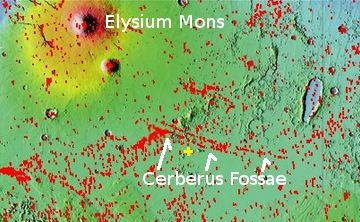
The map to the right shows an overview of the region. The yellow cross shows the location of this particular crack.

In my previous post about Cerberus Fossae, I had incorrectly assumed that these cracks and similar lines of pits or depressions were caused by the sinking of surface material into underground lava tubes. While this is possible in some cases, it is not the main cause of these cracks. Instead, they were formed due to the pressure from below caused by the rise of the surrounding giant volcanoes, Elysium Mons to the north and Olympus Mons to the east. That pressure stretched the crust until it cracked in numerous places. In Cerberus Fossae this produced a series of parallel east-west fissures, some more than seven hundred miles long.

The young age of Cerberus Fossae is dramatically illustrated by the wider mosaic below, showing the entire crack.
» Read more

0 comments

Martian “What the heck?” formations

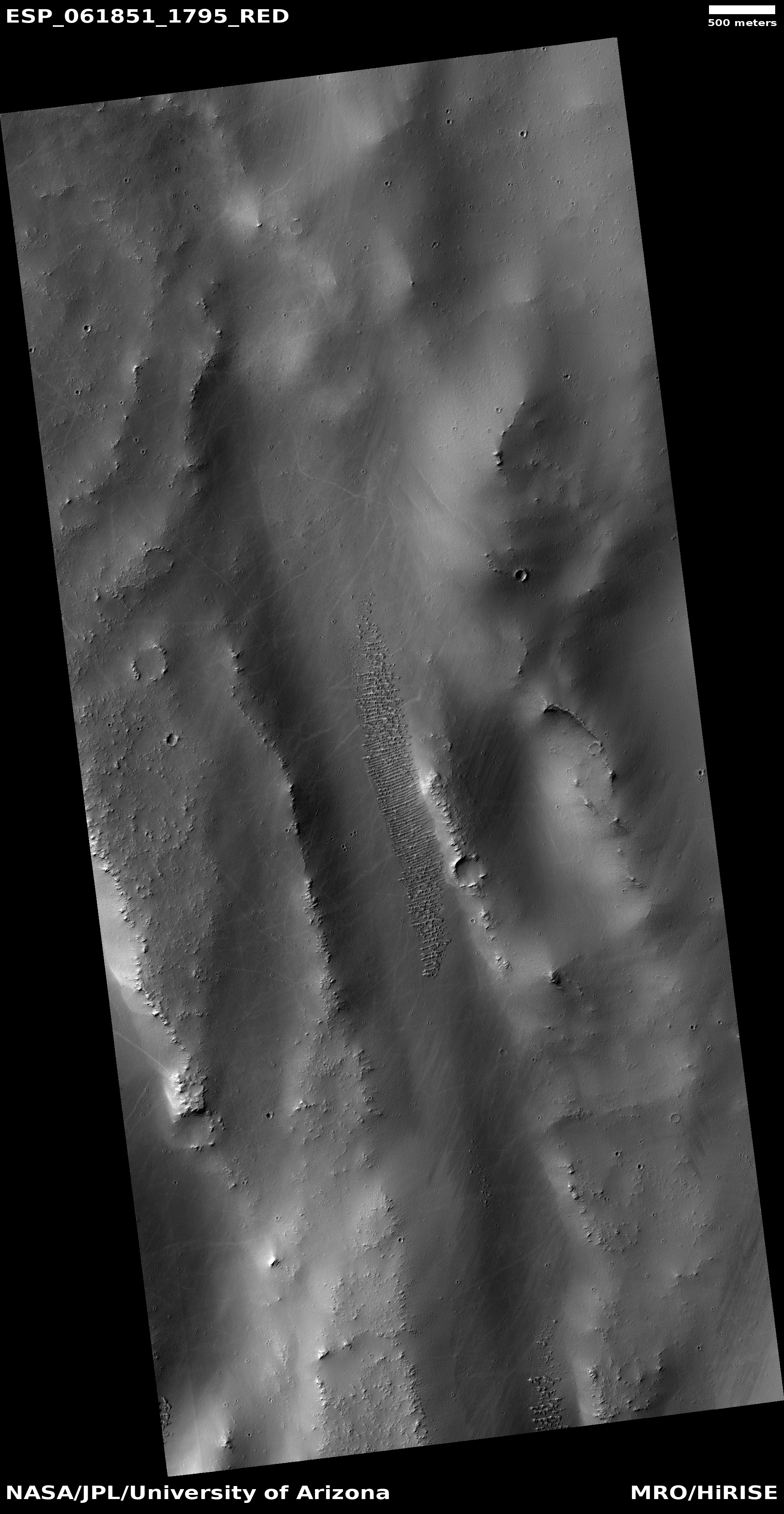
What the heck caused these?
Click for full image.

Cool image time! In digging through the new images that come down from the high resolution camera on Mars Reconnaissance Orbiter (MRO), my reaction sometimes is “What the heck caused that?”

That was my reaction when I looked at the image to the right, cropped to post here.

The full image, taken on October 6, 2019, shows the floor of one of the many north-south fissures found in the volcanic Tharsis Bulge west of Valles Marineris and east of Olympus Mons. The fissures are caused when the crust is pushed upward by volcanic pressure, causing the surface to crack.

In this case the mystery is that patch of east-west ridges at the bottom of this somewhat wide fissure. While they might be dunes, they do not resemble dunes, as they have a rigid and somewhat sharp appearance. More puzzling is their somewhat abrupt appearance and disappearance. Except for its northern end, the edges of the patch are so sharply defined. If these were dunes you’d think they’d fade away more gradually.

Could the ridges be a more resistant subsurface feature slowly being revealed as surface material erodes away? Sure, but their orientation is completely opposite to the north-south fissures that dominate this region. One would expect deeper features to reflect that same general orientation. These ridges do not.

This image was dubbed a “Terrain Sample,” which means it was taken not because of any specific research goal, but because the scientists who run MRO’s high resolution camera had a gap in their schedule and needed to take a picture to maintain the camera’s proper temperature. In such cases they often take somewhat random images, not knowing what they will find. In this case they struck geological gold, a mystery that some postdoc student could spend a lot of time analyzing.

3 comments

Further explorations at candidate Starship Mars landing site

Beginning of Possible Glacial Unit near candidate Starship landing sites
Click for full image.

Close-up on exposed lower layer

Cool image time! Even though it appears that SpaceX has completed its first round of images of its candidate landing sites surrounding the Erebus Montes mountains in the Arcadia Planitia plains in the Martian northern lowlands, this does not mean that other planetary scientists are not asking for more images of this region, for their own scientific research.

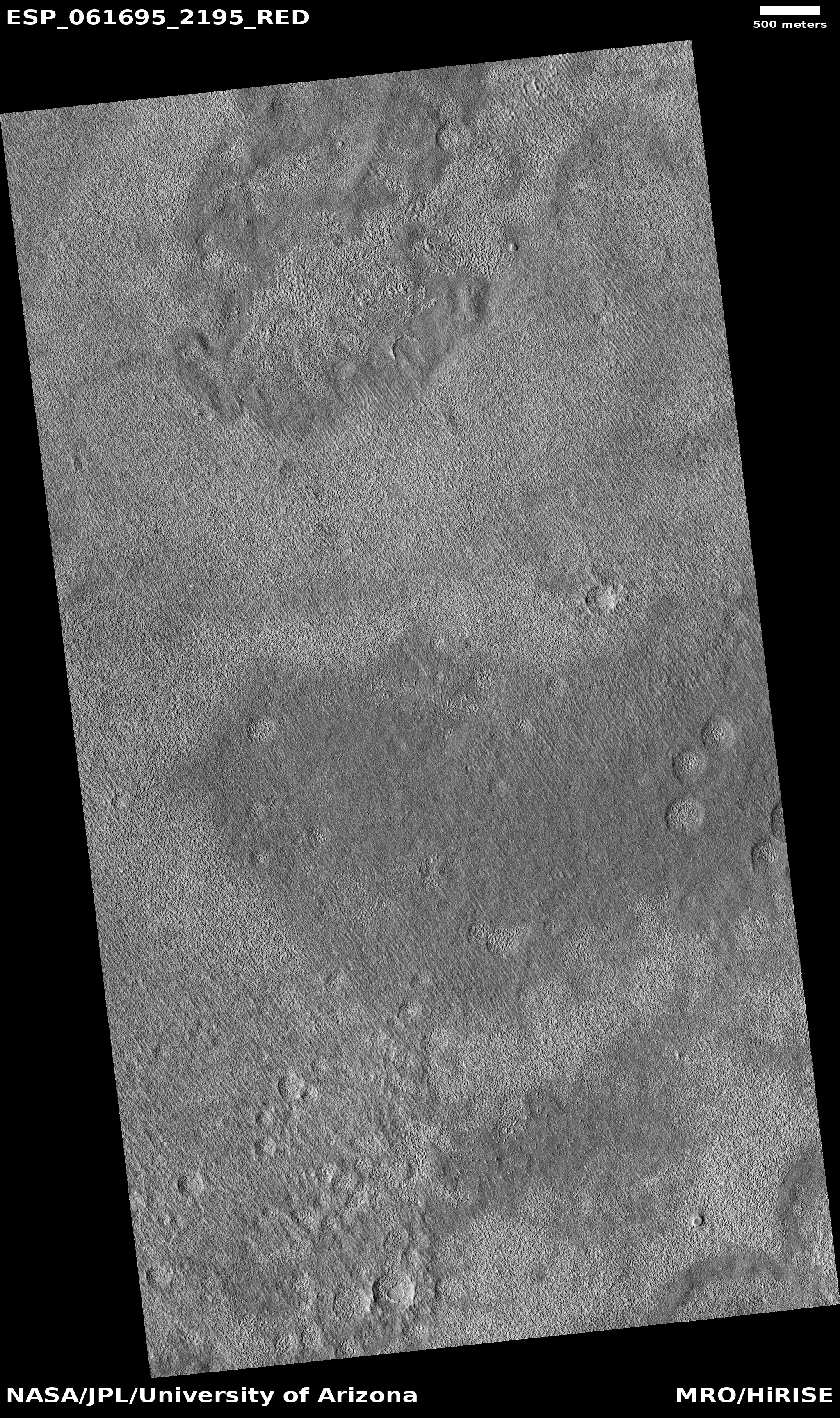
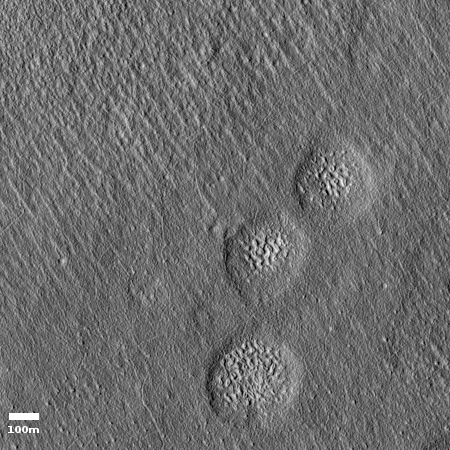
The photograph on the right, cropped and reduced to post here, was released in the early November image download from the high resolution camera of Mars Reconnaissance Orbiter (MRO). Uncaptioned but dubbed “Beginning of Possible Glacial Unit,” it shows what appears at first glance to be a relatively featureless area south of Erebus Montes, out in the flat plains.

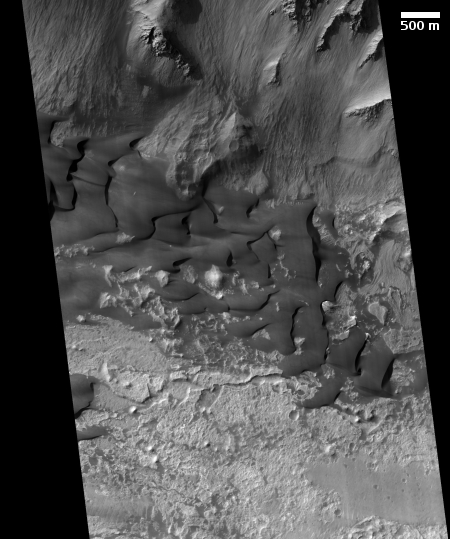
A closer look suggests otherwise. For one, the full image shows darker and lighter areas. The close-up to the right, its location indicated by the white box in the wider image above, also shows several intriguing depressions that appear to be revealing a knobby lower layer. In fact, in the full image it appears that the darker areas are areas where material has covered that knobby lower layer. Where it is bright the ground resembles the floors of these depressions, knobby and complex.

I do not know why they label this the “beginning” of a glacial unit. What I do know is that the research of this region has consistently found evidence of a lot of buried ice. To quote Donna Viola of the University of Arizona noted, โ€œI think you could dig anywhere to get your water ice.โ€ The knobby features to me suggest a surface that is showing signs of sublimation, where the exposed ice is slowly eroding. Think of what happens to a block of ice when you spray warm water on it. As it melts it leaves behind just these kinds of strange formations.

Overview of all MRO images at Starship candidate landing site

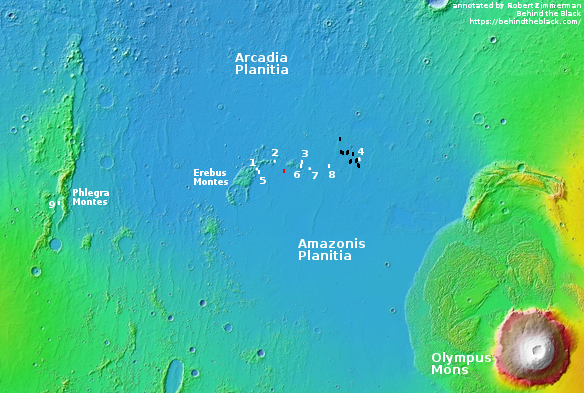
The red box in the map on the right shows the location of this photograph relative to the other images taken for SpaceX. The white boxes are the company’s images taken for Starship. The black boxes are the images it obtained in 2017 when it was thinking of sending a Dragon capsule to Mars.

This map does not show all images taken by MRO’s high resolution camera in this area, but the coverage is very scattered, with many gaps. Over time I suspect these gaps will be filled more quickly than other northern plain regions, because the scientists know that SpaceX has an interest in this area. That interest means there is an increased chance that a mission will fly here in the relatively near future, which in turn is going to generate more scientific interest as well.

0 comments

More Martian pits, filled and unfilled!

Pit in Ceraunius Fossae
Click for full image.

Overview of Ceraunius Fossae

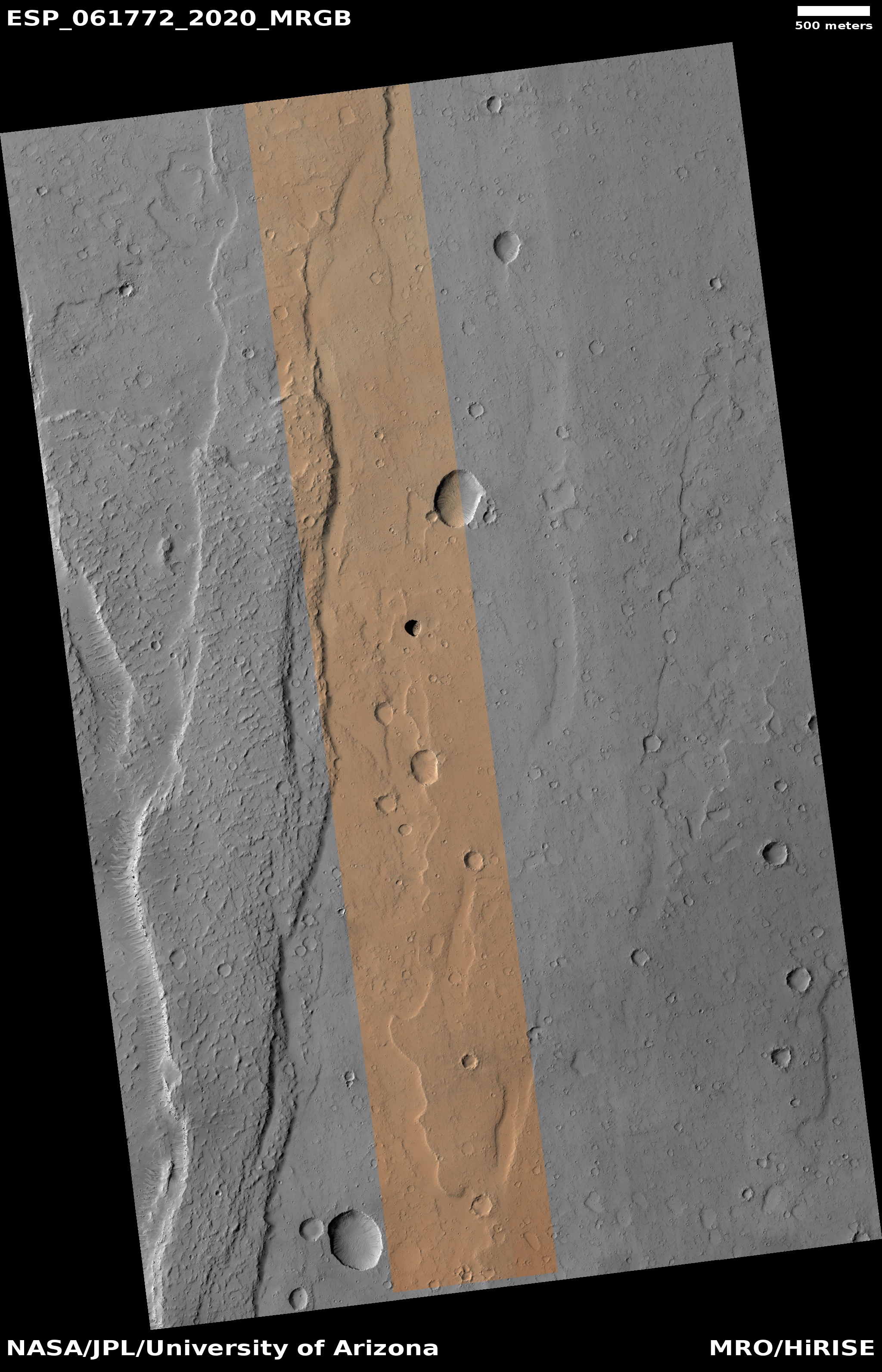
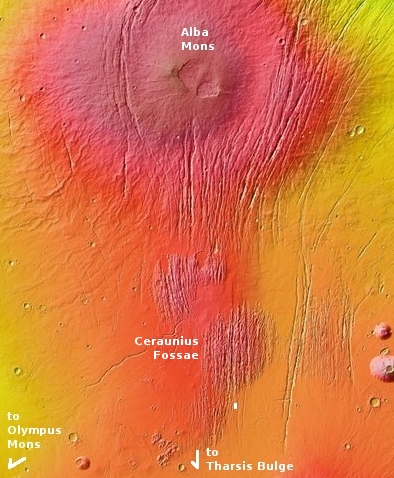
Time for what has almost become a monthly pit report from Mars Reconnaissance Orbiter (MRO). The November image download from the spacecraft’s high resolution camera included two pit-related photographs, both very different. To the right is the first, cropped to focus on the pit and the immediate surrounding terrain. Below that is a wider overview map to provide the context.

This pit’s location is indicated by the white box at the southern end of a region dubbed Ceraunius Fossae, made of hundreds and hundreds of parallel north-south fissures extending more than seven hundred miles south of the giant volcano Alba Mons and caused when the ground was stretched from below, causing it to crack.

This surrounding terrain helps to explain the pit’s origin. First it is located in a north-south depression with a number of other less pronounced depressions. While these do not line up precisely, they still suggest that they are sinkholes where the surface material is draining downward into voids below. Normally the assumption would be the existence of a lava tube, but here the downward grade is very small. Instead, what is likely happening is that the ground is being stretched, causing cracks to form into which surface material slips downward.

The Ceraunius Fossae fractures are extensional features produced when the crust is stretched apart…. Mechanical studies indicate that a regional pattern of radiating graben and rifts is consistent with stresses caused by loading of the lithosphere by the enormous weight of the Tharsis bulge….Several generations of grabens with slightly different orientations are present in Ceraunius Fossae, indicating that stress fields have changed somewhat over time.

In addition to producing normal faults and graben, extensional stresses can produce dilatant fractures or tension cracks that can open up subsurface voids. When surface material slides into the void, a pit crater may form. Pit craters are distinguishable from impact craters in lacking raised rims and surrounding ejecta blankets. On Mars, individual pit craters can coalesce to form crater chains (catenae) or troughs with scalloped edges.

That’s what we see here. The pit is suggestive of a void below, but it is likely not going to be a long coherent underground passage but a serious of random gaps, aligned roughly along the larger crack and producing the various depressions on the surface.

Today’s second pit is of an entire different nature.
» Read more

1 comment

Mars Express confirms ancient glaciers in northern Martian mid-latitudes

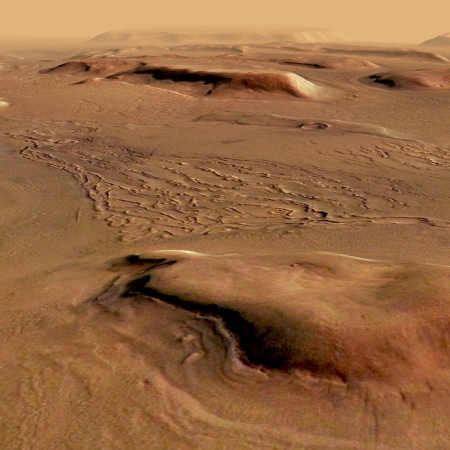
Perspective view of Deuteronilus Mensae
Click for full image.

The European Space Agency’s orbiter Mars Express has confirmed the presence of large fractured ice sheets suggestive of buried and ancient glaciers. These ice sheets are within one region on Mars located in the mid-latitudes where many such glacial features have been found. They are also in the transition zone between the northern lowlands and the southern highlands.

This landscape shows clear and widespread signs of significant, lasting erosion. As is common with fretted terrain, it contains a mix of cliffs, canyons, scarps, steep-sided and flat-topped mounds (mesa), furrows, fractured ridges and more, a selection of which can be seen dotted across the frame.

These features were created as flowing material dissected the area, cutting through the existing landscape and carving out a web of winding channels. In the case of Deuteronilus Mensae, flowing ice is the most likely culprit. Scientists believe that this terrain has experienced extensive past glacial activity across numerous martian epochs.

It is thought that glaciers slowly but surely ate away at the plains and plateaus that once covered this region, leaving only a scattering of steep, flat, isolated mounds of rock in their wake.

Smooth deposits cover the floor itself, some marked with flow patterns from material slowly moving downhill โ€“ a mix of ice and accumulated debris that came together to form and feed viscous, moving flows of mass somewhat akin to a landslide or mudflow here on Earth.

Studies of this region by NASAโ€™s Mars Reconnaissance Orbiter [MRO] have shown that most of the features seen here do indeed contain high levels of water ice. Estimates place the ice content of some glacial features in the region at up to 90%. This suggests that, rather than hosting individual or occasional icy pockets and glaciers, Deuteronilus Mensae may actually represent the remnants of an old regional ice sheet. This ice sheet may once have covered the entire area, lying atop the plateaus and plains. As the martian climate changed this ice began to shift around and disappear, slowly revealing the rock beneath.

Overall, the data coming from both Mars Express and MRO increasingly suggests that there is a lot of buried glacial ice in the mid-latitudes. Mars might be a desert, but it is increasingly beginning to look like much of the planet is a desert like Antarctica, not the Sahara.

4 comments

Mid-latitude Martian glacier?

Glacier on Mars?
Click for full image.

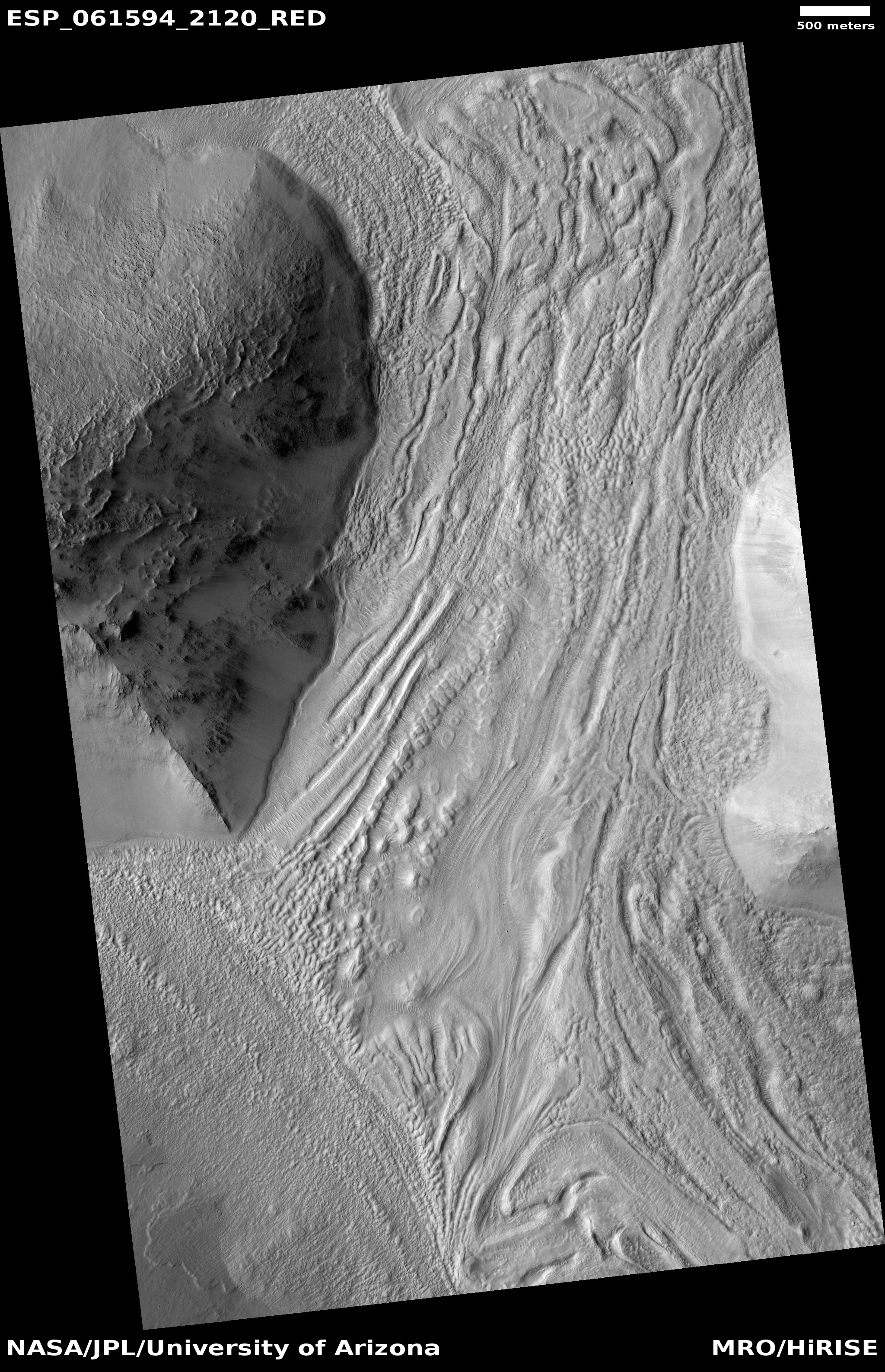
Cool image time! I have posted a lot of Mars photographs in the past few months showing possible glaciers in the mid-latitudes of Mars, where scientists think they have identified a lot of such features. Today is another, but unlike many of the previous examples, this particular feature more closely resembles a typical Earth glacier than almost any I have so far posted.

Based on the image’s title, “Lineated Valley Fill in Northern Mid-Latitudes,” given by the science team for the high resolution camera on Mars Reconnaissance Orbiter (MRO), I suspect that it remains unproven that these are features of buried glacial ice. Thus, they use a more vague descriptive term, lineated, to avoid pre-judging what these features are.

Nonetheless, a glacier is sure what this lineated valley fill looks like. See for example the Concordia confluence of two glaciers in the Karakoram Mountains of Pakistan, near the world’s second highest mountain, K2. Though obviously not the same, you can see many similarities between this Martian feature and Concordia.

MRO has taken only three photographs of this particular valley, with one image useless because it was taken during a dust storm. Yet, the other good image, farther downstream in this valley, shows very similar features.

The valley itself is formed from chaos terrain, located in the transition zone between the southern cratered highlands and the flat northern lowlands where a possible intermittent ocean might have once existed. Thus, for buried ice to be here is quite possible.

0 comments

Unearthly pit in Martian northern icecap

Giant pit in Martian North polar icecap
Click for full image.

Cool image time! It is spring in the Martian north, and thus the Sun has risen and remains in the sky for most if not all of each day, circling the horizon. As such, it illuminates polar icecap features that are strange and weird and hard to decipher based on our expectations here on Earth.

The photograph to the right, cropped and reduced to post here, is a good example. It was taken on September 20, 2019 by the high resolution camera on Mars Reconnaissance Orbiter (MRO), and shows a pit in the outer regions of the polar icecap, an area where that water icecap remains relatively stable, but that is also at a low enough latitude that summer sunlight can cause some erosion and sublimation of the ice.

The bottom of the pit is the center of the bullseye, with the layered features in the surrounding walls showing the many layers inside the icecap, built up over centuries, then slowly revealed as the ice in this pit slowly sublimated away.

You can get a better sense of what you are looking at by the overview map below.
» Read more

0 comments

Sinkholes galore!

Sinkholes galore south of Olympus Mons
Click for full image.

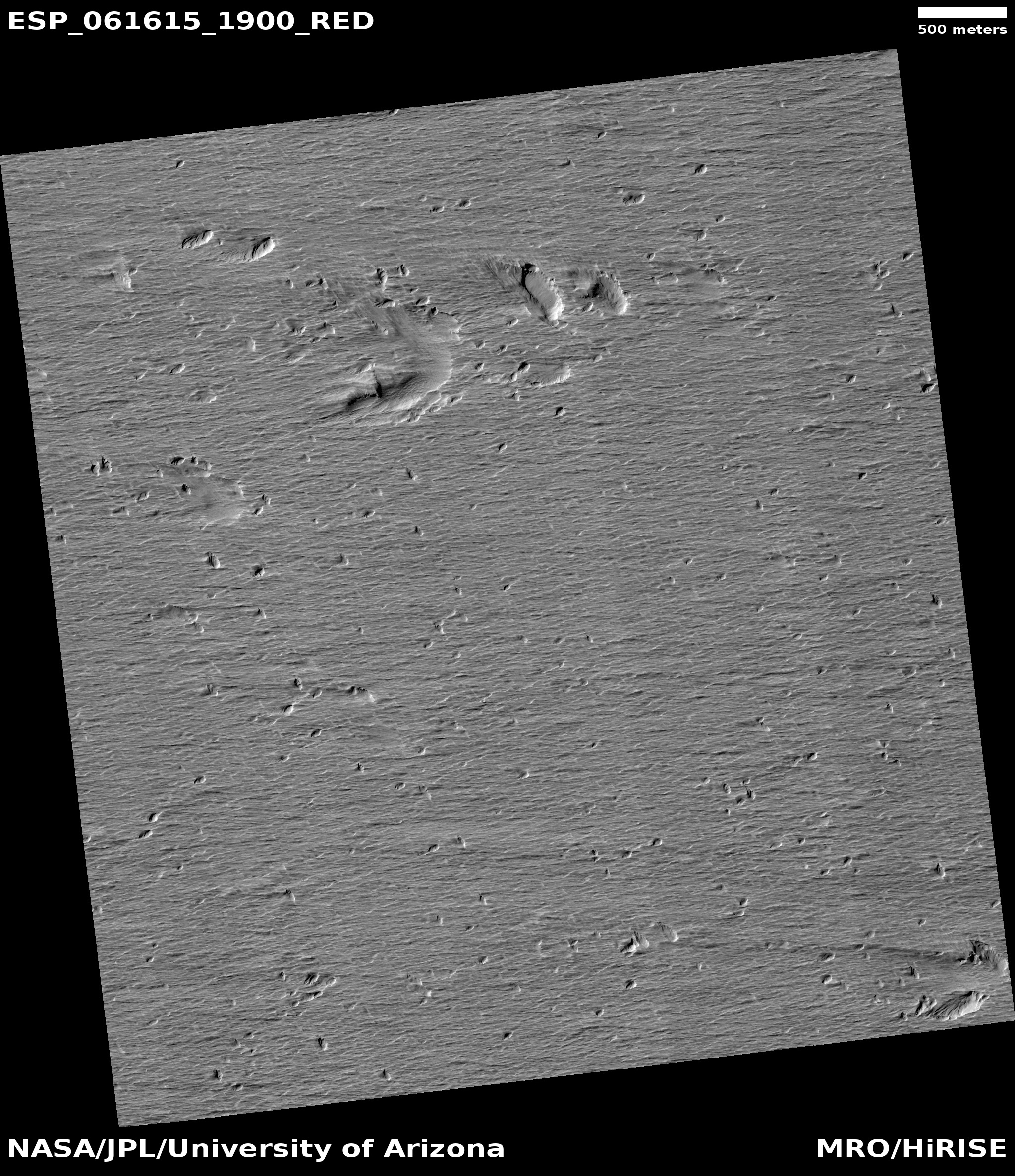
Cool image time! The photograph to the left, cropped to post here, was part of the November image dump from the high resolution camera on Mars Reconnaissance Orbiter (MRO). It shows a wind-swept dusty plain trending downhill to the west that is filled with more than a hundred depressions or sinkholes.

Unlike other pit images I have posted previously, this one is not focused on one particular pit or a string of pits. Instead, what makes it interesting is the large number of pits, scattered across the terrain in a random pattern. Their random distribution suggests that they are unrelated to any specific underground feature, such as a lava tube. Instead, some aspect of the underground geology here is causing the ground to sink at random points.

Below is an overview map showing where this dusty pit-strewn plain is located, indicated by the blue cross.
» Read more

1 comment

Recent impact on Mars

Recent impact on Mars
Click for full image.

Cool image time! While finding recent impacts on Mars is not that unusual, the image to the right, found among the November image download from the high resolution camera on Mars Reconnaissance Orbiter (MRO), was dramatic enough that I decided that more people besides planetary scientists should see it. For scale the photograph is exactly 500 meters wide.

The photograph, taken September 26, 2019, also illustrates all the typical aspects of impact craters, and how they change the landscape.

This impact took place sometime between July 17, 2012 and January 4, 2018. We know this because it wasn’t there in a low-resolution image taken by the wide angle survey camera on MRO on the first date but was there when that same camera took another picture on the second date. Below is a side-by-side comparison of that July 17, 2012 image with the high resolution 2019 image above.
» Read more

1 comment

Islands of ice on Mars and Pluto

Ice-filled craters near Martian south pole

In a paper published today in the Journal of Geophysical Research: Planets, scientists describe the identification of 31 ice-filled craters in the high southern latitudes of Mars. The map to the right, from their paper, shows the locations of these craters. The scientists also took a look at Pluto, and found five craters there that had similar features, though these were likely filled with frozen nitrogen, not water ice.

From their abstract:

These new 31 ice deposits represent an inventory of more than 10 trillion cubic meters of solid water, similar to but greater in number and volume than previously studied features near the north pole. Similar features of nitrogen ice may exist in craters on Pluto, suggesting that craters are a favorable location for the accumulation or preservation of ices throughout the Solar System. [emphasis mine]

These results are reinforced by the existence of glacial features found in numerous Martian craters at much lower latitudes, as well as the ice suspected to exist in the permanently shadowed craters on the Moon and Mercury. The processes that put the ice there on these different planets might be fundamentally different, but the results are the same: Ice accumulating within craters.

One aspect of these high latitude craters that remains somewhat unexplained is their asymmetrical distribution around the south pole, favoring the side of the planet south of Mars’ giant volcanoes. Moreover, in looking at the ice deposits within these craters the scientists found that the ice seemed to lie off-center within the craters, favoring a similar direction.

Based on the available data, the scientists theorize that the most likely cause of this asymmetric off-center pattern is wind. From their paper:

Basic physical arguments, mesoscale atmospheric models, and geomorphological observations predict deflection of winds emanating from the south pole by the Coriolis Force. Such deflection results in a general westward trend of winds (i.e., easterlies) in the south polar regions outside the [south pole cap], matching the [ice-filled crater] offsets we observe.

This correlation implies that wind is important in … formation and/or evolution [of craters with ice]. For the case where winds control [their] formation, katabatic winds may travel down the east side of crater walls and preferentially deposit ice on the west side of the crater via orographic precipitation as they flow up the west crater wall. This mechanism thus favors local accumulation of ice within craters.

I find it fascinating that the location of ice within craters on Mars might indirectly provide scientists with information about the planet’s global weather patterns. This unexpected connection highlights the need to dismiss no data or feature in trying to understand planetary formation. Unlikely things might answer our questions.

7 comments

A journey into the depths of Valles Marineris

Valles Marineris

Cool image time! Rather than start with the cool image, let’s begin with the long view. To the right is a wide mosaic of Valles Marineris on Mars, the largest known canyon in the solar system. About 2,500 miles long and 400 miles wide, this canyon is so large that it would cover most of the United States if put on Earth. The Grand Canyon, 500 miles long by 19 miles wide, could easily fit within it and not be noticed. In depth Valles Marineris is equally impressive, with a depth of more than four miles, about four times deeper than the Grand Canyon.

A closer view of the central regions of Valles Marineris

The white cross in the mosaic above is where we are heading. You can see it as the white box in the zoomed in overview to the right. This central part of Valles Marineris is named East Melas Chasma, and the red boxes indicate locations where the high resolution camera of Mars Reconnaissance Orbiter (MRO) has already taken images.

As you can see, we do not yet have many high resolution images of this part of the canyon floor. The white box is the most recent image, and is the subject of today’s post.
» Read more

3 comments

Both methane and oxygen fluctuate in unison seasonally in Gale Crater

The uncertainty of science: According to a new science paper, data from Curiosity on Mars has now found that both methane and oxygen fluctuate in unison seasonally in Gale Crater.

From the paper’s abstract:

[T]he annual average composition in Gale Crater was measured as 95.1% carbon dioxide, 2.59% nitrogen, 1.94% argon, 0.161% oxygen, and 0.058% carbon monoxide. However, the abundances of some of these gases were observed to vary up to 40% throughout the year due to the seasonal cycle. Nitrogen and argon follow the pressure changes, but with a delay, indicating that transport of the atmosphere from pole to pole occurs on faster timescales than mixing of the components. Oxygen has been observed to show significant seasonal and yearโ€toโ€year variability, suggesting an unknown atmospheric or surface process at work. These data can be used to better understand how the surface and atmosphere interact as we search for signs of habitability.

The data shows that the unexpected and so far unexplained seasonal oxygen fluctuation appears to track the same seasonal methane fluctuations. While biology could cause this signature, so could geological processes, though neither can produce these fluctuations easily.

Meanwhile, adding to the uncertainty were results from the two European orbiters, Mars Express and Trace Gas Orbiter. Both have failed to detect a June 19, 2019 dramatic spike in methane that had been measured by Curiosity.

0 comments

China unveils Mars lander during landing simulation test

The new colonial movement: China today unveiled to the international press its first prototype Mars lander, showing it attempting a simulated controlled descent on a gigantic test stand.

The demonstration of hovering, obstacle avoidance and deceleration capabilities was conducted at a site outside Beijing simulating conditions on the Red Planet, where the pull of gravity is about one-third that of Earth.

China plans to launch a lander and rover to Mars next year to explore parts of the planet in detail.

This is the first time I have heard anything about China sending a lander/rover to Mars in 2020. Previously the reports had discussed only sending an orbiter.

I have embedded video of the test below the fold. It shows the prototype hanging by many wires from the test stand, then dropping quickly, with its engine firing, before stopping suddenly, followed by an engine burst. While impressive, it did not strike me that China is even close to sending this spacecraft to Mars. The test only proved the spacecraft’s ability to do some maneuvering during descent. It did not show that it could land.

That the project’s designer said that landing would take “about seven minutes” also suggests that they are copying the techniques used by JPL to land Curiosity. Considering that JPL’s computers have been repeatedly hacked, including some hacks identified as coming from China, it would not surprise me if China has simply stolen those techniques.

I still expect them to launch an orbiter to Mars in 2020. Whether they also send a lander and rover remains to be seen.
» Read more

7 comments

SpaceX completes 1st round of Starship’s Mars landing site images

All locations photographed of the candidate landing region for SpaceX's planned Mars missions

On August 28, 2019 I broke the story that SpaceX is beginning to obtain images of candidate Starship landing sites from Mars Reconnaissance Orbiter (MRO).

It now appears that SpaceX has completed its first round of Starship requests from MRO. In the image releases from Mars Reconnaissance Orbiter (MRO) since September, only three new Starship locations were taken, and all three were the unreleased candidate sites I noted in my September 16, 2019 update.

Below is the full list of all of the Starship images, their locations indicated on the map above by the numbered white boxes:

With the release of these last photographs, the initial list of proposed images of candidate Starship landing sites on Mars has apparently been completed. No additional images at any other locations appear to have been suggested. The MRO science team has taken stereo images of each one of the nine locations, eight of which were in Amazonis Planitia, and one in Phlegra Montes.

This however is not the first round of pictures requested by SpaceX of the Arcadia Planitia region in connection with the company’s desire to land spacecraft on Mars.
» Read more

9 comments

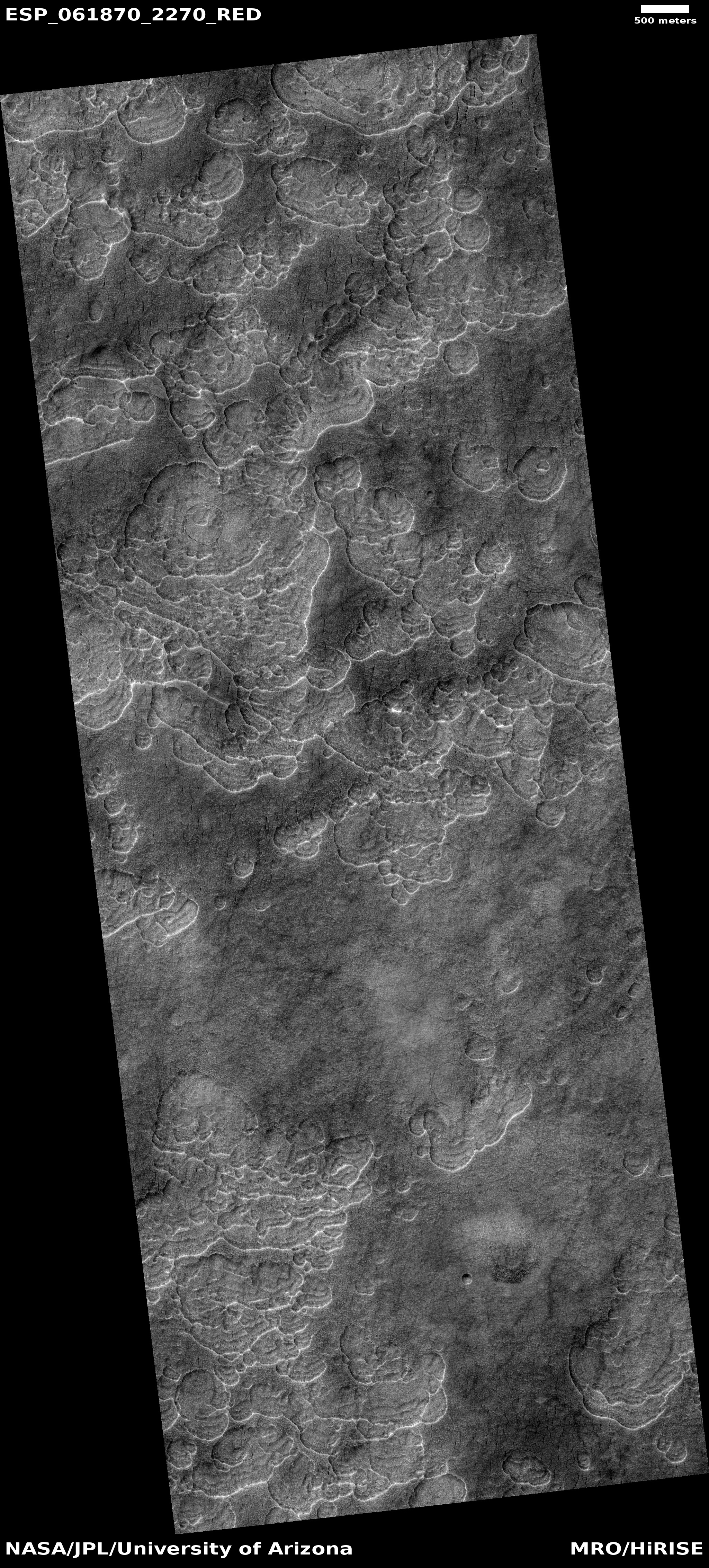
Polygons on Mars

Scallops and polygons on Mars
Click for full image.

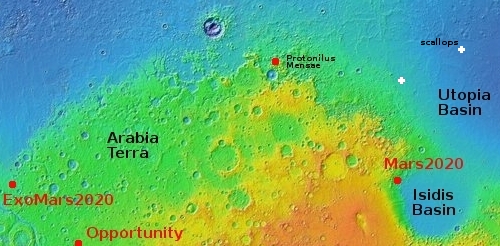
Cool image time! The photograph on the right, cropped to post here, was taken on September 25, 2019 by the high resolution camera on Mars Reconnaissance Orbiter (MRO) and made public in its November image release. It shows the weird but very typical scalloped terrain, with its adjacent polygon pattern of fractures, found routinely in the northern lowland plains of Utopia Planitia on Mars. From an earlier captioned image from 2006 of these same features:

The scalloped depressions are typical features; a smooth layered terrain located between 40 and 60 degrees in both hemispheres. Scalloped depressions probably form by removal of ice-rich subsurface material by sublimation (ice transforming directly from a solid to a gaseous state), a process that may still be active today. Isolated scalloped depressions generally have a steep pole-facing scarp and a gentler equator-facing slope. This asymmetry is interpreted as being the result of difference in solar heating. Scalloped depressions may coalesce, leading to the formation of large areas of pitted terrain.

The polygonal pattern of fractures resembles permafrost polygons that form in terrestrial polar and high alpine regions by seasonal-to-annual contraction of the permafrost (permanently frozen ground). On Earth, such polygons indicate the presence of ground ice.

On Earth these polygons are most often seen in mud, usually suggesting a drying process where the ground contracts with the lose of fluid. On Mars the cracks probably also form from contraction, but not by the lose of fluid but the lose of water ice as it sublimates into a gas.

These polygons and scallops illustrate an important feature of Mars’ vast northern plains. On large scales these plains appear flat and featureless. Up close however many many strange features, like the polygons and scallops in this image, come into view.
» Read more

3 comments

Mars’ seasonally vanishing carbon dioxide polar cap

Buzzell dunes, March 19, 2019
Click for full image.

Since the onset of the Martian spring in the northern hemisphere back in March of this year, scientists have been busy using the high resolution camera on Mars Reconnaissance Orbiter (MRO) to monitor the expected sublimation and disappearance of the cap of dry ice that falls as snow to become a winter layer mantling both the more permanent icecap of water 7,000 feet deep as well as the giant dune sand seas that surround that northern icecap.

The image on the right was first posted here on Behind the Black on June 6, 2019 as part of a long article describing that northern polar icecap and its annual evolution. It shows a set of dunes that Candice Hansen of the Planetary Science Institute in Arizona, who requested the image, has dubbed “Buzzell.” When that picture was taken in March, the frozen dry ice layer of translucent carbon dioxide still coated the dunes. The image’s darkness is because the Sun has just begun to rise above the horizon at this very high latitude location (84 degrees). The circular feature is likely a buried ancient crater, with the streaks indicating the prevailing wind direction blowing both sand and frost about.

On August 9, 2019 I provided an update on this monitoring, when new images of this same location were downloaded from MRO in April and June. MRO has now taken a new image of Buzzell, on October 2, 2019. Below the fold are all these images so that you can see the sublimation and disappearance of that dry ice layer over time.
» Read more

1 comment
1 78 79 80 81 82 128